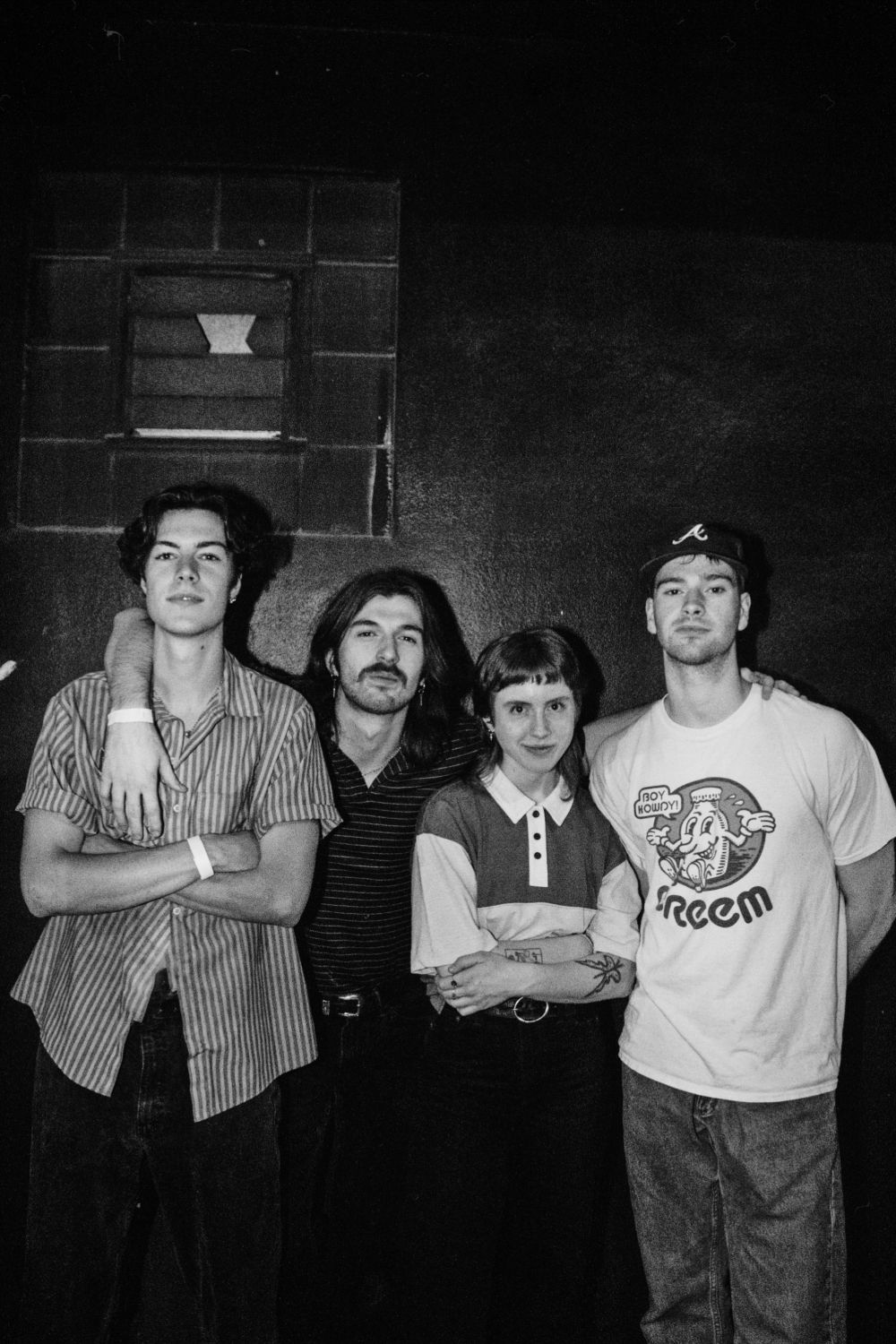
Revved up and out of the gates of Chicago’s expansive DIY scene comes the newbie band, Cruel, and the release of their debut EP, Common Rituals. Off of the newly formed Angel Tapes, an extension of New York’s Fire Talk Records, the band is at home with its rough and deliberately melodic post-punk sound. With recording and mixing help by Jack Henry (Friko, Free Range, Horsegirl) and mastering by Greg Orbis (Stuck, Lifeguard, Deeper), the four-piece strike a deal between punk antiquity and alternative’s melodic variety to release the next Chicago stalwart of rock music.
Cruel, consisting of Michael Schrieber (vocals/guitar), Jen Ashley (bass), Brent Favata (drums) and Jack Kelsey (guitar) is a ruthless and well constructed group of musicians. There is no doubting the intensity that comes off of this EP more than the very moment it begins. The opening track and the first single released, “Gutter”, is a trial of human exposure to a relentless system. With an explosive guitar riff right off the bat and drums and bass rumblings underneath, Schrieber growls into a song about societal expectations of labor and moral bending. “Forty hours a week I lose myself on my knees / Forty times a night I tell myself I’ll get more sleep”, Schreiber screams as the chorus finds its steady ground.
Emerging with guitar chunks and pounding tom-tom runs, “Damage” has a rhythmic change, initiating a maturely paced intensity. With a melody reminiscent of the glory days of punk music, with its simplicity yet engaging and angsty lyricism, “Damage” finds the band speaking to the self-destructive nature of youth. As the two guitars duel between dissonant bends into harmonious and satisfied chord progression, the feeling rises up into a release of our own pent up frustrations. “Demeanor”, one of the catchiest tracks of the EP, is a rush to a secular life. With the drums, bass, and guitars all in a mutual understanding during the instrumental rundowns, “Demeanor” is a screaming conversation towards a one sided systemic scheme. “Count me out / Of your affiliation / I won’t take part / In any congregation” Schrieber demands.
With the fuzziest sound on the album, the closing track “Tuesday” is a thrashing escapade that barely scrapes over two minutes long. With the implementation of a stop time effectively used to break up the wall of sound, the band closes the EP with a catchy and repetitive headbanger that is as memorable as it is loud. (very).
Photo by Yailene Leyva
At only four tracks long, Common Rituals is a fresh take on the importance of punk music in a DIY scene. Loud, thrashing, and emotionally blending, Cruel stands their ground, in a rather dying world, as a defiant and exciting new voice to be reckoned with.
With a sound that is fortified in pop facets, experimental awareness, and sweet undertones, Combat Naps, the project of Neal Jochmann, is fully demonstrative of the boldness and sheer joy that comes with making and performing music. With preparation leading towards the release of his new album, Tap In, Jochmann took the time to talk to me about being a home grown musician, reimagining Combat Naps live, and the freedom that comes with writing music.
Naming the project Combat Naps in 2016, Jochmann had a deep love for music while growing up. With a creative emphasis in his household (and a mom who spent the 80s singing in bands), the desire to make music came early and it came with energy. Notably, “I was really excited about the Frank Ocean album [Blonde] that came out that year [2016],” Jochmann shares. “I remember just feeling really overwhelmed with excitement because there were so many possibilities that it opened up. It’s just a very freeing piece of music”.
Unlike Frank Ocean though, Combat Naps became a musical factory, pushing out pop song after pop song, all to a degree of musical exploration and focus. Starting in the Chicago scene, Combat Naps released a string of EPs and LPs that embraced a lo-fi sound, but kept this undeniable sense of maximal lightness to it. On top of that, Jochmann spent time balancing a side project called Hippie Johnny with friends, Guatama and Connor, putting out a handful of releases. But as of 2018, Jochmann relocated to Madison, Wisconsin, quickly becoming a hometown staple and a familiar face to many. Finding a large and supportive outlet for Combat Naps to thrive, as Madison goes, “it’s a nice little test tube scene, you know”, Jochmann tells me as we share our mutual love for the city and its musical caricatures.
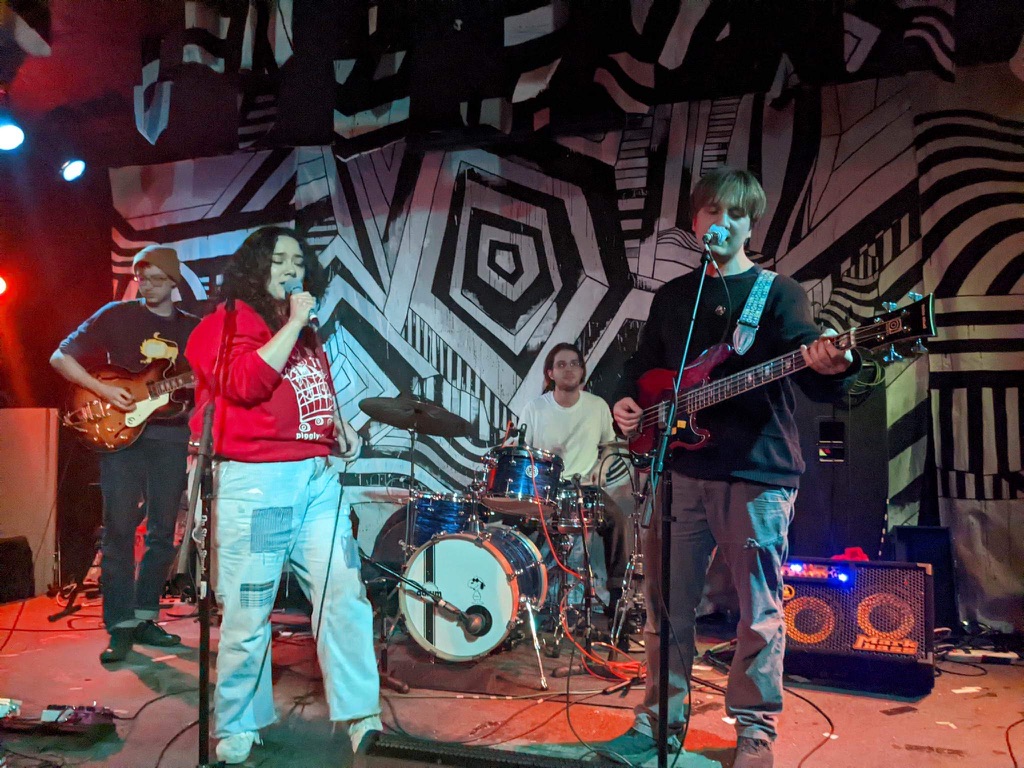
With help from friends and local Madison musicians Tim Anderson (of Able Baker), Marley Van Raalte (of Loveblaster), Ivette Colon (of Field Guide, Original Citrus, and others), and Madison guitar mainstay Ilych Meza, the band takes Jochmann’s sweet and offbeat recordings and interprets a new potential of what Combat Naps can reach when performing live. Hearing the effect to which Colon’s and Jochmann’s harmonies envelop a sense of pop-elegance is only a mere extension to what the full band brings to the shows. Unbeknownst to Jochmann, with an outpour of assurance and borderline feral attitude towards performing, the band revealed a punk nature to the live shows that wasn’t heard before on the recorded material. Telling me about an idea for a future project that would contain both live and studio recordings, Jochmann excitedly shares, “it will be a jump, and there will be just a big sonic difference in what the songs sound like”. But with Jochmann’s knack for manipulating sound, he continues, “that imbalance kind of makes it take an interesting form, like a novel with an incongruous kind of introduction by some other person”.
Tap In, the newest release by Combat Naps, is a harmonious plunge into Jochmann’s versatile and vividly scenic world. With songs about your typical themes of heartbreak, redemption, satisfaction, and even some heroic bravery, Tap In is as ridiculous as it is personally heartfelt and creatively moving. But where Jochmann’s typical songs of dire love or painstaking heartbreak goes, there is always a curveball to the story. “There are so many songwriting tropes”, Jochmann explains, “and then there’s like songwriting anti-tropes that you then learn about, after having learned the initial tropes that are just as traditional as the tropes you were trying to avoid” he laughs as he tries to push out the sentence.
When it comes to his lyricism though, Jochmann sees it as a collage, mad libbing fiction into the real stories of feel-good sadsacks, misfortunate heartbreakers, and eccentric hobbyists. “This approach is really attractive to me. It allows [me] to write stuff that is 100% meaningful because it has images from my life”, Jochmann states. “But it also has gaps of unspoken things and mysteries for the listeners, which can be potentially very impactful as well”.
For instance, take the track “Up To The Task” off of the new release Tap In. A story about an ex-girlfriend starting an indie-pop band with low budget-film dreamboat, Michael Cera. Jochmann’s lyrical approach brands his extensive imagination by portraying commonly felt emotions into a story that forces you to consider the whole spectrum of things you may be feeling. “You occasionally get slapped on the wrist by yourself though, by asking, ‘what the hell is this about?’ Or a friend saying ‘that’s really weird’, what’s that about? And you’re like, ‘yeah, of course this is just nonsense’” Jochmann laughs. “But then you’ll rein it in and go back to, you know, ‘Peggy Sue, oh how my heart yearns for you? Oh, Peggy Sue’. It’s just kind of a rinse and repeat thing”.
As Combat Naps go though, with his extensive collection of bandcamp releases, there is a lot of ground to cover. Whether or not that means that Jochmann has a hard time sitting still with a project, it is indisputable that he has a work habit like no other. Being fully self produced and home recorded, Combat Naps holds a very grand and melodramatic sound that is hard to come by in most DIY recordings. “I have aspirations in composition and in performance,” Jochmann says with an emphasis on polyphony. There might be a fear of writing and producing something that is perceived to be boring. But, looking past that, there is a much stronger drive to make something as exciting and fresh as possible.
With these grand productions and nonstop sonic experimentations, it seems almost inappropriate to try to box this band into a specific genre. “That’s just kind of part of the musical project,” Jochmann discusses. “It’s more than any specific sound. Just be honest and do whatever it is you feel moved to do”. What Jochmann’s music envelopes is this sense of freedom to any predetermined structure or rule to songwriting, genre, or DIY production. It’s prevalent in live shows, it’s there in the home studio, and it’s very clear in any Combat Naps release. “I have so many corny, sappy and sweet little things in my songs” Jochmann expresses. “But this is like a punk music experiment you know, like, make it sweet. Make it obvious. Make it do that. Don’t shut that out. It might lead to an impression of, you know, a nice impression of versatility”.
Combat Naps is a clear and animated response to Jochmann’s creative spirit and a passion to fill in the gaps of undesirable silence. With more releases already planned for the future, “It’s like the modern equivalent of some sort of religious devotion” , Jochmann says as the conversation takes a contemplative pause. “It’s like a religious devotion basically to what that process can reveal. Cataloging it, dealing with it. just reckoning with it. It’s really cool”.
Genre: alternative/folk Label: Exploding in Sound Records
Prewn, the new project of Izzy Hagerup, released her first full length album titled, Through The Window off of Exploding In Sound Records. Antagonized through a gritty soundscape, Hagerup takes on the role of writing, performing, recording and everything in between to make something remarkably eerie and genuine. Leaning into experience obtained from working with Kevin McMahon and his expansive psych-rock project, Pelican Movement, Hagerup is well crafted in pushing the boundaries of song structure and mood. Through the Window represents the conundrum of mortality, being both fragile and perverse, as Hagerup so poetically opens up the bottomless pit. Offering up some post-punk and folk tendencies, Through the Window is a haunted exposé in search to understand human instincts when face to face with death.
Ghosts are summoned on the opening track, “The Machine”, as Hagerup touches on the scene of her own death. Starting with a sonically sparse landscape, Hagerup’s vocals are trailed by delayed harmonies as she sings of her soul leaving her body. The chorus rings, “sometimes I forgot that nothing matters” as the harmonies grow into a disadant climax and fade into nothing. Existential, yes. But in a sense, that nihilistic thought can bring comfort when everything else feels too consequential.
The lead single, “But I Want More”, is somewhat of a plea for help. Told through the perspective of her father, diagnosed with Parkinson’s, who was isolated in a care home during the pandemic. Reminiscent of sludgy 90s folk stylings, the track extends itself into a sing-along brigade of hot-blooded phrases like “but I want more”. It is a song about utter seclusion and the effects that it can have on the human psyche and as the song grows and brittles out, Hagerup’s pure anger stands defiant and unwavering.
One of Prewn’s draws is the way that Hagerup expels her voice over the eight tracks. Layered and lenient, Hagerup uses her voice as a tension point. Songs like “Alive” and “Sheila” are filled with vocal layers that expose themselves with every listen. “I’m Going to Fry All the Fish in the Sea”, reminiscent of a toil-n-trouble-esque marveling, Hagerup sings a roundabout melody about greed with lines like “I got what I want, I’ve got what I need / I fried all the fish in the motherfucking sea”.
Gluttony is a very inadmissible humanistic instinct, and to which point will be the death of us all. On the song “Perfect World”, Hagerup sings of the evil that billionaires disperse onto our society. “It’s a perfect world and I’m murdering my children / It’s a perfect world and I just surpassed a billion”, she sings in the spirit of ignorance and corporate greed that contributes to the polluting of our earth and the exploitation of the lower class. Although “Perfect World” is one of the more lighter sounding songs on the album, with a finger-picked guitar and textures added through vocal arrangements, it doesn’t go without saying that there is a level of intensity that comes from Hagerup’s performance.
In a very bold debut album, Prewn has shown the extent to which Hagerup’s honesty comes to touch upon human instincts. With dissident textures anchored to her voice and colorful intensity to an acoustic guitar, Through The Window stands as a shocking and unique new album that pushes our own understanding of what humans are capable of.
Being a rock star seems much more attainable when you are enrolled in the third grade. Usually that ambition simmers out as you encounter dream crushers and 401Ks. But sometimes there is an exception to this, and in this particular case, it is Madison/Chicago band Slow Pulp and their most recent release, Yard. With two EPs (EP 1 and EP 2) and a full length album (Moveys) already under their belt, Yard finds Slow Pulp reigning in this homegrown and nostalgic persona that they so often have perfected before, but attribute a more raw and introspective quality this time around.
Becoming friends in a west side elementary school of Madison, Wisconsin, Henry Stoehr (guitar), Teddy Mathews (drums), and Alex Leeds (bass) grew up together, both personally and musically, and began to play in bands like Trophy Dad and Barbara Hans. It wasn’t until attending the University of Wisconsin-Madison, where they found the missing piece, that being Emily Massey, who grew up on the east side of town and played in other local bands such as Melkweeds and Modern Mod. With Stoehr taking more of the production responsibility, Massey quickly became the breathy and longing voice of the band.
Yard is as reflective as it is blunt, both offering something for Massey to discover in the writing process. A lot of this had to do with the isolation she endured during writing retreats in a Northern Wisconsin cabin. The album’s opener, “Goner 2”, is an introduction to a softer and more matured Slow Pulp sound. “I’m living in between feelings” Massey sings in her soft vocal style that flows with delicacy and ache. Her lyrics are strategically doubtful while approaching her past, showing to what extent she gets in her own way. That being said, “Goner 2”, the 2 because it was the second version recorded, isn’t stuck to its own terms of ambiguity, but as the opener, leaves room on the rest of the album for Massey to grow and reflect.
Some of the early singles that the band teased stand as a testament to the their various strengths in songwriting and producing. “Doubt” is Massey’s battle with insecurities told through a campy 2000s pop-rock song. Her gripping and raw lyricism only stands out more when juxtaposed to the band’s Malibu-style guitar work and the “do-do” chorus’. “Am I not enough or too much/Can you fix this I think I’m ready to commit” Massey sings in hopes of validating her own uncertainties. “Cramps”, borderline fully distorted, was a full collaborative song that was written on the spot. When the drums roll in and the guitar fuzzes out, Massey’s vocals relay between catchy melodist and souring garage rocker. With lyrics of self hatred in credit to pms, Massey and the band punch out one of the catchiest songs of the year. “Slugs” was first written and introduced by Stoehr in middle school. As most first songwriting adventures go, Stoehr found a muse in his crush at the time. Now bringing it back full circle to the band, “Slugs” is coincidentally still about a summer crush. It’s a laid back tune that lets the distorted guitars and bass take the background, leaving a butterfly effect in your tummy (one requisite to falling in love in the summer).
The title track “Yard” is a turning point on the album. As Massey’s parents put up her childhood home for sale, she fell into the sinkhole that is digging out family memories, especially when it came to her relationship with her little sister. With just a simple and dry piano instrumental, Massey sings, “They put the house for sale sign up/Didn’t know that I cared that much/I’m sorry I wasn’t there enough/It’s on me”. The piano is reminiscent of the old and worn heirloom instruments that usually occupy the living rooms of family households.
Taking shifts in Massey’s approach, there are two different types of love songs that arise in Yard. “MUD” is an undeniable rock song about a relationship coming apart. Standing for “miss u dear”, Massey sings about the delusional exceptions we make to stay in a relationship, often due to the fear of being alone. “I know I’m not where I said that I’ve been/Getting older but I still play pretend/I don’t want this to end” Massey sings as the band comes crashing in. On the other hand, the single “Broadview” is a twangy country inspired song about allowing yourself to fall in love again after a long time on break. “I’m just gonna give it a try/And hope that it’s enough”, sings Massey as piano and harmonica roll in. With Peter Briggs on pedal steel and Willie Christianson on harmonica and banjo, the band adds another texture to their arsenal.
As kids who grew up going to record shops, playing in battle of the bands and attending most of their academic experiences together, there is an indisputable and familiar bond within this group. As an in-house project, being produced and engineered by Stoehr himself, Yard is an album that finds the band at the top of their game. Slow Pulp, relying on their roots, still aren’t afraid to jump into the dark and it has worked time and time again. What Yard has shown is a band that is both effortless and strategically precise, warmhearted and sincere as well as meticulously poignant. Slow Pulp now stands as one of the most important bands in play.
DOMINO, the new record from Diners,has become a top contender on a lot of people’s end of the year list. It’s an album that hits the ground running into the adulation of power pop, retro tendencies and a love for life that never gets old. I had the honor of interviewing Blue Broderick of Diners as she was in the middle of a large national tour for the new album. Calling from her hotel room in Georgia, we discussed collaboration, being on wholesome status, and the possibility of starting at square one.
Growing up in Mesa, Arizona, Broderick developed a love for rock ‘n roll in a slightly prohibited way. Finding her dad’s guitar hidden away in the attic, Broderick waited until he was out of the house before she would begin to practice. Once her dad found out and accepted it, she played in several bands growing up and connected to the Mesa/Phoenix DIY scene. Broderick’s first release under the name Diners, Throw Me A Ten, was released in 2012, and since then she has released several records that expand over sounds of retro pop and eclectic ballads.
DOMINO has been issued through the press as a completely new Diners outfit. In a way, that is true. If meaning the first full record that leans into fuzzed precision and splintering snares, then yes. DOMINO, both sonically and personally is somewhat of a fresh start for Broderick, but it’s not that she hasn’t been experimenting with these power pop sounds before. With six albums already under her belt, Broderick has worked to manipulate the Diners’ sound time and time again, with each record taking on a new fashion. But with DOMINO, “I’ve been wanting to do a louder rock record for a while now,” says Broderick. “I kind of just didn’t know how to do it. Some of that is just not being able to collaborate” she tells me.
Photo by Rachel Lewis
Bringing in friend and contemporary, Mo Troper, to help record and produce the new album was what Broderick had been looking for. Having become really close “around the time the Abbey Road Box Set was released”, Broderick and Troper developed a relationship through a deep love of music. Troper is, in sorts, a power pop guru, with his own career of pop melodies eaten up by distortion. “He’s so much the real deal when it comes to music” says Broderick. “You want to work with somebody who has opinions and is gonna be firm”. Collaboration has become something of value to Broderick’s artistic processes. “I think I am so over doing things alone,” she expresses. “I just feel like my music always tends to be so much better when I collaborate with people”. With mixing by punk engineer Jack Shirley, giving DOMINO an extra edge to nail down, Broderick’s songs and performances are only brought more to their fullest potential. With the entirety of the album recorded at Trash Treasury in Portland, Broderick says “there was a lot of chaos in the studio while recording it, but I think it was all a part of the ride. And actually, that’s the way that it needed to happen in order for it to turn out good”.
You once tweeted, “All perfect albums have one skip”. Can you give me an example?
This is going to be controversial, because I really love The Beatles, but they have way more than one skip on every album. And I think that’s the beauty of them. Each album from beginning to end is like a roller coaster of, ‘this is the best’, ‘this is amazing’, ‘this is so great’, to like, ‘why would they do this?’. I actually think it’s very cool that one of the best bands of all time is not a perfect band.
Currently underway on a large national tour, Diners is lighting up audiences night after night with the new fuzzed up and heartwarming pop songs. Having written these songs by herself, there was no way to know how they might translate to a live, full-band setting. “I mean, with those songs, it’s not like we were a rehearsed band, and then we went into the studio. I made demos, sent them to Mo and our friend Brendan [Ramirez], who played guitar, and then the three of us got together three days before going into the studio and figured out what most of the parts were gonna be like” says Broderick. Catching a Diner’s show is something special, but this tour seems to offer a new sense of vulnerability and excitement to the live performances. “I do on some level feel like I am trying to recreate a record live, which I think is interesting because it’s never gonna sound like the record, especially this record”, Broderick expresses. “It makes me accept that it’s not gonna sound like the record, but in the moment that I am playing, it’s gonna be its own thing”.
Photo by Rachel Lewis
Diners, especially on DOMINO, has an undeniable nourishing exuberance to it that so easily refreshes the heart and bops the head. This album in particular touches upon dreams, promises, self-love and an implicit allure for the world around us. With an album that is being hailed as so joyous, Broderick opens up and says “I think that one of the issues that I’ve always had with playing for people is this feeling of, ‘Oh, Diners is so wholesome, and Diners is like Mr. Rogers’”, she laughs. Although it’s awesome that people can rely on Diners for comfort, Broderick says, “I think that it’s never that I was ever trying to be wholesome, and, in fact, I think I have a lot of songs about making fun of being wholesome, but nobody really accepts it, haha”. Although sometimes subtle behind a filter, Broderick’s writing is just as vulnerable to life’s harder times as anyone else’s. “I think that I want to be okay with talking about disappointment because that’s such a real thing in my life”
After coming out as trans in between her last two releases, Four Wheels and the Truth (2022) and DOMINO, Broderick was faced with the possibility of starting at square one. “I think that the reason why DOMINO sounds the way it does is because I was truly thinking it wasn’t gonna be a Diners record,” she expresses. Renaming the project would coincide with redefining herself, especially if the name Diners is attached to an identity that she no longer identifies with. “I was very concerned about what it would be like to publicly transition,” she conveys. Eventually, Broderick decided against changing the name Diners after all, and says “I just don’t think nearly as many people would have heard the record if I had changed the name. So I’m so grateful that so many people have heard it”. Despite a new direction in sound, DOMINO is still purely connected to who Broderick is, not just as a musician, but as a person as well. The slick lyrical wit, fetching pop melodies, and personable stories are only coincidental to Broderick’s heart, empathy, and contemplation of life. When asked about her feelings towards the name Diners, now on the other side of it all, Broderick just said “Oh, God! I’m so glad I did not change the name”.
Photo by Rachel Lewis
DOMINO is not necessarily about Broderick’s journey of coming out or her trans identity, but it definitely was animated with the joy that came with that experience. Having already begun transitioning by the time Four Wheels and the Truth was released, Broderick says, “I feel like those songs weren’t written when I was out”. But being able to articulate her newfound worldview and self-worth since then, she expresses, “I just don’t think I would have written [DOMINO] if I wasn’t on my path. My mind is just so much quieter. There’s just so much more harmony in my life”.
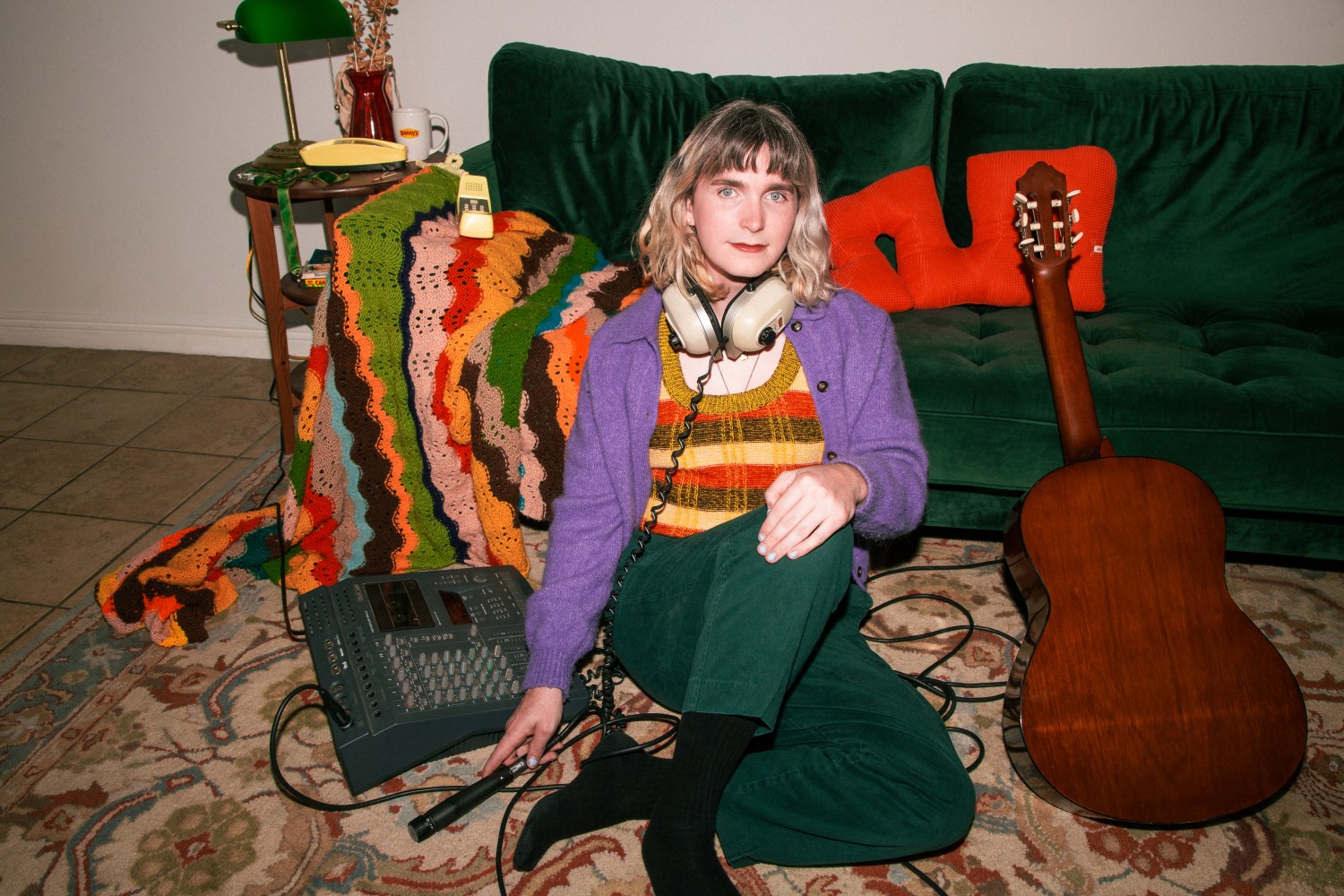
When structure is lost and life seems to forgo desire, it becomes easy to sit within observations. Like the simple pleasures from a smoke break in the middle of a brutal shift at a dead-end job, calamity slows down to personal silence. This personal silence can be just what you need to understand your place in the world. Told through whirling, soft folk songs, Allegra Krieger uses her winding words to do the heavy lifting on her new album, I Keep My Feet on the Fragile Plane, as she sits still in a superficial passage.
Hailing from New York, but having lived all over the country, Krieger has been a part of many people’s storylines. On her fourth full length release, and her debut from Brooklyn label Double Double Whammy, Krieger stays grounded in her own storyline, giving emphasis to the album’s title and the world in which she visualizes around her. There is no time wasted in getting to memorialization, and in ten tracks, Krieger muddies the concept of past and present that perpetuates the timeless struggles of young adulthood.
In a rhythm like waltz, Krieger opens the album with an apologetic line of, “I’m so sorry to say/I think you’re walking the wrong way”. “Making Sense Of”, the opening track, is a dance of sorts towards the unknown. With the simplicity of guitar strumming, Krieger’s vocal points are accented by orchestral string arrangements that create a whimsical atmosphere, yet remain receptive to the light thumping of stand up bass that steadies at the bottom of the sound. The uneasiness that comes hand-in-hand with unexplored territory is stagnant in Krieger’s songs, but in no way does it become overbearing.
Krieger’s strengths come from intersecting lines of grace and delicacy with grittiness and violence. These contradictions, so specific in their recollection, must come from personal observations that Krieger has deemed resourceful. “After work I have a drink/and walk to Matthew’s down the street/I love the way I don’t think/when he’s fucking me” Krieger sings as guitar distortion seeps in, fighting off the acoustic groove. Seeing things not just primarily good or bad, but complex to the human experience, Krieger allows many layers of consciousness to mature within her words.
There is an unconventional pull to Krieger’s song production that pushes I Keep My Feet on the Fragile Plane to stand out amongst standard folk works. With implements of French and English horns, there is a florid softness to a song of heartbreak like the track “A Place For It To Land” while the use of heavy static hums hold a layer of tension. “I Want To Be” frills out into a guitar battle of pounding strings and amp feedback, coming to an abrupt conclusion on a rather mellow track. “Terribly Free” utilizes a simple piano sound while Krieger’s vocal phrasings fizzle out into scrapes of static as she sings “fire and fog/sparkling stars/slow heavy sex/fast moving cars”. The contradictions in her lyrics reverberate within the sweet tones of the extended outro.
The stand out track, “Lingering”, is a cyclical story of doing everything and nothing at all. Beginning and ending in Krieger’s room described as having “pictures on the white walls/black mold on the ceiling”, she goes about her day as normal, but calling out the mundane that would normally go right past us. It’s a slow methodical groove that allows the listener to walk with her through Fifth and Avenue A that “smells like piss and garbage”, or sit and people watch through her bedroom window that separates her from the outside world.
Passive listening to Krieger’s words is, often, not possible. At heart she is a storyteller. And like any skilled storyteller, she warrants all ears. Her voice is both comforting, in delivery and in spirit to the subject matter. The atypical orchestration below her never feels abrasive, but more of an emphasis of priority to her soft and skillful vocal approach. There is no structured path for Krieger, instead she wonders on her own terms. This fragile plane wavers underneath her feet, cracking into noticeable gafs, as she dances around them. “I keep my feet on the ground/and my expectations low” she sings on the formidable track “Low”. Broken down into individual stories, Krieger can’t seem to stop writing. Each song on I Keep My Feet on the Fragile Plane, with its poetic and winding verses, establishes beauty in the context of observation and comfort in the context of learning.
There is an aspect of growing up when love becomes a step-by-step process rather than starry-eyed, on-and-off episodic moments of life we see in movies. Bristol artist Fenne Lily allures her newly determined definition of love through charming and light-hearted folk songs on her new album, Big Picture.
Fenne Lily’s overall themes are no stranger to the overstimulated idea of love. Lily’s previous release, BREACH, a collection of songs entrapped by heartbreak, was released in 2020 during the pandemic, squashing her ability to tour and share what she worked so hard on. This induced severe writer’s block, that Lily discussed, took a long time to shake. What makes Big Picture different from other Fenne Lily releases is that all ten songs were written and cultivated within the bookends of a relationship. Lily goes through stories and phases of new love, branded ideals of giving yourself up to someone else, and then the final fall out to make an entire album something familiar and truly convoluted.
One thing that Lily wants to be clear on is that Big Picture is not a sad album. Lily has talked about the oversimplification that has branded so many artists into a new and now popular sub-genre; sad girl indie music. Although Lily has always been boxed into this corner with artists like Phoebe Bridgers, Mitski and Lucy Dacus, she wants to be clear that slow music does not equal sad music. It takes personal growth and emotional maturity to come to this conclusion not only as a listener, but as an artist too. The ability and confidence to blend songs of hopeful intuition with a soft and slow burned sound creates an active voice to relate to life’s more complex feelings honestly and candidly. That brings us to Lily’s overall point on her new album; emotionally honest music can be a muse for self-soothing and the reintegration of joy back into life.
How does Fenne Lily make a collection of songs entirely about a failed relationship into an album of reassurance and self-fulfillment? Lily states, “these songs express worry and doubt and letting go, but those themes are framed brightly”. What it comes down to was refusing to fixate on the overripe feelings’ leftover from an expired love and to take away what felt needed. That being either memories or lessons learned to carry on. “So it’s alright/if you don’t want a shoulder/If you don’t wanna get over it all”, Lily sings on the song “Dawncolored Horse”.
The album begins with a subtle pop bass line that molds into a soft and playful track titled “Map of Japan”. Lily sings about the hindsight’s of a relationship with an airy vocal approach and electric guitar that grounds the lightness of the tune into the reality of the tough situation. What follows track after track is a beautiful, warm expression of Lily’s understanding and self-acceptance of where her life was currently at and displays it within lighthearted folk songs with mature melodies and conscious instrumentations. “Lights Light Up” is sung as a hardening conversation between two lovers who are not on the same page, but surrounded by bright and static guitar work that embodies both restlessness and independence. The dilemma of wasting time and the time it takes to heal is calmly addressed on “In My Own Time” where Lily sings “In my own time/I’ll brighten up the corners/Temporarily”. A nod to the impatience of healing and the universal fear of a wasted life.
Big Picture is also a demonstration of Lily’s creative growth from her first two albums in that she took on a collaborative approach with people that she trusts and loves. As past projects go, Lily has been very adamant about doing everything herself. But in the case of these 10 songs, Lily wrote and demoed each track herself and then brought them to her live band to flesh out together. The entire album was recorded live in Brad Cook’s North Carolina studio with special help from artists like Katy Kirby, Melina Duterte (Jay Som), and Christian Lee Hutson. In the case of the track “Red Deer Day”, Lily wrote the song after the rest of the album was finished and her relationship was over. All-in-all, what Lily offers is the clearest analysis of a breakup that she has, yet it is the most confident and self-projecting song on the album. “I’m alright or I will be in time” sums up the cleverness behind Lily’s pre-determined ambition to a hope-filled album. It is such a perfect conclusion to Lily’s Big Picture, that friend and musical contemporary, Christian Lee Hutson, helped record the whole song in one day to assure its inclusion to the project.
Big Picture is flushed with love songs that are emblematic of what it really is; confusing, vulnerable, arduous, fragile, blissful, affectionate and desirable. There is no complete linear story starting at the initial crush to the inevitable breakup that Lily experienced in the process of writing the album, but more of a stream of consciousness that occurs when a relationship isn’t working. The back and forth between passion and doubt leads to more complex feelings of guilt and personal endowment that is truer to a love story than what is usually glossed over. “I tell you I don’t know but sometimes I can’t help but picture a whole different life” Lily sings on the album’s closing track “Half Finished”, barely wincing at this decree.
It’s refreshing to hear an artist rework the social constructs that surround the slow song. Even upon a passive first listen of Big Picture, there is no hiding the subtle expressions of joy and contentment that poke their head out often. No drama is white knuckled and no names are dropped, provoking an album of soft contemplation and euphonic understanding. The contrast between these beautiful and laid-back instrumentations and the cut-throat lyrical persuasion that Lily embodies aren’t there for contrast’s sake; but for a deeper and more mature way to accept a failed love.
An apple with a rotten core can have beauty on the outside, giving off the falsehood of a pristine piece of fruit. This doesn’t mean that there can be no joy from this apple but a balance between the beauty and the crumbling core within. Canada’s own, PACKS, have returned to the scene with their sophomore album, Crispy Crunchy Nothing, setting boundaries between vulnerability and understanding while all having a good laugh about it in the end.
Returning from her soft solo acoustic project, WOAH, Madeline Link found herself in a confusing state of will-they-won’t-they until she reunited her band mates to return to the muddy and gritty groove that defined PACKS since their 2021 debut album, Take the Cake. In the meantime, what came about was 18 months of sending demos back and forth until the fourteen songs were fleshed out in one week of friendship and creative endurance. What emerged was Crispy Crunchy Nothing and a nod to the crummiest of situations while still grasping on to optimism, certainty and laughter from our day-to-day surroundings.
Elevated by drowsy melodies and the fuss of electric guitars, in a way, Crispy Crunchy Nothing is a return to the basics for PACKS, but it shows that the band is reaching for more. The new sonic sketches that the band indulges in help build a fitting home for Link’s sincerely humorous yet frank lyrics and mumbly double-tracked vocal approach. With no song surpassing the three-minute mark, Link’s offbeat imagination and select attention to detail, combined with loads of dry wit, produces songs that drown reality in plump bar chords and minor lo-fi garage rock-band instrumentations to create something from nothing. The stand-alone singles “Abalone” and “Brown Eyes” follow the band’s moody takeover of slacker-rock and the good-humored attitude that comes with it. Dexter Nash’s harsh yet calculated guitar riffs add a layer of boldness in the same fashion that Joey Santiago brings to the Pixies. Noah O’Neil’s bass hides within Link’s fat chords while also bringing new melodies to the songs. Shane Hooper’s punctual and tireless drumming acts as a steady hand while maintaining the sloppy sound of garage rock. The loose song structures only illuminate the hidden melodies that Link sneaks into the shortly lived songs. From the “lalalala’s” on “Dishwasher” to the soft choruses in “Cheese” and “Rag Doll” showcase a collection of warm lo-fi songs that represent the small and buried bliss that comes out when least expected.
Within these tender lo-fi songs, though, there is no hiding the loss and discomfort that is brewed on the surface of Crispy Crunchy Nothing. “EC” takes a song about the death of a coworker and masks it with a soft, twangy folk song that resides in the warmness of our hearts. With emotionally exhausted vocals, Link sings about a failed long-distance romance and the feeling of complete loneliness on “Say My Name”. The song barely scrapes over a minute long but still manages to come off as heart-breaking and sincere when you hear Link plead “Never thought I’d say I just wanna hear your voice say my name”. “Smallest One” plays into frustratingly taking apart nesting dolls in the hopes for a obtained sense of closure when holding the smallest one in your hand.
Slumping through songs about loneliness, frustration, loss and the tumultuous feelings of being stuck, the band’s moody disguise doesn’t completely mask the moments of confidence and ambition that Link has hidden throughout the album. Link’s knack for humor in lyrics that are derived from the mundane world around her make a PACKS song stick out when you hear one. “Fourth of July/fireworks and fountains/Shattered dreams and cotton candy”. As funny as a Canadian singing about a sacred American holiday, the song “4th of July” tells of feelings of loneliness derived from holidays and festivities mixed with an already present internal sadness that feels oh too familiar. Even on the minute-long track “Late to the Festivities” shares the line, “cause’ like an apiary in a cemetery/I was fooled by the flowers”, which in and of itself induces a nervous laugh to the situation.
Crispy Crunchy Nothing is less about purposely seeking out joy from life, but letting the joy sneak out from where we least expect it. There is a mutual understanding between Link and her bandmates that these collections of songs are not an appropriation of bad feelings, but more of a celebration of the small things in life. Even through topics of loneliness, heartbreak, loss, wasting life and unfortunate fixations, there is a warm feeling that Link and company coat over each song. Whether that be the charmingly unpolished sound of the band or the allurement of sincere anecdotes, there is a sense of hope categorized finely by Link’s imagination of her banal existence that when she sings “Laughin’ till I cry/Sometimes it feels like life is on my side”, you can’t help but to feel it too.








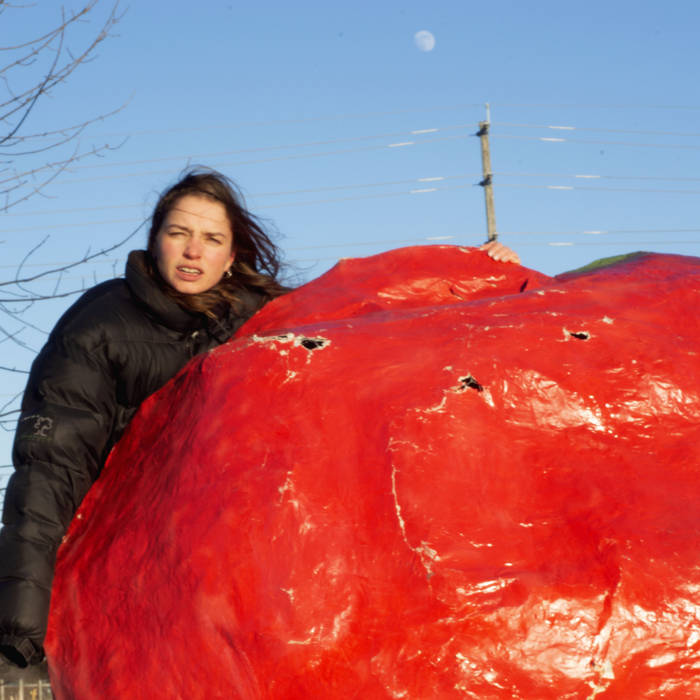
 the ugly hug