Billy Woodhouse and Elliot Dryden finished their latest lots of hands record in a “very messy fucked up student room”. They hurled this description early on in our conversation, my context on the duo limited to that their evening itinerary consisted of rounds of Fortnite and pints of beer. For a moment I found it ironic that they titled the album into a pretty room, although, as they wedged memories of celebratory dance parties in between fond reflections of writing and recording in Woodhouse’s living room, the allegedly “fucked up” nature of the apartment held less and less of a contradictory effect. into a pretty room pursues a sort of haven that cannot be furnished with antique Danish chairs and wallpaper swatches pulled from Architectural Digest. With self-described “squealy chipmunk” vocals, delightfully weird patches of electronic production and lyrics that strip notions of grief right down to the bone, lots of hands’ forthcoming album is a stunning tale of growing up, and a testimony to the extents of beauty found in the unrefined.
In the last four years, Dryden and Woodhouse have continued their journey of stylistic experimentation whilst honing the project’s identity. A chronological listen of the lots of hands catalog corroborates their growth towards a gentler, ambient-folk sound, a progression that hits an exhilarating peak in their latest work. While past lots of hands’ endeavors have been the fruit of remote labor, relying on the modern technological miracles of online demo exchanges, into a pretty room marks their first truly collaborative work, a product of Dryden and Woodhouse thoughtfully collaging old work and writing new songs together in Leeds, UK. into a pretty room fosters an obvious ‘touching grass’ vibe, with lyrics like “breathing the country air” and “talking with the dogs and birdies” offering a glaring manifestation of their experience in the north England countryside. However, the most moving effects of the album’s collaborative nature are far less axiomatic, as their shared vulnerabilities intertwine into one deeply human and emotionally complex coming of age narrative.
Over the course of the 14 track album, twinkling instrumentals coat the achy revelations of growing up. It’s a story of defending ‘laziness’ to your mom before the word depression enters your vocabulary, of experiencing heartbreak and grief not knowing if you will ever feel okay again, of waking up and wishing you could have been born as someone else. While it sounds devastating, the longer you sit with into a pretty room, the more it presents like running your hand over a scar rather than the all-consuming sensation of a fresh wound. “Before we made this album, we were both in transformation phases, different parts of our lives” Woodhouse explains, “[into a pretty room] is reference to doing well for the first in a while, with work and mental health and identity and trying to find out what style of music you want to make and what kind of person you want to be”.
into a pretty room is set to be released as their Fire Talk Records debut on January 17th. I recently met with Woodhouse and Dryden via Zoom, where they spoke about what they’re listening to, the history of lots of hands and what a pretty room looks like to them.
This interview has been edited for length and clarity
courtesy of lots of hands
Manon Bushong: You are about to release your fourth album under lots of hands, but I would love to start by hearing about the project’s roots. How did you two meet, and how did lots of hands come to be?
Billy Woodhouse: I’d been doing it as a solo project until about 2020, when I got Elliot involved, we just met at a really terrible music course in Newcastle and just bounced ideas off each other. It kind of took Elliot a while to get into the scene that I was in. I was probably on the different side of the spectrum, so we kind of met in the middle in terms of style and taste and just started making music as a duo. But before that, it was just an acoustic, ambient project.
Manon Bushong: So you met in the middle… I’m curious about what these ‘opposite ends of the spectrum’ looked like. Can you describe your tastes when you first started?
BW: Elliot was very…
Elliot Dryden: I was very…[laughs] bear in mind we were like, 16. Very Britpop-y
BW: Oasis
Elliot: Those guys… We always had some middle ground, we liked the Beatles, Elliot Smith, Radiohead.
BW: I was listening to a lot of hardcore, and a lot of very heavy math rock that I probably wouldn’t be as interested in now. Eventually we found this sweet spot of folk and ambient that we just really enjoy making together.
MB: How about now, what were your favorite music releases from last year?
BW: Tapir!
ED: Yeah
BW: our good friends in Tapir! dropped an absolute banger of a record this year. It’s like folk music with a little TR 808, electronic drum in the background. I can’t stop pushing that album on every single person I speak to. It’s amazing, it’s kind of a concept album about a pilgrimage that they’re all taking. And, the new Horse Jumper of Love album was amazing, that came out this year.
ED: Mk.Gee, we went to see Mk.Gee
BW: Oh yeah, like a month ago. That shit was awesome. That shit was so awesome.
MB: You mentioned finding a sweet spot of folk and ambient. That is definitely present in your recent work, it has a very cozy, almost outdoorsy feel to it. Where did you write and record the album, and how did that influence the project as a whole?
BW: We recorded it in my living room when I was living in Leeds. I was studying illustration, and Elliot had just got this new job, so he was coming down and splashing his cash every weekend in Leeds. We’d kind of just have a day when we’d sit and write and record. I think just doing it in my house has always been good, but I feel like because it was away from both of our homes, it felt like a new chapter for both of us, and I feel like that translates to the music really well.
MB: It definitely translates well, there is a certain coming of age feel to the album and how you reflect on adolescence, grief and depression. Are the songs and the stories you are telling ones that have accumulated over time?
ED: There’s quite a few that have been around for a couple years, a few of mine that have been around for two, maybe three years, and then some that Bill wrote like two years ago. So half of it is kind of old music that would fit with what we were trying to talk about, and the other half was stuff we came up with recently – reflecting on where we were at the time as well.
MB: You mentioned this idea of ‘what you were trying to talk about’. I would love to hear about the title for this album, and how these tracks fit into your idea of a ‘pretty room’.
BW: With a lot of the songs being from three years ago and a lot of them being new, we tried to encapsulate that sense of moving forward with identity and grief, and just stuff we had been through. It felt like the only time we were able to sit down and work on it was in the living room. With the album, I think we were trying to get a coming of age feel, and a sense of a safe space that we both are in now.
MB: into a pretty room also has more words than your previous albums, though it also includes a few ambient tracks without lyrics. How do you approach creating songs with lyrics versus ones without, and what is the process for tying them all together in one album?
BW: There is, maybe not for the people listening, but in my head, a need for some breathing room because it felt like we were getting quite a lot off our chests in actually making songs with lyrics. I definitely had a lot more ambient tracks on the album on a first draft we created, and then Elliot said “it’s just a bit too much breathing room”. I think in a way, we are just dividing the album into three parts, not because it really changes, but just so you have a chance to breathe. I would really like to do another ambient project that’s just instrumental because that is the sort of music I enjoy making the most.
MB: Would you ever consider creating ambient music for another type of project, perhaps scoring a film?
BW: One of my bucket list goals is to score a film. Maybe when I get old, or whenever the offer comes to me, I’ll take it. For now, and I don’t know about Elliot, but I make music with scenes in my head
ED: I don’t
BW: He doesn’t.
MB: If you could create the music for any existing film, which would you pick?
BW: I would do where the wild things are. I love that Karen O record so much, but I just feel like my music looks like that film. I remember going to see that with my dad when it first came out, and it was actually life changing. All the puppets that they made for the film, it was just everything I needed to be creative in my head, it had all the inspiration. So probably that film, no diss on Karen O’s record though. It’s amazing.
MB: You have used a lovely series of paintings as the cover art for the single releases and the album. Who was responsible for those, and why did you pick them?
BW: I had the idea of barn animals for the cover, because we have the song “barnyard” that was initially going to be the main single. We got kind of caught in that country folk thing, we were listening to a lot of Hank Williams and a lot of country. Our friend Beef, and Harry Principle painted it and so I shot her a quick message and was like ‘please can I steal that for an album?’. It’s actually just one massive painting that she did that she got scanned, but I cut it into pieces because there’s so much going on. They did it by drawing over each other’s artwork, it’s a collaborative piece and then they started dating after, so it also has a cute little story behind it. Shout-out Beef and Shoutout Harry for making that cover, I think it just looks how the album sounds.
MB: Do either of you have a favorite song off of into a pretty room?
ED: There’s one that Bill wrote called “in between”, it’s really good. I like the lyrics, and it’s quite short and sweet and all acoustic, which I like. That one is my favorite
BW: My favourite is “barnyard” because it has everything I like in lots of hands’ songs in it, droning reversed guitars in the background, my squeally chipmunk vocals as well as Elliot’s very baritone, almost grainy vocals. We just kind of wrote it in about ten minutes, just like brainstorming together in my fucked up student room in Leeds. That was a good moment for us when making the record, because we made it, and then we just kind of had a little boogie to it for about half an hour, just being like “we just made this shit, we’re making a record right now”.
MB: What are you most excited for now in the coming months? Aside from album rollout, is there anything else exciting on the lots of hands radar?
BW: I’m really excited to play these shows. We’ve got some really good musicians on board for it, and it’s always good to see the other side of the country. We’re in a very weird place in the UK, it’s beautiful and it has a lot of history, but there’s just not much of a music scene here, so it’s always good to travel about and meet other musicians.
ED: Yeah, same with me. I’m kind of excited that we might be able to travel somewhere else one day, maybe America or just anywhere else. It’ll be quite fun, I’m excited and staying hopeful we’re gonna hit the US.
BW: Elliot, plug, plug, uh, our solo stuff.
ED: No, I’m not.
BW: Elliot’s got some solo stuff coming out at some point. Under Elliot Dryden
ED: So does Bill.
BW: Mine is under Uncle Red. We’re gonna be doing some side projects, mine is more ambient, his is more kind of singer songwriter-y. We’re trying to get the lots of hands universe going.
Today, lots of hands shares “barnyard”, the fifth and final single before the release of into a pretty room. Listen below!
into a pretty room is set to be released this Friday January 17th via Fire Talk Records. You can preorder the album, as well as vinyl, CDs and cassettes.
Written by Manon Bushing | Photo courtesy of lots of hands
Every Wednesday, the ugly hug shares a playlist personally curated by an artist/band that we have been enjoying. This week we have a collection of songs put together by Philly-based composer, multi-instrumentalist, producer and Founder of Dear Life Records, Michael Cormier-O’Leary.
Along with contributions to beloved projects such as Friendship and 2nd Grade, Michael also leads the remarkable chamber folk ensemble, Hour. Following the critically acclaimed release of Ease the Work, Hour recently announced the arrival of Subminiature, a live tour document curating two years of DIY show performances and offering a culmination of the project’s seven years of dynamic work.
The first snippet shared from Subminiature is lead single, “At the Bar Where You Literally Saved Me from Fatal Heartbreak (Live at Philamoca, Philadelphia, PA, 4/12/24”, accompanied by a live concert video directed by Matt Ober. Watch below.
Michael put together a playlist of some of his favorite film music, a lot of which has inspired Hour in many ways. Listen below!
Hour is made up of many familiar faces from the Philly scene and beyond, with Subminiature featuring players such as Jacob Augustine, Jason Calhoun, Em Downing, Matt Fox, Peter Gill, Lucas Knapp, Evan McGonagill, Peter McLaughlin, Keith J. Nelson, Erika Nininger, Abi Reimold, Adelyn Strei
Set to be released on Valentine’s Day of this year, Hour will celebrate Subminiature with an extensive month-long tour across the U.S. You can preorder Subminiature now, including a limited edition cassette and CD run by Dear Life Records.
Written by Shea Roney | Photo by Michael Cormier-O’Leary
Every week the ugly hug shares a playlist personally curated by an artist/band that we have been enjoying. Kicking off the new year, we have a collection of songs put together by New York-based singer-songwriter, Allegra Krieger.
Allegra’s songwriting unfolds with a unique fluidity – slick phrasings flow with both a furrowed brow and an evocative smirk that bring love, sex and rock n’ roll into fruition with a type of storytelling that is unshaken by truth, intentionality and the beauty that often falls behind. Allegra released one of the ugly hug’s favorite records of 2024, titled Art of the Unseen Infinity Machine, an album of melodic stamina where vivid tales are primped and fitted, and fleeting dreams hiss like an inflicted tire trying to hold its breath, yet these thirteen songs still lead with purpose and unlevied gratitude, filling out with the kind of compassion and introspection that has made her work so collective and meaningful to so many.
Listen to Allegra’s playlist here;
Listen to Art of the Unseen Infinity Machine out on all platforms now.
Every Wednesday, the ugly hug shares a playlist personally curated by an artist/band that we have been enjoying. This week we have a collection of songs put together by Brooklyn-based artist Emily Borrowman of the project smush.
Venturing through intimate begrudgements and giddy culminations of longing, smush set out to find a sense of peace within the noise on their debut record if you were here i’d be home now released earlier this year. Along with Emily, the gushing sound of smush comes from Atley King and Jay Christie, as the trio create a motion deliberate in each of their voicings, punctuating each grating texture and sonic manipulation that gives way to the tenderness in Emily’s vocals and the euphoria trapped within the swaying stamina of each song.
Titled “sensitive girl: did you lose yourself again”, Emily shared this statement about the playlist;
a playlist for the sensitive girl. 40 songs, 2 hours and 19 minutes of music for the melancholy heart, the nostalgic daughter, the princess and the pea. find yourself alone and yearning. featuring deep cuts and familiar faces, these songs pair well with glow in the dark stars, lace curtains, and slingshots. you’re a collector of promises, and so am i. listen with your bleeding heart on your sleeve.
“i’ve been searching for an hour in my closet / trying to figure out what to wear / for a day i’ll spend alone in my room”
Day of Snow, Skullcrusher.
Listen to Emily’s playlist here.
You can listen to if you were here i’d be home now out on all platforms. Purchase a cassette tape here.
As a small music journal, we rely heavily on the work of independent tape labels to discover and share the incredible artists that we have dedicated this site to. Whether through press lists, recommendations, artist connections, social media support or supplying physicals, these homemade labels are the often unsung heroes of the industry. Today, the ugly hug is highlighting the work of our friends over at Bud Tapes.
Bud Tapes is a tape label out of Portland, Oregon, started in 2017 by Emmet Martin, who also leads the free music project Water Shrews and previously the indie project World Record Winner. What began as happenstance for Emmet to release their own music has since grown into a small but mighty collection of recordings from an eclectic roster of artists.
Bud Tapes has become a staple in the Portland DIY music scene- a home for anyone making music for nothing more than the love of making music. The label’s releases are often imperfect in the best way—rough around the edges, experimental, and full of character. Each tape is a little snapshot of someone’s creative journey, and you never really know what you’re going to get with each new release, which is part of the fun.
Bud Tapes is about embracing the weird, and off-beat while still keeping it personal. It’s a label that values the physical side of music—putting the project into your hands in the form of a personalized tape, something you can hold, pop into a deck, and experience over and over again. Whether it’s something from Emmet’s own Water Shrews or another unexpected gem, Bud Tapes is all about capturing music in its purest, most direct form.
This interview has been edited for length and clarity
Emmet Martin | Photo by Kat Curey
KC: What sparked the idea to start a tape label? Was there a particular moment or inspiration that made you take the leap?
EM: Well, I’d always kind of wanted to start a record label, but I thought that you had to do something special to start one like you had to be someone or whatever. I had this record I’d been working on for a while, and I was starting a new band called World Record Winner. I was friends with a lot of people who were signed to labels at the time—people I knew who were kind of popping off—and they said, ‘You should send your record around to places.’ So I did, and everyone either ghosted me or rejected me.
Then I got this one email from Off Tempo, which is a label in Seattle. They put out a lot of stuff that’s kind of indie-adjacent, and it’s run by someone from Slashed Tires, which was a cool project. I was more tapped into the Seattle scene because that’s where I’m from originally. So, I emailed them asking, ‘Do you want to put out my record?’ and they said ‘this is just like a thing we stamp on our friends record’s so we can put it out’ I mean, they phrase it less like that, but that was the gist’.
Basically, they said, ‘You’re at the level where you should just put this out yourself. Make a fake name for your label and release it.’ I was like, ‘Oh, shit, you can just do that?’ So I did. That was kind of the impetus for it—putting out my record when no one else wanted to. And that’s pretty much the case for most people starting labels. They’d rather work with someone else than do it themselves, but in the end, you realize you kind of have to do it yourself. And you find all the joys that come with doing it yourself.
KC: Can you share the story behind the name of the label?
EM: I have a pin that I made at a Cool American show—which is Nathan Tucker’s project, you probably know him- he has so many projects. His partner, Georgia, had a button-making station, and I was in college and I was really stoned and I just wrote ‘bud’ with a little smiley face on a piece of paper and got it pressed into a button. I had it on my fleece all the time for like two years. Then I was like, ‘Oh, that’d be a very fun name for a record label or whatever.’ But it was way after I had made it. So that was also kind of an impetus—it was a fun, weird name that I had in the back of my head for a while.”
KC: Do you have any collaborators that help you run the label, and if so, how does that shape the way the label runs?
EM: I’ve always thought it could be fun to get people involved, but I just don’t know how. I can’t pay people to work and I feel bad asking people to do unpaid labor. So, I just do everything myself. I’ll have help duplicating tapes every now and then for bigger projects, like Greg Freeman’s album or Lily Seabird’s album. But everything else is just me for the most part.
KC: Who was the first artist you worked with and how did that come to be?
EM: Technically, it was just me at first, but I did one release for my friend Isabel. It wasn’t really a ‘real’ thing—she didn’t even want to put out the tape. I kind of made her, since we’d done these recordings together. Anyway, shoutout to Isabel. You can find it on the Bud Bandcamp. We got one write-up on a zine, and it’s a really good tape. She wouldn’t let me put all the songs on it, though, even though there are more that are great.
The first ‘real’ release I did for someone else was from a band called Flipchuck, which is my friend Addie’s band with my friends Leanna and Nikhil, who I went to college with. Right before COVID hit, I was at a show for my friend Jesse’s band, Happy Dagger, and Addie was there. We started chatting, and she had become closer with a lot of my friends, so I was seeing her around more. I asked her what was going on with Flipchuck. She said they were finishing something but weren’t sure if they’d put it out or just post it online. I told her, ‘Well, I’ve got this fake label, and I can make you a few tapes. I’ll give you a couple for free, and I can sell the rest online to pay myself back.’ She was like, ‘Wait, you have a label?’
So we made plans to release a tape in April 2020 and do a release show at my house since I was hosting house shows. Obviously, that didn’t happen because, well, 2020. But I ended up creating an Instagram for Bud and we released the tape in April or May. Since everyone was bored, I started doing live streams on the Bud Instagram, and that’s kind of how we ended up doing the Flipchuck release show.
That was the first time I worked with a ‘real’ band, and it went great. It helped people start to notice what we were doing. It’s a really cool tape, definitely worth listening to.
KC: How do you find the artists you work with? Is there a special connection or vibe you look for?
EM: Those live streams I did on the Bud page started with a group chat I created to schedule them and share the lineup. After each stream, I’d say, ‘Anyone in here can send me music, and I’ll put it out.’ It was kind of like, ‘You’re all my friends, and if you’ve got something, send it to me.’ A lot of people had records they’d been sitting on, waiting for the ‘right time.’ But then we were all stuck inside, and there was no ‘right time’ anymore. So, we just decided to put out music now that we had the time to do it.
That’s how I got a bunch of releases, like the first Babytooth album. Isabel played solo for one of those live streams, and that kind of kickstarted things. Now, people send me stuff randomly, but it’s also a lot of me hounding people, asking, ‘When can you finish that record and send it to me?’ So, it’s a mix of people sending me stuff they’ve been working on and me chasing them down.
I think, for the most part, I’ve always gone for the vibe or the ‘atmo’—I learned that term recently and I’m trying to use it more. It’s an alternative to vibe, you know, atmosphere.
KC: Oh I love that. ‘Vibe’ is so over.
EM: ‘Vibe’ is so overused, but it’s kind of like people who would be doing this regardless of whether there’s an audience or not. I’m usually trying to put out stuff where the artist would be making this music whether or not anyone’s listening.
It’s kind of a true folk approach, like folk music in the traditional sense—music that’s not commercially minded and not trying to fit into any particular scene or chase what’s hot at the moment. It’s really a cultural, community-based way of making music. So I’m usually trying to work with people who are in that realm.
Sometimes, I don’t do that and I put out records that are really good and I know the artist is trying to ‘make it’ or whatever. But for the most part, the artists I seek out and think, ‘Yes, this is something that should be on Bud tapes,’ are people making weird stuff that barely anyone listens to—but I’m like “this shit is fucking awesome”, I’ll make twelve tapes of it.
KC: What’s it like bringing a tape from concept to reality?
EM:When I started out, and still for most of my releases, I do everything myself. For the ones that are more high profile, which rarely happens, it’s different, but for the ones I’m doing from home, it goes like this: someone will make the artwork, and I either adapt it into a J-card or they’ll make one themselves. The artwork is usually square, but I have to adjust it so it fits into a rectangle for the front, and then leave space for the spine and side.
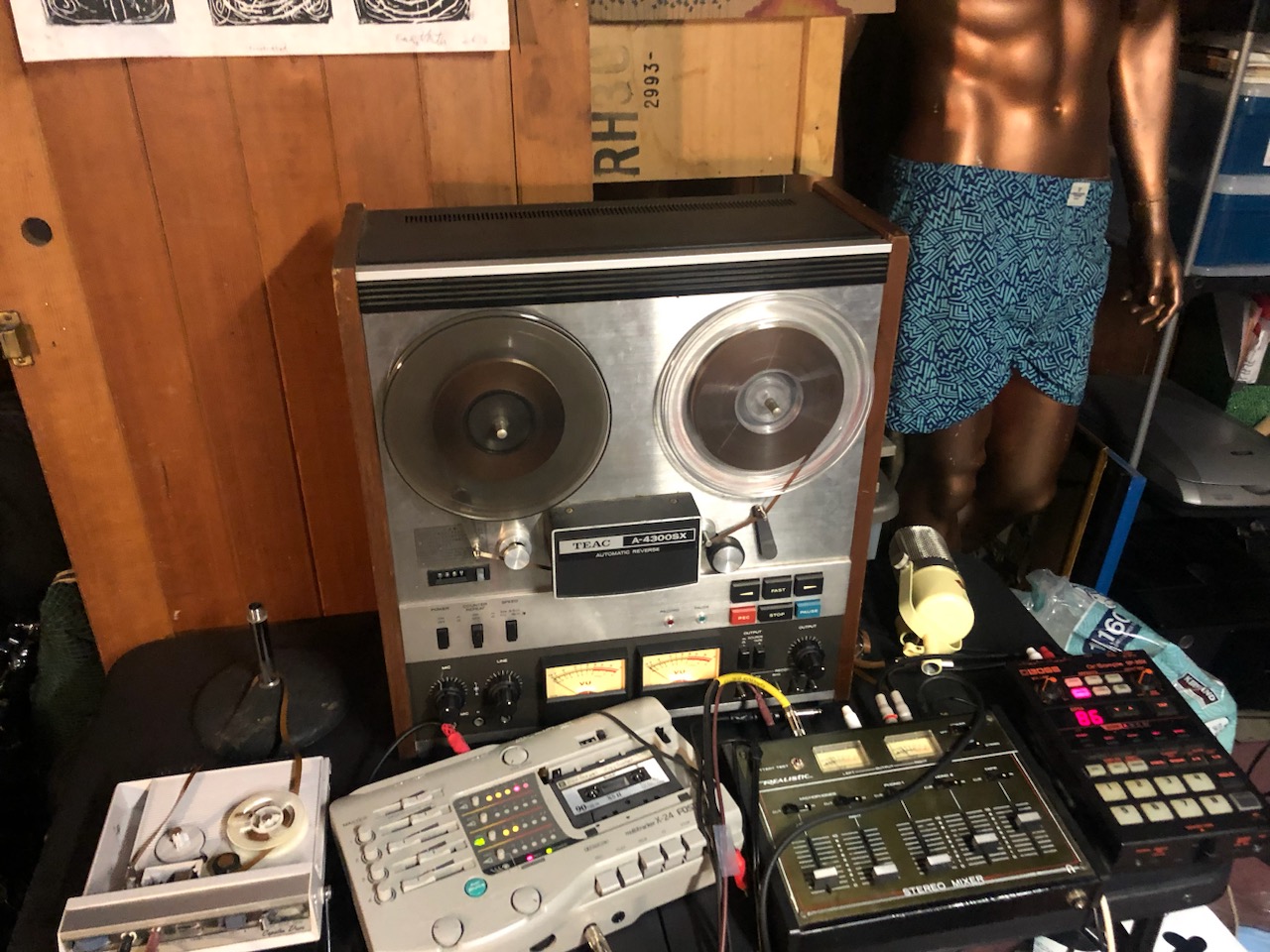
Once that’s done, the artist sends me all the master tracks. If I’m doing it at home, I’ll dub one tape onto my stereo, and then use that tape to duplicate others. I usually have a couple of high-speed double-deck stereo units, so I can put two tapes in at once, and just run them back and forth, hitting high-speed dub.
It’s about twice the speed of the album length, so if the album is 40 minutes, it takes about 20 minutes per tape. I’ll just hang out, watching TV with my partner, while she listens to the whirring of the tape wheels. It’s a specific sound.
Most of the time, I’m just sitting there with my cat on my lap, dubbing tapes and smoking weed. It’s not a bad setup.”
KC: Okay, I love all the band names. You have a good roster.
EM: There’s so many of them, like I’ve honestly done too much [laughs].
It can take a while just to get people to understand what it’s going to look like. We need time to send emails, get everything right, and make sure it’s all set up. It’s mostly about setting people up for when the release is actually coming out and what’s going to fall on the schedule.
But mostly, once I make the tapes, I’ve been trying to announce the release afterward. I’ve done too many times where I announce the release before I’ve made the tapes, and then I’m scrambling last minute trying to get everything done. So I’m trying to give myself more time to get everything ready before announcing.
It’s usually just about making the tapes, making sure the art is ready, maybe planning a release show, and that kind of thing. But honestly, it’s not a lot. I feel like a lot of labels have big rollouts, but for me, it’s not like that. It’s not like I’m doing vinyl or anything, and for the most part, I’m doing stuff that I know will sell a small number of copies—usually no more than 50. So it’s not like I’m ever going to be down and out or anything.
It’s really just about making the tapes and then trying to sell them.
KC: And you taught yourself how to do it all?
EM: Yeah, I had a duplicator I used to use, and it was super janky. Then I bought others, and they were even more janky. My poor partner, Bailey, saw me ripping my hair out, freaking out at these failing machines and trying to replace belts in them.
But it’s always just been me doing it. I eventually figured out a way that works with thrifted double tape decks. They usually make a pretty good copy, and I check every ten copies to make sure they’re okay.
KC: Are there any parts of the process you particularly love—or find challenging?
EM: Oh, I really like just sitting and dubbing the tapes, especially the master tapes. I listen to every record before agreeing to put it out, but then there’s this moment when I go to dub the master tape, and I think, ‘Oh, fuck, I’m stoked to put this out’’ That moment is always really good—like, okay, I’ve got to make these tapes, this is real, I’m dubbing the master tape, this is happening. It’s when I listen to it most in-depth that I get really excited about it.
As for challenges, it’s not so much the process itself, but the hardest part is saying no to people, in any way. Even if I’m putting out their release, and I have to say, ‘I can’t do this right now,’ that’s really difficult for me. But it’s the reality of it. People have all kinds of expectations about what it looks like to put a release out on a record label and setting expectations is hard.”
Photo from Emmet Martin
KC: Can you tell me about the Cosmic Bud series? Where did you get the idea and how do you put each series together?
EM: It was kind of a thing that I failed to do. Initially putting out experimental music seemed so different from Bud that I thought I had to create a separate imprint for it. So, I did a series of three CDs, mostly with experimental stuff happening in Portland—my friend Josh’s band Modern Folk, my friend Matthew Peppitone, and my friends Our Blue Heaven. I did CDs for each of them, like a batch deal.
I don’t know, it just felt weird to keep it separate, and people were confused about what that even meant. Eventually, I just thought, ‘Whatever, Bud is just me, I can do whatever I want.’ So now everything is just under Bud. That was kind of a failed experiment in trying to create something separate for experimental music, like a little imprint. But I realized I could just put everything under Bud, you know? It’s all going to be on the same Bandcamp page anyway.
Handstamp Cassettes of Waves of Higher Bodies by Spiral Joy Band
KC: You’ve done a few reissues or revitalized releases, the Spiral Joy Band that was just announced and the Clovver EP for example. Why are you drawn to this form of preservation and why do you think it is important?
EM: The ones I’ve done have mostly been projects people have asked me to work on, like the Clovver EP, which was super meaningful to me. That was a band I saw a lot back in the day, and the drummer passed away pretty unexpectedly. The singer is my friend Teal, along with my friend Elian. Most of them are in Pileup now—Elian and Grey both play in that band.
Clovver would always play, and it was super cool. The drummer, Andrew, was also in my friend Aaron’s band, Two Moons—I can’t even remember how many projects Aaron’s had over the years. He put out Balloon Club and a bunch of other things. And he also played in Clovver!! Anyway, I would see Clovver all the time, and I’d heard about a record of theirs they were working on. It never came out, so we ended up mixing it years later, after Andrew passed away. It was more of an archival thing.
It was really cool to put that out, but the hardest part about those kinds of releases is that there’s no active band to promote it. So, it’s out there, and I try to sell the tapes, but there’s not much context for it. If you have a media guy, they can lay out the story of how it was made, but I didn’t really know how to do that at the time.
Now, I’m doing a reissue for a band called Spiral Joy, which is a weirdo drone band originally from Virginia, then Wisconsin, and now Texas. I’m reissuing one of their really great records, mostly because I’m also putting out a new release from them. They reached out, saying they had an LP from a European label that only pressed a few copies, and now people have been asking for it. The shipping is so expensive that it’s hard to get it to people. So, they asked if I’d consider doing a US CD reissue to make it more accessible. I thought that sounded great, and it’s perfect because it ties into the new release I’m also putting out, so I can plug both at once.
I also really admire a lot of reissue labels, especially in Portland. Concentric Circles is a classic one. Jed, who’s been in bands like Helen (Liz Harris from Grouper’s band), plays drums in that and has also played in Jackie-O Motherfucker and other great bands. He runs Concentric Circles and also co-runs Freedom To Spend, a reissue label that does incredible archival work, digging through people’s families’ archives and finding amazing stuff. That’s the kind of work I’d love to get into, but I’m not sure how to go about it. Maybe one day I’ll figure it out, but I’ve already done a few reissues, so I’ve kind of broken the seal. I guess I could expand on that in the future.
Show Poster for How Strange it Is Album Release Show w/ Babytooth, Boreen and Tough Boys 3/09/22
KC: How long has Bud Tapes been around?
EM: I started in 2017 and did three releases over three years. Then in 2020, things really took off, and I ended up doing around 20 releases a year.
KC: What keeps you going and excited about what you do, especially on the challenging days?
EM: There are certain things that just happen, like this Spiral Joy Band release, which is really crazy. It features former members of a band called Pelt, who are the reason I got into weird, experimental music and drone music in the first place. They started in the mid-’90s and have been around a long time. One of the original members passed away, but they’ve kept going. Spiral Joy Band is an offshoot of that, and they’ve been releasing a lot in recent years.
I met my friend Rob Vaughn, who runs a label called Sound-O-Mat. He doesn’t put out a lot—just a few 7”s and CDs—but he’s been around for a long time and has worked with Pelt a lot as a sound engineer. When he found out I had a label, he said, “We should hook you up with Michael and do a Spiral Joy Band release.” I was like, “Yes, I do have a label, it’s real, whatever!” That kind of thing keeps me going—the fact that I can say, “I have this label,” and it connects me to more opportunities like that.
Now I’m kind of connecting it more with the Water Shrews world. I used to keep things separate because, with experimental music, people can be judgmental. I didn’t want people to look at it and think Water Shrews was some experimental project, or that we don’t get it. But I’m way more into that world now. I used to play in kind of indie rock, twee bands for a long time, with the whole “heart on your sleeve” thing. But now I’m just like, whatever—I don’t care what people think. I’m putting out stuff that I think fits within the same world I’ve created with Water Shrews, which is really exciting.
When I finally started following people on the Bud Instagram, I never follow anyone unless they follow me first, but I decided to follow all of my weirdo friends. And my friend Al, and a few others, were like, “What the fuck? How did I not know about this? This is so cool!” It was really exciting to see people so stoked on it. It’s a great way to make connections. You get to put on this weird hat like ‘I’m a label, I put out these records, and I could put out your record if you want’.
The Shrews hat is a little different, it’s a little more weird, and less thought-out. It’s like my “freak flag” hat.
KC: Can you share a few personal favorite releases or projects that you’ve worked on and tell us a little bit about them? Whether it’s because you learned something new, the process was enjoyable or you just like the music.
I love Shelter Music. They’re a group of folks who’ve played in a bunch of famous indie rock bands—kind of a supergroup. It’s Travis, who’s the lead of Naomi Punk, my friend Max Nordile (who’s played in a million bands in Seattle, the Bay Area, and New York), Dave, who plays bass in Milk Music (now Mystic 100s), and Steve, who played in Trans FX, a big band in Olympia for a while. Then there’s Anton, who played in Gun Outfit and a bunch of other bands. They’ve all been in so many different groups, but now they play together in Shelter Music, and it’s just this weird, free-form craziness. I always struggle to explain it, but it’s generally free music. They do a bit of hallucinogens and just make music in a park shelter in Olympia that has an outlet, which is why they’re called Shelter Music.
They started as a gathering where they would just hang out, meditate, and play. Max joined later—Max is funny because he’s totally not new agey at all, but some of the others are a little into that vibe. They’re cool about it, though. I recently learned the term SNAG, which stands for Sensitive New Age Guy, and they’re definitely SNAGs in the best possible way. It’s not the kind of weird New Agey stuff where people are trying to sell you things. These people are total SNAGs in the best way possible.
I’m super stoked on the Shelter Music CD I did called Live in a Tree. It’s a 50-minute long jam they did at an art swap in Olympia. I sat in with them before, which was both super exciting and nerve-wracking.
The Greg Freeman album was another huge deal for me. My friend Garrett Linck, who now plays in the band, had seen Greg Freeman’s band at a festival in Burlington. He was totally blown away, texting all of us, like, “You gotta hear this!”. He told me about the song Tower, which was the only song Greg had released at the time. I thought, “Wow, this is really cool.”
I don’t know how, but Greg ended up sending me his record directly—not through Garrett, because they hadn’t connected yet. I think Will from 22 Degree Halo might have helped connect us. Will ran a label called Sleeper Records, and he sometimes refers people to BudTapes when they reach out to him, saying things like, “I don’t do this anymore, but try Bud Tapes.” Greg has never confirmed that, but somehow, the record ended up in my inbox.
I was in New Mexico visiting my partner’s friends when I got the email. Normally, I wouldn’t respond to emails like that while traveling, but I was like, “Wait, this is Greg Freeman’s record!” So I wrote back immediately, saying, “Yes, this record is incredible. My friend Garrett told me about you when he saw you at the festival. I’d love to put this out.” Greg was down, and we set up a phone call to talk.
I always say to people who like Greg Freeman’s music: “He’s gunna be huge. Someone’s going to figure out how good his stuff is.” I’ll always tell people, “I’m happy to be the worst case. If nothing else works out, I’ll make a hundred tapes and we’ll make it happen.” Greg had sent his record to a bunch of places, kind of like I had done with my own stuff.
When Greg said he was waiting to hear back from a few places, I told him, “If something works out and you get a better offer, great! But if not, 100% I’ll put it out.” So that was a huge deal for me. It was the first record I put out where I didn’t know the artist personally, and it wasn’t like building a community type thing at first—but it eventually did.
It was so amazing to see Greg play in Portland and to see so many people come out to support him. It was like everyone I knew who had been involved with the label at some point came out, and it was just such a cool moment. People were so stoked, and it felt so good to see that support.
Cassette Tapes of Greg Freeman’s Debut Album I Looked Out
KC: For those who are looking to start their own tape label, what advice do you have for them?
EM: Just do it. You don’t have to have a big plan or be anyone special—just make a label. Set up a Bandcamp or Big Cartel, or start making tapes and give them to your friends. Then you have a label. Or CDs, or USB sticks with your album on it, or put stuff on streaming. Anyone can do it. It’s just about deciding that you want to do it.
KC: Is there anything you wish you knew before you started?
EM: I started when I was really low on money, so it’s been a bit of trial and error. But it’s all been fun figuring it out along the way. A lot of people go into something like this with a big plan, but I’m just happy that I’ve figured it out as I go. I’ve never been a perfectionist. If you ever get one of my tapes, you’ll see what I mean. This one’s actually a pretty good example, but usually they’re a bit stamped off-center or a little messy. I’ve never worried about making everything perfect.
The magic of doing anything creative is in the process that gets you to that point. Without failing and messing things up—like when your tape players aren’t working or you realize the stamp’s not sticking—the point is it’s a real person making tapes and trying to build community. It’s about being a person, making something, and trying to build a community. You don’t get that by planning everything out with a big team behind you. It’s just a real thing and I think people pick up on that. I’m not trying to be anyone or get anything out of this. I just want to connect with like-minded people and put out cool records. That’s what it’s about for me.
KC: Where are all of your releases out of?
EM: It’s mostly local stuff, but there are a few random releases here and there. Like, I did a couple from this group called Amigos Imaginarios, which is made up of this guy, Caleb who lives in Worcester, Massachusetts, and someone named Arbol, who now lives in France. That was actually a random submission, but it worked out.
Another release I did was for my friend Gabe, who lives in Chicago now but was the bassist in my high school band in Seattle. I did an ambient tape for him a while back. He went on to study sound design at the Art Institute of Chicago and now works in that field. He was in that program with Lula Asplund, who’s now a drone queen in the scene. She’s really popped up recently.
But yeah, most of the stuff is local, with the occasional random submission from other places.
KC: What’s on the horizon for Bud Tapes?
Yeah, there’s always a lot on the schedule. Right now, I don’t have a ton coming out, but I have three releases ready to go. There are also some long-awaited projects that will come out sometime next year. One of them is my friend Garrett Linck’s record.
Garrett’s a great guy—he plays in Greg Freeman’s bands and he’s been an old friend of mine since college. He hasn’t really made his own music in years, except for a few EPs back in college. He’s been playing bass in Hello Shark too, but now he’s finally working on a solo record, something he’s been talking about for over two years. He keeps setting deadlines and then it doesn’t happen. Normally, I wouldn’t be so patient, but Garrett’s one of my oldest friends, and honestly, he’s the reason I do what I do. So I’m just waiting, I really hope this next year is the year we put it out.
There are a few other projects like that—people I’ve told, “Whenever you’re ready, I’ll put it out.” They can cash in that token whenever. Garrett’s record is especially close, though—it’s almost done, just needs a few finishing touches. I really hope it’s out next year. With Water Shrews, we just record everything and put out tapes when we have too much material.
Along with this series, our friends at Bud Tapes are offering a five tape bundle giveaway! The bundle will include Self-Titled (2023) by Canary Room, 5 New Songs of Half Shadow (2023) by Half Shadow, Alas(2024) by Lily Seabird, Waves of Higher Bodies (2024) Spiral Joy Band and Massive Leaning (2023) by layperson, as well as an ugly hug tote bag and sticker.
To enter the giveaway, follow these easy steps below!
Every Wednesday, the ugly hug shares a playlist personally curated by an artist/band that we have been enjoying. This week we have a collection of songs put together by Brooklyn-based artist Dan Poppa of the project People I Love.
People I love exudes an undeniable nostalgic warmth while Dan achieves a level of intensity with the most gentle vocals, crafts profound narratives in very few words, and constructs memorable melodies through minimal and haunting instrumental arrangements. In part because of Dan’s status as a bedroom pop veteran with other projects like waveform* and Lola Star, there is a certain lived-in quality to his voice and a familiar honesty to the way he makes music. Packaging aching lyrics of “hit me like a brick” and “waiting to bleed by you” into melancholic lullabies, the 2024 self titled People I Love album is a tender diary of yearning met with eerie lo-fi chords, balancing raw beauty with a lingering cloud of darkness, and distilling Dan’s thoughts into some of his most vulnerable work yet.
Listen to Dan’s playlist here:
Following the release of the self titled album earlier this year, Dan recently shared a new single called “Trader’s Log”. Check out those releases as well as the rest of the extensive People I Love catalog below.
Written by Manon Bushong | Photo given with permission from Dan Poppa
Built upon a vivid display of collaboration and curiosity, Amigos Imaginarios is an experimental duo composed of Arbol Ruiz (Paris via Columbia) and Caleb Chase (Worcester, MA), whose blend of stylized structures, pressurized electronics and sweet flavored twee had offered quite the impression on their first two records, Pick Flowers (2021) and El Jardin Encantado (2022), both released via Bud Tapes. Now Amigos Imaginarios announce their forthcoming LP titled Ice Cream, and to celebrate have shared the first single from the cycle called “Voy corriendo”.
In just 90 seconds, “Voy corriendo” is both a subtle and sweet affair amongst the electronic tinkerings and unruffled harmonies that Ruiz and Chase use to create a green patch of charm and sustainability within its bizarre, and almost dilapidated presence. With a title that roughly translates to “I’m running” or “I’m on my way”, “Voy corriendo” flows with this whimsy of wonder, remaining both playful yet poignant in its short, and oddly charming life – like a beloved children’s toy at the end of its battery life, whose charisma is wearing down despite remaining true to its colorful demeanor and purposeful responsibility for play.
Ice Cream marks the first Amigos Imaginarios project that was made in person, having been a fully collaborative project only through email up to this point.
Along with the single, Amigos Imaginarios also shared a music video featuring a 2000% saturated video with a collection of adorable dog clipart. Watch “Voy corriendo” here!
Ice Cream will be released January 10th via up and coming Brooklyn tape label, TV-14 Recordings. You can preorder a cassette now. Check out the rest of TV-14’s catalog here.
At the very bottom of the Virginia Creeper bandcamp page for their latest release, there is a Wikipedia link that takes you to the about of a cryptid-being known simply as the Loveland Frog. In its animated depiction, this limber amphibian stands on its hind legs, hunched over and stopped in its tracks at the end of a searchlight illuminating its presence – a riveting interpretation of a rather intriguing piece of Ohio folklore that still goes through the same rigmarole that both skeptics and believers hold to more well known beings like Bigfoot and Nessie.
Shea Roney: Can you tell me about the Loveland Frog? Why did you choose to include it along with the credits of the album?
Genevieve Poist: Yes! The Loveland frog is a cryptid that I am a fan of. We’re very pro-crypted in this band. We’re still trying to route our next tour so we can go to the Mothman Museum in West Virginia. There were a lot of little strange sounds and inside jokes and bits that made it into the record in different ways – we just recorded another album a few months ago, and the same thing happened actually – I think a lot of people do that. It’s the fun of making art obviously but I was trying to figure out how to appropriately acknowledge and credit them in the work. But I had been reading about the Loveland Frog, and specifically that rendering of the frog on the Wikipedia page, just really brought me into their whole aura. It’s fun to make the lore of the record lead to different lore, and one of my favorite things about being on the Internet is clicking and going down a trail somewhere, so I wanted to give that to whoever might find it.
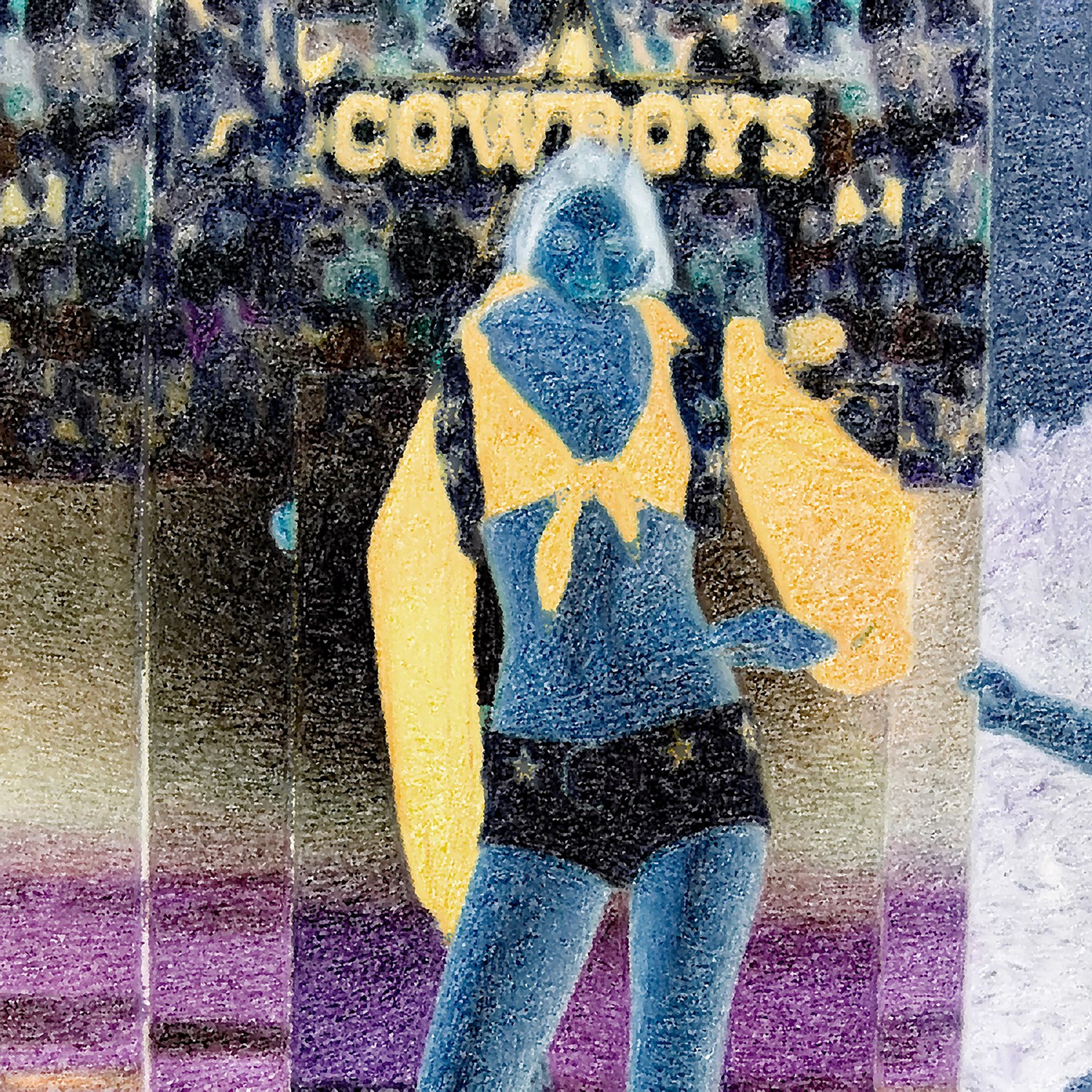
People Love the Dallas Cowboys Because They Want to Love Themselves artwork by Genevieve Poist
Genevieve Poist fronts the Austin-based project Virginia Creeper, who after a few years of writing and touring, have finally released their long awaited debut record People Love the Dallas Cowboys Because They Want to Love Themselves. Beginning as a solo endeavor, Virginia Creeper has since become a cavalry of creatives – familiar faces out of the music scenes from the American South that have contributed to a wide range of beloved indie recordings and touring acts. As a whole, the album plays with a witty liveliness, finding its own pacing amongst memorable hooks, expansive instrumentation and charming stories of personality and community, establishing the core repertoire that Virginia Creeper has worked to compile over the years. But to Genevieve’s efforts, this project has become a force of understanding, where each track is a composite of both presence and perspective within the song’s lasting life and the people behind its creation.
We recently caught up with Genevieve to discuss the new record, what it means to love yourself as well as the Dallas Cowboys and the act of finding and keeping the lore within art.
Photo by Tommy Reed ft. Aaron Zachary, Aaron Arguello, Marshall Pruitt, David Stimson, Genevieve Poist, Mason Parva, and Rosie the dog
This interview has been edited for length and clarity
SR: A lot of these songs on this record were written a handful of years ago. Can you give me a rundown on the timeline of making this record?
GP: The earliest songs on the record were probably written in late 2018 and into 2019 when I started playing with my friend Aaron Zachary (former Virginia Creeper member), and then at the end of 2019 is when we were thinking of recording a lot of these songs. But as everyone knows, we were supposed to start recording that weekend when the world shut down, so essentially that stretched and changed everything and we ended up writing and recording over 2020 and 2021, primarily at different intervals, so I would guess it was over four years.
SR: So now that these old songs have finally gotten to see the light, some in which you have said marks a special time in the VC lore, in what ways are these songs representative of that time and are there moments in which you see you and the band growing with these songs?
GP: Personally, for me as a songwriter, a lot of the subject matter that I was writing about or processing had to do with my mom passing away in 2019, so a lot of these songs, and even if it wasn’t directly about that by any means – the images and experiences – you know, were really concentrated in that universe. When you experience loss, you’re kind of writing about that forever, so I don’t really think that that’s necessarily going to change. But I do think that it was a very fresh and interesting place to be in relation to that event. And then, as a band and group of people working together collaboratively, the years around making this record were the first time a lot of us met, and not only began making music together, but even became friends. It kind of forged this musical and creative community that we have now with the current Virginia lineup, and then some other friendships and other musical projects that have come out of that. It was really unique and interesting to reflect back on how the different threads were woven together in that moment, I was trying to pay homage to whatever that was.
SR: Can you tell me about the rotation of characters that make up Virginia Creeper? How did this lineup come to be and do they influence the songs you write?
GP: Before we started the process of writing and recording this record, Virginia Creeper was sort of just me, and then different collaborators that I had worked with at different moments in time throughout my life of making music under that moniker. But now, Virginia Creeper is very much a band, with the people that are in it, and then sort of this little rotating group of people that we’ve recorded with that are still playing with us sometimes, as well as just friends that were on the record. That for me was essentially the first time that I was collaborating with a group of people on stuff that I had initially made in private or independently, which was a really informative experience – definitely very positive and fruitful for me. I have always liked music because it’s an art form that is inherently collaborative. Whether it’s an audience, or you and other people, I feel like this is one of the first times that I really was living what had appealed to me.
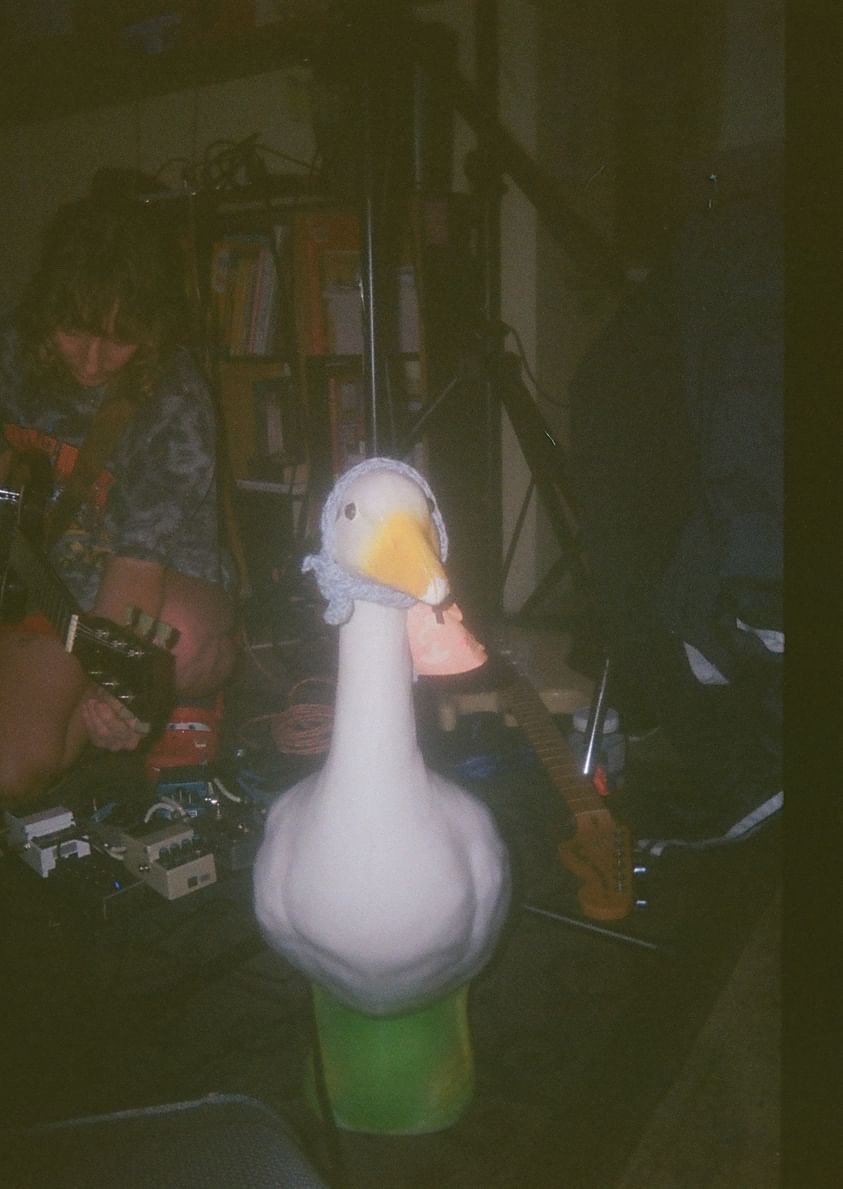
Virginia Creeper live set goose named Ginny (taken by our friend Giovanni Ventello)
SR: Did there come a need to document or preserve that time of your life? And in that case, how did you approach that type of preservation of feelings and memories through your music?
GP: I like this question because I feel like I am almost problematically obsessed with preservation and documentation. I definitely feel like a lot of my compulsion to create comes from an impulse to record, keep, or preserve a memory, especially with memories that seem really significant to me that are very vivid, but are maybe not accessible – maybe the other people that have lived those memories aren’t present anymore to reflect upon them with me, or maybe the memory itself is actually really sort of niche or minor. But for whatever reason my emotional connection to it feels really strong and I am really motivated, or compelled, to write those down or make something out of it through a song or other art forms. That is a big driving force for me, which also extends into other aspects of my life. My friends are always making fun of me because my phone doesn’t have any space on it, because I have like 40,000 voice messages and 50,000 pictures and I don’t delete my text messages, so there’s a physical reality to that issue as well. I have so many sentimental little objects that are probably considered trash by most people, but all of that to me feels really important to living life.
SR: Yeah for sure, and on a personal level, this record revolves around some very intimate feelings of grief and identity. What have you found yourself embracing when bringing new life into these songs while also having the time to now grow with them before they were released?
GP: I think a lot of the delay in releasing the music, I mean, it did take a long time to finish it, but then there was this time after the fact where I was grappling with like, ‘oh, this doesn’t seem to be a good representation of who I am, or who we are artistically right now’, and we were asking, ‘should we even release it?’ I don’t know if the rest of the people in the band felt as strongly, but you know, I think just by nature of me having the most familiarity with those songs, I think it was just harder for me to deal with it. And then when finally releasing the record, I didn’t really listen to the songs for a large period of time, and once it was released, revisiting them and talking to people about them kind of gave me this cool sort of bookmarking, like, ‘okay, we did that.’ And now you can kind of see, at least for me, how we got over here, and it’s nice to have this sort of thread that’s a visible record. I think it gave me an appreciation for being able to see a process and sort of have experience to think, ‘oh, I don’t know if I like that’, but then think, ‘okay, actually, I can see it with this removed lens to where I can appreciate it at a distance from myself a little bit.’ It feels nice.
SR: Is there a different direction you’re thinking of going with your songwriting or are you just talking mainly about your emotional connection when you say it doesn’t feel like an accurate representation of where you are right now?
GP: I think more so kind of just the sonic palette or genre. The music that we’re exploring as a band, and in a really reductive or simplistic way, those songs on that record and the music that I had released previously, a lot of it came from writing in a sort of limited space either by myself or not being able to be really loud. Since the time of that record’s creation, writing with the band and being able to play together resulted in different sonic terrains that we’re exploring in terms of being louder, or just having different clothes that it’s wearing. It’s not really that crazy different, I mean, we play with different bills now, but I don’t really think it’s that wild.
SR: So no glitch pop for Virginia Creeper?
GP: Well [laughs], we do play some various types of glitched beats in our live sets right now, but it’s not really glitch pop, it’s more just like a weird sample from the Internet that we manipulated and made sound weird. But who knows what’s next?
SR: “People Love the Dallas Cowboys because They Want to Love Themselves” is obviously a very intriguing title. Being from Texas yourself, what was the inspiration for this phrasing and does this title ring true in your own life?
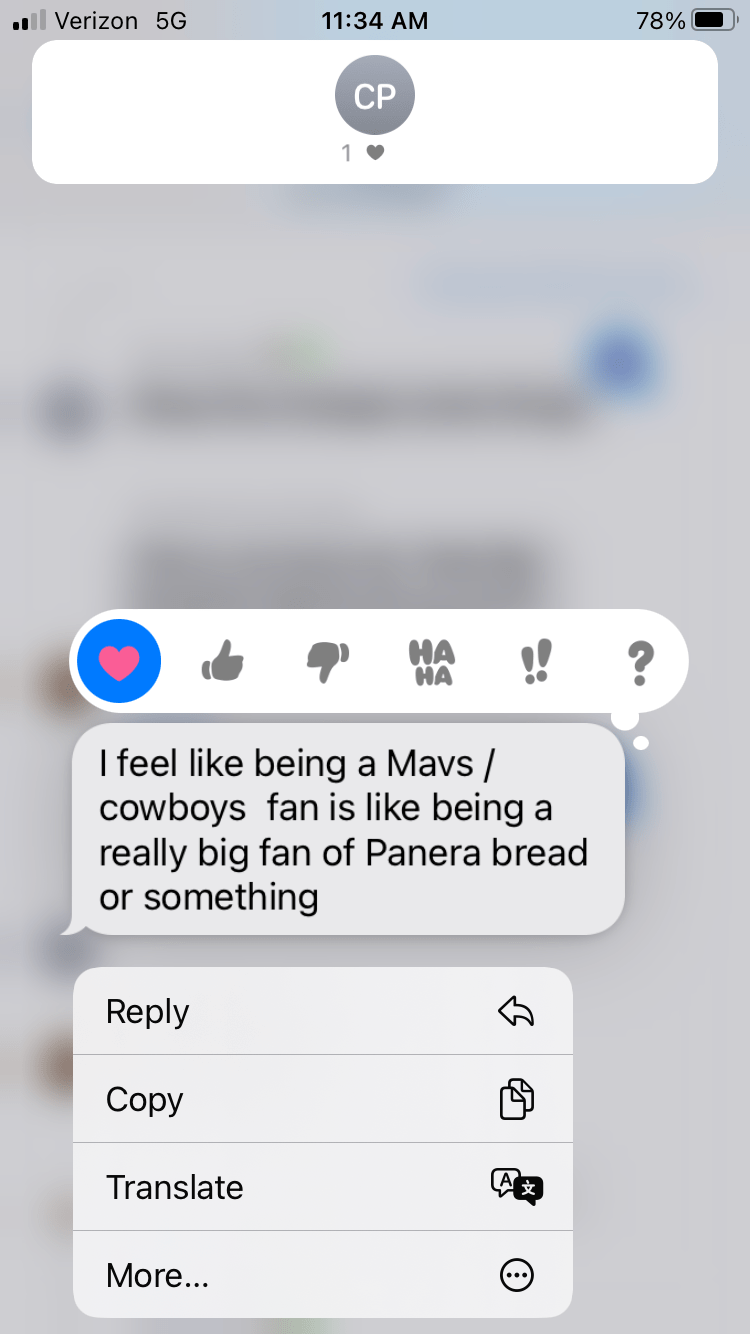
GP: Okay, first of all, I have a prop. I had a birthday party this weekend, and my friend Jason, who is basically where the phrase “people love the Dallas cowboys because they want to love themselves” came from in a conversation we were having once several years ago via text, he gave me this book for my birthday paying homage to the title, so I can’t wait to read about the outrageous history of the biggest, loudest, most hated, and best loved football team in America. The phrase is kind of about how people place a lot of their personal identity and self-worth in the things that they like, sort of why we have stan culture, where people get personally upset if you critique something that they’re interested in – that phenomenon is just really interesting to us and we’re trying to figure out why we do that and if it has intensified recently. Well, Jason and I were talking about how the Dallas Cowboys are sort of emblematic of that notion. Anyways, I’m not a Cowboys fan, so I like to antagonize Texas sports fans, especially football.
But to your second question, I do think it’s true. I think most things that we love, we are loving because we’re wanting to be like them or we are seeing ourselves in them – it’s somehow connected to wanting to love ourselves or receive love ourselves in a way. So I do think that that is a true phrase, right now at least, but I’ll report back as time passes if I think differently.
SR: You just finished a super brief tour recently? Was it the World Series themed tour?
GP: Yes it was!
SR: Not to keep the conversation on sports, but what a bummer that series was. What was that?
GP: Dude, I know. We joke that half of our songs that we play now are about baseball, so we’re always saying we’re a sports band. But yeah, it was such a bummer. Kyle’s really into baseball, and the rest of us have kind of embraced it when we’re all together. Yankees vs. Dodgers to begin with, is kind of the most lackluster series, and then the way that the series played out wasn’t even exciting, so it was kind of a downer.
SR: You recently helped put together a compilation album called ATX x AVL with Love made of all Texas artists benefitting Hurricane Helene victims in western North Carolina. How did that compilation come to be, especially coming together so quickly?
GP: Well it started with Lindsey Verrell of Little Mazarren. They are always joking that they are self described ‘not good at the Internet’ [laughs] even though they’re way better than they think they are. So, they texted me with this idea, presented what they wanted to do, and then I sent out a call to as many people as I could think of that would be down. I think we messaged people on Thursday or Friday, and then got all of the submissions by Tuesday morning, and then it was like a one week turnover which was awesome. I’m always kind of nervous asking people because it is kind of daunting to either record something new really quickly or find something and make sure you’re okay with putting it out. But people were super generous and excited about it, which was awesome. I’m continually very inspired by how active people are, whether it’s for Palestine and doing things to raise awareness and protest the genocide that’s happening, relief for the hurricane, or even a few years ago with a comp that we put something on for abortion access when a lot of that stuff got restricted. People’s industriousness and just willingness to do so much when most artists aren’t even making any money from the base level stuff that they’re doing – and then adding this on top of it – it’s just really inspiring.
SR: I am such a fan of very niche concept compilation albums. I know that Toadstool Records just put out one that was all Beach Boys covers.
GP: Woah, that’s so cool! There’s just so much stuff that reminds me of how just much fun and play there is in making music, or any type of art for that matter. It’s all just a fun art project with your friends or people you know, and I think there’s such a pressure to make stuff so streamlined and presented and packaged in a certain way because of how stuff is right now, but anything that is deviating from that, or just like existing for the sake of existing because people wanted to do it, is just really refreshing.
You can purchase People Love the Dallas Cowboys Because They Want to Love Themselves here as well as stream it on all platforms.
The Fruit Trees is the moniker of California songwriter and multi-instrumentalist Johnny Rafter, who upon releasing his debut record Weather in 2023, quickly followed it with We Could Lie Down in the Grass, the hour-long, 24 track sophomore record that rang in the end of summer this year.
Although these tunes feel worn in, The Fruit Trees, and Johnny’s writing in that case, is still a rather fresh journey, but also one of exposure and accessibility – a place to step in and step out and come back around much wiser. Like a small collection of bugs, gently caught and kept in a rinsed out pickle jar, We Could Lie Down in the Grass captures and culminates curiosity towards the most minute details that surround Johnny’s day-to-day. As the glass tinkers and buzzes with life, experimental folk voicings playing amongst warm melodies and memorable structures, this little ecosystem grows with each additional moth or pill bug – each witty one-liner or field recording – as these songs become part of a much larger story.
Through email correspondence, Johnny took the time to answer a few of our questions about We Could Lie Down in the Grass, finding placement in his changing world and embracing all bits of creativity.
Photo by Hannah Ford-Monroe
Shea Roney: We Could Lie Down in the Grass is your second album in just a little over a year. In what ways do you find comfort in your writing process that you can still rely on, as well as where did you find yourself changing course and trying something new when compared to your process on Weather?
Johnny Rafter: My writing and recording practices sort of feed into each other. Usually I find some chords and see what feelings or images they unearth. That leads to maybe a word or two, and then the lyrics spiral out from there. I find it awkward to write words separately and just sing them over chords. It’s nice to feel like the words sort of blossomed out of the music and it feels better to sing words like that for some reason…
My writing seems to naturally go towards simple language, the passing seasons and my own blurry sense of the inner and outer world. Working alone, it can be challenging to record songs in ways that feel organic and have a sense of performance, but I tried to strive for that this time. My lack of musical understanding and skill makes mistakes and messiness inevitable, so I try to embrace it and allow things to be loose.
This time I was a little more competent at recording, so I spent less time digging through the internet trying to figure out what compressors do. There was more of a leisurely flow to the work… I think that helped me access more resonant ideas without getting tripped up on technical stuff… It might be worth saying that my first album Weather was my first time writing songs and recording, so it’s kind of a messy testament of my own learning and curiosity about songs and recording. This new album was a continuation of that but with a little more confidence and momentum. I think the songwriting on this second album is more potent and direct.
SR: We Could Lie Down in the Grass is a rather extensive project, 24 songs and running over an hour long, yet still flows naturally amongst themes and sounds that create a welcoming and unique environment. What do you think this album was able to accomplish in part due to its length?
JR: I’m glad that it comes off as cohesive! And has a flow to it… I didn’t really think about the length… It was just— “Well these are all the songs that came to me over the past year”. It would’ve felt strange to release them separately or never at all. I think it’s good to just release stuff so you can move on and not overthink it. I’ve been trying to embrace “good enough” and “might as well”.
I’ve tried to make writing and recording a casual part of my daily life. Something lightweight I can work on at home after work and on days off (I was inspired by Kieran Hebden’s approach “good music is about ideas not gear”; also I heard the poet CA Conrad suggest trying to write poems at your job— fitting it into the reality of your life and not waiting for some ideal situation). The advantage of that is you can make a lot of work, even if the production value might never compare to studio recordings. I think of the songs more like drawings in a sketchbook or collages — something handmade and imperfect. So this was just a longer sketchbook.
I tried to interweave the lyrics with images, ideas and words across the different songs. At some point I started to see the whole album as one long text, so it made sense to have the songs speak to each other. With the length, I was able to explore lots of approaches to making songs and just try lots of fun stuff. The process is the good part for me, though it’s cool when the fog burns off and you get to look back at everything you made as a whole. Some people told me to cut songs, but honestly it didn’t feel like it mattered. For my own emotional wellbeing, I need to stay in a 100% hobby mindset and put zero pressure on myself. So there’s no right way to go about things. I’d just like to keep writing songs as a lifelong practice/process and be unfettered about it and see where it goes.
SR: The Fruit Trees is taken on as a mostly solo endeavor, although you worked with a handful of others to complete this record. Where did you find your vision for this album enhanced by the people who helped work on some of the parts? How is that different from going fully solo to you and your creative vision?
JR: When I started a few years ago, I didn’t know anyone making music, and I’d never been part of a music scene or anything like that. So just out of necessity I recorded and mixed myself. Naming it “The Fruit Trees” was in hopes that it would turn into more of a collective situation. The hope with the first album was that maybe if I made something interesting enough it would help me find people to make music with.
Luckily that’s been my experience— The songs sort of feel like magic spells or beacons that have brought me closer to people after a pretty lonely chapter of my life. Over the past year new friends and bandmates have sort of come into my life in a beautiful way. I think that’s an awesome thing about sharing your art even if it’s on a casual local level, it opens up life a lot.
But yeah, the collaborations so far have been kind of light, and my intention is that future albums will have deeper collaborations. My awesome friend Ben (who plays bass in our band) and I have a really close friendship that’s slowly turning into a deeper musical collaboration. I’ve realized you can’t rush these things. I think it has to be based in friendship and trust, and also you gotta work with people who make you laugh!
SR: There are a lot of instances where you piece together field recordings, almost making this album sound like a found footage video of the world around you. What did setting mean to you when piecing this album together? Were there any throughlines that you tried to build through themes and environment?
JR: I definitely hope to create some sense of an environment or a space— like an album as a place you can go for a while. For this album I imagined an old house and the songs were in different parts of the house like the kitchen and the yard and the porch and the attic. Some of the songs are down the street.
One way I felt like I could have the world permeate the songs was to include some field recordings from my life. Like opening the windows and letting the wind blow in. I love sounds… Like just sitting in the park and hearing the different sounds— the wind, the birds, the engines, the voices and the ways those are perpetually changing and interacting in new ways. The surrounding environment is sort of always bleeding into my inner experience (or maybe it’s the other way around?) and so I think I try to create a similar sense in my recordings.
SR: Each song feels like its own moment that can be expressed in a million different fleeting feelings, yet your writing is so concise in its expression. Were there any stories or feelings that you found difficult to articulate when writing, and did fleshing them out through the process help define their meaning further in any way? What were some of your favorite stories to tell?
JR: It feels risky to write sincerely and simply. That feels scarier to me than ironic distance and wit, but possibly more important nowadays… That being said, I hope to find a sense of whimsy in the songs, so there’s heaviness and levity happening at the same time.
Honestly writing songs is also just so cathartic and fun, and it does help me make some meaning of my confusing little life. I hope to not only write from that therapeutic place but also imagination and humor and things like that. Not just about me and my turbulent inner life but also about how wonder and pain-filled the world is.
The song Collar was a favorite— it was based on a neighborhood dog I saw that wasn’t looking so good. I was really worried about it, and this little story from the dog’s perspective appeared in my mind. To me it feels like a fairytale or a fable or like a tarot card which I like. I hope that dog’s okay.
Photo by Hannah Ford-Monroe
SR: Continuing, the articulation of singular moments, the feelings and images that you bring a focus to, are often moments overlooked that hold a sense of beauty and an edge to what it means to simply be alive. Do you find that there is a consciousness in your creative worldview that embraces this simple beauty, or does it come from some sort of disconnect that needs to be tied together again to build that clearer picture?
JR: That’s cool it comes across that way. I think perhaps it is branching out from whatever my worldview is and from the way I try to live— appreciating smallness and the mundane everyday life stuff, paying attention to my senses and how we don’t really need that much to be content. How the best things are simple like sharing time with people and eating food, or playing frisbee. Joy is always there underneath. But I also go through waves of horrible feelings of loneliness and disconnection, dissatisfaction, fragmentation, grief, separation, shame… I guess the interplay of those different states creates a lot to explore. There’s a lot of paradoxical things to hold all at once, and I think songs are good for exploring that.
SR: There is an element of timelessness that floats through this record, both in style and writing, that a lot of people gravitate towards when they listen to your music. Do you find any sense of preservation in your work, whether that be of memory, stories, people or places? And if so, do you personally feel a need, or an obligation, to make something that will be long lasting?
JR: Honestly I don’t think about making things long lasting. I guess some people want to make art or achieve greatness or whatever so after they die there’s something left of them? I don’t really care about that, and it seems like a sick pressure to put on yourself. I remember a line from the Tao Te Ching that was like “To live as long as you live and then die is enough”. Plus things I make don’t really feel like “me” anyways.
But on some level I guess I do see it as sort of residual evidence of who I was, what I felt, what I saw, where I was, etc. I think I fear wasting my time, not in a productivity sense, but not living fully enough— dissociating and missing the actual details and reality of my life. Maybe making songs is a way to help me pay attention and ask questions, and a way to stay a little weird. It sort of feels like gathering a bunch of small beautiful things into a basket and then leaving it on a friend’s doorstep. I just enjoy the gathering and the giving… It does seem like an interesting experiment to sustain this as a lifelong practice and then get to look back at all these words and sounds. A lifetime of music and poetry!!
SR: What’s next for The Fruit Trees?
JR: Waking up before dawn; time in and around bodies of water; playing more shows; I’m gonna go see Simon Joyner next week; also Agriculture; an ambient/instrumental album is almost done (a collaboration between me and Ben); two more albums in conceptland— one is a full band sort of indie rock album and the other is a classical guitar based album in a tuning I made up that I’d like to record somewhere with snow; lots of biking around, soaking up the sun and getting as silly as possible; making lots of soup; a small Pacific Northwest tour with our friend Ash’s band Swinging next January; doing chores; baking bread.
You can now purchase cassettes of We Could Lie Down in the Grass via Jon Shina’s label, Flower Sounds out of Greenfield, MA. Find more of their releases and curations here.
Written by Shea Roney | Photos by Hannah Ford-Monroe
Today, Brooklyn-based singer-songwriter Avery Friedman shares her long awaited debut single, “Flowers Fell”. Having frequented bills with artists such as Sister. and Dead Gowns for the past year, Friedman has consistently left an impression on those that have caught her sets, oftentimes performing solo, creating a space in which her vivid imagery and tender melodies greet new ears with welcome and understanding. Produced by James Chrisman (Sister.) and with contributions from Felix Walworth (Told Slant, Florist), “Flowers Fell” plays to the in-between moments as Friedman defines new beginnings.
Photo by Mamie Heldman
“Flowers Fell” begins in a reverberated haze, rearing guitars and diluted vocals hold their breath, awaiting that very first line that Friedman drives out— “The flowers fell off when I was asleep / But it’s okay ’cause now its all green” — blindsided, but not disappointed. Soon the chorus becomes definite, Friedman’s vocals wield both strength and tenderness as the melody leads with its whole chest and instrumentation follows in a potent groove. “How long can you mourn for something that was always supposed to blossom into something stronger?” Friedman asks in a statement — a combination of both grief and vitality. As the song begins to close out, the ghosts of distortion and the swarming of sonic fixations underneath begin to blend, holding the surrounding static accountable as a full picture begins to clear up.
“Flowers Fell” is accompanied by a music video, directed, filmed, VFX, and handwritten lyrical text by Nara Avakian. Watch it here.
You can stream “Flowers Fell” on all platforms now.







 the ugly hug