Every Wednesday, the ugly hug shares a playlist personally curated by an artist/band that we have been enjoying. This week we have a collection of songs put together by LA-based artist Izzy Hagerup of the project Prewn.
Following the release of 2023’s debut LP Through The Window, Hagerup has just announced her follow up album titled System, out October 3rd via Exploding in Sound. The music that comes from Prewn is as deliberately harsh as it is instinctively beautiful. Through The Window bound together lush textures and open spaces by building trusting relationships with dissident sound structures and absorbent lyricism. Prewn’s pulse continues to pump with the release of “System”, the first single off the upcoming album and accompanied by a music video directed by Sophie Feuer.
“System” opens like a cold sweat, where thick, briny strings dribble down like beads; dribble farther down your face than you would often allow before wiping away. It’s a moment that feels stuck in time, one that deliberates between peace of mind and a piece of mind that can’t quite fall into place. As the strings begin to take shape, offering a counterbalance to Hagerup’s melodic fortitude, you want to say that it sweeps you up into a dream-like state, but this is real life, and she knows that. The song soon breaks off as Hagerup belts, “just give your life away”, a chorus of searing words that give voice to the internal conflicts between mental struggles and the buttoned-up expectations that are often placed on us. It’s a stunning track that builds upon frustration with such intent as Hagerup’s singular voice becomes the benchmark for retainment and release, slowly bringing us back to that same moment of stillness from which we began.
About the playlist, Hagerup shared;
“Some songs that I’ve come back to again and again over the years”
Listen to the playlist here;
Listen to System here!
System is set to be released October 3rd via Exploding In Sound. You can pre-order the album now as well as on vinyl.
The Fruit Trees has been the recording project of LA-based artist Johnny Rafter for a few years now, just releasing We Could Lie Down in the Grass at the tail end of 2024, and a handful of one-off bandcamp-only recordings since. The most recent Fruit Trees album, titled An Opening, stands out in more ways than one. First and foremost, Johnny brought in friend and visual artist Hannah Ford-Monroe as lead vocalist and lyricist for the project. But An Opening finds its footing not solely within a new collaborative set up, but one that embraces the most instinctive feelings that came from the pair in a single sitting.
Described as “lightning in a bottle”, a night after the Dodgers opening night in LA, An Opening was written and recorded within a 3-hour sitting after a long day of work for both Johnny and Hannah. When no one else showed up for Fruit Trees practice, the pair set out to work on some harmony parts, as this was the first time Hannah had ever taken a stab at singing outside of the privacy of her car. Frustrated and tired, what came after was an unconscious flow of sweet, delicate melodies and open lyricism from Hannah, riffing on the warm, flourishing guitar voicings that Johnny plays with ease.
These songs flow out like an old fan; methodical, but slow in its rotation, bringing weight to the moments of pleasure and relief when that breeze finally hits your direction. Lines like, “I’ve got band-aids on my knees, I got them climbing trees, they have a face that looks up at me from a cartoon I haven’t seen”, are beautiful simply in their deliverance, especially considering being Hannah’s vocal debut. But beyond that, just the sheer coincidence that these images, these stories and these melodies managed to squeak out of her brain at that time, following Johnny’s worn-in directional paths, is worth a patch of momentary reflection at the very least. But rather than ask under what circumstances brought it out of them, circling the ever-shifting drain that is the subconscious, it’s easier to point at the amount of trust that blooms between both Johnny and Hannah, and the lengths at which their creativity will allow them to travel. These songs are rough, and rather imperfect (as the duo would say themselves), but that’s what makes An Opening such a beautiful anomaly. It’s an unintentional collection, placing Johnny and Hannah only with each other and what was around them, and deep down, trusting that that simple breeze will always turn back their way.
We recently got to talk to The Fruit Trees about trusting each other, leaning into imperfection and how An Opening came to be.
This interview has been edited for length and clarity. We could have talked about baseball and sandwiches from Larchmont Wine and Cheese for hours.
SR: So really you two had no intention of making an album together?
Hannah Ford-Monroe: Absolutely not! [laughs]
SR: But here you are. I know this was all recorded one night after a shift at opening night at Dodger Stadium, but how did this idea come to be?
HFM: It was the opening day, so it was really busy, but you know, it’s the best job ever and I love it. But there was Fruit Trees practice that day, and I was getting off by 9ish, and Johnny lives right down the street from Dodger stadium.
Johnny Rafter: I had recently asked Hannah to sing harmonies in The Fruit Trees, so we were practicing older songs, working out the singing parts. That was really the only intention we had at the time.
HFM: Singing is still very new to me, so it’s not super natural for me to just sing a harmony part.
JR: We’re not trained musicians, so with harmonies, it either clicks or we could sit around forever trying to figure out.
HFM: I just wasn’t getting it right. I was just tired and it wasn’t hitting. And then Johnny was like, ‘do you want to just try writing a song?’
JR: Something like, ‘I’ll just make up guitar stuff, and you can freestyle over it for fun’. We had the mics set up because we had been singing through them, so I recorded it having no idea how it was gonna sound.
HFM: So Johnny would work out the guitar for like a minute or so, and noodle to find some chords or a riff, and I would listen as he was doing it, and then he would just hit record and start playing and I would just start singing. And that’s what you’re hearing on the album. Afterwards I had no recollection of what any of it sounded like.
SR: That’s insane! At any time during this session did you think to yourself that this may be something? Or did the realization come afterwards while listening back?
JR: At first I thought maybe we’ll come up with some ideas to revisit later and work into songs. But then midway through the initial recording session, I realized something special was happening— To me her voice is so beautiful and timeless and I’ve heard her sing in the car, and that’s why I asked her to join the band…
HFM: [laughs]
JR: And she’s my best friend, so it’s easier than finding some random person on Craigslist to sing with— but yeah halfway through, I realized what was happening was really beautiful.I was holding my breath for each song just thinking… ‘don’t mess up the chords’! [laughs]. Just keep going, let her do her thing. Then we’d get through the song and I would exhale. We wrapped it up at like one or two in the morning and I stayed up for three more hours listening through everything. I sent it to her that next morning like, ‘Hannah!!!’
HFM: It’s funny, because in my head I was like, ‘I don’t know’. You know? You know, I don’t know [laughs]. We were both so tired and worked all day, so it was this really special thoughtless, go-with-the-flow kinda state. And when you’re in a go-with-the-flow state it’s hard to gauge whether or not it’s actually good. When he first texted me the next day, I was afraid to listen to it. I haven’t really done music stuff. I don’t really know what my voice is yet. It’s kind of mysterious to me. But it really just simply appeared. One day we didn’t have an album, and then the next day we did.
SR: Johnny, when you were listening back, thinking of adding more parts to the recordings, how much did you try to honor what you recorded in that sitting?
JR: Luckily I had a few days off of work, so I spent them doing all the overdubs– mostly drums and harmony stuff. I tried to carry the same spirit– first idea, one or two takes. I tried to not overthink and trust that energy. I didn’t want to overdo the production because it felt like a special, small thing, like you’re there in the room with us as it was happening. It sounded sort of mysterious, and I didn’t want the production to take away from Hannah’s voice. I wanted that to be the focal point.
HFM: But with the whole timeline, we were both really exhausted after work, putting us into a state with my voice sounding like that after a day of talking and yelling, and then just the coincidence of our work schedules…
JR: If one little thing was different, like if one person showed up to practice, we probably wouldn’t have done this. It was so beyond our own intentions. I felt like we should just put it out in this form. It just feels special, even if there’s a lot of imperfection to it, maybe because of that.
SR: What’s your relationship with imperfection?
HFM: I like to draw, and taking it seriously is not the right approach for me. I feel like everything I’ve ever made that I’ve liked, for the most part, has been thoughtless, and just moving my hand without thinking about it. So for singing, I feel like doing it this way was the only way for me to start doing it. I’m not really the type of person who can sit down and really plan something out, and if I had tried to sit down and write a bunch of lyrics and melodies, it wouldn’t have turned out like this. I enjoy doing something just because, you know? Of course art’s not perfect. Nothing’s perfect. You can find an imperfection in everything. So why not just not care at all, and just be like, ‘yeah, that’s what I did. And?’ What does perfect even mean?
JR: Accepting the imperfection is the only way I can do it. I’ve always tried to embrace whatever happens, not trying to get a certain sound, and just sort of working with what is in front of me and what I can do with limited abilities versus trying to make something that’s technically perfect or something. A lot of the art and music I like looks and sounds kind of messed up. Homemade stuff especially, it feels so personal.
SR: Taking away from the noodling on guitar and riffing lyrically, what sort of things were you trusting in the moment? What was coming out that you wanted to follow?
JR: I think we both had a lot of pent up emotions, and it was just this emotional outpouring. It seems you weren’t like, ‘I want to write about this or that’. You were just kind of going wherever your intuition led. And for me, with the music in that moment, I tried to vary the structures and the tone of the songs. I feel like I would set the tone and then Hannah would build off of it.
HFM: Yeah, as Johnny was playing, I would be thinking about something, in general, to start off in a direction. And then it would just kind of… honestly, who knows where it came from? I was just kind of riffing off of Johnny. Maybe my brain would be like, ‘Okay, what rhymes with that?’ And then sometimes I was thinking about things that had happened recently or I would look at stuff that’s in Johnny’s practice space. I was thinking a lot about strings because there’s a lot of cables. As we kept recording, themes just naturally reoccurred. Like, now that word is in my brain, so when I can’t think of anything else, that’ll be the word that fills the space. It’s funny because when I was listening back, I talk about dreams a lot, but I don’t even really have very many dreams. I’m not a frequent dreamer.
JR: But life is a dream!
HFM: [Laughs] I don’t know, it’s like, how the heck did that all happen?
SR: As you’re parsing through these recordings, touching upon these feelings of silly or sad, were there thematic through lines that began to pop up?
JR: It’s almost in the exact order that we recorded it in. I think, kind of unconsciously, that I was trying to make an album. I was thinking, ‘well, if this was an album, what would be cool after that last song?’. That’s why it ended up flowing, I was trying to direct it in a certain way, and it all kind of fell into place. I can’t really speak for the lyrics.
HFM: I mean, I can’t either! [laughs].
JR: When I listened back, it felt cohesive. Like the songs sort of speak to each other in a way. There’s a lot of nice imagery and threads running through.
SR: The subconscious had a field day that night.
HFM: I think the last nine songs we recorded are all on the record. We just got into this flow state. And you really can’t think about it because you don’t want to lose it. It’s thinking about stuff that kind of gets in the way, you know? I can’t speak that much about music, besides this. What do I know?
JR: Instead of first thought, best thought, this felt like no thought, best thought.
HFM: Woah!
JR: The only thing in my life it reminded me of was last spring when I found a butterfly on the sidewalk on a super windy day. It was gonna get stepped on because it was hurt, and I picked it up and I walked like four blocks to my house, cradling it in my hands, trying to shelter it from the wind. That’s how it felt when we were playing. I was like, ‘Oh, my God! It’s such a delicate, beautiful thing. Don’t crush it!’
HFM: Dang!
JR: It was super emotional for me, listening to her sing and hear these melodies and words. It was just so moving. And then the whole weekend when I was recording, I would be alone recording the drums or something, and I would just start sobbing!
HFM: Johnny really hypes me up. I’ve always really liked to sing in the privacy of my car, but I’ve always wanted to write songs. I don’t play any instruments or anything and I don’t know how to make music at all. So Johnny inviting me into something that he does has meant a lot to me, because I couldn’t on my own. I needed someone else to invite me into their world. I’m grateful to Johnny for that. Honestly, I was really afraid when I went back to listen to some of the songs after. I didn’t want to listen to my voice, but I was surprised by how it came out. Even Alex [Favorite Haunts] asked me if Johnny pitched it up. I was like, I don’t think so [laughs]! I feel like I still don’t really know what my voice is, because I haven’t made anything before, so it’s been a fun surprise.
SR: How are you sitting with them now? Have you gotten over that fear of hearing your voice?
HFM: After listening to it a couple times, I feel more comfortable with it, for sure. I think it’s probably something that a lot of people feel when they first sing on something. I’d say there’s some nerves of like, ‘Oh, yeah, anyone could just listen to this’, but it’s fine. I feel more comfortable with it. I wouldn’t say I’m confident. But we made this album and we’re gonna put it out and just try not to think about it too much. Because, like I said before, that’s never really gotten me anywhere.
JR: I think sharing your voice is maybe one of the hardest things to do creatively, because it’s your physical body. There’s nothing you can do to change it, so it definitely takes some courage. I’ve felt similar things when sharing songs, but it goes back to the imperfection thing, it’s really just like, ‘this is what I can do’. I could either never share it with anyone or just put it out and move on with my life.
You can listen to An Opening out everywhere now!
Written by Shea Roney | Featured Photos Courtesy of The Fruit Trees
Today, LA-based group Marguerite has shared with us the new music video for their song “larger now II / current”. This song sits as the endcap to their most recent EP things we found released back in 2024 via partnering with Pleasure Tapes. The music video for “larger now II / current” resembles a narrative based on singer and songwriter Katya Urban after she traveled back to her hometown of New York City. Finding a bike on Randalls Island, Urban then bikes all the way to the other side of the city to Coney Island, bringing light to growth after grief and how presence and memories can be intertwined in the process.
“You should know I’m larger now I’ve come to see / Even when you’re far away you’re here with me” lingers with a commanding vulnerability as “larger now II / current” plays with a steady hand, showcasing a band that can utilize both harsh tones and layered textures as Marguerite pushes forward with thought out and enduring melodies. But as the song breaks off, following a timeline set between two distinct markers, where she is now and the memories that she holds close, Urban and co. play to the tension and release of those two ends as they are being pulled closer together with each searing guitar and dynamic intuition.
About the video, the band shared, “throughout her journey, she is followed by a larger projection of herself on the horizon, literally “larger now” than her current self. When she completes her journey, she is greeted face on by the large version of herself and she settles on the sand to reflect and surrender to the water. By revisiting familiar places tied to different moments in her life, she comes back to herself and finds solace in her surroundings, despite navigating grief. This video is an ode to her late father, who taught her the great gift of how to ride a bike on Randalls Island, and the city that shaped her early life.”
Watch the music video for “larger now II / current” here!
You can listen to things we found out everywhere now, as well as order a cassette tape via Pleasure Tapes.
There are elements within our environment that operate through layers of chaos. But it needs to be clear that chaos isn’t innately ugly, and as a matter of fact, Favorite Haunts continues to prove with each release that chaos can be an inherent source of comfort to an individual that finds themselves in the middle of it all. The way we look at a colony of ants from our height appears chaotic, yet functions as a collaborative and productive society that takes care of all. Chaos can be the inner workings of a kitchen, preparing the most lip-smacking food you’ve ever had, made at the hands of a sweaty, rag-tag team of chefs and line cooks working between smoke breaks. Chaos is the collection of noises, the rustling of brush, a dealer’s choice of bird species and the wings of a bee making acquaintance with your ear that orchestrates your favorite natural sceneries. But it’s in this chaos, when you take the time, where you can define the many happy accidents that create something that has never been experienced quite like this before.
Favorite Haunts is the recording project of LA-based artist Alex Muñoz, who has been releasing art under the name since his initial recordings back in 2020. With an extensive collection of albums, including some from the Favorite Haunts Sewing Circle (a live group configuration of LA creatives), Muñoz makes an effort to build a unique life within each collection of sounds that he discovers, honoring each happy accident as if they happen for a reason. Favorite Haunts recently released their latest album titled Floral Pedal, finding Muñoz sharing his most reflective and collaborative piece of work to date. After finding a floral designed loop pedal, “covered in a thin layer of dust and weighing as much as a brick”, the way in which this pedal opened up new layers of understanding – what are the stories from which these sounds may have been coming from – became strikingly influential to Muñoz throughout the process.
Floral Pedal is a beautiful collection of recordings, building little intrinsic settings from found samples and intuitively formed instrumentation. It’s also a strikingly intense album, not in any kind of sonic display, but rather from the strength of presence, following an individual’s ever shifting connection to the environment that surrounds them. It’s a meeting of ghosts, the old and new relationships in our lives, of indescribable beauty and momentary memorial lapses. Even the thin layer of dust becomes a lens of discovery into a different place – who we are and who we may be if the bigger picture was as easy to shift as the dust that we hold – that even our existence itself is a happy accident worth celebrating.
We recently got to talk to Alex Muñoz about Floral Pedal, discussing how the record came to be, finding inspiration in whatever is around you and embracing the magic that is right in front of us.
Tell me about this floral loop pedal. Where did you find it, what were your first experiences with it and how did it come to shape this record?
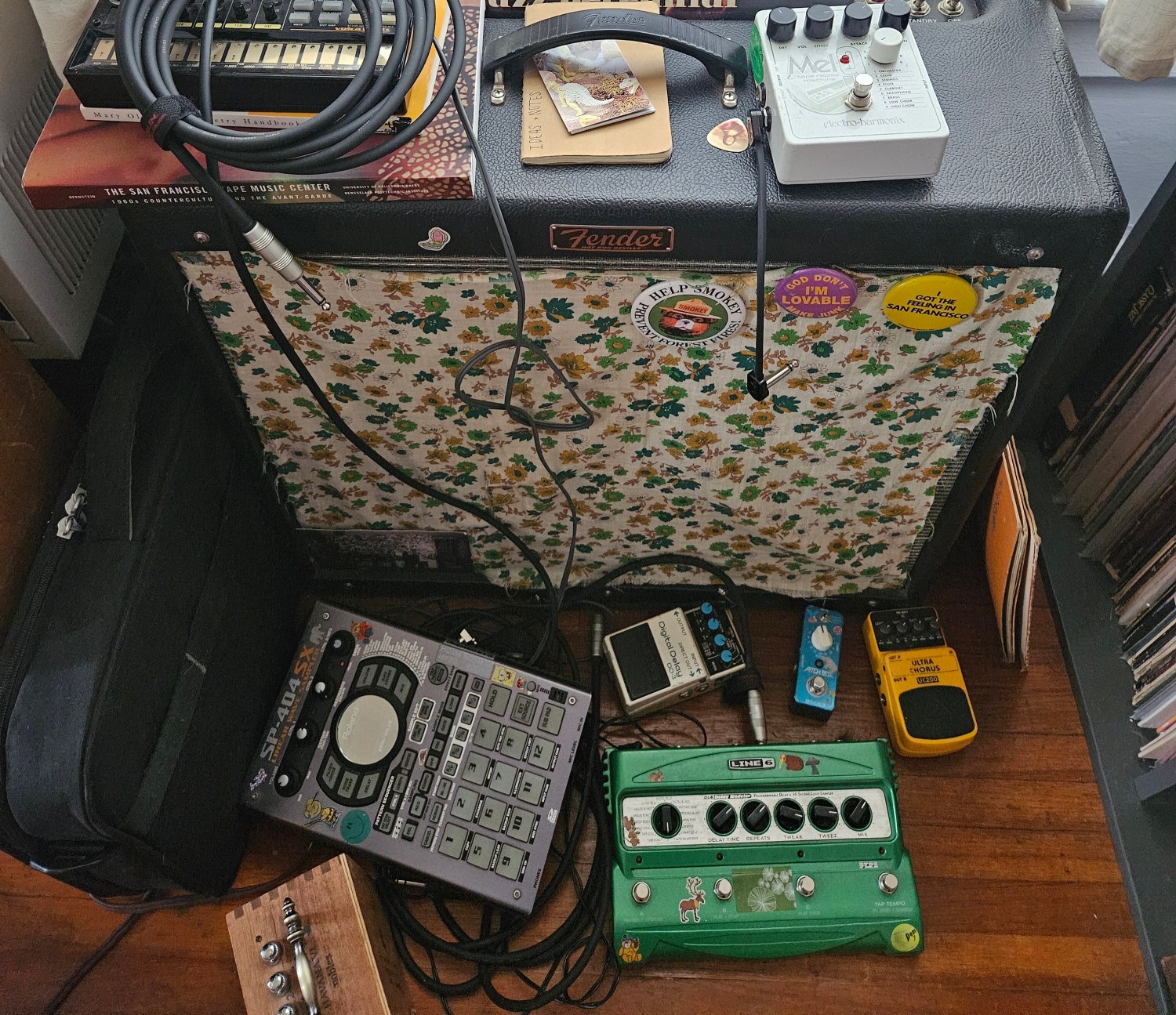
For a while I had been wanting to get a loop pedal to try improvising live after seeing Dustin Wong play a couple shows around LA, and was inspired by his way of looping guitar live. I had been wanting to change up my live set from strictly samplers to incorporate more guitars since some of the music I’ve been making/releasing lately is getting more guitar based than my previous ambient/sample based stuff. This past December, a buddy of mine from Colorado was selling some pedals on his instagram stories and I saw he was selling the Line 6 DL4 for a good price, so I decided to buy it! The DL4 was the loop pedal I had my eye on the most, since I’d seen some of my musical heroes using it here and there; Lightning Bolt, Nick Reinhart, Battles, etc.
It’s such a unique piece of gear with so many interesting features, like it’s supposed to mainly be a delay pedal, but people use it as strictly a looper mostly. It has a function that speeds up the loop or slows it down, depending on the mode you record it on, and combining loops at different speeds can create an amazing array of shimmery, melty, twinkle-y sounds! It also has a reverse function (with 2 different speeds as well), and has a button to play the loops manually, kinda like a sampler! These are things I discovered while messing around with it and watching YouTube videos to learn more, haha.
The very first thing I recorded with the pedal was the track “thru the woods”. It started as just another doodle/test, and the loop sounded cool to me, so I recorded it and kinda kept adding layers to it as the track progressed. There are about 3 or 4 different guitar riffs in that one track, that are just layered on top of each other until it sounded full and nice to me. I just used the voice memo app on my phone propped up to my amp to record it (along with all the main loops on the album). Those cool little functions really helped shape the sound of the album, they’re all over the record.
I was very intrigued by the singular word you used in parentheses when describing this pedal – the word magic. What parts of these recordings would you say came from magic? How do you interpret that word in your relationship to creativity?
I believe music is magic, like, it comes from the weirdest, most colorful parts of the human brain and brings people so much comfort and connection. It’s a very spiritual/holy thing to me. I’m not a trained musician by any means, everything i’ve learned is by ear or picking up from friends and other musicians along the way, I know very little music theory and cannot read music. So when I’m working on a track or improvising, and I play something by accident that ends up sounding cool, it almost always piques my interest, so I run with it and use it. To me that is magic, that accidental note or sound wanted to exist and found a way to use me as a vessel to escape into the world. I’m here for it and love that way of interacting with music and art as a whole. I’m super into “happy accidents”. Happy accidents are what this album is pretty much made of! I also believe that layer of “dust (magic)” were little particles from another place I had never been to (Colorado), that might have found their way into the DNA of the music, physically and spiritually. It was covered in adventure and the essence of Colorado!
That’s so interesting! What parts of these songs felt like your own adventure? Living vicariously through this dust, did this project influence your personal ideas of presence and environment?
It’s funny you say my own adventure, because while recording the album, I started to slowly imagine this surreal and psychedelic adventure using the song titles, possible track order, and sounds of each track. The “floral pedal” is kinda this loose concept in the story, but I was thinking of it as a colorful little glowing magic box that emits nice music, that our main character finds on the ground near the entrance to the woods while riding their bike. They decided to put in their backpack, thus being the catalyst for the whole adventure. So the story kinda sprawls out from there and forms a loose narrative. I’m inspired by a lot of folklore and also adventure stories, like The Odyssey by Homer, and how the classic story structure and tropes find their way into modern storytelling. Like for example, with the movies “O Brother, Where Art Thou” & “The Warriors”, etc. I wanted to create my own fairytale adventure type story to dive into, and let my imagination run wild while recording. I actually haven’t really told any of this made up lore to anyone other than to a couple close friends, and now y’all here! I hope to maybe make a little zine or something later, to go deep and explain what every track means! That’ll be fun I think. It would all be too much to explain here, so all I will say is, it’ll be a surreal fantasy adventure and the song titles are basically the theme of each “scene” from the story. Sorry if that was kind of a detour from your question a little bit, haha
Were there any ways in which you approached this project differently than in the past? Did you want to focus on any new techniques or challenge yourself where you were already comfortable?
Yeah absolutely, I approached this project in almost an entirely different way than other projects, except maybe my previous album “Music from Big Green” which was recorded on my phone and mixed/layered via SP404. I started recording these loops on my voice memo app in January, just as a way to document the ideas, and I was only really planning on maybe just making a little EP out of it and that’s it. Then I just kept recording more and more of them, and having fun with adding samples and other stuff. It just kind of blossomed into this garden of accidents and colorful little pocket symphonies. After having a large collection of recordings on my phone, I started feeling like maybe I can add more to these recordings. I reached out to my friend Johnny (The Fruit Trees) who I have collaborated with in the past and is also a member of my group Favorite Haunt’s Sewing Circle, because he had offered after hearing some of the recordings, to maybe overdub some saxophone or clarinet. I liked that idea and recorded a new track for him to play over which became the track “Mystery Spot/Enchanted”. It kinda grew from there and we ended up working on adding more elements to the entire album together. I like working with him because I think we are both sometimes reading each other’s minds, and know exactly what to do next. We’ve shared creative epiphanies more than words at times when working together, which is cool and special to me. I recruited more awesome friends (Fletcher Barton, RJ Wilks, Stress Actual) to overdub various instruments to more tracks, and it really started to feel like it was becoming this living breathing organism of an album.
Around the time of recording I was also listening to Pet Sounds a lot, so you can probably tell where my head was at during this time. Like, “let’s add everything we got to this thing”, and getting excited about it when we listen back to it after recording. I felt like a kid making a fort with my friends or like when people band together to make a huge Rube Goldberg machine in their backyard. This process was still totally new to me at the time, and it presented me with more creative ideas than challenges I’d say. The way I made my music previously was honestly more challenging and sort of limiting at times. I would usually use a lot more samples and some phone recordings still, then put them all into my SP404 sampler and kind of use it as a workstation, slowly layering things on top of each other. That process takes forever but I think it helped me learn how to make something with limited gear (I usually don’t use any DAWS).
What sort of paths did limiting yourself lead you down? Was it a challenge for you to limit what you used?
Having those limits early on has definitely pushed me to want to branch out and try making music differently. I’d been making my music using that sampler method since about 2019 or so. Since then I’ve interacted with so many different musicians that have inspired me with the ways they write and record their music. It all just looks so fun, and my old method was starting to bore me a bit, because the music I have been wanting to make has been evolving. This project started as just me making lofi beats in my room in 2019, using pretty much only samples, and not really showing them to anybody. Now it’s really expanded, and I’m collaborating with more people, and things have felt a lot more free with how I can express myself and get creative through this project. I think I was feeling pretty stuck around this time last year, with what I wanted to make, how it sounded, and how I wanted to make it. I’m really glad I kept making things regardless of all those feelings, and I’m really grateful for where I’m at creatively and for the folks who have found my music thus far and told me they resonate with it. I think the biggest challenge for me overall was actually letting go and letting the music have a life of its own in the world and other people’s worlds, since this project started as such a private thing for me to occupy my time during the pandemic. You are actually also the first person to ever write about my music, which means a lot to me, and realizing where I am in my music life now really reminds me that I’ve grown a lot since my socially anxious pandemic hermit days.
You offered a long list of names and ideas that you gave gratitude towards for making this record happen. In what ways do you interpret inspiration for these recordings?
Inspiration is all colors to me. Like, the type of reverb used in my favorite song that week is one color, the meal I ate for breakfast that morning is another color, a movie I saw a couple days prior is another color. It all sort of comes together for me while making something, either consciously or subconsciously. Nothing feels like it goes to waste. This album really felt like I tuned in to what inspires me, recent happenings and from my childhood in particular. Every track really felt like an appreciation of the things that have made me who I am today. The way a sour note on a guitar chord somehow ended up making the loop remind me of the soundtrack to the movie Coraline, or how another loop started giving me the same feelings and imagery as walking through the South Pasadena tunnels (that were covered in vines and surrounded by trees when exposed in certain areas) with my pals as teenagers many years ago, or when my friends and I would wake up early after hanging out late that night, and take an early morning drive into the Angeles National Forest and listen to Bryter Layter by Nick Drake. Just magical moments and media from my life. Stuff like that was coming up a lot and really inspiring during the making of this album. I’m really happy that I got to translate those moments of my life into this music! Also, as for the long list of inspiration and special thanks, I was inspired by the inside CD booklet of Person Pitch by Panda Bear, he includes a very long list of his favorite artists and inspiration for the album. When I saw that, I thought that was awesome. I can’t stand gatekeeping.
You’ve previously mentioned that this is the first release that you actually hope people listen to and hold in their hearts. What kind of life do you hope for this album to have once it’s out of your hands and in the world? Is it easy to let projects go?
Yeah, I didn’t really mean that as in, like, that I didn’t care at all before or anything. It’s just with this album, I made it with the hope of bringing comfort to people, because the process and sounds were also bringing me so much comfort. I just really wanted to share this whole experience. I wanted to make something that I wanted to listen to, and for others to want to listen to as well. Which is actually a first for me, because I think before I was just making stuff because I had ideas that were more like “wouldn’t it be funny or cool if ___” and just making it just to make it. Which was still fun and fulfilling, but lately I’ve just wanted to focus on making things with more intention, to bring people comfort and connection.
This album was very easy to let go into the world. I can’t wait for it to be out. This album feels like a school project I remember making in the 1st grade, where I had to make a little diorama of a rainforest. I was so proud of it and excited to bring it to class the next day! This feels a lot like that rainforest diorama, in more ways than one.
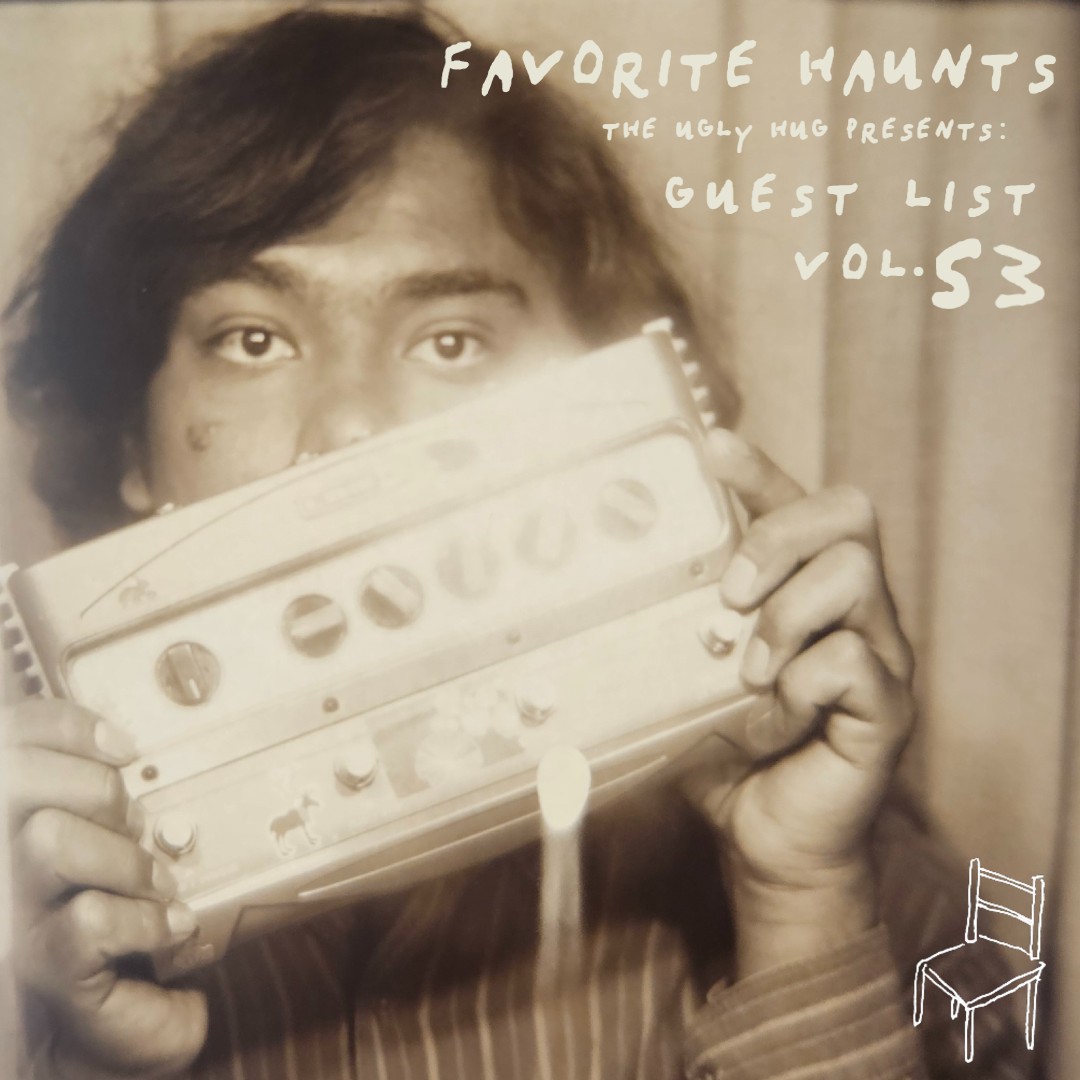
Every Wednesday, the ugly hug shares a playlist personally curated by an artist/band that we have been enjoying. This week, we are pairing our guest list with our feature of LA- based artist Alex Muñoz of favorite haunts.
About the playlist, Alex shares;
I put this playlist together, like I have a ritual of doing with every project I work on, as a way to stay inspired and focused when im not at home working on the project. This playlist consists of music that I’d been really enjoying at the time of making the album. Some of the music has been in my constant listening rotation for almost a decade. There are a couple tracks in particular that I wanted to mention:
1. Ethio Invention #1 by Andrew Bird
This piece came into my life after a long night of hanging out, driving around los angeles with my friends in maybe 2018(?). We were on our way to our friend’s place to crash for the night, and my friend Nate played this song on the aux, and I was absolutely floored. The combination of being deliriously tired after a long fun day and driving through the hills of Los Feliz in LA, overlooking the city below, clad in flickering lights…was the perfect moment. That moment still continues to inspire my art.
This track basically inspired the whole album. Starting with the pizzicato style plucking of the strings of his violin, a sound that i’m obsessed with, to being able to hear him clicking his loop pedal in the recording. The track eventually gets so dense with loops and effects layered on themselves that it turns into ambience. A perfect piece of music.
2. Miracle by Jurassic Shark
Jshark was a local band from my hometown that had a huge impact on me. They lived more or less down the street from me. They were my first diy show. They are the reason I started making music, recording, and playing shows, etc. They had something really special and unique that set them apart from the surfy so-cal bands at the time. Their songs were beautiful and everytime they played, they filled the room with reverb, energy, colors, and sparks. They also sometimes used to play with stacks of books on their amps, and patterned fabric on their amp faces which was funny and awesome to me. Truly a magical band!
Listen to Alex’s playlist here;
Floral Pedal is out everywhere now!
Written by Shea Roney | Featured Photos Courtesy of Favorite Haunts
In the most fulfilling sense of the meaning, Trey Shilts and Leo Dolan found each other. And since then, fronting the LA-based co-collaborative project Finnish Postcard, Dolan and Shilts have created a space that is entirely of their own. Having been part of several other bands and established solo projects through the years, as well as taking inspiration from the extensive LA underground, surrounding themselves with a calvary of creatives, Finnish Postcard has become a force of understanding towards where they are at in life, both creatively and personally.
As of today, Finnish Postcard is sharing with us their highly anticipated debut album titled Body, releasedvia I’m Into Life Records. These songs don’t represent moments that just pass by, but were released already having been lived in. The album as a whole, connected through textured layers, developed grooves, delicate melodies and colorful spouts of experimentation, each track wholeheartedly animates the tiny yet tricky grievances of growing up, where feelings of comfort, love, anxiety and loss become so familiar with each listen, as if they are our own stories we are listening to.
We recently got to catch up with Finnish Postcard to discuss the new record, how the project began, redefining what makes an American band and the Finnish Postcard video game.
Photo by Colin Treidler
This interview has been edited for length and clarity
Shea Roney: We’re approaching the eve of your debut LP! How are you guys feeling about it all?
TS: I’m really glad that it’s coming out so soon after we finished it. That’s one of the perks of working with a tape label like I’m Into Life. You see people putting out records two years after they finish them, and they’re kind of like, ‘I don’t really care about this anymore’. So I’m really excited for it to come out.
LD: That’s something I like about not being embroiled in the industry, even though that is something I would want at the end of the day, I like to have less mediation between when we make the music and when we put it out, and it felt important to to put it out so soon. I feel like we’re both kind of still in the weird no man’s land, where the album’s announced, but it’s not out, and there’s so much work left. This just took up such a giant chunk of my brain for so long, and I feel like I’m at a place now where the release is less painful and less stressful and more just a fun thing.
SR: I can imagine that there’s gotta be so much momentum that you feel going from the recording process to releasing it. Were releases something you were often nervous about before?
TS: I think there was just a learning curve, and figuring out how we wanted to do it our way.
LD: We’ve both put out a lot of music across a lot of different types of bands before we started Finnish Postcard, and releases would always just kind of expose you. It’s like the music that you make can be perfect in your head until it’s out.
TS: There’s just so many weird things about how music works right now, and how the industry has developed recently, where I kind of feel like we’re inventing it for ourselves, you know, how we would want to put something out. We wanted to honor the songs and not just have it be a post on the story. We wanted it to be special.
LD: Because it feels special to us.
TS: And I think we’ve figured out how to do that for us. The rollout of this album to me so far really feels very particular to us, and very right for the album.
LD: This band doesn’t feel like the other bands I was in before, or even my solo project. It does feel more special, and I just like what we do more, too. So it’s just a balance between accepting that you have to have a certain level of detachment because it’s art, and once it’s out, people are going to be forming their own relationships with it. And it’s not something you could control, but also, how do I put this thing out in a way that feels like I gave it enough respect in my life?
SR: The ethos of this record, and really this band in general, gives a nod to the fact that you two found each other. As this project was beginning, what did you two see in each other when you met and how have you progressed that into the music that you now make together?
LD: I saw a lot in Trey, especially in his general approach to music. We met in a really awesome way where he was playing a set of solo instrumental loop based music at an art gallery, and I was there and watched him for a long time. I approached him afterwards, and basically my ulterior motive was to get him to make music with me [laughs].
TS: Leo asked me to talk about a record I had just put out with my solo project on his radio show on KXLU. I went over to his house and we did a pretape of that, and then we just kind of chilled and jammed. Literally within 2 months of meeting we moved in together.
LD: I think what I saw in Trey was that he had his sights set a lot bigger, and he was just willing to really put in a lot of work. Which is how I felt, too.
TS: There’s kind of a difference between people that want to be in a band because it’s fun to be in a band, and then people who have just different intentions. You have to be down to do a lot of the really unfun stuff, like booking shows and practicing and making sure that the songs are really right, giving everything enough time and attention. I just found myself in bands where it just didn’t feel right, and I think Leo and I have a really similar musical kinship and a similar vision, and are both really just willing to see this through.
LD: There’s a difference between people who want to be in a band, and people who have to be in a band. There’s nothing wrong with wanting to be in a band. If you want to be in a band, you should. But that’s not how it felt. That’s never how it felt for me.
SR: With this musical kinship that you two have garnered, in what ways did you challenge or push each other when it came to your songwriting?
LD: We both exposed each other to a lot of new music. I was locked into writing in a certain type of way that I felt was reaching the end.
TS: I think we helped each other meet in the middle in a place that we were happier with than where we started. It was less of a process of challenging really, and more of a process of turning each other on to shit, and being like, ‘we should make stuff that sounds like that,’ and discovering a new space in music to inhabit than what we did before.
SR: Did you guys kind of subconsciously know you’d be happier in this middle than where you were previously at or was it something that you had to figure out and work towards?
TS: I don’t feel like there was really any resistance from me. I was just like, ‘thank God. With this guy, we can get somewhere interesting’.
LD: When we met, I was at the end of a couple different energy cycles in my life where I felt like I had kind of exhausted all the ground I’d covered with my solo music.
TS: It was a weird time for me, too. I had this long term girlfriend that I had lived with for years, and we had decided we’re going to break up, and I was going to move out. Then there was a month where I was needing to find a different job and a place, and in that month of transition is when we met. That relationship was time to build something new. It also just so happened to coincide with meeting all these bands and friends that are making music in LA. I feel like it’s the right time for this album to come out, when our colleague’s bands are making really cool shit that I love. I feel like we kind of fit into that picture in some way.
SR: One thing that I was intrigued by on this album was that you made an effort to not filter anything out. Can you explain to me what that process looked like, what it meant to you and how did that push the way you approached this album, both musically and personally?
TS: To me what that means is that there were no moments where we thought that we should take something out because it’s not cool or that we probably shouldn’t go there. The album, as it exists, is exactly what we meant to say and how it was supposed to come out, and I want whoever listens to it to know that, because there might be moments on it where you’re like, ‘were they going for this, but fell short?’ No, just trust us that this is exactly what we were going for.
SR: Was that easy for you guys, to just allow stuff to happen? Or was there a lot of hesitation that you had to combat in that process?
LD: It’s not that it’s not easy, but I think it takes a while. Sometimes you have to sit with a decision for months. There were a lot of different approaches, like a lot of discarded pieces of music that went into this. When we were working on this album, it was not a super good period of my life. I was dealing with an injury, I was unemployed, and in a general malaise. So it didn’t feel like I had an incredible story behind this album, but more I was starting to grapple with parts of adulthood I hadn’t yet, and I feel like the album reflects that. It’s not like a dangerous album that came out of a period of living on the edge. The things that were reflected in this album, for me, felt very real and multidimensional, like the aspects of being an adult that are not always glamorous to talk about.
TS: Yeah, there’s no filter between what was going on and what is on the record. It was really earnest and honest.
SR: Embracing the unfiltered stuff, did that in a way push you to understand your own grievances with adulthood? Like, if I can accept this on the record, then I can be able to accept this in my personal life or something?
TS: I mean the answer is yes for me. I really think about my brain a lot, and what my story is and where I’m at. It’s an always turning thing and then it doesn’t get me anywhere. Then I write a song about something and then I can move on, then I’m released from whatever the thing was that I needed to get out of. Writing this music, and talking about lyrics with each other, I mean, it helped me a lot to geolocate where I am emotionally on my journey.
LD: It’s funny, because you listen to music that I was making, you know, 8 years ago, and in a lot of ways, it sounded more autobiographical because I was writing about a lot of real world things that happened — therefore you might think it was more honest, like I’m talking about things in this very matter of fact, tactile way. I look back and I see ways that I was hiding even in there, even though it was storytelling, which is not a bad thing, music is storytelling. But I feel like with Finnish Postcard stuff, it’s a way more impressionistic approach. The lyrics, if you see them written out actually make a lot less sense, but it’s been a process of trying to hide less and make myself into something that I’m not less.
SR: How do you think that helps put yourself out there more by embracing this style?
LD: You gotta let the light into the dark parts of you. If you admit you got a problem with something, that’s the first step to getting better.
TS: There’s an element of this band that is us creating this little bubble of safety together. Not even safety only, but taste —this is cool, this is lame, this sphere that we invented. And inside of that we are so free. Sometimes the truer thing, the truer lyric is the one that makes way less sense and is incomprehensible. But you hear it, and it makes the kind of sense that only songs really can.
LD: Writing music is not like writing poetry or prose. It’s a totally different thing that can’t be compared. There’s a lot of ways in which emotion and meaning is conveyed through music that are completely unique. I think you can’t really look at someone’s lyrics printed out and get the full picture. Once I started to realize that myself, I feel like that’s when I started writing Finnish Postcard songs.
SR: Also, considering the experience of playing off of each other and incorporating everything that goes into a song can really open that door tooI can imagine.
LD: It’s cool to have the license to write half a song and then see what Trey has to say about it. I can totally not finish this song and just let it be for a sec.
TS: There’s also this element of collaborating that’s honestly hard for people to understand that a band has two people, and they’re both the main person. Like, ‘it’s your band Trey, right?’ And I’m like, ‘no’. And people think it’s Leo’s band. It’s a deeply, deeply collaborative project. But it’s hard to, I think growing up under capitalism in the United States specifically, it’s really hard to not approach something collaborative with fear and to feel threatened or like you’re not getting enough of something. There was a lot of unlearning that we’ve fostered, creating an environment where I feel like I can be open and collaborative in a way that I just haven’t ever been in any other project.
SR: You’ve also described this album as an ode to the rock shows and pseudo venues you experienced growing up. What kind of memories or feelings did you hold on to from those shows that you wanted to implement into this album?
LD: When shows are good, especially in hard periods of my life, I would just get this incredible feeling of being like, ‘oh, my God! These people are like me.’ When I moved to LA, I was really lost and confused generally, and went to some shows and was like, ‘these are the people that I hang out with. And maybe the reason I feel so fucking weird right now is because I haven’t hung out with people like me in four months. I feel like that travels over to Finnish Postcard, too. I can be myself in this setting.
TS: We owe so much, and really exist in a way that is in reverence to the lineage of DIY music. I remember going to this venue in my hometown that was a brunch spot where some guy would throw shows there sometimes. I grew up in a really small town, so me and the three or four other alt-kids would be there, and I just remember thinking that this is a place where difference is celebrated and you can really be yourself, and the more yourself you are, the better. It was just so different from what you’re programmed with at school or work.
SR: I just experienced that same conversation when a friend from Denmark was visiting Chicago. We went to see Squirrel Flower play in this haunted, abandoned theater space, and my friend was amazed at how much difference was celebrated in these spaces. She said she has only experienced that feeling in American communities.
TS: That is really cool! That’s something that we kind of contend with, because we’re a deeply American band, and that’s been something that we’ve always really cherished. But obviously, that’s always been really complicated. The lineage of DIY music in the United States is something that I really look to with a lot of reverence, and we both come from a background in college radio, which I think is more of what we mean sometimes when we say American.
LD: I didn’t really know what DIY meant in music until I was like 24, but I’ve been having shows since I was like 14. Because I grew up in Oregon, and there is no semblance of any sort of music industry there, there’s no upward mobility to be a musician. So, we’ve had a lot of shows at all sorts of places, ranging from decrepit houses to jazz bars. I played in a laundromat once. It’s hard to even say that that’s what I wanted to do, because that’s just what you did and what was happening. There weren’t a lot of paths in front of me, so it’s very comforting to know that people all over are just doing shit because ain’t no one else gonna do it for you, so you gotta do it yourself. Also let the record show that we are huge Squirrel Flower fans.
SR: Speaking of doing it yourself, you guys released the first ever Finnish Postcard video game. What was the idea behind it and what was that process like?
TS: I had these childhood experiences exploring polygonal forests and stuff. Something about that style just feels very emotional to me— the N64 one era graphics, that just feels really meaningful to me. And I’ve been seeing it reflected a lot in the extended universe of our peers, that low poly style of artwork, and I just wanted to participate in it in one way, like once, and just do it in a big way.
LD: And Trey coded that whole game. You didn’t use a template, right?
TS: No, it took a long time [laughs]. I had to learn how to use Blender and GitHub. Talk about DIY, my code looks so crazy and sloppy.
LD: We should release the code.
TS: I already did, it is on open source. But I didn’t want to do it in some way that’s just 3D artwork for a song or something. I really wanted something super different. Also as a kid, there was a game that the Gorillaz put online where you would drive around in a jeep on an empty highway as the Gorillaz, and I just remember connecting with it so much. There’s an element to it also that’s almost nostalgic in a way, but there’s this quote in it, if you go deep enough, from Brian Eno about how we always love the thing about old technology that we hated it for when it wasn’t old. So the noise of cassette tapes, or the digital glitchiness of CDs. He has this quote that he’s like, ‘as soon as we can avoid it, we want to replicate it’. Our music is not nostalgic, and I don’t want anybody to get the idea that it is. I included that as a nod to the fact that I just really wanted to have this experience.
You can listen to Body out everywhere today as well as snag a copy on cassette or CD via I’m Into Life Records. There is also a small run of hand-bound books containing lyrics and writings on the album put together by Adam Weddle that will be for sale this Saturday at their album release show. Finnish Postcard will soon depart for a short tour going up California to the Pacific Northwest.
Written by Shea Roney| Featured Photo by Colin Treidler
Every Wednesday, the ugly hug shares a playlist personally curated by an artist/band that we have been enjoying. This week, we have a collection of songs put together by LA-based artist RL.
RL is the project of Rachel Levy, who began sharing music under the moniker with the release of Life’s a Bummer back in 2013. Now with a handful of beloved releases out, the songs that live on an RL project are built out of curiosity towards the relationships around us, where moments of absurdity and humor weigh just as heavy as love, heartbreak and promises, and melodies simply linger in your noggin for the rest of the day.
About the playlist, RL asks;
You ready to get some feelings out while you dance? K let’s go!
Listen to RL’s playlist here;
You can listen to all of RL’s releases out everywhere now.
Written by Shea Roney / Featured Photo by Snapchat Filter
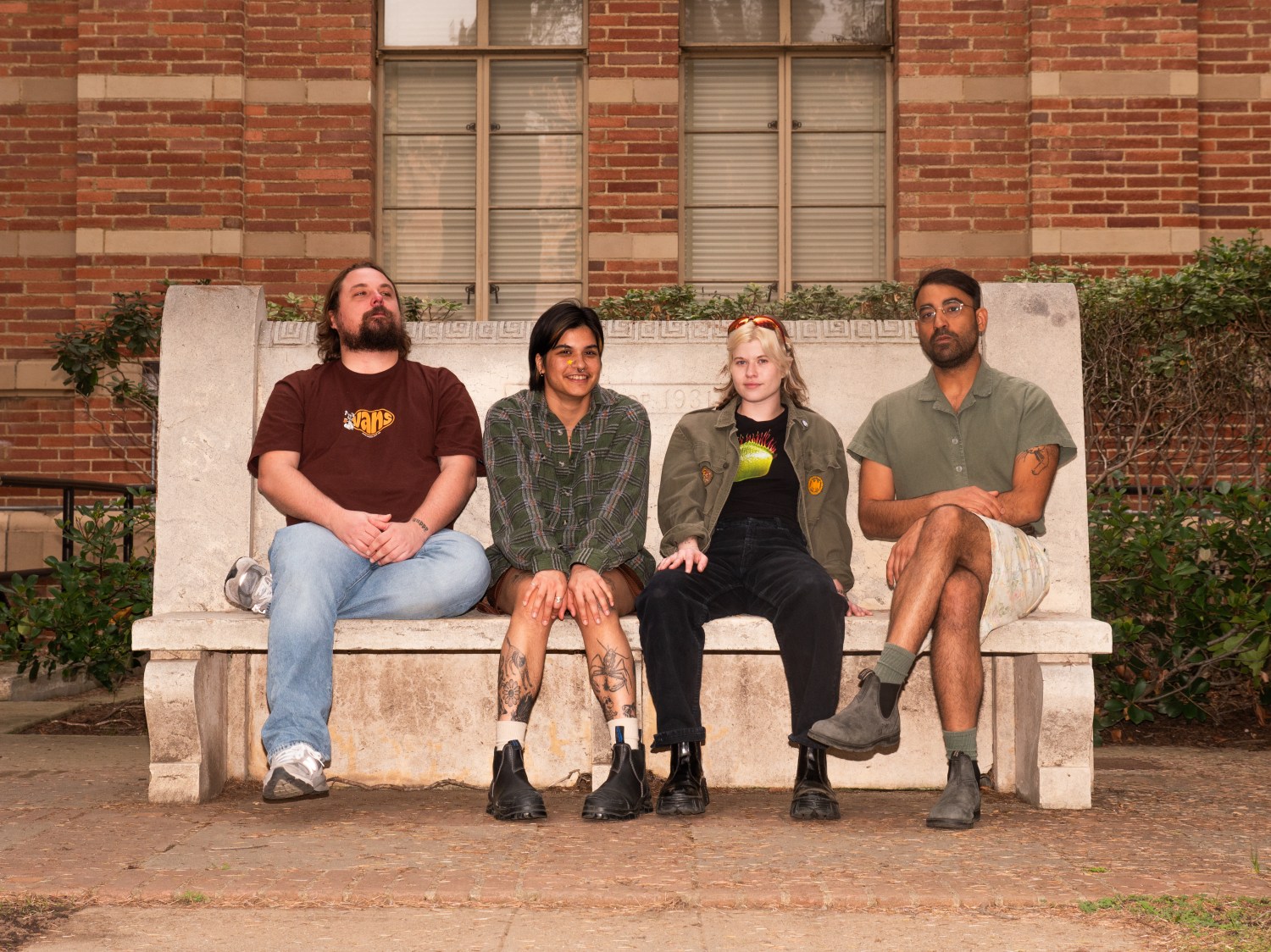
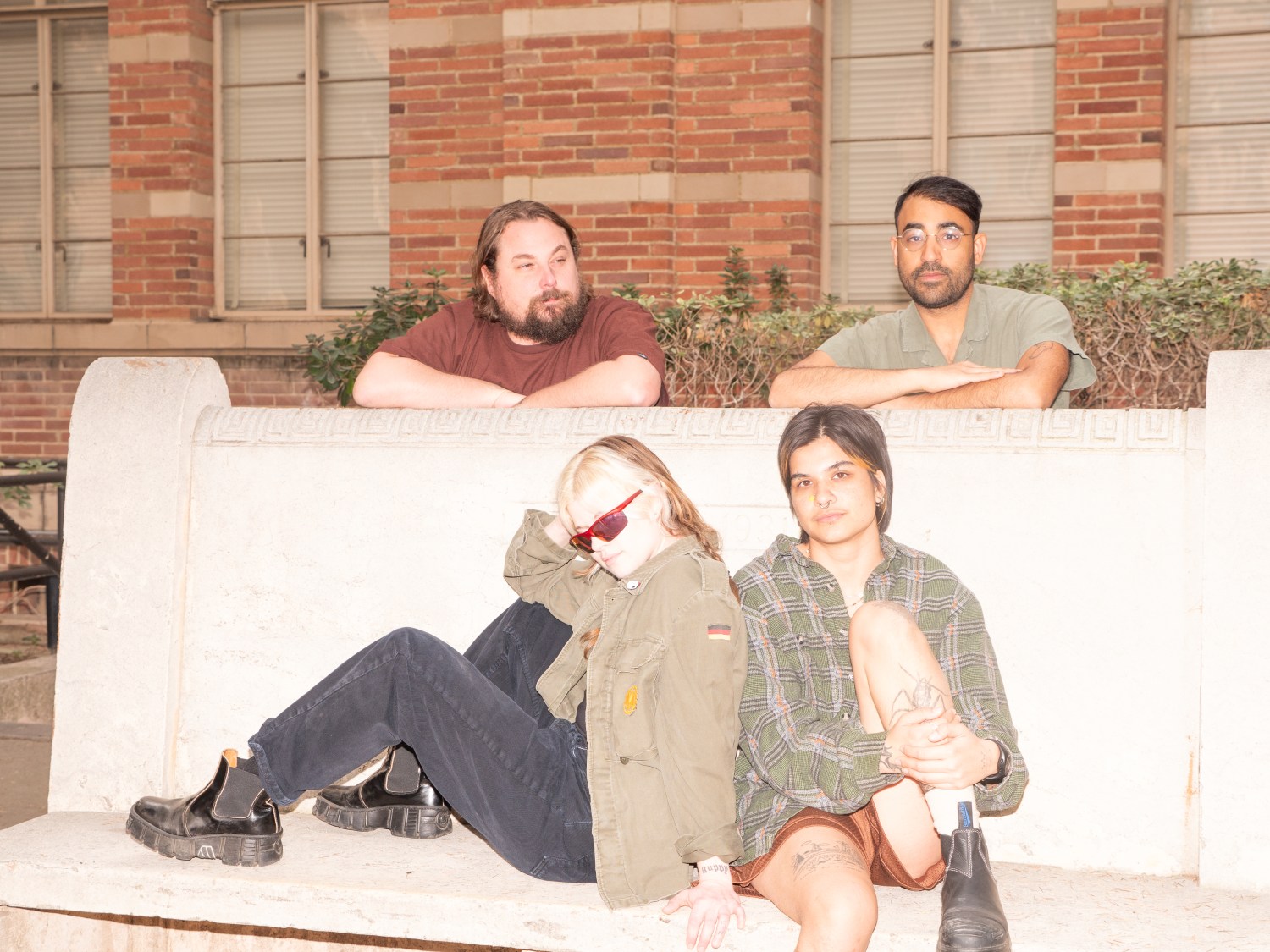
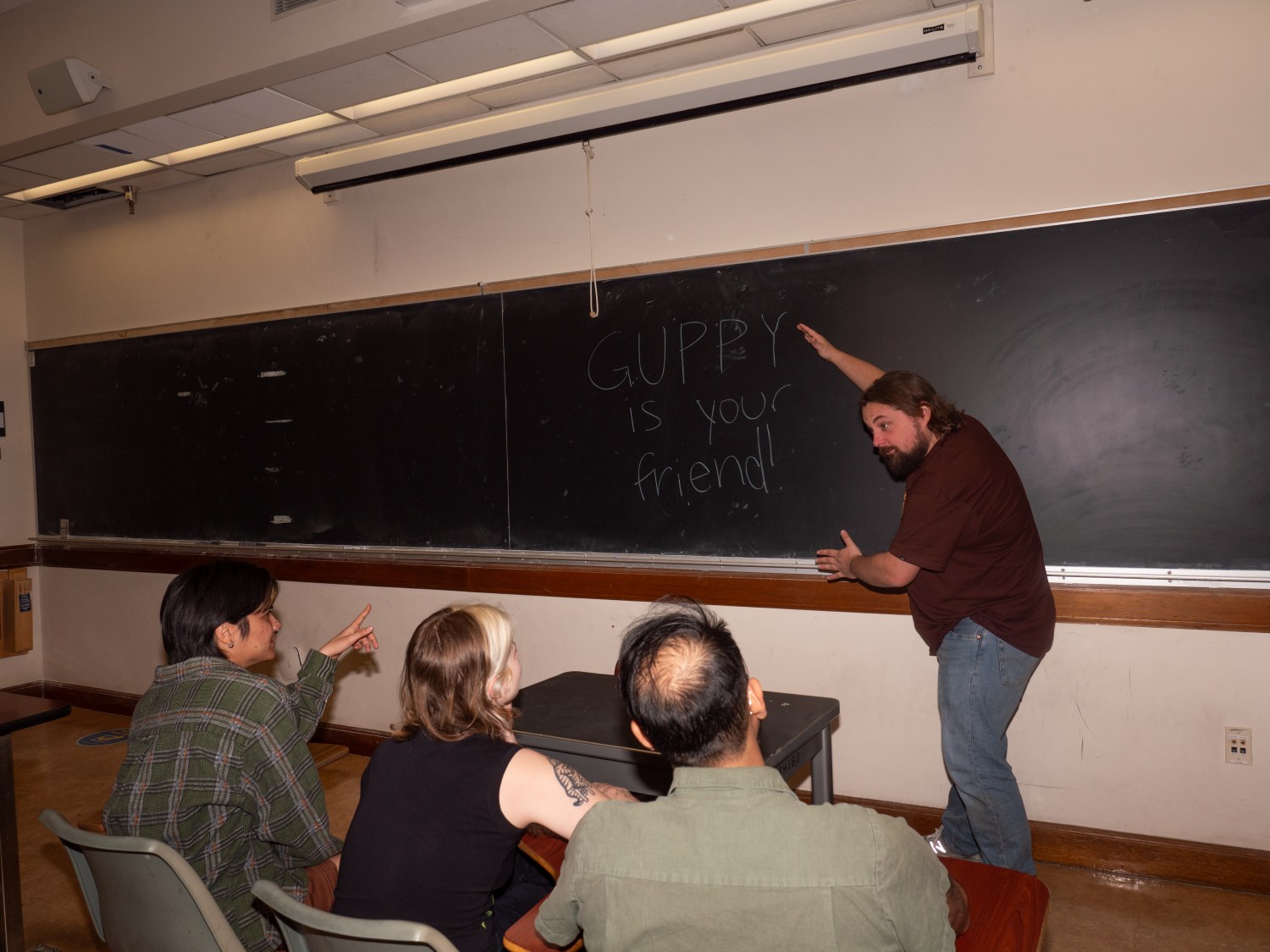
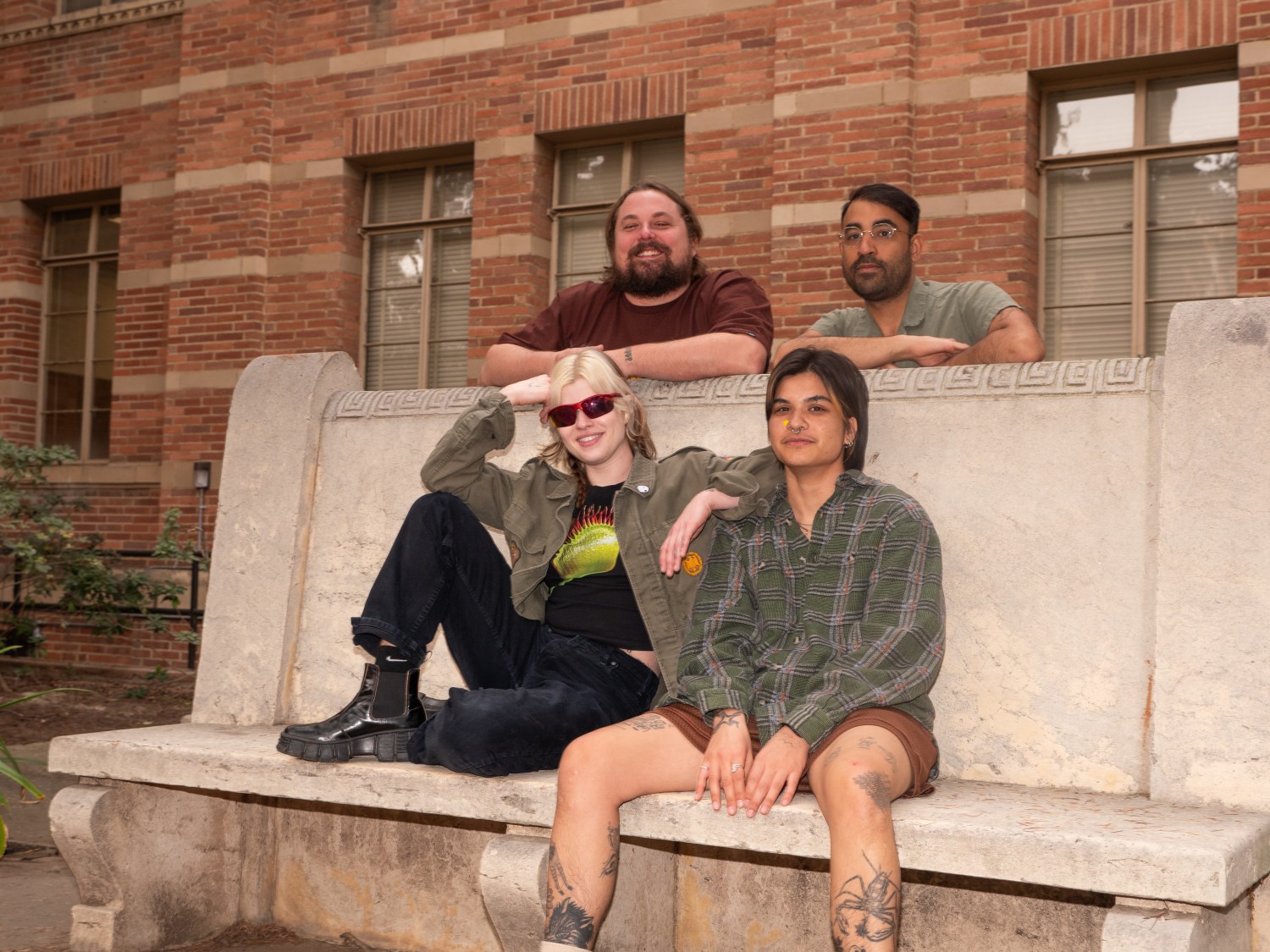
I first met Guppy in a small east LA venue, to which I recognized them for their song “Texting & Driving.” A year later, we sit side by side in booths of my college radio station to discuss the becomings and more of the band. While Guppy identifies themselves as a indie rock band from LA, there’s something to be said about their lyricism and the way they present themselves. Listen in to the world of Guppy and hear us talk about their inspirations, albums, and more!
This interview was conducted by Chloe (DJ Adderall Spritz) at ucla radio. Listen to our conversation with GUPPY below!
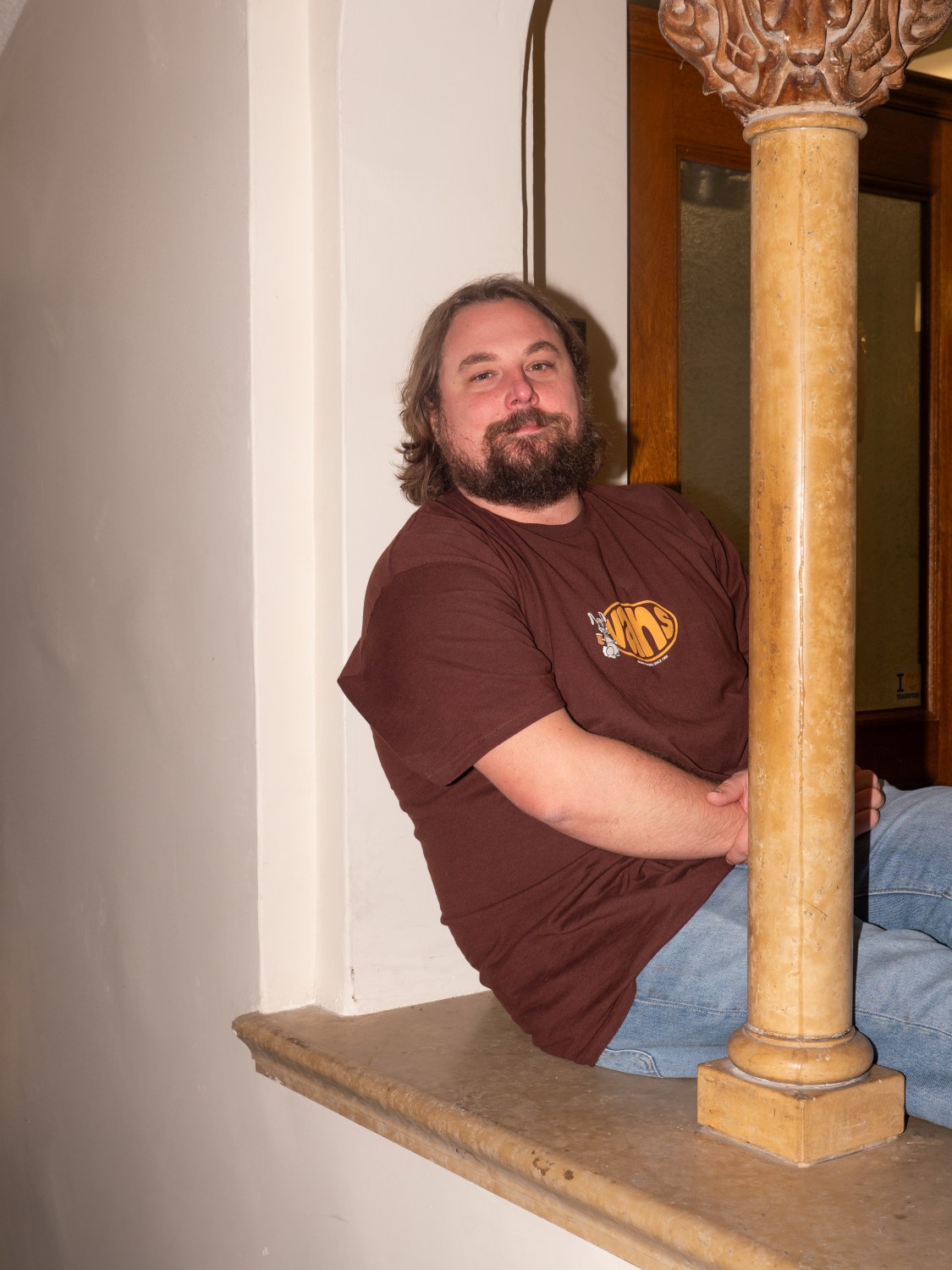
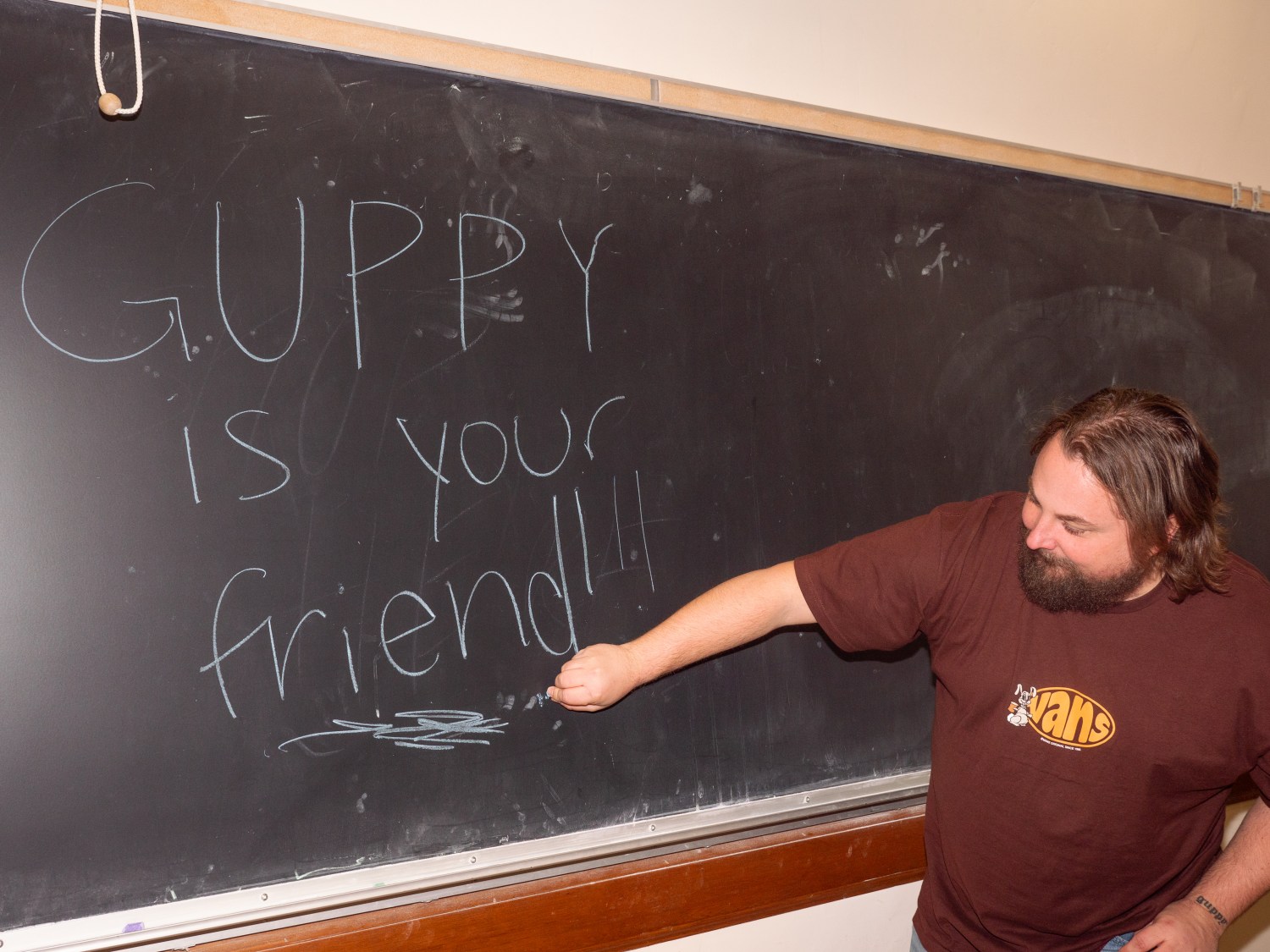
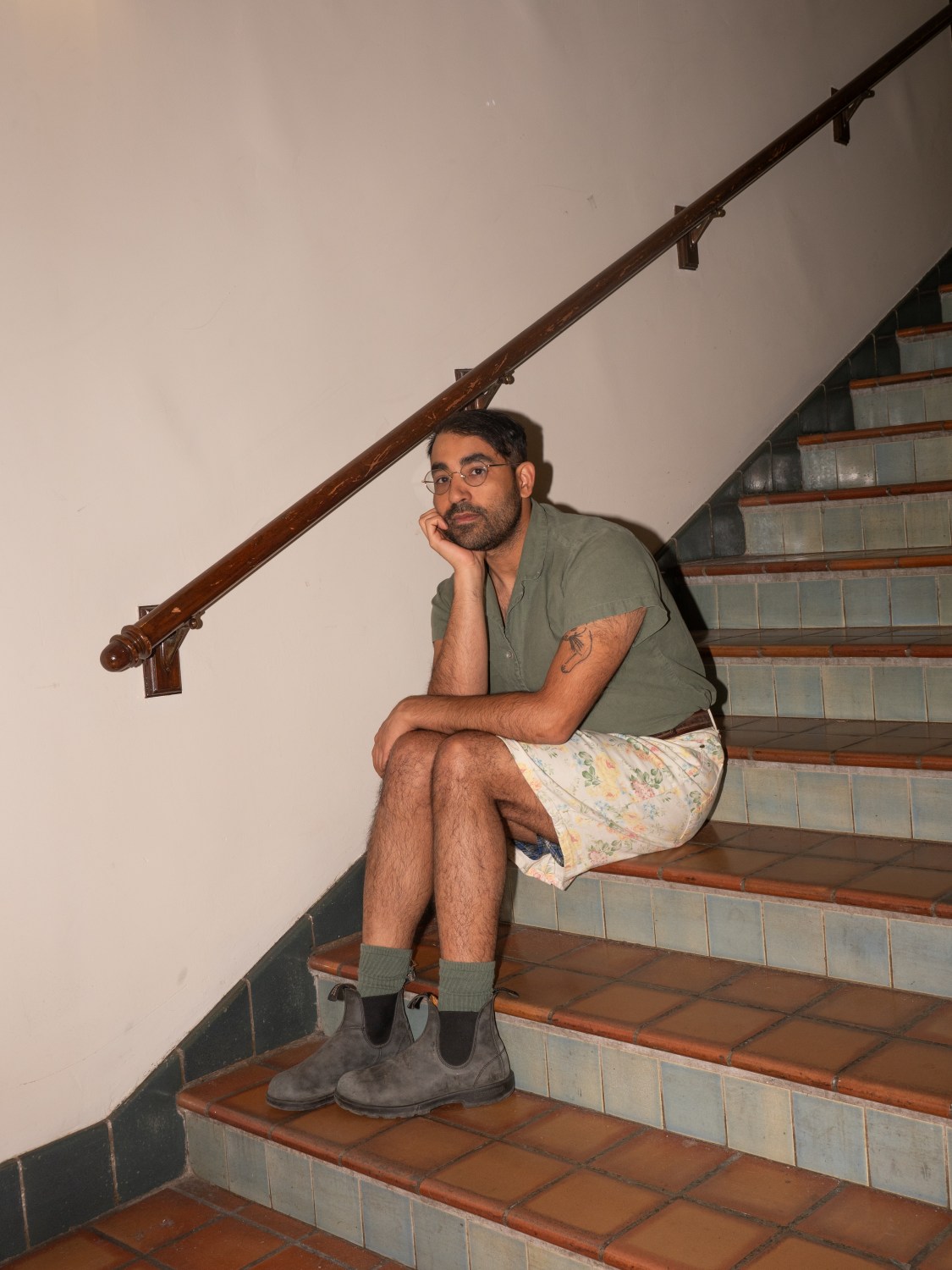
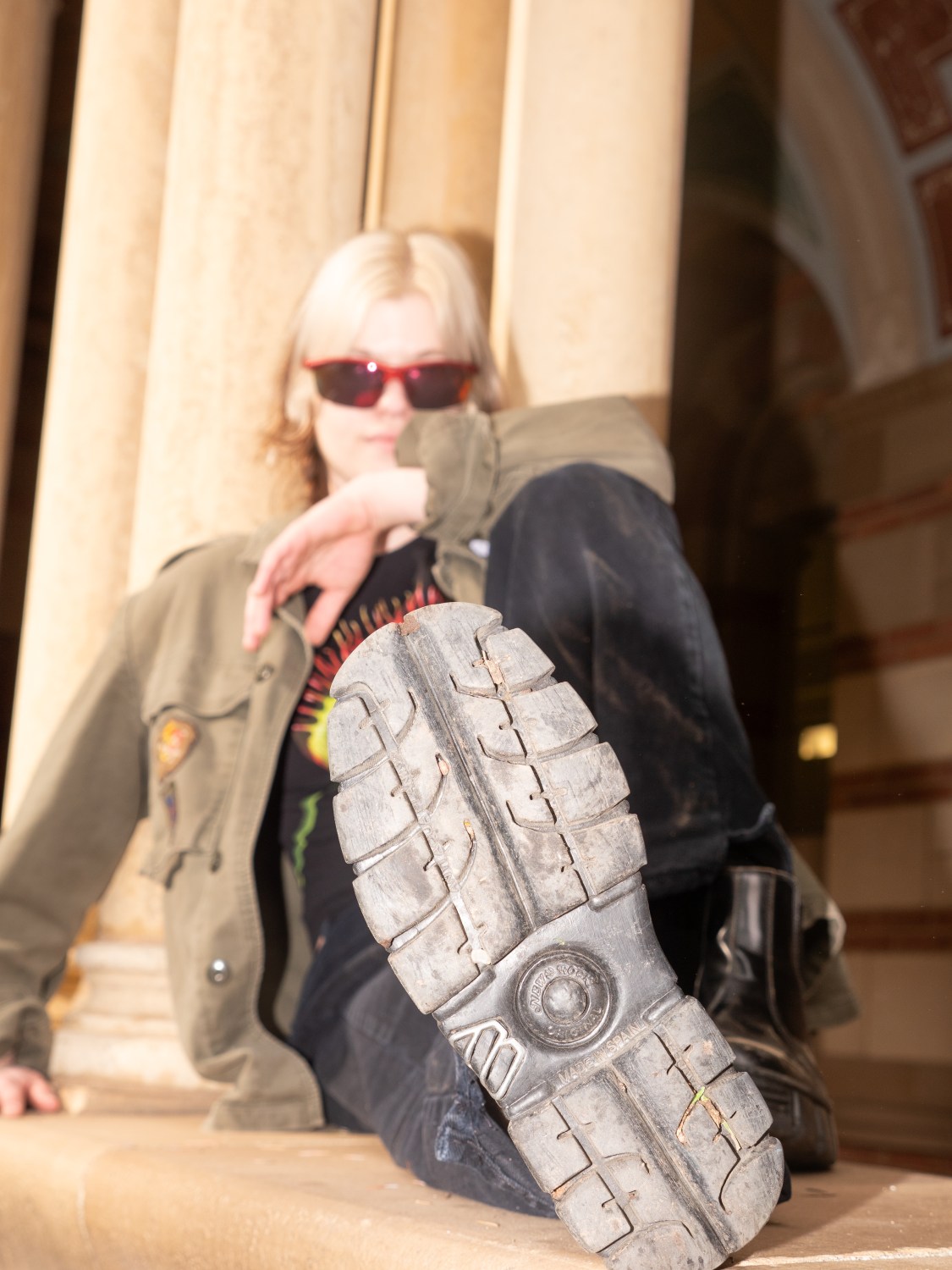
Scroll through to see more photos of GUPPY!
You can listen to GUPPY’s most recent release Something is Happening… out on all platforms, as well as vinyl and CD.
Interview and photos by Chloe Gonzales | Interview conducted at ucla radio
iji (ee-hee) is one of those groups that can be described as “your favorite artist’s favorite artist” (Sasha Colby), and through fifteen years of sophisticated pop tunes and pure indie bliss, they have proven time and time again that making music can and should always be fun. Fronted by Zach Burba, iji returns with their latest record Automatically, the groups first release since their relocation to LA in 2020 and a revitalization of the creative spirit within. Having time to sit and wonder, bubble in the troubles of the pandemic and its shadowy afterglow, Burba took the time to reflect on what is worth saying in a world like this, where stripped back pop tunes and witty musings can be just as effective when radiating moments of essential joy, communal care, existential dread, childhood dreams and souring friendships become harder to define.
On the surface, Automatically revels in organic and articulated instrumentals that feel lighter than past albums by the rather adventurous group, yet at its heart, sing the praises of such charm and character that iji has defined throughout their rich history. With an array of collaborators of indie spearheads and hometown heroes such as Erin Birgy (Mega Bog), Adrianne Lenker (Big Thief), Nicholas Krgovich (Nicholas Krgovich) and many more, Automatically is the communal event that it was always meant to be. “First Lickers of the Rock” simmers on top of electric tinkerings, while songs like “Recycle Symbol” and “Worlding Way” bounce with melodic energy, where 70’s folk-pop renegades would feel seen, and then honored when provisioned in the charming little world that iji so notably crafts. “Confusing Questions” and “Fear of What” are deliberate mysteries, unsettling at times, mark their own territory on the rather wide-ranging and inclusive collection of stylings and sounds.
“I want to take it all back / Every line ever spoken”, opens the album with “Onomatopoeia”, a song that blooms from the stem of a folk groove, choreographed to Burba’s melodic intuitions and clever vocal harmonies that would trigger anyone’s own participation in the comradery. It may come down to the phonetics that feel the most fitting, “Only one expression remains / the onomatopoeia” becomes an expletive, a simplification of all the shit around us that feels impossible to describe. And to his credit, Burba’s often textured and far out lyrical comprehension grasps this need of purposeful communication. “Walk a little more around the block to see the Deadhead sticker on a Tesla truck,” he sings, highlighting the moral and political hypocrisy in late stage capitalism. “Holy Spirit, tie my show,” sets “Dominus Vobiscum” into a whistling whimsy – “around and over, under, up and through” as religion becomes normalized in selfish ways more and more.
Intuition meets introspection as Burba rears an ending to the journey of Automatically. “Professional Anything” floats to its own lighthearted pace, as expectations are broken and passion and creativity come out on top. “She Sees” weighs heavy as it lumbers through a sparse soundscape. Featuring Adrianne Lenker on backing harmonies, she hits a steady and ghostly bongo like a heartbeat, as Barbus and co. come to the finish line. Reaching this collective release that has been kept inside for too long, Automatically doesn’t revel in the disastrous and estranged for long – even when heavy moments arise, Burba feels the most comfort in letting it breath, making for a rejoiceful moment of creativity and community to fill in the grand scheme of it all.
You can listen to Automatically on all platforms now as well as purchase a vinyl via We Be Friends Records.


 the ugly hug