Cashier put out a song. Does it rip? I don’t know. Is the sky blue?
Today, the Lafayette-based four piece announced forthcoming EP, The Weight, set to come out March 13th via Julia’s War, offering a preview through new single, “Like I Do”. While it is only the sixth song available on their discography, Cashier’s minimal amount of recorded music thus far has certainly not hindered their stretching reputation. They have a sound capable of hijacking even the most disintegrated, brain-rotted attention spans; delivering profound live sets and injecting that raw, divinely DIY essence into their recorded music. “Like I Do” taps traditional rock music in the best way possible. It’s hearty, messy, dynamic. Kylie Gaspard’s vocals are paramount and unrelenting when present; and when they aren’t, the space is swiftly filled with sovereign shredding.
About the song, Gaspard explains, “This one is more of a piece of generic rock. We kind of wanted to make our own version of that sound. The lyrics are very simple, just about two people figuring each other out, what feels right when you’re unsure of a scenario, and navigating another person’s energy.”
You can pre-order The Weight and listen to “Like I Do” below.
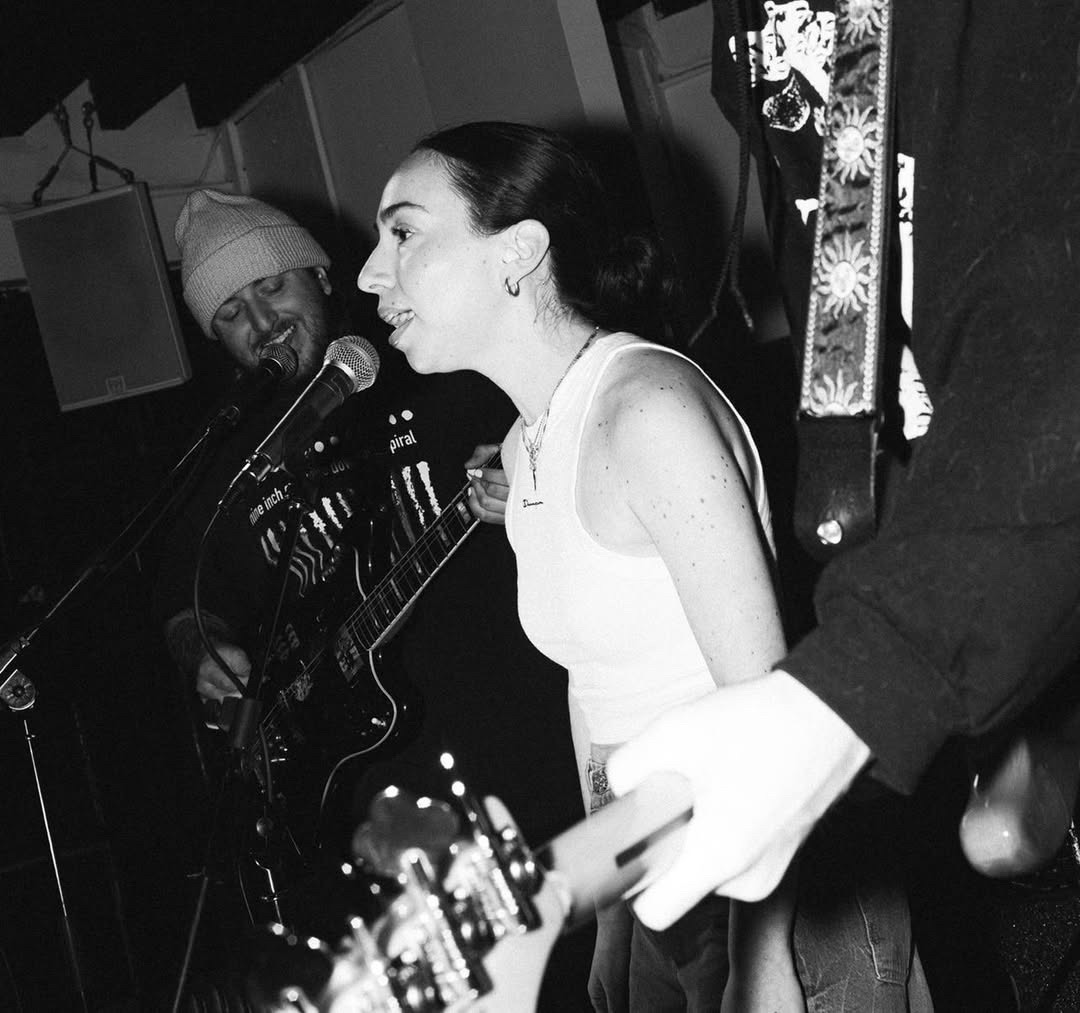
I habitually watch shows from the back of the venue. Partially, because I am six foot three and a bit self-conscious about my predisposition for view obstruction, and partially, because I believe it’s the best place to absorb the crowd. There is an interesting dichotomy between the nature of music consumption as a solo act and as a live experience; throughout the day, I watch people with headphones wedge themselves between strangers on a train car, each tuned into their own self-serving listening campaign. Of course, there is a beauty to listening alone, and to the way it can help us make sense of our own minds – but I think music is at its most invigorating when you can experience the vulnerability of someone else’s art alongside a stranger. I love standing in the back as if the crowd in front of me is half of the event, and I love witnessing the collective catharsis that live music can generate. However, sometimes a set moves me enough that I subconsciously detach from the corner, absorbing the energy of the crowd from within it instead of observing with my back velcroed to the sound booth. I assume this would have been the case at the release show for MX Lonely’s “Beauty Lasts for Never”, although I will never truly know. I got stuck crammed next to the stage on my way back from outside, standing an arms distance from the stage (and unfettered by any unease that the proximity would otherwise trigger within me) at what was undoubtedly my favorite set of 2024.
I wrote that last year. It was shortly after I saw MX Lonely at Trans-Pecos on November 23rd, and I stashed it in a Google Drive folder of music thoughts that have never seen the light of day. November 23rd of this year, I spoke to MX Lonely on a cocktail of video chat platforms – using up my thirty free Zoom minutes before continuing our conversation about their forthcoming record via Google Meet. I wanted to reference my own stockpiled captivation; not merely out of the coincidental November 23rd novelty of it all (and certainly not because I was itching to leak an entry from my digital diary), but because throughout my conversation with the band, I was reminded of those feelings. Of how, for thirty or so minutes, I somehow forgot I was an uncomfortable person. Or at least, I forgot to let that self-assessment plague me. The most powerful thing music can do is alleviate us from ourselves – to siphon the weight of our own insecurities and anxieties, to help us feel less alone, or to even just help us feel anything at all; perhaps by thwarting into states of numbness and pulling us out of emotional auto-pilot. While any band can easily declare that they hold these ethos and intentions, from every experience I have had at their sets, I can attest that MX Lonely truly sees them through. “The band is named after my own little sleep paralysis demon. I would say that the monster that is most prevalent for me is loneliness and isolation and feeling disconnected, and I like to think that’s who we make music for, people who feel like that”, Rae Haas tells me. “To be able to have community and space for people who all relate to those themes is so incredibly rewarding. Selfishly, because that’s what I need, and unselfishly because it is bringing all these people together. You realize there is space in music for everybody.”
Brooklyn-based MX Lonely consists of Rae (synth/vocals), Jake Harms (guitar/vocals), Gabe Garman (bass), and a cycling of drummers over the years. They started the project about five years ago, and, in the fashion of most great bands, initially conceived it as a “for fun” endeavor. They began by learning a solo record Jake had released under the project HARMS, telling me the band did not come to fruition until a year or so later – around the time they collaboratively wrote “There’s Something About You That I Don’t Believe In” (which prompted a sort of “oh shit…” moment) and began playing small shows around New York.
Now, they self-identify as “Loud as Fuck”, which I would say is pretty accurate, though I find it necessary to emphasize that their noise never poses as inadvertent. There is something soft tucked neatly within MX Lonely’s propensity for swelled volume, as if the project is begging to subvert any predisposed notions you hold about music that is “Loud as Fuck”. They pull tunings from Elliot Smith, they take stage presence inspiration from drag artists, they harvest emotional delicacy from the subdued depths of their own minds. “I feel like we all [try to] take emotional music and make it pretty heavy and visceral and more of a shared experience. I think music this heavy and personal generally becomes something that is folky or more insular.” Rae explains.
MX Lonely’s emphasis on the potentials of live music and the shared experience it can offer is equally potent in their recorded music as it was in my gushy Trans-Pecos introductory anecdote. They are set to release All Monsters early next year, and while you cannot listen to it in full until February, every single track had been experienced by a crowd prior to recording. “I think it was nice we got to road test it, and also just focus on preserving what we consider to be an authentic, ‘band in a room’ sound,” Jake explains of the songs, of which all center the live experience of MX Lonely. “It’s essentially a magnified version of what the songs sound like when we play them all together.”
The result is not only a magnified version of what MX Lonely sounds like live, but a concentrated punch of the catharsis their live shows in packaged form. All Monsters is equal parts relentless and rewarding; it starts on a fervent note and maintains its intensity until the last second of hypnotic final track, “Whispers in the Fog”. Although the record is an undoubtedly charged front to back listen, it’s also far from monotonous, serving as a canvas for MX Lonely to explore various routes of heavier songwriting that all lead to the same destination (cascading emotional purge). Some tracks are cushioned by velvety, fuzzed out soundscapes, while others take on a drier form, owning their jagged edges and ever so slightly scalding you with them.
“I think it should feel cathartic in some way, but maybe not necessarily good while it’s happening, sort of like shadow work.” Rae notes. “A lot of people have described some of the songs on All Monsters as being racked with anxiety, sort of like this fist clenching thing that lets go.”
The record dismantles a lot of notions surrounding monsters, which serve as an all encompassing idea for the various antagonists that besiege our day-to-day. Some are external, but most come from within; they range from anxiety and addiction to loneliness and isolation, and they are far more daunting than any under-the-bed creature you may have conceptualized as a child. These are themes MX Lonely has explored before – found in the dysphoric haunting of “Too Many Pwr Cords” on their 2024 EP SPIT, and amidst the heartbreaking pleas of “Paper Cranes” on their 2022 record Cadonia, but on All Monsters, it feels as though they have achieved a resolution. Not in an overt way, you can’t expect MX Lonely to feed you secrets to fulfillment on a silver spoon of distortion lathered in magnetic bass lines and frothy synths. Rather, it feels as though the band have eradicated their monsters by merely acknowledging that they exist. Instead of running or attempting to suppress them, on All Monsters, MX Lonely confronts their own fears and vices head on; armed with some of their most cunning and dynamic songs yet and liberating years of shame in a thirty-seven minute, total adrenaline rush of a record.
We recently spoke to MX Lonely about their relationship to live music, building their own studio, and All Monsters, out February 20th via Julia’s War.
This interview has been edited for length and clarity.
Manon: Jake – I read that you wrote “Blue Ridge Mtns” in high school, and put it away because it felt too vulnerable at the time. Over the last five years, how have you grown MX Lonely, not only as a project, but as a safe creative space and collaborative outlet where you are able to revisit old material or chapters that you may not have been comfortable doing on your own?
Jake: I feel like the band is definitely a pretty safe space for me to try ideas out, and there is a lot more reception for bringing in more vulnerable, emotional material than I have had in previous projects. Nobody has ever made fun of me for bringing an idea that was too “weenie”, I mean sometimes Gabe will be like “that’s pretty emo”…
Gabe: Yeah, but we know how to work it.
Rae: I feel like that was from the start. Everyone’s pretty open, everyone writes on the records, everybody brings in songs and ideas and as well as being critical and editing a lot, we try to be receptive to the vulnerability in the songwriting.
Manon: When you’re writing and recording, do you think about playing the songs live a lot? Is considering that experience very front of mind?
Jake: I would say so, I mean this album was cool because there were demos that existed since probably 2022, 2023, that were part of the crop of demos that became SPIT. But then we were touring really extensively for the first time, so we got the opportunity to play all of these songs, some of them many times prior to recording. Every song on the record was played live on those tours, and we got to see how people reacted to them. I don’t know how much it necessarily changed the structure, but it does change how you think about them.
Gabe: I definitely feel like when we were making the record, there was a lot more of the thought of “I don’t know how that will work live”, and that may have affected what we did. Whereas when you are just making music on the computer for a very long time, you might think about that less. Both SPIT and this record were very live focused. The next record might be like that, or it might not.
Manon: I also saw you recorded live versions of several of the songs, and you just put out one for “Big Hips”. Was that important too, to have maybe an alternate live version accessible at the same time as some of the songs and just having that out right away, or that was just maybe more for fun?
Rae: I think both. I think one day we would like to do an Audiotree or a KEXP, but until that opportunity happens for us, we figured we would just do it ourselves. I guess it was in lieu of, I don’t know, making TikTok videos or something stupid. We are all builders and do a lot of stuff in house so I guess that was our version of making a TikTok dance for “Big Hips”.
Manon: You guys also just built your own studio too, right? I would love to hear about that and your relationship to DIY as a band.
Rae: Gabe, you wanna lead on building the studio?
Gabe: I don’t know if this will make sense, but I feel like because of who we are as people, we are always a step behind where we should be, but it’s because we love having control of our situations and we love being able to do things ourselves. Like Rae said, we’re all builders. I’ll personally take on any project where I get to create something with my hands and I think there are always limitations with going to a studio that we didn’t want to have. We just wanted to have our own space where we can create things, even if it isn’t the most high end studio with a million dollars worth of equipment inside of it. We had the ability to do it ourselves, so we built it, and now we can make some records in it.
Rae: It’s nice not being at the whim of like other people too. Our band is not really a major music corporation’s dream, the stuff we make is weird and none of us are super rich or hot or cool, so opportunities are not going to come slamming down the door. But what’s so amazing about DIY and being able to build is you have the power and control, you’re not relying on somebody else’s studio or show or whatever it is. I think that’s really special.
Jake: We’d rather fail through the process slowly on our own, than have our hands overly held. A lot of bands in our position have management, all we have is a booking agent that helps us get some better deals and a platform to negotiate. But Rae does all our graphic design, Gabe does accounting and engineers the records, I do the sort of day-to-day emailing with people and keeping up with things, and I would say from that sense we are pretty DIY. And we also all grew up going to shows, for how built up Brooklyn is, I do feel like all of us have experience going to DIY shows when we were younger. I feel like that’s not as prevalent now, but there’s probably still stuff going on. Probably shit we don’t even know about.
Gabe: Yeah we’re not cool enough
Jake: We’re like “what about Trans-Pecos”
Manon: I love the way you approach the concept of monsters on this record. You inject a lot of nuance into something that, I think when you consider a more juvenile perspective of, can be a very black and white, good or bad, sort of thing. I’d love to hear more about, and why you chose All Monsters as the title for the record?
Rae: I like to think of monsters as the things that haunt us, the things that you personally need in your life to kill. A lot of this record feels like shadow work to me, but also I think you can have a lot of vengeance and just feel as though something is haunting you and sometimes that just needs to be released. So that’s the idea, releasing them to heaven, “all monsters go to heaven”. I think a lot of times, songs or a record all come through you, you feel sort of like more of a vessel or something and the shape, the image of what you’re trying to say becomes more clear. This definitely felt like one of those, where all these things kept coming up and as each song fell into place, I realized it was all about darknesses or things about yourself that you hate and want to kill.
Manon: As for shadow work – I know that is something that’s pretty prominent in your lyrics, but how do you feel that the style of music you make plays into shadow work as well, maybe as a catalyst for that process?
Rae: I like to think of the music as very releasing. You know when you’re really sad and you put in a record and cry? Maybe you’re going through something and you’re like, ‘I need to listen to Elliot Smith and weep for a second’, because he is really just harping on this emotion. I like to think of MX Lonely as music for someone who is neurodivergent and racked with anxiety or depression or whatever it may be, and then puts on MX Lonely and is able to feel those emotions with somebody else. It’s less lonely.
Gabe: MX Less Lonely
Manon: What are some of your biggest music inspirations?
Jake: People are scared to come across like a weenie saying Radiohead, but I think Radio Head, Pixies, Elliot Smith are my top three.
Rae: There are a lot of contemporary people I am interested in and inspired by. I think synth-wise, there’s an artist, Caroline Rose, they are a guitar player but they are also an incredible synth artist and an amazing album curator.
Gabe: I mean Radiohead, Pixies, but I also think there are a lot of newer artists that we are definitely inspired by, at least for this record. Curse the Knife, Downward, Trembler, Trauma Ray. But we also definitely like our nineties rock.
Jake: Yeah we can’t underline enough how important Pixies are to us as a band. Also Elliot Smith – we use the Elliot Smith tuning.
Rae: And the Kurt Cobain vocal tracking technique
Gabe: I thought you were going to say you use the Kurt Cobain tuning on your synth.
Jake: We do the blind double. It’s like when Butch Vig tricked Cobain into doubling, tripling, quadrupling all of his parts by saying ‘oh, you didn’t get it, can you do it one more time?’
Gabe: No he kept saying there were technical issues, he was like ‘ah, it just didn’t record.’
Jake: Yeah so that’s what we do with Rae, except they know it’s happening. But yeah, definitely the nineties, we also all like heavy music in general. Gabe and I love listening to really abrasive, terrifying, black metal and hardcore.
Gabe: Especially when you’re driving 80 miles an hour in the van and there’s a wind tunnel around you and you have been driving for ten hours. When you listen to really aggressive music you enter a different realm. The most important bonding point between me and Jake was when we first met, we were working together and we went on a twelve hour drive straight to Chicago to drop something off and we were just listening to music in a truck that had no ceiling. There was just wind gushing the whole time. I think that made MX Lonely what it is today.
Jake: It influenced the aesthetic of the sound.
Rae: For this record in particular, I was watching a lot of Dragula, which is a show by the Boulet Brothers. But I am inspired by a lot of drag artists, and the idea of monsters stemmed a lot from that. I also take a lot from drag artists performance-wise, like Hoso Terra Toma, A’Whora. My friends run a really cool collective, Sissy Fist Productions. There are tons of really incredible performers in Brooklyn right now, and that’s very exciting and cool.
Manon: I would love to hear a bit more about that, especially in the context of MX Lonely sets. You are so phenomenal live, and your shows have so much energy – what are some ways drag has inspired that, and also what do you hope to bring to a live set in general?
Rae: There are so many things that drag artists do, but when it comes to a lip-syncing, they really carry the songs more than anyone. I think I try to pull from that ethos when I step away from the synth. I almost think of it like a possession or exorcism – just really allowing for a space for a full body experience to happen and for it to be different than the record. I think there are a lot of performers that sound just like how they do on their records, and I have so much respect for that, but I also like to let the energy of the room and wherever we are and the emotionality of the music be a bit more paramount. I am thinking more about how it’s hitting people emotionally than getting everything pitch perfect, at least from a vocal perspective.
Jake: I’d say it’s like that in general and from a band perspective too. The best shows we have ever played are usually not the ones that are not-for-note perfect, they’re the ones where there is crazy energy in the crowd or the flow is really dialed in. You have also created the runway, I feel like that is a callback to drag.
Rae: Absolutely. I think a lot of times you can see music and get a bit dissociative, and I think the runway is a cool way to break people up. I also love when people aren’t necessarily watching you, maybe they are watching each other and moving with each other. That’s exciting to me.
Puberty serves as a first introduction to deep rooted societal taboos surrounding aging. The whole hormonal mess would suck enough without being met with shudders from adults and painful conversations packaged in animal + insect innuendos. It also never truly dissipates – it seems as though one could be decades removed from juvenescence and still dodge the word with such vehemence, as if so much as uttering “p*berty” might onset a conglomerate of pimples and a poorly timed voice crack. Not MX Lonely. The Brooklyn based four piece has a knack for complementing their harrowingly good melodies with anomalous and deeply memorable lyricism – whether that be chants of astronaut FMK, stomach-pinching anecdotes about substance use, or merely the choice to quote Elliot Smith amidst a face melting bridge. Today, MX Lonely announced forthcoming record, All Monsters, leading with a single about a trans puberty experience.
“Big Hips” takes a facetious approach to the impacts that bodily changes impinge upon someone who is gender nonconforming. The track is inherently satirical; a witty recontextualization of gender dysphoria armed with a brief comedic interlude. However, the visceral impact of “Big Hips” far surmounts its quips, and the track’s weight lingers far beyond its brevity of 2 minutes and 43 seconds.
I would advise your first listen to be via its music video (directed and edited by Owen Lehman). It leads with a few vibrant clips that set you in a school – a ticking clock, a vacant classroom, a fluorescent bathroom. Simultaneously, the track commences on a note of transient delicacy, luring you in with some coy basslines, Rae Hass’ vocals in their more angelic shape, percussion that feels rational. It’s an introduction, familiarizing you with the silhouette of the track’s melody and intentions (which you soon learn, are to inform you about having big hips for a boy) before it detonates into something you feel at the pit of your stomach, something you can’t possibly fit in a locker – no matter how much of your body weight you use to cram it shut.
The chorus is potent and erratic and catchy as hell (an experience amplified by my suggestion to experience with its visuals of blacktop shredding). It leaves you wondering why more “heavy gaze” projects are not reclaiming their juvenile gender dysphoria by shouting dick jokes at you. It makes you smile thinking of a thirteen year old in Ohio hearing it and feeling seen, and it makes you smile thinking of some cis dude in East Williamsburg boasting his big hips as he listens in the Whole Foods protein powder aisle – because god knows the rest of us have clocked enough hours singing along to his narrative.
“Big Hips” is a thrilling first bite of what we can expect from what MX Lonely will carve out on All Monsters, out February 20th via Julia’s War. About the track, Rae says, “Big Hips is a self-mocking celebration of youthful masculinity. Puberty imbues a sense of dread for everyone, but especially trans people. For me, the onset of feminine curves was met with a sort of voyeurism I didn’t feel I was made to be proud of. “Big hips” were something that happened to you rather than something you owned. The song recontextualizes the dysphoria of my youth in the way young boys would jovially proclaim the size of their phalluses (whether it was true or not). It’s a big dick joke.”
Where did your summer go? Not just this one, but all the long ones in the past: you look back through hazy memories, blurred by six-packs of Miller High Life, “a pinch of good luck / a hit of bud,” the seesaw back and forth between the mundanity of your shitty job along with the joys and perils of your weekend haunts, and playing guitar in bed. The trip you had planned and failed to take with your friends recedes in the distance. We’re Headed to the Lake from Guitar doesn’t just take us into the lake: its songs circle its edges, reflecting the frenetic energy of youth via the twists, turns, warmth, and searing heat all present in the songwriting.
Following last year’s Casting Spells on Turtlehead and his 2022 self-titled, Guitar, the solo project of Portland musician Saia Kuli, expands and refines his maximalist bedroom rock project with this new LP from Julia’s War. At its core, Guitar’s music is fuzzed-out indie rock, but while the album retains the self-produced quality of his past work, there are some noticeable changes, with Kuli looking back to push his music forward. “It’s kinda corny,” Kuli admits over email, “but this album really was me going ‘back to my roots’ both sonically and lyrically. That’s why I think it made sense to focus-in on places from my past and present.”
It’s hard to pinpoint Guitar’s pretty idiosyncratic sound. As an artist, different aspects of Kuli’s music have been described in the past as slacker rock, post-punk, no-wave, “warped shoegaze,” “negative, angular rock.” Pointing to his label contemporaries, both formerly on Spared Flesh and currently on Julia’s War, gives you a rough constellation of where his music is located. All of this is genuinely helpful, though I find that pointing out three major strands to his songwriting is most useful for wrapping my head around Guitar and this project in particular: 1.) Guitar as a producer, 2.) Kuli’s involvement in Portland DIY, and 3.) his adoration of 80s and 90s indie rock.
Especially with his last EP, past coverage of his work have rightfully acknowledged Guitar’s hip hop origins, making instrumentals for his brother kAVAfACEunder the moniker of KULI. It feels most evident with the Stones Throw Records-type samples he’s often included in past projects, but you can sense his talent as a producer by his use of Ableton as a central tool in his songwriting in the past: his jagged songs get much of their character from Kuli dramatically shifting the listener between different dynamics, using bizarre guitar tones, and introducing other weird sounds that you might only land on by scrolling through a list of synth patches and dragging them onto the Arrangement View of your DAW. These sounds are littered across the entirety of the album. The third and final single “Chance to Win“, featuring sweetly-spoken vocals from Jontajshae Smith (Kuli’s wife who he’s featured on the standout track “Twin Orbits” from Casting Spells on Turtlehead and other tracks on his self-titled), which by the end of the track features these floaty violin synth stabs that weave in and out of the bass groove that remains. The end of “Counting on a Blowout” repitches a vocal sample of a “hahaha,” chopping it up alongside the final riff.
But with this in mind, it’s important to note that this album feels pretty distinct from his last project precisely because of Guitar’s different approaches to engineering, mixing, and production. “Largely due to my friend Morgan [Snook] (who co-produced the album), I played parts all the way through in one or two takes (instead of looping and chopping takes), had a real bass (as opposed to pitching down my guitar), and my homie and former bandmate Nikhil Wadha laid down ripping drum parts for all the songs,” Kuli explains. Influenced by touring with the previous EP, this project was written with a live band in mind, and it’s felt.
Things sound noticeably brighter than before, opening the floor in the mix for more foundational elements of his music to shine a bit more. Programmed drums are traded in for Wadhwa’s tasteful live recordings on kit, giving the album newfound energy. Instead of the warped and pitch-shifted murmurs he would often deliver in his early work, Kuli’s vocals are much more at the forefront, evidenced by his initial two singles. Kuli’s goofy, easeful scatting on “Pizza for Everyone” feels like a vocal line Stephen Malkmus might sing; he belts out emo harmonies on the heart-pumping “Every Day Without Fail” (in addition to the hardcore screams at the end screamed with vocalist Zoe Tricoche). Instead of replacing the weirdo charm of his previous work, the more polished production on the project, done alongside this broader list of collaborators, actually enhances the wide breadth of ideas Guitar has always explored throughout his work.
“This album was shaped by Portland in a big way,” Kuli declares. “I think part of that was a reaction to people thinking we were a Philadelphia band a few times on the East Coast and in the Midwest. That’s something I definitely take as a compliment, but it also made some hometown pride well up in me.” The aforementioned collaborators aren’t brand new. In addition to his production, Kuli cut his teeth in Portland’s DIY punk scene, playing with artists like Nick Normal, Gary Supply, and alongside his former labelmates on the unfortunately defunct local label Spared Flesh, that gained him associations with the egg punk and DIY rock and roll associated with underground rock tastemakers like Tremendo Garaje and tegosluchamPL.
This grimy, weirdo rock energy is infused throughout his work, and when we’re plunged into dissonance, it never feels out of left field since it already feels like we’ve been there from the start. The warm acoustic plucks at the start of “A+ for the Rotting Team” lead into a singsong-y buildup before Kuli remarks “time to go,” and a dissonant riff rings like an alarm before shuffling us into the power pop of the rest of the song. His song structures will have an A section that goes into a B section that goes into a C section into a D section, often never looking back (the lead single “Pizza for Everyone” lands far from where it starts) – out of a playful sense of indulgence and a gut instinct for the most interesting place for each song might go. Late 80s and 90s indie rock, the jangle and pop sensibilities of artists informed by the C86 / Glasgow scene like Jesus and Mary Chain, Teenage Fanclub, and more, but most evidently the lo-fi playfulness of American cult indie darlings like Pavement and Guided by Voices, the latter of whom Kuli has frequently cited as an influence in the past. This third pillar of Guitar’s music feels incredibly clear on We’re Headed to the Lake, where Kuli often sounds like he’s invoking Robert Pollard on several tracks, both in voice and creative tendencies: Kuli is also a songwriter brimming with a million ideas that he’s compelled to explore, even the short sparks of inspo. Tracks like “Ha”or “Office Clots”, with their brevity, serve less like interludes and more like the concise, brief song ideas of Bee Thousand. This influence is worn on the sleeve of this album. Kuli’s love for the lo-fi, slacker, and jangly indie rock infuses the project with a sun-drenched nostalgia that, when paired with a lot of the lyrical ideas that Guitar explores, gives the whole album a conceptual unity that’s been somewhat missing compared to the more mixtape-y nature of his previous projects.
Kuli’s desire to look backward is important thematically to this album, with his appreciation for his home showcased by the sentimentality for specifically his weekend haunts. “When I think of Portland, it’s specifically the rundown parts of town that lack Portlandia shout-outs that stick out to me. Corner stores, self-serve car washes, pawn shops, payday loan places, etc.” Kuli envisions Benson Lake a little while east of Portland when referring to the album’s title. “Really only a place you go if you grew up here, and it’s mostly families of the working-class sort that hang out there and barbecue and cool off.”
As Guitar looks backward to the places he grew up, some classic motifs arise: youthful desire, an insatiable need to hang out and escape boredom despite your empty pockets (“Nickels in the furniture / but no cash”). Sometimes Kuli leans into a serious sense of disquiet from that restlessness through his lyrics, as he croons on “A Toast For Tovarishch”, “I can’t sit around and wait.” In other songs there’s a sense of playfulness toward invoking youth, like in the tongue-in-cheek refrain of “The Chicks Just Showed Up” that point to the simple wins in life that change things for the better: “The chicks just showed up / they’re super tough / the coffee’s free.” Kuli frequently references games throughout the project, both invoking literal images of sporting events, like seeing another person on the jumbotron in “Pizza for Everyone” or winning a parlay in the “The Chicks Just Showed Up” (“cha-ching”), but also more gestural images and mantras that apply beyond a field, like new seasons beginning, striving to not “give up just yet” at the end of “A+ for the Rotting Team”, and going for broke in The Game Has Changed.
Guitar continues to do the latter with his guitar work: Kuli’s focus isn’t on virtuosic solos — although he displays some impressive chops throughout the project, with highlights on the Weezer-y “The Game Has Changed”, where the acoustic meanderings in the verses are later traded for a scorching lead line by the climax of the track — but instead on stuffing songs to the brim with shrewd guitar lines that call, respond, and bend to each other in interesting ways. In the center instrumental break of “Cornerland”, Kuli pits two spider-y guitar lines against each other on each side of the stereo mix, both racing in parallel to the driving bass line in the middle. The main guitar riff for “A Toast For Tovarishch”, though its continuous pedal tones maintain a warmth throughout the track, reveals a sense of unease with its stilted phrasing. Kuli is undeniably great at his instrument, but the real strength of Guitar’s guitar is the arrangements. This album continues Guitar’s sharp decision-making when it comes to stacking complementary guitar parts on top of and in response to one another and knowing when to hold back so those explosive moments of layers stacked upon layers feel even grander.
The ninth track on the album, “Pinwheel”, is a great encapsulation of the whole project: the lo-fi yet newly polished mix, the expansion on both his own style of songwriting and indulging his influences, the sound of youthful angst, and a maximal showing of all his cards by the end. In opposition to “Office Clots”, where Kuli is “stuck on the carousel,” rotting at work, this song spins the other direction. It’s a continuous buildup of elements, starting with spare, downstroked guitar chords, with Kuli looking through his memories and recalling his need to prove himself, “Now we got them where we want / All the usual weekend haunts / distant memories / we curse you first / we’ll catch up, somehow,” building and building until the final hook: “How we multiply / we formed a line / tear in your eye / need to send it off.” The song culminates with my favorite instrumental outro of the year, with the drums finally arriving to catch the groove of a brick-headed, gloriously simple chord progression, glistening synths soaring overhead, and a monstrously saturated, low-end lead guitar that brings us to the song’s end. It feels like fireworks set off over water.
We’re Headed to the Lake sees summer spinning again and again, the endless taking of risks to fulfill that “need to send it off,” to jump into that water. Guitar treads the usual weekend haunts, ground that’s been walked before, both by leaning into his beloved influences and by maintaining his other various idiosyncratic approaches to songwriting, bringing us bleeding-edge indie rock colored both by his eccentricities and memory. Even as we move into autumn, We’re Headed to the Lake brings us back into the heat anew even as we often meander away. “The sky glows in my window / the mind wanders from the light / it’s alright.”
You can listen to We’re Headed to the Lake anywhere you listen to music as well as order cassettes and CDs from Julia’s War.
Written by Patrick Raneses | Featured Photo by Ryan Belote-Rosen
I used to avoid employing “lived in” as a descriptor for anything music related. Partially because I deemed it a bit overdone, partially because I worried it was too synonymous with “flawed”. However, the most prominent reason I had expelled “lived in” from my vernacular was because I found it reductive, and felt that it inhibited a need to expand upon what is ultimately so compelling about music that resembles the sensation of wearing that “well-loved” utility jacket that never leaves the front of your closet. The reality is, there is no impression quite like the fingerprints left by “lived in” music, and yesterday, as I meandered through an MTA tunnel plastered with advertisements for AI companionship, I realized “lived in” might be the highest form of praise art can receive today. “Lived in” dwells amongst the positive descriptors that swarm my brain when I listen to Guitar, as amidst moments of rich shredding and unforgettable hooks, the Portland project is teeming with pockets that touch on what it feels to be human – in both a complex and fundamentally simple sense.
This past summer, Guitar announced forthcoming record, We’re Headed To The Lake – sharing lead single “Pizza For Everyone” and eliciting hunger cues from anyone nurturing an appetite for power pop spreads and finger-licking riffs. “Every Day Without Fail” followed last month, and as Saia Kuli’s gravely vocals reach an intensity that rivals the face-melting soundscapes it co-exists with, the flammable second single proved that the Portland based project is beyond worthy of its name. Today, Guitar is back with the third and final single off We’re Headed To The Lake, offering a more tender side of the project as Kuli’s signature earnest vocals are replaced with his wife’s singing.
While “Chance to Win” enters with less immediacy than the singles it succeeds, the track parallels their intensities (and windswept feels) through other means. Controlled chord progressions trickle in and escalate gradually, as Jontajshae Smith’s honeyed vocals unfold a poetically disheveled stream of thought. Frenzied feelings of exhilaration, sometimes referred to as “butterflies”, are kindled through lines of “Sit still / First place / Record pace / Long game / Okay” and “Just wait / On the / Count of three / Breath in / One two”. The track is stunning and tousled – much like the adrenaline rush of possibility, and the lingering anxieties that anticipation fosters.
“This song is about the excitement of an opportunity, feeling electricity in the air and trying to stay cool and not fumble,” Kuli says.
We’re Headed To The Lake will be out October 10th via Julia’s War. You can listen to “Chance to Win” below.
Every Wednesday, the ugly hug shares a playlist personally curated by an artist/band that we have been enjoying. This week we have a collection of songs put together by Portland-based artist Saia Kuli of the project Guitar.
Guitar’s most recent release, 2024’s Casting Spells on Turtlehead, leans into a level of unpredictability, coming upon a post-punk antiquity and kicking it further down the road, Kuli creates a free flow of sound unhindered by its brutalist edge. Throughout the project’s catalog, Kuli has shown that there is a method to the madness, switching gears so casually it feels natural to the first-time listener and consequential to the longtime fans who are excited for what’s next. But through it all, while still grasping to melodic fixations, what fills a Guitar song is almost a pity towards silence – not that it needs to be filled for silence’s sake, but rather offers the possibility of something new that can’t be refused.
About the playlist, Saia said;
When it comes to playlists I’m very heavy on feeling it out. I just start throwing stuff on and then look for that that flow. This playlist has some songs that came out really recently and some songs that I’ve revisited year after year for many years. Some of the tracks on here come from very very deep in my YouTube likes. I tried to use making this playlist as a reason to go find old stuff I used to love and put it beside new stuff I love.
Listen to the playlist here!
Listen to Casting Spells on Turtlehead and other projects from Guitar out everywhere!
Last month, Lafayette based three piece Kaleidoscope Crux released single “Galactic Door”, a gloomy swirl of rusty guitar, textured samples and fuzzed out yearning. It was the first single off of Through the Portal, their debut EP out late this summer via Julia’s War, Pleasure Tapes and Candlepin. If approval from a sludge-lovers holy trinity of DIY tape labels was not enough to lead you to their music already, Kaleidoscope Crux is back today with their second single, shredding through a state of emotional fatigue on “Guided Away”.
The tone of “Guided Away” is instantly set with corroded vocal harmonies burgeoned by walls of heavy grungy goodness as Max Binet proclaims “it takes everything I have to keep holding on, hanging by a thread”. Sonically, the track mimics a sort of breaking point; a state of overstimulation amplified by blistering guitar riffs, unbridled vocals and tense percussion. “Self medication creeps into a lot of my lyrics, and this song is no different”, Binet explains of the track. “It deals with waking up and realizing that you’ve made an ass out of yourself. I came up with the first few lines during a shift at a kitchen job in early 2024, after a night that ended in a particularly chaotic manner.”
You can follow Kaleidoscope Crux on Bandcamp and check out the music video for “Guided Away” below.
Days out from the release of Moths Strapped to Each Other’s Backs, Bedridden have a lot to look forward to. It marks their debut LP, it’s an opportunity to sell tapes without title misprints and it will surely inch them closer to Sebastian Duzian’s dreams of the band landing a Miller Light sponsorship. However, amongst all the bounties on the horizon there is a unanimous front runner exciting the band the most; the anticipated shift in their shows that will come when their audience finally has access to these songs.
Of course, that will not come as a surprise to anyone who has caught a Bedridden set in their lifetime; the volcano of personality and noise they bring on stage speaks more to their passion for playing live than anything I could tell you from our conversation. The brash charm of their shows filters through their forthcoming record, and while Moths Strapped To Each Other’s Backs is by far their most intentional endeavor yet, at no point does the work poured into it sand down the band’s raw edges. Instead, Bedridden’s enthusiasm for the feel of a live set guides the listen, yielding an experience just as fervent as catching them at Trans-Pecos.
Jack Riley started Bedridden during his college years in New Orleans, enlisting bassist Sebastian Duzian and drummer Nick Pedroza to formulate the band’s identity and hatch out their first EP, Amateur Heartthrob. “I think with Amateur Heartthrob, we just wanted music out – that was our debut, so we just had six songs that we considered done. Looking back, I don’t know if I consider them to be fully finished and fleshed out to the extent that they could have been,” Jack reflects on the EP. They are now a Brooklyn based four-piece, adding guitarist Wesley Wolffe as they progress towards a denser sound and a dynamic that stitches their various individual backgrounds and influences into an identity of its own.
Moths Strapped To Each Other’s Backs presents as a quilt of witty and often hyper-specific anecdotes, ranging from an interaction with a church pastor to frustrations over ex-roommates’ lamp shopping obsessions. They nearly all have roots in rage, an emotion heightened as Jack’s words interact with charged guitar riffs and hostile drumming. The album’s title comes from [redacted astrology app], after a line about moths in a friend’s horoscope resonated with Jack amidst a period of his life blemished by codependency. While the tracks accumulated over the course of a few years, they all bleed into one familiar early adulthood story, and what it feels like to navigate an external world before you have fully grasped how to navigate yourself.
“In terms of the timeline, a lot of the things I like to write about haven’t changed over the course of two years. Whether it be my silly, self-destructive behavior or just meeting new people and having experiences, it all seems pretty cyclical, like it just tends to keep happening”, Jack tells me. “Lyrically, [compared to Amateur Heartthrob], Moths is just more concise and intentional. It’s less tongue in cheek and more just exactly what I was going through or feeling on a certain week or day. It’s still kind of coated, in a way there’s a lot of metaphors and whatnot, but if you look into it or I explained what it was about, it’s pretty cut and dry. We also recorded this record over a year ago, so when I listen back it all blends together”.
Although the bouts of heightened emotions explored in the album may have dulled with time, recent single rollouts have served to replenish the energy the band lends to these tracks. “It feels so good performing songs when they’re actually out. We’ve been playing some songs from the album since before the last EP was finished, so now three are out, playing those specifically is so much cooler, because there’s a chance someone in the audience actually knows them”, Nick explains, reflecting on their recent March touring. “Everytime we get to play ‘Chainsaw’ now that it’s out, I’m so stoked, like this is something I can show people and they can go find it,” Jack adds. “I’m ready for it all to be out and to get that feedback, especially in a live setting.”
The band’s excitement to play the record post-release is joined by a sense of perfectionism, dispelling any notions that a slacker-leaning sound is synonymous with a lack of preparation. “We treat Bedridden like the military”, Wesley jokes after the four of them went into the self-deprecating details of a dissatisfying show in Philly. They also all cited the record’s most difficult track, “Heaven’s Leg” (known exclusively as “religious song” to Wesley, Sebastian and Nick) as their favorite to play due to the enduring focus and effort it requires. “It’s just one big shred fest bonanza”, Sebastian concludes.
Moths Strapped to Each Other’s Backs is out April 11th via Julia’s War. Until then, the band has tapes available for pre-order on bandcamp.
Written by Manon Bushong | Featured Photo by Sam Plouff
Last month, Glaring Orchid was the first of five bands to play a California wildfire show hosted by Julia’s War at Trans-Pecos. The event’s flier made its Instagram debut a scanty 24 hours in advance, though neither short notice or the evening’s harsh wind chill hindered a punctual turnout; the Queens venue was lively by 7:30 while Dana DeBari’s sugary vocals drifted in and out of heavy grunge atmospheres. As each gritty layer of Quinn Mulvihill’s project came to life, there were moments you could detect a pin drop and moments too brash to hear your own thoughts. Obviously, no one is hearing a pin drop at Trans-Pecos, but the control the band wielded as they oscillated between tender and heavy (and the fact that it was only their fourth live show) felt deserving of all the cliche hyperboles in my arsenal.
Their first show was last April, playing alongside Ringing, Rat Palace and Pry at the TV Eye in Queens. For those unfamiliar with the venue, the stage features an opulent red velvet curtain that opens and closes between sets, “We made jokes about it for a while afterwards”, Mulvihill tells me, “We did a show in Philly after that which was really cool and intimate and we were like, ‘where’s the curtain? We need the curtain to set up”
Mulvihill has been playing music since his dad gave him a guitar for Christmas at 12, spending his teenage years recording songs on a free version of Ableton Live and recruiting Dana DeBari to sing on them. “Dana and I grew up together, she was not that into music, but she was just naturally good at singing, I thought. So, I was like, can you please come sing on this song,” Mulvihill recalls of the two’s earliest collaborations. “Yeah, in his loft bedroom. We were like, 16 years old,” DeBari adds. Glaring Orchid began a few years ago to satisfy Mulvihill’s craving to put out music that he could make on his own while he was working on boats and moving frequently, his first release a drum and bass heavy lo-fi EP in 2022, followed by a cover of “I’m So Tired” in 2023.
Last year Glaring Orchid released i hope you’re okay, a splattering of synthy lo-fi, grungy reverb and glitchy fragments that never present the same way twice. The release thickened the project’s identity, with production help by Tim Jordan and drum contributions from Jordyn Blakely and Alex Ha bending Glaring Orchid’s bedroom recording project roots into a charged experimental rock album. DeBari’s famously nice voice looms in nearly every track, chameleon-like in its tendency to adapt to the mood established by instrumentals it surrounds. In some tracks Mulvihill’s bristly vocals offer a dreamy counter-harmony, as the two drone about being under the influence in “buzzed in the basement”, eerie synths invading gradually as the song trickles further from reality. Though it frequents naturlistic imagery, i hope you’re okay is sort of like eating fruit in Sour Patch Kid form, processed in unpredictable ways to contort organic ideas into a surreal and potent experience.
the ugly hug recently sat down with DeBari and Mulvihill to discuss music inspirations, their creative dynamic and the history of Glaring Orchid.
Photo by Noah Lehman
This interview has been edited for length and clarity
MB: How long have you known each other?
DD: Since we were 12, same hometown.
MB: That’s awesome! When did you start Glaring Orchid?
QM: Glaring Orchid started a couple of years ago. I was away working a lot, and I started getting frustrated that I hadn’t put any music out. I was like, I’m just going to do something that I can do on my own and release, and that was the first EP – the drum and bass lo-fi one. It was very different from what I had always made but I just thought, maybe I can try to do this on my own.
MB: Were you living in New York then?
QM: I was sort of in Florida, I worked on boats so I was kind of moving around a bit, but at that point mostly in Florida, and Dana was either in New York or Boston. So for that first single, the cover we did, she was in New York and did a voice memo and sent it over.
MB: And then Dana, I know your involvement started with having a good voice. Do you feel like you’ve shifted how you approach music since the days in the loft bedroom?
DD: I feel like I’ve learned a lot, which has been nice, but I kind of just do what [Quinn] requests, and then we tweak it. I’m always groaning about something, being like, do I have to do this right now? So, it’s like that kind of dynamic.
MB: I’d also love to talk about I hope you’re okay! Quinn I know you mentioned you worked on boats, I was curious about the way you used the ocean and other eerie nature references in this record that often explores life and death. Was there an intention there?
QM: Honestly, there wasn’t really too much intention. I didn’t realize until way after – I read something talking about the songs, and I was like, ‘wow. Every one is about life and death.’ I didn’t mean for that to happen, and I don’t know why it happened.
DD: Your natural state of thought
QM: I guess so… There were a couple of songs that I did consider a bit more. Definitely “swimmer”. It was just post COVID when people were starting to go back to work, and everyone was miserable and that struck a note with me.
MB: Yeah that one definitely has a ‘post-covid’ feel to it. Have a lot of the songs on the record been with you for a while?
QM: Some of the songs are from a long time ago. I definitely start songs and then I put them away for a while and then I come back to them. “swimmer” I started in 2022 and then kind of hit a roadblock and wanted to do something else. I started working with Tim Jordan in May of 2023, and he helped me finish it by December.
DD: I like watching the process, kind of from afar. I see the early stages, and they get stuck in my head. I’m like, ‘when are you going to finish this’, because I want to hear the rest of it.
MB: Was there a song you heard early on that felt especially antsy about being finished?
DD: “swimmer” was always on my mind for sure, I just thought it was going to come out really good.
QM: She kept saying ‘you have to release this one’.
DD: Yeah, I was getting impatient.
MB: What song off the record came the easiest?
QM: I would say “blistered skin” was the quickest. I was visiting Dana in Boston. I brought my guitar and I just recorded a demo.
DD: And I heard it on like a loop
QM: Yeah that one I was really stoked about. “blurry2” too. That was when we were almost done with the record, it was one of the last ones and I was just feeling really inspired, so it came together easily. That one was Tim’s idea, like I brought it to him and he was like, ‘this is the first song’.
MB: Okay, so besides from going to work post-covid, what are some of your bigger inspirations?
QM: So much music! The obvious ones are Nirvana, and I love Sufjan. I’ve always kind of followed the local music scene. I love TAGABOW and all those Philly bands, all the New Moral Zine bands doing the grunge stuff, I mean all those bands are massively inspirational.
MB: The album has such a great balance of soft and heavy, that was really awesome during your show, there was so much control. Has there been any challenges with playing these songs live?
QM: The chords themselves are all simple, the hardest parts are the stopping and starting, and trying to make it quiet. Also not playing “sweater” for the first two shows. I think it was fun to do that for Chicago and then for Trans-Pecos. It was just me playing guitar in the first two shows, so bringing in a second guitarist made a big difference. It’s also hard because I don’t want to tell people what to do too much, but I’m trying to find the balance of letting someone do what they want and keeping some sort of resemblance to the album.
MB: How long have you been playing shows under Glaring Orchid?
QM: The Trans-Pecos Show was our fourth show, so it’s very new. The first two shows, we had a couple of friends from New Jersey that played with us, and the second was with some friends I met from here. It’s been kinda makeshift, the trickiest part is trying to get five people in a room together to practice and then play a show.
MB: It definitely did not sound makeshift! The songs translate so well live.
QM: Thank you. We did practice, we both really tried to make it sound good, and we were really happy with how it was.
MB: So your third show was in Chicago, how was that?
DD: So fun!
QM: That was, that was a lot of fun. Chicago was great. We played at Schubas – perfect venue. The whole experience was really great. I think we were all a bit nervous, but the first show was definitely the scariest one.
MB: Have you seen any good shows lately?
QM: I saw Melaina Kol before the Chicago show, and that was something that really surprised me. I love their albums, but the live shows are a whole different thing – really great. Seeing TAGABOW live is really cool, probably like the loudest band I’ve ever seen. I also saw Greg Mendez, and I didn’t know him at the time, but I saw him play and I fell in love with his music. It was special. It’s been cool discovering music that way, where you might go to just see one band and then find another that you fall in love with.
You can listen to Glaring Orchid’s 2024 release i hope you’re okay out everywhere.
Written by Manon Bushong | Featured photo courtesy of glaring orchid
Today, Bedridden announced that their debut LP, Moths Strapped to Each Other’s Backs will be out on Aprill 11th via Julia’s War. Hatched by Jack Riley in his college years in New Orleans, Bedridden is now a Brooklyn based project, joined by drummer Nicholas Pedroza, bassist Sebastian Duzian and guitarist Wesley Wolffe. The individual members boast backgrounds ranging from jazz to metal, these influences subtly feeding the identity and rapport built over a shared proclivity for volume. Bedridden accompanied the album announcement with the release of “Etch”, a track both promising for those fond of their 2023 release Amateur Hearthrob and sure to dredge up new listeners. The rhythmically dense EP is sort of like if Friday Night Lights had a sludgy power pop soundtrack, wrapping notions of home runs and cheek kisses from cheerleaders in a sea of angsty guitar. It wields enough fuzz to form a foreboding cloud of grunge, but not enough to sand down any rough edges. Bedridden’s apt for animated riffs and sports novelties merely exist as a padding for the loneliness and anxieties that trickle out of their seemingly unguarded arenas of noise.
“Etch” is a wrathful track that explores the burdens of one’s own rage, armed with brooding guitar harmonies and scatterings of sports vernacular. It purges interpersonal animosities as Riley recalls a victorious fight dream, his vocals dodging harmony as he pummels through lines of “meet my knuckles” and “he can’t breathe, he can’t see without his eyewear”. Though the dream follows his rules, meandering in and out of NBA references and ending with the sweet satisfaction of the antagonist warming his own bench, there is an ambiguity to “Etch” that feels familiar whether or not you have access to any sports channels. The erratic and combative feel evoked by the song’s lack of a tonal center recalls an innately human kind of anger, an overwhelm that can sometimes only be soothed by aggressive figments of our own imagination.
In a statement about the track, Riley shares “‘Etch’ was a rhythmic accident that didn’t stem from any direct inspiration. The irregular triplet line came to me first and sounded somber, yet hostile. It lent itself well to phrases I had written not about heartbreak, but about the subsequent temper that it had induced. I was dreaming of fighting, I was dreaming of winning that fight and lastly dreaming of defaming my competitor. The song is frantic and doesn’t have a tonal center. With its weaving guitar harmonies laid underneath countering vocal melodies, it sounds to me like that regretful fistfight that I was longing for.”
Listen to “Etch” here.
Moths Strapped To Each Other’s Backs is set to be released April 11th via Julia’s War Recordings. You can now pre-order the album as well as a cassette tapes now.
Written by Manon Bushong | Featured Photo by Sam Plouff


 the ugly hug