“There’s such a specific feeling you get from living in an attic,” Hobson laughs. “I feel like a little doll shuffling around up here.”
There has always been a layer of separation in Jane Hobson’s writing, a practice in creating an honest and reflective version of herself, so detailed that she can physically hold it in her hands. Last month, the Chicago-based singer-songwriter shared her newest album, Attic Days – a collection of songs that document her transition into adulthood, and the many paths she took to get there.
Originally from Madison, WI, Hobson became a staple in the scene with her powerful and enduring live performances. Attic Days found her returning to her hometown to record with her band (composed of other beloved Madison musicians) in the home studio of guitarist and songwriter, Bronson Taalbi (Please!).
Currently living in an attic, these new songs aren’t restricted within the tight, slanted and poorly insulated quarters of attic living, as Hobson’s storytelling and rock n roll catharsis mark a big breakthrough for the young artist. We recently caught up with Hobson to discuss the new record, as she reflects on writing with distance, the joy of playing live and reconnecting with her younger self through music.

This interview has been edited for length and clarity.
Shea Roney: Attic Days marked a return to Madison for you. Can you tell me a bit of how the project came to be and the people you worked with?
Jane Hobson: I would say Attic Days is the culmination of a few years of songwriting for me. It started at the end of my college experience and then I wrote the other half once I moved to Chicago. The actual record was recorded in Madison with my band. Bronson [Taalbi], who is one of my guitarist, was also my producer and my engineer and he really brought it to life for me. It was really awesome working with him, and also really convenient to be back in Madison and stay with my family. I’m working in Chicago now, but I would still bounce back to Madison quite a lot to play a show or two over the weekend and then wake up early the next morning and go record in Bronson’s studio.
SR: Attic Days is a brutally honest project, as you grapple with more mature and heavier topics revolving around big transitions. When you began to write these songs, where were you at in life and how did the collective themes come to be?
JH: I feel like it’s an eclectic smattering and does really feel like an album that’s reflecting on a ton of different transitions that were happening in my life. I went to Oberlin College in Ohio and songs like “Time to Kill” and “Where the Fuck Am I?” are about feeling stuck in a very rural place. It’s such a small town and I felt lonely and isolated and really wanted to get out. But after graduating college, moving home and just trying to be an adult and reflect on the relationships I’d had in college, I think that’s where a lot of the big themes came from. Honestly, a lot of the stuff that I wrote, I’m not gonna say it’s random, but it pulls from all different parts of my life.
SR: A lot of these songs grapple with distance, whether that be your proximity to home, drifting relationships or even the gap between you and your younger self. Did writing these songs help bring these large concepts more into view for you?
JH: I think a part of why I write songs is to understand my feelings and my internal-self better. A lot of the time when I sit down with my guitar, it’s because I need a little emotional catharsis. It’s so corny to say that my guitar is my therapist, but it is kind of true. I feel like it helps me come to understand a lot of different stuff. The concept of distance is definitely present throughout these songs. A lot of them are about growing up and changing and feeling a lot of distance from my past self. “Cold Song” is really all about growing up and feeling separate from my childhood. And I mean, a lot of the songs that are about relationships on this album are about old relationships that I have. A lot of the stuff that I write about is more retrospective. I’m not necessarily someone who understands my feelings as they’re happening. I like to have some space and reflection or else my brain is just a massive confusion.
SR: Were there any specific ways that you found yourself connecting to, or reaching out, to your younger self in Attic Days?
JH: I mean, I feel like when I start playing music, it always feels like I’m communicating with a younger version of myself, because it’s something I started doing when I was pretty young. It also feels like one of those moments that is just so private, where a lot of the time, those childish feelings can come through a little bit more honestly. Then it becomes a question of if you want to lift it off the page and into the real world at a certain point. But I feel like when you really tap into your creativity, there is a lot of your childish energy within it and you have to give yourself some license to use that. A lot of the time when I write songs I just genuinely feel like a teenager, like I’m sixteen again or something, as I’m often like ‘this is so dramatic, what am I talking about?’
SR: Songs like “Eat Me Up” and “Know Thyself” are very observational of yourself, but at the hands of someone else. You do allow little moments of grace, like on “Not My Medicine”, to define your worth as your own person. Was this conflict something you wanted to highlight or did it come out naturally through writing?
JH: I don’t think it’s something I necessarily intended. I think a lot of the stuff that’s in my music is not always something I intended in terms of, especially when putting together an album, being thematic in certain ways. For me, it sometimes feels random, to put a bunch of things together and see the patterns that might emerge, but it wasn’t necessarily intentional. “Eat Me Up” and “Not My Medicine” are both about someone consuming you and exploiting you a little bit and are both based off of feeling bad in a relationship, but again I wrote them pretty far removed from those feelings that I still carry around.
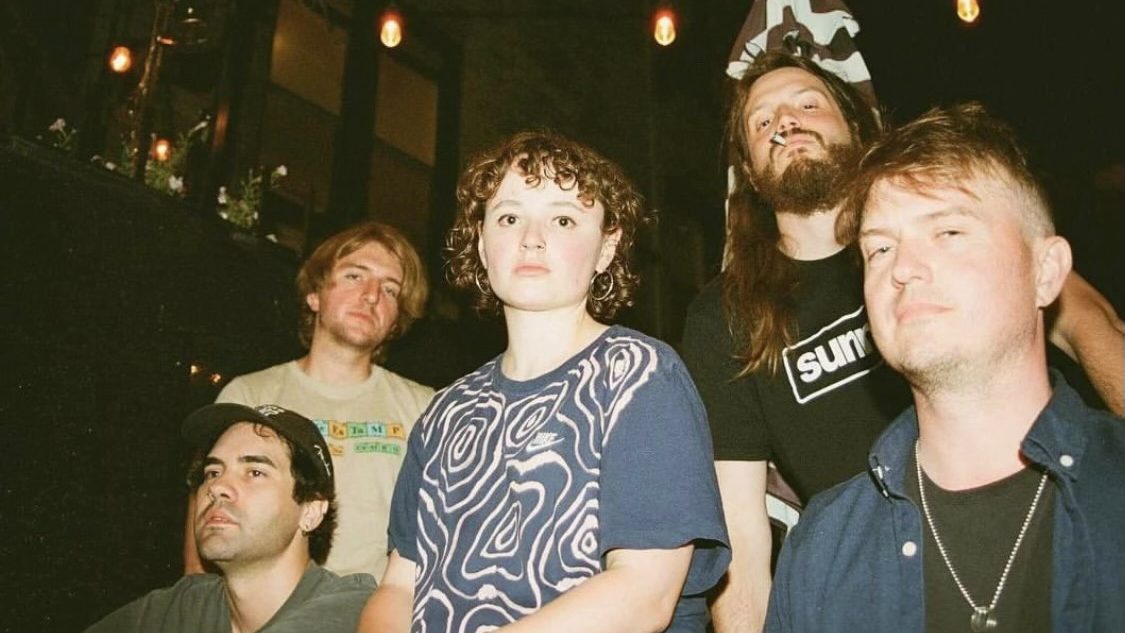
SR: Is it easy for you to tap into and relive these old unsavory feelings?
JH: Yeah, I think a lot of what those songs are written about is gonna feel visceral, and it is easy for me to remember how that feels. But yeah, “Eat Me Up”, my mom hates that song. There’s definitely some metaphors in there that she finds unsavory for sure. “Not My Medicine” is supposed to feel more empowering in the message, like you don’t understand what I am apart from you, but at the end of the day, I’m my own person, and I can separate myself from you.
SR: You are known for having a really rockin’ live show, and that rawness translates into such a fun record to listen to as it feels like a step forward in your band’s recorded sound. How involved was the band when fleshing out these songs?
JH: Generally, I write my songs in a pretty solitary way, but I feel very blessed to have found a group of people who just get it, they hear it so fast. It’s really the most rewarding feeling. I’m primarily a singer, so I’m not a super well trained guitarist. I was an English major in college, and my songs are really lyric driven. I sometimes have ideas for guitar leads that I hear in the song, but I’m not someone who shreds necessarily. But James [Strelow] and Bronson, they shred. I do play acoustic sets sometimes where it’s literally just me and my acoustic guitar and it’s a really different sound than the full fleshed out band. Playing with them is something I’ve started to become really addicted to.
SR: Have you been playing these Attic Days songs live for awhile now?
JH: That’s the funny part, when it comes to recording, it takes such a long time that I’ve been playing almost all the songs on this album for at least a year. I think it’s kind of funny to release it, especially to the people who come to a lot of my shows, because I’m like, ‘it’s finally out!’ I think a lot of people expect that it’s all brand new stuff and I’m like, ‘no guys, like this is old.’ I’ve already lapped myself in my songwriting and I have a few more albums in me that are not recorded yet.
Jane Hobson will be playing the McPike Sessions in Madison on June 15 and then back in Chicago at Gman Tavern on July 19.
Written by Shea Roney | Feature Photo by Maha Hemingway

 the ugly hug