It’s difficult to find your footing after times of grieving – though condensing time like an accordion, capturing both the past and present into a full journey of cathartic healing feels so effortless at the hands of Noa Jamir. Last week, the New Orleans/Lafayette-based singer-songwriter shared a beautiful exploration of self worth on her debut full length album Cicada. Taking a two year hiatus, Jamir dropped out of her last semester of college as she went through a “dormant hell” of loneliness and depression. To reemerge from those dark moments as a beautiful new spirit, Cicada lets breezy tunes take the reigns as Jamir documents her personal experience of healing and the importance of holding onto every step.
Cicada plays to the soft-rock headbangers and pop song lamenters that live for the intimacy of heavy summer air. The album opener “These Walls” plays to the momentum of a slow burning anthem – swelling in a compressed state of confusion and frustration as Jamir tries to break down her self-constructed walls of what it is to love and to be loved. The country-adjacent “Want to Love” scratches that yallternative itch that is spreading around these days, with its atmospheric lap steel (Alan Howard) annunciating the tenderness of the track and the longing in Jamir’s lush vocal performance. The stand out, “Indebted” is a steady indie-rock burner, culminating Jamir’s rage and fortitude into a patient demeanor of confidence, singing, “He proved to me that I can survive anyone and anything” – joyous and defiant all in one.
Some of the most impactful moments on Cicada are also the most sonically exposed – sitting still as the words drip like warm honey over the sparse soundscapes. “Oh I know it’s comin / The rain, the sun, the flood of all the memories,” Jamir sings with a quiet whisper on “Nights”, as the chorus blooms with layered harmonies over a folky guitar. The song lingers with an intense beauty, giving space to those unwanted thoughts – not allowing Jamir to deny their existence. With the inclusion of two voice memos from close friends, we are given a rare glimpse into Jamir’s support system during those rough moments – personal, endearing and beautiful, a culmination of the project at hand. “Mariah’s Interlude” is a brief spoken piece, tending to the patience of self care. “Aidan’s Interlude” speaks, “it can be tempting to numb ourselves […] it’s just helpful for me to remind myself that when I’m feeling a lot, that is my superpower and that makes it possible for me to truly live” – and to Aidan’s credit, Cicada feels to embody that statement.
Cicada moves at its own accord, and that’s okay. As a compositional album alone, the dynamic shifts, deliberate pacing and endearing hooks create a charming and enticing listen that runs no longer than 25 minutes. But what makes Jamir’s writing so special are the dualities that often are overlooked in times of struggle are now given a their own voice. “I realized what this was for me / A way out of my own company,” she sings on the aforementioned “Want to Love.” What feels like a harsh drive down memory lane isn’t taken as regret or mourning, but rather the importance of recognition and growth that got Jamir to where she is now.
Not that long ago, New York was once a vibrant home for independent artists, musicians and creatives alike – all trying to find their place within a community of sustainability and support. With plenty of independent venues, promotors and journalists doing the hands-on work, the means to share your art were vast and obtainable. But over the years, the accesability to express yourself became more difficult, as corporations like Live Nation and Spotify cornered the market, show spaces and venues shut down and journalism became blocked behind paywalls, eventually leading to a large cultural and financial gap separating who is able to participate.
Temporary State University is a new non-profit organization that is dedicated to training the next generation of New Yorkers to throw their own cultural events. With an emphasis on educating and organizing through three workshops this fall, TSU will teach you how to plan, organize and execute a show in a fun, fair and safe way for all.
As they gear up for these workshops, TSU will be hosting the Temporary Day Party, their big fundraising drive this Saturday, June 29 in Ridgewood, NY. As an all day event, the Temporary Day Party will consist of a 12 hour, 15 act show of some of New York’s best musicians, a handful of local vendors, as well as a preview to the full workshops.
Jordan Michael is the founder and Director of TSU. Growing up in the show world, as well as once running the NY Showpaper, Jordan has witnessed a change of the recourses, accountability and access to safe spaces in New York over the years. With the help of Hannah Pruzinksky (GUNK, h. pruz, Sister.) and Ceci Sturman (GUNK, Sister.), TSU is building up their student body of new stakeholders and leaders to rebuild that once vibrant community.
We recently had a chat with Jordan to discuss the organization, talking about the needed public shift towards redefining a venue, sharing knowledge through workshops and the overall goal for Temporary State University in the NY community and beyond.
This conversation has been edited for length and clarity
Ugly Hug: Before we talk about this project, what is your background in the New York community and where did you get the idea to start TSU?
Jordan Michael: I grew up working doors and bar, booking shows, and sometimes doing sound at venues. I also had a bunch of sound equipment that I acquired and started renting out to people. I grew up in a very vibrant community of DIY spaces, independent promoters and bands that were homeless and just toured nationally. At the time, America had such a vibrant community of DIY venues and independent media that you could kind of just dedicate yourself to touring and playing shows in this network, creating a ladder that you could climb to build a career for yourself. Now that ladder, through a million different cuts, has fallen apart. And then the pandemic happened and it just felt like the long aging process brought out the natural death of the community I grew up in. When I started to see that there are these 23 year old kids who just moved to New York that have no connection to the community and who need the help – like the kids who want to do a DIY show under a bridge in industrial Queens – I want them to have a PA system to make it happen.
UH: You have been using a very unique social campaign that documents empty spaces with the words, “there can be a show here”. What is TSU’s approach to redefining these public places that wouldn’t typically be considered a venue?
JM: Public spaces are for the public and we are the public. A show is just a gathering of people in the same space, paying attention to the same thing. You can do that anywhere. When I saw the DIY community of our teens kind of die off, a lot of it was geared towards the closure of spaces and venues. I loved so many of those spaces, and it’s not that I don’t mourn their disappearance, but it highlights the fact that a lot of the problem is individual people with a lot of consolidated power. If bands email me because they don’t have a place to play, that’s a bad sign. You shouldn’t rely on somebody else to express yourself and you shouldn’t rely on small businesses to express yourself. I’m not against doing shows at venues, most shows happen in venues, but I intentionally want to get people out of the mentality that if something doesn’t happen at 8 P.M. at a bar then it can’t happen at all.
UH: The Temporary Day Party is going to be held at a place called Party Connection in Ridgewood, NY. What kind of space is that?
JM: In cities like New York where apartments are so small, there are a lot of places where you can rent out one of these halls as like a community living room. When planning this event I didn’t want to do it in a venue, I wanted to do it in a place that theoretically you could do a show in and show people how you take a place that isn’t a venue and turn it into one for the night.
UH: A 12 hour show is pretty epic, and I can only imagine the strategy and the energy that went into planning it. How did you approach such a task?
JM: I’m currently writing a whole zine about how you herd all the cats involved in a three person bill – I can’t even get into the logistics of doing it with a twelve hour show. You come up with a bunch of people you ask to play, you figure out when they can do it, you compile a list of all the different slots people can play, and then you just puzzle it together. You also just have to figure out what instruments people are going to play and the equipment you need. Then you announce it and hope people show up.
UH:You also plan to give a small preview of the workshops that TSU will be hosting this upcoming fall at the day party. What kinds of topics will the full workshops go over as you get people started and trained to host their own events?
JM: The workshops at the event will just give people a sense of what we are teaching and how we’re going to be teaching them. We will have a guest speaker that I will ask some questions and then the audience will have the chance to ask questions as well. But the full workshops are broken up into three sections. The first section is curating the show – when you have an idea for a show and you have all the bands, a venue and a date picked out. The second workshop is pre-production and promotion, which is getting ready for the show, making sure you have everything you need and you’re doing all of the things you need to do leading up. Then the final workshop is the day of the show, making sure nothing bad happens and dealing with something bad happening so it doesn’t become something horrible happening. We will also soon be releasing guidebooks on each subject that will be available on our website for free. It’s basically just a more condensed written version of what we’re going over at these workshops. They are meant to be picked up and read in one sitting to feel like you get a sense of what it is we are sharing.
UH: As you run these workshops in New York, what do you hope to see expand to other communities as you share these tutorials to the wide public?
JM: I have no ambition to expand whatsoever. I don’t even want to keep doing this project in a few years. The dream is total obsolescence. If this is just something that is common knowledge and people just know how to do it, then it doesn’t necessarily need to be taught to them. And if tons of different people are putting together different collectives to share resources to do shows, then this doesn’t need to exist and I can quit. That’s the dream.
You can find various ways in which to help TSU reach their goal here, including a monthly contribution, donating sound equipment or storage spaces and even professional insurance services. You can now pre-register for the official TSU workshops. Visit their website for more information.
On “a boy called ear,” Demi Spriggs (Athens, Greece/ London, UK), takes traditional British folk melodies and pairs them with freak-folk influences and shoegaze improv. The result is a four-song EP that walks between past and present — evoking feelings of melancholy, world-weariness, and brief moments of joy set across its tales of love and loss.
Spriggs, who is also a visual artist, ethnographer, and doctoral candidate, isn’t the first to marry old English folk songs with modern songwriting sensibilities. There’s a long list, ranging from 1960s/70s folk-rock bands Fairport Convention and Pentangle; the 1990s/ 2000s freak folk scenes; as well as contemporary folk artists such as Anaïs Mitchell and Laura Marling.
But what Demi Spriggs does well on a boy called ear is present a unique take to time-honored folk ballads; tying together feminist themes in these story-song narratives.
In doing so, she’s created new tales of her own that align with the role of the bard. She’s the storyteller who weaves a yarn of history, myths, and ritual into verse; transfiguring the past to speak about the here and now.
Demi Spriggs’ high and mellifluous voice is coupled with her intricate nylon-stringed guitar fingerpicking, which produces an intimate and emotionally-present record. These stripped-down arrangements lend themselves to these songs, which are nestled between desire, sadness, and hope.
Released on Jan 12, this is Spriggs’ first project with New Paltz, New York-based record label Team Love Records. The label was founded in 2003 by indie folk artist Conor Oberst (Bright Eyes) and musician and owner Nate Krenkel.
The EP’s opener, “holding fair,” begins with an a cappella quote of Scarborough Fair: “Parsley, sage, rosemary, and thyme.” From there, Spriggs builds a scene of a relationship slowly falling apart.
Musically, there’s a mix of emotions; effervescent and bittersweet that captures the euphoria of the early stages of love and the sting of rejection. “My love/ You can’t chase time/ And you can’t hold the fairest ones down.”
And on “a tale of love and sadness,” Spriggs’ winding fretwork with her pure and honeyed voice contrasts with themes of unrequited love. The song left me feeling as though a part of me had been hollowed out. It summoned a rising tide of old memories — haunting and beautiful.
The highlight of the record is “if you don’t say it, the wheat will,” which sees Spriggs as a sayer steeped in ancient melodies with a portent message. It’s part folk ballad and part Greek epicedium with a foreboding sense of loss.
There’s an eerie calmness to Spriggs’ vocal delivery, which adds tension to the plaintive narrative. “And I see them in the fields/ Shadows of the ones who flew/ Of the men who didn’t know/ That they were dying before they grow.”
A boy called ear closes with the electric guitar-driven shoegaze instrumental “escalator jazz.” This drone-focused piece is a departure from the rest of the EP stylistically, but still emotionally fits with its wistful experimental improv.
Spriggs’ wrote on her Bandcamp page that “escalator jazz” acts as a bridge for a future release titled “Night Folkways” — an experimental folk project with looped textures, vocals, and FX pedals. Although it serves as a connective thread between the releases, “escalator jazz” doesn’t seem like a memorable way to close out the EP. The beating heart of this record lies with Spriggs’ abilities to bring new ideas to traditional folk storytelling. Despite the lack of cohesion at its end, Demi Spriggs’ a boy called ear is a heartfelt collection of songs that takes inspiration from the past, while moving forward with inventiveness and a willingness to experiment with the folk genre.
Every Wednesday, the ugly hug shares a playlist personally curated by an artist/band that we have been enjoying. This week, we have a collection of songs put together by Brooklyn-based singer-songwriter, Nisa.
Crafting a career out of skies-the-limit songs, finding a beautiful blend in the harshness of garage rock, the glittery gaze of power pop and the undeniable release of a good dance track, Nisa released her debut full-length album, Shapeshifting, off of Tender Loving Empire Records earlier this year. The album carried its name sake in both the sonic explorations and narrative feats as Nisa wrote from the freights of a moving identity; one that is no longer fitting – while in line – the next is not yet attainable.
Sharing this week’s Guest List, Nisa says:
“This playlist came together in a secret garden I found near my apartment. I wish I knew it existed before this week, but I’m also enjoying the excitement of a new place to sit. Some of these songs have been swirling around in my mind as New York enters brain-melt levels of heat, while others felt connected to my neighborhood / built environment. Also, the Durutti Column is one of my favorite bands, and listening to them feels like endless sunshine…”
Nisa will soon be playing two shows supporting King Hannah on 7/1 at Johnny Brenda’s in Philly and 7/2 at Elsewhere Space in NYC. Shapeshifting is out now on all platforms.
Triples is one of Canada’s best-kept secrets. With an emphasis on loose and energetic DIY performances, the band has put out some of the most heartwarming and fun pop songs in recent memory. Today, the Toronto-based project of songwriter and actress, Eva Link, has released her long awaited new single, “So Soon”. As a follow up to 2019’s debut full length, Big Time – an album with no shortage of glittery attitude and loveable hooks, Link returns to her form more confident than ever, with powered up, jangly guitars and an enduring melody that reminds her to embrace what she knows best.
Triples has always gravitated towards a nostalgic feel – taking inspiration from 90’s alt-pop legends like Guided by Voices and Liz Phair, as well as that underground punk charm that is both invigorating in spirit and timeless by nature. “So Soon” showcases the band with a more expansive, rock-forward sound, but at no loss to the heart and pure enjoyment that comes with Link’s songwriting.
“Whose guilty conscious keeps them hiding away/ Fear of fucking up with things you say,” Link sings, as a steady guitar introduces the song – a batch of open ended doubt setting the scene. It doesn’t take long before her layered harmonies become responsive and the driving drum fills and heavy guitars turn the song into a pop-rock classic, as “So Soon” reaches for that joy of embracing what fills us up.
“This song is about coming out of a hibernation, where you’re just used to feeling bad or sad, and then reemerging into the world and remembering what it’s like to feel like yourself again doing the things that made you feel happy, actually doing the things that matter to you (the “cool and right things”) you recognize the YOU that starts to come back,” Link shares about the song.
“So Soon” is accompanied by a music video shot by Seamus Patterson at Paste Studios back in 2023. The video plays with a coming-of-age feel, as the band rocks out in a twinkle lit garage, capturing a new and exciting step forward for Triples.
Triples will be performing with PACKS (Eva’s sister and frequent collaborator, Madeline Link’s band) at the Drake Underground in Toronto on July 6, and look to release their forthcoming EP in the near future.
Earlier this week, the Brooklyn-based trio, Sister., released a new single, “Colorado” off of Mtn. Laurel Recording Co. If you live in New York and have seen the band perform in the past few months, whether that be stripped back for a house show or a full band endeavor, you most likely have heard a variation of this song. Regardless of which version, “Colorado” finds Sister. exuding a level of patient handling; a relic that romanticizes the enduring process of their collaboration, all while further defining their style and sound at their own pace.
This interview was conducted in January of this year. The band took the time to call me as they sat between projects and recording sessions of “Colorado”. We decided to hold off on publishing this piece until the song was released, and in the sense of music PR, that was the move – and for the sake of the piece, it allowed me to watch the contents of our past conversation live its life in real time.
Photo by Avery Davis
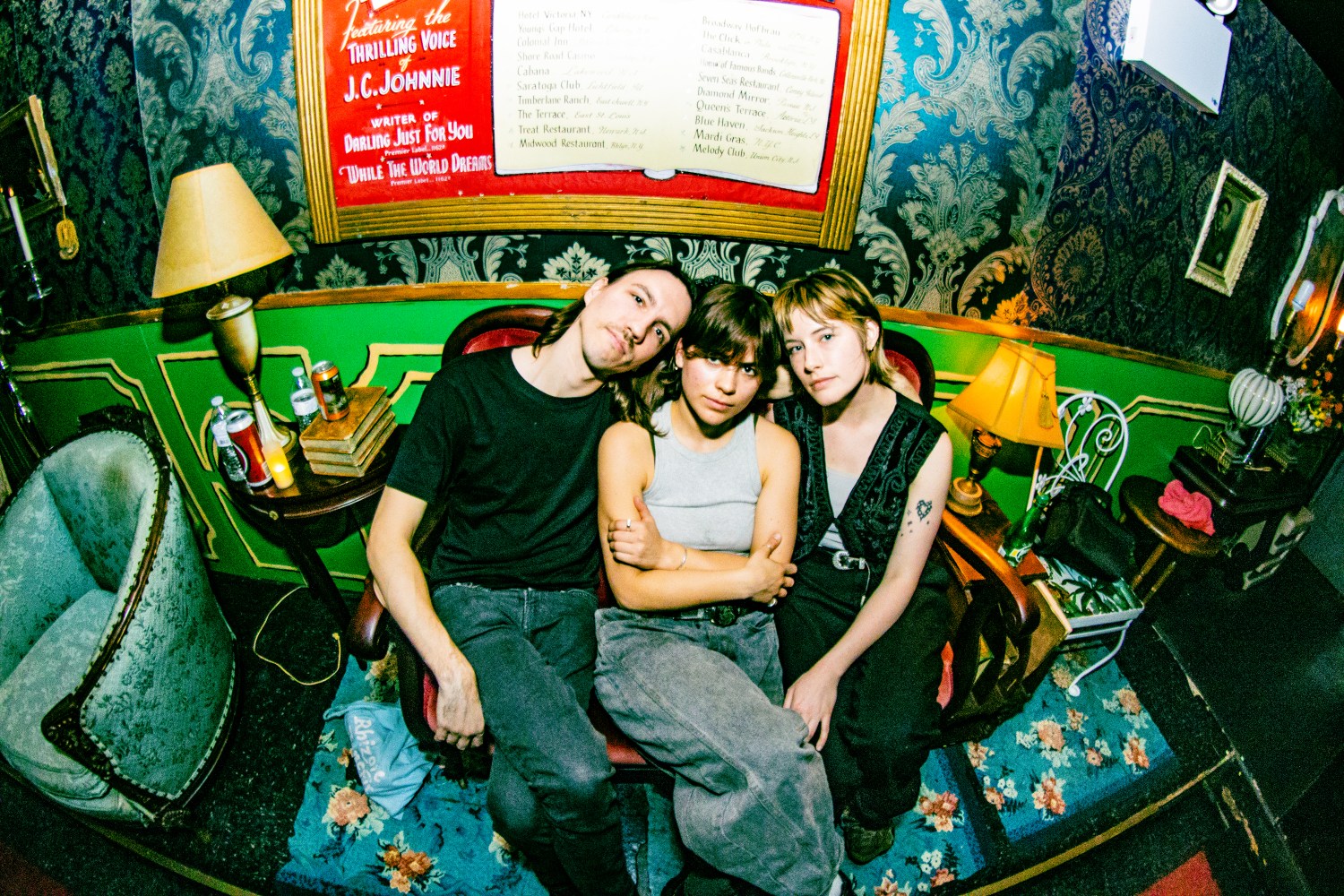
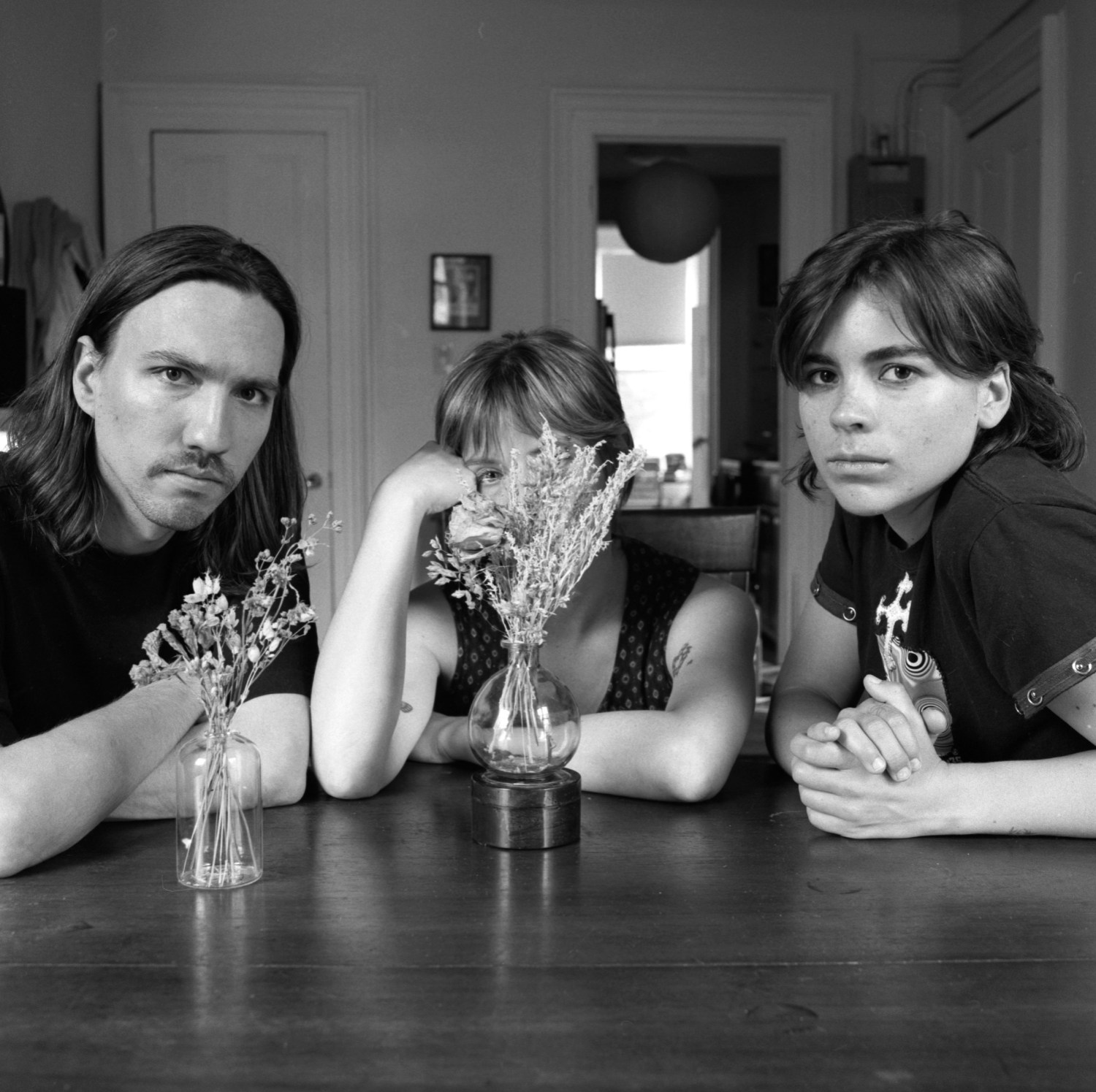
Sister. is composed of songwriters and multi-instrumentalists Hannah Pruzinsky, Ceci Sturman and James Chrisman. Last October, the band released their debut full-length album, Abundance, which found the band in a comfortable spot. Pruzinsky and Sturman started the project as a duo when they met in college, and since then, their songwriting found a similar path of sincerity and inventiveness in Chrisman’s warm and unique production and textured instrumentation.
At its core, Abundance is a bedroom record, hopping between locations in the process of writing and recording. Most of the album was tracked in a small cabin in Woodstock, NY – a little run down unit making a comfortable home for the trio to set up shop and flesh out the new songs. Unlike recording in a professional studio, the band was able to take their time, as Pruzinsky shares, “I think it was fun to be able to stretch it out so long. Even more so than recording in the cabin, I feel like I always think of us recording all the overdubs in my room with James at the computer and Ceci laying on my bed re-listening to the songs a million times.”
Whether at the cabin or in Pruzinsky’s bedroom in Brooklyn, the band recognized the outside elements that allowed the recordings to breathe; a symbiotic relationship between the noises captured and the environment in which the band occupied – “when we had the mics gained up you could hear the creek that was under the cabin,” Chrisman recalls, sharing an example form their time in the woods. These moments throughout Abundance latch on to our senses; a blend of birds in conversation, the clicks of guitar pedals and keyboards, pouring rain and the creaking of old wooden floors all stand out in their own way, yet add a collective beauty to the overall experience of the record. “That’s actually a personal preference of ours,” Sturman says, “using whatever happens to be captured, instead of going back and trying for a better sound or recording.” Something she further explains, “I think we’re just really good at embracing that sort of thing – this is what we did, we’re gonna honor it and that’s gonna become the song.”
There is no more striking example than the album’s opener “Ghost” – a song attributed to Sturman’s time learning the piano and recorded on a trip with her mom to a ranch in New Mexico. The final version grows from that original voice memo, capturing a performance of Sturman playing the song for her mother. “Ghost’ was really uncomfortable for me to accept,” Sturman shares as the others recall having to convince her to use it on the album. This song was my introduction to Sister., first listening to Abundance on the train when it was released. Its spacing felt like a familiar form of tenderness, one that knows that healing is an option, as Sturman sounded so distant in her presence, but so vulnerable and compelling in her performance.
The choice to place it as the opener wasn’t much of a topic of discussion for the band; “we started sending the album around a lot, and people said “Abundance” has to go first – you need a big entrance, and we all were like, no,” Pruzinsky laughs. It was a gut feeling, trusting their creative intuitions that kept it in its tracking spot. “I think there were definitely nerves about it, but it does welcome you into the expansiveness of the album,” Pruzinsky continues, with Sturman adding, “well, it felt like a risky move for me because it feels vulnerable, but I think it’s cool. We have to put trust in the listener that they will keep listening, and then they can understand why that might have been the first song.”
And to the band’s credit, having “Ghost” open the album perfectly sets the tone for a project that doesn’t stay in one lane for long, but rather focuses on their craft as a culmination of moments. “It’s like a record of so many things,” Chrisman says about the song. “It’s a record of Ceci and her mom and one particular performance, but it’s also because Ceci is learning the piano, it’s a document of a moment in her relationship to piano, too.” And once again, inviting in their settings, “even a document of that acoustic space with a weird bird in the background,” he laughs.
As a project, Abundance savors maximalism at no expense to intimacy, and originality through vision and feel of its players. Songs like “Notes App Apology” and “Guts” flow with melodic folk voicings through a classic and tempered alt-rock drive. “Gorilla vs. Cold Water” is a patient build, standing strong through synth drones and heavy guitar strums. The drum machine track plays second hand antagonist in the dark turns of “Classon”, and “Kinder” reaches similar emotional heights until decomposing into dust as the instrumentation burns from the inside out. “There are so many different narratives that take place on this album,” Pruzinsky shares, “I think what came through were these momentary glances in time.”
Abundance became a document of the trio’s growth, experimentation and ultimately, their form, but it is also helped capture the way that they learned to communicate creatively with such intention and ease. “It was more like a phase or a chapter for us, as songwriters and collaborators,” Sturman begins. “I think we have just been growing a lot as people and as musicians, so we got to just use this as an opportunity to co-write and just really try to see how we could make a bunch of different songs really work together and have cohesion.”
That cohesion comes through in the varied feels of comfort that arise from the individual songs, regardless of their build, emotional pull or stylistic choices. “For so long, Ceci and I had no idea how to articulate our ideas to each other and how to find someone that also just knew what we wanted,” Pruzinsky shares. “When we were able to finally get there, it was like, ‘okay, now we can do everything we want!’ It’s like we can be doing the most minimal thing, which is just the three of us playing acoustic instruments in a room, and it feels so good and so comfortable.”
Photo by Felix Walworth
“We wrote Colorado together,” says the band in their press release. “Hannah started with the chords and the line ‘You drive to Colorado and I get emotional,’ and we built it all from there.” The song builds off of those same elements of loose textures, shared ideas and honored performances that live within the heightened emotional release of the song. Within their composure, the band thrives in pushing the vast soundscape further, but in no way at the expense of losing that intimacy that makes their performances so full and memorable.
While recording “Colorado”, Sturman recalls a time when their friend and label manager, Elijah Wolf, said, “this is such a classic Sister. sound,” in the middle of their session. “That’s so cool that we might have something like that,” she says. And as “Colorado” now sees the daylight, and it was time to resurface this old conversation, I was instantly enveloped in that first experience I had with the Sister. sound, a moment of true Proust Effect on public transportation; my own momentary glance in time that felt so present. And to its effects, that classic sound doesn’t feel to necessarily label their form, but rather a chance for the band to define themselves with where they are now in the moment, knowing they have so much more to show us.
“Colorado” is accompanied by a music video made by V. Haddad with the help from Nara Avakian. You can stream “Colorado” on all platforms now. Pruzinsky and Sturman also run New York-based show zine, GUNK, which is shared at the beginning of every month.
Today marks one day since New York-based singer-songwriter Claire Ozmun’s song “I-90” entered the world; now, with an accompanying music video made with hand-written lyric animations (by the Ugly Hug’s own Audrey Keelin) and home video recordings from Ozmun’s personal family archive, Better Company Records’ newest signing makes an exciting entrance through her foray into a released discography.
Ozmun says, “I started writing ‘I-90’ in 2020 while living in my parent’s basement. I was facing student loan debt, a waning relationship, and changing family dynamics. ‘I-90’ is about granting myself permission to feel the weight and silliness of that time.”
Ozmun’s EP, set for release on July 19, is titled “Dying in the Wool.” As described in a press release, “I-90” “offers a candid look at early adulthood, capturing the experience of comparing personal achievements with those of peers and navigating complex relationships and self-discovery. Set against Midwest-imbued guitar parts, vocal harmonies, and nostalgic field recordings, “I-90” reflects Claire’s introspective nature and trust in the future.”
If you’re in New York, her EP release show (with support from Hiding Places and Adeline Hotel) will be held at Sultan Room on July 24th and you can buy tickets here.
Building upon the gratuity of contrast and the wiggle room of a DIY world, Georgette Pullover is the latest mini-album from New Orleans-based creative project, Make Your Maze. Beginning in 2019 as a Bandcamp-only outlet for multi-instrumentalist and producer Andreas Jahn (Sympathy Wizard) for his more off-kilter sonic explorations, Georgette Pullover sees a definitive expansion of the project into something that is both sweet by nature and confident at heart.
The album opens with “Dov”, where electronic tinkerings push back tides of static waves in a competition of the harshest. It’s an abrasive opening, but it stands out as an incredible differentiator to what follows in suit. While experiencing intense OCD lows, Jahn spent the time fleshing out these tracks as a writing exercise to contrast anxiety-relieving and anxiety-inducing sounds – building fixations to live inside the listener as well. Songs like the delayed mania of “Bronwyn Avery” or the dilapidated folk diddy “6AM Flower Carton” thrive upon their own relapse, creating soundscapes of brash electronic layers and vocal manipulations that graze the edge of anguish.
But in the in-betweens of frustration from unresolved mediums, Jahn compartmentalizes relief in the midst of admirable twee-pop instrumentations and beautifully catchy melodies that are all tied neatly together with a bow of lo-fi rock n’ roll whimsy. Songs like “Pastry” and “Friend Foundation” live amongst Jahn’s warm production style – allowing the repetition of sounds to lift up the catchy and oftentimes complex melodic structures. One of the standout tracks, “baseball” is a patient breeze, making sure to capture the entirety of a blissful feeling, “in the same hi-resolution render” Jahn sings, reaching the high notes of the chorus. But throughout, Jahn romanticizes the sound of nostalgia, whether that be through revitalizing song snippets written in his teenage days or embodying the works that have inspired his own projects (“Awful Mess” by the Softies), there is an undeniable layer of joy tucked into the songs.
Georgette Pullover offers a remarkable escape when taken in as a whole – where Jahn plays with both our sour familiarity and active wonderment for the world around us. It’s a very sweet album, one that is memorable upon introduction, as it allows the listener a view into our own characterizations of what we personally find comfort in – an attribute that Make Your Maze humanizes so well.
You can stream Georgette Pullover on all platforms as well as purchase a limited edition cassette made by Kiln Recordings in New Orleans.
Every Wednesday, the ugly hug shares a playlist personally curated by an artist/band that we have been enjoying. This week, we have a collection of songs put together by songwriter and guitarist, Jason Evans Groth of Magnolia Electric Co., Haunted Library, the Coke Dares and others.
As a librarian, Groth is a natural archivist and this collection of songs connects the web of friendships, networks and inspirations that he has encountered within his long running time in the indie music world. Touching upon the impact that individuals like Jason Molina and Steve Albini had on his life, this playlist is a personal love letter to the passion that comes from music and the people who make it something worth holding on to.
To accompany this curation, Groth has shared a write up to account each song to a specific memory, person or purpose that has moved him.
I moved to Raleigh eleven years ago, for a job that I was offered two days after my friend and bandmate from Magnolia Electric Co, Jason Molina, died. I left Bloomington, IN, my home through college and twelve years beyond; the place I moved to to keep my high school band going and where I joined, subsequently, all of my touring bands; the place where I watched my friends start Secretly Canadian Records; where I hosted, attended, and played dozens (if not hundreds) of house shows and bar shows and festival shows and college shows; and I started life as a full time librarian at a big state school a few states South. I didn’t fully stop touring but I did fully start a different career. Music has shaped my identity for as long as I could turn up the volume on the radio, and I think about everything in terms of it.
I’m now on the brink of another big move to a different college town for a different academic librarian job. Two days before I was offered the job, Steve Albini, who I got to work with on three records and who I consider a huge influence and a friend, died. The timing is not lost on me, and I’ve been thinking a lot about my friends. Not just Jason and Steve, who both died too young, but all of my friends. The ones who are or soon will be in towns I used to live in; the ones who I still keep in touch with no matter how far or close; the ones who I will meet and who I will remember to call and who I can’t wait to see again; all of my friends.
Photo Courtesy of Jason Evans Groth
This list is made entirely of songs that I have, over the last year or so, added to or heard on collaborative playlists with friends. Friends who share music are and always will be my best friends, and sharing music like this – music that I think of when I wake up, music that means something to me for a moment and I capture into a list, music that is brought up in conversations, or music heard in a movie, or music that is evoked because someone says something that makes me think of lyrics – is one of my favorite ways to communicate. Looking back at these lists I see a snapshot of me not just over the year but as a whole, as a person who has been fully taken with music for as long as I can remember. And all of the songs are songs that are both shared, specifically, with friends on lists, but were all shared with me by other friends, too.
Tim and Andy from Silkworm are friends (their band Bottomless Pit toured with Magnolia), and “Couldn’t You Wait?” is often the first song I think of when someone I love passes away. Steve Albini recorded that song, and Tim’s new band – Mint Mile – was the second to last band Steve ever recorded. The first time I heard “Farewell, Farewell” was in Utrecht on the last day of my first European tour with Songs: Ohia, played by our friend Burd Early as a wish for us to travel safely. Mark, the drummer from Magnolia Electric, shared The Goon Sax song with me because it reminded him of some demos I had made and shared with him.
The Gizmos – classic punk rockers from Bloomington – wrote a song about friends in the Midwest that just feels like home to me, and had my band The Coke Dares play some shows with them at a reunion a few years back. Jason Molina invited me into Songs: Ohia partly because he saw my Neil Young album cover band, The Cinnamon Girls, play Tonight’s the Night and told the head of Secretly Canadian “that’s my band.” Zeb, who plays in the Cinnamon Girls, showed me “Don’t Be Denied.” Amy O. is a friend from Bloomington and I can’t get this song out of my head. I heard this Heaven 17 song for the first time with my friend Sarah from Bloomington at a little reunion this past November in the mountains of Asheville. Rosali is a friend from the Triangle and “Rewind” is one of the best songs of 2024.
Here’s Steve with Shellac, being as provocative as ever, but also melodic, and sad, and cathartic, and darkly funny. All of that was Steve, and it sounds so good, as always. The Beths sing perfect harmonies and make great melodies, and my friend Kyle who works with me at the library casually introduced me one day when we were wiring music studios and I was hooked. My friend Scout writes great music, including this, which she recorded with Steve; Sal, who played on the last Magnolia tour, plays bass on this, and Will Oldham, who I admire and who I’ve gotten to play a few weird and memorable shows with, sings beautifully.
One time, at a Robbie Fulks show, Jason Molina told me that I was “as good as he is” at guitar; I don’t believe it, but I am grateful to Jason for showing me Robbie (and Steve recorded this, too). Nobody really showed me the Ariana Grande song but it’s been following me around, and it is so much like “Dancing on My Own” how could I not like it? It also has the word “friends” in it, so it works. Butterglory was one of those bands that only your friends knew about in the 90s, and I ended up meeting one of them at another indie rock person’s wedding in like 2011. Sardina was an amazing Bloomington band made up of people who were both inspirations and friends – the singer, Michelle, used to host my bands in Austin, and the drummer, Lon Paul, recorded my band the Impossible Shapes and played in the Indy band Marmoset. He also died way too soon.
Photo Courtesy of Jason Evans Groth
Steve recorded this Superchunk song, my favorite Superchunk song, and I thought it was appropriate to nod to the region I’m about to leave. My friend Matt does sound for them, too, so it all comes together. My friend David Vandervelde played “Looking for the Magic” for The coke dares when we stayed with him one night, and it’s never not been the first song I think of when I think of songs everyone should hear. My friends in the band Pavement introduced me to “Witchi Tai To” over the last two years of them playing. Ok, we’re not actually friends, but they changed my life and I feel like we’re close. And “Red Barchetta” was the secret fantasy song that Jason Molina wanted Magnolia to cover, shown to me first by my friend Greg in high school, but made legend by Molina at sound checks when we couldn’t quite figure it out. And “Thank You Friends” – the full version of which was shared with me first by my friend Jim, singer of my band Cadmium Orange, and the demo version which was shared with me by my friend Elizabeth, a DJ on one of the best radio shows I ever heard (Girls’ Guide to the Outlaw Spirit on WKNC in Raleigh) – is obvious.
Just writing this all down and looking at this list that is also a story, makes me feel so incredibly grateful for my friends, friends for whom music has been an identity definer and shifter, friends for whom friendship is often founded on the platform of passion for music. Thank you, friends.
Every Friday, a staff member at the ugly hug curates a list of their five favorite new(ish) releases to share with us all. This week, our photographer, Will, put together a list of distorted hugs, tin can stunners and loveable bedroom pop tunes.
“Angel Like You” by Nick Harley
In what has quickly become one of my favorite albums of the year, Nashville-based Nick Harley delivers a perfect blend of Appalachian folk and low-fi indie. “Angel Like You” introduces the album with melancholic nostalgia with a simple instrumentation, just a couple of well-picked guitars, and some drums. The sentimental songwriting, about the purity and optimism of the beginnings of love, is captured on the warm fuzz of analog recording. The entire album creates the ideal soundtrack for driving through the Appalachian mountains after a spring rainstorm. For now, I’m settling for a post-rain walk on the streets of New York, and it’s just as good for that.
“Gulf Shores” by Merce Lemon, Colin Miller
Continuing with artists hailing from Appalachia, “Gulf Shores” by Pittsburgh-based Merce Lemon and Asheville’s Colin Miller has been a part of my rotation since its release in January. One of two covers by Will Oldham (who I only recently really dove into the discography of, and it’s a must listen to for fans of Songs Ohia, MJ Lenderman, etc.) and the song is truly done justice. A beautiful and melancholic song, sonically and lyrically, Miller takes the lead of the duet with the floating sounds of steel guitar (my absolute favorite instrument) behind him.
“Dotted Line” by Why Bonnie
Their first single after signing to Fire Talk, “Dotted Line”, proves Houston’s (now Brooklyn’s) Why Bonnie, led by Blair Howerton, has picked up right where she left off. The single maintains the grit of the band’s past work, rounded out with a more polished sound. The song juxtaposes the all too common frustrations of making music as an indie musician over an energetic instrumentation. After getting the chance to catch their live show at Baby’s All Right this month, their upcoming album is definitely something to keep an eye out for.
“Julia” by Crate
New York’s Crate has a single line description on Bandcamp; “like a warm hug”. This description rings true with their debut single “Julia”. After a slow build of synth and drums for almost a minute and a half, it comes crashing down when the guitars come in, and you are enveloped in a sea of warm distortion. After being lucky enough to see them open for A Country Western at Trans Pecos, I was blown away by their sound and can safely say it’s one that is only better live. Here’s to hoping that more music is coming on the way from them soon!
“Trudy” by One Wheel Fireworks Show
To finish on a sadder note, Ashville’s Will Cole, releasing music under the title One Wheel Fireworks Show, delivers a full album of songs as devastating as they are beautiful. “Trudy”, a tribute to the all too relatable despair of an aging dog, the song’s namesake also being who the album is partially dedicated to, and just might be the best of both. Cole sings softly over a steady hum of fuzz with a single guitar before a short slide guitar solo finishes the song. The song reads like a page from a diary with its heartfelt sincerity which is driven home by a minute of audio clips about dogs and Asheville that extends the melancholic feeling of the track.





 the ugly hug