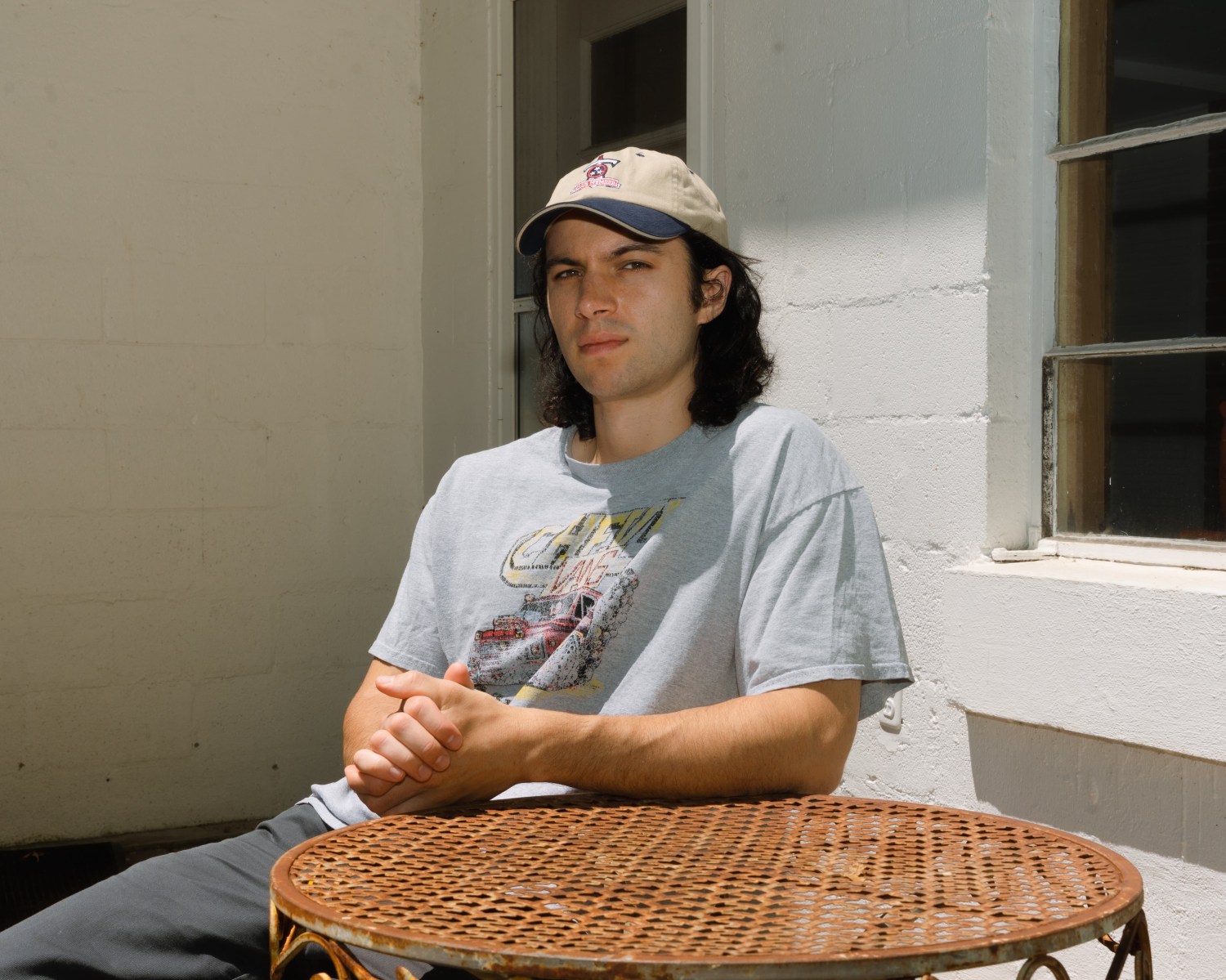
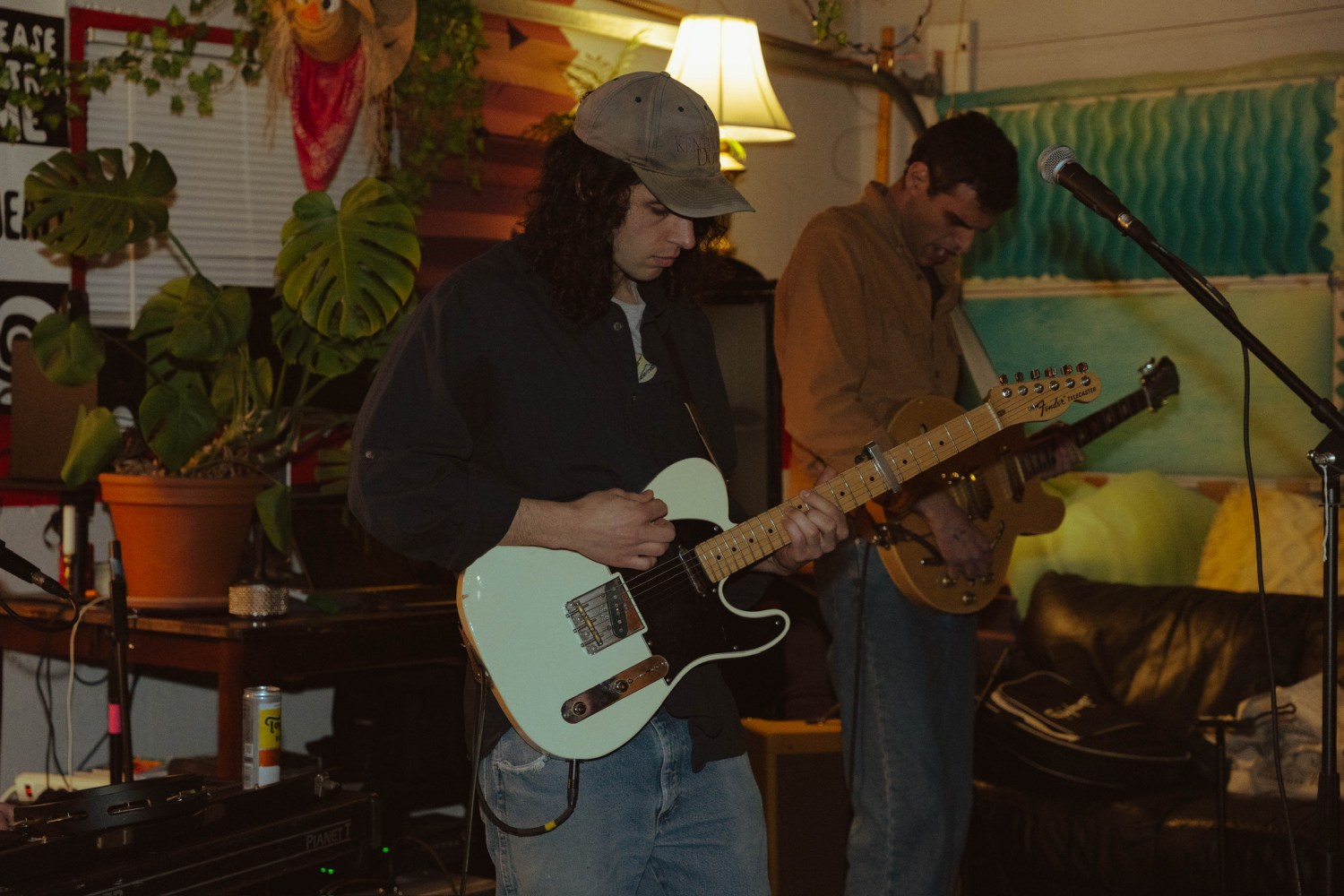
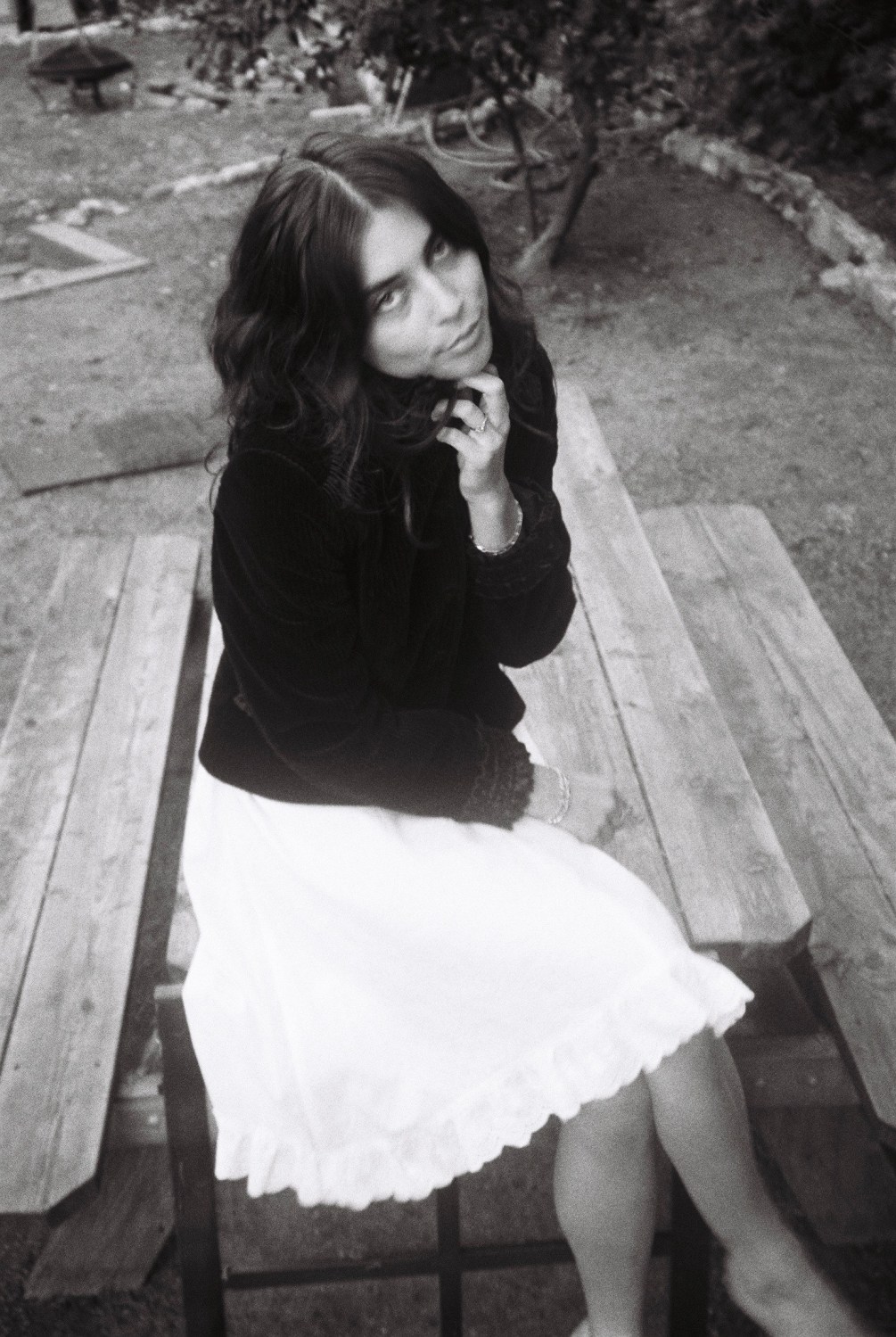
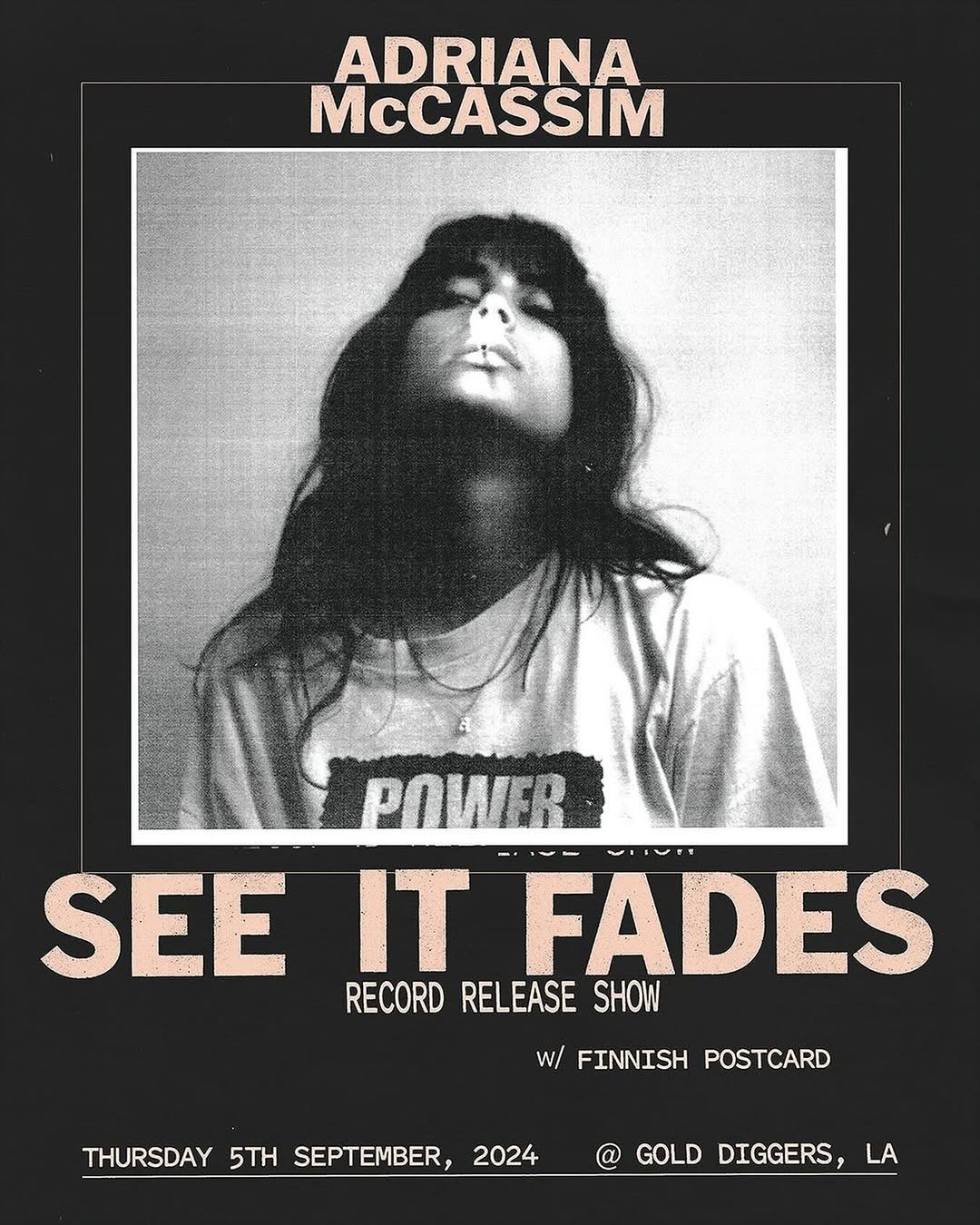
Adriana McCassim is an LA-based, Asheville-raised songwriter who shares with us her new single “Rust” out everywhere today. Returning to I’m Into Life Records, this is the first bit of new music from McCassim since her debut LP, See It Fades. Released back in 2024, McCassim invited the discomforts and bad habits into her dynamic space, her deliverance nothing short of empowering, bringing both a gripping presence and tender release to the here and now that she was writing from. Now brushing off the cobwebs, “Rust” finds McCassim returning to this space with both vulnerability and perseverance.
With a chill in the air, “Rust” opens with a voicing of gentle synths that spread like goosebumps down your arms, only brought to a reasoning from the light drum machine underneath. Although McCassim’s voice is the haunting focal point of each one of her songs, each instrumental piece becomes a limb in and of itself as “Rust” embodies a full heart consumed by a lost soul. As rich guitars rattle from its core, pumping blood throughout the space, we can’t help but to wonder if it’s enough to keep going. McCassim’s simple, yet fixated refrain, “Don’t rust your love”, leaves each word to its own means as she grapples with the space left open to the elements.
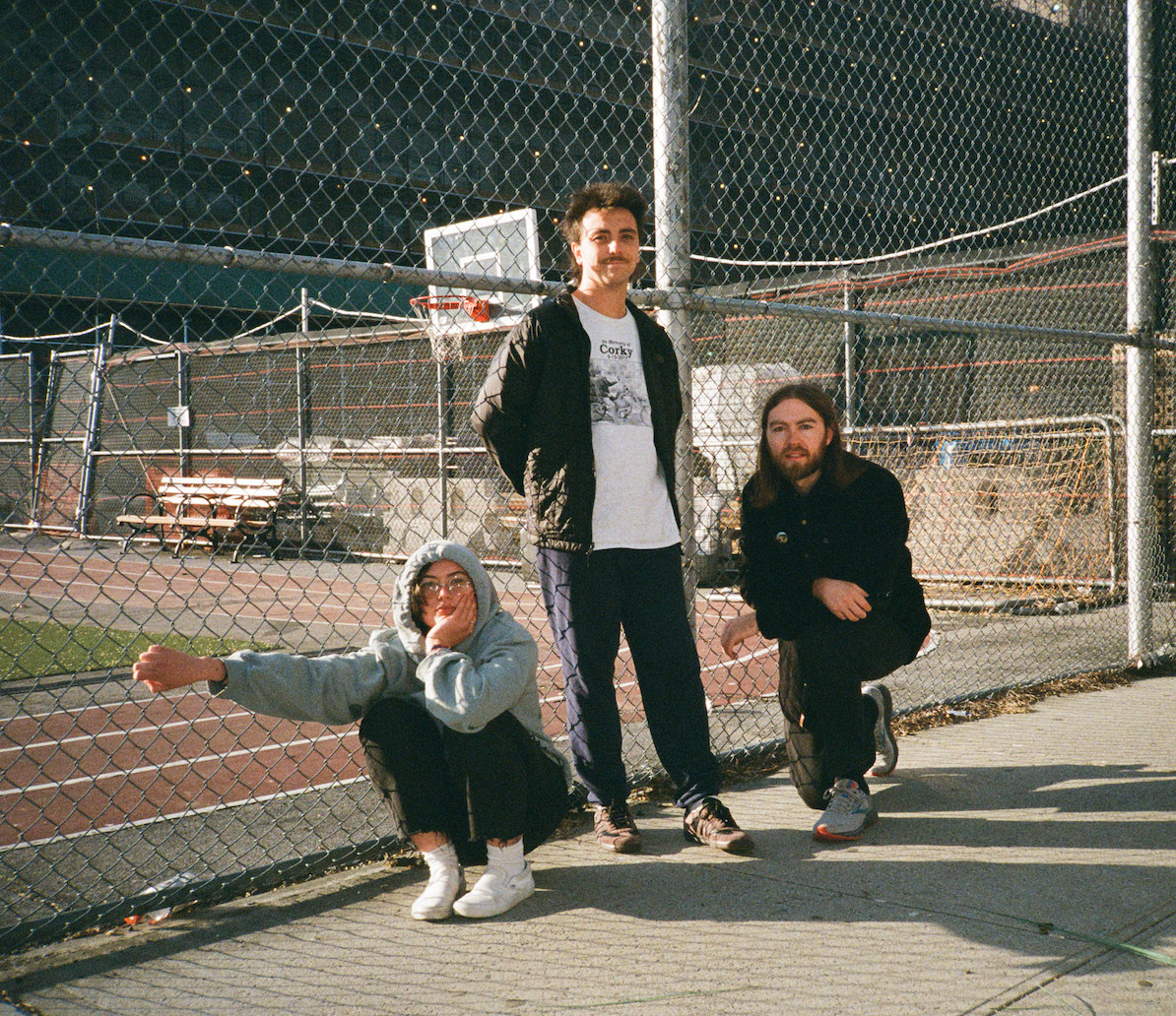
Photo Courtesy of Adriana McCassim
About the single, McCassim shares, “Rust is about the fear of corroding something beautiful – a plainspoken reflection on self-sabotage, intimacy, and the struggle to let someone in. It’s rooted in country music I was listening to at the time, and recorded mostly live. The track layers drum machines and electronic textures to create that textural world. This was the first time I played with a drum machine and live drums. It felt more human and interesting to listen to. We wanted this drone effect, and repetition, that eventually falls down by the end of the song emulating the lyrics.”
Listen to “Rust” here!
We also got to ask McCassim a few questions about “Rust” and how it came to be.
Following your debut LP, See It Fades, released late last year, as you continue to write and record, where does “Rust” fall into where you’re at in your life both creatively and personally?
Rust, to me, feels like a bridge in between See It Fades and this next record I’ve been working on. I was really on the fence with whether or not to include it on the next thing, but it felt so singular and important to put out now. I wrote Rust about this period in my relationship where I was really navigating self-sabotage and trusting myself. It really lives in its own world, creatively speaking, and feels like something other people might relate to.
Compared to the process on your last release, were there elements when writing “Rust” that came out of trying something different? Was there anything you challenged yourself to accomplish?
I think so, yes. This song was written in one sitting, oddly enough, while I was taking a School of Song Adrianne Lenker class. We were working on incorporating the idea of droning sections while writing – this song fit that mold especially just living within two chords the entire time. I really challenged myself to be as literal and honest as possible. Almost like an unravelling.
I also felt excited about starting this song with a drum machine, sort of in the demo phase, and following through with using it in the final version. Which we ended up achieving 🙂
Your songwriting has always been strickenly personal, and this song grapples with habits and the struggle to let someone in. Were there any feelings that surprised you as it was coming together? Do you find any comfort in the song, or does it sit as more of a reflective piece?
Totally. Everything that fell out first go around is pretty much in the song now. There’s words about corroding my relationship, my previous issues with ED, and just feeling deep self defeat. I wasn’t necessarily expecting that to unravel in one frame.
Now when I listen back, it does feel really comforting. Like a reminder and less punishing.
“Rust” was written inspired by the country music you were listening to at the time. What elements of a country song draw you in and how did they influence how this song came to be?
What I love most about country music is how honest and plainspoken it is. Oftentimes, it feels like a story first go around without fear of upsetting the listener. I wanted to emulate that. I was listening to a lot of Bill Callahan and Arthur Russell albums at the time.
Do you have anything planned for the future?
We are about half way through working on a new album right now, I feel so excited about what we’ve made so far. It’s such a different approach than See It Fades, mostly done live in the room at my house. Can’t wait to share it hopefully next year. We will see 🙂
You can listen to “Rust” out now, as well as order a cassette of See It Fades via I’m Into Life Records.
As a small music journal, we rely heavily on the work of independent tape labels to discover and share the incredible artists that we have dedicated this site to. Whether through press lists, recommendations, artist connections, social media support or supplying physicals, these homemade labels are the often-unsung heroes of the industry. Today, the ugly hug is highlighting the work of our friends over at I’m Into Life Records.
I’m Into Life Records is a tape label out of Ashville, North Carolina that was founded in 2022 by Ethan Hoffman-Sadka, who also releases music under the project Trust Blinks. What began as happenstance for Ethan to help some buddies out with their debut album has since grown into a mighty collection of recordings from an eclectic roster of artists. With a focus on the found community that comes with sharing music, I’m Into Life has become a staple in many scenes across the country. Over the years, the label has shared the works of remarkable artists such as Open Head, Laceleaf, Jolee Go, Tombstone Poetry, Good Trauma, Nobel Beast, Idle County, Finnish Postcard, Theadoore, Fraternal Twin, Adriana McCassim and Molly Drag.
We got to chat with Ethan about how the label began, what lessons he has learned and how the label got its image.
Early Label Days
This interview has been edited for length and clarity.
Ugly Hug: What sparked the idea to start a label? What were the initial goals, and have you seen those goals shift over time as you get more practice?
Ethan Hoffman-Sadka: It’s funny, I just did a music business presentation about the label, so I’m ready to talk about it [laughs]. What sparked the label starting was actually my friend’s band Open Head finished their debut album and they didn’t have a home for it or a way to market it. The label started from their release. Just as a way to help them and make vinyl for them. And then from there it grew a little and I was like, ‘Okay, I guess we’ll just roll with it’.
Did you have any prior experience with the whole releasing and marketing aspects of a label? Did you do any of that work when it came to your own projects?
I knew nothing about physicals. I think I had probably by then ordered tapes for my own music, but I also didn’t really start getting into music until a few years prior to starting the label. I was kind of a late bloomer, but I knew a little bit about the industry stuff. I used to work for this music blog called Alston Pudding when I lived in Boston and I did all their video stuff for them. And I also ran a social media account for my hedgehog at the time called Spiked Jones [laughs], so that was all I knew about using Instagram. I definitely learned the hard way how expensive vinyl is and have since pivoted to really prioritizing tape and CD releases.
covid times record store drop off at Dusty Records
Starting with Open Head, a few of the first artists you worked with were Jolee Go and Laceleaf. How did you approach finding the artists you worked with and how did you build this little community?
I’m not sure how I found Jolee Go, I think we just had mutual friends. And then serendipitously I had moved to Los Angeles around that time, and she was moving there. We’re both from New York, so I just really resonated with her first EP and saw that she didn’t have any merch for it. So, I just reached out and offered and then we developed a nice friendship. That was a kind of random one off. But after those first three releases, it more solidified an idea that it’s sort of a collective vibe, and if one artist succeeds, then everyone succeeds and gets a little more traction. To this day that’s kind of what makes the label worth it in my eyes. Artists that join the label are kind of all in this together.
As you started to build out your catalog, piecing together all these bands and making physicals, what were some of the trial and errors that you experienced, and what did you learn to embrace that has brought the label into what it is today?
This was actually a big part of the point I was trying to make in that music business lecture. You have to learn to straddle this line of being DIY, but not being a total punk, and still having some sort of business acumen. As much as it sucks, you do have to think about things like, ‘oh, will these tapes sell so you don’t just go bankrupt?’ So, I think I’ve definitely learned that. even if I am so confident in a release and love the music so much, you still need to plan around that in a financial way. It’s hard not to be like, ‘oh, I’m so in love with this release, you guys deserve vinyl.’ Which I still believe in my heart, but I’ve had to learn to be more practical. Also, this is probably not the best business minded idea, but I am always encouraging artists that if they get a bigger opportunity that they should go for it and sign to a bigger label that can pay out better. It was really exciting when Open Head just signed to Wharf Cat. It was a cool, full circle thing to have gotten to give them some sort of small platform.
polaroid of triple split crew Tombstone Poetry, Hiding Places and Trust Blinks
When things become so hectic, what makes you most excited to run a label?
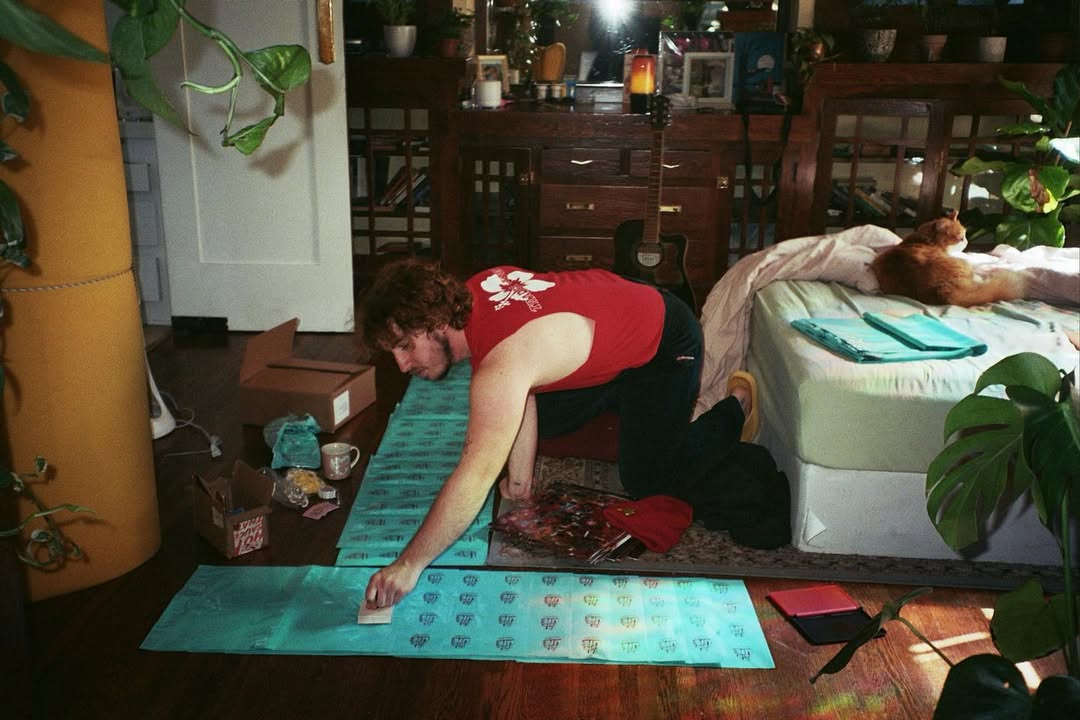
A lot of it comes from the releases, where I’ll hear something that’s so different or weird, and it reinvigorates that excitement for music. Our most recent release, Fool’s Errand by Theodore, it’s the project of Grace Ward whose music I’ve loved for a long time. But hearing their new album was such a great experience – the music is so creepy and cool and complicated, but it makes sense. So definitely the releases keep that fun and excitement going when they’re sent to me. And then also I just try to keep it fun with shipping out the orders. I’m always at the dollar tree, buying weird stickers and candy to fill the orders. I definitely want each package to feel like a Wonka Bar or something.
It’s all in the name. Who designed that animated poster that you use often? It’s such a fun visual.
So that original artwork actually came from my grandpa. He was an illustrator in the sixties in New York City, and every now and then we’ll come across one of his pieces online. That one I couldn’t find what it was illustrated for, so a friend helped me restore the image, and then we pulled the logo from it. We have not gotten into any legal ramifications for using it so far [laughs].
So is that where the name for the label came from, too?
Yes, it was in that poster. I’d imagine it came from some sort of magazine he did. So really, in the beginning, I had the release first and then started the label, kind of working backwards. So I definitely needed to think of a name. I pulled a few friends and I was definitely looking at some cool, more mysterious and edgy names, but that one kind of stuck with me because it was so almost not cool [laughs]. Especially because a lot of our music falls into a category of, ‘we’re all depressed and anxious’. But, you know, we’re still trying to make the best of it. And as long as that doesn’t get grouped into pro-life. sentiments, then, yeah, that’s how the name came about [laughs].
An I’m Into Life Poster hanging up at the Post Office
What are some releases that have stuck with you over the span of the label’s history?
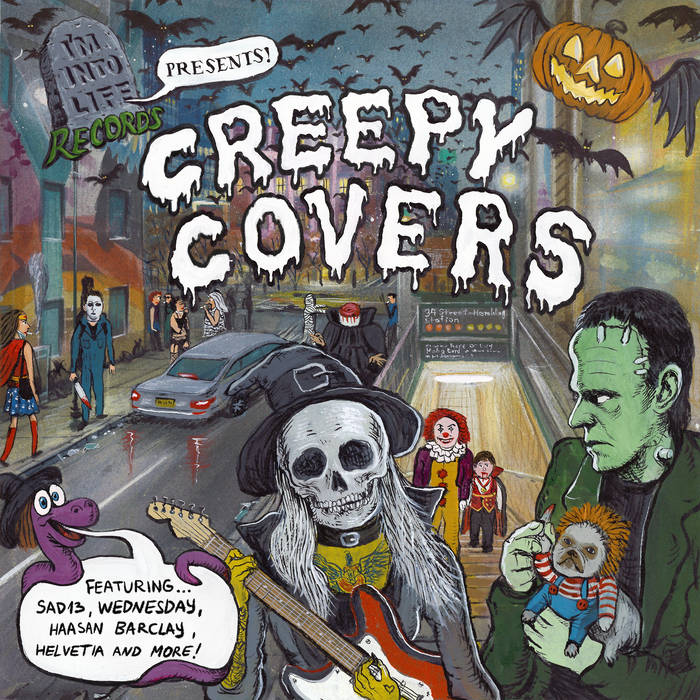
A big one was organizing the Halloween covers compilation. It was shortly after the label started and I thought it would be cool to do something to help put the label on the map. I’m so obsessed with Halloween and so obsessed with so many of the artists on that compilation. I’m definitely still proud of that one just because I think it’s pretty unusual to make this grouping of songs where you encourage all the artists to record a whole new song. It was a lot of work, and I had to start it like over 6 months in advance and then keep following up with artists because we’re all super spacey. It definitely snowballed and became this huge thing that really did help put the label on the map for a little bit and get on those huge blogs that we hate like Pitchfork and stuff [laughs].
Some of the I’m Into Life back catalog and merch
You’ve done a handful of comp releases, one of the more recent being the Hurrican Helene relief comp, Song to the Siren. Do you see yourself doing more compilations? Does it feel like a thing that kind of encompasses and connects what’s around you?
Definitely. A lot of the time, unless I really find someone who I’m obsessed with their music and they happen to not already have a label or a friend making merch for them, I don’t have a project I’m working on. At least with the compilations I have the control to make something happen instead of waiting around. The fundraiser ones are great because we can actually do something meaningful to the rest of the world. But with the #1 and #2, I wanted to tap into some really specific sounds, that if you’re kind of in the scene, you’re kind of aware as to how all these bands are connected. It’s cool to put that in a compilation and see all these artists on the same release.
Do you have anything in the works that you’re looking forward to?
It’ll sound kind of sad, but I have literally nothing in the works which is exciting to me. I have learned now over the years that I’ll have nothing on my radar, and then something will come out of nowhere, whether it’s like a new artist or a new release from an existing artist. That’s an anti-answer, but that’s how it seems to go. I had no releases for a while and then suddenly July became such a busy month. So, I’ll probably just be working on some retroactive promotion and pushing the older catalog.
Along with this series, our friends over at I’m Into Life Records are offering a merch bundle giveaway! The bundle includes How Could I Be So In Debt? vinyl (2024) by Tombstone Poetry, Hiding Places, trust blinks., Tombstone Poetry Split x3 (2025) cassette, Fool’s Errand cassette (2025) by Theadoore, as well as some I’m Into Life and ugly hug goodies.
To enter the giveaway, follow these easy steps below!
Every Wednesday, the ugly hug shares a playlist personally curated by an artist/band that we have been enjoying. This week we have a collection of songs put together by Eli Raymer of the Asheville-based project Good Trauma.
Along with playing in other bands such as Powder Horns, Tongues of Fire, Idle County and Trust Blinks, Good Trauma is Raymer’s place to be fully enveloped in his own little world. Releasing his latest album In Succession last year, where he embraced more broken folk structures, Raymer’s writing is where tension and intuition link arms and sincerity and distrust break the hold, beautifully capturing that triumphant feeling of making it through another rough day while still looking forward to whatever is next.
About the playlist, Raymer shares;
Here’s a playlist I curated for you! I tried to capture my daily listening perspective from morning to night, Breakfast to the bar, sensible to foolish.
Listen to Raymer’s Playlist here;
Listen to In Sucession and other Good Trauma releases out everywhere now! Tapes available at I’m Into Life Records.
Last week, a band I had been interviewing told me that the only relevant means of music categorization is region-based. It came up amidst some anti-genre discourse, and the take was less a blanket statement of “every band from Pittsburgh is making an identical style of music” way, and more so rooted in the touching impacts of community on art. I found myself marinating on that take heavily as I listened to this split EP by Tombstone Poetry, trust blinks. and Hiding Places, three bands who share ties to Asheville, North Caroline. Their timelines in the city do not boast an identical alignment, Hiding Places is now a Brooklyn based project and trust blinks. has only been in Asheville since 2023, yet an element of community touches and binds the entirety of the listen, creating a through line amongst a series of personal reflections and guarded thoughts.
We recently got to ask trust blinks., Hiding Places and Tombstone Poetry a few questions regarding their individual tracks, collaboration on this split and the impacts of community in Asheville, North Carolina.
trust blinks. is the project of Ethan Hoffman-Sadka who has been releasing under the name since 2021. Following the last LP Turns to Gold (2024) and two collaborative singles, Trust Blinks. returns today with two new songs, “Body Keeps Score” and “Dirty Dishes”. On “Dirty Dishes”, trust blinks. reflects on a childhood unblemished perception of the world from the thinned-out lens of adulthood. The tectonic gaps between a life where “astronaut” is an attainable path and a life where you co-exist with a roommate’s neglected mug in the sink are bridged in a rusty haze of lived in guitar and tender vocals, untethering the track from the extremes that it explores to establish an experience that leans a bit further into emotionally ambiguity. The weathering impact of lived experiences is a theme that trickles over on “Body Keeps Score”, where trust blinks. examines how hardships can only promote growth if we choose to not be defined by them. Tombstone Poetry makes an appearance on the alt-country leaning track, the initial contrast of Hoffman-Sadka’s brittle and delicate deliveries followed Burris’ sharply melodic twang ultimately filtered into one through a stunning moment of harmonization.
This is not your first split release, having collaborated with other artists like liverr, new not shameful and Suggie Shooter. Now with this 3 part split, even including Tombstone Poetry on one of your tracks, what does this kind of collaboration, and/or pairing, bring out in the music that you create? What do you take away from experiences like this?
Lately, I’ve been trying to collaborate with as many of my friends/inspirations as possible. I love so many different sounds it’s hard to keep track haha. With each split or mutually created song I think I pick something new up along the way whether it’s a new skill/interest or even the realization of what I don’t like. I haven’t been really feeling a succinct sound lately so I’ve been enjoying going with the flow and doing one-off tracks instead of albums. I’m always looking for ways to force myself to not take it all so seriously- which ironically takes quite a bit of work for me.
There is a lot of depth in these songs’ complexion, for instance, “Body Keeps Score” leans into the more alt-country style and “Dirty Dishes” embraces that more slow and harsh soundscape that filled past projects like Turns to Gold. When it came to the sonic build of these songs, was there anything new that you wanted to try? Any ways you challenged yourself with these recordings?
As cliche as it sounds, it’s been hard to resist leaning into the sounds of the South since I moved here. I wrote both of these songs around 6 months ago and just recorded little demos of them for Youtube without any much thought about what genre they were at the time. When it came time to really record them they both seemed to naturally gravitate towards different sounds. I knew I wanted to record Dirty Dishes with my friend Luna (Total Wife) and the goal in doing so was definitely to channel The Pumpkins, MBV, Lilies, Acetone and so on. I wrote Body Keeps Score with Caelan (Tombstone Poetry) in mind to sing on so I think I kinda built the song up around the sound of their voice I had in my mind. I’m still pretty new to incorporating instruments like banjo, violin or pedal steel into mixes so I think I struggled a little more with Body Keeps Score when it came time to record that one. I realize I still have quite a bit of work to do when it comes to genuinely approaching songs that are a departure from the usual wheelhouse haha.
“Dirty Dishes” floats this theme of growing older and becoming more despondent to your surroundings. What was the significance in the imagery you chose? Is there a thematic throughline with the grappling that “Body Keeps Score” goes through?
I really like when any art comes from a really simple place. I think Dirty Dishes’ lyrics came really naturally in that sense. In adulthood I find myself so manic and wrongfully attuned to inconsequential details like the noise or messes my roommates make. I probably was in the middle of some mental stupor and took a step back and realized how sad it was that our worlds become so much smaller as we grow older. The line ‘you could clean them but they’ll still pile up’ is all about how there’s always some new problem or fault I find with something or someone. I’m working on that!
With Body Keeps Score there is not really as much imagery going on. I just liked how those words paired together (from the book) and made a little play on the words. The lyric, “If the body’s been keeping score I’ve gone undefeated since I was born”, kinda says it all. I think sometimes I take pride in my hardships in an unhealthy way. Hardship can definitely help us grow but not when they become an aesthetic thing or a script we rely so heavily on.
Did writing and recording these songs help you feel more present in your day-to-day, especially when pulling deeper meaning from the mundane?
I think I gravitate towards writing lyrics as if they are mantras. In that sense, writing these songs definitely helped me feel a little lighter. It’s always nice to consolidate a philosophy or feeling into a 3-minute, materialized thing that you can say goodbye to. As for recording these songs, I can’t say they were as enjoyable. I started that process after Hurricane Helene and six months later I still find it hard to get into a certain flow. The prospect of sitting at my desk was and still is extremely daunting and at some point, I just had to set a deadline so I could let myself move on. I’m not as happy with Body Keeps Score (it feels a bit dramatic/forced) but I’m excited to take some space and work on new stuff/potentially approach recording the song again in the future.
Now a Brooklyn based band, Hiding Places began in Asheville as the project of Audrey Keelin, Nicholas Byrne and Henry Cutting. Following the 2024 release of single “Pulp”, Hiding Places returns today with two new songs, “Unfixing” and “Flooded Island”. Though the notion of a “bedroom” track is technically rooted in lack, there is often an impalpable depth and level of untouched emotional ruminations in music created in one’s own space. Amidst a circling fog of delicately layered vocals on “Unfixing”, Hiding Places simulates an unraveling of skepticism and preoccupation cushioned by tender, glistening guitar. This authentic “bedroom” quality spills over onto “Flooded Island”, which maintains a wispy sense of solitude as Keelin’s syrupy vocals sift through overbearing thoughts during a quiet shift at a woodshop.
There is a great deal of focus towards different sonic textures in these songs, but especially on “Unfixing” with its building layers and the roles the landscapes played on the track. Where did you challenge yourself in crafting this soundscape? Did the build up of instrumentation come naturally with the songs’ intentions?
Nicholas: So these two songs from Hiding Places came as from songs from our first album that we’re done recording now, and basically realized, hey, we need to fit this album on a record, and these two songs stuck out as having their own sonic qualities that work together, and we thought it would be fun to release them early on this project.
Audrey: I feel like I want to preface this by saying that these two songs were built from demos that I made in my room alone. They just both have that sort of energy to them, so I think all of the textures that we incorporated in this and essentially almost everything on this recording that was built on these bedroom demos, we’re just kind of experimenting and seeing how we can make them Hiding Places songs. And these songs were arranged and produced during the same time that we were arranging and producing and recording the entire album that’s going to come out sometime soon. But they set themselves apart because they are more like bedroom recordings, and they are just softer and more delicate and songs that we don’t really play live. They have this more experimental energy to them rather than like, you know, this is a song that we arranged as a band in the practice room, and this is a song that we play live, and this is a song that we get out a lot of energy with. But to more accurately answer that question, the song’s intention was just experimentation, just trying to get out a feeling. It’s honestly indescribable, and that’s why we make music.
Lyrically, there are phrases on “Flooded Island” that lean into that imaginative imagery that you have used in the past to grapple with more adult themes, as was the focus on your prior EP, Lesson. In what ways did utilize this type of writing to bring out themes buried within these songs?
Audrey: Flooded Island was a song that I wrote while I was working in a woodshop in Chapel Hill. I had a lot of free time because there were often times where there was nobody there and I could just make my own stuff, and sometimes I would use the job site radio to mix my demos in the woodshop. So I think that that song for me is imbued with that memory. Also just imbued with the memory of working my ass off in general, especially working my ass off to move to New York. That song I wrote before I moved to New York and I was just thinking about how much hard work it was going to be to move here. It’s also just like witnessing other people overworking themselves to survive.
This is one of the first Hiding Places’ releases where you are all once again in the same spot, but now living in New York. Has that shift in location changed the way you approach and interact with how you make music?
Audrey: I think that the move to New York has actually completely changed Hiding Places’ sound as a whole. I think that these songs and some of the songs that are on the album kind of mark an end of the remote Hiding Places that we’ve known for four years now. It’s kind of bittersweet, but I’m very, very happy that we live in the same place now because we can arrange music together and play it together and try it out and add new parts and test what feels most fun and exploratory live. With the shift in location though, I think the main thing that has been really revolutionary to Hiding Places is Michael Matsakis and recording and arranging with him. Having him produce some songs and play keys and organ and bass parts and even guitar parts in some songs, he’s just so tapped into this endless stream of creativity and curiosity that I admire so much and I’m so lucky to be around.
Nicholas: Audrey made these demos in North Carolina before moving to New York about a year ago, and we recorded the rest of the parts of the arrangements in New York, so I think they exist somewhere in between sonically, which has kind of been the story of the band so far. Now with Audrey in New York, though, we have the opportunity to play a lot more and write together here, where previously our process has been building on top of demos that either Audrey or I bring to the band. There are several songs on the album that we wrote from scratch together, so we’re kind of evolving how we build songs and sounds. It’s always funny, I feel like a lot of the songs we’re releasing were made a couple years ago, so it sounds different than the things that we’re writing now. But I think these are especially cool songs because of the way that they are really crafting a soundscape and are rather ethereal in their atmosphere.
With origins in North Carolina, this split album has its soul based in the South. Now living in New York, in what ways do these songs connect you back to Asheville and the way that that community functions?
Audrey: I appreciate that you asked about Asheville. It’s extremely meaningful for me to be making music and being in the same scene still with people who live in Asheville because it’s where I grew up and it’s where I feel like it’s the scene that raised me as a musician and also just as a person. I felt disconnected from it for a while ever since I moved, but the fact that I can come back and feel at home again is so encouraging and it makes me want to just keep making music and being in that community and being inspired by that community.
Nicholas: We just played with Tombstone at Trans-Pecos here in New York, and it was really fun. It’s really cool to blend these worlds, North Carolina and New York, of people and place and music and taste!
Watch the accompanying music video for “Flooded Island”
Since 2021, Tombstone Poetry has been forging a musical identity that paints a certain country warmth onto alternative rock and noise heavy walls. Following the 2024 release of their LP How Could I Be So in Debt, Tombstone shares singles “Ignition” and “Bender” today. “Ignition” presents as the most upbeat track on this release, attesting to Tombstone Poetry’s knack for molding shame-drenched confessions into buoyant hooks and twangy warmth. “Bender” adopts a darker soundscape, though both tracks cut deep into reflections on substance abuse and the impact of addiction on relationships.
Through feelings of heartbreak and sabotage, was there a specific theme that towed the line between these two songs? What did you find yourself embracing when bringing out these songs?
I think as I continue to write about things like heartbreak, I find more solace in being brutally honest. The general theme of broken relationships (both platonic and romantic) has been a defining characteristic of Tombstone songs for a long time. I think with Bender and Ignition, the songs are not only honest but defeatist in the hopelessness of the lyrical themes. In picking them as the songs for the split I decided to embrace that feeling and have these two sister songs stand together.
As “Bender” becomes this haunting infiltration into the lives of two individuals, how did you play with the concept of a bender and heartbreak taking on similar roles in your lyrics?
Bender is a pretty straightforward song about drug addiction. It’s somewhat dramatized but the feeling of being at the mercy of your vices but wanting stability in a relationship was my point of view in writing it.
“Ignition” and “Bender” take on two different sonic build ups, yet hold on to that alt-country style that your music has set its roots into? Was there anything you wanted to do to challenge the way you work as a large instrumental unit on these tracks? Did you try anything new?
We recorded both of these tracks completely differently than anything we’ve done before. Usually we go into things as a unit at a studio, but with these two me and Lawson Alderson pieced them together in our home studio, bringing in different members of tombstone and guest musicians. It was a very fun and different experience to collage the songs together.
What did it mean to you to hop on the track “Body Keeps Score” with Trust Blinks. for this split? How did that collab come to be and what did you gravitate towards on that song?
It was a blast! I love Ethan and have been playing music with him since he moved to Asheville. We just got together one day and bounced some ideas off each other for vocal parts and it all came together.
You can listen to the split EP of trust blinks., Hiding Places and Tombstone Poetry on the bandcamp page of I’m Into Life Records, as well as order a cassette tape!
Written by Manon Bushong | Interview by Shea Roney
In the most fulfilling sense of the meaning, Trey Shilts and Leo Dolan found each other. And since then, fronting the LA-based co-collaborative project Finnish Postcard, Dolan and Shilts have created a space that is entirely of their own. Having been part of several other bands and established solo projects through the years, as well as taking inspiration from the extensive LA underground, surrounding themselves with a calvary of creatives, Finnish Postcard has become a force of understanding towards where they are at in life, both creatively and personally.
As of today, Finnish Postcard is sharing with us their highly anticipated debut album titled Body, releasedvia I’m Into Life Records. These songs don’t represent moments that just pass by, but were released already having been lived in. The album as a whole, connected through textured layers, developed grooves, delicate melodies and colorful spouts of experimentation, each track wholeheartedly animates the tiny yet tricky grievances of growing up, where feelings of comfort, love, anxiety and loss become so familiar with each listen, as if they are our own stories we are listening to.
We recently got to catch up with Finnish Postcard to discuss the new record, how the project began, redefining what makes an American band and the Finnish Postcard video game.
Photo by Colin Treidler
This interview has been edited for length and clarity
Shea Roney: We’re approaching the eve of your debut LP! How are you guys feeling about it all?
TS: I’m really glad that it’s coming out so soon after we finished it. That’s one of the perks of working with a tape label like I’m Into Life. You see people putting out records two years after they finish them, and they’re kind of like, ‘I don’t really care about this anymore’. So I’m really excited for it to come out.
LD: That’s something I like about not being embroiled in the industry, even though that is something I would want at the end of the day, I like to have less mediation between when we make the music and when we put it out, and it felt important to to put it out so soon. I feel like we’re both kind of still in the weird no man’s land, where the album’s announced, but it’s not out, and there’s so much work left. This just took up such a giant chunk of my brain for so long, and I feel like I’m at a place now where the release is less painful and less stressful and more just a fun thing.
SR: I can imagine that there’s gotta be so much momentum that you feel going from the recording process to releasing it. Were releases something you were often nervous about before?
TS: I think there was just a learning curve, and figuring out how we wanted to do it our way.
LD: We’ve both put out a lot of music across a lot of different types of bands before we started Finnish Postcard, and releases would always just kind of expose you. It’s like the music that you make can be perfect in your head until it’s out.
TS: There’s just so many weird things about how music works right now, and how the industry has developed recently, where I kind of feel like we’re inventing it for ourselves, you know, how we would want to put something out. We wanted to honor the songs and not just have it be a post on the story. We wanted it to be special.
LD: Because it feels special to us.
TS: And I think we’ve figured out how to do that for us. The rollout of this album to me so far really feels very particular to us, and very right for the album.
LD: This band doesn’t feel like the other bands I was in before, or even my solo project. It does feel more special, and I just like what we do more, too. So it’s just a balance between accepting that you have to have a certain level of detachment because it’s art, and once it’s out, people are going to be forming their own relationships with it. And it’s not something you could control, but also, how do I put this thing out in a way that feels like I gave it enough respect in my life?
SR: The ethos of this record, and really this band in general, gives a nod to the fact that you two found each other. As this project was beginning, what did you two see in each other when you met and how have you progressed that into the music that you now make together?
LD: I saw a lot in Trey, especially in his general approach to music. We met in a really awesome way where he was playing a set of solo instrumental loop based music at an art gallery, and I was there and watched him for a long time. I approached him afterwards, and basically my ulterior motive was to get him to make music with me [laughs].
TS: Leo asked me to talk about a record I had just put out with my solo project on his radio show on KXLU. I went over to his house and we did a pretape of that, and then we just kind of chilled and jammed. Literally within 2 months of meeting we moved in together.
LD: I think what I saw in Trey was that he had his sights set a lot bigger, and he was just willing to really put in a lot of work. Which is how I felt, too.
TS: There’s kind of a difference between people that want to be in a band because it’s fun to be in a band, and then people who have just different intentions. You have to be down to do a lot of the really unfun stuff, like booking shows and practicing and making sure that the songs are really right, giving everything enough time and attention. I just found myself in bands where it just didn’t feel right, and I think Leo and I have a really similar musical kinship and a similar vision, and are both really just willing to see this through.
LD: There’s a difference between people who want to be in a band, and people who have to be in a band. There’s nothing wrong with wanting to be in a band. If you want to be in a band, you should. But that’s not how it felt. That’s never how it felt for me.
SR: With this musical kinship that you two have garnered, in what ways did you challenge or push each other when it came to your songwriting?
LD: We both exposed each other to a lot of new music. I was locked into writing in a certain type of way that I felt was reaching the end.
TS: I think we helped each other meet in the middle in a place that we were happier with than where we started. It was less of a process of challenging really, and more of a process of turning each other on to shit, and being like, ‘we should make stuff that sounds like that,’ and discovering a new space in music to inhabit than what we did before.
SR: Did you guys kind of subconsciously know you’d be happier in this middle than where you were previously at or was it something that you had to figure out and work towards?
TS: I don’t feel like there was really any resistance from me. I was just like, ‘thank God. With this guy, we can get somewhere interesting’.
LD: When we met, I was at the end of a couple different energy cycles in my life where I felt like I had kind of exhausted all the ground I’d covered with my solo music.
TS: It was a weird time for me, too. I had this long term girlfriend that I had lived with for years, and we had decided we’re going to break up, and I was going to move out. Then there was a month where I was needing to find a different job and a place, and in that month of transition is when we met. That relationship was time to build something new. It also just so happened to coincide with meeting all these bands and friends that are making music in LA. I feel like it’s the right time for this album to come out, when our colleague’s bands are making really cool shit that I love. I feel like we kind of fit into that picture in some way.
SR: One thing that I was intrigued by on this album was that you made an effort to not filter anything out. Can you explain to me what that process looked like, what it meant to you and how did that push the way you approached this album, both musically and personally?
TS: To me what that means is that there were no moments where we thought that we should take something out because it’s not cool or that we probably shouldn’t go there. The album, as it exists, is exactly what we meant to say and how it was supposed to come out, and I want whoever listens to it to know that, because there might be moments on it where you’re like, ‘were they going for this, but fell short?’ No, just trust us that this is exactly what we were going for.
SR: Was that easy for you guys, to just allow stuff to happen? Or was there a lot of hesitation that you had to combat in that process?
LD: It’s not that it’s not easy, but I think it takes a while. Sometimes you have to sit with a decision for months. There were a lot of different approaches, like a lot of discarded pieces of music that went into this. When we were working on this album, it was not a super good period of my life. I was dealing with an injury, I was unemployed, and in a general malaise. So it didn’t feel like I had an incredible story behind this album, but more I was starting to grapple with parts of adulthood I hadn’t yet, and I feel like the album reflects that. It’s not like a dangerous album that came out of a period of living on the edge. The things that were reflected in this album, for me, felt very real and multidimensional, like the aspects of being an adult that are not always glamorous to talk about.
TS: Yeah, there’s no filter between what was going on and what is on the record. It was really earnest and honest.
SR: Embracing the unfiltered stuff, did that in a way push you to understand your own grievances with adulthood? Like, if I can accept this on the record, then I can be able to accept this in my personal life or something?
TS: I mean the answer is yes for me. I really think about my brain a lot, and what my story is and where I’m at. It’s an always turning thing and then it doesn’t get me anywhere. Then I write a song about something and then I can move on, then I’m released from whatever the thing was that I needed to get out of. Writing this music, and talking about lyrics with each other, I mean, it helped me a lot to geolocate where I am emotionally on my journey.
LD: It’s funny, because you listen to music that I was making, you know, 8 years ago, and in a lot of ways, it sounded more autobiographical because I was writing about a lot of real world things that happened — therefore you might think it was more honest, like I’m talking about things in this very matter of fact, tactile way. I look back and I see ways that I was hiding even in there, even though it was storytelling, which is not a bad thing, music is storytelling. But I feel like with Finnish Postcard stuff, it’s a way more impressionistic approach. The lyrics, if you see them written out actually make a lot less sense, but it’s been a process of trying to hide less and make myself into something that I’m not less.
SR: How do you think that helps put yourself out there more by embracing this style?
LD: You gotta let the light into the dark parts of you. If you admit you got a problem with something, that’s the first step to getting better.
TS: There’s an element of this band that is us creating this little bubble of safety together. Not even safety only, but taste —this is cool, this is lame, this sphere that we invented. And inside of that we are so free. Sometimes the truer thing, the truer lyric is the one that makes way less sense and is incomprehensible. But you hear it, and it makes the kind of sense that only songs really can.
LD: Writing music is not like writing poetry or prose. It’s a totally different thing that can’t be compared. There’s a lot of ways in which emotion and meaning is conveyed through music that are completely unique. I think you can’t really look at someone’s lyrics printed out and get the full picture. Once I started to realize that myself, I feel like that’s when I started writing Finnish Postcard songs.
SR: Also, considering the experience of playing off of each other and incorporating everything that goes into a song can really open that door tooI can imagine.
LD: It’s cool to have the license to write half a song and then see what Trey has to say about it. I can totally not finish this song and just let it be for a sec.
TS: There’s also this element of collaborating that’s honestly hard for people to understand that a band has two people, and they’re both the main person. Like, ‘it’s your band Trey, right?’ And I’m like, ‘no’. And people think it’s Leo’s band. It’s a deeply, deeply collaborative project. But it’s hard to, I think growing up under capitalism in the United States specifically, it’s really hard to not approach something collaborative with fear and to feel threatened or like you’re not getting enough of something. There was a lot of unlearning that we’ve fostered, creating an environment where I feel like I can be open and collaborative in a way that I just haven’t ever been in any other project.
SR: You’ve also described this album as an ode to the rock shows and pseudo venues you experienced growing up. What kind of memories or feelings did you hold on to from those shows that you wanted to implement into this album?
LD: When shows are good, especially in hard periods of my life, I would just get this incredible feeling of being like, ‘oh, my God! These people are like me.’ When I moved to LA, I was really lost and confused generally, and went to some shows and was like, ‘these are the people that I hang out with. And maybe the reason I feel so fucking weird right now is because I haven’t hung out with people like me in four months. I feel like that travels over to Finnish Postcard, too. I can be myself in this setting.
TS: We owe so much, and really exist in a way that is in reverence to the lineage of DIY music. I remember going to this venue in my hometown that was a brunch spot where some guy would throw shows there sometimes. I grew up in a really small town, so me and the three or four other alt-kids would be there, and I just remember thinking that this is a place where difference is celebrated and you can really be yourself, and the more yourself you are, the better. It was just so different from what you’re programmed with at school or work.
SR: I just experienced that same conversation when a friend from Denmark was visiting Chicago. We went to see Squirrel Flower play in this haunted, abandoned theater space, and my friend was amazed at how much difference was celebrated in these spaces. She said she has only experienced that feeling in American communities.
TS: That is really cool! That’s something that we kind of contend with, because we’re a deeply American band, and that’s been something that we’ve always really cherished. But obviously, that’s always been really complicated. The lineage of DIY music in the United States is something that I really look to with a lot of reverence, and we both come from a background in college radio, which I think is more of what we mean sometimes when we say American.
LD: I didn’t really know what DIY meant in music until I was like 24, but I’ve been having shows since I was like 14. Because I grew up in Oregon, and there is no semblance of any sort of music industry there, there’s no upward mobility to be a musician. So, we’ve had a lot of shows at all sorts of places, ranging from decrepit houses to jazz bars. I played in a laundromat once. It’s hard to even say that that’s what I wanted to do, because that’s just what you did and what was happening. There weren’t a lot of paths in front of me, so it’s very comforting to know that people all over are just doing shit because ain’t no one else gonna do it for you, so you gotta do it yourself. Also let the record show that we are huge Squirrel Flower fans.
SR: Speaking of doing it yourself, you guys released the first ever Finnish Postcard video game. What was the idea behind it and what was that process like?
TS: I had these childhood experiences exploring polygonal forests and stuff. Something about that style just feels very emotional to me— the N64 one era graphics, that just feels really meaningful to me. And I’ve been seeing it reflected a lot in the extended universe of our peers, that low poly style of artwork, and I just wanted to participate in it in one way, like once, and just do it in a big way.
LD: And Trey coded that whole game. You didn’t use a template, right?
TS: No, it took a long time [laughs]. I had to learn how to use Blender and GitHub. Talk about DIY, my code looks so crazy and sloppy.
LD: We should release the code.
TS: I already did, it is on open source. But I didn’t want to do it in some way that’s just 3D artwork for a song or something. I really wanted something super different. Also as a kid, there was a game that the Gorillaz put online where you would drive around in a jeep on an empty highway as the Gorillaz, and I just remember connecting with it so much. There’s an element to it also that’s almost nostalgic in a way, but there’s this quote in it, if you go deep enough, from Brian Eno about how we always love the thing about old technology that we hated it for when it wasn’t old. So the noise of cassette tapes, or the digital glitchiness of CDs. He has this quote that he’s like, ‘as soon as we can avoid it, we want to replicate it’. Our music is not nostalgic, and I don’t want anybody to get the idea that it is. I included that as a nod to the fact that I just really wanted to have this experience.
You can listen to Body out everywhere today as well as snag a copy on cassette or CD via I’m Into Life Records. There is also a small run of hand-bound books containing lyrics and writings on the album put together by Adam Weddle that will be for sale this Saturday at their album release show. Finnish Postcard will soon depart for a short tour going up California to the Pacific Northwest.

Written by Shea Roney| Featured Photo by Colin Treidler
Every Wednesday, the ugly hug shares a playlist personally curated by an artist/band that we have been enjoying. This week, we have a collection of songs put together by artist Caelan Burris of the Asheville-based project, Tombstone Poetry.
Since 2021, Tombstone Poetry has been forging a musical identity that paints a certain country warmth onto alternative rock and noise heavy walls. The six piece’s sound took to its most formidable shape yet last year with the release of How Could I Be So In Debt?, where they harnessed an addicting balance of twangy instrumentals and emotionally charged angst in a dense 33-minute listen. The album’s layers of screamed harmonies, shimmery distortions, religious motifs and garagey dissonance are ultimately sewn together by the band’s ability to exert sincerity, their introspections bleeding poignantly amidst every style and technique they experiment with.
Listen to Burris’ Playlist here;
You can listen to all Tombstone Poetry releases and purchase a copy of How Could I Be So In Debt? on cassette or vinyl on their bandcamp.
Written by Manon Bushong | Featured Photo by Shea Roney