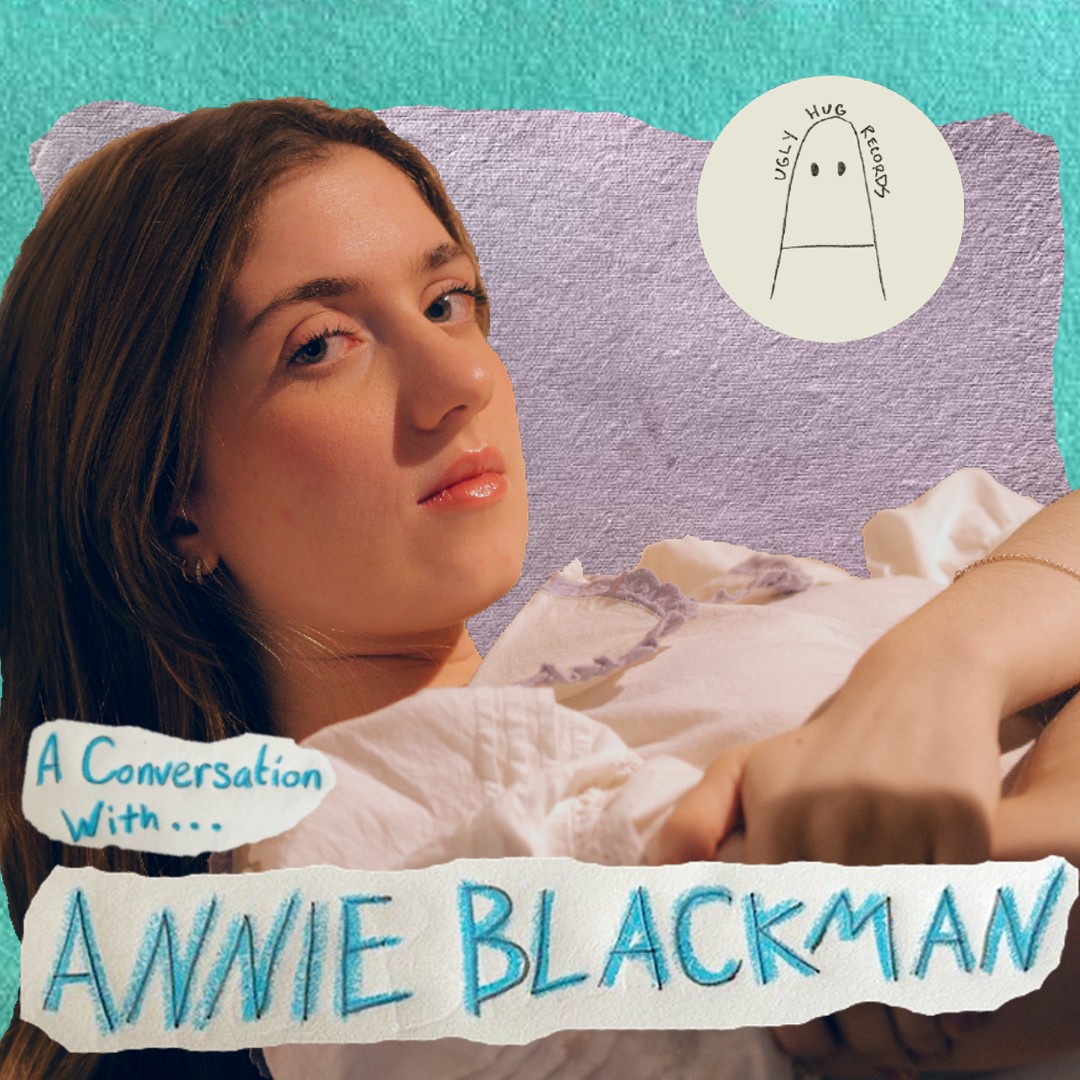
Every Wednesday, the ugly hug shares a playlist personally curated by an artist/band that we have been enjoying. This week we have a collection of songs put together by Brooklyn-based singer-songwriter Annie Blackman.
With both a gripping passion and a keen eye, Annie Blackman lattices the incongruent feelings of heartbreak, insecurities and maturing into the most vivid and beautiful lyrical stories and folk-tinged songs. Her latest EP Bug released back in 2023 is a brief, yet poignant display of the casualties that often go unnoticed in the grand scheme of it all. But the butterflies in our stomachs ought to know something is up when Annie’s lyrical intuition blends irresistibility with the relatable scenarios she recites, like a fist bump before bed by a lover, that stings just as much as solidifies our own confusing and giddy emotions.
Listen to Annie’s playlist here;
You can listen to Bug and the rest of Annie’s music everywhere now!
Written by Shea Roney | Featured Photo by AleiaghHynds
“There is a song on the album where I play saxophone,” McClellan says, falling into a brief pause before letting out a quick laugh, “I’m not a good saxophone player.” When it comes to songwriting, control isn’t always a given, a beneficiary to circumstances in most cases, but can be just as effective an artistic choice as what basic instruments you chose to record. “We could have easily asked someone else to do it,” she continues in regards to her saxophone skills, “but, to me, it’s not about the technique or the form here. It’s about being very committed to the vision.”
Anna McClellan is a singer-songwriter from Omaha, Nebraska whose aptitude for presence has always held an edge to her poetic and faithful ventures. With three previous albums under her name, McClellan’s range of sounds have become, and quite frankly always have been, reactionary to the environments in which her narrations are taken from. The short plights of pounding piano keys take the piano ballad to a more enticing, and oddly eloquent, arena fit for indie-rock slackers and tempted swooners alike. Her melodic phrases croon over deep feelings of devotion and defeat – humorous quips mixed with this unpredictability that resonates just as casual as it is damning to the restless confessionals at play.
Today, McClellan offers her latest work, a sincere and eclectic album called Electric Bouquet. The stories that she writes about, now sitting with accumulated interest as the years pass by, sing of a time when boredom will cost you – the hope for something to happen sits out like soggy cereal in the late-morning. Yet, the details of this foundational mundane begin to blend in amongst personal and societal changes, hitting with such deliberate delivery and personal conviction that is only fitting coming from her singular voice.
I recently caught up with McClellan as she prepared for the release of Electric Bouquet, where we discussed her time growing up in Omaha, becoming an electrician in the TV industry and sticking to the vision she had set out to complete for some time now.
Photo by Madeline Hug
This interview has been edited for length and clarity
SR: You wrote the songs for Electric Bouquet over a range of years. What was the timeline and where were you location wise in the process?
AM: All of it was really written in Omaha, where I grew up. I moved back to Omaha in the fall of 2018 and then recorded my last record in the summer of 2019, and then basically started writing songs for Electric Bouquet right after that.
SR: Growing up in Omaha, which is referenced a few times in your writing, what did the city come to symbolize in this narrative path that the album takes?
AM: Yeah, “Omaha”, the song, is a very love to hate relationship with the city, and then there’s also “Dawson’s Creek”, the last song, which is all about my childhood. It ties up thematically to a lot of the stuff around being a kid and having too much time on your own unsupervised and alone. I wasn’t doing anything bad [laughs], I was mostly just ruminating hardcore, like I was really bored. I just didn’t have enough stimulation. So, Omaha represents a lot of that for me because I have so many rooted memories, restless ones, of wanting something to happen, something exciting or surprising, and I’ve just been looking for stuff like that ever since.
SR: You obviously write from a very personal lens, telling your own story, but there is so much to be said about this larger scope that you utilize, especially on the song “Jam the Phones”, which catches you going through all of these big changes in your life as you also think more critically of how the world changes around you too. Did you find that the identity at which you write from change throughout the album’s process the more you focused on these larger themes?
AM: I’ve been thinking about social justice issues and trying to figure out how to write about them for a long time. Before shit started, like really popping off, at least for our generation, there’s a collective whole that I’ve noticed, where we’re all starting to tap into more and more of what’s going on. So it felt really organic with everyone wanting to talk about this stuff more, but the framework for talking about it is tricky because everyone has such different ideas. I feel like talking about it from the ‘I’ is always the best, because people can’t argue with your feelings. That song specifically [“Jam the Phones”] was written in 2020 around the George Floyd uprisings, when I feel like everyone was, for the first time asking, ‘what do we do?’
SR: There are many songs that reflect on different kinds of relationships throughout the record. Were there any relationships that you struggled with articulating and did you find a way to solidify their meaning on this album?
AM: Of course, most of the ones that I’m thinking of are romantic. When I wrote the first song back in 2019 called “I’m Lyin”, I was with a person, he plays music too, and we played music together. I played the song for him, and he was like, ‘do you not want to be with me anymore?’ I hadn’t thought about it like that, but then after he said that, I was like, ‘wait, maybe that is what this means, shit’ [laughs]. Then we broke up not long after that. Sometimes songs will explain things before my mind catches up to them. I think “Dawson’s Creek” is very much about familial relationships and it was a long time coming. I’ve been trying to figure out how to write about my struggle with my family and our dynamic, because so much of it is about not saying things, and like this sort of repression. So I feel like we’ve had lots of conversations over the past five plus years about this stuff, and through those conversations enabled me to voice these things more and have the courage to do it.
SR: I’ve never actually seen Dawson’s Creek, but I am familiar with the lore. Was there any significance of using that show as the title of the song?
AM: It’s not really about the show at all, but more about watching the show. I used to watch it in the summer, it was on TBS at 9am and 10am every morning. So I’d wake up and watch Dawson’s Creek with my cereal, and that’s sort of how I’d start the day in the summer. It embodies this sort of lost, wistful feeling of just waking up and immediately being swept up in someone else’s narrative, like a fake narrative instead of feeling like I had my own narrative.
SR: Television and film is pretty consistent throughout the record, like on the song “Co-Stars” which plays out like this very Hollywood-esque progression of love and expectations.
AM: Yeah, it’s funny, when I wrote that song I knew I’d wanted to get into TV at that point, but fully was not working in this world at all. It’s funny, a lot of things about this record have grown in their meaning since, not like a manifestation, but there’s been through lines that have carried past the songs. Even the cover is me with a bunch of lamps, and now that is what I do on the show, I get all the lamps to work for the sets. It’s just kind of crazy.
SR: Yeah, I wanted to ask, now working as an electrician on television sets, where did you get the concept of the ‘electric bouquet’ and what does it mean to you?
AM: I was going to electrician school at the time, so I think that the word was just really prevalent. I was also sitting and thinking about live shows and imagining me bringing lamps, like so many lamps to every show and setting them up and that being a part of the load in and out at night – it’s like an electric bouquet. You create the bouquet around you as part of your set design, and that’s what the poem at the end of the album is about. ‘I have lamps – 20 lamps at night, I bring inside, set them up all around me, like an electric bouquet.’ But I think realistically I could only do like three, maybe four lamps a night [laughs]. It’s a small operation.
SR: When I picture a bouquet, obviously it’s like a bouquet of flowers. But thinking further on this word, a bouquet is never naturally occurring. Someone has to put it together.
AM: Totally. Calling an album a bouquet is a cool idea. That’s another way of thinking of it.
SR: Bouquet is a great word for an album. It makes sense.
AM: Yeah, I was really happy when I came up with the title. It’s the first time I’ve ever had the album name before I recorded the album.
SR: That’s gotta feel so good, right? Did that guide the outcome of the writing or recording for you at all?
AM: I just felt very empowered, like I knew what I wanted it to sound like and how I wanted to feel through the whole thing. Through the experience of doing this before, obviously writing the songs, but not necessarily being as assertive production wise, I knew this time that I really wanted that control and to be more uncompromising in my decisions. I was really excited about that because there’s not a lot of places that you get to do that in life, but when it’s your songs and your name, you can just be like, ‘no’ [laughs]. In that case, maybe this thing isn’t going to sound the best or be the most convenient, but I like it when things are impractical. To be honest, I think that it makes for something more interesting.
Photo by Madeline Hug
You can stream Electric Bouquet on all platforms today, as well as order a vinyl or cassette copy of the album via Father/Daughter Records.
To the likes of being awakened by your sleep paralysis demons – used to the routine of these spooky encounters by now – only to be shown the surprise birthday party they have thrown for you, there are elements of mui zyu’s music that stick out as odd, borderline conflicting, yet from the center of its beating hearts, there is a tender sweetness that becomes irresistible to partake in.
mui zyu is the creative project of Hong Kong/UK artist and experimentalist, Eva Liu, who as of today, has unleashed her sophomore record nothing or something to die for out into the world via Father/Daughter Records. Over the past few years, Liu has molded her expansive, yet incredibly intimate project as mui zyu into something that is both emotionally refining and sonically addictive when ingested by earthlings. But fifteen songs in and out, nothing or something to die for is a rehabilitation of what it means to be a human, and the things we must hold on to when existence begins to feel radical and nihilism becomes a choking hazard when left out in arms reach.
With a production style that’s made through a clenched jaw and an expansive mind, Liu has thrived in brewing and boiling her sonic landscapes from within her home studio with co-producer and fellow Dama Scout bandmate, Luciano Rossi. But when it came time to create nothing or something to die for, with help from PRS Foundation funding, Liu was able to take her ideas to Middle Farm Studios in Devon, England. “The engineer came and picked us up from the station and took us to a farm shop to get supplies,” she recalls as the week of recording began. “Once he dropped us off at the studio, he left us to it – we were stuck there for a week and had no way of leaving unless we walked for hours.” Besides a hairless cat named Dust, Liu and Rossi were left to their own curiosity.
Photo by Tia Liu
“I feel like our approach to making this album was a lot different in that we had more time to experiment and mess about with new equipment,” she adds. Through their interwoven brain paths and love of textured earworms, Liu and Rossi thrived in these moments of uninterrupted exploration. “If I’m wanting a particular sound or feeling, I would just describe it, and [Rossi] would be able to manipulate the certain thing to sound exactly like what’s in my head,” she shares, showcasing their strengths as a creative duo.
Going beyond the classic build up of instruments and mui zyu stylings, there are multitudes of little sound bites and recording tricks that live amongst the record’s landscape – something that Liu takes a lot of pride in. “As soon as we want to explore something, we’ll explore it to the max, even if we chuck it in the end.” Most memorable, to her excitement, was the chance to use a fanfare horn that hung on the wall of the studio “It was my first ever experience using a brass instrument – I had no idea what I was doing, and I think it literally only plays one note on the album,” (found in the depths of the song “sparky”). “But that’s what I enjoy mostabout our process and I wish I could do that every time I record – it was just such a nice experience being so removed from the world and solely focused on what I love doing.”
nothing or something to die for also features a handful of collaborations with outside artists – something that Liu has always wanted to do, but never felt confident enough in her abilities to ask for. “I used to be so terrified – I just had that inner imposter syndrome screaming at me all the time.” But spending years working with Rossi and other bandmate, Danny Grant, in countless creative environments, Liu now admits, “I feel like Dama Scout definitely gave me the confidence to approach other people and collaborate more with other artists I love.” With songs like the dissolving “sparky” featuring lei, e (formerly Emmy the Great), the darkly meditative “in the dot” featuring Lukas Mayo (Pickle Darling) or the industrial-strength muscle relaxer that is “please be okay” featuring Miss Grit, the features only enhance the sonic experience of the album, pushing Liu’s writing to new depths that she never thought were possible before.
Opening with “satan marriage”, an instrumental that plays out from an array of stringed instruments, the album comes to life like body parts shaking off their tingly slumber and unconnected nerves. Soon a drum machine accumulates and introduces our surroundings, as “the mould” kneads our physical being to fit inside this fantastical world of dilapidated characters that Liu has created – one that emboldens the horrors of very human-centric qualities of destruction, apathy, misogyny and greed through the lens Liu’s own individuality.
Following her 2023 debut LP, Rotten Bun for an Eggless Century, which followed a lone warrior exploring concepts of identity and healing, nothing or something to die for goes beyond Liu’s conception of her own character as she observes how mankind, as a species, have both a hand in, as well as are concurrently fighting off, this dying world. “As humans, we’ve kind of messed up a lot of things,” Liu will say with visible weight. “With this album I’ve left my story behind and I’m now looking more outward at my understanding of the world.”
Photo by Tia Liu
“I think a lot of the album has to do with embracing chaos in the many forms it comes in,” she adds, in the name of betterment. Dealing with serious grief on songs like “please be okay” and “the rules of what an earthling can be”, reckoning with the pressures of appeasing others’ standards, while “in the dot” gives a voice to our most destructive humanly habits, being an earthling can feel impossible at times. The sugar-coated, cavity filled track, “donna likes parasites” refers to a family member who is, as Liu puts it, “overly worried about everything. The strive for perfectionism is actually damaging their health – it’s actually ruining their life.” Like a parasite, these manufactured stressors begin to eat you from the inside out. “I find a lot of people I know are always trying to find a way to better themselves, or I guess in their eyes, quick ways to find happiness,” she says. “But it’s not lasting.”
“After the pandemic, a lot of my friends were exhausted and very disheartened with everything that’s going on in the world,” primarily noticing, “people were just not looking after themselves.” In response, Liu’s artistic theme became one of perception; creating new ways to look at, perceive and carry our trauma alongside our need for harmony and hope. “It’s just amazing how our perception of things can change all the time – whether it’s true or not,” she admits, going on to explain, “sometimes we look at memories and we can interpret them differently at times and you’ll start to feel differently towards it.” Utilizing this idea of perceptions as a new challenge – “it’s just deciding what to do with it that can change how you feel.”
“Follow the mould through portals/ Looking at memories wrong/ Take tiny sips through their lips”, rattles through the pop sensibilities and slo-mo palpitations of “the mould” as Liu views decay with a new manner of optimism. The idea of portals, as she explains it, “ represent a sort of opportunity to rethink something or to look at something differently for the positive.” “the mould” celebrates that idea, warts and all, as she embraces the caste that only she can fit in – no longer living in regret of what she’s not, but rather cherishing what she has become on her own.
Taking inspiration from the the classic 1986 David Lynch film Blue Velvet, the standout track, “sparky” honors the dog that plays in the hose as his owner dies. Although dark in its depiction, it comes down to instincts – what is Sparky capable of controlling in the moment and where is Sparky at his purest form? Although it is often warped by societal expectations of what Sparky should be doing in that moment, Liu lays it out on the chorus, “Does it feel cute biting the water, Sparky?/ Does it feel good trying to be happy?,” she sings, almost with envy towards its simplicity.
“In a way, the portals do represent an escape, but they also represent the next level, the next chapter or the next world that you’re about to embark on.” This sounds like a huge concept, but Liu knows it doesn’t need to be overly complicated. As she embarked on this treacherous journey, mirroring the complexities of manufactured rules and utilizing chaos as a benchmark of capabilities, she found there are slivers of grace amongst these songs that hold a purpose. “We need to take time to look and realize and reflect that things are actually really good and you are lucky to be where you are.” In no way is this an album of defeat, but rather one of self rehabilitation against the odds of what an earthling can be. “I like absurdity, but I think overall, this album is about hope, and as cliché as it sounds, not giving up.” As portals open and close, allowing momentary lapses in reality, Liu embraces that first step through, knowing it can make all the difference.
Every Wednesday, the ugly hug shares a playlist personally curated by an artist/band that we have been enjoying. This week, we have a collection of songs put together by Hong Kong/UK artist and experimentalist, Eva Liu of mui zyu.
As a project, mui zyu has molded an expansive, yet incredibly intimate soundscape into something that is both hauntingly stunning and neurologically addictive when ingested by earthlings. To celebrate the release of her sophomore LP, nothing or something to die for, out this Friday, Liu has created a sonic theme revolving around the album’s artwork, sharing:
“the theme is imagining what the cave-dwelling characters in Waffle Burger’s painting for my record would listen to in the morning. this is how i think they’d soundtrack their days, from waking up in the damp stoney cavern, to swimming in the hot broth, doing their group meditations and roasting the heck out of their marshmallows.”
nothing or something to die for will be available everywhere this Friday (May 24) via Father/Daughter Records. You can preorder the album now on bandcamp.
Earlier this month, Rolling Stone Magazine published a shorthand list of artists that represent the future of music. The print, with a glamorous photo on the cover of Bad Bunny with a polished look and chains dangling from his neck, stands as a typical Rolling Stone write up. But once you get to page 73 (the meat and potatoes of the issue) in the midst of the “Rolling Stone Future 25” you will come across a warm toned photo of Annie Blackman. Wearing a butterfly patterned skirt, she looks at ease with her back resting on a subtle floral print wall. Within the first sentence of Blackman’s feature, Taylor Swift is name dropped. This can cast a giant shadow that covers anyone compared to Swift these days. It recalls the time in 2011 when Blackman, at the age of 13, got to meet the pop star and Swift empowered her to keep writing music. Whether or not that experience has helped Blackman reach this point (who’s to say?) her writing speaks for itself.
Annie Blackman is a Brooklyn-based singer/songwriter from Montclair, New Jersey. Her most recent release off of Father/Daughter Records, an EP titled Bug, traps words of friction, justifiable nerves and love butterflies that exude from the walls of her safe space. But in a rare case, Blackman is an artist who has been sharing personal music since a young age. With documentation of life stuck in time, anyone can see the lengths at which Blackman has grown both personally and musically, proving herself through the years to be an instinctive storyteller. “What are the things it feels like I am the only person in the world experiencing even though I’m obviously not” she says when discussing writing decisions. And to the relation of which specificity in her work holds, we as listeners are given the opportunity to hear our common and complex feelings broken down into digestible and natural stories through her personal accounts.
Learning guitar around the 5th grade, Annie Blackman began her public musical endeavors in 2016 when she released her first album titled, Blue Green, a collection of songs she wrote throughout her high school years. This was a fully acoustic venture representing the turmoil of young love that was recorded within the walls of her childhood bedroom . “I was in love with my best friend for quite a while and I never tried anything with him”, Blackman recalls when I asked about muses, in hindsight, she finds funny with age. Instead of telling him, she wrote songs and wouldn’t release them until it was all completely platonic. “Looking back on it, I honor and love the girl who had a crush on him, but it is funny to think of the gravity of the whole thing”, Blackman jokes.
As a songwriter who writes with the acute details in mind, I asked Blackman how she feels her storytelling has grown with her since the lovesick songs from high school. “I have become more observant, more attuned to my feelings and also I think more selective”, as she recalls the harshness of some of her earlier songs. “I feel like now I understand that in order to pack a punch or tell a story of woundedness I don’t need to bring anyone down in such an obvious way” as comes with maturity she hopes.
Blackman started receiving a lot of attention on TikTok from posting snippets of songs like “Seeds” and “Glitch” during the pandemic. Stranded in a time that was dedicated to stillness, Blackman’s words became something that sat comfortably with listeners. As videos started to see viral attention, Blackman tells me “it gave [her] the confidence boost to make a really proper demo and collaborate with some friends who know how to produce”. For the first time she saw that her songs could go beyond an intermediate circle of support.
I read a cool story in your Rolling Stone write up that when you were studying abroad in Paris, and some TikTok fans of yours from Berlin reached out to you?
So it was actually pre-TikTok. It was the winter of 2019, so TikTok hadn’t even blown up yet. But I had actually had a high school friend run an online zine who’d done a little interview with me when my first album [Blue Green] came out on bandcamp. Somehow this friend group of German teenagers had found me through this zine and I was sort of a favorite in their friend group which is totally crazy and random. We sort of became internet friends and then when I was in Paris, I was going to Berlin to visit a friend in another program, and I reached out to these girls and said I would love to meet you guys. And it’s funny because I was 20 and these girls were like 15, so it was definitely a sweet little age gap. A couple of my friends and I went to a party that these girls were having and it just turned into an impromptu house show, which was really cool. The first time that has ever happened to me, and the last.
Blackman soon sent professional demos all over, but landed on San Francisco indie label Father/Daughter Records. Blackman was familiar with this label because the bands Remember Sports and Forth Wanderers, Father/Daughter staples, came from her hometown. “These people seem cool and legit and down to earth so I emailed them and three weeks later I was in there”, Blackman recalls.
In 2022 you put out your first album off of Father/Daughter Records called All Of It, where you recorded in a makeshift tent studio inside of your childhood home in New Jersey. Can you tell me about that process?
I mean, it was hard. It was deep pandemic and I was living at home. My dad and I built this PVC pipe sound blanket little hut thing and I would just go in there for hours and hours and hours. And because we made the whole thing remotely it was definitely difficult. I’d never actually recorded myself before, so you know, I had a little interface, I had a little mic, but it was a lot of trial and error. But I was also out of college, unemployed, and you know, COVID, so you can’t really do anything, so I’m glad it happened when it did because it gave me a sense of purpose for sure.
Earlier this year, Blackman helped represent Father/Daughter records at SXSW in Austin, Texas. When I asked her the peaks and pits of a week-long festival life, Blackman had nothing bad to say about the festival itself. “Everything just feels so fun and wholesome. You get to see people that you only get to see there”. But Blackman then brought up a point that is often glossed over and that being the financial struggles of a life in music. “I think the pits are that you don’t make any money and if you don’t have a car, which I don’t, the transportation costs really add up. So I think that was definitely the most painful part”.
Right before Blackman jumped on my call, she was in the midst of a job search. “Everybody has a day job of varying time commitment, but it’s definitely important to strike that balance [with a career in music]. It’s a necessity”. Unless artists are reaching millions and millions of streams or constantly touring, there is no money in music and this is often a point that is not widely known by non-musicians. Blackman still considers it to be one of her two careers and “it is a job, but it’s really not”. Making music is expensive. Unless playing a solo show, Blackman tells me she just gives all the earnings to her bandmates because rehearsal rates can add up too.
As time came to chat about the attractive title given by Rolling Stone, there were mixed feelings of course.” On one hand, I’m like, ‘Oh that’s fake!’. And on the other hand, I’m like, ‘do I need to now be the future of music?’”. The future of music is quite the title. It can sit heavy on one’s shoulders. When asked if this label was burdensome at all, Blackman responded with “I don’t know if it’s too burdensome, but I also can’t just rest on my laurels. Everything just sort of needs to be better than the last thing”.
With print readers on the decline, there wasn’t much of a translation to a rise in listeners for Blackman. Considering it as street cred within her scene and hopes it will open the door for more opportunities in the industry, there is no denying that Blackman is still grateful for the honor. “Whether it’s sort of an accolade, or a duty I now need to carry out I’m not sure, but it mostly feels really cool and sort of surreal.”
Photo by Tonje Thilesen
As for her most recent work,Blackman sings on her EP, “Like a play within a play within a play within a scene” on the title track “Bug”, to decompartmentalize the rough goings in her life in palatable and frivolous chunks that she keeps in her pocket for keeping’s sake. This EP, and works prior, have shown that Blackman consistently makes concise pieces of work that have established her as a new voice worth listening to.
For the remainder of the summer, Annie Blackman has a show at the Knitting Factory on August 26 in Brooklyn, New York opening for Beau. She is excited for more things in the works for the Fall.
GENRE: folk/dream-pop LABLE: Father/Daughter Records
In a bedroom somewhere in Christchurch, New Zealand (the largest city in the South Island), sits multi-instrumentalist and producer, Lukas Mayo, known as their musical project Pickle Darling. New Zealand, a country that frequently pumps out alternative innovators, such as The Clean, Tall Dwarfs and Aldous Harding, also finds that Pickle Darling fits neatly into this estranged group. After years of formidable DIY sustenance, Mayo finds comfort again in making lo-fi bedroom pop songs from the comfort of their own home.
Finding success amongst EPs and two full length albums, Bigness (2019) and Cosmonaut (2021), Mayo felt the extension of pressure that comes from the public eye. Pickle Darling has been a bandcamp favorite for years now, having both full length releases being labeled as ‘Album of the Day’. Also having toured with acts such as The Beths, Fontaines DC and Lucy Dacus while gaining a lot of attention to their homemade pop songs, Mayo began to feel lost. The release of Cosmonaut in 2021 brought Pickle Darling to large production heights, fitting for the theme of the outer spaces, but with intricate composition and the expectation of perfection, Mayo no longer felt like they were making music for themselves anymore. Feeling worn down, Mayo retreated back to the bedroom to record their newest album, Laundromat.
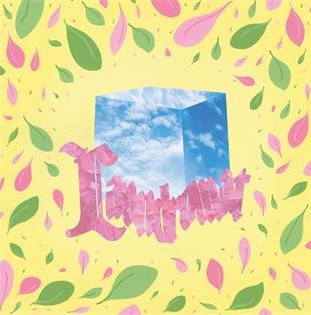
Laundromat, Pickle Darling’s first release off the San Francisco label Father/Daughter Records, is Mayo’s journey back to finding comfort in art. Still creating lighthearted songs embellished with several finger-picked instruments, the dreaminess of synths and drum tracks and coyish autotune has shown that Mayo has perfected the clean and sweet bedroom pop tune. Graduating with a degree in audio production, there is no denying the quality that a Pickle Darling album sounds like. Writing, recording and producing each song on their own, these songs live in Mayo’s personal world, crafted and mastered within the walls of their home; sometimes reluctantly released out into the world. Laundromat finds Mayo in their first comfortable living situation; sans problematic roommates and peevish landlords, offering a place for Mayo to fully thrive in the writing process.
The first single for Laundromat that Pickle Darling let sit in the world was the brief “King of Joy”. Scraping over a minute long, “King of Joy” dangles in its simplicity; running low tones with driving percussion that resolves in the lightness of synthesizer melodies. There is undoubtedly a sweetness that it leaves behind; a smile on your face or a daydream to a more honeyed time. This single acts as a reminder to Mayo to not overcomplicate art. Pushing themselves to utilize ideas in the moment relieves the pressure of making something overworked in the name of perfection.
There is a large amount of Nostalgia that Mayo paints within their tunes. Considering the lengths that Mayo takes to ‘homemade’, I am taken back to the extent of childlike imagination. Laying on the floor with a box of broken crayons, no care as to what is produced, resting on the expected approval from adults and the confidence in what our little minds can make. Mayo litters Laundromat with songs that soundtrack this homemade and pressure free artistic exposure. With folk tunes built in dreamy atmospheres, Pickle Darling brings the listener back to the bedroom; our own space of solitude and comfort, decorated without the pressures of the outside world.
The music video for “Head Terrarium” is built within its own DIY world with paper mache hilly landscapes, cardboard trees, cotton ball clouds and dancing plastic creatures. Overlooking this dream world is Mayo, whose face rests amongst the clouds, taking pride in all the self-constructed beauty. As the song shifts into the chorus, the video takes a turn to the real outside world, much darker in its aesthetics, where a malformed mannequin is made out to be Mayo. The only resemblance to Mayo’s humanity is the lower half of their face on a screen attached to the body, singing along to the song. This shell of Mayo repeatedly sings “I’m not as brilliant as I like”, an acknowledgement to the feeling of despondence from the art they are creating.
Mayo’s electronica intuition has been a signifier through all the music they have released into the real world. The song “Invercargill Angel”, beginning with folky string instruments housing Mayo’s whispery autotune, is a beautiful reminder of the sonic instincts that prop up a Pickle Darling song. Two different sonic styles that gracefully blend together to create a unique and playful sound that is reminiscent of early Sufjan Stevens or a late career Wes Anderson soundtrack. “I hope he makes you feel at home” Mayo repeatedly insists before the song breaks off into an electronic setting of retro synthesizers and drums tracks that build upon each other until there is a harmonious chorus of arcade nostalgia and internal comfort.
Pickle Darling sings about finding art in the mundane; having an open mind to the beauty when you don’t over complicate things. It’s this simplification to the writing process that fills Laundromat with so much charm and affability. Caked in sunny major intonations and culminating melodies sets Pickle Darling light on the chest. It’s a meaningful listen that flows from track to track with the hope that it doesn’t end.






 the ugly hug