“There is a song on the album where I play saxophone,” McClellan says, falling into a brief pause before letting out a quick laugh, “I’m not a good saxophone player.” When it comes to songwriting, control isn’t always a given, a beneficiary to circumstances in most cases, but can be just as effective an artistic choice as what basic instruments you chose to record. “We could have easily asked someone else to do it,” she continues in regards to her saxophone skills, “but, to me, it’s not about the technique or the form here. It’s about being very committed to the vision.”
Anna McClellan is a singer-songwriter from Omaha, Nebraska whose aptitude for presence has always held an edge to her poetic and faithful ventures. With three previous albums under her name, McClellan’s range of sounds have become, and quite frankly always have been, reactionary to the environments in which her narrations are taken from. The short plights of pounding piano keys take the piano ballad to a more enticing, and oddly eloquent, arena fit for indie-rock slackers and tempted swooners alike. Her melodic phrases croon over deep feelings of devotion and defeat – humorous quips mixed with this unpredictability that resonates just as casual as it is damning to the restless confessionals at play.
Today, McClellan offers her latest work, a sincere and eclectic album called Electric Bouquet. The stories that she writes about, now sitting with accumulated interest as the years pass by, sing of a time when boredom will cost you – the hope for something to happen sits out like soggy cereal in the late-morning. Yet, the details of this foundational mundane begin to blend in amongst personal and societal changes, hitting with such deliberate delivery and personal conviction that is only fitting coming from her singular voice.
I recently caught up with McClellan as she prepared for the release of Electric Bouquet, where we discussed her time growing up in Omaha, becoming an electrician in the TV industry and sticking to the vision she had set out to complete for some time now.

This interview has been edited for length and clarity
SR: You wrote the songs for Electric Bouquet over a range of years. What was the timeline and where were you location wise in the process?
AM: All of it was really written in Omaha, where I grew up. I moved back to Omaha in the fall of 2018 and then recorded my last record in the summer of 2019, and then basically started writing songs for Electric Bouquet right after that.
SR: Growing up in Omaha, which is referenced a few times in your writing, what did the city come to symbolize in this narrative path that the album takes?
AM: Yeah, “Omaha”, the song, is a very love to hate relationship with the city, and then there’s also “Dawson’s Creek”, the last song, which is all about my childhood. It ties up thematically to a lot of the stuff around being a kid and having too much time on your own unsupervised and alone. I wasn’t doing anything bad [laughs], I was mostly just ruminating hardcore, like I was really bored. I just didn’t have enough stimulation. So, Omaha represents a lot of that for me because I have so many rooted memories, restless ones, of wanting something to happen, something exciting or surprising, and I’ve just been looking for stuff like that ever since.
SR: You obviously write from a very personal lens, telling your own story, but there is so much to be said about this larger scope that you utilize, especially on the song “Jam the Phones”, which catches you going through all of these big changes in your life as you also think more critically of how the world changes around you too. Did you find that the identity at which you write from change throughout the album’s process the more you focused on these larger themes?
AM: I’ve been thinking about social justice issues and trying to figure out how to write about them for a long time. Before shit started, like really popping off, at least for our generation, there’s a collective whole that I’ve noticed, where we’re all starting to tap into more and more of what’s going on. So it felt really organic with everyone wanting to talk about this stuff more, but the framework for talking about it is tricky because everyone has such different ideas. I feel like talking about it from the ‘I’ is always the best, because people can’t argue with your feelings. That song specifically [“Jam the Phones”] was written in 2020 around the George Floyd uprisings, when I feel like everyone was, for the first time asking, ‘what do we do?’
SR: There are many songs that reflect on different kinds of relationships throughout the record. Were there any relationships that you struggled with articulating and did you find a way to solidify their meaning on this album?
AM: Of course, most of the ones that I’m thinking of are romantic. When I wrote the first song back in 2019 called “I’m Lyin”, I was with a person, he plays music too, and we played music together. I played the song for him, and he was like, ‘do you not want to be with me anymore?’ I hadn’t thought about it like that, but then after he said that, I was like, ‘wait, maybe that is what this means, shit’ [laughs]. Then we broke up not long after that. Sometimes songs will explain things before my mind catches up to them. I think “Dawson’s Creek” is very much about familial relationships and it was a long time coming. I’ve been trying to figure out how to write about my struggle with my family and our dynamic, because so much of it is about not saying things, and like this sort of repression. So I feel like we’ve had lots of conversations over the past five plus years about this stuff, and through those conversations enabled me to voice these things more and have the courage to do it.
SR: I’ve never actually seen Dawson’s Creek, but I am familiar with the lore. Was there any significance of using that show as the title of the song?
AM: It’s not really about the show at all, but more about watching the show. I used to watch it in the summer, it was on TBS at 9am and 10am every morning. So I’d wake up and watch Dawson’s Creek with my cereal, and that’s sort of how I’d start the day in the summer. It embodies this sort of lost, wistful feeling of just waking up and immediately being swept up in someone else’s narrative, like a fake narrative instead of feeling like I had my own narrative.
SR: Television and film is pretty consistent throughout the record, like on the song “Co-Stars” which plays out like this very Hollywood-esque progression of love and expectations.
AM: Yeah, it’s funny, when I wrote that song I knew I’d wanted to get into TV at that point, but fully was not working in this world at all. It’s funny, a lot of things about this record have grown in their meaning since, not like a manifestation, but there’s been through lines that have carried past the songs. Even the cover is me with a bunch of lamps, and now that is what I do on the show, I get all the lamps to work for the sets. It’s just kind of crazy.
SR: Yeah, I wanted to ask, now working as an electrician on television sets, where did you get the concept of the ‘electric bouquet’ and what does it mean to you?
AM: I was going to electrician school at the time, so I think that the word was just really prevalent. I was also sitting and thinking about live shows and imagining me bringing lamps, like so many lamps to every show and setting them up and that being a part of the load in and out at night – it’s like an electric bouquet. You create the bouquet around you as part of your set design, and that’s what the poem at the end of the album is about. ‘I have lamps – 20 lamps at night, I bring inside, set them up all around me, like an electric bouquet.’ But I think realistically I could only do like three, maybe four lamps a night [laughs]. It’s a small operation.
SR: When I picture a bouquet, obviously it’s like a bouquet of flowers. But thinking further on this word, a bouquet is never naturally occurring. Someone has to put it together.
AM: Totally. Calling an album a bouquet is a cool idea. That’s another way of thinking of it.
SR: Bouquet is a great word for an album. It makes sense.
AM: Yeah, I was really happy when I came up with the title. It’s the first time I’ve ever had the album name before I recorded the album.
SR: That’s gotta feel so good, right? Did that guide the outcome of the writing or recording for you at all?
AM: I just felt very empowered, like I knew what I wanted it to sound like and how I wanted to feel through the whole thing. Through the experience of doing this before, obviously writing the songs, but not necessarily being as assertive production wise, I knew this time that I really wanted that control and to be more uncompromising in my decisions. I was really excited about that because there’s not a lot of places that you get to do that in life, but when it’s your songs and your name, you can just be like, ‘no’ [laughs]. In that case, maybe this thing isn’t going to sound the best or be the most convenient, but I like it when things are impractical. To be honest, I think that it makes for something more interesting.
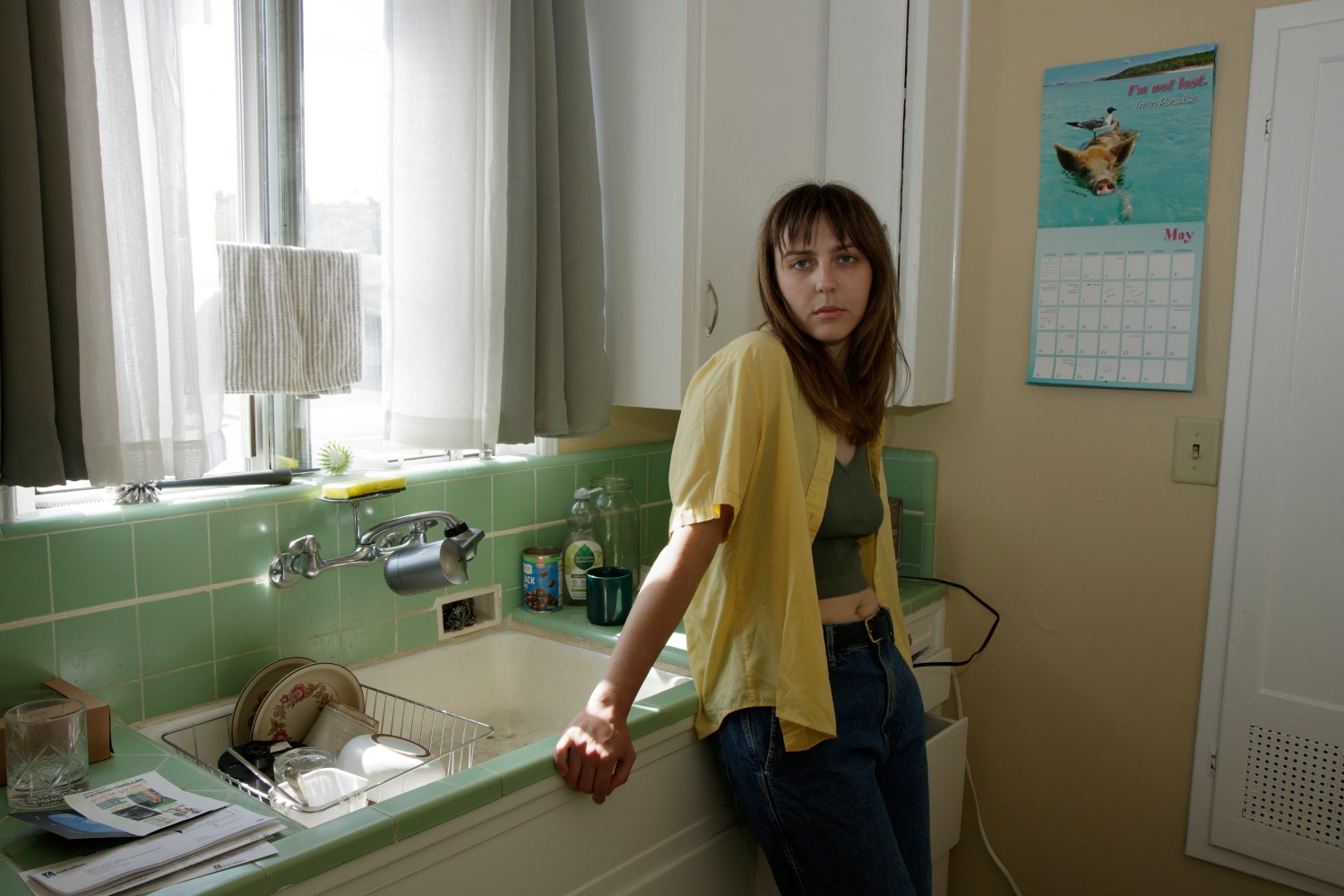
You can stream Electric Bouquet on all platforms today, as well as order a vinyl or cassette copy of the album via Father/Daughter Records.
Written by Shea Roney | Featured Photo by Madeline Hug
 the ugly hug