Written by Shea Roney | Photos by Averi Love Little, Braeden Long, Kian Kermani and Lauren Schmit | Video by Eilee Centeno
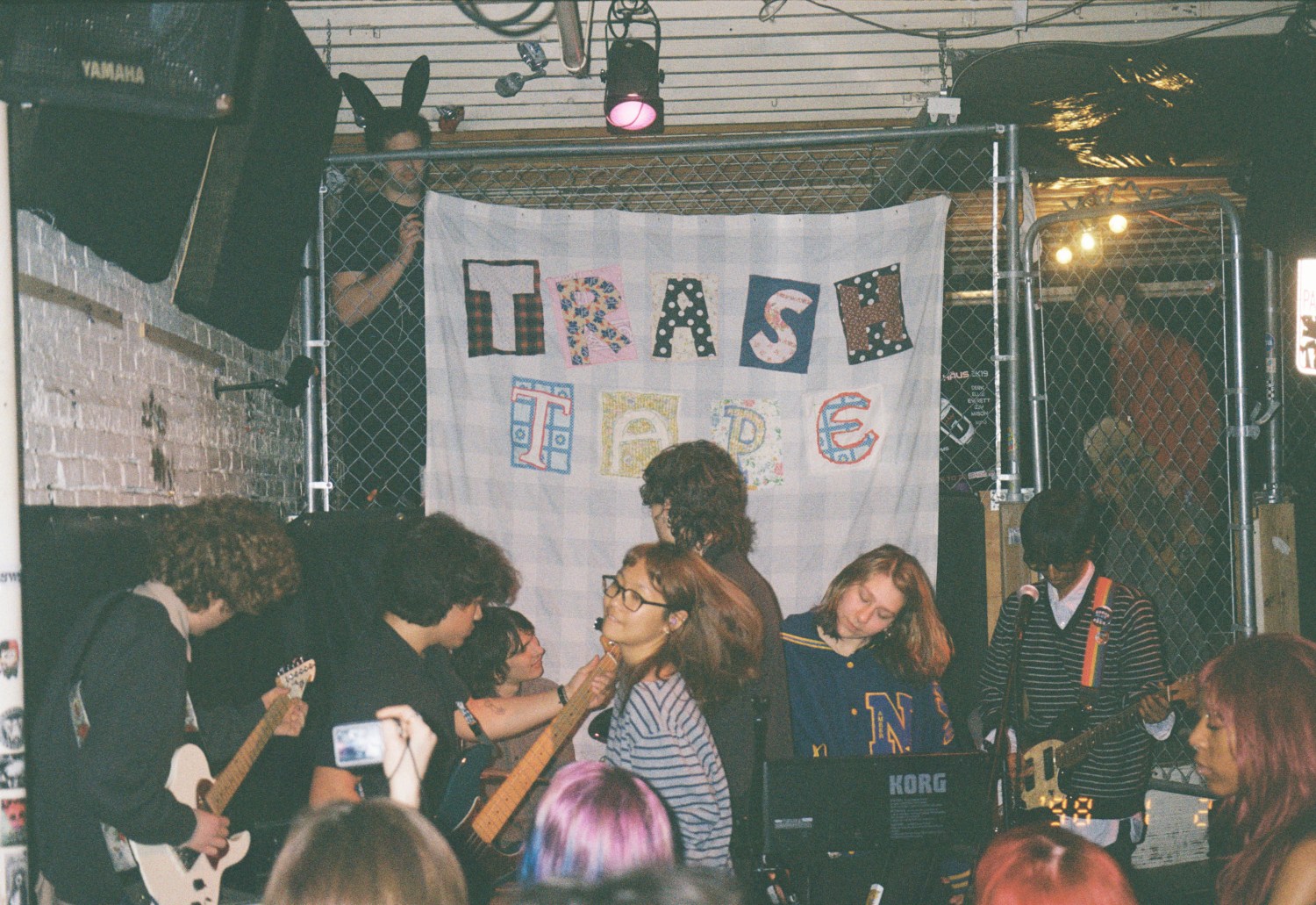
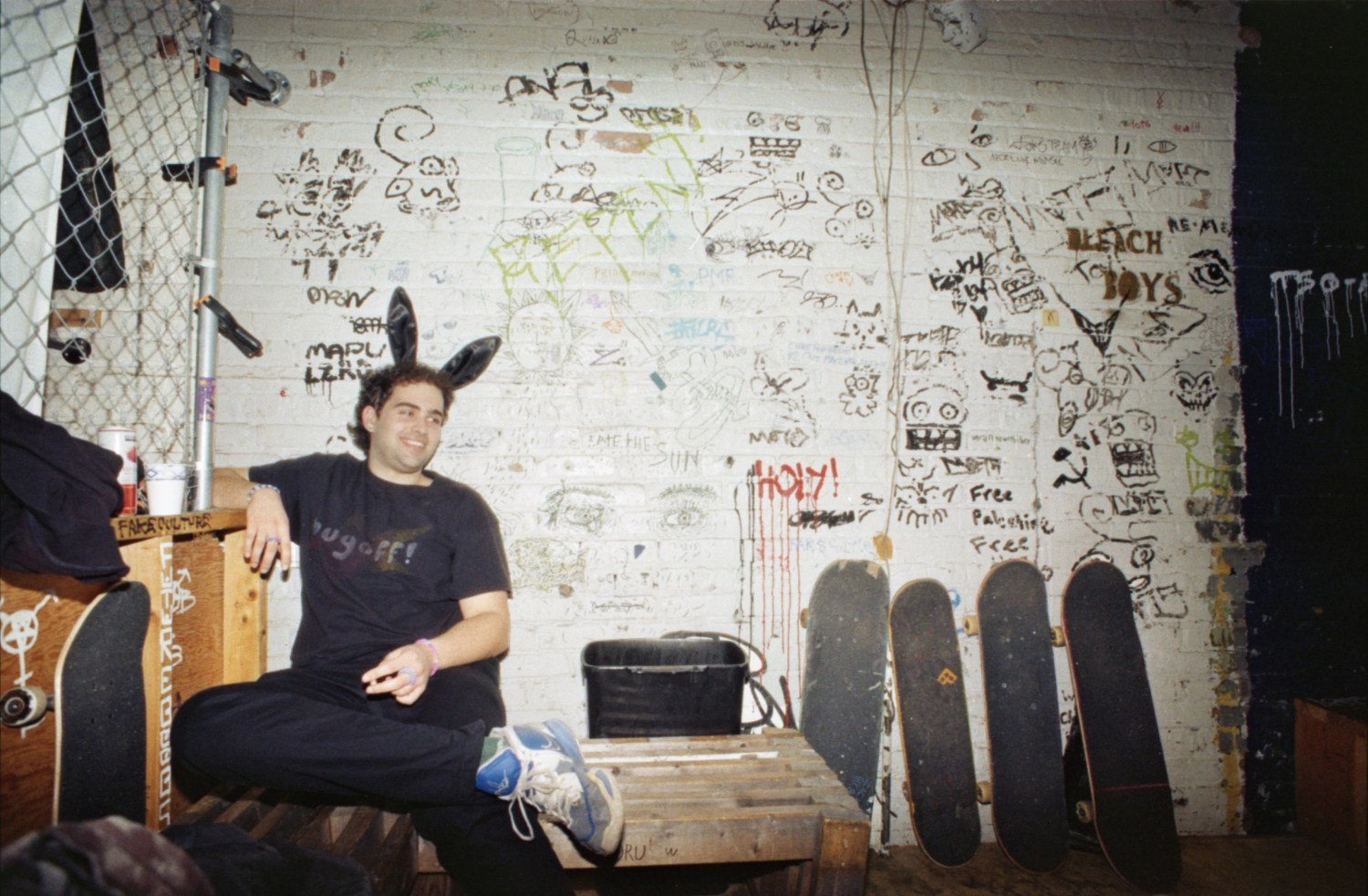
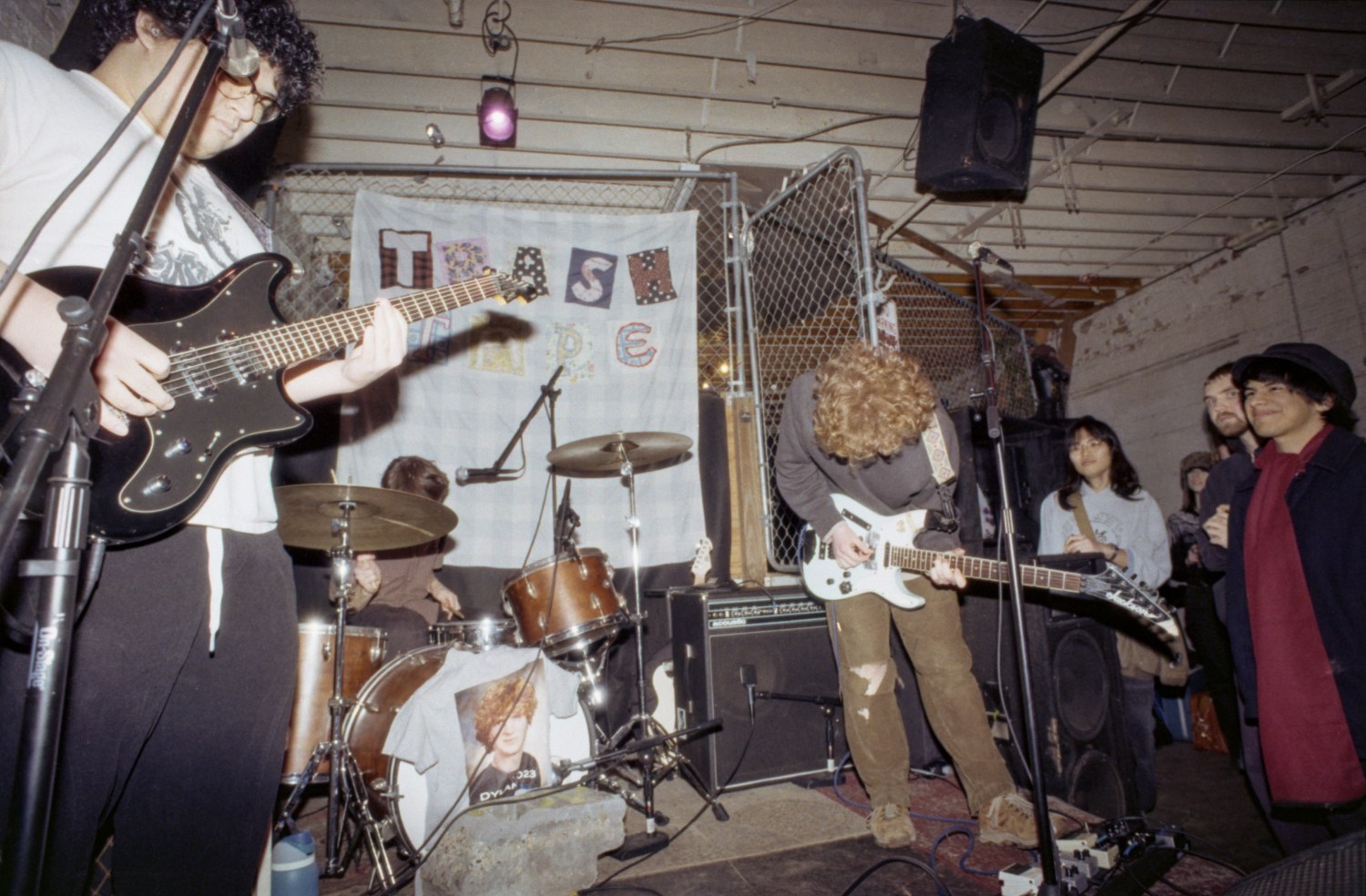
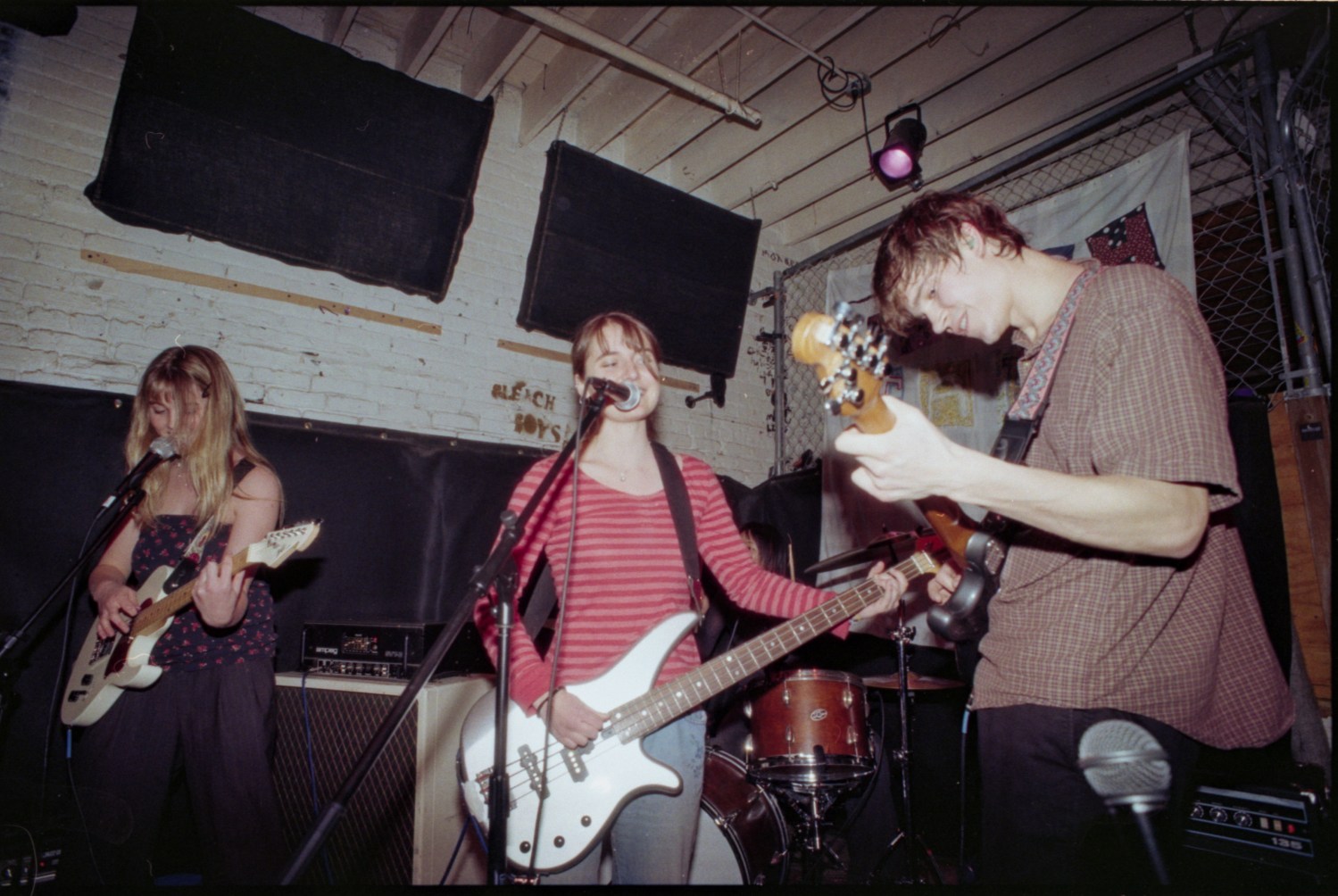
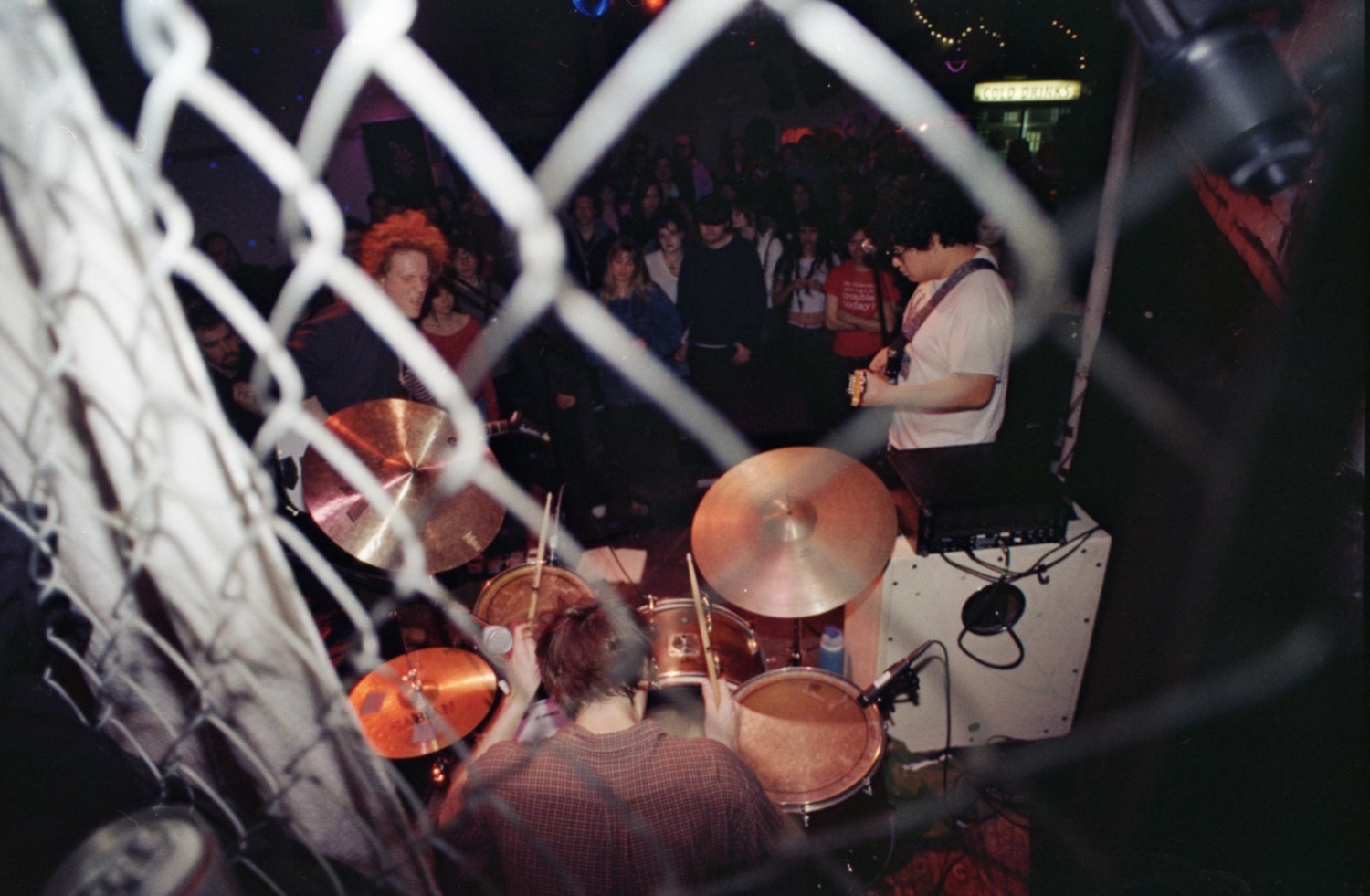
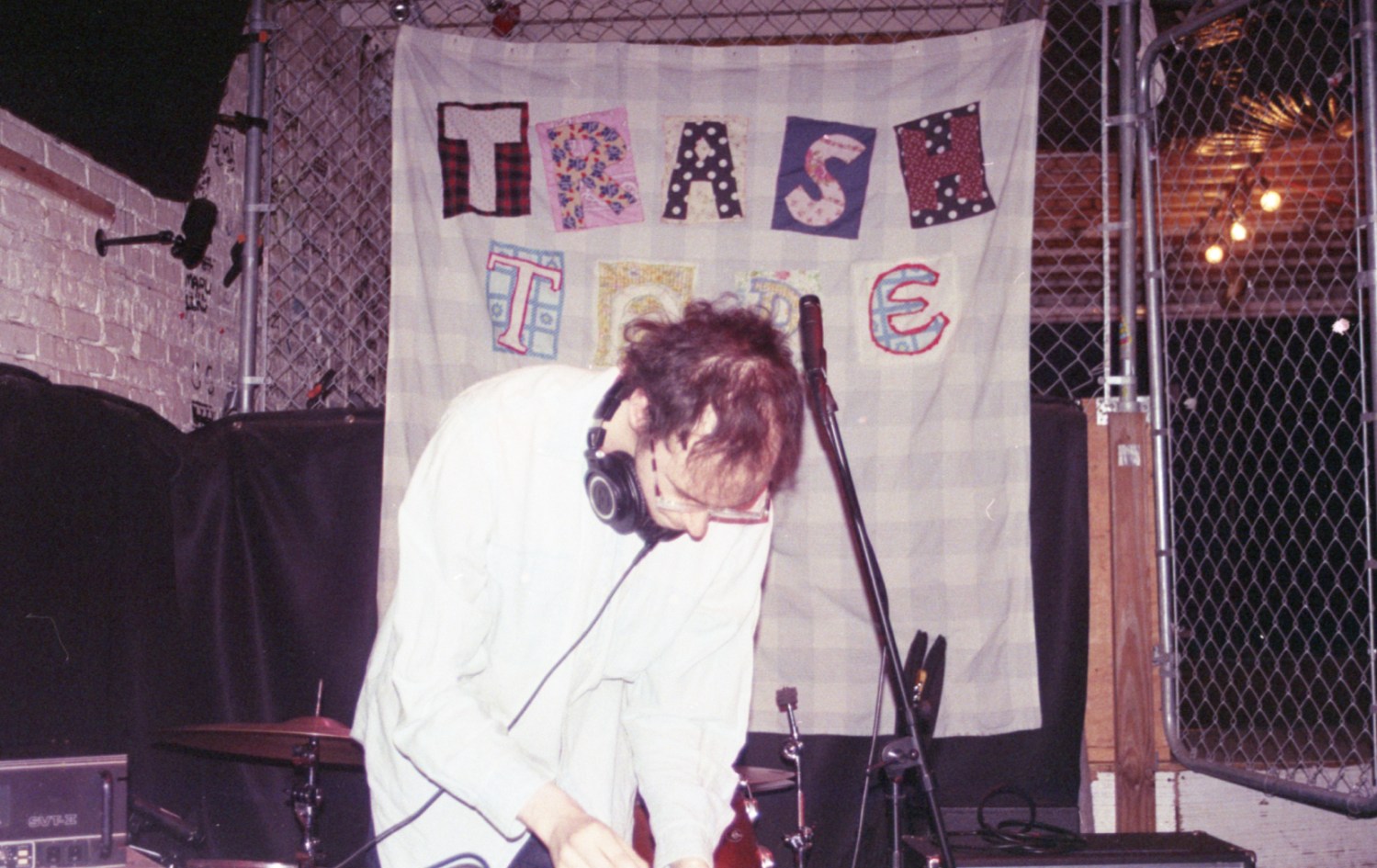
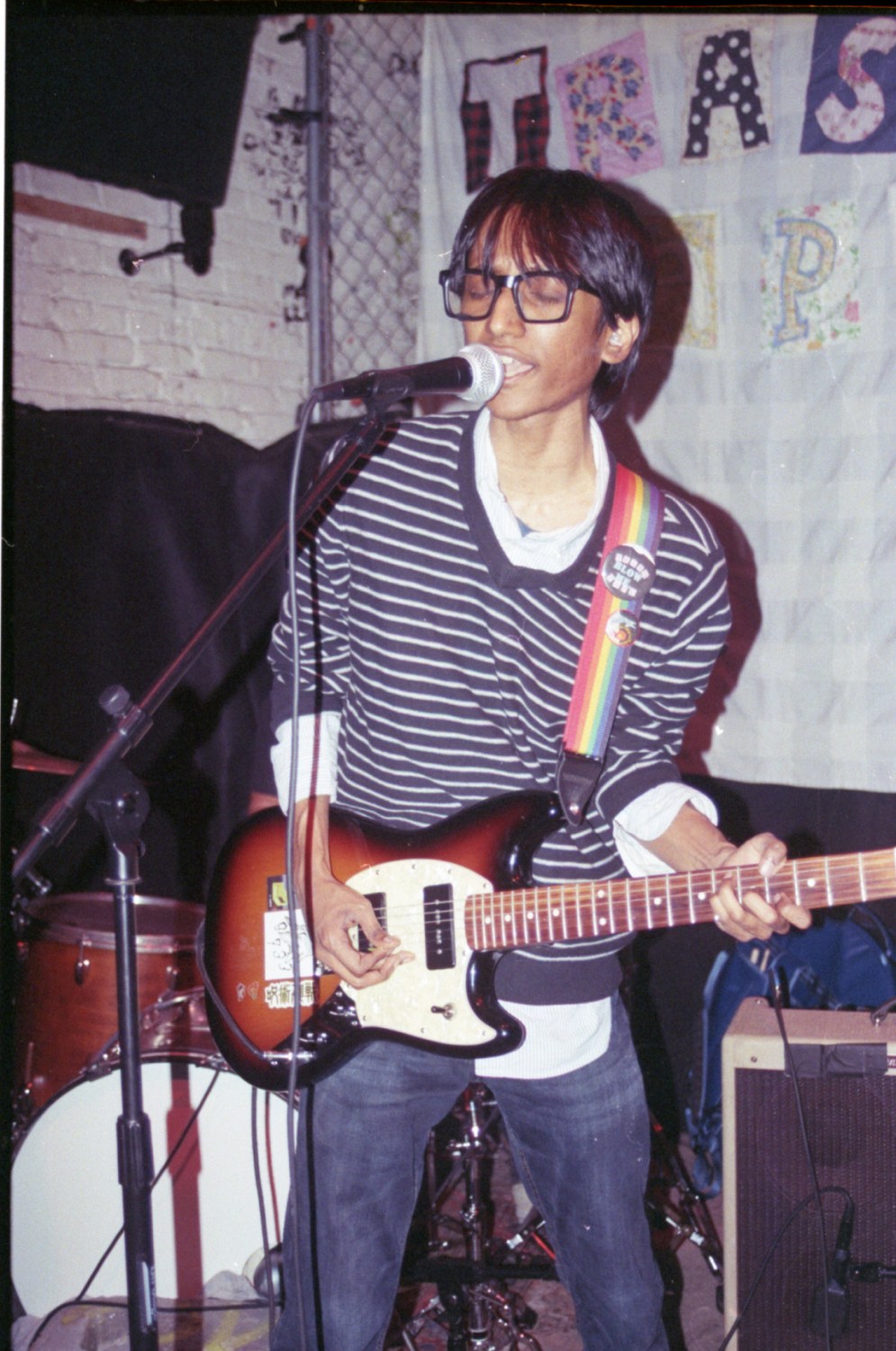
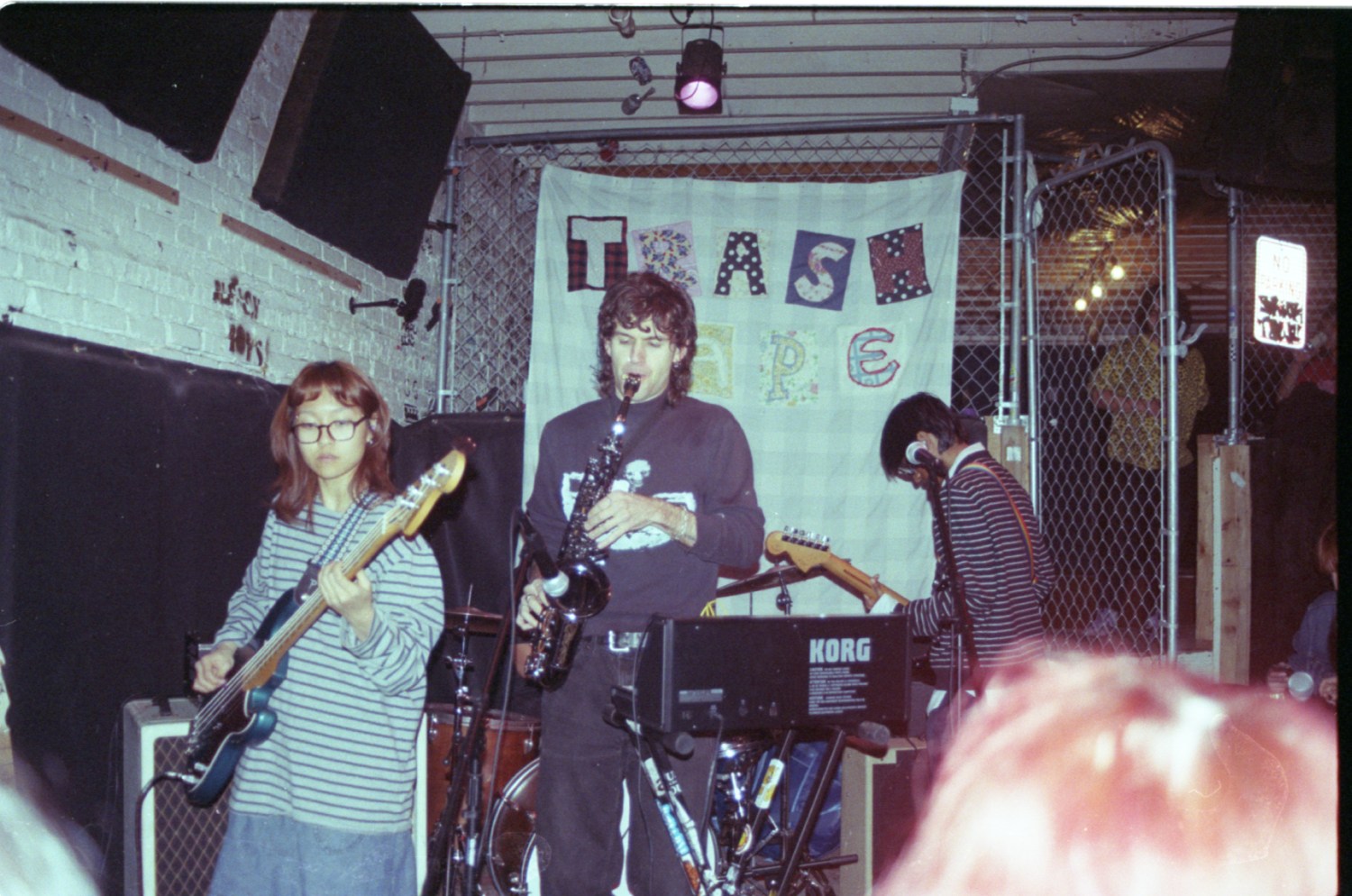
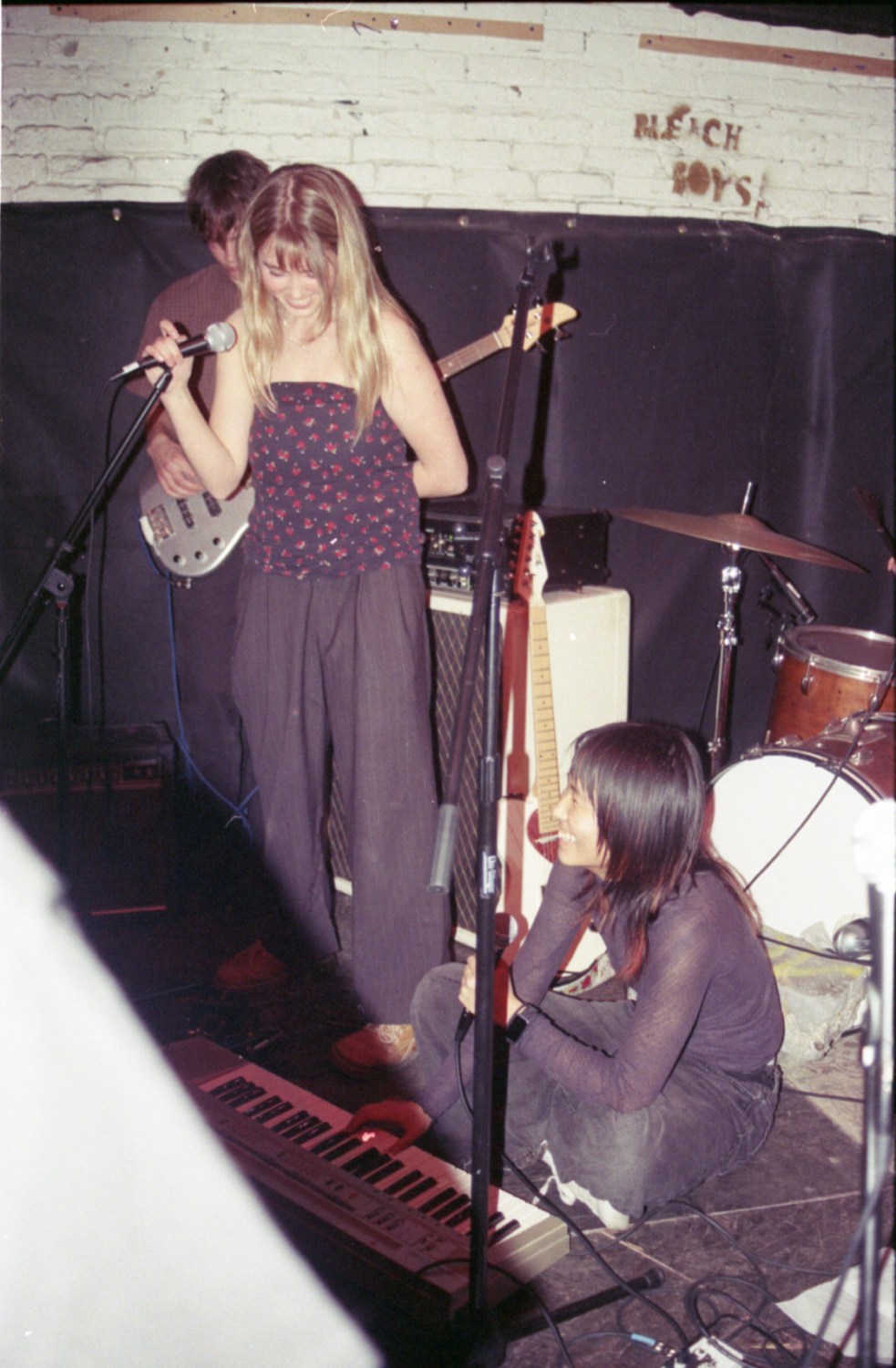
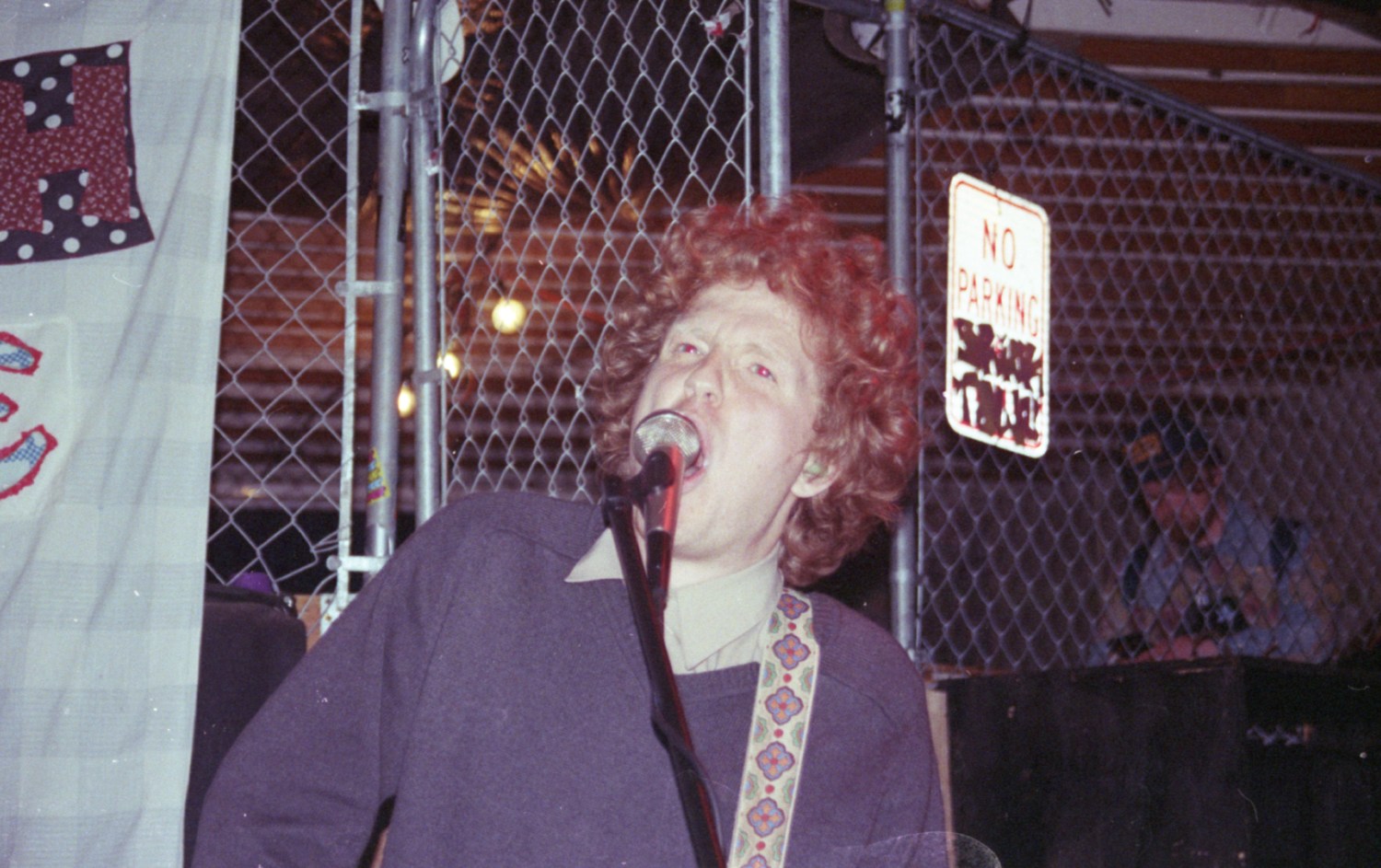
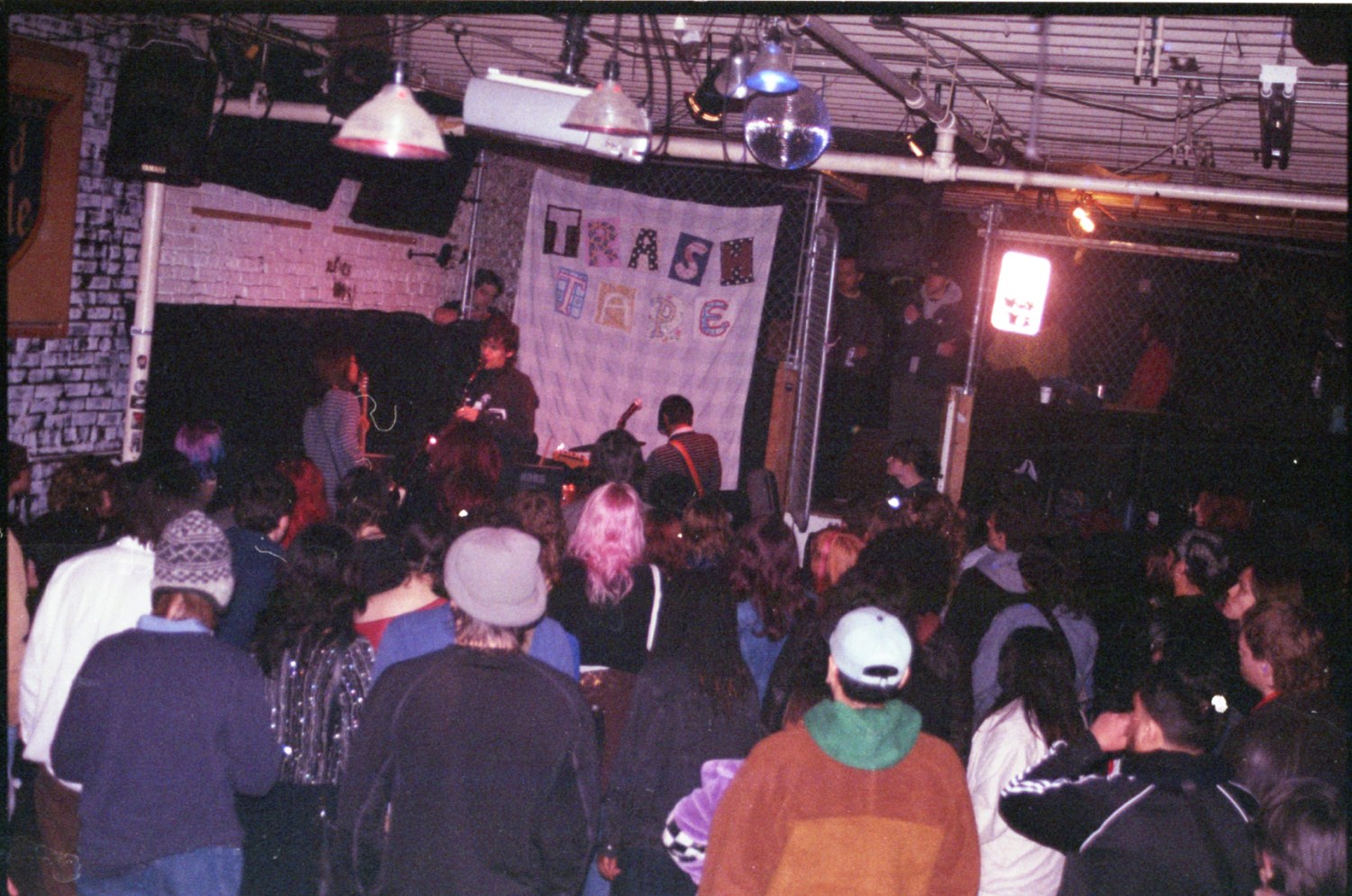
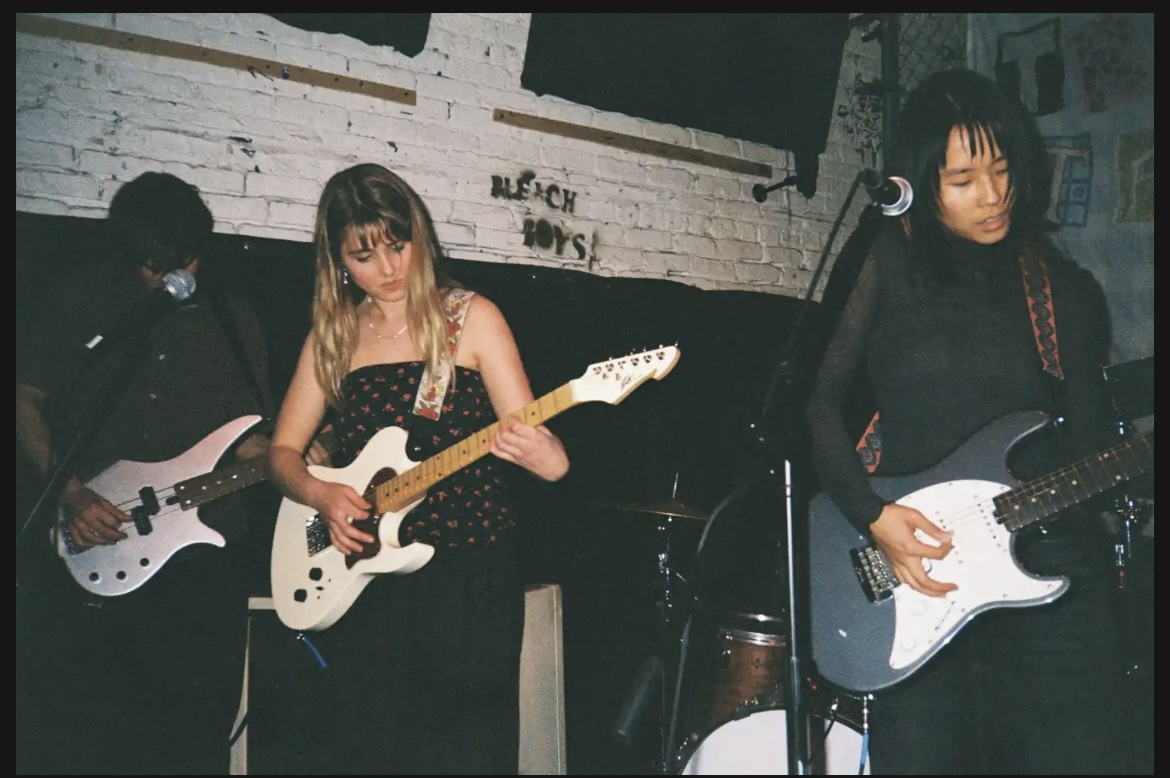
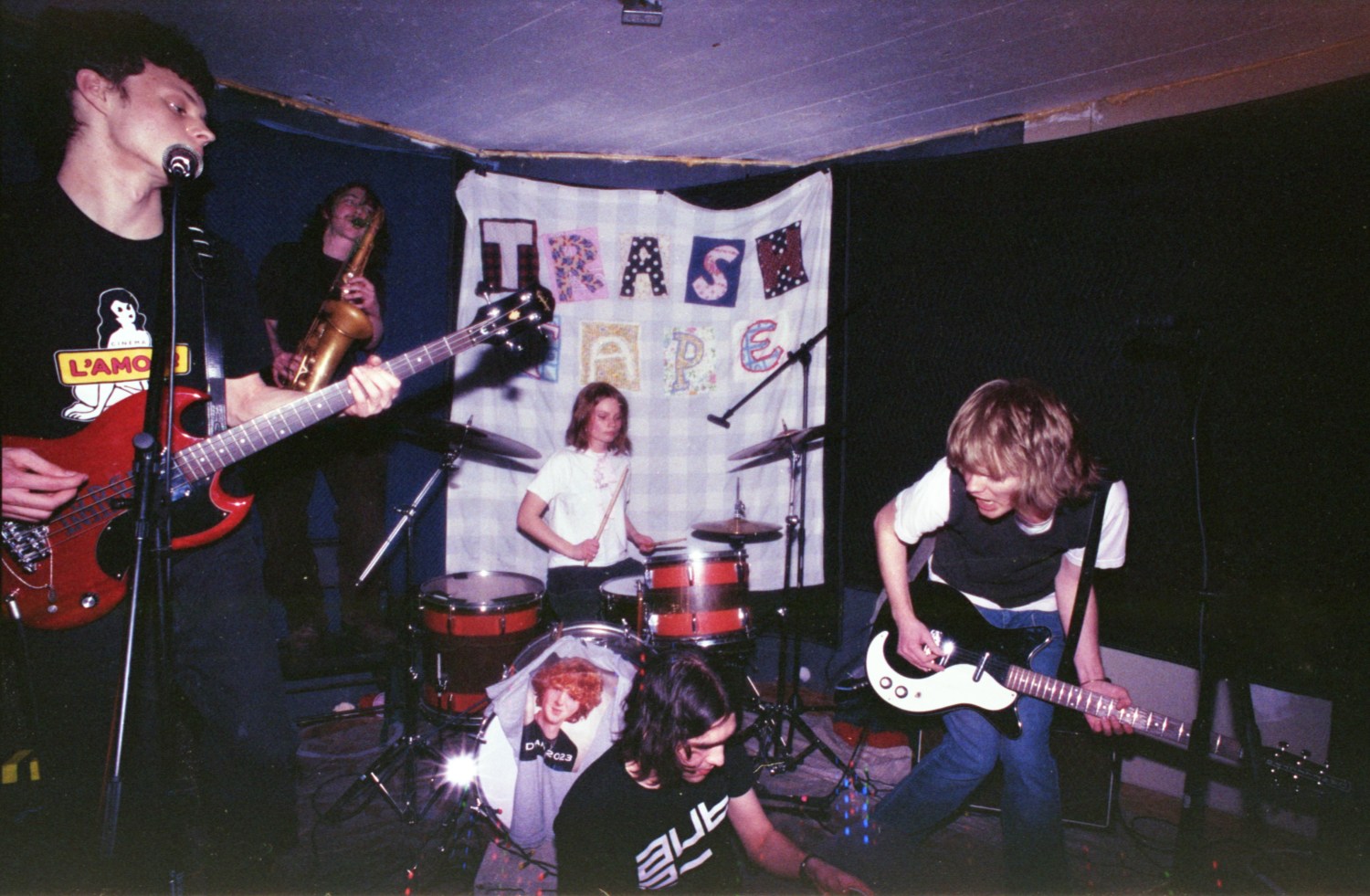
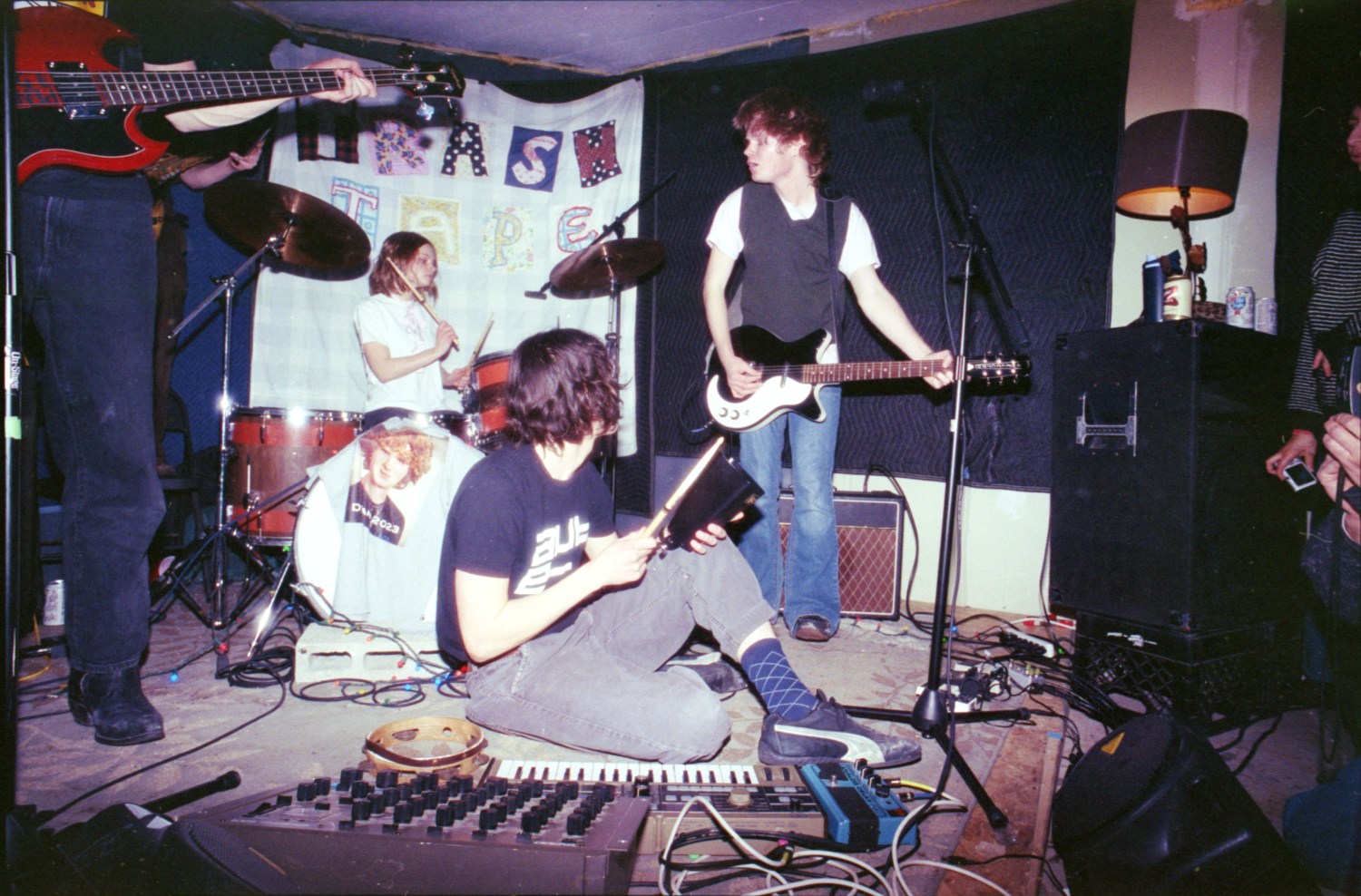
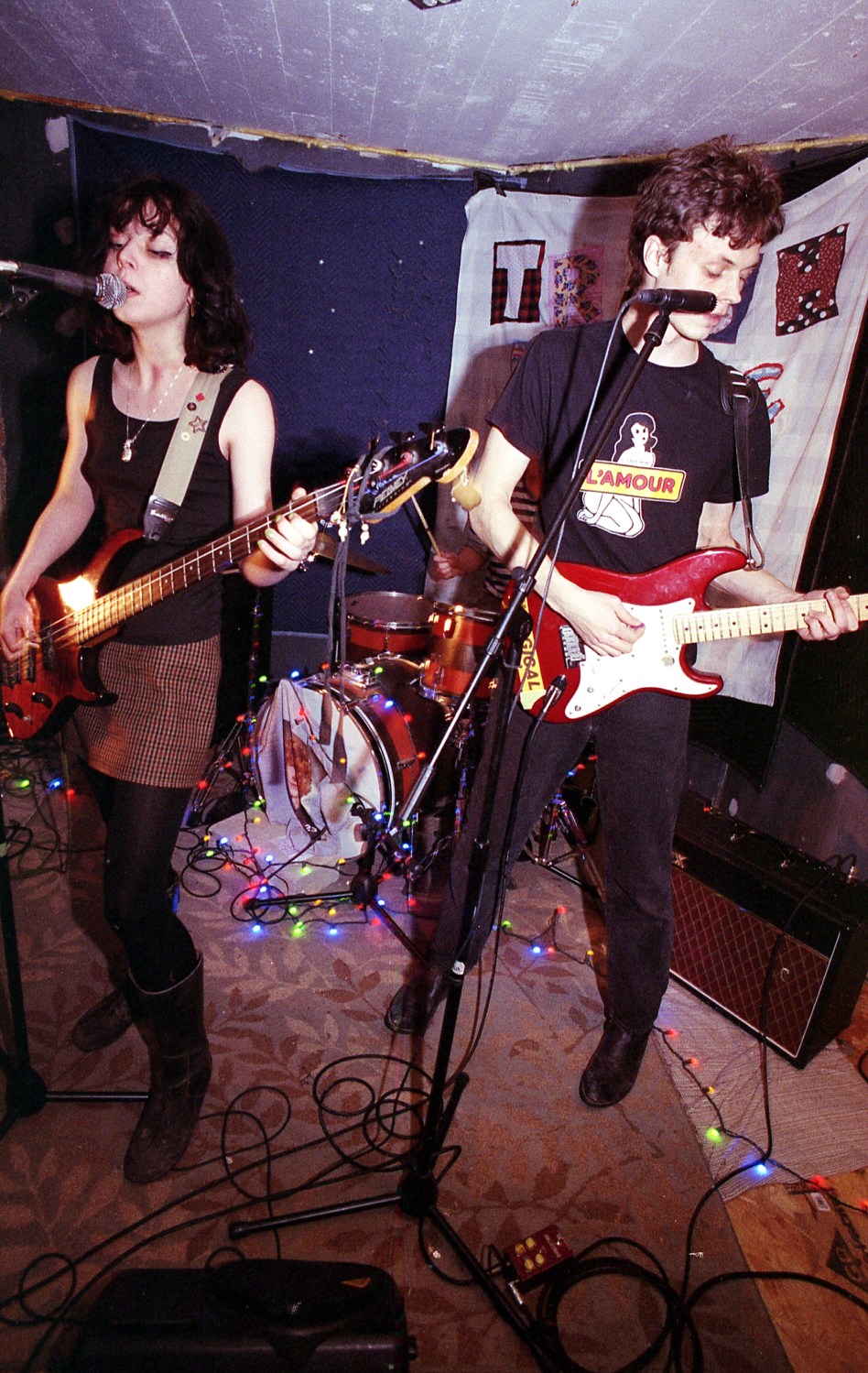
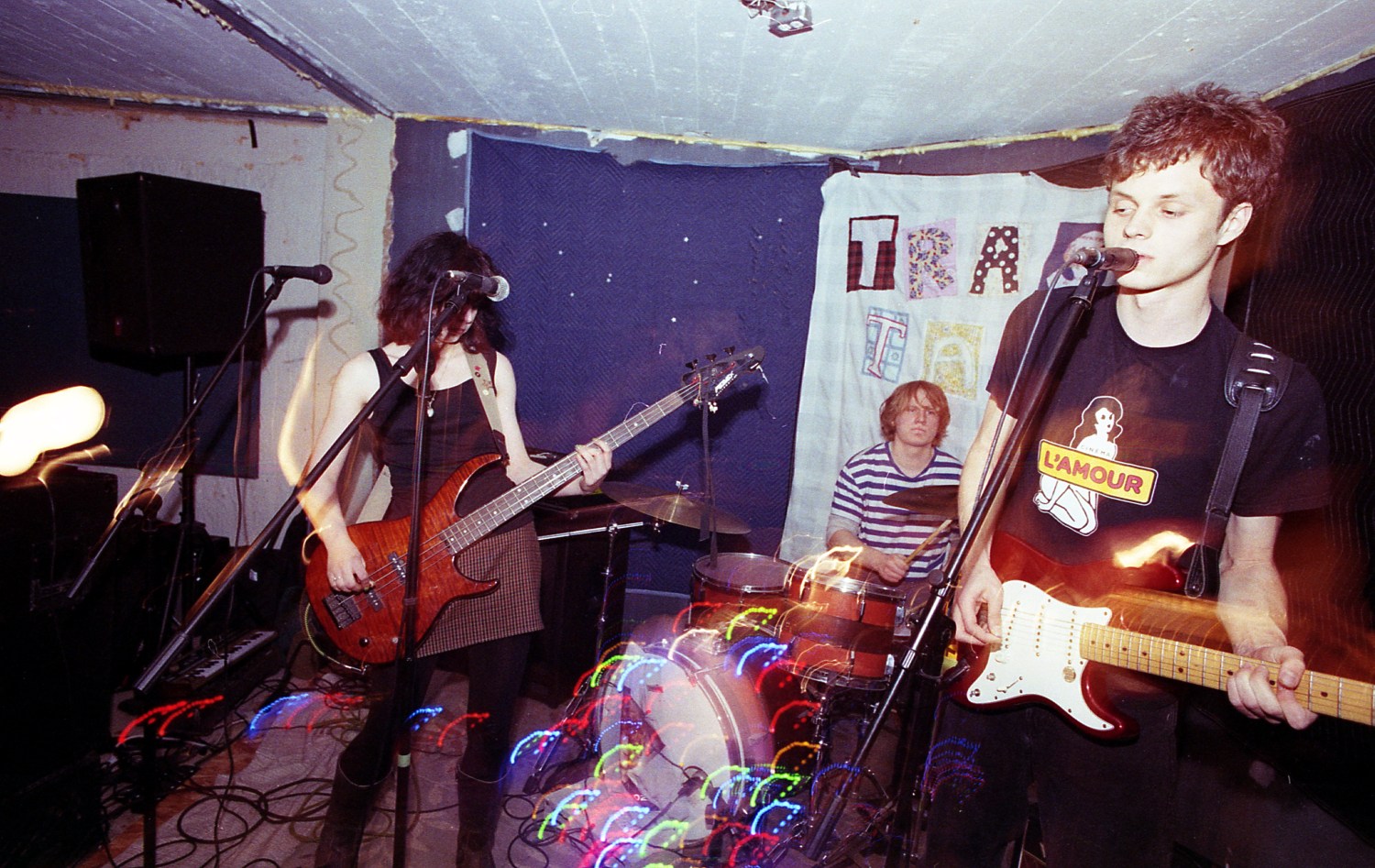
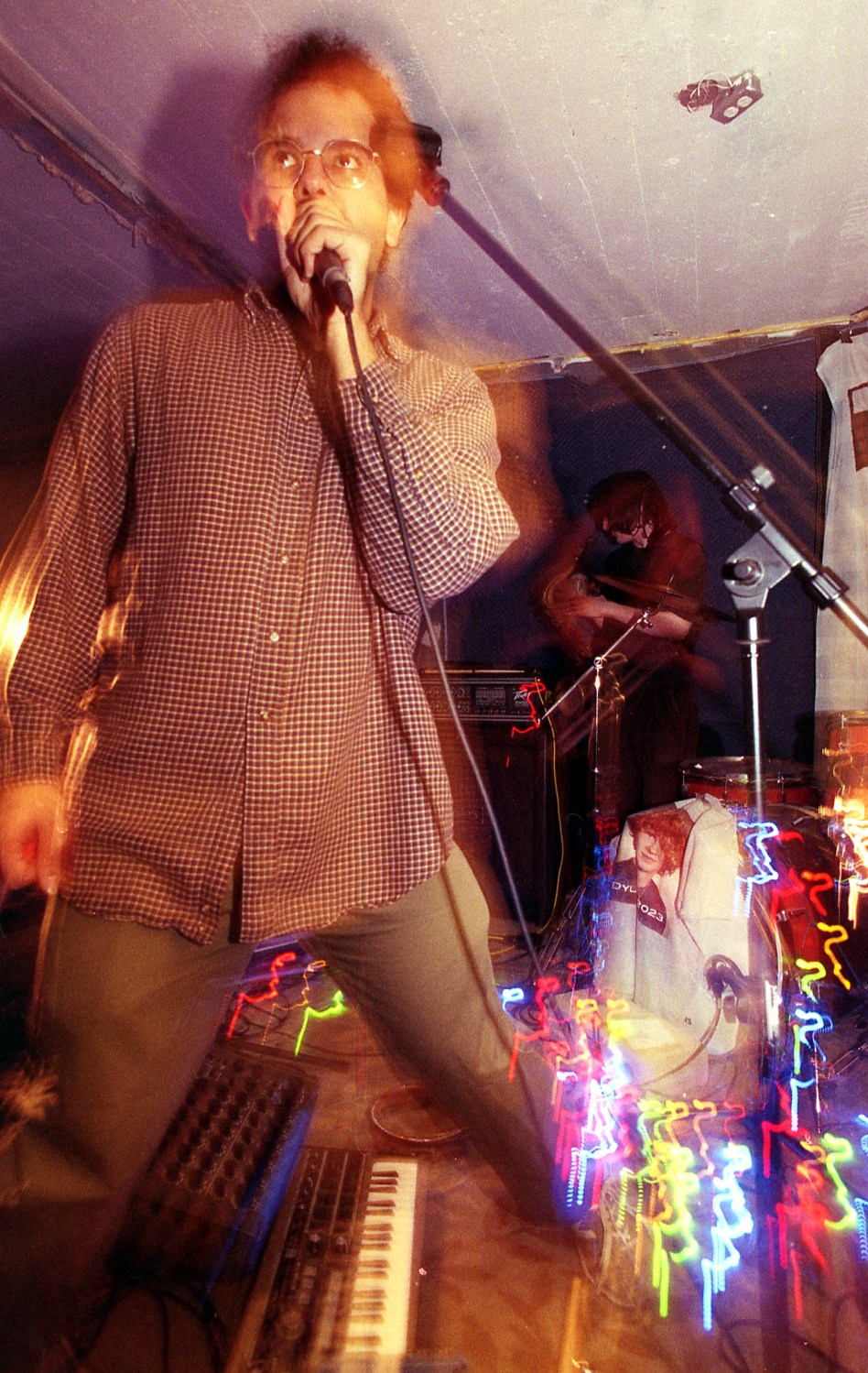
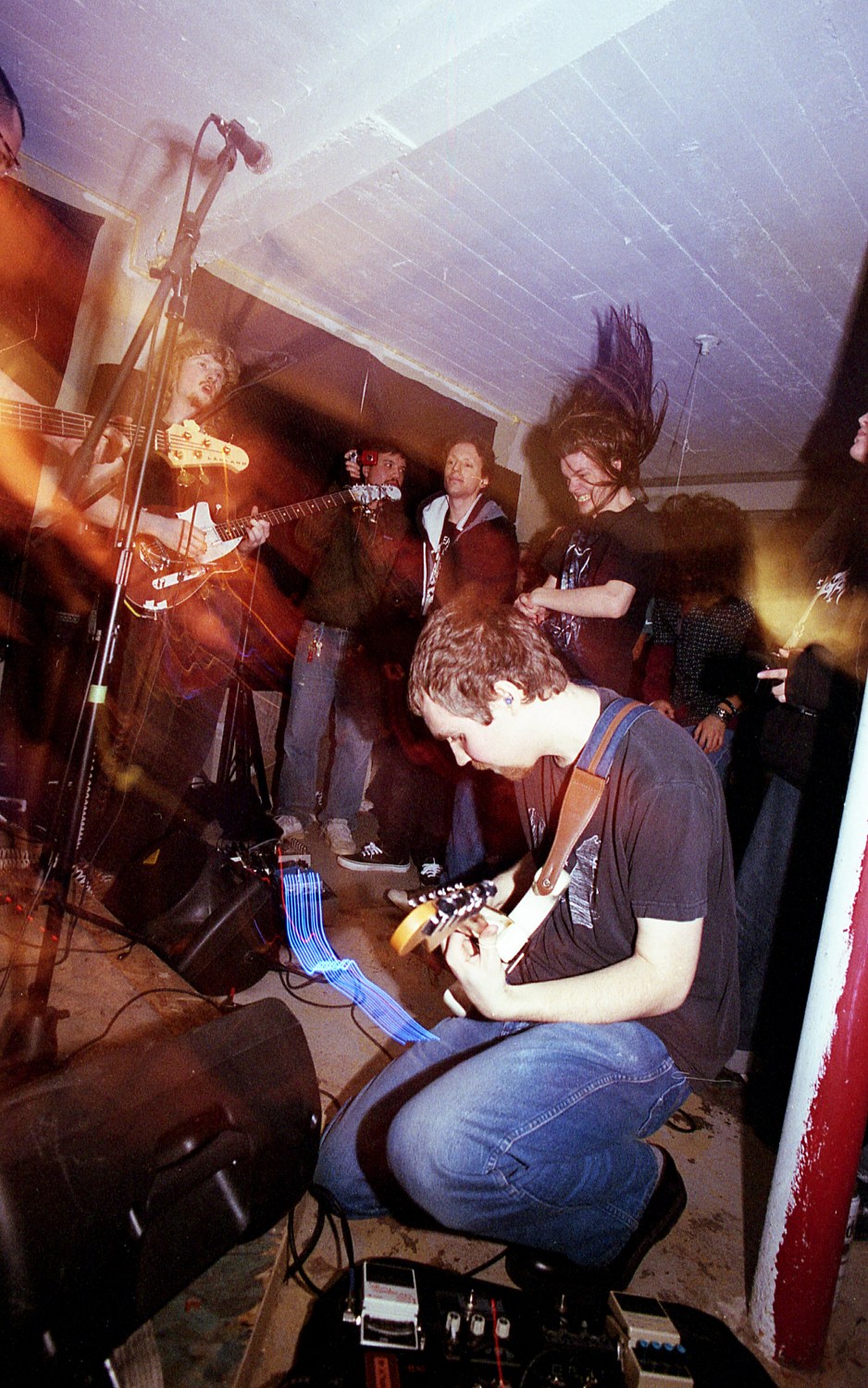
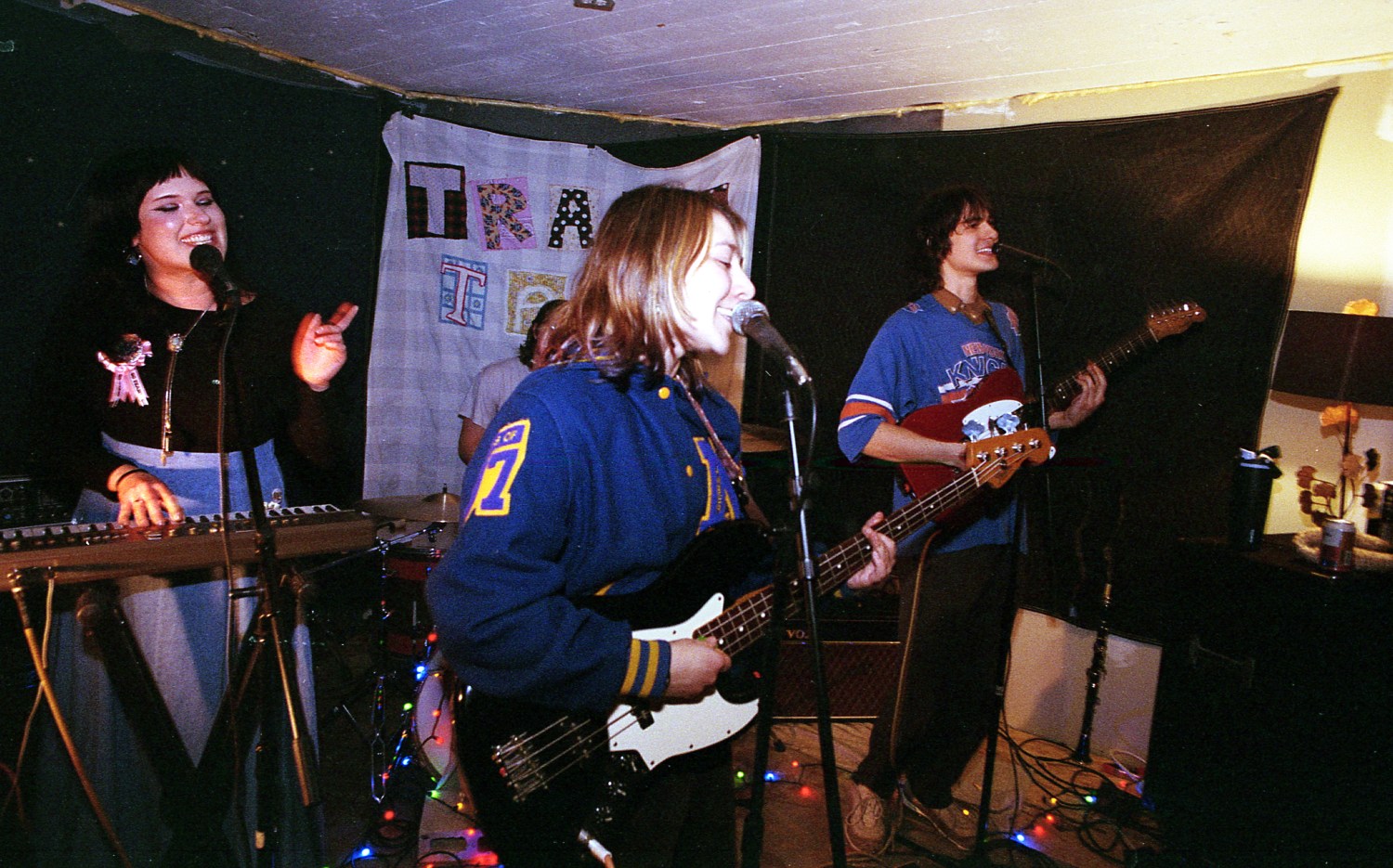
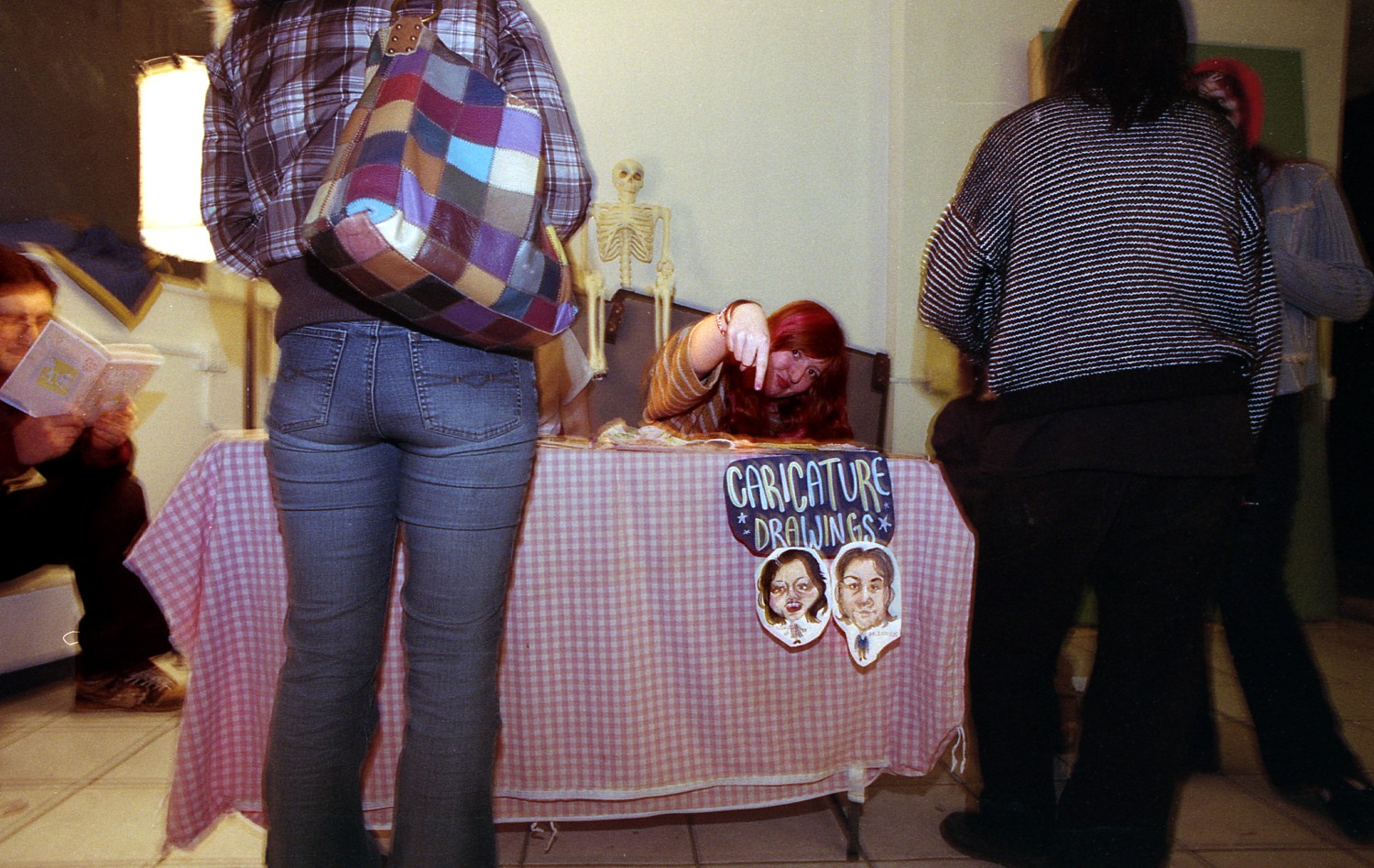
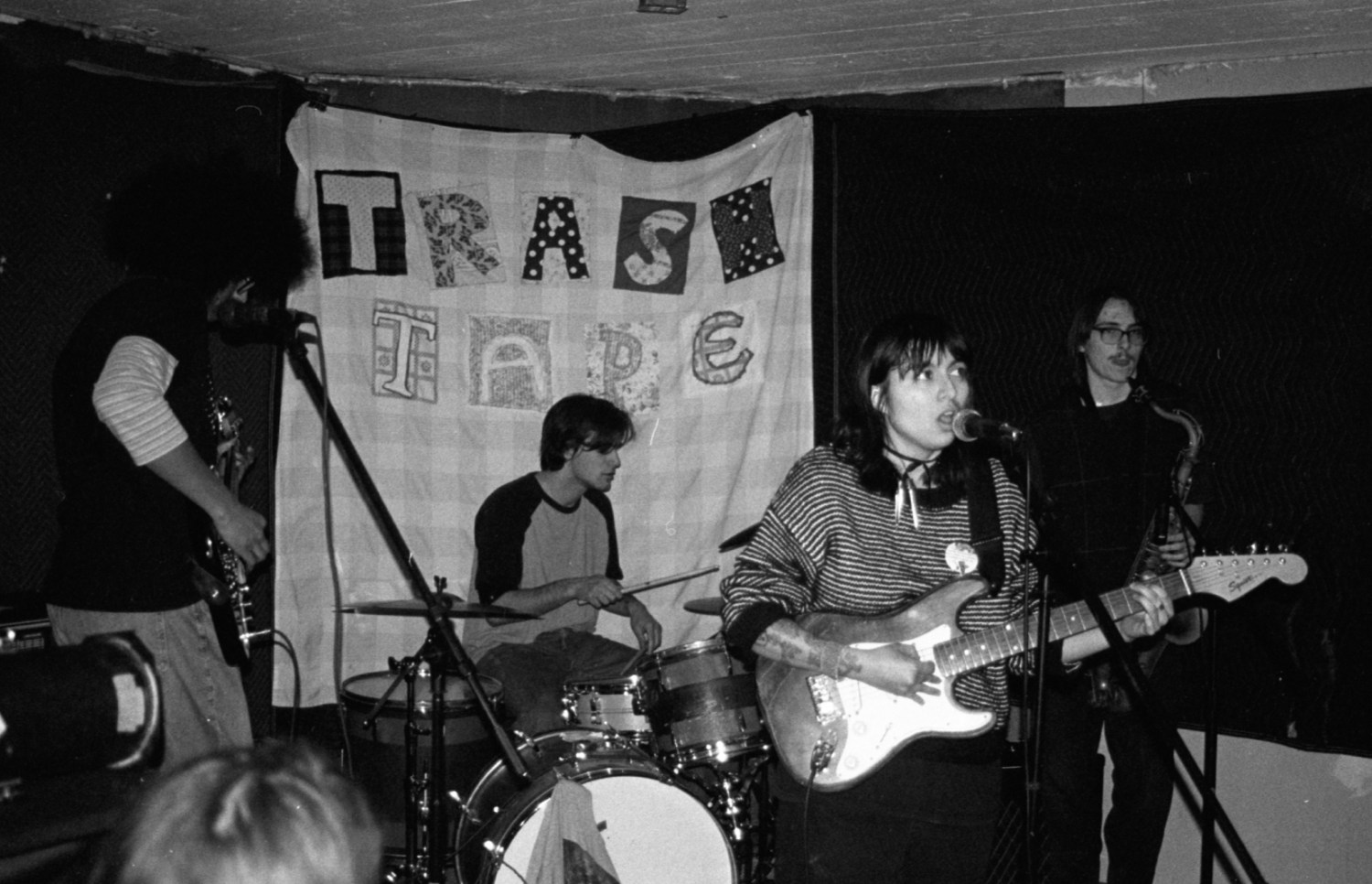
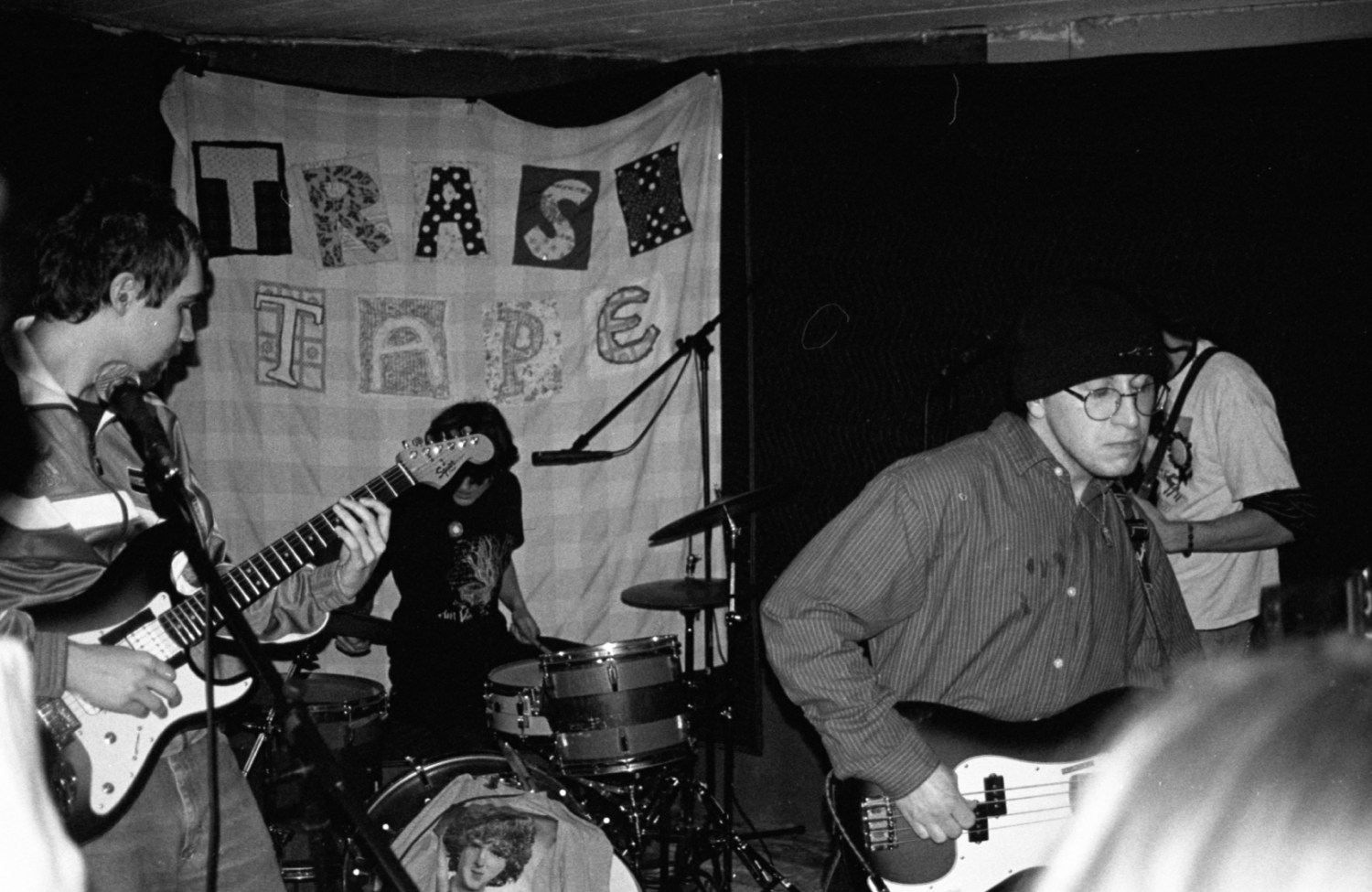
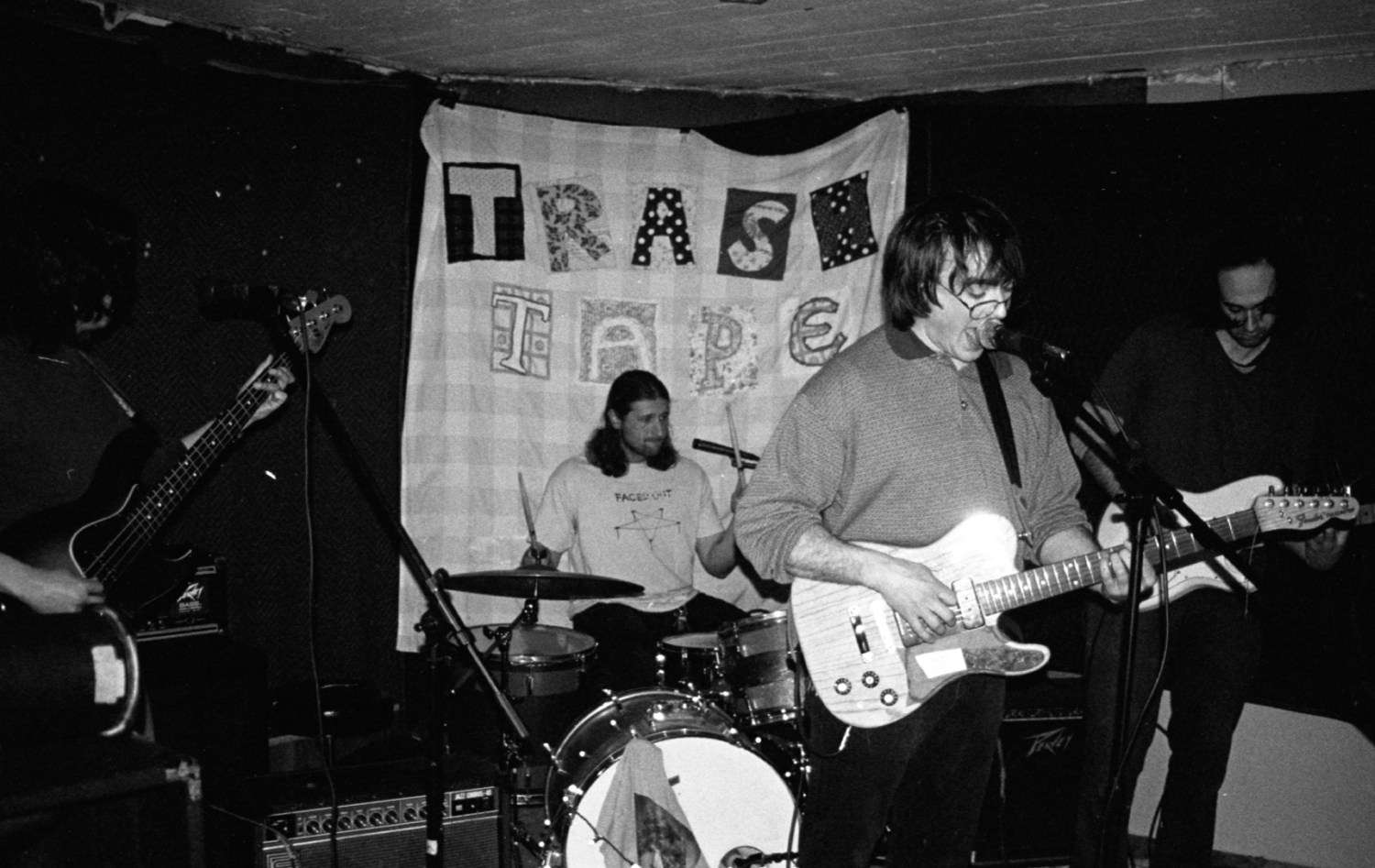
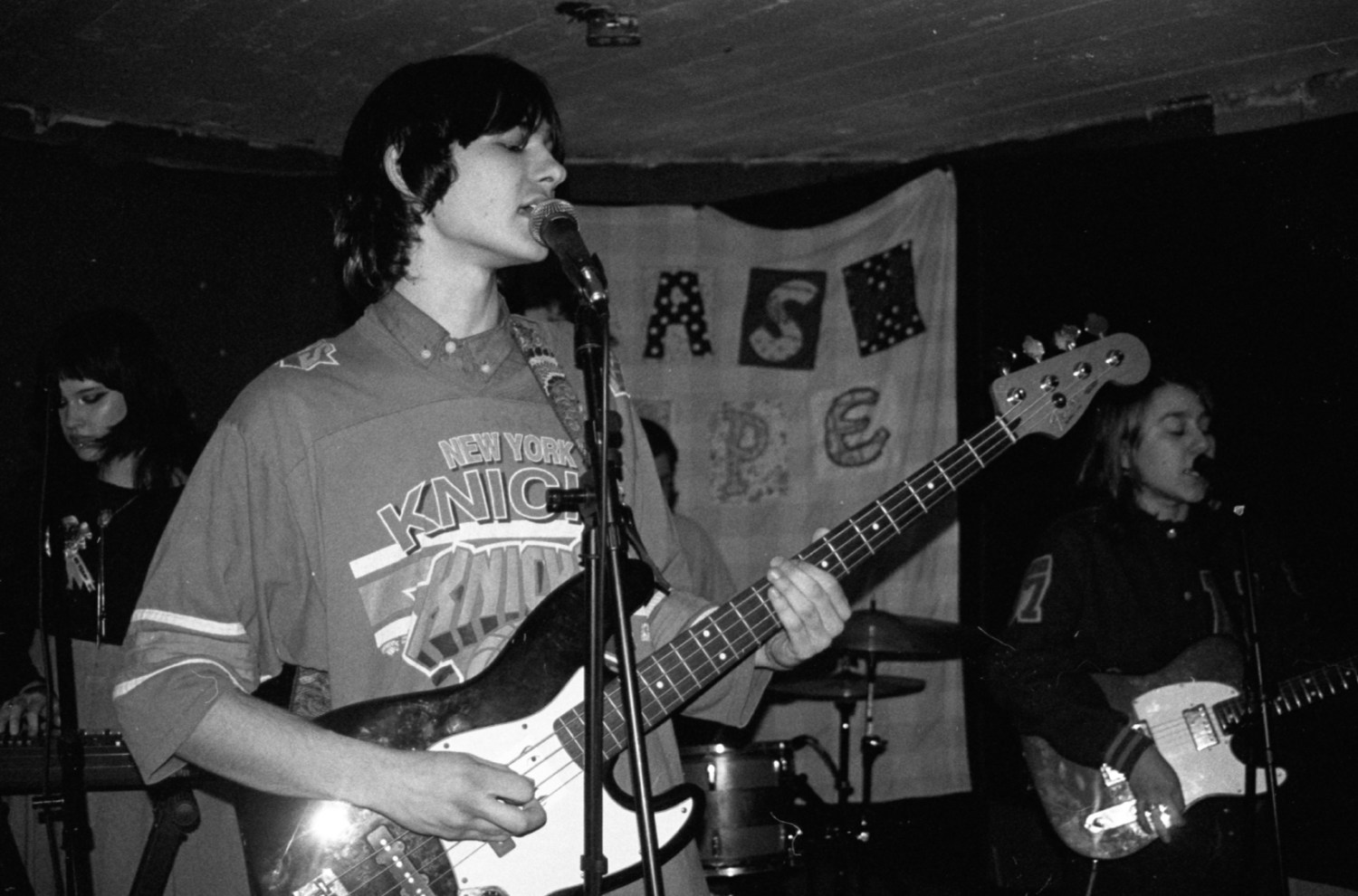
Taking over Chicago for two weekends, Trash Tape Records celebrated 6 years of DIY merriment with a three-part festival, bringing out an array of artists both on the label and local Chicago (and out-of-town) legends. The party started at Bricktown on Valentines Day, followed by a night of DJs at the legendary Rainbo Club on the 19th and a final set at Lowdown on the 22nd.
Originally formed in the Chappell Hill and Durham area when they were in high school, Trash Tape Records was founded by Nathan McMurray and Evren and Eilee Centeno. The vision was simple; to put out their friend’s music that they loved so much. Building off of that youthful excitement with a sheer DIY ethos, Trash Tape became a home to many artists with similar mindsets, making their art accessible, exciting and incredibly enduring.
2025 was a banner year for the label, as they shared back-to-back-back debut releases, such as the acclaimed self-titled barn burner from Motocrossed, the brain-scratching pop goodies of Welcome to the Shower by Tanner York, and Charlie Johnston’s imaginative The Firetruck is Running Late. So far this year, TTR has shared WhatThe Red Flare Meant, the long-awaited debut record from mail., bringing obsessive expositions of harsh dynamics and commanding melodies out from the dark and into the spotlight. Fan favorite Memory Card also returns with Siren Surf Hurricane, as Henry Tart continues to grow his catalog of enduring sentiments and melodically rich lo-fi swooners. Then recently, NC pop-defibrillators, gumhead, share their debut single titled “Covered”. Not to mention Oh Good! Sacred Heart Academy Made an EP, the debut EP from the Centeno siblings’ new project, Sacred Heart Academy. And keep an eye out for a new release from sects in the near future.
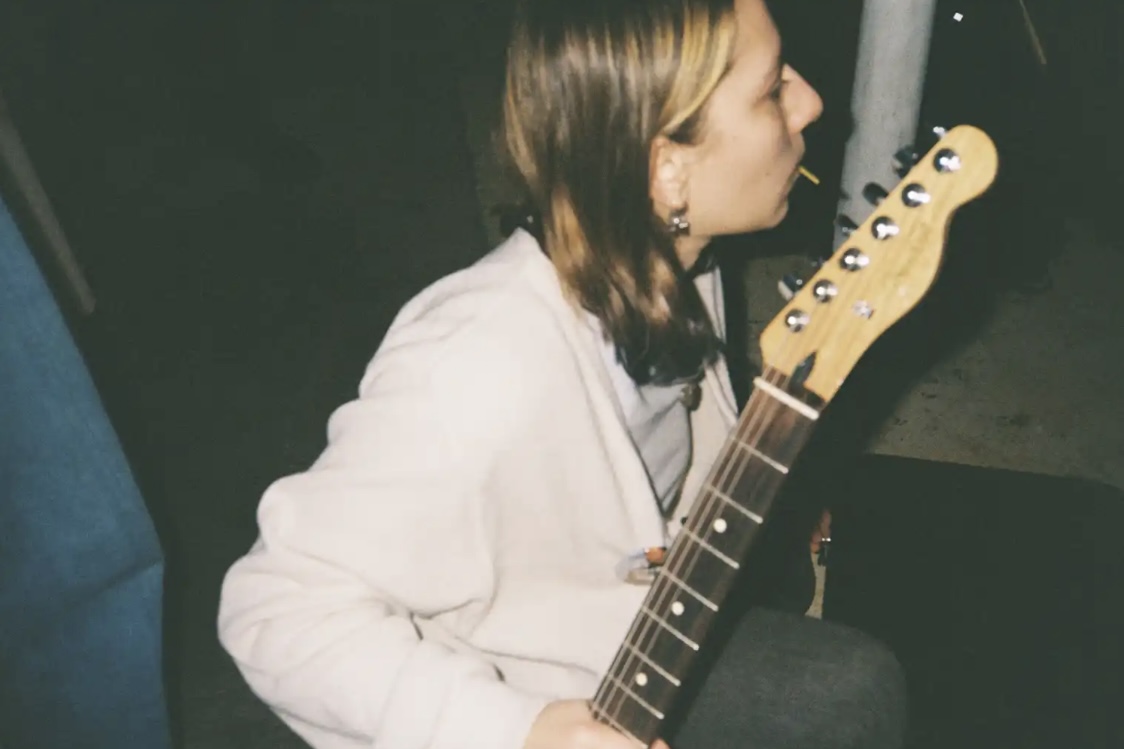
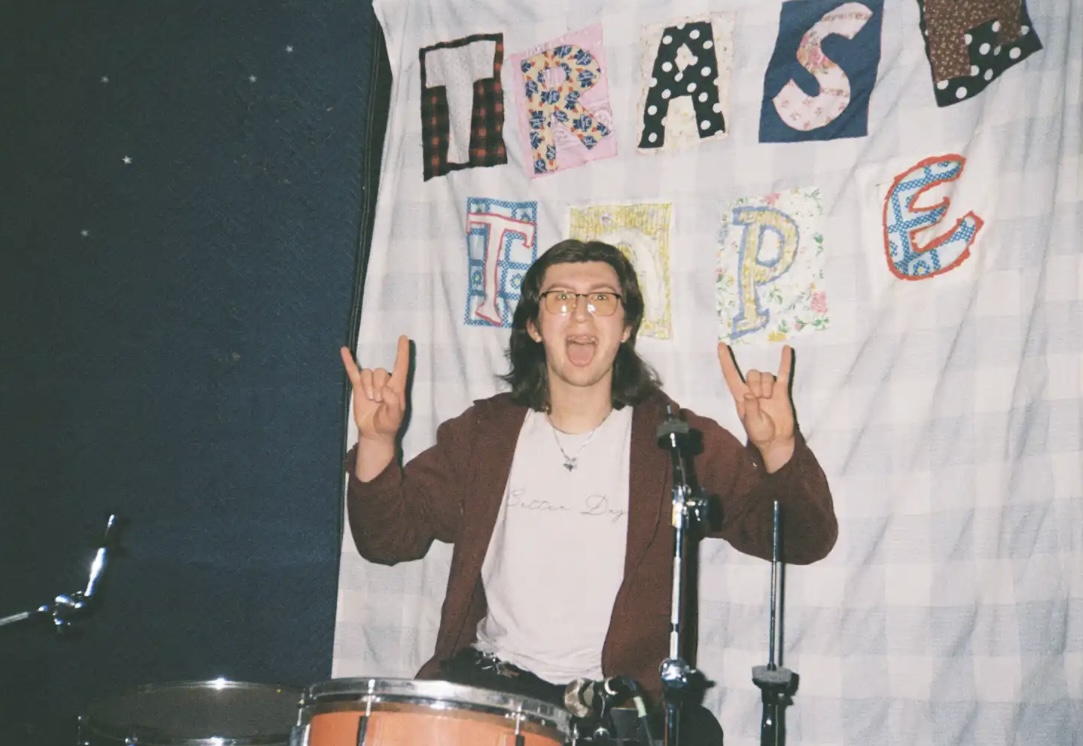
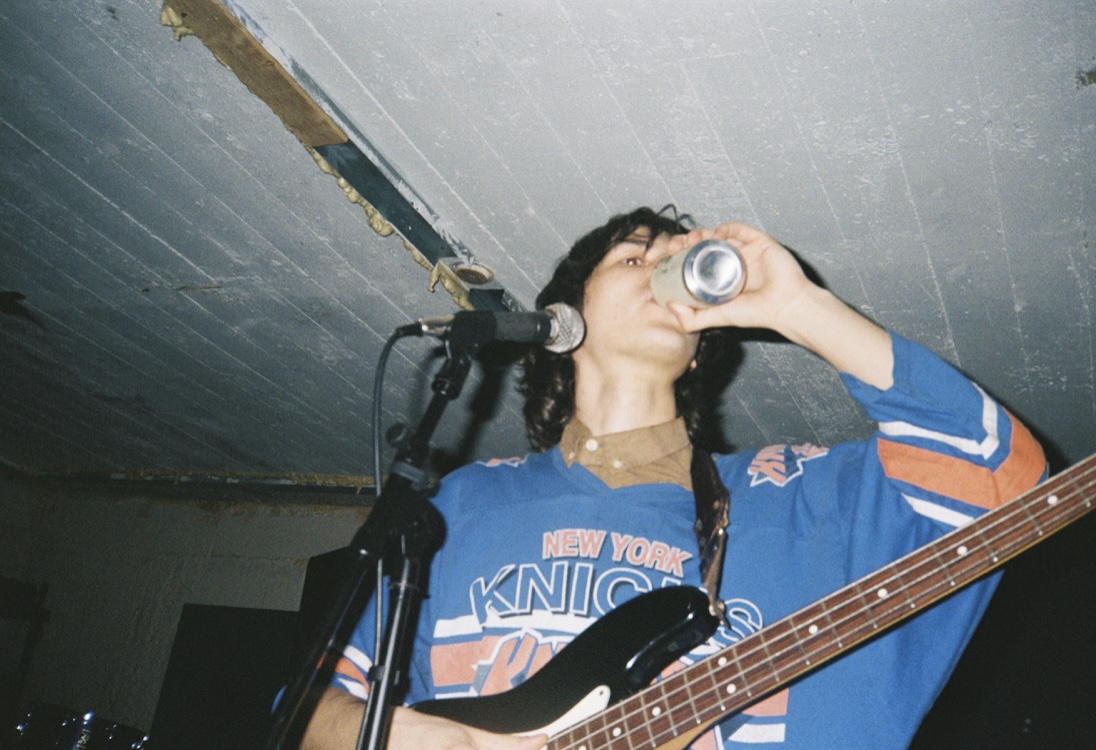
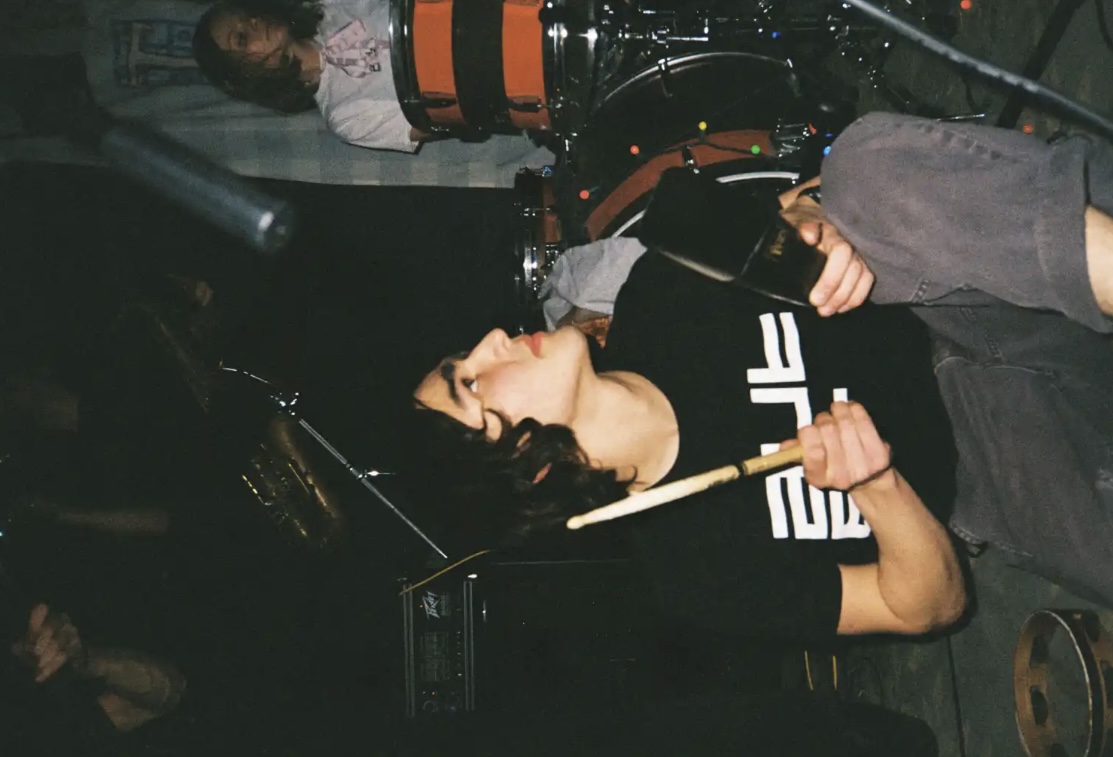
Collecting photos from Averi Love Little, Braeden Long, Kian Kermani and Lauren Schmit, take a look at two weekends worth of Taking out the Trash.
Watch a compilation of the whole festival recorded by Eilee Centeno.
Hill View #73 by Shea RoneyPhoto by Averi Love LittleSects by Averi Love LittleLittle Chair by Averi Love LittleSects by Averi Love LittleMemory Card by Kian KermaniHill View #73 by Kian KermaniHill View #73 by Kian KermaniLittle Chair by Kian KermaniSects by Kian KermaniHill View #73 by Kian KermaniLittle Chair by Lauren SchmitSects by Lauren SchmitMemory Card by Lauren SchmitPhoto by Lauren Schmit
Current Union by Averi Love LittleCurrent Union by Averi Love LittleReceiver by Braeden LongPhoto by Braeden LongReceiver by Braeden LongPhoto by Braeden LongPhiladelphia Eagles by Braeden LongSacred Heart Academy by Braeden LongPhoto by Braeden LongKitship by Kian Kermanimail. by Kian KermaniChaepter by Kian KermaniSacred Heart Academy by Kian KermaniSacred Heart Academy by Lauren SchmitSacred Heart Academy by Lauren SchmitSacred Heart Academy by Lauren SchmitCurrent Union by Lauren Schmit
If you happen to be anywhere near Carrboro, NC this Friday-Monday, consider making your way to The Big Pop Show. Helped put together by Nathan McMurray, this legendary festival features several TTR artists as well as the best pop bands of today.
Tanner York doesn’t walk into a studio so much as he drags it with him, through Asheville apartments, the recording studio at UNC Asheville and his parents’ attic, leaving behind a trail of tape hiss, cheap snacks and a surprisingly serious collection of pop songs. York is your music obsessed friend anxiously waiting to leave a party to sing along to Beach Boys Instrumentals in his Subaru after sipping on his patented “Tanner Two,” a self-prescribed two lager limit. He spends his days obsessively scrolling through microphone reviews on one tab and a high-speed game of bootleg Tetris in another, thinking of all the different ways he can create the perfect drum sound. But when he plugs his guitar into the AC30 tucked away in his closet and presses record on his Tascam 488 MKII, all that scattered energy coalesces as he reveals himself in this sacred space as a budding hero of modern underground pop. On Welcome to the Shower, his joyfully weird and emotionally sincere debut album, released July 20 via Trash Tape Records, York transforms his obsessive ear and chaotic charm into something startlingly clear: lo-fi pop songs that sound like inside jokes until they suddenly hit like memories.
Before Tanner York started recording as Tanner York, he fronted a high-energy noise-pop duo called Diana Superstar. The early performances leaned into pure showmanship and black midi-esque chaos. “I thought my destiny was kind of like the noisy, blow-you-away live show,” York says. The songs were short-winded but bursting with excitement and creativity–jagged, stitched-together ideas that didn’t always complement one another, but hinted at a restless, ambitious musical mind. Over time though, he shifted his focus inward, discovering his real obsession wasn’t spectacle—it was the song. The melody. The chord changes. “I started realizing that what I value most is writing something that could pass the acoustic guitar test. Something sticky, something strong.” That pivot marks his growth, not just in style, but in intention as well, as he learned to craft nuanced, coherent pop songs that stick with you long after the tape stops rolling.
Photos by Hana Parpan
That newfound clarity within his songwriting is what makes Welcome to the Shower so charming and so special. While the album brims with unconventional tape tricks and lo-fi quirks, it’s never a gimmick. York’s melodies are deceptively complex, his harmonies airtight. Tracks like “Girlfriend” and “Museum Broadway” are loaded with witty lyrical side-eyes—born from York’s interest in comedy and his brief but passionate detour into stand-up in Los Angeles—but they’re never too cool to not care. In fact, they care deeply, and that tension between irony and sincerity is part of what makes this record so endearing.
In “Museum Broadway,” York paints a surrealist portrait of suburban malaise, full of strange observations and tongue in cheek imagery: “The movie theater with a fuck-ugly mural / Beside the frozen-over pond.” These are the kinds of lines he’s mastered that evoke laughter before shifting into emotional clarity over a key change when he drops the dry detachment to sing “everyday I think about just moving far away from here but I don’t have the time.”
“Girlfriend” is equally clever, but more biting in its longing. It flirts with the melodrama but always lands somewhere painfully honest. “I heard she gave you a tattoo / of your dog that recently died” and “I could be everything she is” feel like throwaway one-liners until York twists them into a chorus that aches with restraint: “But you have a girlfriend / she loves you just fine.” It’s that careful balance between pettiness, humor, and vulnerability that makes York’s writing shine. His lyrics often read like someone trying not to cry by telling a joke and then accidentally revealing everything.
While the lyrics may lean toward playful or indirect, York admits that’s partly a protective instinct: “One of the ways that I get myself to trust a lyric is to make it funny. It’s almost an insecurity thing, where it’s like, ‘oh, if I’m being funny then I’m above sincerity, which I’m trying to avoid, but I really do love songs with funny lyrics. Bands like Squeeze have incredibly funny lyrics, but they also write such amazing pop songs. I’ve always thought that novelties are in the same artistic bracket as something that’s attempting to be serious because it’s equally if not harder to pull off correctly.” That looseness, both as a defense mechanism and a genuine stylistic tool, often leads to wryly observational lines that sneak up on you and leave a mark.
Photo by Hana Parpan
Last summer York spent a few months in Los Angeles, California working for a twitch streamer, Luke Taylor, editing his streams. He found himself at stand up comedy shows almost every other night trying out new jokes and meeting fellow comedians. Through this and by playing video games online, York found lots of personal inspiration by befriending many of his comedic and musical heroes.
“I was playing Fortnite with my friend Dan, who lives in New York, and one day he asked if his friend could join the lobby. It ended up being Will from Hotline TNT and I was like, ‘Oh my God, I love his music.’” York had recently become obsessed with Cartwheel, Hotline TNT’s latest album at the time. “In a lot of ways it felt adjacent to the goals I had where it was like the kind of Teenage Fanclub writing, pretty simple pop songs, but in the context of having super loud guitars and things like that.” The two began exchanging music and ideas over Discord. “From then on Will has been a big help for me, both giving feedback and also helping me navigate releasing a record and things like that. He’s been very wonderful.”
The process behind Welcome to the Shower is as loose and spontaneous as the music sounds. “I never wrote or recorded songs with the intention of them having a place on an album, which may explain the abundance of energetic songs rather than calmer ones,” York says. “I got very into recording with a Tascam 8-track cassette recorder after seeing the Elephant 6 documentary, and the immediacy immediately inspired me. I loved how it didn’t let me spend hours tweaking with settings. It forced me to think about the music first.”
He leaned into the tape’s limitations, experimenting with pitch shifts and speed manipulation. “Sometimes I’d record my vocals at a slower speed so that when I pitched them back up they’d sound higher. Recording on tape was really helpful because sometimes when I hear a song so many times I start to get sick of it and I start doubting it. I found that if I have a song and I’m starting to get sick of it, if I pitch it up a lot, it’s almost like listening to a new song and you get to hear the chord changes differently, it feels like you’re hearing the song as an outside listener. A lot of the time it would make me realize like, ‘oh, this is still a good idea. I just need to get out of my head.’ Sometimes I would just keep the pitch shifted version that way because I ended up liking how it sounded more.”
Some tracks like the fluttery, hook-laden “All Over Again” were written, recorded, and fully mixed on tape in a single day. Others, like the textured “Cut Out,” went through multiple demos and incarnations before arriving at their final form. Whether immediate or hard-won, each song is bound by a deep, almost mythic pull toward pop itself. The shimmering ideal of a melodic, emotional, and endlessly replayable song. “I became really obsessed with pop song structure and key changes and what makes a good melody,” he says. “When I listen to great pop songs, I get so much joy from listening to them over and over, and singing along in my car. I just wanted to make songs that could fit in that space.”
Photo by Geddi Monroe
With influences that range from The Beach Boys, Beatles, and XTC to contemporary weird-pop heroes like Sharp Pins, Combat Naps, and Chris Cohen, York isn’t reinventing pop so much as lovingly disassembling it and re-taping it back together, making it entirely his own. Welcome to the Shower reflects that patchwork spirit, full of jangly guitar tones, crisp comedic timing, and unpredictable but sophisticated chord changes, all stitched together into lo-fi power pop songs crafted with enormous care and an even bigger heart.
One of the album’s most striking moments comes at the very end with “Blarry,” a devastating closer that peels back all the irony and reveals York exposed in a way that feels almost disarming. It’s a song about compromise, about trying to hold onto something already fading. “Do I, do I remind you / Of those days and long, long nights / When someone made an effort to believe you?” he asks, before answering himself with the heartbreaking clarity: “I’d walk a thousand miles / for someone just to lay beside / for that alone I’d trade anything.” Just when you think the jokes drop away as the melody stretches out in a remarkable moment of unguardedness, you get a punch to the heart as the song abruptly ends in the middle of a line and you kind of want to strangle him.
Photo by Hana Parpan
Underneath all of the amusing remarks and the bent melodies, Welcome to the Shower is an album about longing and coming-of-age confusion. Its roots lie in York’s community in Asheville, at shows at Static Age Records, a local venue and record store that fosters a thriving music scene where York has seen and played with many of his heroes and made many of his friends, in conversations with older mentors, and in jam sessions with fellow UNC Asheville music technology students (now his live band). “With this record, I stopped trying to sound like anyone else,” he says. “I just chased the melodies I couldn’t get out of my head.”
Welcome to the Shower isn’t trying to prove anything, and that’s part of its charm. It’s the sound of someone falling in love with music all over again. Not for the aesthetic, or applause, but for the simple thrill of a well-placed key change, a sticky hook, or a lyric that makes you snort before it breaks your heart. Tanner York may still be figuring it all out, but if this record is any sign, he’s already miles ahead of the curve. His songs might start as jokes but they end as the kind you can’t stop thinking about for days on end. Welcome to the Shower is the perfect soundtrack to a hot summer night and the sound of someone arriving casually, hilariously, and with total clarity.
You can listen to Welcome to the Shower out everywhere you find your music. Pre-orders for your very own Tanner York CD are now open via the legendary Trash Tape Records.
Written by Eilee Centeno | Feature Photo by Hana Parpan
James Keegan, known under the moniker Kitchen, slowly comes to a quiet realization as he sings the haunting outro of his newest single “Real Estate Agent.” “There is no place of perfect connection, no light on the water sweeping the waves.” His voice, embedded with an aching sense of acceptance, reveals his gradual understanding that the pursuit of an idealized, perfect experience is futile. Through each line of the outro his hesitant sense of acceptance starts to wear down as he acknowledges the impermanence of seeking something that doesn’t truly exist.
A song that starts off with the image of a real estate agent’s headshot on a “for sale” sign and a fake ocean breeze blowing back her hair effortlessly turns into a reflection on indifference and apathy in the face of catastrophe as he challenges himself to sit with the uncomfortable feeling and see if it will force him to “stop sleeping.” After paralleling the disconnect between an image of the natural world disrupted by the commodification of space, Keegan cleverly comments on the way we jokingly process the decimation of our world, “calling disaster like sides of a quarter, unlucky enough to never get bored.”
“This isn’t a concept album but one of the main recurring concerns of the lyrics is the destruction of the natural world and climate change. There is a lot of nature imagery but it’s juxtaposed with imagery of the post-industrial human world,” Keegan says.
Over the past two months Keegan has been sporadically releasing singles on Bandcamp and YouTube leading up to the announcement of his newest album, Blue Heeler in Ugly Snowlight Grey on Gray on Gray on White. Keegan cited the simplicity and directness of Neil Young’s After the Gold Rush as an influence while also finding freedom in the loose and unpredictable nature of Pavement’s Wowee Zowee when pacing his longest record yet, a 20-song double record.
“I haven’t made something this long before and I always operated under the assumption that I would be better off cutting a larger project down to a more direct, more easily digestible scale. But most of these songs are not as emotionally direct as the songs on my past albums. There’s not really a simple emotional arc to these songs in the same way as the songs on Breath too Long.”
While Keegan’s newest material might lack a clear, concise storyline, and the themes feel less deliberate than his previous work, as the influences of each song jump from straightforward rock songs, to lengthy layered and droney pieces, each single desperately deals with the struggle of trying to hold onto what is left of our decaying world.
On “Bike Uphill” he sings helplessly, “I wanna be the one to live outside the world” creating an eerie almost apocalyptic feeling while contemplating a world in flux, where cities “melt away” and familiar spaces shift into surreal, dreamlike landscapes. Keegan reflects a sense of waiting, as though he is unsure whether he will be consumed by the unraveling of the world or find a way to belong within it. He imagines a world of isolation and loss, “is there a dream that i have not let pass through my hands” creating a sense of foreboding as the absence of certainty about our world and his place within it creates a dystopian feeling of being adrift in an unknown, shifting reality.
Keegan builds upon feelings he started to uncover and work through on his previous album, like on the lead single “Fall” where he sings “when the bombs go off, will I be with you.” There’s a cryptic sense of inevitability that led to the budding themes on these four new singles. Through very few words on “Ugly Snow in Ugly Moonlight” Keegan poignantly reflects on disillusionment, as if the purity and wonder of snow and moonlight have not only been tarnished by time and growing up but also tarnished by the post-industrial human world. There’s a feeling of longing for something that can’t be recaptured, a quiet surrender to the inevitability of change and the fading of youthful wonder and naivety.
The first single from the album “Sali” calls upon childish imagery by personifying the Finnish liquorice, Salmiakki, which is flavored with a type of salt that’s a byproduct of a chemical reaction according to Keegan. While it remains a spacious song, the use of textural layering and droning parts creates an overwhelming feeling that connects each of the singles.
“Before I could write songs I was even remotely happy with, I was making noise music and doing little recording experiments on audacity on the family computer and on a little digital four track I had, so making more abstract music is just part of what I do. I definitely think carefully about how ambient and drone pieces fit alongside the songs on things I make that are song oriented. In the case of the last album, Breath too Long, the ambient pieces served a structural purpose and helped to elaborate on the emotional content of the songs. The songs approached emotions in a semi-direct way and the ambient sections took them a little further into abstraction. I felt with this album that there was less of a straightforward arc than with past albums, so there wasn’t really a structural justification for ambient sections.”
Salmiakki’s unique taste might evoke a similar bittersweet nostalgia, where something initially foreign or uncomfortable becomes familiar, even a part of us. Something that may seem innocent and natural to us as children can later be revealed to be harmful and unhealthy. Keegan builds upon this feeling of escapability and a looming omnipresent fear of the future. The salty nature of Salmiakki serves as a metaphor for the bitterness that comes with growing up, where the world transforms from the innocent, carefree days of childhood into something more complex, painful, and ultimately decaying. The “salty swell” could symbolize the encroaching weight of reality, coming in waves — first subtle, then overwhelming.
“Writing lyrics that I’m happy with is hard. At the same time I try not to agonize over them. Usually the lyrics that I’m happiest with didn’t have a lot of conscious thought put into them. I’ll realize a couple weeks or months later what I was getting at. That’s sort of rare though. Mostly I try to be honest and to make sure the words sing. If the words technically work or are cool in writing but they don’t sing naturally I rewrite them. Really good lyrics feel like they arrived with the melody as a unified whole.”
Keegan has an unbelievable ability to craft stillness within his songs, a stillness that lingers even amidst the most driving rhythms. In “Real Estate Agent,” this is particularly evident as he delivers the plantitive second-to-last-line, “I learn how to live as my body decays.” Here he suggests that meaning and understanding are gleaned not in some perfect, transcendent moment but through accepting the slow process of decay and imperfection. It’s in this acceptance of time’s passage and the fragility of life that Keegan’s songs come alive in an almost meditative way.
As he repeatedly asks, “Do I know you?” on the outro, Keegan invites listeners into a reflective space, where the urgency of life slows down. Time seems to stop as his vulnerable voice hangs in the air, allowing listeners to pause and consider their own sense of connection and understanding. It’s this rare ability to create a sense of stillness, even amidst movement, that makes Keegan’s work so powerful. His vulnerability, paired with his ceaseless search for meaning and connection, creates an atmosphere where listeners can feel safe to take their time with their own reflection. Keegan’s music becomes a space in which time stops, and introspection takes precedence, offering a quiet sanctuary for those willing to sit with it.
“Overall the album ended up dwelling a lot on the feeling that I don’t know what to do about the horrible things that are happening in the world. I tried to put a few hopeful things in there but unfortunately it ended up kind of a bummer in some ways,” Keegan said. “One song on the album ‘Song for You’ was previously on a compilation by Bee Sides benefiting the Palestinian Children’s Relief Fund. I wrote the words intending for it to be a sort of hopeful song about trying to do good in the world rather than getting stuck in shame and guilt and fear and all that.”
Blue Heeler in Ugly Snowlight Grey on Gray on Gray on White will be self-released on April 4, 2025. Preorders of the album can be found on Kitchen’s bandcamp, including cassette tapes.
Written by Eilee Centeno | Featured Photo by Steven Coleman
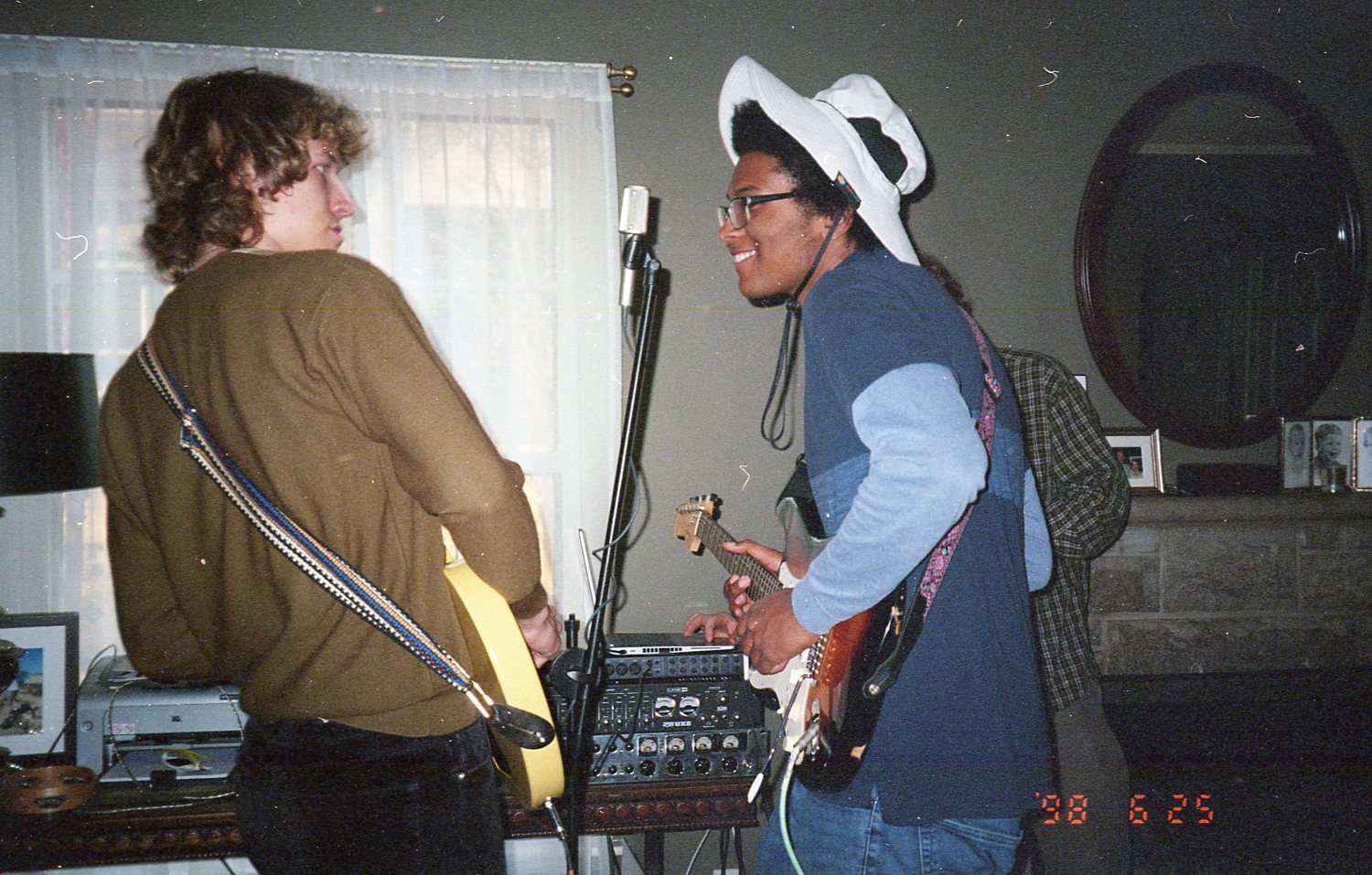
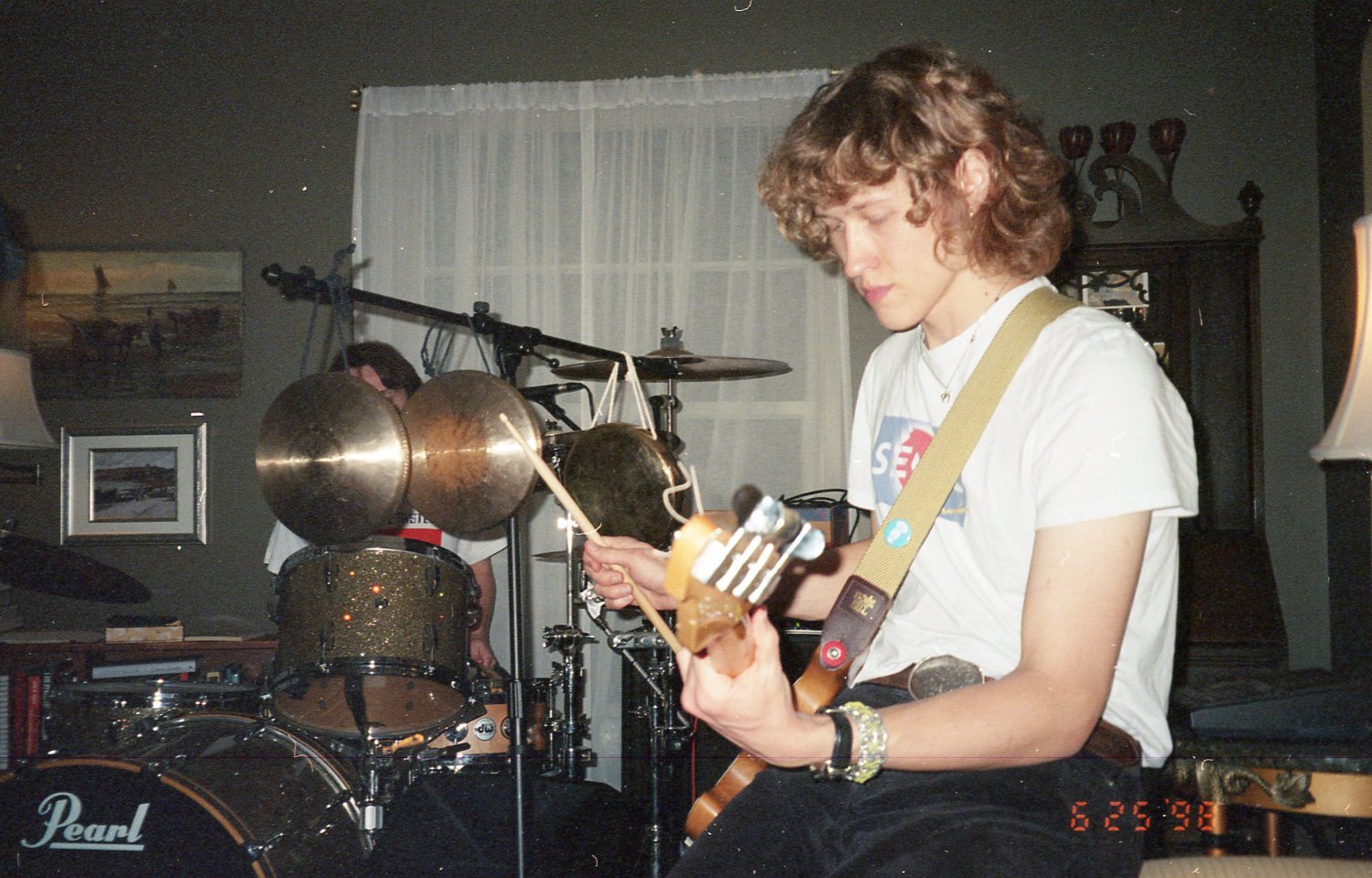
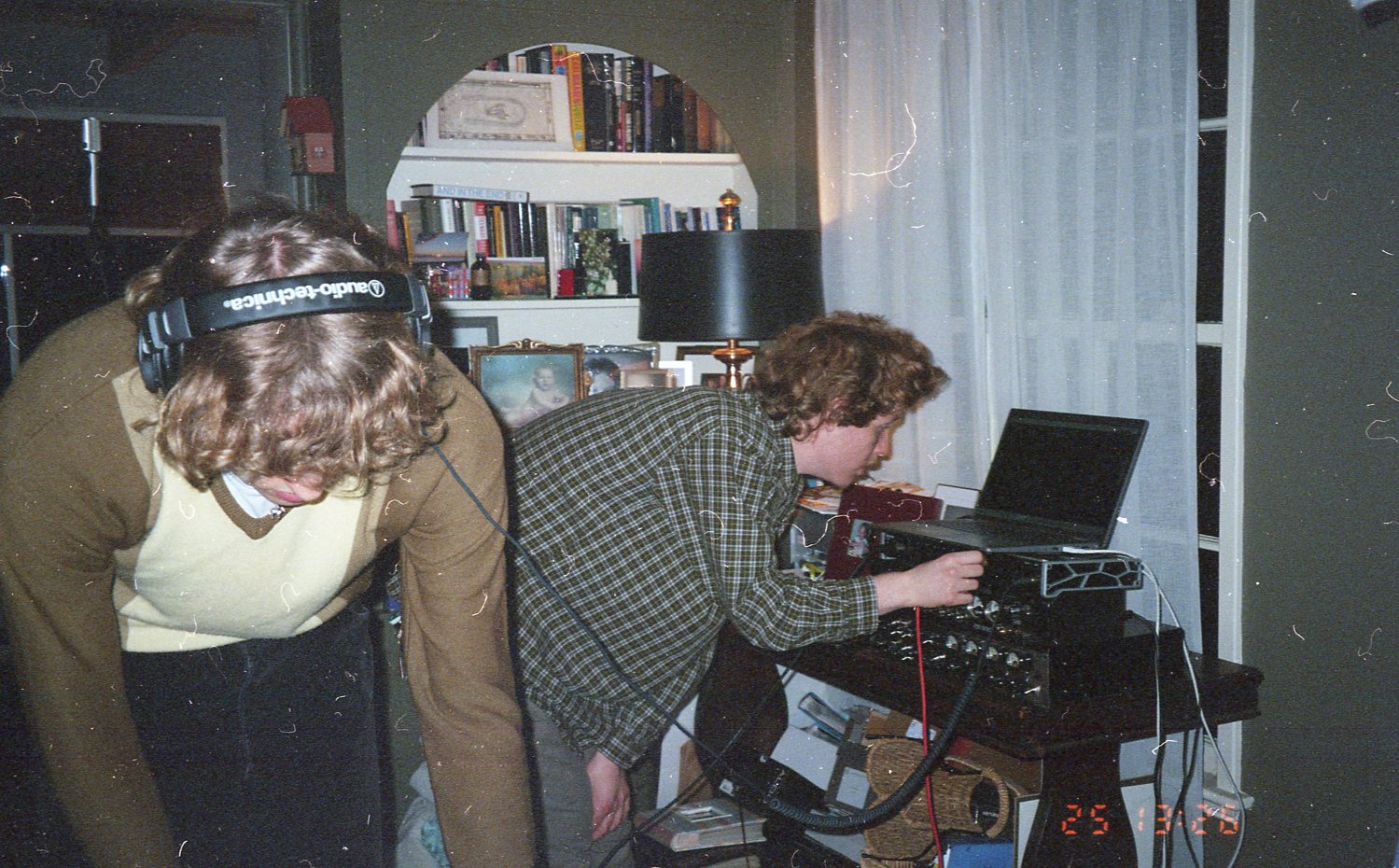
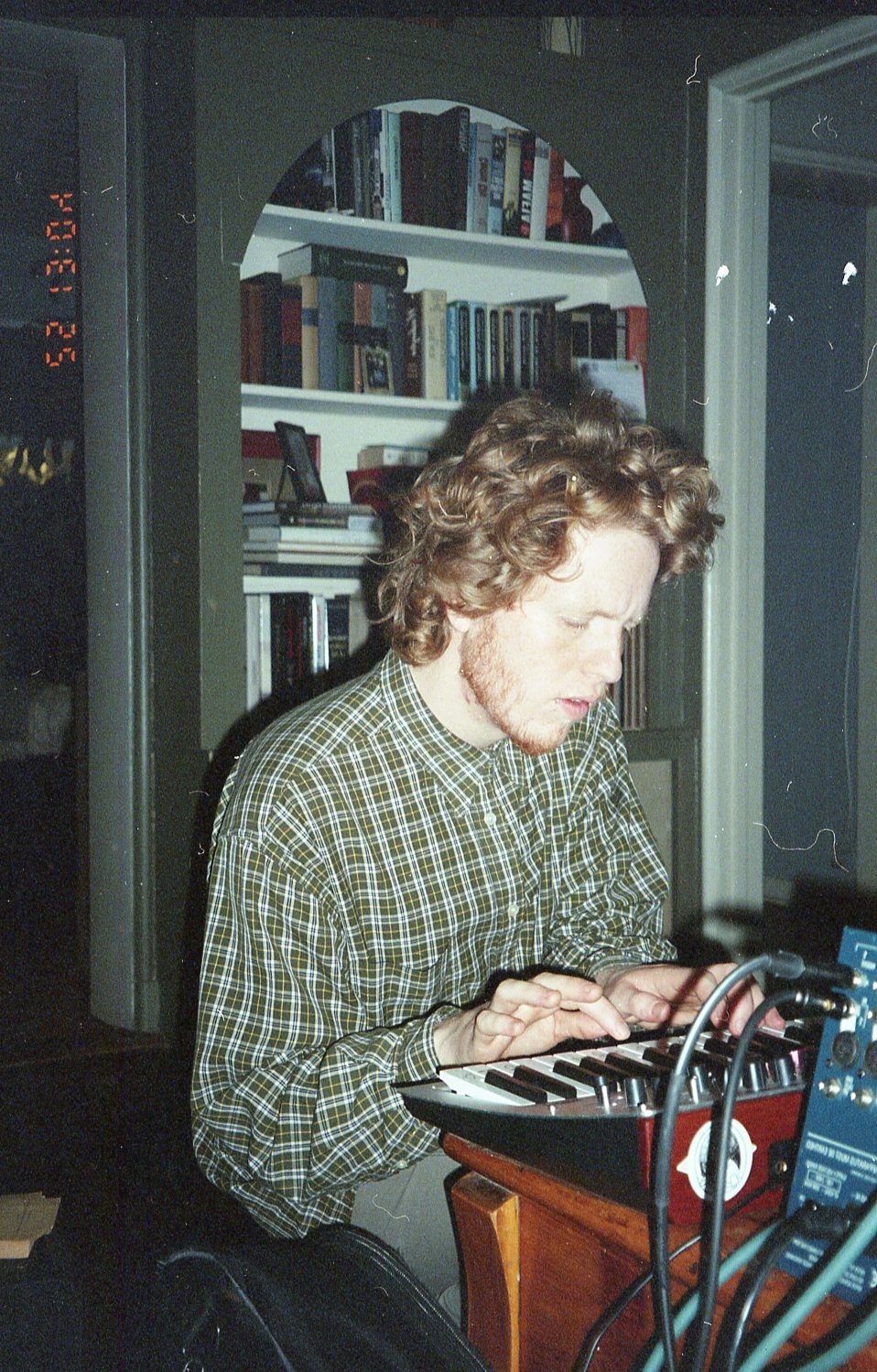
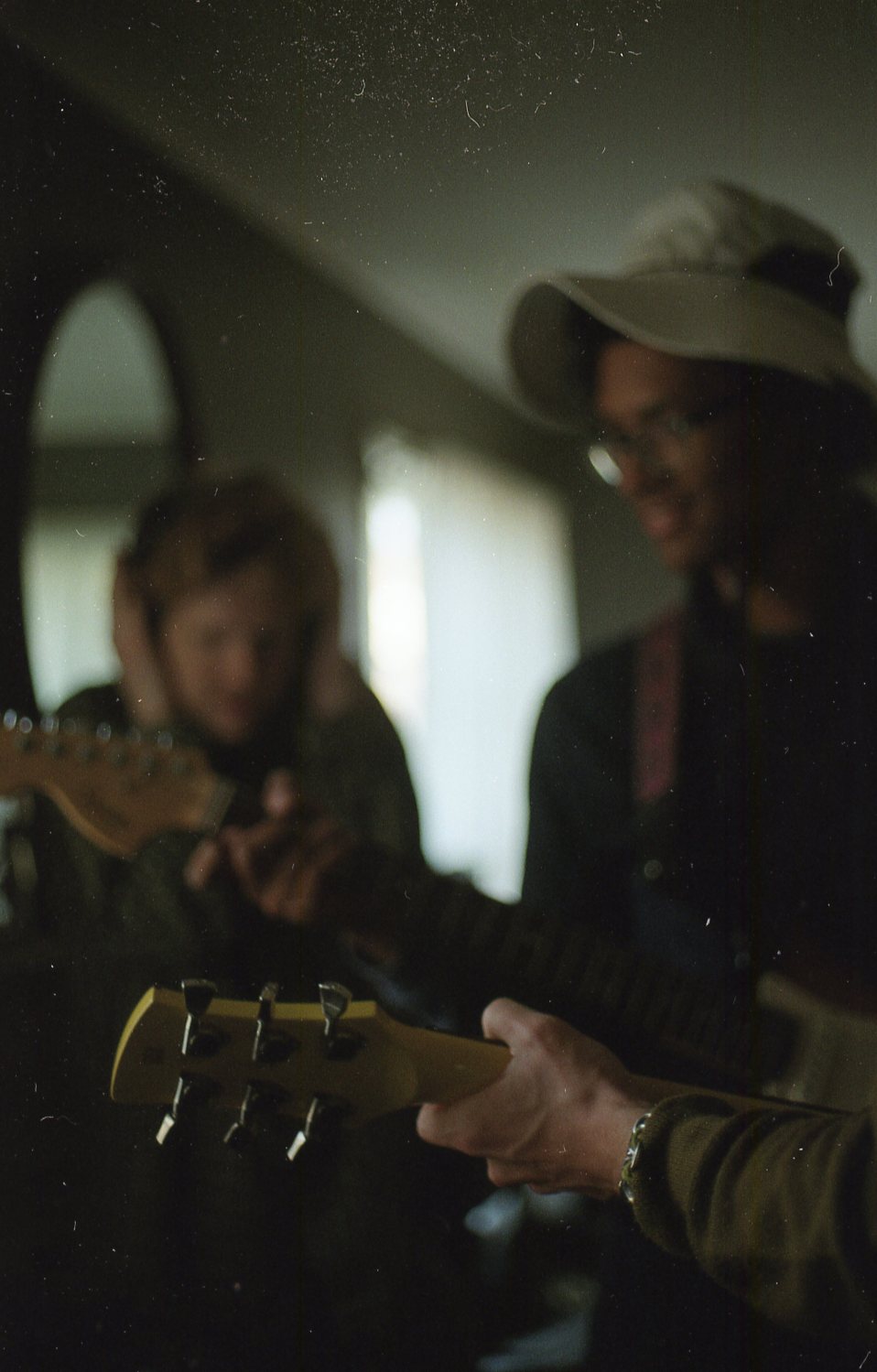
Holding the headphones to his ears so as not to not hear his bandmates talking to each other behind him, Deerest Friends member Nathan McMurray quickly turns around, “This is it! This is the sound, it’s perfect.” Frances Brazas and Ruben Steiner anxiously wait to take the headphones off of each other’s head to hear their recording come together. Huddled around the laptop they all share the same giddy expression, excited to keep recording.
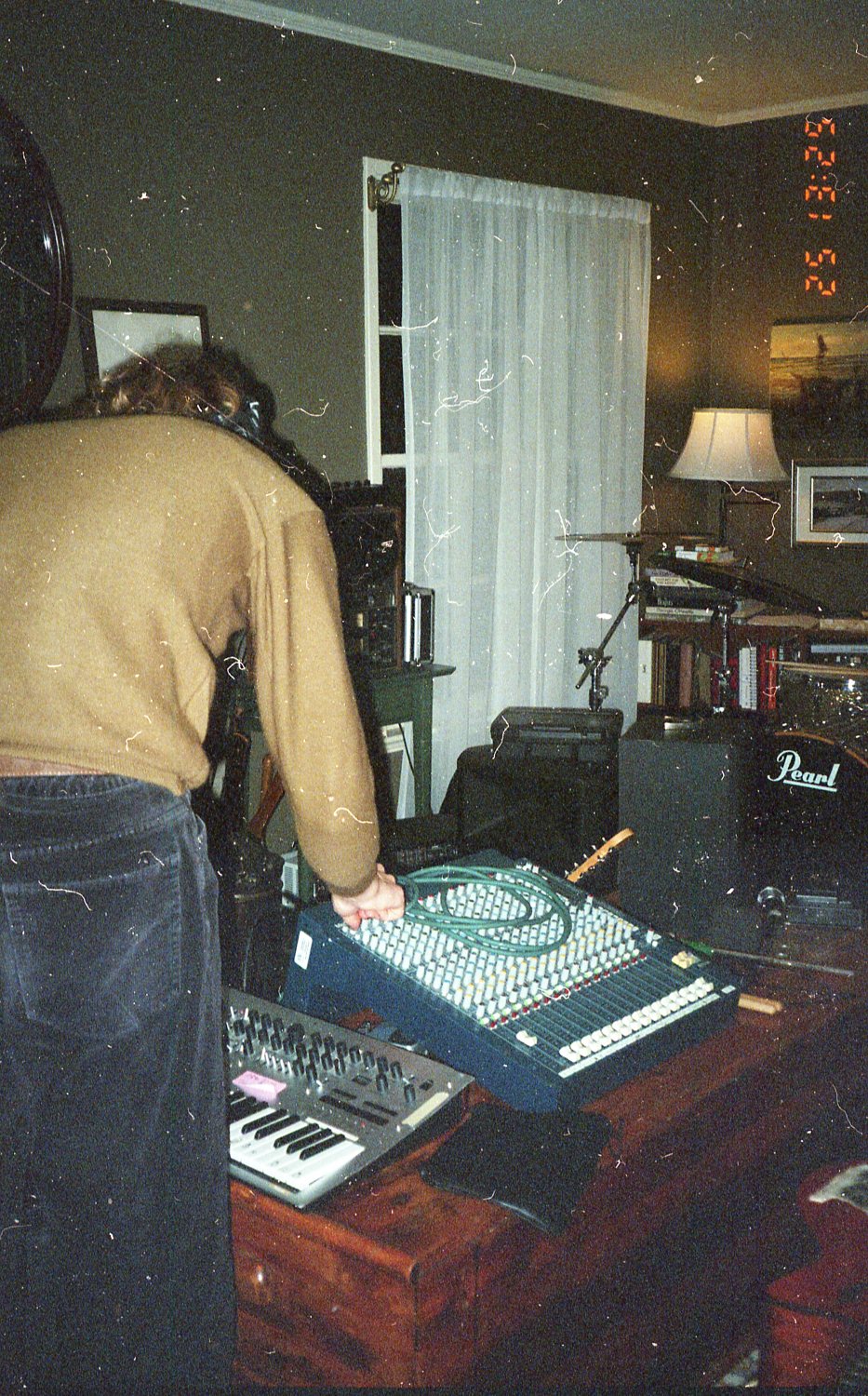
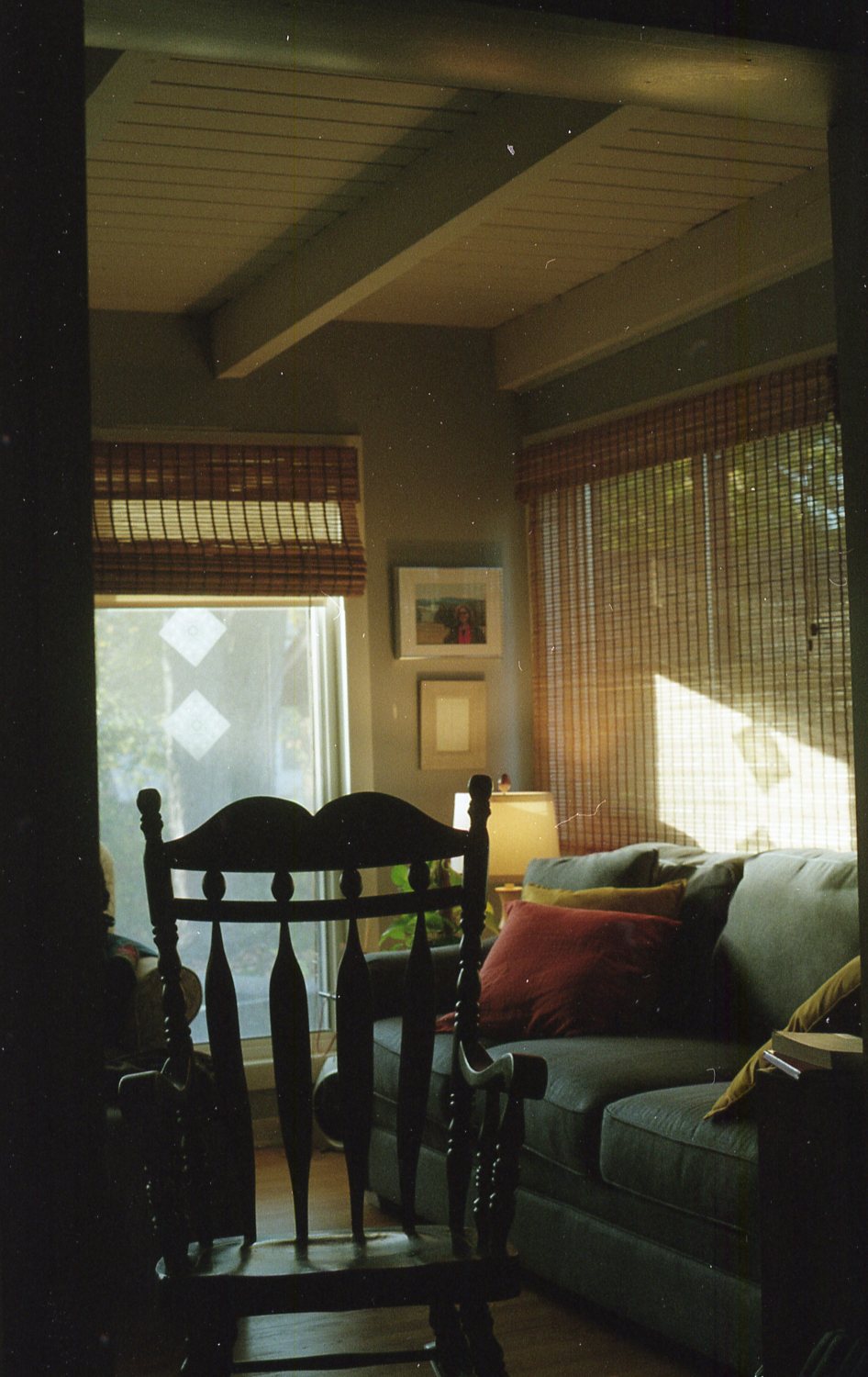
Sitting on an old rocking chair in Brazas’ family’s home in the suburbs of Chicago, observing them minutes and even hours earlier I was unsure of how they were a functioning band. Lost microphones and mic cables left them using their iPhone to record the kick drum and one mic to record both lead and backing vocals live.
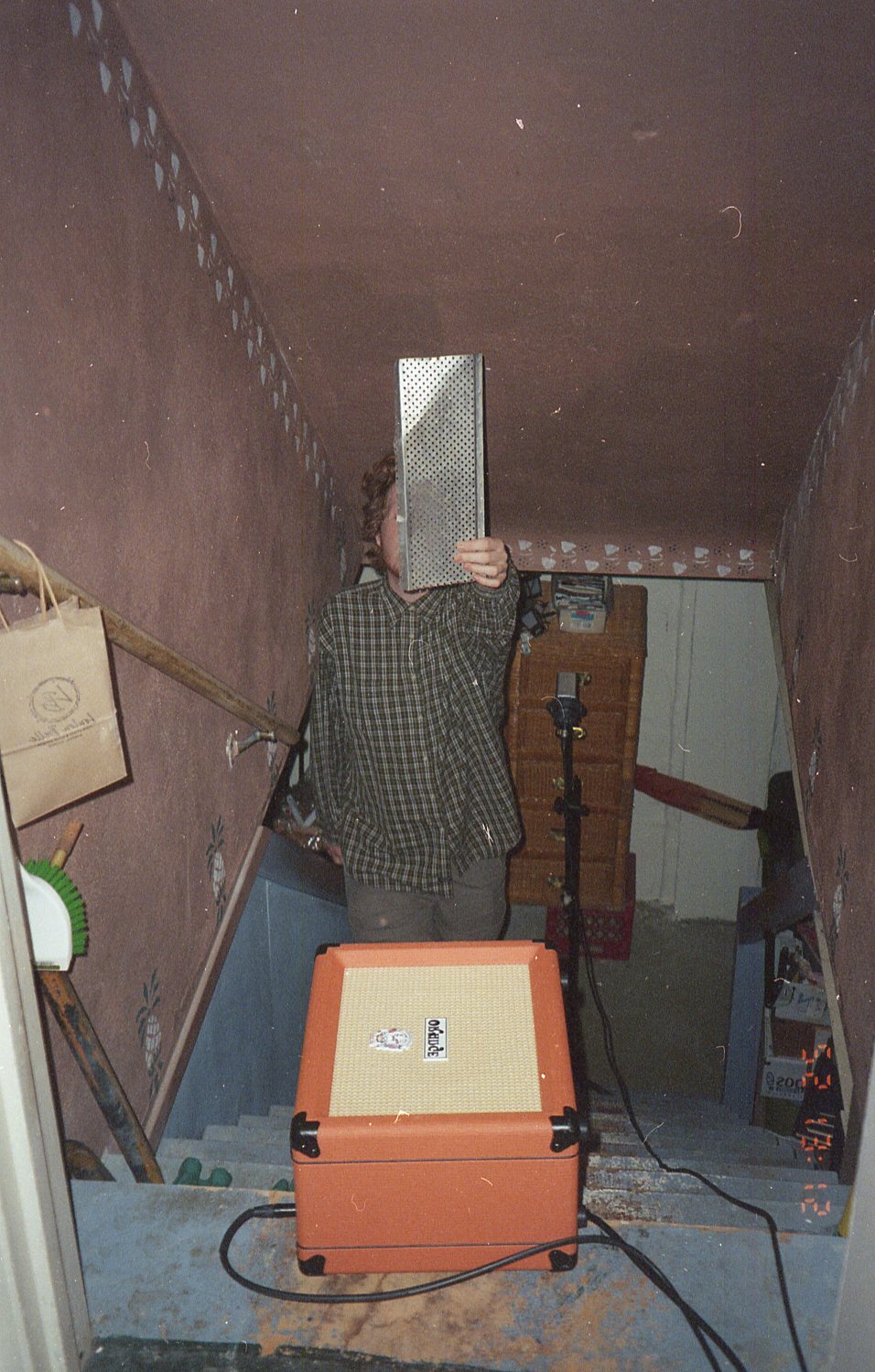
McMurray had the idea to balance an orange tube amp at the top of the staircase and put glass and beads on top to get a rattling effect from the synth as it echoed down the staircase and into the basement. Scared the whole time that the amp would fall down, I tried to look away and focus my attention on the living room where tangled and crossed wires ran through the air and headphone cables pulled at each end. The synth kept randomly turning off, a problem that occurred because the original cable was lost and a knock off was used as the replacement.
“It was completely unnecessary, it probably would’ve made zero difference to record it in a less circuitous way, but that’s what I like about this approach. Recording is very different from playing live. I think in the recording scenario you have theoretically infinite possibilities, and I couldn’t imagine it being enjoyable if you’re not exploring or actively engaging in some level of spontaneity” said Brazas.
Deerest Friends is a Chicago-based band centered around the songs of Nathan McMurray and Frances Brazas, but you’ll find dozens of names of friends from all over credited on Deerest Friends projects. Their songs come alive through the help of their friends, bandmates and rotating members.
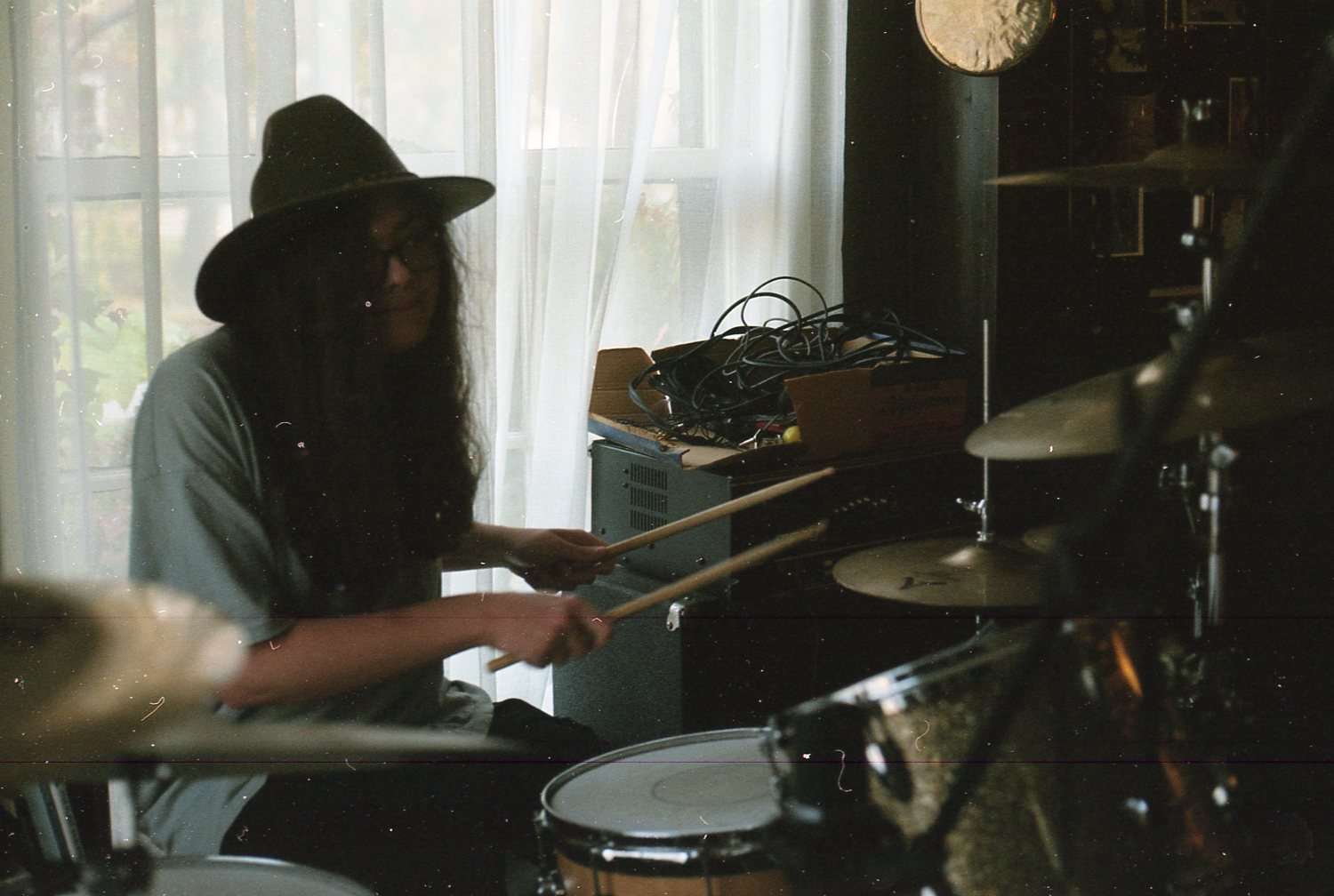
On their recorded music, you can hear the voices of Desi Kaercher’s haunting piano and synth lines wavering over the tracks, their drums holding everyone together, Charlotte Johnston and Xochi Cortez’s emotive strings weaving tensely in and out of parts, and Will Huffman’s iconic twee vocals echoing a catchy melody round out the record.
If you’ve seen or get the chance to see Deerest Friends live you’ll probably notice that each time you see them they may be performing with a different lineup. Ruben Steiner of Lund Surk often performs with the band, playing guitar or keyboards, Will Lovell joins in on drums or Trumpet, and Erin Boyle drops in on Cello. Most of the time audience members will find themselves getting swept up in the magic of seeing Deerest Friends live and become an honorary member, singing their favorite parts on stage or jingling their apartment keys when conducted by the band.
“You can engage in the same level of spontaneity live, it’s just completely different because the spontaneity live comes from having these limited things to work with and a limited amount of time. You get a different kind of recorded spontaneity when you have infinite options and time” McMurray said. “When you record, you have the ability to do things with instruments and vocal layering that’s just not possible to do live. If you create this kind of intense or manic energy by doing a lot of layering and getting sounds that wouldn’t typically be allowed, you can get that same idea across live if you just sell it the performance. The manner in which you perform something live is a really big part of the arrangement, and you can capture a lot of what is presented by a recorded arrangement just in how you deliver a live performance.”
Instead of trying to take their recorded music and recreate it perfectly or as close to the recording as they can every time, the band allows their songs to take a completely different form live, using the performance as a way to see all the opportunities of where else the songs can go.
“Even if a song is released, every time we play it live, we’re sort of adding onto it,” Kaercher said. “For some of the new songs, the live versions and recorded versions are very different, and I really like that. Most of the new stuff we played on [our summer] tour didn’t sound anything like the album because we were using entirely different resources.”
The band has become such a tight unit that they don’t even discuss somethings about their live performances, instead they already have an inkling of what each member likes to do or experiment on, and what parts should stay the same, and everything magically syncs up on stage.
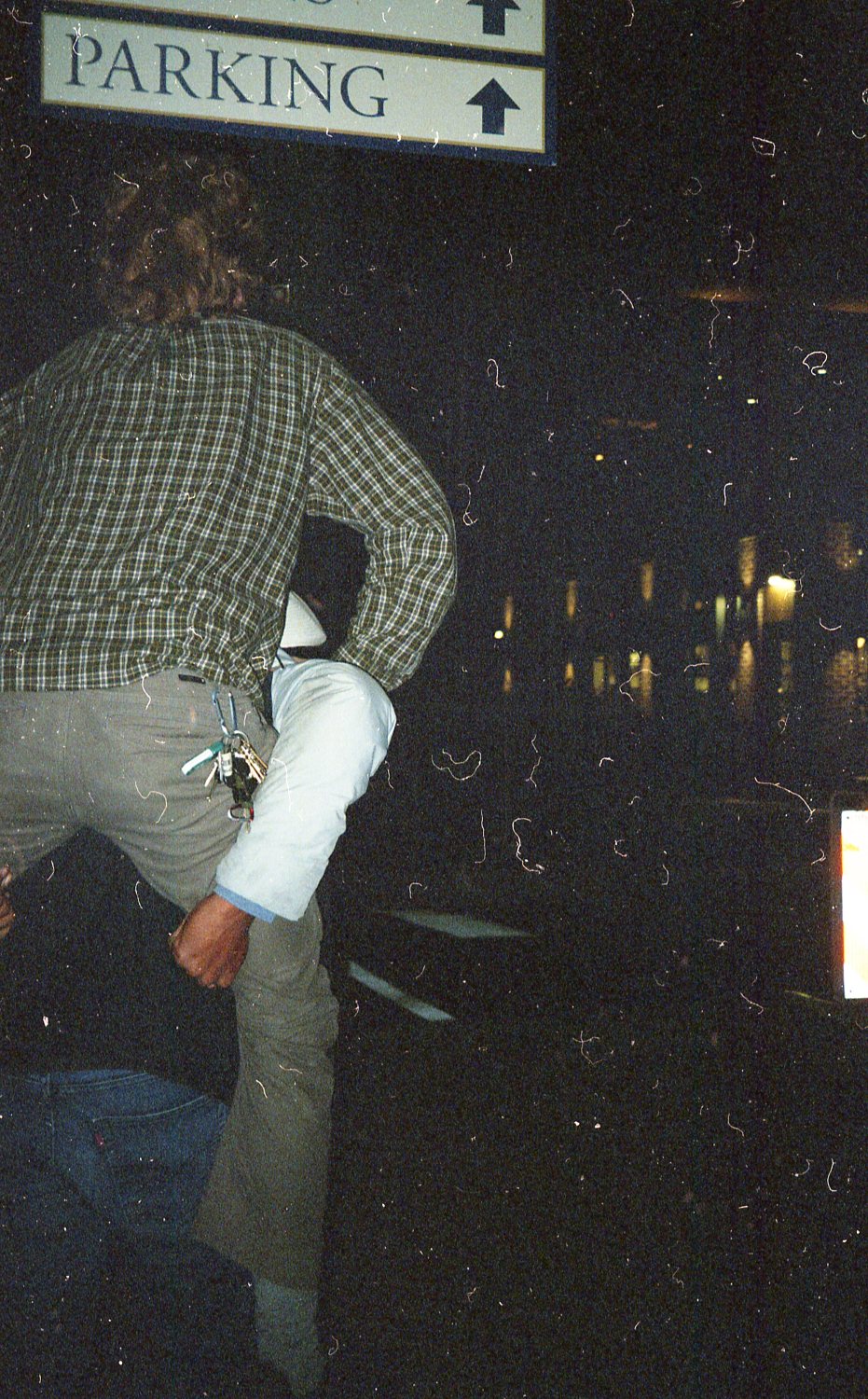
Over the course of the 12 hour day I spent with Deerest Friends, the band went from recording Lund Surk songs, to recording Deerest Friends songs, to practicing Deerest Friends songs for their upcoming tour. Before and in between all of that we made lunch, loaded the car with gear, drove an hour out of the city and to the suburbs, ate dinner at a local fast food place, said goodbye to a member as they had to head back into the city, stood on top of Nathan’s car to try and see the Juice Wrld mural on the second story of a local brewery, picked up another member from the train station, and packed the gear back into the car and drove home.
“I find being a part of Deerest Friends to be really fulfilling because I don’t feel that I can write stuff on my own anymore. It just feels way too unenjoyable. I kind of hit a wall at a certain point, and for most of the last year, I felt like I needed to be around other people, to write with other people, and to make music with other people to really enjoy it” Kaercher said. “I’m a lot less like Nathan and Frances, I’m not really self guided. I can do it alone, but I just don’t have the heart for it. Writing with Nathan during the period Deerest Friends had separated was genuinely really fulfilling, it feels really good which is rare.”
Their days together feel almost as chaotic as their recordings, sounds stitched together by outlandish ideas and the desire to let out lyrics and chord progressions that have been rattling around in their brains for months. Their love for each other, and every person who drops in to help them complete the project keeps them motivated to spend hours upon hours together actualizing their visions for their songs.
“A lot of the way we record has to do with the immediacy of it, too. If we’re practicing or recording, and we decide we need to record a specific percussion part right now, because we’ll never have another opportunity to do it, sometimes the only thing we have is like a box of screws and toy bongos, we make it work, even if it takes hours to get the sound right.”
On December 1st, the band released two singles “Dearest Friend” and “Camaraderie,” bookends to their debut album Lamb Leaves Pasture, and recorded almost exactly one year apart.
“Camaraderie” was the last song they ever recorded in the old studio that Kai Slater had, where most of their first record was recorded. McMurray noted the emptiness he felt in the room on the last day of recording in the studio with Desi as everything but the drum kit, a room mic, and a mixer was all packed away in boxes. This truly solidified “an end of an era” and the end of the Lamb Leaves Pasture era for them.
“‘Camaraderie’ was sort of a post Deerest Friends song. It was written in a period when the band had sort of separated. After the late summer, early fall 2023. It was the first song I had written after Lamb Leaves Pasture and I wrote it in my head and arranged it on my computer in a program initially. I was staying with my uncle and I didn’t have a guitar. I was using this app, but I didn’t really know how to read or write music at that point so I would just drag the notes around until it got sounding right. It’s like a digital score and I sent Desi the sheet music for it. When I had moved back to Chicago after the summer, I was living in my old place, and I drove this little car up from North Carolina so I couldn’t take all too much, and I recorded it in my empty living room, which was just the two acoustic guitar tracks. I had taken it to Desi because I had this whole arrangement written, but I wasn’t able to transcribe the drum part, so I beatboxed it to them.”
“Dearest Friend” was mostly recorded in a practice room in the Reva and David Logan Center for the Arts in Hyde Park. It was before the project or group even existed, “it wasn’t even a prefiguration of Deerest Friends existing” Brazas said. “I would record stuff on my own and be like, ‘I guess I need to be in a band now.’”
“The actual recording process leans into a sort of maximalism, which I like. For better or for worse, that’s what my work process is like. I’m extremely obsessive about recording things. I’ll record 25 tracks of percussion. For one of our newer songs I recorded a percussion track for three hours, hitting a piece of metal in slightly different ways and some of it made it on the song” Brazas added about their recording process.
No matter how much or little time you spend with Deerest Friends, you will leave feeling their shared sense of immediacy and passion for art. You’ll start looking at all of the objects in your room differently, ripping the sheets off of your bed and cutting them up to make funky curtains, you’ll start dancing around your room and write a song only with a tambourine, which seamlessly leads to you slicing up old magazines and books to create your single cover, and reluctantly passing out when you realize you have no more sheets on your bed. Tossing and turning in your bed you might try and figure out what is missing, and you’ll come to the conclusion that you’re missing collaboration and the close community that makes art and creating so beautiful. A strong sense of friendship radiates through Deerest Friends’ music, making it feel so familiar and comfortable right away.
The band asked me to end the interview with some fun questions. We went on a few tangents about our favorite pies, catching allergies from people, our fiber intake, liver health, how we eat apples, and the sexiest era of Leonard Cohen. If you feel like you didn’t get to know Deerest Friends well enough, Desi and Frances agreed on 2010s and Nathan said “he never looked sexier than Paul Simon when he looked like a medieval entertainer.” Feel free to debate them on this topic the next time you see Deerest Friends or ask them about their favorite dubstep songs.
Scroll through for more photos of Deerest Friends.
Deerest Friends released two singles “Camaraderie” and “Dearest Friend” earlier this month. Listen to them now on all platforms.
Everyday for the last three-ish years my daily routine has been pretty simple. I wake up, make a fried egg, deliberate between sourdough bread and multigrain bread while my egg cooks, scroll through mind-numbing Instagram reels hoping to see some content that depresses me enough to put my phone down and spark a change in my daily routine, listen to music and mope around town until I have to go to work or school. And now that I’ve just graduated I thought I’d have more time in my post college life to create, or write, or at least listen to some new albums but playing drunksketball with friends and waiting for the pool table to open up at the local dive bar takes up a lot of my time.
Really the only thing that keeps me going sometimes is knowing I’m going to make a good breakfast in the morning that lasts me all of five minutes while I listen to Kitchen as the sun shines through my windows and I take my first sips of hot black coffee. Wearing the tape thin on my Breath Too Long cassette is maybe all the structure I need. Kitchen’s music is such a constant in my life that it almost feels impossible to take a step back and reassess why I love his music so much. It’s hard to break down the barriers surrounding his music and him because I hold him on such a pedestal, one that my friends kind of make fun of, and have thought that he was Phoebe Bridgers-level famous based on the way I talk about his music.
For those who aren’t my friend, and haven’t got the “who is Kitchen” spiel in my bedroom as I pick out a record to throw on to alleviate the stress of an awkward silence, Kitchen is the recording project of Rochester based artist, James Keegan. Before Kitchen, Keegan released dreamy bedroom-pop music under the moniker Loner(s) while he was in high school, and the first Kitchen release, the eclectic set of lo-fi pop tunes, Town came out his senior year. He went to SUNY Purchase where he studied Audio and Music engineering and has released a slew of full albums, EPs, and instrumentals consistently since 2017. I often describe him as the songwriter of our generation, adding a tired “he just gets it” at the end when it becomes too vulnerable for me to try and describe how magical his music is. Much like his music, Kitchen feels like a distant memory, and if you’re not there to hold on to the moment, you’ll miss it all.
I started re-reading some features on artists I love to determine how other writers painted them. I’ve read numerous MJ Lenderman articles recently that described whatever basketball jersey or 90s alt-country band-T he was repping to show how “he’s just some dude.” So I tried to describe James Keegan the same way. I pictured him in front of The Burlington Bar in Logan Square, where the rest of his bandmates and touring partners in the Conor Lynch band were grabbing post-show beers, as he stood outside with my brother and I in an oversized Attic Abasement-shirt answering our jumbled questions in a hushed murmur with his hands constantly moving between his pockets and the side of his face. “Intergalactic” by the Beastie Boys played from speakers inside the bar and flooded into the street where we all shared a distracted laugh and a sigh of relief breaking down the awkwardness that separated us a second earlier. I wondered if we were all thinking of that Diary of a Wimpy Kid scene or if we all just needed a minute to acknowledge our surroundings again. I can’t think of James as just some dude, I couldn’t paint him in that light even if I forced myself to. As the three of us shared a “see ya later and get home safe” yell to our friend Nathan as he ran to catch his bus home a few minutes into our interview, I realized that Keegan was so ingrained in my daily routine and life that, standing there, he didn’t even feel real. Minutes before I was thinking about how strange it was to be talking to somebody whose voice follows me everyday in a trail through my earbuds, my tape deck, my car, and then next I was thinking about how oddly in sync we all were.
There’s so much trust, comfort, and nostalgia embedded in his music. Sometimes it almost feels too vulnerable to me, sharing his latest album, Breath Too Long with somebody might be the most intimate thing one could do, and to write that is even more daring. The title track, a song for when you’re lovesick, or sick in bed with COVID as Keegan was when he wrote it, watching the world pass you by from your back flat on your bed staring up at the ceiling, unable to do anything but toss and turn and replay pathetic conversations and moments where you wish you had more to say. It’s in those restless nights where you finally have the time to confront your feelings and actions and recognize that you’re not as poignant or forward as you want to be. Keegan sings on the track, “you always take the leap of faith, I stay where I know it’s safe, a dream, a distant dream.”
Kitchen’s music is simultaneously so bare yet so cloaked in fuzziness that it gives this feeling of a distant daydream. His music quite literally feels like “snow on the dead brown leaves” as he sings on one of his earliest songs “November Prayer.” It’s the moment you hear wind gushing outside your window as you grab your comforter tighter and curl it around your toes. It’s the four step distance you walk behind your friends when you think you sense sparks between them and don’t want to be overbearing. It’s hesitant and it’s bold. It’s pathetic and abashed, yet confident and unashamed. Everytime I felt like I didn’t have the words, I wished I could send somebody a Kitchen song that matched my emotions. Keegan expresses your feelings and takes away the fear of sounding pathetic so you hold it in until the moment has passed and there’s nothing you can do about it now.
In our digital age, we share everything online; even our dumbest thoughts that consist of a new iteration of hawk tuah recalling a Silver Jews or Sparklehorse lyric find a home on Twitter and our most revealing selfies that also show off a new band poster freshly picked out from the local record store to make sure the person you like knows how indie you are can live on Instagram for 24 hours. It almost feels like nobody has a sense of shame anymore, yet we all do. We’re just looking for somebody who will relate to us and make us feel like our words and feelings hold some weight. Everything moves so quickly that we start to lose a sense of ourselves. We live in an age where a like on an Instagram story means more than a wave at a show or a nod at the bar, so we’re always thinking about our next tweet, or what song to post on our story and the most relatable Letterboxd review. I have less and less of an actual person to hold onto and more of a figure of a person, shapeless and malleable, nothing on the inside but a projection of what I think I want to be.
Kitchen’s music is so magical to me because it reminds me of moments and pieces of myself that I forgot existed. While losing yourself in the world he creates within his albums, you somehow become more aware of yourself and your environment. I fear sometimes that if I don’t listen to his music I’ll forget the streets I’ve walked down 100 times because I was always listening to his music while doing so. I’ll forget how the dying streetlight blinks in time with “I Want You” and I’ll miss the people having a fight outside of the bar while Keegan sings “when I was a kid so obsessed with love, a word with permanence, you fall and don’t get up.” Rain doesn’t fall as peacefully when it’s not being soundtracked by “World is Big” and smiles from strangers as I pass the gas station don’t seem as genuine when I don’t have the reassurance of “Already Going Home” in my headphones.
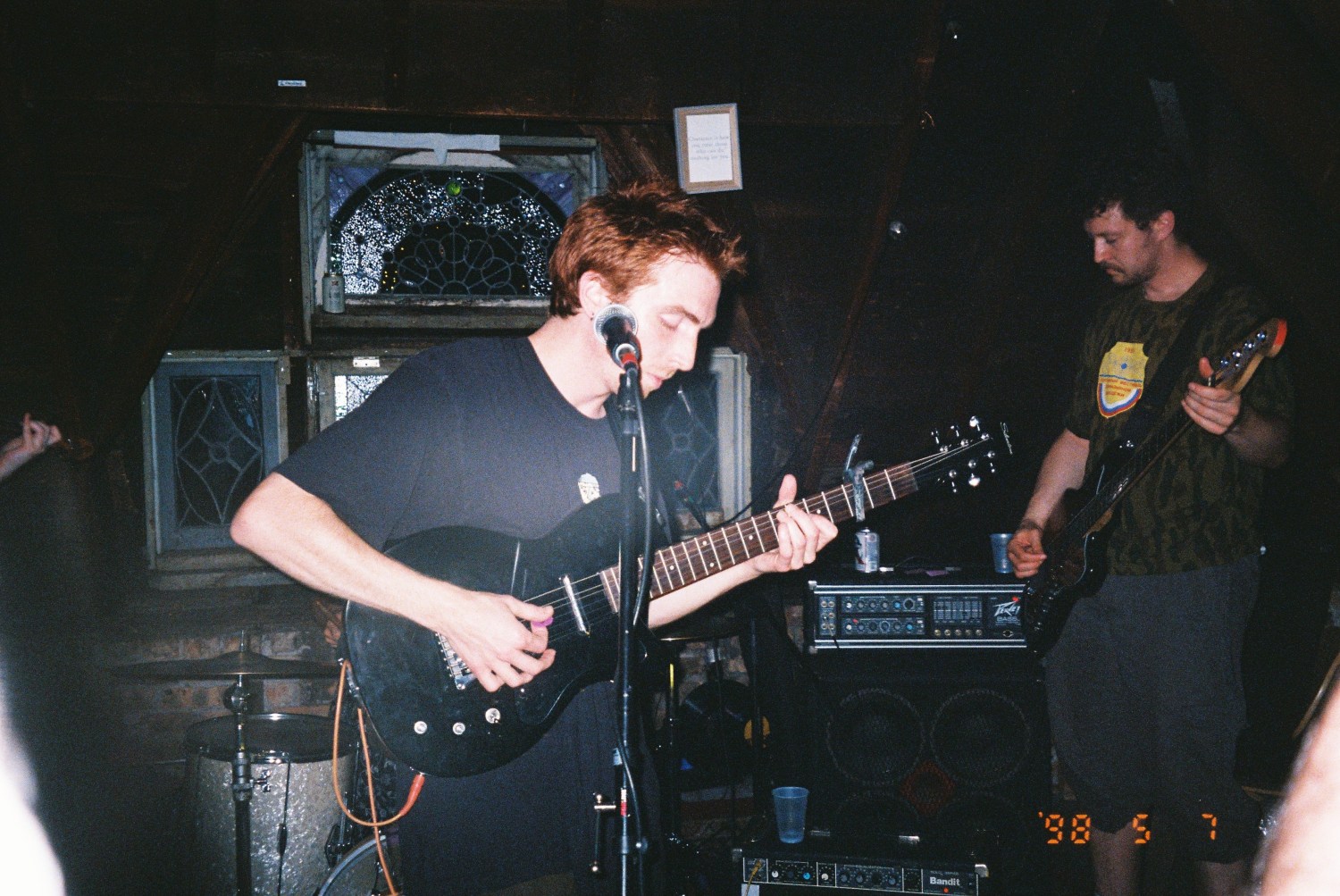
Photo by Eilee Centeno at The Attic in Chicago
During his performance at The Attic, a house venue in Logan Square, Chicago just a few hours before the interview, I felt myself slipping in and out of consciousness. Huddled around the five-piece ensemble framed by beautiful wooden ceilings and stained glass windows overlooking the neighborhood park, dripping sweat from the back of my neck, I wrapped my arm around my brother as tears swelled in my eyes, feeling a sense of belonging and comfort I had thought I’d lost. One moment I was zeroed in on every movement on stage, the next I was completely blacked out singing along to “Domino” and imagining every step I’ve taken mumbling along to that song in my hometown in North Carolina, being reminded of every time I looked up at a stop light and felt my heart sink and long to slip into one of the strangers passing me on the street.
I started thinking about how Hanif Abdurraqib profiled artists, usually making them seem larger than life. It feels like an innate human reaction to obsess over people and hold them up to standards that are above themselves. Maybe it was because I had just read a chapter in his book, They Can’t Kill Us Until They Kill Us, about the Weekend and his superhero-like ability to turn a crowd of thousands of people into sex-crazed animals, and it made me think about the humor in how most people obsess over huge pop stars, people like Taylor Swift or Drake who have big personalities and heaps of charm and charisma, but the person I obsess over is an artist with the posture of Bart Simpson who works at a fast food restaurant, and maybe everyone should make that pivot, too.
Maybe looking up to figures that are larger than life is what’s stopping us from making the changes in our daily routine that will push us towards a realization that we can take small actions to get us out of this mind numbing repetition. If our inspirations are more grounded in everyday life and our peers, then the disconnect between our motivations and our willingness to delve into our passions will disappear.
Even Keegan’s recording process when making a Kitchen album is reflective and representative of how it seems our generation is feeling. There’s tons of kids who are getting into analog recording with the hunger to connect to a creative process that grows with you and naturally takes the shape of your environment. It’s harder to delete or record over a mistake on a tape recording, but it becomes easier to accept and work with it, forming the rest of your recording process around that moment.
“I was really inspired by Spirit of the Beehive for a while and I moved away from tape recordings, but then I stopped doing the computer stuff so much because it’s all MIDI and you can get any sound you want. You can make an instrument play any sound you want. Most of what I like about a lot of the music I listen to is that it feels very natural and feels like things happen almost by accident,” Keegan said when talking about the evolution of his recording process.
There’s a sense of satisfaction that you get when committing to things, whether it’s finally finishing that Cormac McCarthy book that’s been sitting on your shelf for a year, or completing a week of journal entries, or following through on plans to hangout with your friends, sticking to your word is one of the hardest things to do especially when we are constantly distracted by the endless cycle of Instagram reels from friends we have to watch or new Pitchfork articles we have to read and argue about on Twitter. We’ve become so scared to share any imperfection of ourselves or our work that we often lose all strength to do anything at all, but Keegan has learned to embrace imperfections during his recording and writing process and even finds stability in them.
“When I was recording ‘Pike’ years ago I accidentally recorded one second over every track so there was a gap in the song that I couldn’t fix and I ended up having to re-record the whole thing. This was one of the worst mistakes I ever made while recording and the track was shaping up to be exactly how I wanted it, but it ended up being even better when I re-recorded it.”
After years of recording, Keegan has found a method that works well for him, bridging all of his influences into a succinct and memorable writing and recording style. In a short period of time Keegan has been able to create a distinct sound for himself that goes past his abilities to write catchy and relatable pop tunes. From the minute you hear the tape hiss, to the first down stroke of his guitar, to his shaky voice breaking over the track, you immediately settle into the comfortability of his work, allowing yourself to let your walls down as he does in the same breath. The combination of digital and analog recording styles is a reflection of the world he wants to create, full of imperfections, insecurities, and timidness, as well as patience, desire, and care.
Keegan described how his most recent record was made through this process, “You can hear when it’s tape stuff. ‘Fall’ is all digital, but ‘Halloween in August’ is a blend. The first half was recorded on a boombox and the second half was recorded into logic. The vocals were all recorded into the boom box, and then I cut them up and put them on top of the track.”
There’s so much care that goes into Kitchen’s recordings. His music builds upon intense swells, yet they’re never emphasized by crashing symbols or heightened vocals. They’re intensified by the realization of seeing yourself in Keegan’s music more and more. The lyrics become more weighted and backed by the world he creates throughout his albums. While his records may not be conceptually planned, there’s lots of nuance that leads you from song to song. “I Want You” wouldn’t make you cry as hard if it didn’t follow “Halloween in August,” continuing in Keegan’s story pining over someone. He has such a unique way of making you see the beauty in the mundane, and genuinely walk away feeling it. Weaving instrumental interludes between songs carries the feelings over from one place to another, transporting emotional spells from one song to another.
The other night I watched the movie The Lunchbox by Ritesh Batra, and in it the main character passed a street artist who painted the same place every day, but in each painting there were small differences. A kid riding a bike, a guy walking a dog, a couple holding hands would appear somewhere in the painting. The main character thought he saw himself in one of the paintings so he bought it and held the painting to his chest the whole train ride home. Keegan’s music feels like bits and pieces of a larger feeling. Each time I listen to a Kitchen song I see myself in a different world. His music is instantly so familiar that you sink into his world so instantaneously, holding on to your own memories and creating more within his albums. In a time where feelings are so quickly passed through, especially in the way that we’ve become accustomed to consuming and processing feelings, Kitchen’s music is so permanent and tender. His music instills a sort of stillness that feels very important and impactful right now. “Everything I do is cautious, can’t make my arms do what I want.”
“I think I process stuff very slowly. It takes me a really long time to figure out how I feel about something a lot of the time. By the time I figure it out, it’s a little bit too late to do anything about it but write a song. Maybe that sounds fucked up.”
Unknowingly, Kitchen connects rooms full of kids acting like adults based around a sense of hope that while we outwardly try and project how unique we are, we all feel the same sense of desperation, hopelessness, and passion. At his show he closed with one of my favorite songs, “Demon (Yellow)” and it only feels right to me to end this piece by quoting my favorite lines from it because Keegan always has the words for when I don’t, “crossing oceans, desperate phrasing I can’t talk cause I’m too lazy.”
Keegan just announced that you can now pre-order the first Kitchen album, town, on both vinyl and cassette. You can purchase a copy here. Kitchen will also be playing a few upcoming shows with Hello Shark in Troy, NY on November 15th and in Buffalo, NY on the 16th, then in Rochester on the 17th with Spencer Radcliffe, Hello Shark, Attic Abasement and A Wonderful.

 the ugly hug