“I don’t know, it kind of goes back to, ‘why do you listen to depressing music?”, Kauffman brings up. “I think it’s more about a connection. If other people are feeling that, and you know that, why not talk about it?”
Last month, Abel released one of the most brash and heartfelt records of the year in Dizzy Spell. Fronted by Isaac Kauffman, the Columbus-based band took a much more collaborative approach to writing and recording, developing their sound further into a collective mix of brutal distortion and folk solidarity that reaches to the heart of the Midwest underground.
I recently got to catch up with Kauffman to discuss the record, shuffling through the teeth rattling noise, broken pop hooks and heart wrenching sincerity that makes Dizzy Spell a record worth holding on tight to.
This interview has been edited for length and clarity
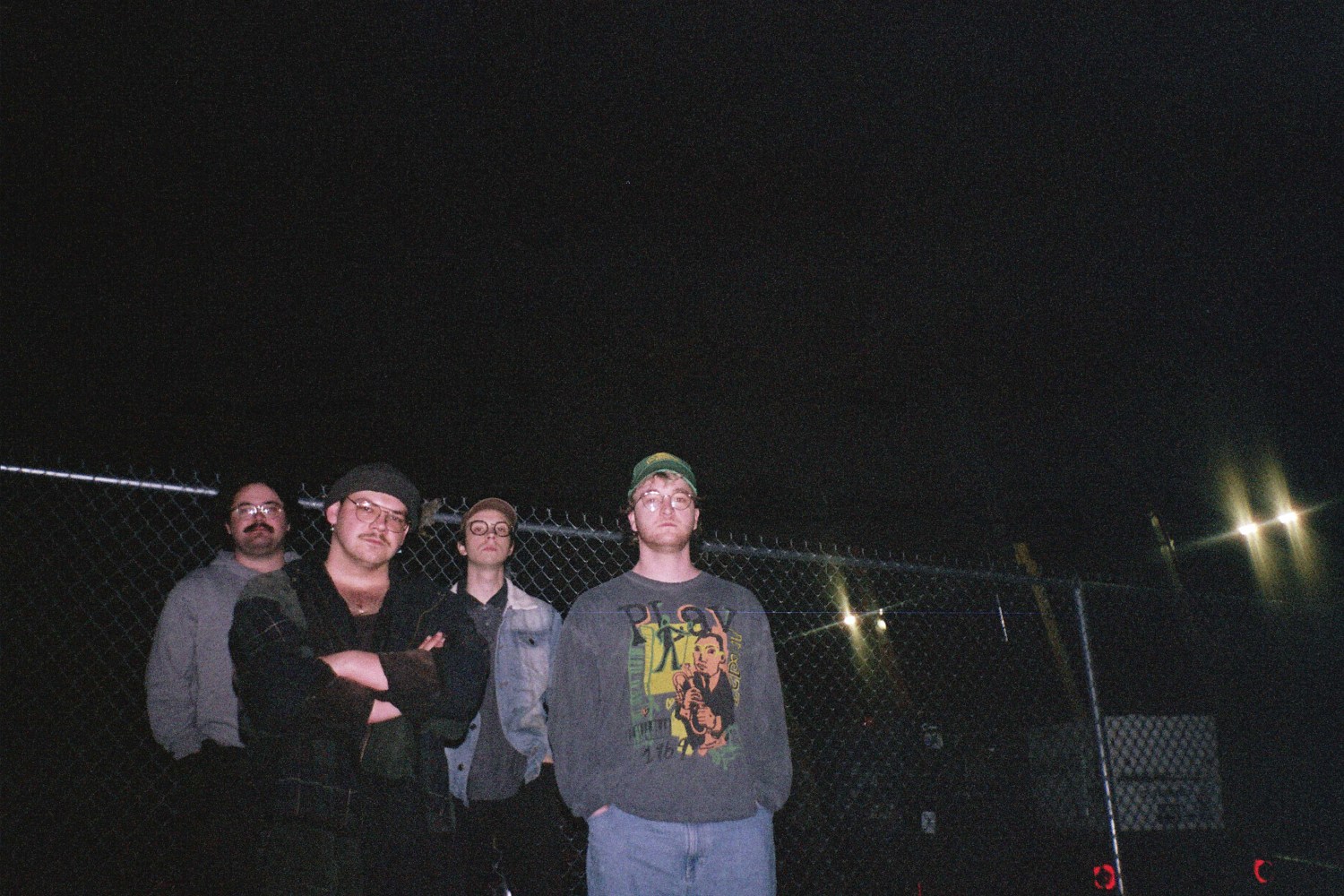
Shea Roney: Dizzy Spell marked a much more collaborative approach to anything Abel has done before. Where did you see shifts in your process? Did you find any hidden strengths when collaborating as a full group?
Isaac Kauffman: Just in terms of sheer layering, I think there were a lot of shifts, because I think in the past it’s been pretty cut and dry (4 track type recordings and stuff). But now there’s room for so much more play, and honestly, I feel like if anything, the more we implement collaboration, the more and more we’re figuring out who should be doing this and who should be doing that, and who’s really bad at this, and who’s really good at that. So I mean, I guess both strengths and weaknesses, but I’d say we’re learning a lot about our strengths in terms of ‘can we riff on something?’ or ‘can we actually improv or not?’, that kind of thing.
SR: These songs are a mixture of both songs you have been playing for a few years now as well as newly written ones. How did this collection come to be? Where do the older songs sit with you now as they are finally released?
IK: First and foremost, there was “Rut” which we originally dropped back in 2021. That just kind of started this phase where I wanted to create more gazy atmospheres and just really see what I could do with distortion and producing distortion. In the past, we’ve been really clean cut, and after “Rut”, we were trying to figure out where to go. I feel like that’s kind of where this came about, because we definitely had the itch to make more singer-songwriter type songs, but I think more so, we just wanted to really advance our live sound to a studio and to tape, you know, to something final. The past two years we’ve done a few tours and just doing that made us realize that we’re more so of a live band and we want to make sure that that comes across in our recordings.
SR: So has playing these songs live help develop and flesh out what we hear on the album? How quickly do you begin to play a song live once it has been written?
IK: We usually play stuff pretty quickly. We’re already playing shows where 70% of our set isn’t even Dizzy Spell anymore. Most of these songs we were able to develop live except for “Wanna”, just because it was originally released two years ago before that EP (Leave You Hanging) with Candlepin and it was way more hyper-poppy. So playing that live I think we realized that we wanted to go a more noisy route; like blow up our speakers type deal at the end. When Brynna [Hilman] joined the band, we decided, ‘okay, we need to sit back and actually figure out how to make the EQ spectrum work on all of these amps’. So I think “Rut” evolved simply because we got to evolve our tones.
SR: After the album was released, you said on an Instagram post, “I hope you find peace within the noise”. I find that to be a very deliberate and understanding statement towards these songs as a listener who gets to experience them, first from a distance, and then fully enveloped. Where do you find peace in the noise?
IK: I appreciate that first off. Secondly, I think I just find peace knowing that I was able to create something and was able to get any emotion outside of my body. I think it’s very peaceful to be able to play any instrument, or even sing. I think that always just brings peace to most creative, or at least musically inspired people. So yeah, in the process of creation, I found a lot of peace.
SR: As the primary producer and writer, did you find it important to play with the different dynamics and styles throughout the album? What was the thought process of going from shoegazey walls of sound to twangy acoustic porch tunes?
IK: Oh man, it was definitely a challenge. First, I think it was just a matter of really trying to figure out where vocals laid. I think a big part of Dizzy Spell was finally being confident with my voice and figuring out how to use it. I feel like in the past, especially in a live setting, I was very uncomfortable with my voice, but once we got to these songs I was very comfortable and I wanted to call that out in some points and really push myself vocally on this.
SR: We are big fans of Mark Scott and the whole villagerrr crew over here at the hug. He is featured on the song “Placebo”, which is quite a shift in the overall sound and experience of the album. Can you tell me about that song and how that collaboration came to be?
IK: There was a point in time where we still didn’t know how many tracks we wanted on the album. I think I just wanted everyone to weigh in and John [Martino] just ended up expressing that he wanted to potentially write something. A week or two later, he sent me a voice memo and it was just that guitar riff with that main line over it. I was like, ‘okay, this is cool, I also hear Mark on this.’ That was like a week or two after I’d already reached out to Mark just in terms of collaboration, because I wanted one or two other local artists on this. I had shown him a few of the tracks, and he was like, ‘I don’t really know where I’d fit at all on this’, and then John sent me that track and it worked out.
SR: There are a lot of moments where you describe global issues told through your own point of view and observations. Was approaching this writing lens through your own critical life moments a challenge?
IK: That’s a tough one, because I feel like I tried to, in the grand scheme of things, distance myself from my lyrics, and I try to see my lyrics as more of a way for others to interpret it however they want to interpret it. But I think over time, I also look back on my lyrics as more of, not a journal or diary, but kind of just like a placeholder and time of emotional check-ins with myself. A lot of these songs are framed around very specific mindsets and moments that, in passing and reflection, aren’t that heavy, but the heaviness comes from the repeated listens. So I think with time, I’ve grown more attached to some songs, and others I’ve almost outgrown. I think it kind of speaks to the broader idea that you’re speaking to where it just seems like there’s always distance involved. It’s my brain’s simplification of feeling lost in the modern day world and I think we’re all just feeling very disconnected from everything.
Do you guys have anything coming up that you are excited about?
We’re working on a tour in October which will just be a little 5 day tour with Devils Cross Country out of Cincinnati. We’re playing with Dogs on Shady Lane on August 28 at the Basement. Other than that, we’re playing new songs. We’re writing stuff all the time. I’ll probably release another rat race ∞ type thing with more poppy songs or just stuff we’re not as final about. Definitely lots going on.
Written by Shea Roney | Feature Photo by Dylan Phipps

 the ugly hug