Back in June, Duped Zine shared a compilation titled The Fourteen Bears in Summer and Winter. Operating out of Chapel Hill, North Carolina, an area that has not gone unnoticed these past years in the world of independent music, Duped has always carved their own path of pop-centric, enduring and incredibly heartfelt musical contributions.
Playing a key role in the Big Pop Show the past two years, Duped continues to showcase some of the best artists out there. Although not all from NC, this comp focuses on the connected spirit of collaboration, friendship and fandom. Put together by the members of the band Little Chair, the comp includes artists such as The Matildas, Entrez Vouz, David T, K9, Sleep Tight Tiger, The Laughing Chimes, Sacred Heart Academy, Hill View #73, The Sourdrops, Deerest Friends, Little Chair, and more!
As a small music journal, we rely heavily on the work of independent tape labels to discover and share the incredible artists that we have dedicated this site to. Whether through press lists, recommendations, artist connections, social media support or supplying physicals, these homemade labels are the often-unsung heroes of the industry. Today, the ugly hug is highlighting the work of our friends over at Trash Tape Records.
Originally formed in the Chappell Hill and Durham area when they were in high school, Trash Tape Records was founded by Nathan McMurray and Evren and Eilee Centeno. The vision was simple; to put out their friend’s music that they loved so much. Building off of that youthful excitement with a sheer DIY ethos, Trash Tape became a home to many artists with similar mindsets, by making their art accessible, exciting and incredibly endearing. Consisting of US-based acts covering the South and Midwest, such as Memory Card, Gabbit, Tombstone Poetry, Hill View #73, Hippie Love Party and Deerest Friends, the connective tissue of the label even expands to acts like Quite Commotion and Rain Recordings from Sweden and Gluepot from Australia, proving that a community doesn’t have boundaries.
We recently sat down with our friends at Trash Tape Records to discuss starting a label with trial and error, going on tour, high school jobs and their favorite label memories.
Nathan, Evren and Eilee at Kobabi in Chicago 2025 | Photo by Shea Roney
This interview has been edited for length and purposes.
Shea Roney: So, Evren and Nathan, you two started this label at a pretty young age with a basis of just wanting to make music together. How did Trash Tape initially form and what were your intentions in the beginning?
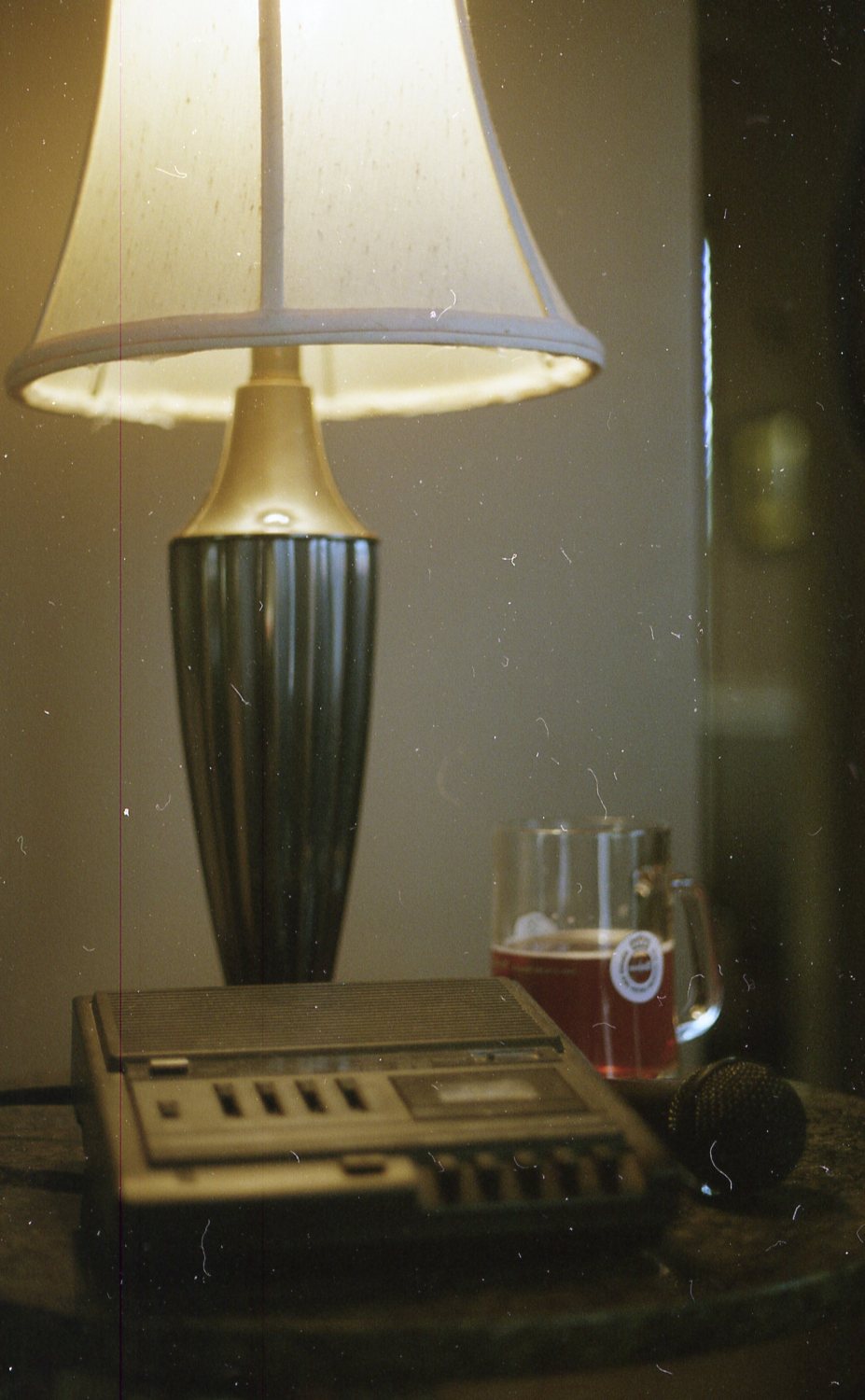
Evren Centeno: We were buds already, and we had been playing music at that point for half a year. We would go to my place or Nathan’s sometimes, because Nathan had a really bad sort of, like, what was that recorder that you had?
Nathan McMurray: I found in the attic my mom’s old multi-medium stereo, like CD player, cassette player, record player. There was this function on it to make mixtapes, but if you input a microphone and tricked the machine into thinking that it was the other cassette tape you were copying, then you could record on it. But it was one track and awful, awful quality.
Evren: But we were messing with that because we were interested in tapes. We liked, you know, indie music, Elephant 6 and all that stuff, and we thought, ‘wouldn’t it be cool if we had something like that in our community?’ And then COVID hit, but we knew a bunch of people online through just talking about music, and friends of ours were putting out music, so we were like, let’s just put this music on streaming, and then we can hand-make some tapes. I had a tape-dubbing machine, my dad had one, just like a stereo, and you could dub tapes on it. And we also had a four-track, so we made a first run of tapes using that, and then we went from there. It was kind of loose. We just wanted to put our friends’ music out on it.
Shea: So it primarily started with friends’ music? Did you ever want to put out your own music?
Evren: Yeah, it kind of started with friends’ music. We didn’t put any of our own stuff out on the label until years after.
Nathan: Yeah, I think it was two, three years after. I remember the first, and I apologize if this isn’t something you want to print [to Evren], but Evren texted me and a few other people, something like, ‘we’re starting elephant 69’ [laughs].
Evren: Yeah, I did say that. I was 15. It’s okay to be 15 and cringy.
Nathan: We were all quite young, and it came from a good place. And then, that tape label started when we had put out a record and figured out how to dub it. We were doing it with an aux cable coming from a phone or, like, a computer straight into the Tascam onto the tape. Initially, when I first tried to do it using that shitty one track, it sounded bad, so then we took it to Evren’s dad’s tape deck and dubbed using an aux cable from my phone into that, and we just dubbed them all in real time while we watched TV or something.
Evren: And that was during quarantine, so we had no class. So Nathan would just come over to my house, and that’s what we would do. We would just write and record and dub and fold and cut paper. And it was all bad. We were all still very much 15.
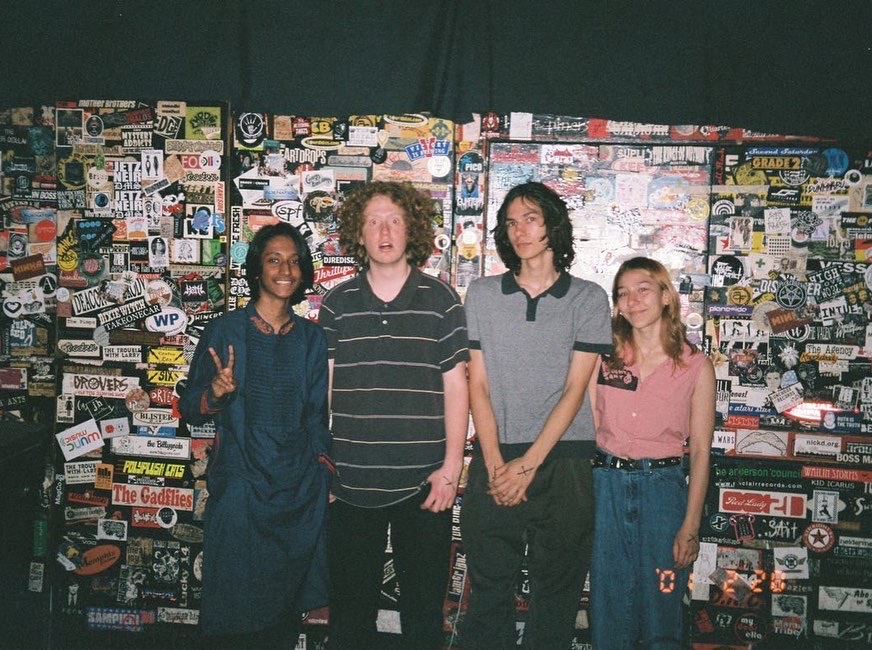
Awsaf, Nathan, Evren Eilee at Local 506 Chappell Hill 2022
Shea: So, it was a lot of learning as you went for the tape production. Did you know how you wanted to record music when it came to that?
Nathan: The way I started recording music, at least me personally, was that my mom had this bad Dell laptop that was on the way out. I started doing freelance work in Photoshop when I was 12 because my dad’s friend came and pirated all the Adobe programs, so I had Adobe Audition on this laptop. And there’s this place in Durham called Hunky Dory that’s a record store slash vape shop, and in the dollar record section, they had this whole wall of used stereo equipment and everything was $5 untested. I would buy, like, RadioShack mixers and weird RCA cable adapters, and eventually, I had accumulated enough stuff that I could get a signal to pass through a microphone through this RadioShack mixer into Adobe Audition. It sounded awful. It sounded worse than if I would have just used the laptop mic. But I felt special doing it.
Shea: So, you get the initial first few releases out, did that solidify the thought that this could be an actual label for you?
Evren: I mean, I think we believed in it really heavily as it started, but we were just young and excited about something. And all our friends online would just shitpost about it, which I think was what made us think that it was interesting, or something cool at least.
Shea: Wait, what? Why?
Evren: I don’t know, actually. It was like this really insulated, but intense community. Even though it was literally only a few people who were even aware of Trash Tape Records, because all of our friends were just lurking online all day during quarantine making and spreading Trash Tape related shitposts, we felt a semblance of momentum. But really it was just a bunch of kids online making insidious jokes with one another, but then those jokes became part of the labels public image.
Nathan: It would get posted on music meme pages that, like, just shitpost about general online music. And I think that’s probably how it started to spread. It was so bizarre. But it really is such an echo chamber because you feel so much more significant when you’re in a group of 20 people and there’s pockets of three or four people in each city and you just play Minecraft and talk about music all day.
Evren: But no one was really buying the tapes still. I mean, some people were, but it was a very small scale. There weren’t repeat sellers or anything like that. We were doing small runs. But I think we just believed in it. We would pick up followers and we would see people talking about it, maybe posting about the music, listening to it. Nathan was just excited about making tapes and getting into printing and things like that. And then came the idea of wanting to tour and we wanted to play with our bands.
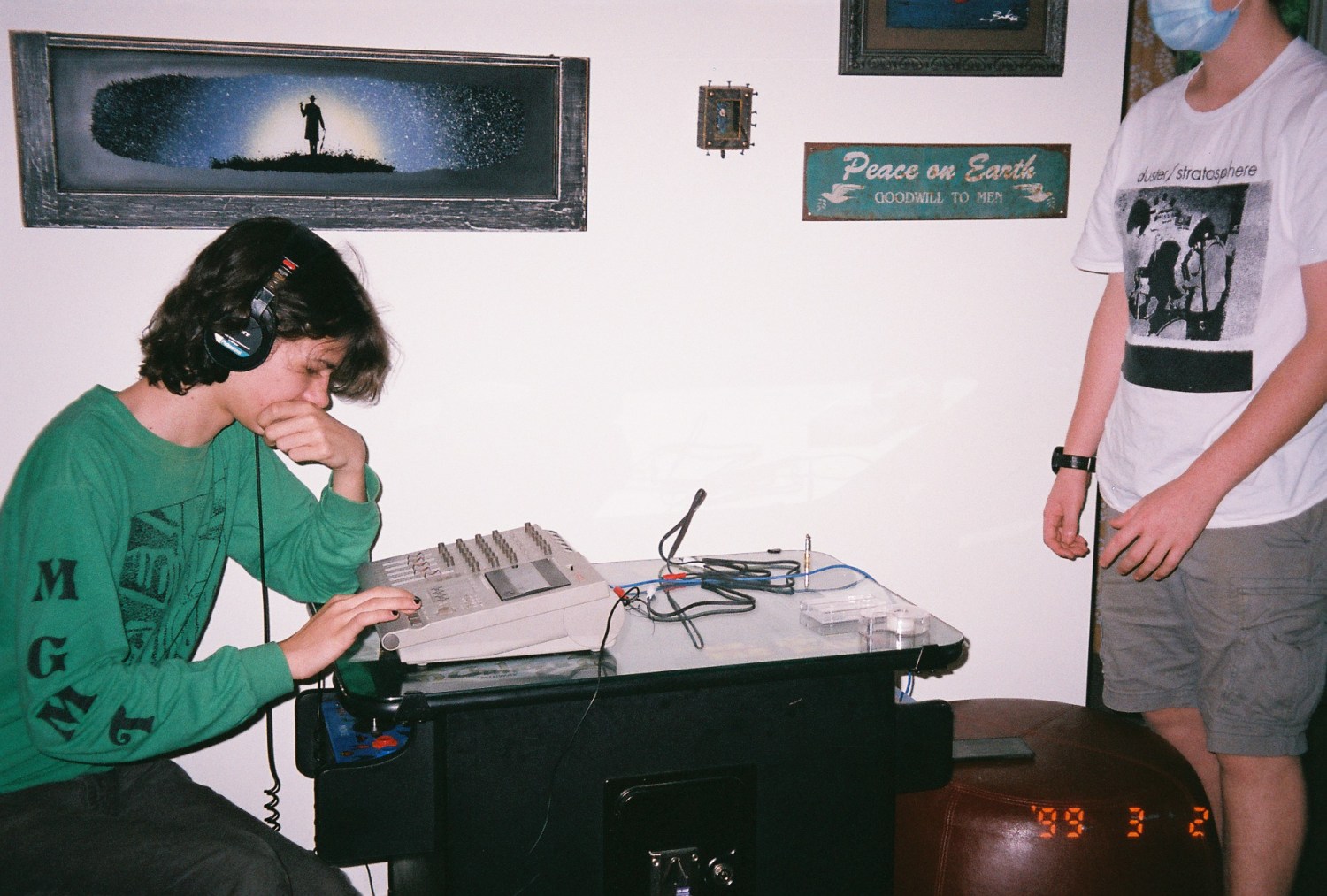
Tape Dubbing in North Carolina 2021
Shea: You know, that youthful excitement is so prominent when you’re 15, 16. And it’s really transferred into the way you run this label. It’s very visible and really exciting to watch. Eilee, when did you start to get involved?
Eilee Centeno: I actually don’t know.
Evren: Well, Eilee really initially started because Eilee was in college and she was past 18 and Nathan and I weren’t, so she could sign up for things that we couldn’t, like PayPal and DistroKid. We needed Eilee, but then it was also, like, Eilee was also just into what we were doing.
Nathan: I remember because I had made the email and I was trying to set up a bandcamp and a DistroKid, and at that point, we were dividing up the tasks, and I was like ‘oh, god’. So, I texted everyone, like, ‘I tried to make the PayPal, but I’m not old enough’. And then Eilee entered.
Evren: Yeah, it was all kind of very freeform. I mean, the way the name came about was just the first name someone said, and everyone was just like, ‘oh, yeah, that’s cool’. And then somebody made the logo and just drew it, and it just stuck. Put it up on Instagram, that’s our thing now.
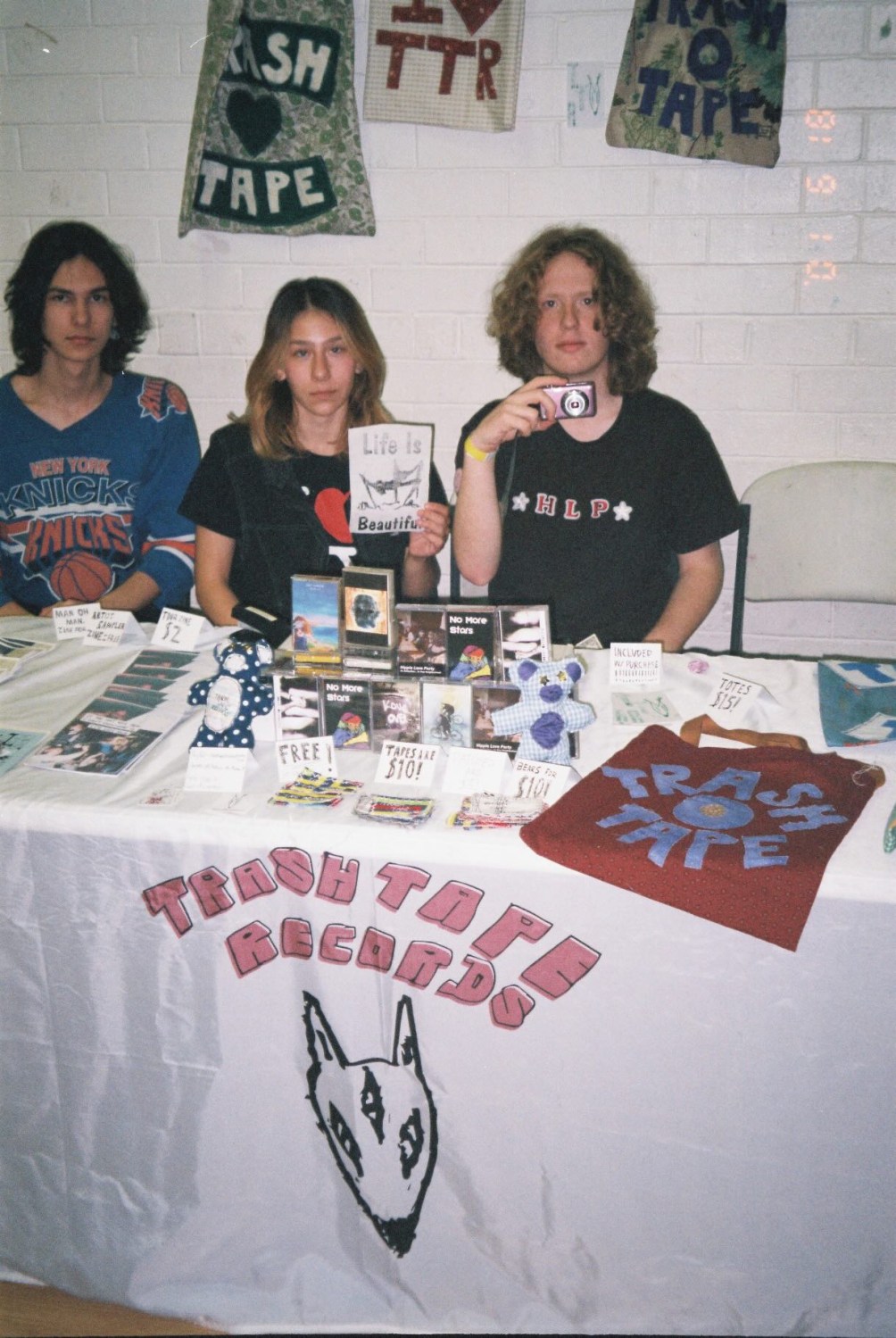
Vending at Psychic Hotline Noth Carolina 2022
Shea: So did you guys find your generalized roles by circumstance?
Evren: Yeah, Nathan, you were into the physical stuff and took the ropes on that.
Nathan: Yeah, and I’m not very good at Instagram and large-scale communication with the public, so other people picked up on that.
Evren: I like looking for music and stuff online, so I try to find people to put out their music. We would find all sorts of stuff online at that time. I’m not as keen anymore as far as to what’s going on online, but there were all sorts of young people doing stuff that we would put out.
Shea: I mean, you guys have a pretty expansive curation of artists covering a lot of ground that goes outside of your North Carolina origins. How did you first start searching for these artists? And what drew you into the people that you decided to work with?
Evren: Some of them are really haphazard. We always had open demo, well we did for a while, not anymore. Sorry to be a bad guy. We got so much crazy shit sent to our email that was kind of really obnoxious to deal with sometimes.
Eilee: But we did get lucky. Like, Awsaf sent us demos. The stuff that they sent, they didn’t even put out until later, but it was some of their best stuff. Like, ‘all the time’ was the first song they ever sent. And then Memory Card was just a friend of Awsaf’s.
Nathan: I have a very funny story about the Memory Card beginning. Henry had released his first album as a Google Drive exclusive. Do you remember that? He emailed us like, ‘I just released my album as a Google Drive exclusive’. And that’s the type of thing that we were like, ‘oh, I gotta see what this is’.
Evren: I used to use Rate Your Music a lot, and that’s how I found a bunch of stuff, like this guy Josef who we ended up making music as Rain Recordings together. He was from Sweden, and his stuff was awesome. And then Quiet Promotion, another young Swedish artist I found through Bandcamp and Rate Your Music. But then other people were just friends of friends. There is a tape label called 9733 and they also had a forum online. That’s where we would hear of S. Rabbit, who we ended up working with. And then they ended up doing Gabbit with Gavin Fretless who was on our label, basically finding each other’s music through our label.
Nathan: It feels like the culmination and dream of everything that we had hoped to possibly create.
Evren: That was our initial hope that people would just collab on each other’s records and stuff. That there would be a network of people that can record certain things and play certain instruments and whatnot.
Hill View #73, Welcome to Berlin, Memory Card and Old Star in Atlanta 2022
Shea: You do have this expansive online community. How has that defined the way that you approach what community can be for you guys?
Nathan: It feels like a modern idea of the more classic DIY indie thing. Where it’s kind of updated for a global age, because when the whole world goes global, I think music and art communities have to go global with it. Otherwise, you just kind of get trampled. And the internet happens to be the way that that goes now. I think there’s other ways that it could be done, maybe better. But that’s where we’re at.
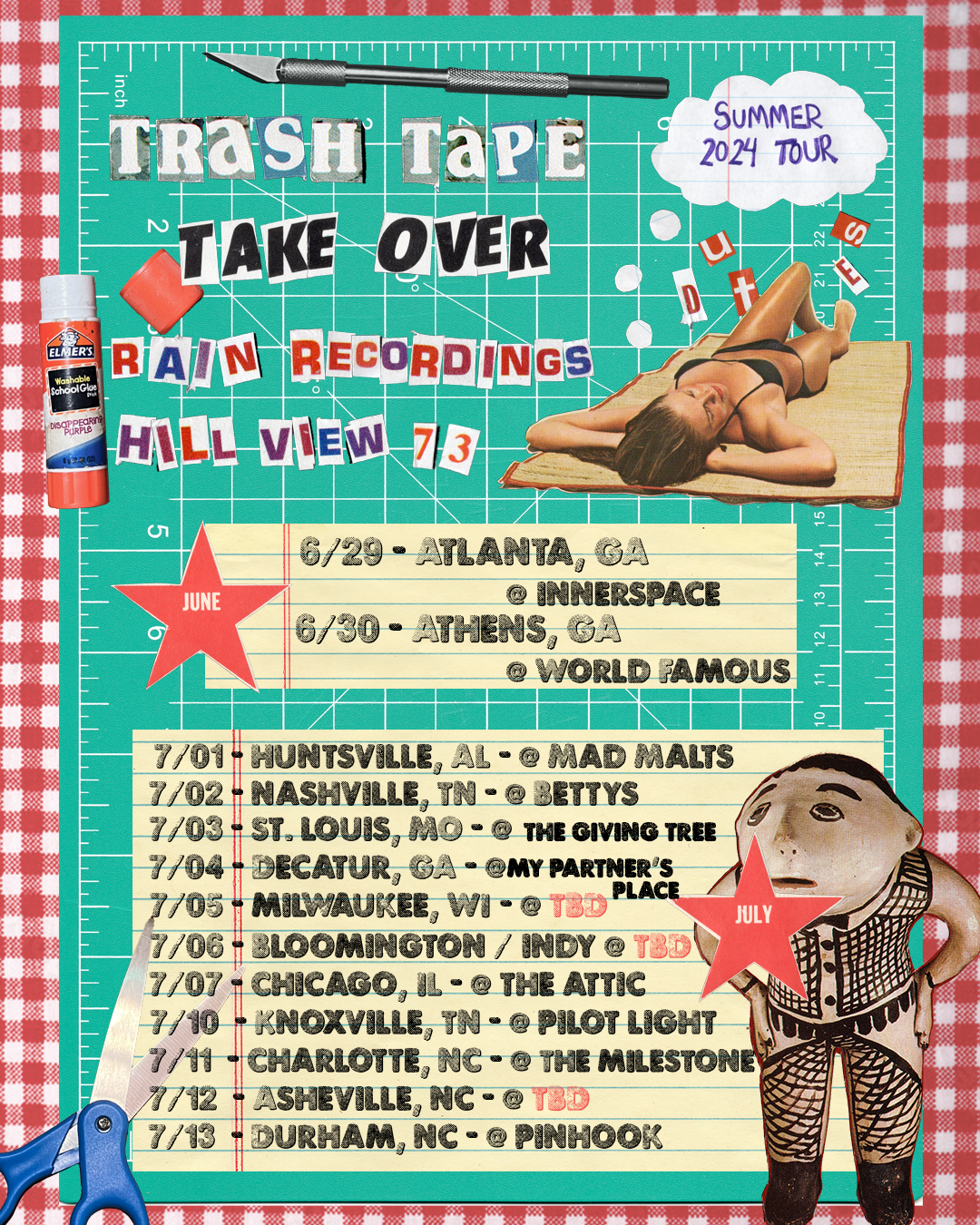
Evren: But when you’re planning a tour, or when someone’s planning a tour, they reach out to you, and they’re either staying at your house, or you’re staying at their house, you’re seeing each other, you’re playing a show. Even though we have bands where we’re from in North Carolina, then we’re playing a show in Virginia Beach with bands like Hippie Love Party and whatnot. And then we would go to Atlanta and play with Hillview and do tours with these bands. So, it almost became like a touring circuit in a way.
Eilee: I think because a lot of our artists have toured so much too and toured together. We’ve made a lot of connections all over the east and the south mainly. Where like, Knoxville feels like a second home to us just because of the community there that we wouldn’t have found otherwise. We’ve never even spent more than a day there, but everybody we know there is really special. And it’s nice because we can help our friends book shows there too. The community just keeps growing and growing.
Nathan: Yeah, because now touring feels like a big road trip where you see all your friends and you also don’t lose money. And you’re still just constantly creating anywhere. It’s really nice being inspired by different people and places. Touring in that circuit and in that manner feels so much more sustainable than just touring in places where you’ve never met anybody. It’s nice to have that kind of stability in what is a very unstable lifestyle.
Hippie Love Party with Handmade Trash Tape Merch on the “Minions Tour”
Shea: Yeah, I guess with that sustainability, as you guys get older and have different responsibilities, how do you maintain that stability with all the aspects of running a label?
Evren: It’s hard. We’re a pretty unstable label. But we’re working on it. You know, now that we’re all in Chicago, we’re trying to do more stuff locally. We did that festival, Eilee honestly did a really great job of putting that all together and really had the vision for doing more stuff locally. And I think that went really well. It seemed like something people were into.
Eilee: When I first moved here, I immediately had Evren and Nathan over and we had a day where we would just make tapes and buttons and all that stuff together. Now we do that together a lot more where it used to be super separated and it was just like, ‘oh wow, Nathan did the tapes, how awesome’. And I made Tombstone koozies, and now, somehow, they have to get to each other, so they can get to the people who bought them. And now it’s just really easy. It’s just hard too to talk about releases and stuff online or over the phone. We don’t even get to really hear each other’s honest and true opinions on music that’s sent to us or ideas we have for promotion. We’re all just like, ‘yeah, sure, let’s do it’. But then when we’re in person, we actually get to flesh it out more and really talk about our ideas because things can get jumbled.
Evren: It’s definitely a lot sometimes. We’re all also trying to make music and make other things. Eilee does a really good job of doing zine interviews and posting that on the account, just so we have stuff to put out there, stuff for people to read and get to know our artists. We’re going to try to also get more consistent with getting together and planning things out and whatnot. It’s just been a busy time. Nathan and I are doing school, Eilee’s been working, and then we’re going down to North Carolina soon for this big Pop Fest thing, and then Nathan’s going to Atlanta to help record Hill View #73 and play shows. Honestly, a lot of the way in which we support the label is just by playing for the bands on our label. I played for Hill View, Memory Card, and then did other stuff for bands that were on the label.
Nathan: It’s almost become a thing where me and Evren are the house rhythm section for the label. It almost feels like, okay, we’re helping the bands out by getting them out on the road and by backing them.
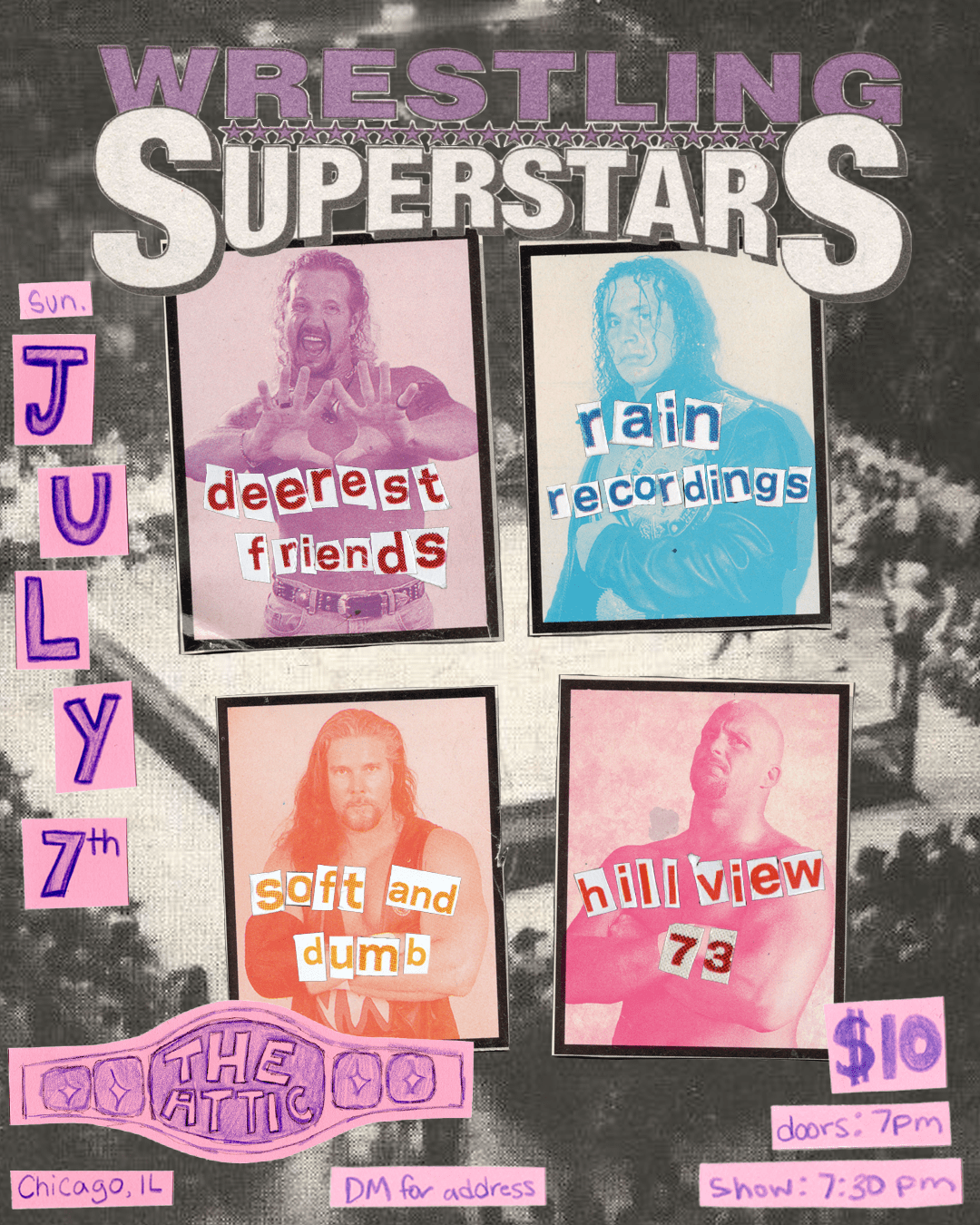
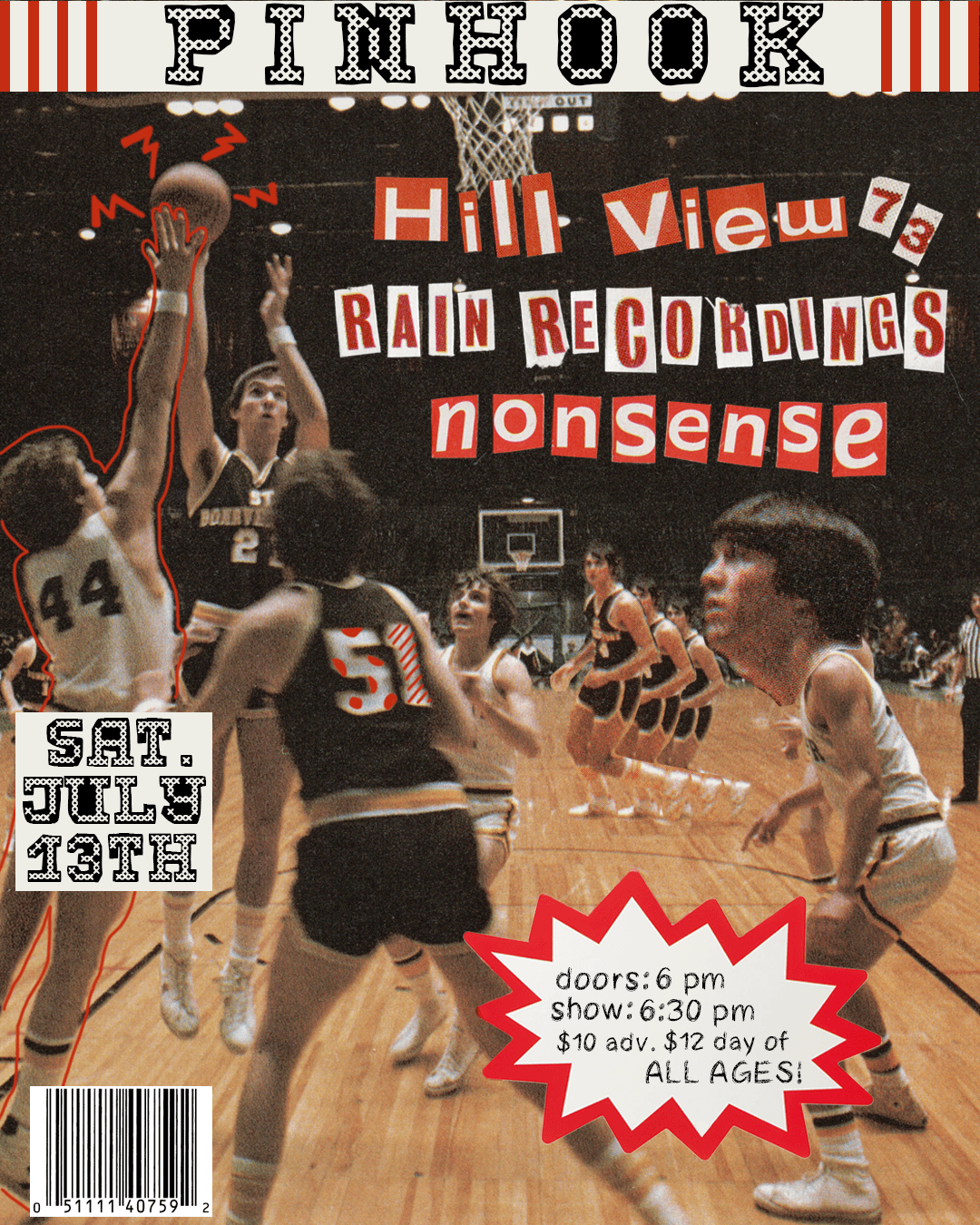
Scroll through for some Trash Tape show posters through the years
Shea: I mean, you guys do create such an engaging way to explore and appreciate new artists. Going from your zine interviews to touring and supporting your artists, what’s so important about crafting these stories, these little relatable nuggets about your artists?
Eilee: I think it’s just that our artists are small, so, people don’t know a lot about them, but all of them have really special stories that have meant a lot to us. Especially somebody like Gabbit or Tombstone Poetry, who mean a lot to us being based in North Carolina and introducing us to an amazing community. And I want their story to be shared. Even if a lot of people aren’t reading it, it’s just nice to take the time to actually really get to talk to them, for me, personally, and then to share that and hope people feel some sort of attachment or relate to something and then want to check it out.
Evren: And the thing about those digital zine stuff is it takes time with its presentation. We try to do fun stuff with it, like a little mini review or we ask them fun questions, and then we try to diversify the pages and whatnot. A lot of times when I’m trying to find new music, reading features and things like that, that’s a big way for me to get into a record because I can see where an artist’s headspace is at. I’m like, ‘oh, wow, their process sounds really interesting. Let me give it a spin.’
Nathan: I think that that’s a thing that’s died a lot in the current realm of music production. Whereas if you go back even 20 years and look at small magazines, I was just looking at an old issue of Roller Derby, and all the interviews in this issue were compelling and funny and very interesting and they motivate you to listen to the artist. And I think taking that sentiment and still giving it digitally and free and everywhere kind of gives you the benefits of genuine engagement while not being limited by buying a zine or knowing who to mail order.
Memory Card Practice at Nathan’s Apartment Winter 2025
Shea: And Eilee, you made a tour documentary too.
Eilee: Yeah, a long time ago. I have wanted to make a more updated one because I feel like we’re all just different now and it’s a different time. I was supposed to film a lot this summer on our tour. That didn’t happen and it was just… oh, my God. We might have gotten an actual TV show probably.
Nathan: There would have been a scene of me and Awsaf, just like, wordlessly using a toothbrush to scrape throw-up out of the inside of the window of their parents’ car for like an hour and a half in Homewood, Illinois, while all these guys would pull up into the gas station, look at us weird, and then drive away. It would have been one hell of a documentary.
Eilee: I was thinking of filming the Pop Fest. That would be cool.
Shea: Can you tell me a bit about Pop Fest?
Nathan: It’s like a bunch of bands who are all playing at Duke Coffeehouse in Durham, North Carolina on March 22nd and 23rd. I think it’s Saturday and Sunday.
Evren: Yeah, but a lot of trash tape artists are playing. Memory card is playing, Eilee and I are doing a set, a lot of friends are going to be there. I’m really excited. A lot of Chicago bands and North Carolina bands.
Eilee: Nathan also had a big hand in putting it together.
Nathan: It’s been a long process of planning and it’s crazy that it’s actually working out. It’s all done with university funding, so there’s a lot of proposal writing and mission statements. You gotta seem like an intelligent person with a vision to some degree. It’s going to be scary though, because it’s going to be all of the people any of us have ever known.
Eilee: Like every single world of ours is combining.
Nathan: Like my parents will be there. There might be deadbeats from when I went to high school.
Evren: Eilee’s 50-year-old co-worker is going to be there, because he’s playing a set at the festival, and we’re playing like sets back-to-back. It’s so beautiful. It’s crazy.
Nathan: Do you think we can get Mike from the cafe to come? Was it Mike or Mark, the crazy guy who ran the co-worker cafe? Oh my God. We were working as line cooks in a public park, in the cafe, but it was like a winter wonderland public park event, so we would just be there all night, and Eilee would make hot dogs and french fries and I made pizzas and sandwiches.
Evren: Yeah and then Nathan and I worked at Party City for like half a year together.
Nathan: I worked at Party City for damn near a year. You were there for like 10 months, right?
Shea: Are you guys sad to see it go?
Nathan: We went together like a week before it closed. We stole Mario figures. It was really surreal.
Evren: I was kind of like, ‘let me see what I can get here, what’s on clearance’, and there’s nothing worth buying there. There’s nothing you would ever fucking want there.
Nathan: That was the cool thing about working there, there was no incentive to steal things from work to get in trouble. The only thing would be I would go to the snack aisle, and I would steal combos if I hadn’t had dinner, and I’d eat cheese pizza combos. And that was the extent of my workplace theft. But you would get a lot of balloons. You get 12 free balloons a day. So, if I felt down, I would make a balloon.
Evren: Nathan figured out what the biggest balloon in the entire store was, and it was a life-size Stormtrooper. And we really wanted to see it, because like, that’s crazy [laughs]. So he just convinced our manager to let us blow it up.
Nathan: For promotion! But then within a week of that, we weren’t allowed within 10 feet of each other, because we would talk to each other too much.
Evren: Because it was so understaffed, we were all working like three jobs at the same time. You were the cashier, and then had to go blow up everybody’s balloons.
Nathan: I remember when we got in trouble, because there was like a huge order, like 50 or 100 balloons, something obscene. We were making them together because there was no one in the store. We’re not going to finish this if it’s just one of us, and we’re talking while we do it, because the store is empty, and that’s so sad to just blow up 100 balloons in silence. And then our manager comes over, and she’s like, ‘why are you guys talking?’ And then she made me go stand at the cashier in silence while there was nobody in the store, and Evren just had to blow up all the balloons by themselves.
Evren: At that time, we got to see each other all the time, because it was like, we would go to work, and we’d do trash tape stuff, and it was that time, like we were doing Welcome to Berlin, and then we did our first tour that summer, which was all trash tape bands. It was Hill View #73, Koudi, and then Welcome to Berlin. I drummed for all three bands and we had no fucking clue what we were doing.
Nathan taping the front bumper of his parents car – Tour 2022
Shea: What was it like figuring out how to book shows and tour?
Nathan: The thing is, it’s hard if you’re from a place, and you’ve got no music, no clout, it’s impossible to book. But if you’re from a place, no music, no clout, and you want to book a show four hours from you, it’s easy. You’re just like, ‘hey, I’m from out of town’.
Evren: The first show we booked was in Chesapeake, Virginia. I was with this band Hippie Love Party, who are on the label, at a venue called The Riff House, like a trailer in a gravel lot. It was a great show, but we went like three hours to play it, and it was great. It was worth it. And we were like, ‘oh, we can do this’. But that first tour, we were playing with three unknown bands, only two of them had music out. Koudi was releasing a record, but no one knew who they were. Hill View had just released their first EP. We played like eight shows, so what we would do was we would play where everyone was from. We went to Atlanta where Hillview is from, and then we went up north from there. But then in Asheville, no one showed up.
Eilee: We were supposed to be playing with Melaina Kol, but he had to drop the day of.
Evren: But no one showed up to that show because it was like, three bands no one’s ever heard of, ever, that have never played live, ever [laughs].
Eilee: Which is so awesome and funny too, because now we know so many people in Asheville, and it’s just like, we made such a beautiful community there three years later. It just takes time.
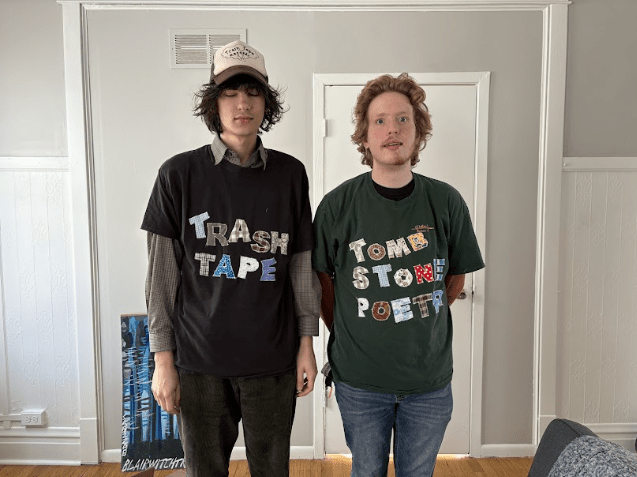
Evren and Nathan with shirts made by Eilee for Tombstone Poetry Promo Video
Shea: Trash Tapes recently celebrated 5 years of being a label. Looking back on your catalog now, broadly speaking, what are some releases that have stuck with you? Whether that be from just the sheer joy it brought, something you learned about the process of running a label or putting out music, etc.?
Eilee: For me, I think the last Rain Recordings album Turns in Idle, that was a really special release. Josef is from Sweden, so he came to stay with us for like three weeks. Evren and him worked out the album and then we all went to Drop of Sun in Asheville for the recording, and they were there for like a week. Nathan and I came up halfway through and we got to do some stuff on the record, but also just watching that whole process was really beautiful, and we all just got super close during that time. I mean, it took a long time for the album to come out, but when it was getting ready, I had asked Evren if I could help with the release and they kind of just let me do whatever I wanted. That was really nice because I wanted to get into video editing and making little promo videos with animation and stuff. Josef is a good artist and makes his own drawings, I got to work with him too, and being part of that process and then making all their shirts and merch for tour and stuff, was just really special to me. It did cause a lot of tension between Evren and I, but I feel like our relationship got stronger throughout it. My relationship with everybody just got stronger through that release and I learned a lot about the creative process and myself.
Evren: I think when the first Hill View EP came out, Songs I wrote Skipping Classes, was a big thing, because I was just graduating high school and it was like the first time Hill View released something. I’d known Awsaf for a while, I mean it still shows how good of a songwriter they are, and how good they were at that age and whatnot, but when that came out it felt like things were going places. That was a really exciting feeling, being a part of that and then playing their first shows live with them and making the tapes and selling them. There was something that felt really special about that.
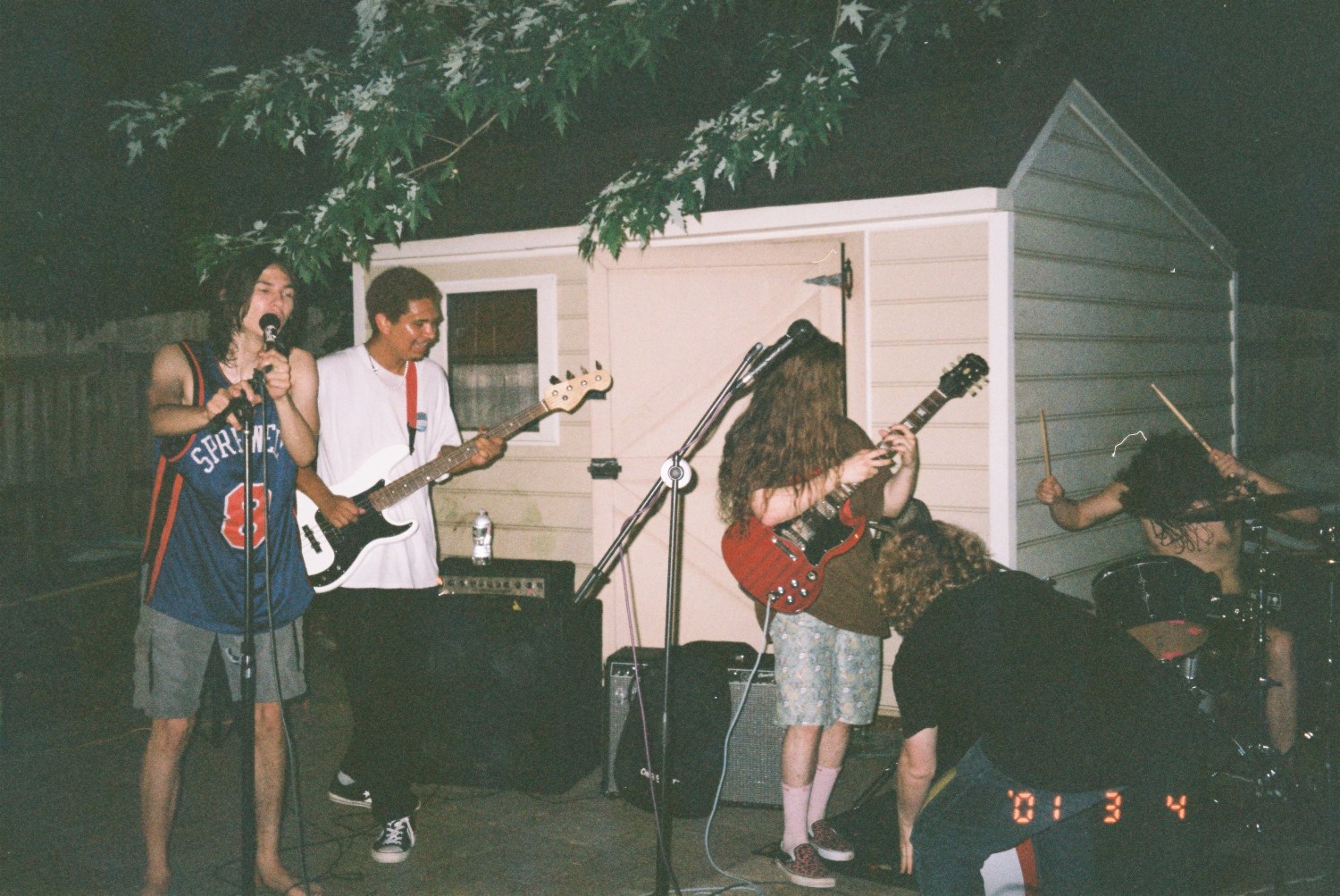
Hippie Love Party x Welcome to Berlin Pool Party Show Summer 2022
Nathan: I have two answers. The first is the Memory Card album As the Deer. I flew out to Alabama, and I spent a couple weeks in Demopolis, Alabama with Henry where I thought we were going to just practice for tour, but then I got to his house and he was like, ‘okay are you ready to finish the album?’ He had more songs he had to record, and then we touched up mixing and did all of the album art in between Alabama and North Carolina. At points, his mom would stop by where we were staying and just kind of not question what was going on. And then when we were in Durham, we would stay up for days making scary music that was supposed to allegedly be a live show on the radio, and working on the album cover, and my mom would walk into the kitchen at five in the morning when she’s leaving for work and just side eye and not say anything [laughs]. Just the whole process of that album was very special, but also just because Henry is one of the people that was really, really influential in my life. It was also just a point in my life where I was kind of losing my mind and felt trapped, and then I ran away to Alabama for a month. Listening back to it, I love that album and I love every song. I think it’s my personal favorite thing that we put out, and it means so much to me to have been able to play a small part in bringing it through the finish line.
Then the other one is the second thing we put out, Take Me to the Moon and Back by Pig Democracy. That album was the first time I ever really got adventurous with my end of the production side of things. It was a box set, so I had made a print template for how to print out everything on cardstock that could then be cut and folded into a box that you could put all the tapes in. And then it also came with a zine. My dad works in this light factory, setting up lights for design, and I went up to his work and printed them all on the printers there, and he helped me lay it out using the computers there. At the end, it was a very personally important process to learn how to do all of that, and to do it for an album that means a lot to me, for a person who means a lot to me. It felt like both of those things, I think in the scheme of our label and for all of us, felt like big steps.
Along with this series, our friends over at Trash Tape Records are offering a merch bundle giveaway, which includes tapes of Terns in Idle (2023) by Rain Recordings and Field Recordings (2022) by A Patchwork, a Trash Tape pennant and buttons, as well as stickers and a tote bag from the ugly hug.
To enter the giveaway, follow these easy steps below!
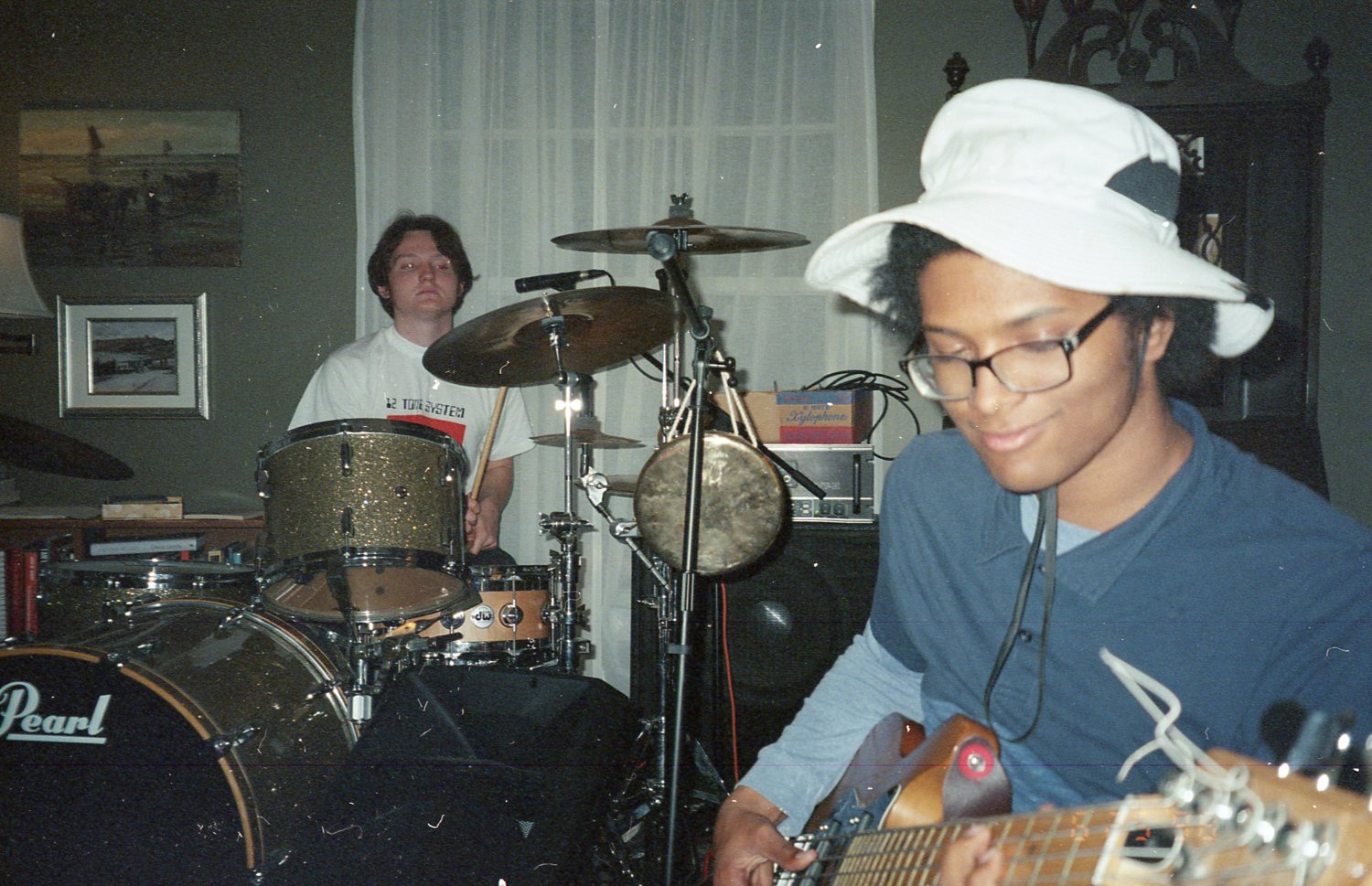
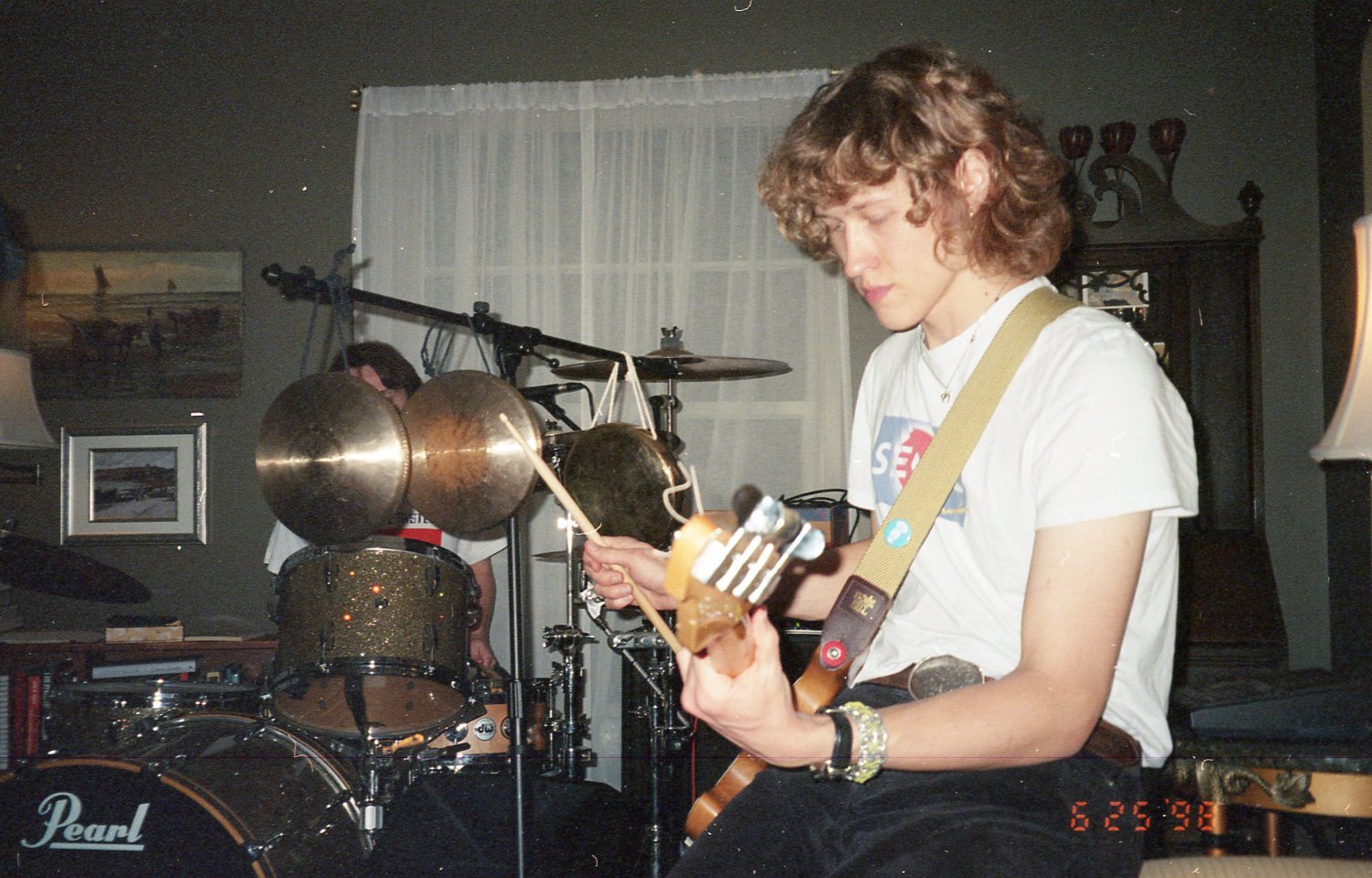
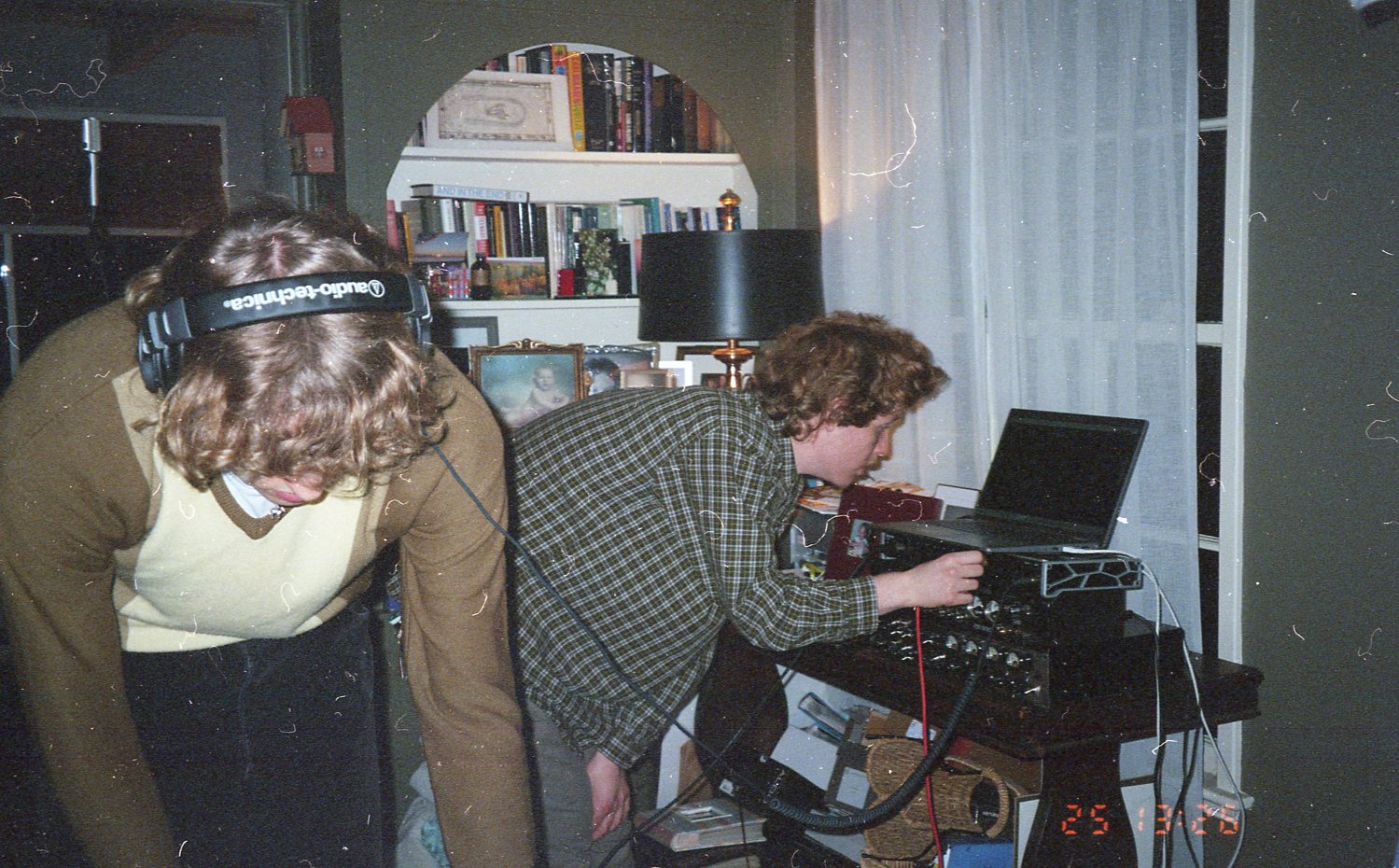
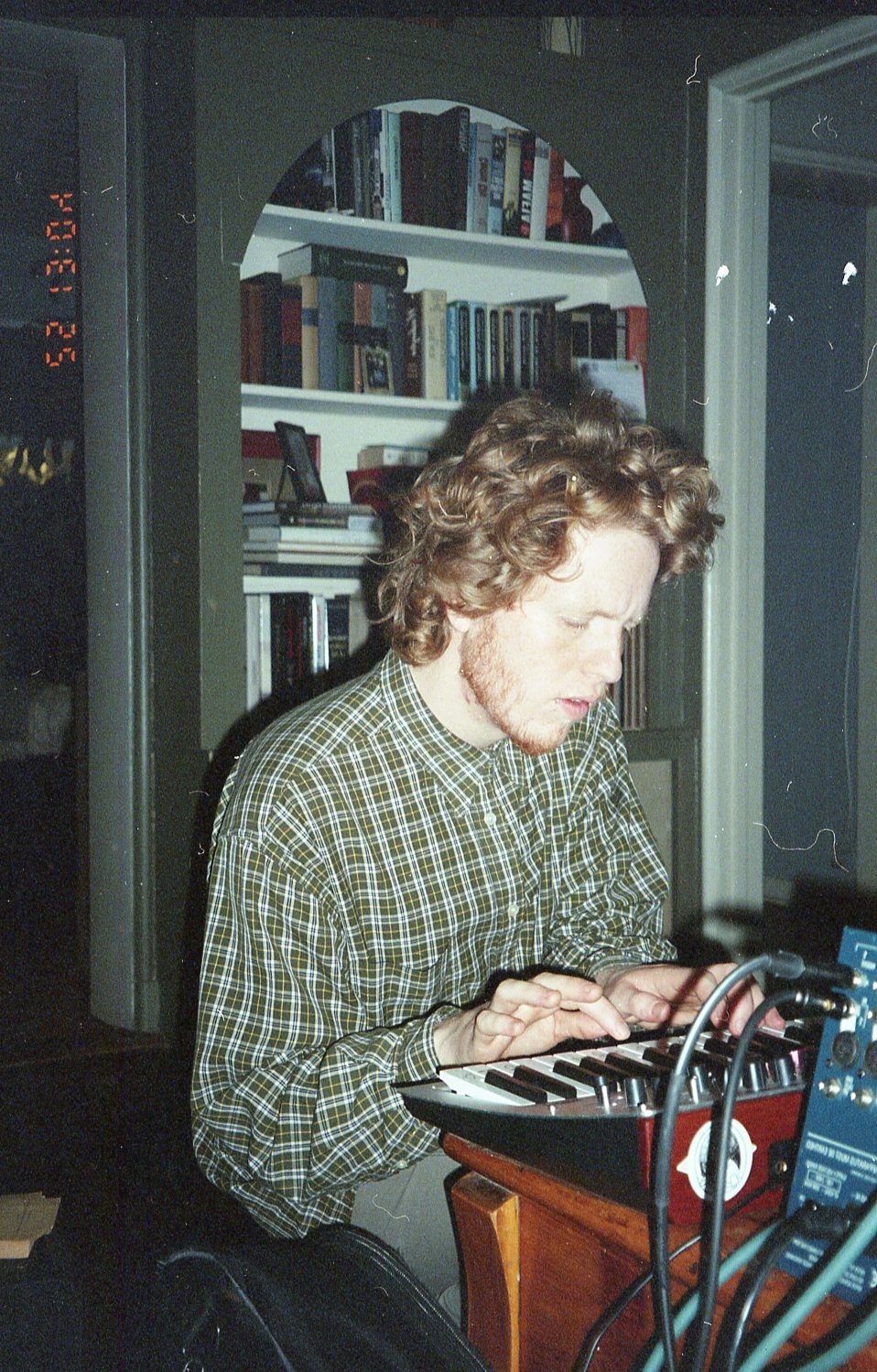
Holding the headphones to his ears so as not to not hear his bandmates talking to each other behind him, Deerest Friends member Nathan McMurray quickly turns around, “This is it! This is the sound, it’s perfect.” Frances Brazas and Ruben Steiner anxiously wait to take the headphones off of each other’s head to hear their recording come together. Huddled around the laptop they all share the same giddy expression, excited to keep recording.
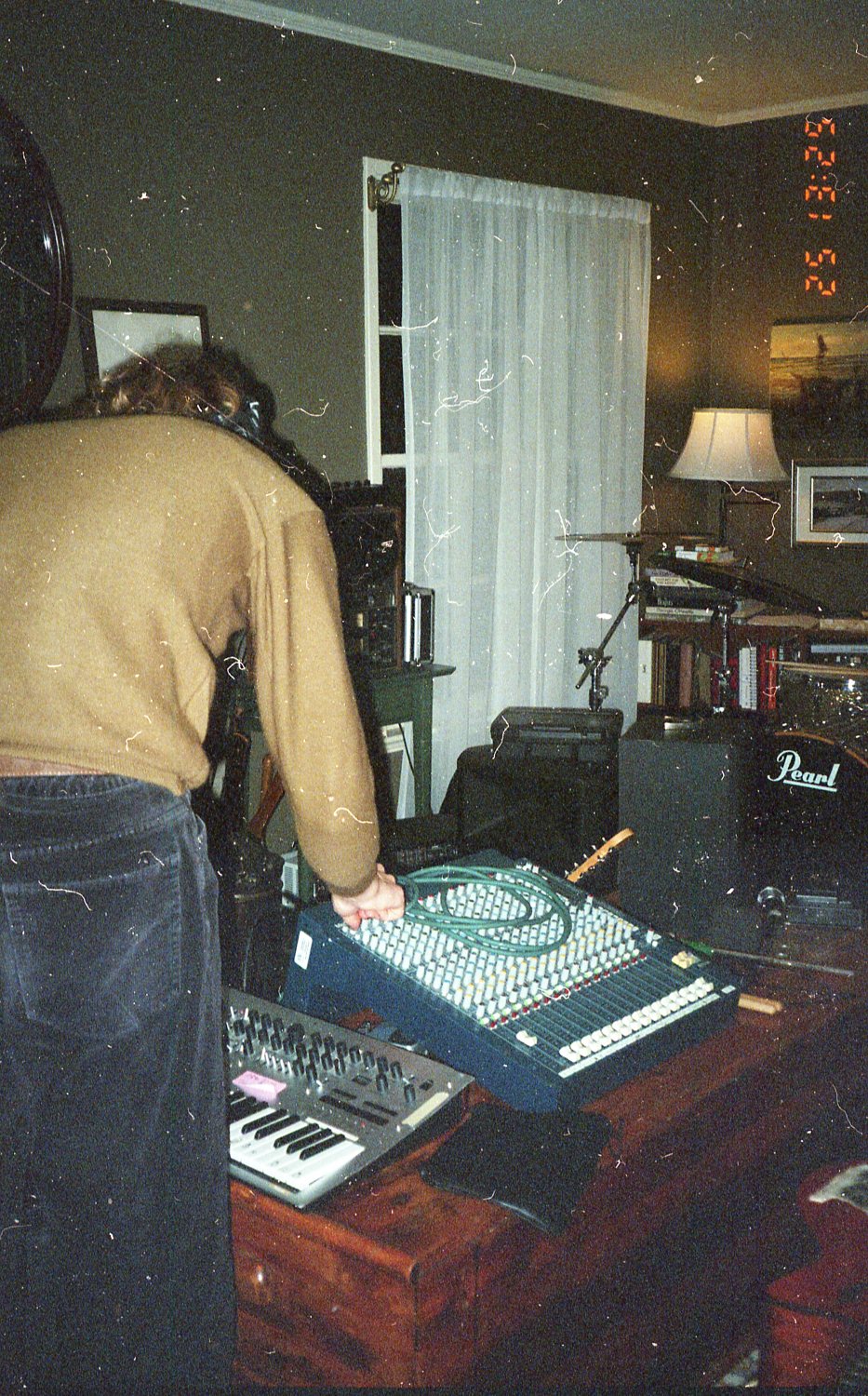
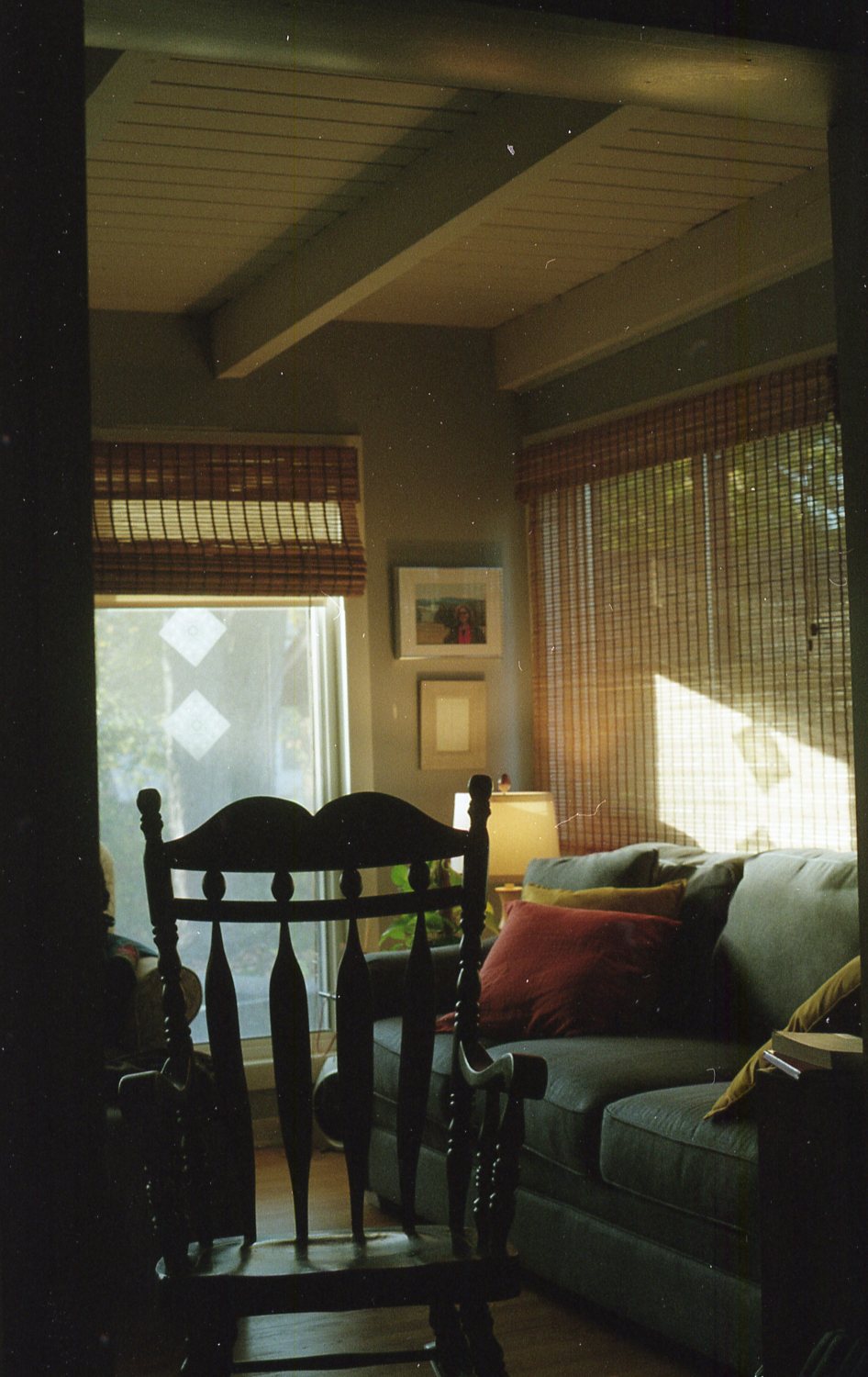
Sitting on an old rocking chair in Brazas’ family’s home in the suburbs of Chicago, observing them minutes and even hours earlier I was unsure of how they were a functioning band. Lost microphones and mic cables left them using their iPhone to record the kick drum and one mic to record both lead and backing vocals live.
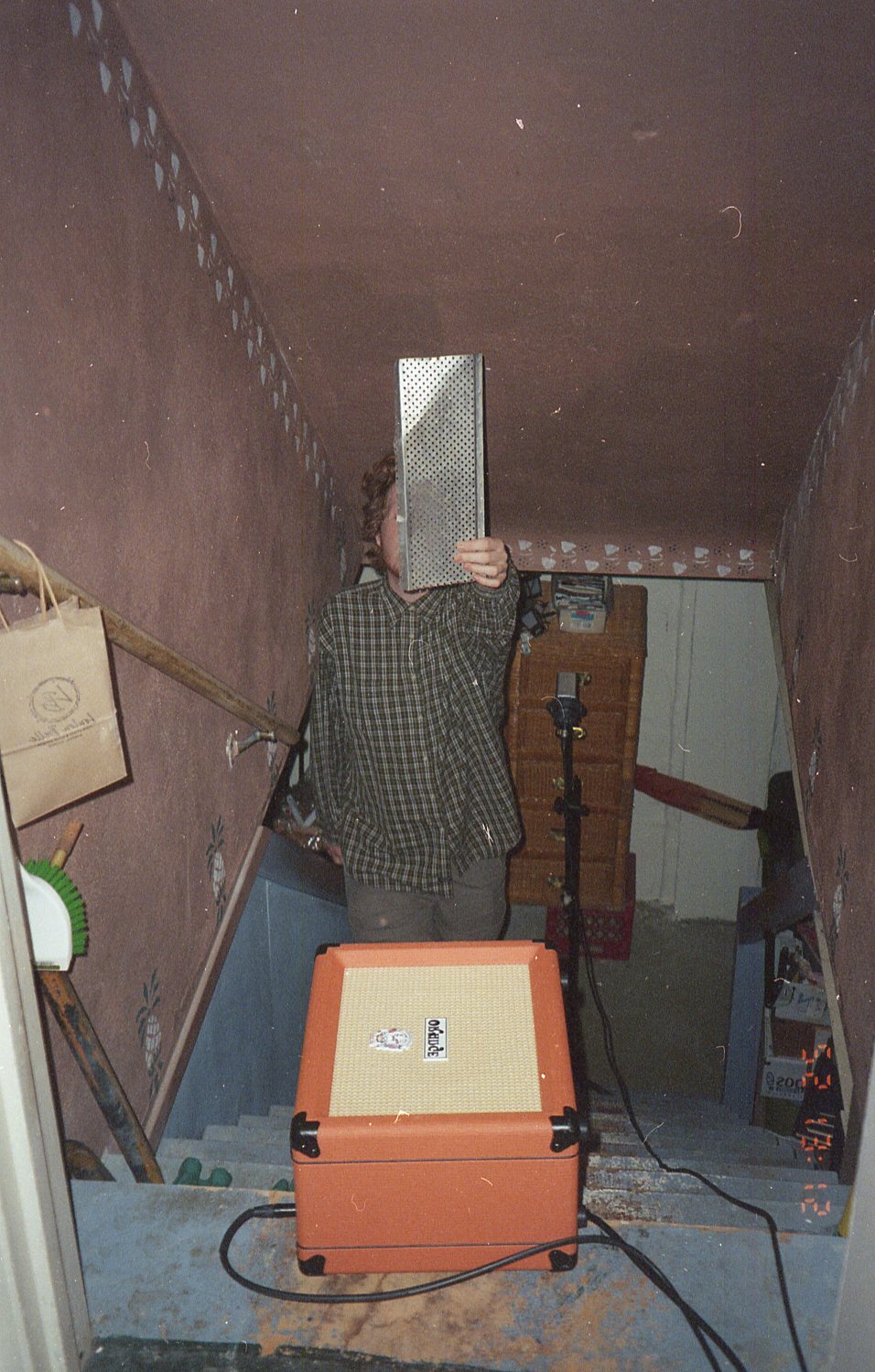
McMurray had the idea to balance an orange tube amp at the top of the staircase and put glass and beads on top to get a rattling effect from the synth as it echoed down the staircase and into the basement. Scared the whole time that the amp would fall down, I tried to look away and focus my attention on the living room where tangled and crossed wires ran through the air and headphone cables pulled at each end. The synth kept randomly turning off, a problem that occurred because the original cable was lost and a knock off was used as the replacement.
“It was completely unnecessary, it probably would’ve made zero difference to record it in a less circuitous way, but that’s what I like about this approach. Recording is very different from playing live. I think in the recording scenario you have theoretically infinite possibilities, and I couldn’t imagine it being enjoyable if you’re not exploring or actively engaging in some level of spontaneity” said Brazas.
Deerest Friends is a Chicago-based band centered around the songs of Nathan McMurray and Frances Brazas, but you’ll find dozens of names of friends from all over credited on Deerest Friends projects. Their songs come alive through the help of their friends, bandmates and rotating members.
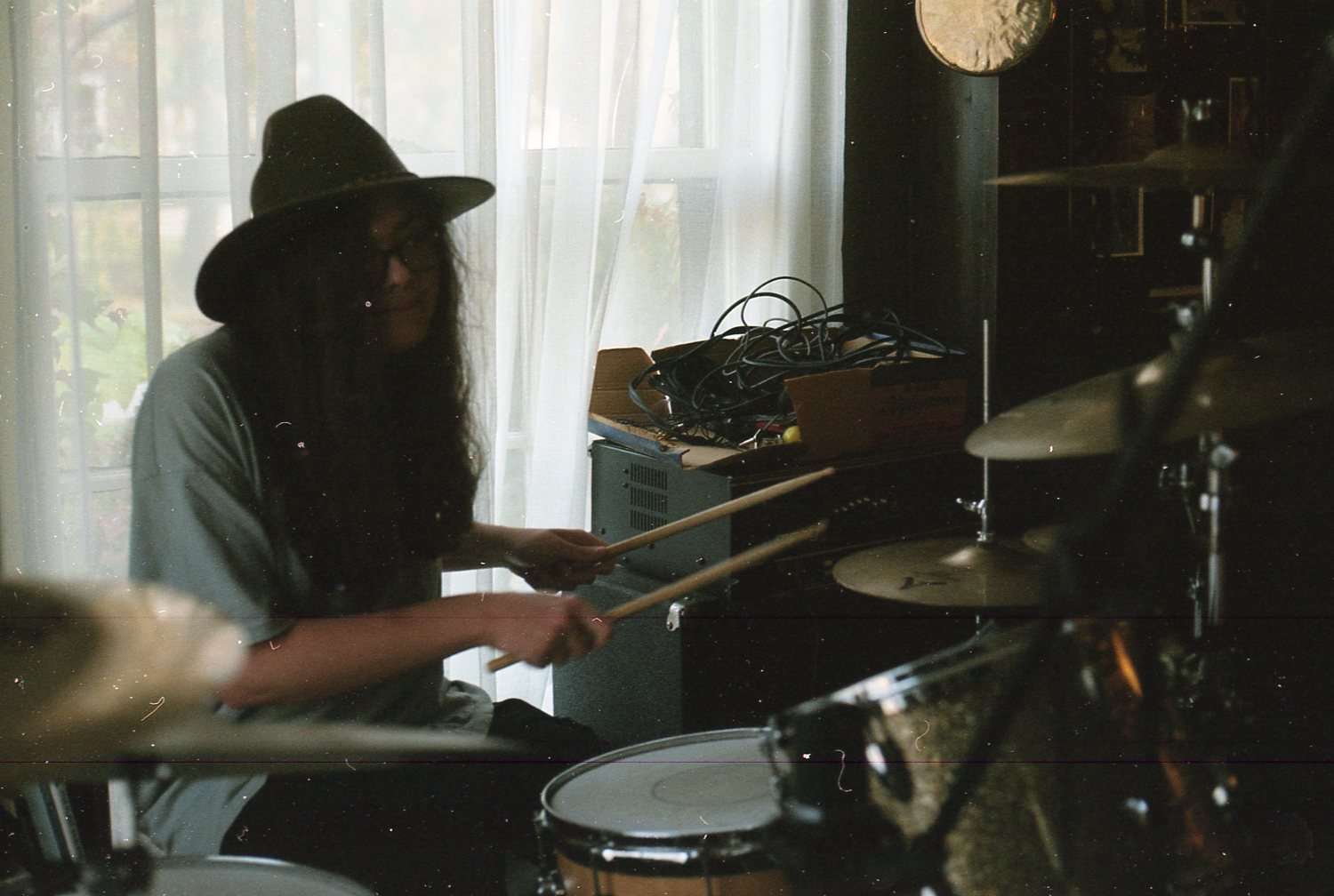
On their recorded music, you can hear the voices of Desi Kaercher’s haunting piano and synth lines wavering over the tracks, their drums holding everyone together, Charlotte Johnston and Xochi Cortez’s emotive strings weaving tensely in and out of parts, and Will Huffman’s iconic twee vocals echoing a catchy melody round out the record.
If you’ve seen or get the chance to see Deerest Friends live you’ll probably notice that each time you see them they may be performing with a different lineup. Ruben Steiner of Lund Surk often performs with the band, playing guitar or keyboards, Will Lovell joins in on drums or Trumpet, and Erin Boyle drops in on Cello. Most of the time audience members will find themselves getting swept up in the magic of seeing Deerest Friends live and become an honorary member, singing their favorite parts on stage or jingling their apartment keys when conducted by the band.
“You can engage in the same level of spontaneity live, it’s just completely different because the spontaneity live comes from having these limited things to work with and a limited amount of time. You get a different kind of recorded spontaneity when you have infinite options and time” McMurray said. “When you record, you have the ability to do things with instruments and vocal layering that’s just not possible to do live. If you create this kind of intense or manic energy by doing a lot of layering and getting sounds that wouldn’t typically be allowed, you can get that same idea across live if you just sell it the performance. The manner in which you perform something live is a really big part of the arrangement, and you can capture a lot of what is presented by a recorded arrangement just in how you deliver a live performance.”
Instead of trying to take their recorded music and recreate it perfectly or as close to the recording as they can every time, the band allows their songs to take a completely different form live, using the performance as a way to see all the opportunities of where else the songs can go.
“Even if a song is released, every time we play it live, we’re sort of adding onto it,” Kaercher said. “For some of the new songs, the live versions and recorded versions are very different, and I really like that. Most of the new stuff we played on [our summer] tour didn’t sound anything like the album because we were using entirely different resources.”
The band has become such a tight unit that they don’t even discuss somethings about their live performances, instead they already have an inkling of what each member likes to do or experiment on, and what parts should stay the same, and everything magically syncs up on stage.
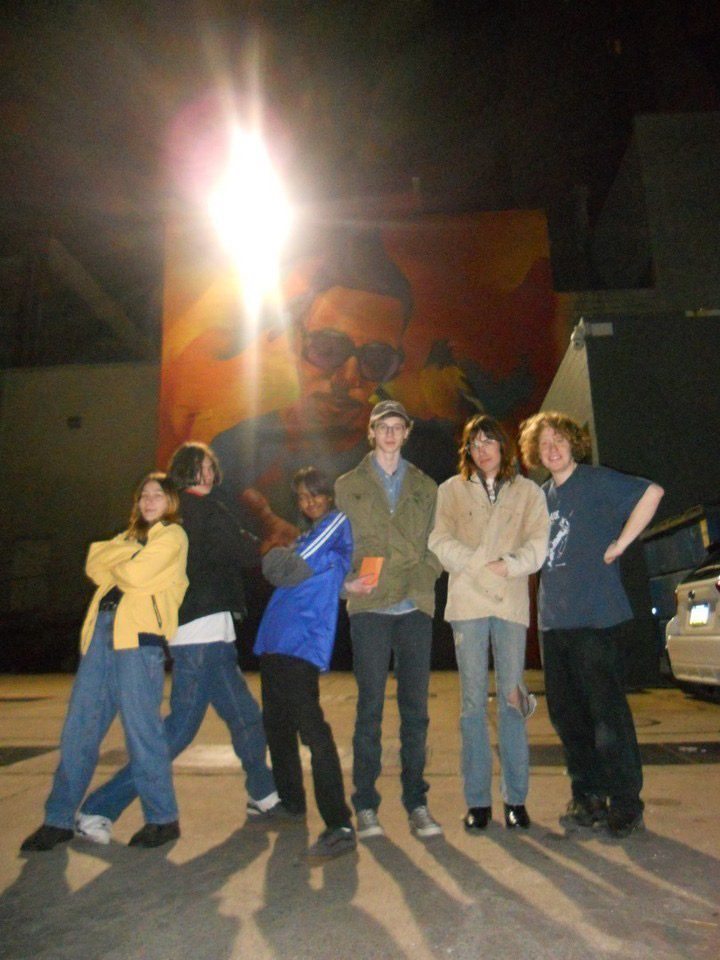
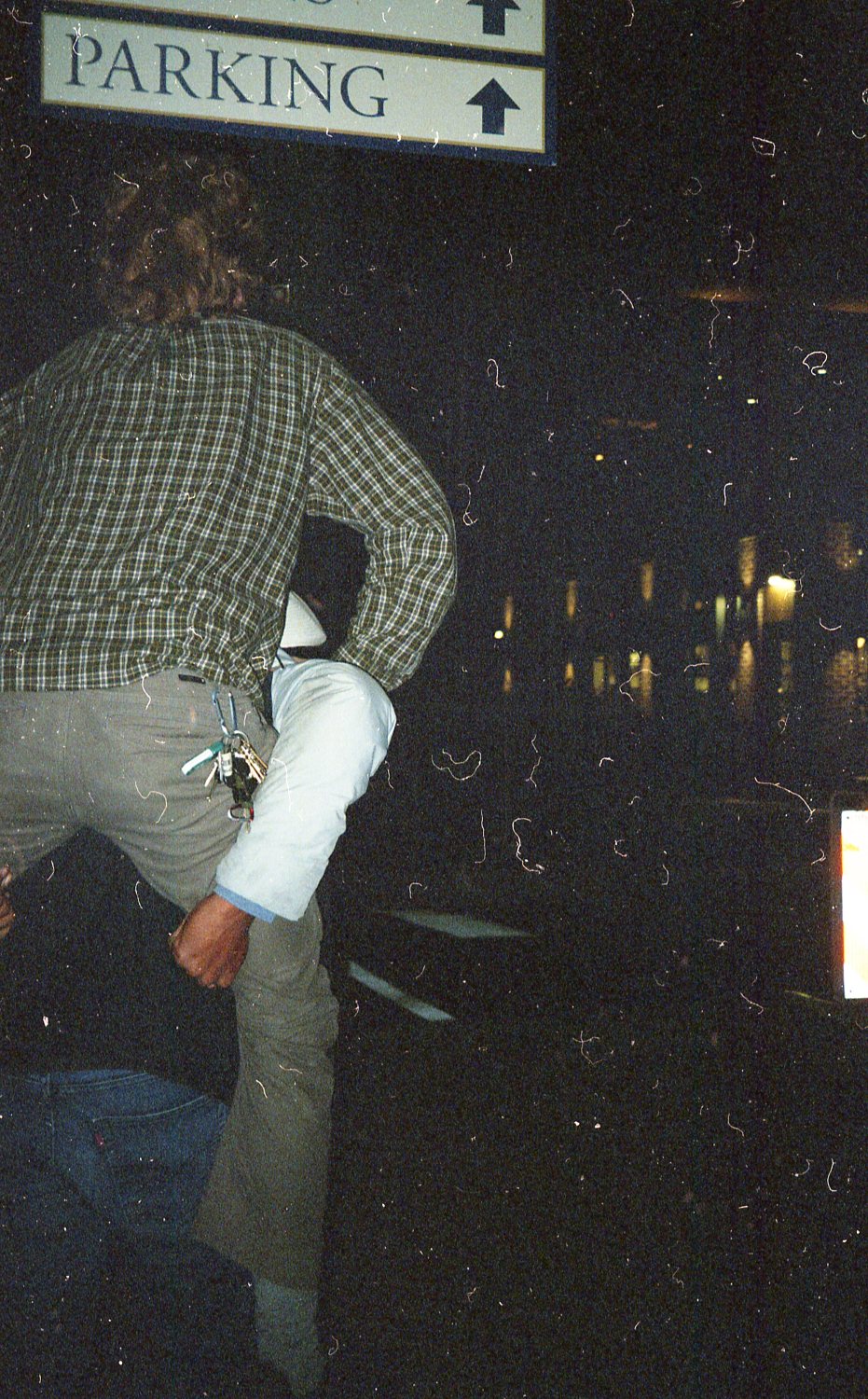
Over the course of the 12 hour day I spent with Deerest Friends, the band went from recording Lund Surk songs, to recording Deerest Friends songs, to practicing Deerest Friends songs for their upcoming tour. Before and in between all of that we made lunch, loaded the car with gear, drove an hour out of the city and to the suburbs, ate dinner at a local fast food place, said goodbye to a member as they had to head back into the city, stood on top of Nathan’s car to try and see the Juice Wrld mural on the second story of a local brewery, picked up another member from the train station, and packed the gear back into the car and drove home.
“I find being a part of Deerest Friends to be really fulfilling because I don’t feel that I can write stuff on my own anymore. It just feels way too unenjoyable. I kind of hit a wall at a certain point, and for most of the last year, I felt like I needed to be around other people, to write with other people, and to make music with other people to really enjoy it” Kaercher said. “I’m a lot less like Nathan and Frances, I’m not really self guided. I can do it alone, but I just don’t have the heart for it. Writing with Nathan during the period Deerest Friends had separated was genuinely really fulfilling, it feels really good which is rare.”
Their days together feel almost as chaotic as their recordings, sounds stitched together by outlandish ideas and the desire to let out lyrics and chord progressions that have been rattling around in their brains for months. Their love for each other, and every person who drops in to help them complete the project keeps them motivated to spend hours upon hours together actualizing their visions for their songs.
“A lot of the way we record has to do with the immediacy of it, too. If we’re practicing or recording, and we decide we need to record a specific percussion part right now, because we’ll never have another opportunity to do it, sometimes the only thing we have is like a box of screws and toy bongos, we make it work, even if it takes hours to get the sound right.”
On December 1st, the band released two singles “Dearest Friend” and “Camaraderie,” bookends to their debut album Lamb Leaves Pasture, and recorded almost exactly one year apart.
“Camaraderie” was the last song they ever recorded in the old studio that Kai Slater had, where most of their first record was recorded. McMurray noted the emptiness he felt in the room on the last day of recording in the studio with Desi as everything but the drum kit, a room mic, and a mixer was all packed away in boxes. This truly solidified “an end of an era” and the end of the Lamb Leaves Pasture era for them.
“‘Camaraderie’ was sort of a post Deerest Friends song. It was written in a period when the band had sort of separated. After the late summer, early fall 2023. It was the first song I had written after Lamb Leaves Pasture and I wrote it in my head and arranged it on my computer in a program initially. I was staying with my uncle and I didn’t have a guitar. I was using this app, but I didn’t really know how to read or write music at that point so I would just drag the notes around until it got sounding right. It’s like a digital score and I sent Desi the sheet music for it. When I had moved back to Chicago after the summer, I was living in my old place, and I drove this little car up from North Carolina so I couldn’t take all too much, and I recorded it in my empty living room, which was just the two acoustic guitar tracks. I had taken it to Desi because I had this whole arrangement written, but I wasn’t able to transcribe the drum part, so I beatboxed it to them.”
“Dearest Friend” was mostly recorded in a practice room in the Reva and David Logan Center for the Arts in Hyde Park. It was before the project or group even existed, “it wasn’t even a prefiguration of Deerest Friends existing” Brazas said. “I would record stuff on my own and be like, ‘I guess I need to be in a band now.’”
“The actual recording process leans into a sort of maximalism, which I like. For better or for worse, that’s what my work process is like. I’m extremely obsessive about recording things. I’ll record 25 tracks of percussion. For one of our newer songs I recorded a percussion track for three hours, hitting a piece of metal in slightly different ways and some of it made it on the song” Brazas added about their recording process.
No matter how much or little time you spend with Deerest Friends, you will leave feeling their shared sense of immediacy and passion for art. You’ll start looking at all of the objects in your room differently, ripping the sheets off of your bed and cutting them up to make funky curtains, you’ll start dancing around your room and write a song only with a tambourine, which seamlessly leads to you slicing up old magazines and books to create your single cover, and reluctantly passing out when you realize you have no more sheets on your bed. Tossing and turning in your bed you might try and figure out what is missing, and you’ll come to the conclusion that you’re missing collaboration and the close community that makes art and creating so beautiful. A strong sense of friendship radiates through Deerest Friends’ music, making it feel so familiar and comfortable right away.
The band asked me to end the interview with some fun questions. We went on a few tangents about our favorite pies, catching allergies from people, our fiber intake, liver health, how we eat apples, and the sexiest era of Leonard Cohen. If you feel like you didn’t get to know Deerest Friends well enough, Desi and Frances agreed on 2010s and Nathan said “he never looked sexier than Paul Simon when he looked like a medieval entertainer.” Feel free to debate them on this topic the next time you see Deerest Friends or ask them about their favorite dubstep songs.
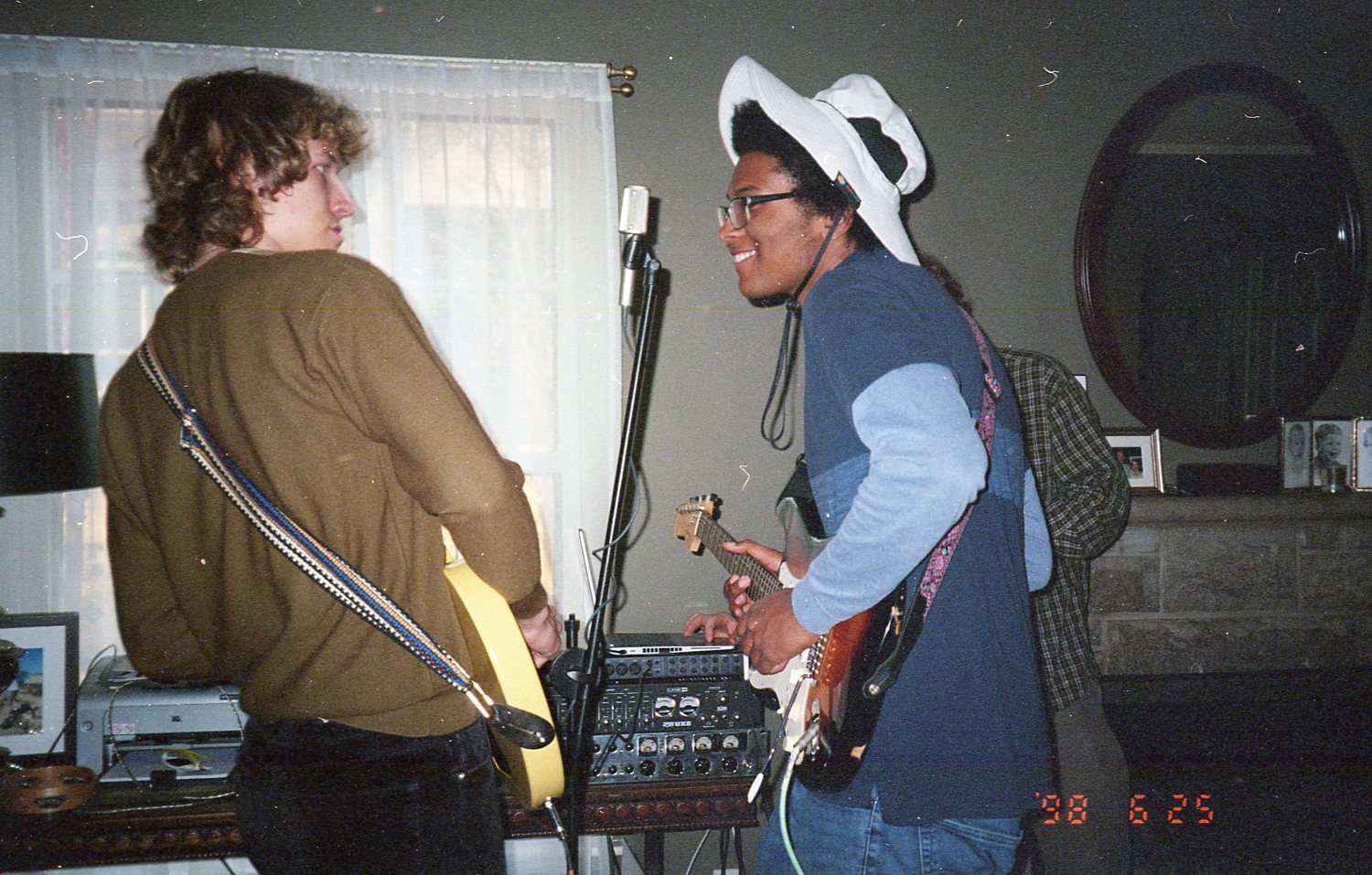
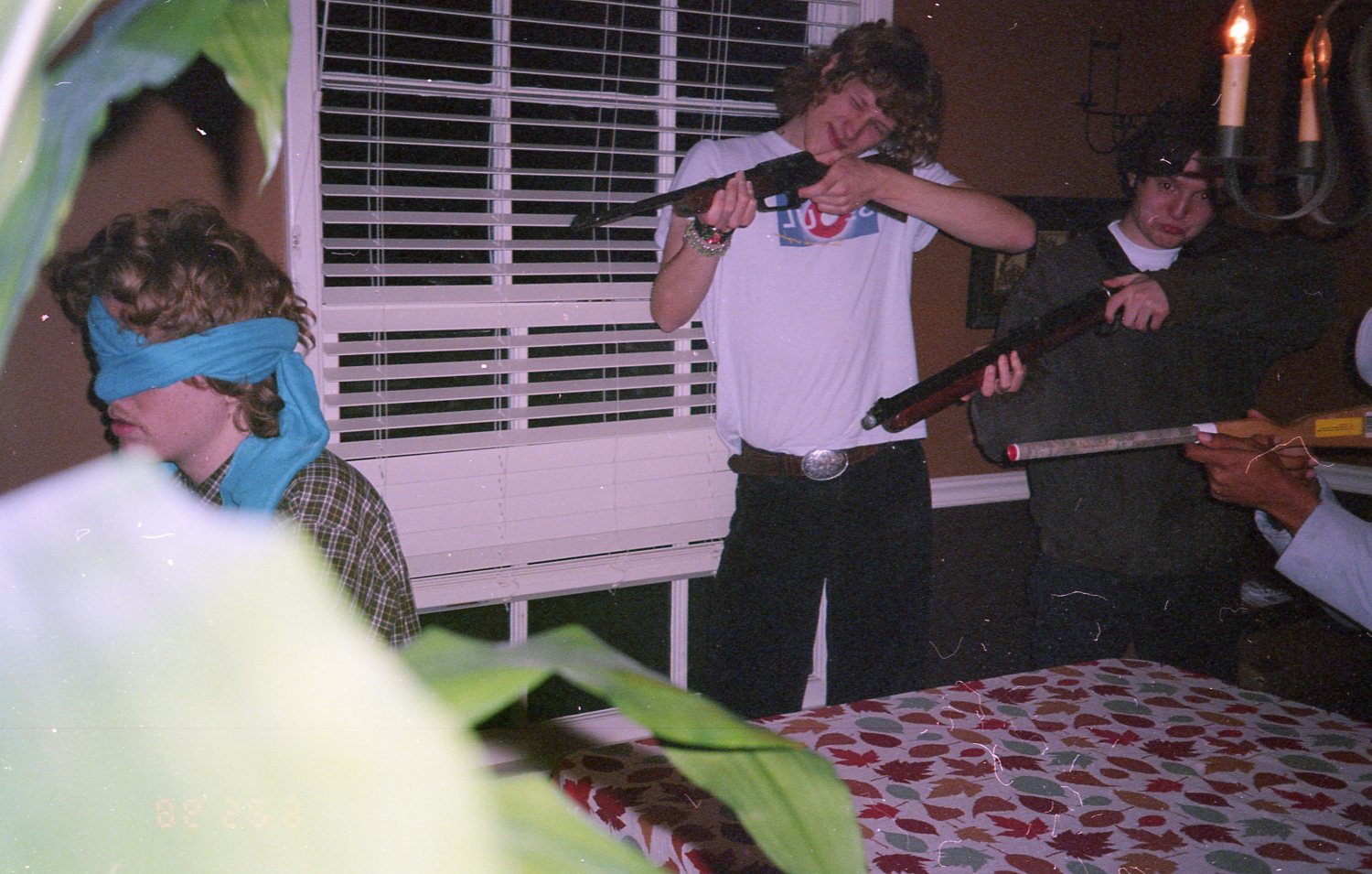
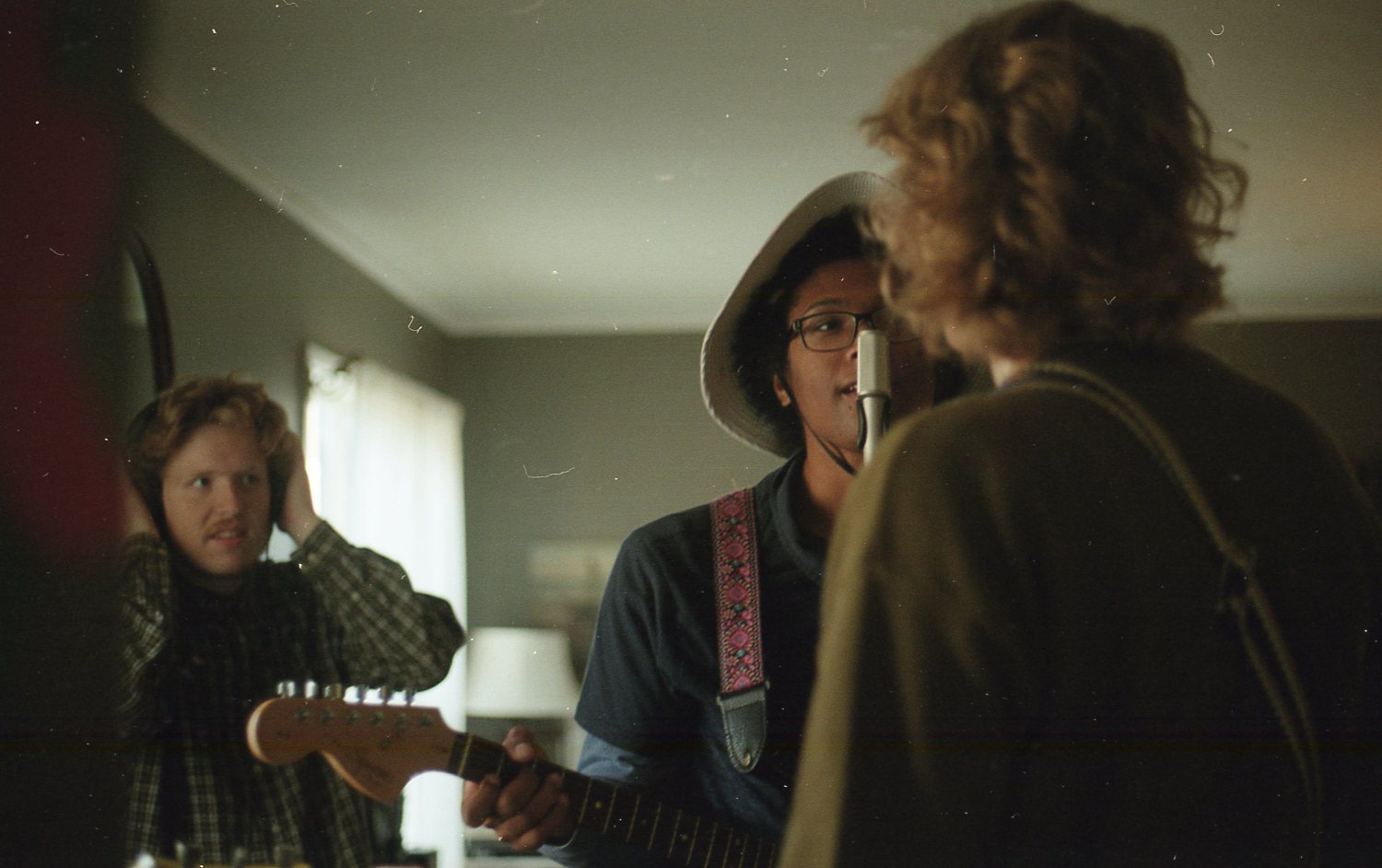
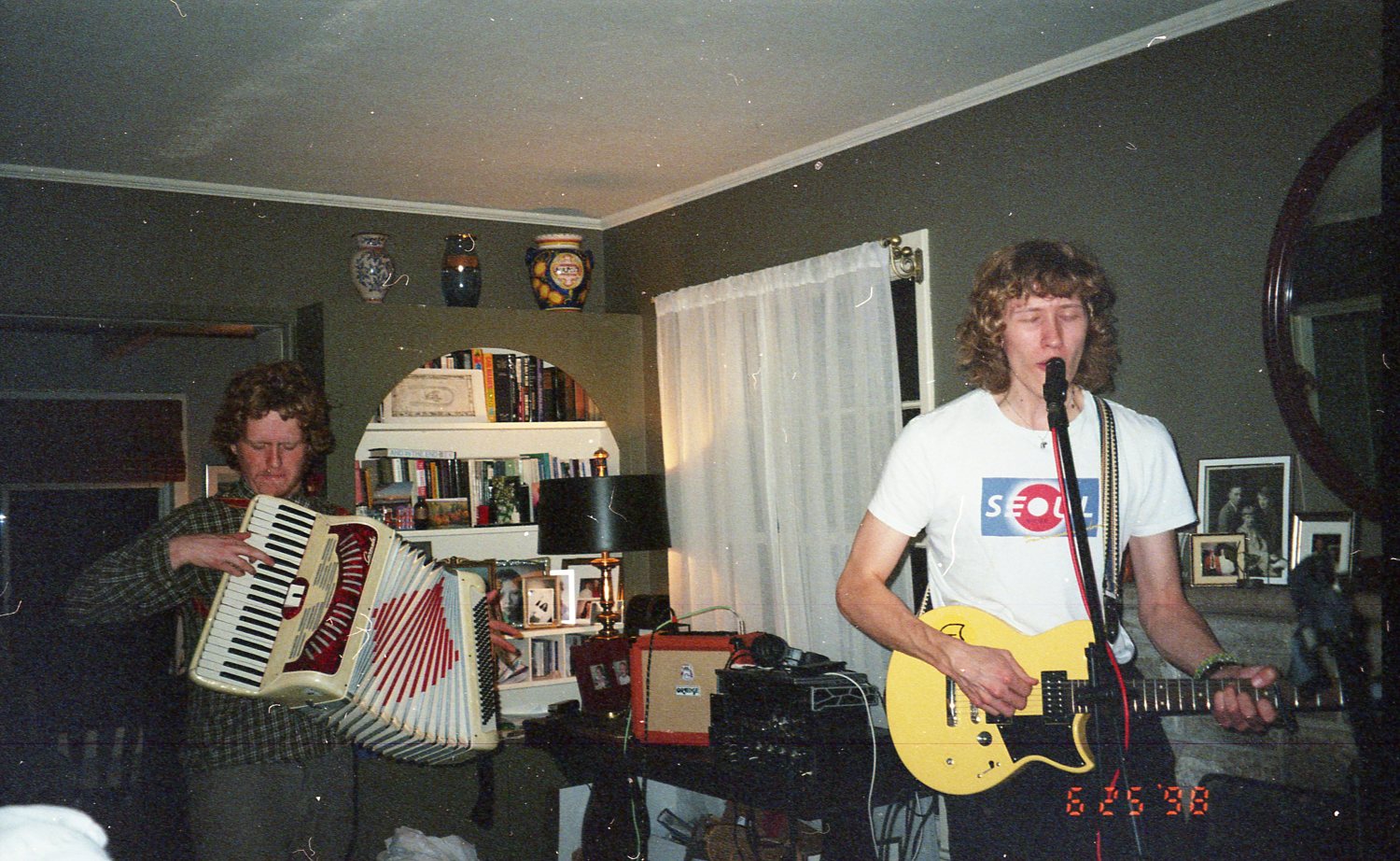
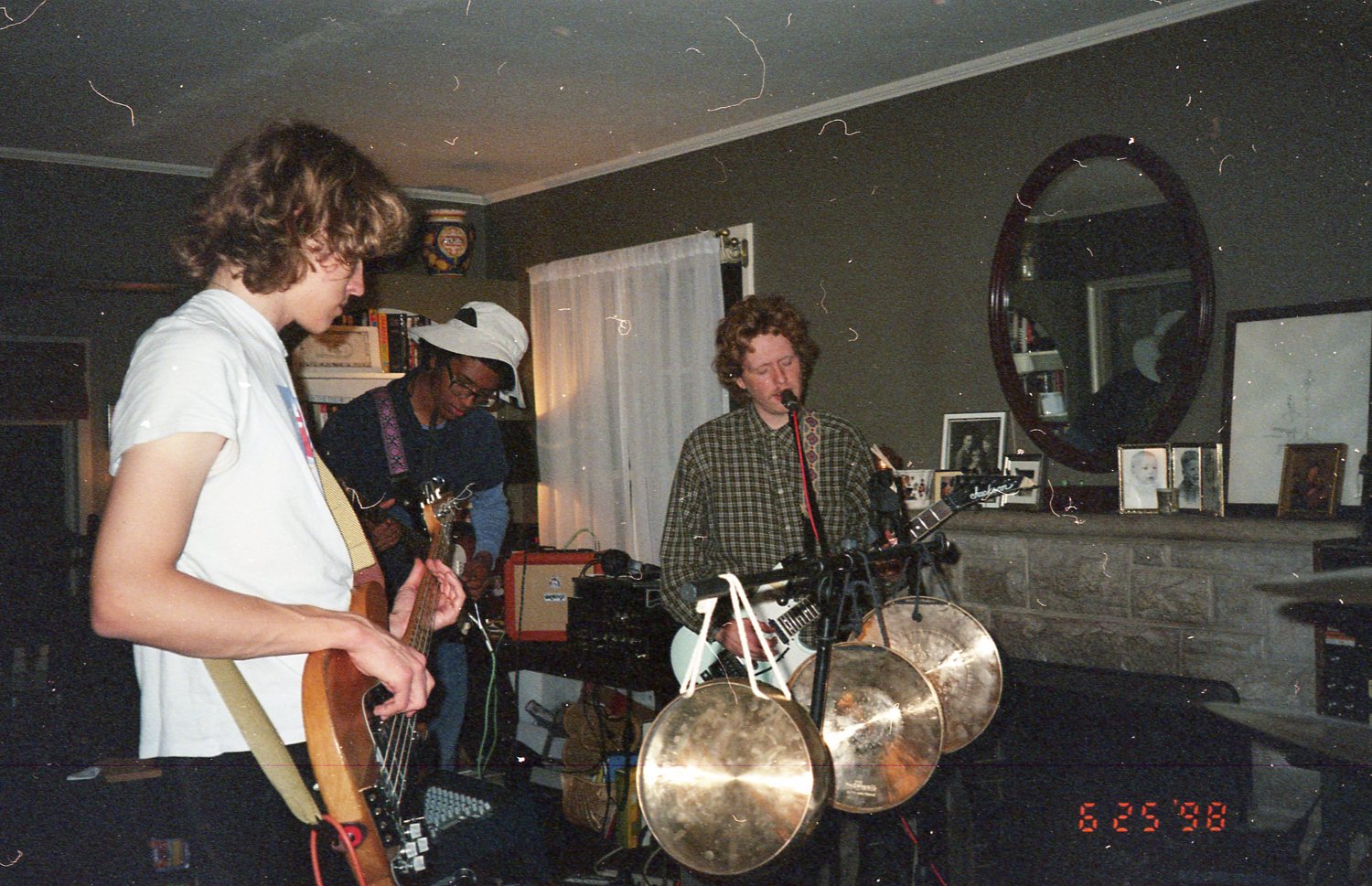
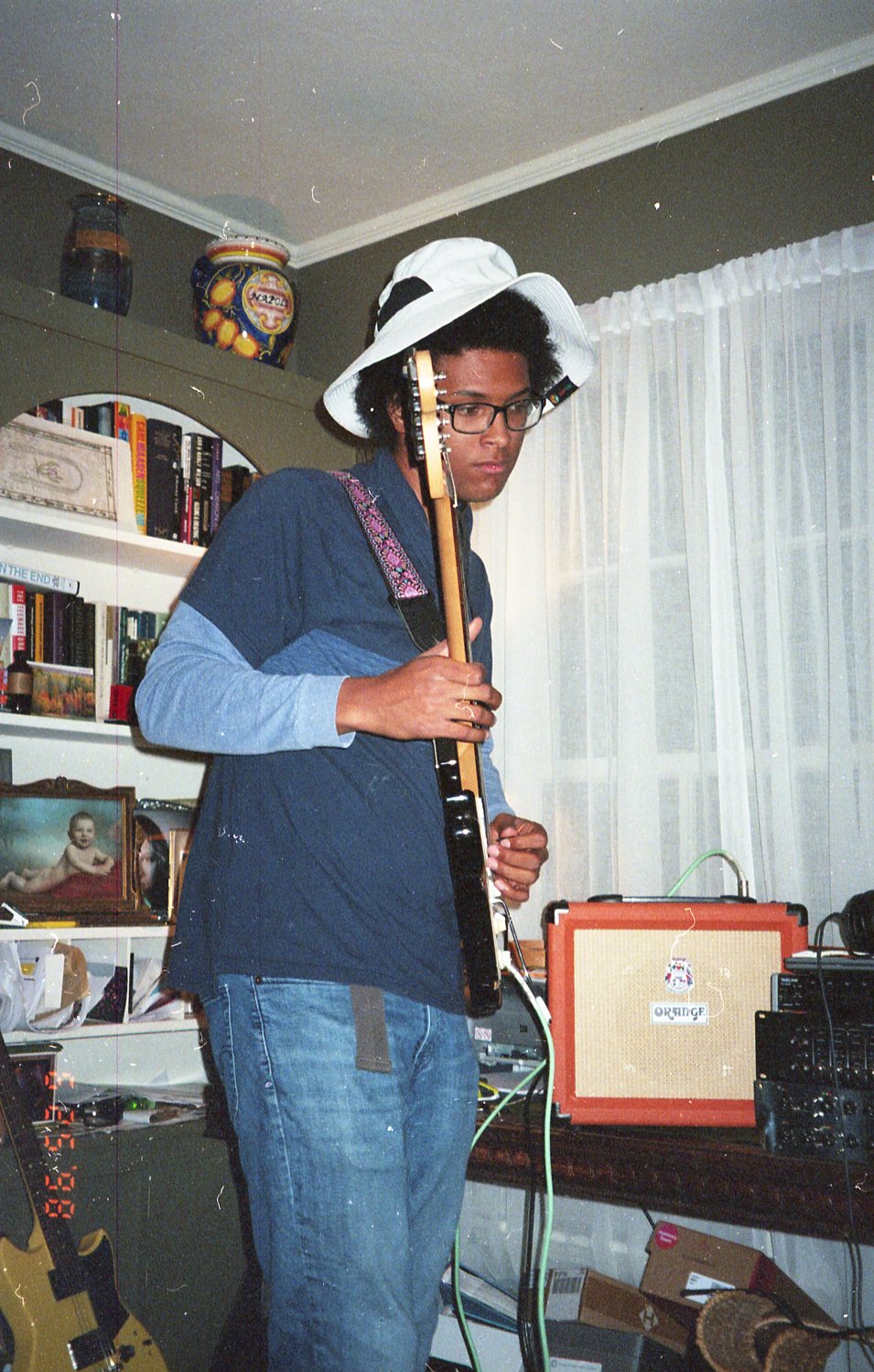
Scroll through for more photos of Deerest Friends.
Deerest Friends released two singles “Camaraderie” and “Dearest Friend” earlier this month. Listen to them now on all platforms.







 the ugly hug