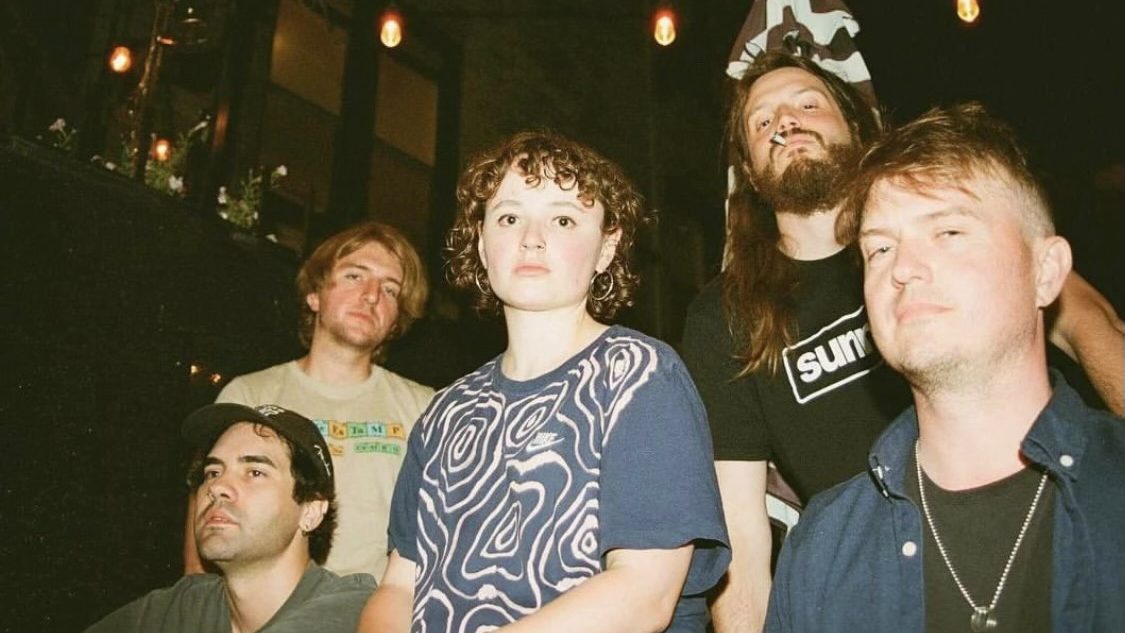
Every Wednesday, the ugly hug shares a playlist personally curated by an artist/band that we have been enjoying. This week, we have a collection of songs put together by Colorado-Chicago-Seoul artist, Jeehye Ham of Precocious Neophyte.
Grounded in the antique foundations of shoegaze and the bewilderment of dream pop, Precocious Neophyte is a group that expands beyond the thresholds of what a bedroom artist can be. As a veteran of the South Korean indie music scene, having performed in bands such as Vidulgi OoyoO and JuckJuck Grunzie, Ham brings a type of ruckus and wonder to Precocious Neophyte, where tension and intuition are compelled to unite into moments of sincere power and tender understanding. The group released their latest EP, Stony, earlier this year.
Along with her curation, Ham shared this blurb as to how the playlist came together;
These songs are mostly by Korean indie bands, some who have been active for a long time and some who are new. Byul.org and zzzaam, two introverted, sad, and shoegazey bands who had not been active for a long time, just started releasing new songs, so I’m really excited to listen to them. But not all of the bands are from Korea. Sunshy are my favorite band in Chicago. They just started to perform last year, and I put their newest single, “are you still watching,” on the playlist. It is my favorite Sunshy song. I still remember hearing them play it for the first time on a Free Monday at the Empty Bottle last winter.
Written by Shea Roney | Feature Photo by Sara Thornton used with permission by Jeehye Ham
Every Wednesday, the ugly hug shares a playlist personally curated by an artist/band that we have been enjoying. This week, we have a collection of songs put together by Chicago-based songwriter, composer and multi-instrumentalist, Macie Stewart.
With a career that excels in amble collaboration and exposure, Macie Stewart creates lush compositions that flow with intense trust of the open space it has, where moments conflict and cherish, embrace or strain, all working together towards a stunning release. As a studio musician and composer who can be found on songs from SZA, Chance the Rapper, claire rousay, Kara Jackson, Mannequin Pussy and many more, Stewart is also the other half of the widely acclaimed duo, Finom, as she and co-collaborator Sima Cunningham just released their latest album, Not God, earlier this year. But as a solo artist, Stewart opens up with curiosity and confrontation, taking personal confessionals through artistic reveries and dynamic instrumentation that lures out the beauty in imperfection. Stewart’s solo debut LP, Mouth Full of Glass was released back in 2021 via Orindal Records, having since released a handful of singles and announced more music on the way soon.
In her playlist, Stewart offers up a taste of Chicago, stretching far and wide across its incredibly diverse and inspirational music scene.
Featured Photo by Shannon Marks| Written by Shea Roney
If you have ever experienced the rich communal impact of the Chicago music scene, there is a chance that you have caught a performance by guitarist and pedal-steel player, Andy “red” PK, who has become a substantial player in countless Chicago acts such as Free Range, hemlock, Tobacco City and other touring groups. Although PK’s presence in the scene feels matured, established and highly influential, their skills as a songwriter are a new endeavor for them, as last week saw their debut singles as a songwriter, “Bedroom” and “Moving Off the Line”, added to streaming platforms for the first time, marking the start of a new talent that stands out on its own with such sincerity and contextual instinct.
Stemming from immediate inspiration and recorded directly to tape, these singles are brief, yet dense with intention and clarity. “Bedroom” plays within a confined space, a collective exhale – a rummaging of thoughts that plunder our consciousness when the latch of your bedroom door comes to its purposeful resting spot. “And I heard you driving / I looked away too long and I missed you,” PK sings in a hushed whisper, lingering amongst layers of guitars that create a comfort of stringed textures underneath. In a more eager push towards folk-pop, “Moving Off the Line” so cleanly plays to both of PK’s skills as a melody maker and compositional instrumentalist. Progressing with a lively and nostalgic drum track that holsters an array of off-beat accent points, the track still leaves room for the underlying bass to speak for itself as PK’s established guitar voicings kick in. “If anybody told you / That I’m moving off the line / You’d listen close for warnings / But you’d hold on to the signs,” is noted by anyone who lives in Chicago; bustling, pragmatic and essential to navigating a complex city, let alone navigating your own placement on an individual level. Balanced with a string of harmonies that are performed with familiarity in influence, PK’s debut singles already feel timeless at their core.
You can listen to “Bedroom” and “Moving Off the Line” on all streaming platforms now, as well as purchase them at Red PK’s bandcamp.
“I think that it is good to want to have a community get together once a week, sing some music together, read together, do all those things,” McKenna acknowledges, a type of grateful reflection across her face as she discussed her approaching EP release show. “I have just had to seek structure and community in different ways, and I think Chicago has been very open to that.”
Edie McKenna is best known for her leading role in the Chicago-based alternative group, Modern Nun, who have spent the last few years dedicated to creating spaces built on acceptance and collective experience through music and community.
With the release of her debut solo EP, For Edie, out everywhere today via Devil Town Tapes, McKenna is leaning more into her folk roots – reliving and repurposing the words she wrote almost a half decade ago. It’s an open letter to her younger self, only four songs long, as For Edie carries past trauma with such confidence – a striking invitation into the life she lived and where she has been headed ever since.
I recently got to sit down with McKenna to discuss the new EP, learning to redefine imprinted expectations and the joy found in mutual congregation.
This interview has been edited for length and clarity
Photo by Cora Kinney
Shea Roney: What was the transition like from St. Paul, Minnesota to Chicago? Where did you find yourself in the music scene here?
Edie McKenna: I graduated in high school in 2016 and moved to Chicago to go to DePaul. I really hadn’t been on my own before and it was really hard. I ended up dropping out of college because I just wasn’t doing well, but I made my core group of friends at DePaul and I fell in love with Chicago. My friend Sophie, whose brother is in the band The Slaps, saw the music that I started posting online and asked if I wanted to open for them. That’s when I had my friend Lee [Simmons], of Modern Nun, come play guitar with me. I think that the music scene was really lacking a lot of non-cis men at the time, so I think we just kept getting asked to play shows. Not to discount any of the non-cis men bands at the time, I just wasn’t aware of them because I was so new. I always was obsessed with indie and folk music, but I thought that I would be, I don’t know, a lawyer or whatever you think you’re going to be when you’re younger. I would just play music for fun, but then it kind of kept going and now I really love it, so I just kept going.
SR: In the past with Modern Nun, your recording sessions were more of what you described as ‘collective experiences of trial and error’. What was it like when you decided to take on these songs?
EM: Maybe this is just for me, but I find recording folk music just a little bit easier because it’s a little more straightforward and I don’t mind being so cheesy. Particularly with these songs, because I wrote them so long ago, the cheesiness is abundant. I don’t care if we’re just playing three chords, that’s fine with me. Whereas, with Modern Nun, it’s just different in that the music is a bit more complicated in a way.
SR: It’s funny because you said you never thought you would put these songs out, claiming that they were ‘too cheesy’ or ‘simple’. Did you find that there came either a motivation or a need for these songs to find daylight?
EM: I don’t know, I felt like I was just sitting on them. I’m lucky to have a really supportive group of friends who knew these songs, particularly “Lava Lamp”, which was one of the first songs I remember ever writing. I just had wanted to work with Seth [Beck] (Rat Future Recordings) for a minute because we were friends outside of this. When we finally got to work together I already had those songs and thought I might as well just try it. It went so well that I was like, why not make it a whole project? This whole thing has been a ‘why not’ sort of situation.
SR: Did the songs go through any changes from when you originally wrote them?
EM: They didn’t really undergo many changes, but I have been really under the influence of distortion, like Neil Young or MJ Lenderman vibe lately. I was just craving to add that to the folk music because I just think it’s so fun. We definitely tweaked them a little bit, because I’m not really a riffer and I wanted Seth, Zack [Peterson] and Eric [Beck] to be able to play off it, so we expanded some of the bridges and the intros and outros, definitely. But the lyrics stayed the same.
SR: Throughout this EP, you write from your own lens of some pretty difficult subject matters, especially on songs like “Kick in the Shin” and “Hail Mary”. What was it like to revitalize those moments and those feelings? Has revisiting these songs sharpened your understanding of your path of healing at all?
EM: I don’t know if I’m there yet, but I definitely have been feeling like I am almost ready to move on from these things. And in order to move on from them, I wanted to put these songs out. I do feel like I have processed these events and feelings and now when I write I don’t talk about them as much anymore. Like this EP was me writing about those experiences. When I named Modern Nun, that was about those experiences. But it is interesting to talk about it and I feel really proud about how far I’ve come. Songs are so specific and I think the best songs in my opinion are really specific moments or stories. It’s like time travel to those moments, but then I get to add something that I’m interested in now, like distortion, and it becomes a merging of two times in my life.
SR: “Swinging” feels like you are cutting yourself some slack, almost a brief grace period on the EP. Can you tell me about that song?
EM: That song is so gay. I’m sure it is definitely something that a lot of queer people experience, like when it’s two people not raised as men trying to make a move on each other. I remember it was impossible, the first date was like a week long and nothing happened, and I was like, ‘okay, that’s kind of the vibe.’ But it gets easier as you get older. That’s kind of what I was writing about. It’s so cute and it’s fun and I’m proud of it. I wanted to release it because I knew it is catchy, but whoa, I cringe. Just a little. Just a little.
SR: There are a lot of instances of longing in these songs – to be accepted, to be loved, etc. Do you feel like you have caught up to those feelings?
EM: No, I don’t think I’ve caught up to those feelings. I definitely think I’ve found my people and I’ve found it in other ways and in moments, but I think that it’s eternal. That feeling was so strong in high school and in early college when I wrote these songs, because, particularly being queer, it was just like, ‘I’m never going to act on these things’, or even, ‘I’m just going to pretend… ’. I also have extreme anxiety, so I get those feelings confused – excitement or yearning with like genuine fear, I get them really confused, so I think it makes the feelings stronger. But I think if you don’t have something to yearn for, what’s the point? It’s like having a crush on life, you’ve got to have something to be excited about it.
SR: While still talking about this longing, did the use of physical placeholders in your writing, such as sunglasses, a lava lamp, or even a malleable prayer make things feel more obtainable, or even just more realistic?
EM: My favorite kind of writing is just very straightforward because I really like someone who respects the intelligence of the reader and the listener. When I was first starting to write songs that I liked, the easiest way to do that is to just be observant and recognize, ‘this is my point of view’. I definitely think that it made the answers more realistic. I think using objects really just grounded me in the present moment because I felt so out of control and in the clouds in my life. They brought my answers into real life and made everything seem real at a time when I was really existing and hiding in my head.
SR: You grew up very religious, and I won’t ask you to dive back into it, but growing up in the foundations of congregation – which at its barebones is people who believe in the same thing/entity – have you found a draw to that same kind of belief when it comes to the local music community here?
EM: Totally, there are a lot of similarities. The things that I grew up doing, in theory, were amazing. Getting together once a week, singing, seeing some art, being with your family, being with other people, reading, talking about the reading, eating together – structure. I think I really struggle because a lot of things in my life I feel like I went from zero to a hundred. I went from not knowing what being gay was and going to private school where you got in trouble for doing the wrong thing always, to immediately smoking weed, etc. I just crave structure and I crave a very rigid routine and seeking that in my adult life has been really complicated. I had to seek structure in different ways through my friends here, which has been a huge learning experience because it’s like, ‘okay, I am living my truth. I am doing what I thought I would be doing just in a different way.’ That’s really nice to think about.
Written by Shea Roney | Feature Photo by Clare O’Mahony
For Edie is out every where today with a limited run of cassettes via Devil Town Tapes
The untethered project of singer-songwriter Carolina Chauffe – who performs under the name hemlock – has shared two new singles today, “Depot Dog” and “Lake Martin”, premiering here on the ugly hug. This comes as the third group of singles released tandem from their upcoming album 444 set to be self-released on 10/11. Brought to life by the intimate and bountiful friendship of the “Chicago lineup”, composed of Andy “Red” PK, Bailey Minzenberger and Jack Henry, those that have been following the hemlock experience over the years will probably recognize these songs. Previously released within an extensive archive of song-a-day-a-month projects, 444 finds these songs now repurposed, grasping new life, grit and universality as they have grown over time.
Playing to the rush of a windowless drive, “Depot Dog” is consistent, fast and unburdened by the green lights ahead that refuse to break the pace. With a Neil Young-esque sharpness to the sticky guitar tones, the song is determined to the journey as the band falls into a groove of precision. “a throat full of skipping stones / lately lonely, but not alone / windows down cajun music / playin on the bluetooth radio”, Chauffe sings, lamenting the changing seasons and the transitions that follow, relaying to the personal implications of their own shifting surroundings. But building from the wit and charm that has since defined hemlock’s career, Chauffe writes to the peculiar moments of reliability found in the small things that keep us grounded; “unlikely truth like a hot dog from Home Depot / against all odds like a hot dog from Home Depot.”
“Lake Martin” is a rhythmic prayer, a slide show of life’s very construction, as Chauffe romanticizes a swampy south Louisiana sunset in all of its glory. Recorded in one take and putting a cap on the 444 sessions, Chauffe performs with pure sincerity in the midst of an awe inducing stillness. Like the functioning ecosystem of a swamp – “cuz everybody’s someone’s dinner here / the show isn’t for free / I pay my due, I tip my server / generosity reciprocal” – “Lake Martin” is a love letter to the communal harmony we find everywhere we look. Eluding to both our beginnings and ends, the song comes to a close as the backdrop of cars highlight the small, proud exhale from Chauffe, giving the last line the serenity it needs to continue breathing; “What a wonder to be welcomed – full belonging to the beauty of it all.”
Through the twangy rock n’ roll and broken pop hooks that live in the heart of Chicago, Edie McKenna has had a hand in building the little congregations around town that make this music scene so special. Best known for her lead part in the band Modern Nun, who describe themselves as ‘queering their religious upbringing’, McKenna and co. have developed a type of spirituality brought out by acceptance and shared experience of music and community. Keeping to that theme, McKenna has shared her new track, “Hail Mary”, the last single off of her upcoming debut solo EP, For Edie. Written back in her teens, she revisits the trials and tribulations of growing up religious in a queer body, as she sings a prayer for who she was and who she’s become.
The song rouses to life with a fervent folk groove as an acoustic strum feels invigorated by the underlying bass and auxiliary percussion that meander along with purpose. “And underneath those stain glass windows I prayed / You’d take it away from me”, McKenna sings with ease, leaving the weight of the matter to carry itself. As the chorus reaches the holy trinity of thrice repeated ‘Hail Mary’s’, the underbelly of the groove brews with harsh distortion, letting loose a blissfully cathartic, and joyfully nostalgic release of tension and self-actualization that longs to be listened to on repeat.
Along with the song, McKenna shared in a statement;
“Hail Mary’ was written as a prayer to my younger self. I wrote these songs many years ago and while I cannot recall the writing process itself I know that it still feels, to this day, very cathartic to sing this song. When I was growing up, I could not comprehend my queerness as an actuality, more as the sin that it would eventually be to live out. So, I only acknowledged it by pleading with God to take it away before it became a more serious problem. The ‘Hail Mary’ prayer itself was always my go-to, so I thought I’d rewrite it to aid in my own healing and acceptance.”
“Hail Mary” is accompanied by a music video made with the help of Arden Lapin and Raine McKenna. McKenna’s debut EP, For Edie, is set to be released on August 23 via Devil Town Tapes, with a limited run of cassettes.
Written by Shea Roney | Album Artwork by Edie McKenna
Sleeper’s Bell, the Chicago-based folk duo of Blaine Teppema (guitar, vocals) and Evan Green (guitar) have shared their new single, “Road Song”, today. This release comes after the reissue of their debut EP, Umarell, via Angel Tapes / Fire Talk earlier this year, which included a separately released bonus single, “Corner”. Umarell, both concise and inviting, found Teppema in a place of still observation – where moments left open to breathe were both purposeful and reflective. Bringing her initial vision for the project into fruition, “Road Song” finds the duo in good company of collaborators, bringing out Green’s artistic production and Teppema’s open-ended lyricism with an array of cacophonous instrumentation and deliberate storytelling.
From the very click of the drum sticks, you can tell this isn’t going to be your grandmother’s Sleeper’s Bell track. Above a light instrumental shuffle, Teppema sings, “Spent so long on the road / I forgot there was somewhere to go,” as the chord progressions lean into minor tonalities – finding an edge that feels both strikingly new and incredibly fitting for the minimalist group. It isn’t long before a saxophone, played by Rufus Parenti, grumbles for resolution, bringing stamina to the emotions in Teppema’s wandering mind. “I caused another bitter end / ‘Cus all I needed was a friend,” she sings, giving a voice to the thoughts that lead when there is nothing left to entertain, just before the song comes to its abrupt and inevitable end.
About the song, Teppema shared in a statement;
“It’s partially about the sunk cost fallacy — you put so much time and energy into something that you forget you’re allowed to try something new. But then, sometimes, you put so much into something and then you’re a long way from where you started, and you have to figure out how to get back, or how to pivot.” She continues, “It’s also just about being a kid. I miss how visceral all my feelings were. I feel everything like that again when I’m driving long distances. And I listened to a lot of Townes as a kid, in the car with my dad. ‘Nothin’ was one of the first songs that ever made me feel sad. So I ripped that line from him and made it about me.”
Sleeper’s Bell will be performing in an Elliott Smith tribute performance on August 6th at Schubas Tavern in Chicago, IL. They will be performing alongside other Chicago acts such as Minor Moon, Half Gringa, Wet Skelly and Plus Plus.
“I almost forgot,” Olivia Wallace blurts out towards the end of our conversation. “I made a list of a couple local bands to shout out.” Reading from a prewritten list of local Chicago bands that have sparked some excitement for her – a moment of true music fandom;
“Well, Precocious Neophyte, they’re a shoegaze band from South Korea that lived in Chicago for awhile, but I think they’re moving away to Denver soon. They’re so good, they’re my favorite. Julia Morrison is a singer-songwriter I saw the other day. She’s so unique and unexpected in her vocals and lyrics. And then another local person I really like is Girl K, especially their foray into more pop oriented music. Super good.”
Olivia Wallace is the backbone behind the Chicago-based pop-rock project Sick Day. Earlier this year, Wallace and co. released their latest EP, Overexposure, under their new label home, Substitute Scene Records. As the follow up to 2022’s debut full length Love is a State of Mind,Overexposure rattles to the brim with soaring guitars and distorted anxiety. But cutting through the noise is an institution of pop melodies, as Sick Day turns moments of doubt and anguish into catchy one liners, relatable anecdotes and a pure enjoyment for loud music.
Whether putting together stacked local bills, hosting songwriting groups or photographing events, Wallace has a deep love and respect for the Chicago scene and the people who build it up. The conviction to relatability is crucial in her work – personifying, articulating and inviting shared experiences is not only a marking for mindful involvement, but a gesture to the community that Wallace wholeheartedly promotes. Made up of other Chicago musicians, Sick Day has become a local hub of heavy hitters and rock n roll softies alike, collaborating with artists like Ryan Donlin (Red Scarves, Chaepter), Jen Ashley (Cruel) and Robby Kuntz (Red Scarves, Old Joy) on drums, as well as a rotating cast of live players including Chaepter Negro (Chaepter) on cello and Kaity Szymborski as the groups new bass player.
Wallace and I recently got to catch up over coffee and a banana cream Danish to discuss the community that holds up the Chicago scene, the evolution of the Sick Day project and the importance of exposure in her songwriting.
This conversation has been edited for length and clarity
Photo by Tracey Conoboy
Shea Roney: You’ve become a staple in the Chicago scene over the years, playing shows, collaborating with other artists and just being a big proponent for the community. What was your first exposure to local Chicago music and what stood out to you?
Sick Day: I didn’t start doing music for a few years after I moved to Chicago, but I feel like I didn’t really start to build that community until after COVID. It took me a while to, well, network is not the right word because it doesn’t feel like networking, but just becoming friends with people in the scene. Places like the golden dagger (RIP), friends’ house shows, and songwriting meetups that I had going a while back really helped.
SR: As someone so involved within it, where have you seen smaller bands struggle in this expanding and profit-driven industry?Are you still able to find hope in it all?
SD: As more and more of our public life takes place in online spaces mediated by tech corporations, it’s more important than ever to create real, personal community around the arts. Music is much more than a metric used for advertising and I’m somewhat afraid that musicians have internalized the backwards messages that apps like Spotify and Instagram have pushed upon us. The races for likes and streams and manufactured scarcity of popularity that leave people feeling atomized & undervalued. It’s so important for musicians to forge real-life connections because music isn’t about ego. It’s an extremely powerful spiritual force that makes the online narcissism factories look laughable. I do think the diversity of the music ecosystem is endangered, but I’m seeing more and more people craving real community in the arts, and that gives me hope!
SR: You have described yourself as a more solitary writer, but since the formation of the project, Sick Day has seen additions to your recording and live roster. How did this culmination of artists come to be?
SD: It takes a certain headspace of focus and like vortex of thought for me to really get into the songwriting space. So I write alone. The people on the EP are Ryan on lead guitar, who I’ve collaborated with a ton before, Robby on drums, and Jen on bass. I’ve played with them a lot in the past, and they’re amazing instrumentalists in that they pick up on songs so quickly. The final version of the song “It Hurts to Try” was probably Robby’s first time playing that song right before we went to the studio that day.
SR: There was a two year gap between the release of your debut LP Love is a state of Mind and Overexposure, marking a clear difference between the sonic build ups and performances in each. Did you find your writing or influences change between projects?Did your writing and recording process shift at all with more voices involved?
SD: Love Is a State of Mind was released in September of 2022 and we recorded Overexposure maybe six months later. It just took a while for the label to gather all the materials and set a release date, but I was recording pretty continuously in that time. Love is a State of Mind was all home recorded, and then we recorded some with Danny from CalicoLoco – it was all very homespun. Some of the songs were just demos that I recorded during the pandemic and it was just going to be raw, compared to my previous EPs, Deja Vu and Sleeping in the Dark, where I strove for a more professional sound. Overexposure was a bit of melding the two together. And I think Henry [Stoher] (Slow Pulp) and Keith [Douglas] were really good at capturing that idea amazingly. Keith was so professional when we were recording and then I worked with Henry via email, and he just has a gift for mixing things that sound both raw and so professional at the same time. I don’t know if it was a shift so much as a shift in how we recorded it. We recorded it all at once and I didn’t consciously think, like, ‘oh, I want to make a shoegaze record, or I want it to be grunge’. It’s just kind of how it turned out and evolved.
SR: Was there significance in revisiting the song, “Meet Me At The Park” a year or two after it was originally written? Does it sit differently with you now having worked on it twice?
SD: My friend Danny convinced me that this song has to be recorded with a full band. That first recording on Love is a State of Mind is something I just did real quick in my room. I appreciate both of the versions, but the full band version has so much life to it. The guy from Amplified Magazine said the demo version of “Meet Me At The Park” sounds like maybe I didn’t meet them at the park – then the full band version sounds like I met the person at the park [laughs]. That was definitely the simplest song I’ve ever written. It’s basically just a few chords, trying to be more hooky. I sometimes think about cognitive biases and psychology – there’s a thing called the mere exposure effect, which means the more you’re exposed to a certain stimulus, the more you just generally like it. And so applying that to songwriting, if you just repeat the same thing a lot, it’ll get more stuck in people’s heads. I’m not trying to like wield psychology [laughs], but it’s good to keep in mind.
SR: I find that psychological interpretation very interesting, it makes sense when it comes to melodies, but I can find it in your lyrics as well when you write about common struggles and the stimuli we get from them. In a way, that is another mere exposure effect, as you kind of highlight things that people experience day to day, building a personal attraction to your songs. This is brought out very well in the “Overexposure” music video.What were the ideas behind that video?
SD: I outsourced the music video to Kaity [Szymborski] who was super enthusiastic about making a video and she put her own spin on the meaning of overexposure. I love how she kind of parsed it down to a really mundane seeming detail, but it’s so relatable. If I was making the video, I might’ve gone for grander ideas or something, but it probably wouldn’t have hit as much as Kaity’s idea. And shout out to Lola’s Coney Island for letting us film there and being super nice and enthusiastic about wanting to be in the video.
SR: Does your own interpretation of the word ‘overexposure’ differ from Katie’s interpretation that is highlighted in the music video?
SD: I think it’s been hard to answer questions about the meaning of overexposure because I kind of channeled the song and wrote it in like 15 minutes. It felt really real and right and meaningful to write the lyrics and melody, but it’s strangely hard for me to put the meaning into prose. I wrote it more as a poem that is, in a way, rich with meaning but also it’s a song that I want the listener to feel, and interpret, on their own. It’s a different mindset and I try to make something really deeply relatable and also a little bit of amalgamation of experience, not just one detail of my life, but something that both resonates with me, but also with a potential audience.
SR: Since it’s been a few months since its release, what has it been like to play these songs live? I know you have a show coming up in Madison where you are only taking two cello players as opposed to your full band. Is there a formation that you feel brings out the songs better?
SD: They’re just totally different experiences. I played a strip down set with just me and Ryan the other day at a bar called Bernice’s and I was not expecting anything. I was thinking, ‘okay, we’re going to play and the people are just going to talk at the bar,’ but when we started playing, it was like a vortex that sucked the attention to the music. It was such a cool experience. But I think the main difference between full band and playing a stripped down set is that when with the full band, the lyrics sometimes get a little buried, but the spirit of the song really comes alive. Whereas when I’m playing stripped down, the lyrics really shine through and people can really hear each word and that’s really nice.
SR: Anything you have coming up that you are excited about?
SD: I’ve been recording an EP with an artist named Snow Ellet, which is a totally different process, just me and Snow Ellet to a click track. And then I’m trying to record an album of my earliest songs from when I was in my early twenties.
SR: Are you going to keep them as they are?
SD: I’m going to keep them as they are, but plan to just make the most of them. But yeah, my music from back then is not at all the same. It’s not worse, maybe, I don’t know [laughs], it’s got its own charm that’s just a little different.
Photo by Tracey Conoboy
Sick Day will be playing a full band set on August 10th at the Beat Kitchen along with All Weather Sports, dmb the etymology and Oyeme. Sick Day will also be headed to Madison, WI on September 13 to play the Snake on the Lake Festival (free of charge).
Written by Shea Roney | Featured Photo by Tracey Conoboy
Carolina Chauffe is the creative guide behind the ever evolving project, hemlock. Growing up in Lafayette, Louisiana, Chauffe has been untethered to one place, letting opportunities decide where they move next as they plant roots from Louisiana to Texas, the Pacific Northwest and Chicago, spooling connections in every direction that their presence and spirit touches.
Earlier this year, hemlock released the six-track mini-album, Amen!, off of Hannah Read’s [Lomelda] label Double Yolk Record House. It’s a touching piece of work, a contusion of the heart, as Chauffe and friends create a simple, yet indescribably intense record of placement, connections and the spirit of being.
I recently caught up with Chauffe as they house-sit for Lindsey Verrill [Little Mazarn] in Austin, Texas. Having done the classic layered questioning before in a past interview with hemlock, I wanted to try something new this time around. Only preparing one question, what followed became a stream of consciousness, retelling the story of not only how Amen! came to be, but how Chauffe’s patient and stunning observational process creates a clear focus of the artistry and bonds that connect their world.
This interview has been edited for length and clarity.
Artwork by Church Goin Mule
Shea Roney: I felt an emotional connection to Amen! before I even got a chance to listen to it because of the stunning album artwork by Church Goin Mule. In the bottom corner, it reads, “I didn’t know where I was headed – only forward! What a miracle to keep going, keep asking and to keep finding out! Amen!” So my question is, what defines a miracle to you in your life?
Carolina Chauffe: That’s such a beautiful question. In a moment of such dissonance globally, it can seem harder and harder to keep a grasp on magic. You’re also catching me in a very tender moment, where I’ve just come to a brief resting place between tours, and today is the first day that I can even begin to process this past week’s miracles. It’s all hitting me now with how relevant and intense this question is.
On a good day, the question is answered with another question; what’s not a miracle?
This album is a miracle to me. It was, in many ways, a gift of a lot of time and energy and collaboration with some of my heroes, especially in a year where I promised myself I would lean more into collaboration. I think that community is a miracle. To lean into the trust that someone or something or somewhere will always catch you, and to be proven time and time again that that is true. In a lot of ways, a miracle is also a testament to human goodness as well. So I believe it’s equal parts faith and magic and reciprocity and trust. But there’s a difference between man made miracles, which need a conscious amount of intention and a lot of courage and hard work. And then there’s the miracles that are just links that appear from the ether and reinforce that you’re on the right path. I think that for me, making music and just continuing on living requires both of those miracles to meet each other and get really well acquainted, almost blurring the lines between where one ends and the other begins.
Amen! came from that kind of perfect storm. Taking the general upheaval of my life and all of the silver linings that followed from getting out of a partnership and leaving Chicago where I lived for three years. It was so hard, but it was true. I think that can often be the form a miracle takes as well. It was the choice I needed to make.
At the time I was leaving Chicago, moving via tour with Merce Lemon down south and heading back over to Austin, Lindsey caught me in this nest that I return to over and over again, letting me stay in this shed that her and her dad built together in the backyard.
Tommy Read offered to record the album in Silsbee, Texas. We had never met before, but he was going off of the good word of Lindsey and Hannah. All I knew was that we had four days on the calendar blocked out, and I didn’t know what it was gonna be, but I knew what shape I wanted it to take – I had trust in that. I played through the songs the eve before recording, and Tommy was like, ‘those are the ones that we’re gonna do’, and the track list made itself. That was miraculous in its own way, trusting the album to make itself with the help of a lot of really tender hearts.
Amen! also bridged my transformation geographically, as a couple of the songs are from Chicago right before I left, and the other couple are from living in Lindsey’s shed. A couple of the others came from a tour that I was on last summer with one of my best friends, Clara [Lady Queen Paradise], who is one of the deepest and most intense inspirations in my life.
Photo by Oscar Moreno
That connection is miraculous as well. In 2018, Clara was on a double solo tour with Ode (playing under the project ‘bella’) as they came through Louisiana. I was coming back from a road trip and we decided to stop at a house show happening at this spot called Burger Mansion in Baton Rouge. I didn’t know who was on the bill, so we showed up and it happened to be Clara and Ode. I’ve never seen anyone do a double solo tour before. It was not something that I knew could happen. They came all the way down from Providence, Rhode Island to Louisiana in their car with one shared guitar and it blew my mind. My first tour ever ended up being a double solo tour the next year. A year from that date I had taken that dream and taken that vision, and just ran with it, but they were the one who materialized it. I had never observed it before and it obviously changed my life, because I’m still doing it. Flash forward five years later, Clara and I ended up going on tour, and almost to the date, we were doing our own double solo tour. The songs “Eleanor” and “Prayer” were written on a day off between shows. I was just sitting and riffing on my friend’s porch in Portland.
Capturing Amen! felt like a miraculous return to the South for me. It felt important to be recording in Silsbee, which is actually the midpoint between Austin and Lafayette. There’s the connection between everywhere I’ve lived in my life within these songs. There are songs influenced from the Pacific Northwest, from Chicago, from the deep South – it includes and melds so many different places and times – past selves, present selves and future selves.
Lindsey, Kyle and Carolina | Photo by Hannah Read
The only person that I knew in a true way before recording was Lindsey, but we all got to know each other through the making of this very precious and sacred feeling together. We mutually believed in each other so deeply, and that is absolutely priceless. I’d met Kyle Duggar, who plays drums on Amen!, only in passing a few times, but he came to make a record with me in full blind trust. No one knew the songs. I hardly knew the songs. We just played through them a few times each and captured them as they were, and it was exactly what it was supposed to be. The energy of the room was so special and playful and intentional. I felt really in touch with the miracle of trust from every angle of that whole recording session, because so many of us were just meeting for the first time, and we made something so intensely beautiful and straight to the point. Whatever the point is.
While recording, we would look out the window to this field of mules that was outside the studio. I’ve always been such a fan of Church Goin Mule, but at this point, it felt like a very obvious connection and sign that I need to reach out to her. When I asked Mule about collaborating for that beautiful painting that is the cover, I was going to initially commission a new original work, but that ended up falling through because we both ran short on time and energy, – but it really didn’t even matter to me because I knew what piece I wanted. Once the album was recorded, it was just obviously the cover – I finally had consciously put them in the same space. The sentence ends in the bottom right corner with the word “Amen”, and the record ends with the word “Amen” – they just seemed to be married to each other. It’s like the miracle of kinship.
I met Mule years ago in my hometown of Lafayette while she was doing a residency at a gallery. I remember being so stunned by her work. I was probably still in high school, so that’s just another through line to the origin point of inspiration, stretching onward almost half a decade to the point of finally being able to collaborate. I actually just got to see Mule for the first time in so many years this past week. She showed up with a bundle of sketches from the time that we were gonna collaborate on an original commission for the album cover. It was this manila envelope full of sketched mules and phrases that I could tell she jotted down as she was listening through my songs for the first time. I cried.
That was the case for recording with Hannah and Lindsey and having collaboration with Mule for the visual art. All these ties that I had open for so long were now tying themselves into a nice little bow. Lots of full circle moments; miracle moments.
Photo by Jake Dapper
Clara texted me recently and said, “home is something you carry with you.” I think that’s a miracle too. I think it’s true and it takes a lot of people to carry one person’s home. When you’re like me and sleeping in a different bed most nights, it doesn’t feel like a sole weight to bear. It’s shared among many pairs of shoulders. That’s utterly miraculous.
I always wanted a pair of red converse high tops when I was a kid, and I never was able to get a pair. I just played a show in New Orleans at this record store’s last show before they closed (long live White Roach Records!) and they were selling these red chucks there. And I was like, ‘okay, you know, the universe has spoken’ [lifting their foot to show off the new chucks].
The connections that people have had to this record, whether it’s feeling pulled towards the visual art or feeling pulled towards the music, it just never gets any less awe inspiring to me the ways that people can receive the work that I am sharing. I’d be sharing it whether or not anyone listens. And the fact that it does resonate, not only with friends, but on the far ends of that spectrum, total strangers and also my heroes, is such a source of faith and hope for me. It makes me feel like I am where I am meant to be.
I was just in Fayetteville for a weekend playing Old Friends Fest. That whole weekend, we had maybe five drops of rain. I was out of service for three days, and when I re-entered civilization, I had all these texts like, ‘are you okay?’ Apparently there were tornadoes all around the festival, and we were just out on our own little plane ten miles off the gravel road. There’s some miraculous force field that can protect you from the woes of man and the woes of the earth sometimes. But I mean, when the woes do hit you, it just takes the miracle of community to pull you back out.
Carolina and Kyle | Photo By Hannah Read
I’m just thinking about when you say the word miracle, to me the vision that I see in my mind immediately jumps to a sun glint on water. It’s a meeting of elements that creates a perfect image or feeling. All these places where the elements combine to bring observance to what was already there in a different shape, that emphasizes the magic and the wonder and the awe of it all. At the heart of a miracle is collaboration between something, whether that be forces, people, elements, or a combination – miracles take active observation; they require observance. There’s so much to observe right now around us, some of it so heartbreaking and impossible to process consciously. But then there’s also the opposite of that; the weekend at the festival with tornadoes all around us where all we could see was beautiful lightning, or the backyard shed that still has your quilt in it after you return months later. I don’t know. If I didn’t believe in a miracle I wouldn’t be here, right?
“There’s such a specific feeling you get from living in an attic,” Hobson laughs. “I feel like a little doll shuffling around up here.”
There has always been a layer of separation in Jane Hobson’s writing, a practice in creating an honest and reflective version of herself, so detailed that she can physically hold it in her hands. Last month, the Chicago-based singer-songwriter shared her newest album, Attic Days – a collection of songs that document her transition into adulthood, and the many paths she took to get there.
Originally from Madison, WI, Hobson became a staple in the scene with her powerful and enduring live performances. Attic Days found her returning to her hometown to record with her band (composed of other beloved Madison musicians) in the home studio of guitarist and songwriter, Bronson Taalbi (Please!).
Currently living in an attic, these new songs aren’t restricted within the tight, slanted and poorly insulated quarters of attic living, as Hobson’s storytelling and rock n roll catharsis mark a big breakthrough for the young artist. We recently caught up with Hobson to discuss the new record, as she reflects on writing with distance, the joy of playing live and reconnecting with her younger self through music.
Photo Courtesy of Jane Hobson
This interview has been edited for length and clarity.
Shea Roney: Attic Days marked a return to Madison for you. Can you tell me a bit of how the project came to be and the people you worked with?
Jane Hobson: I would say Attic Days is the culmination of a few years of songwriting for me. It started at the end of my college experience and then I wrote the other half once I moved to Chicago. The actual record was recorded in Madison with my band. Bronson [Taalbi], who is one of my guitarist, was also my producer and my engineer and he really brought it to life for me. It was really awesome working with him, and also really convenient to be back in Madison and stay with my family. I’m working in Chicago now, but I would still bounce back to Madison quite a lot to play a show or two over the weekend and then wake up early the next morning and go record in Bronson’s studio.
SR: Attic Days is a brutally honest project, as you grapple with more mature and heavier topics revolving around big transitions. When you began to write these songs, where were you at in life and how did the collective themes come to be?
JH: I feel like it’s an eclectic smattering and does really feel like an album that’s reflecting on a ton of different transitions that were happening in my life. I went to Oberlin College in Ohio and songs like “Time to Kill” and “Where the Fuck Am I?” are about feeling stuck in a very rural place. It’s such a small town and I felt lonely and isolated and really wanted to get out. But after graduating college, moving home and just trying to be an adult and reflect on the relationships I’d had in college, I think that’s where a lot of the big themes came from. Honestly, a lot of the stuff that I wrote, I’m not gonna say it’s random, but it pulls from all different parts of my life.
SR: A lot of these songs grapple with distance, whether that be your proximity to home, drifting relationships or even the gap between you and your younger self. Did writing these songs help bring these large concepts more into view for you?
JH: I think a part of why I write songs is to understand my feelings and my internal-self better. A lot of the time when I sit down with my guitar, it’s because I need a little emotional catharsis. It’s so corny to say that my guitar is my therapist, but it is kind of true. I feel like it helps me come to understand a lot of different stuff. The concept of distance is definitely present throughout these songs. A lot of them are about growing up and changing and feeling a lot of distance from my past self. “Cold Song” is really all about growing up and feeling separate from my childhood. And I mean, a lot of the songs that are about relationships on this album are about old relationships that I have. A lot of the stuff that I write about is more retrospective. I’m not necessarily someone who understands my feelings as they’re happening. I like to have some space and reflection or else my brain is just a massive confusion.
SR: Were there any specific ways that you found yourself connecting to, or reaching out, to your younger self in Attic Days?
JH: I mean, I feel like when I start playing music, it always feels like I’m communicating with a younger version of myself, because it’s something I started doing when I was pretty young. It also feels like one of those moments that is just so private, where a lot of the time, those childish feelings can come through a little bit more honestly. Then it becomes a question of if you want to lift it off the page and into the real world at a certain point. But I feel like when you really tap into your creativity, there is a lot of your childish energy within it and you have to give yourself some license to use that. A lot of the time when I write songs I just genuinely feel like a teenager, like I’m sixteen again or something, as I’m often like ‘this is so dramatic, what am I talking about?’
SR: Songs like “Eat Me Up” and “Know Thyself” are very observational of yourself, but at the hands of someone else. You do allow little moments of grace, like on “Not My Medicine”, to define your worth as your own person. Was this conflict something you wanted to highlight or did it come out naturally through writing?
JH: I don’t think it’s something I necessarily intended. I think a lot of the stuff that’s in my music is not always something I intended in terms of, especially when putting together an album, being thematic in certain ways. For me, it sometimes feels random, to put a bunch of things together and see the patterns that might emerge, but it wasn’t necessarily intentional. “Eat Me Up” and “Not My Medicine” are both about someone consuming you and exploiting you a little bit and are both based off of feeling bad in a relationship, but again I wrote them pretty far removed from those feelings that I still carry around.
Photo by Max Glazer
SR: Is it easy for you to tap into and relive these old unsavory feelings?
JH: Yeah, I think a lot of what those songs are written about is gonna feel visceral, and it is easy for me to remember how that feels. But yeah, “Eat Me Up”, my mom hates that song. There’s definitely some metaphors in there that she finds unsavory for sure. “Not My Medicine” is supposed to feel more empowering in the message, like you don’t understand what I am apart from you, but at the end of the day, I’m my own person, and I can separate myself from you.
SR: You are known for having a really rockin’ live show, and that rawness translates into such a fun record to listen to as it feels like a step forward in your band’s recorded sound. How involved was the band when fleshing out these songs?
JH: Generally, I write my songs in a pretty solitary way, but I feel very blessed to have found a group of people who just get it, they hear it so fast. It’s really the most rewarding feeling. I’m primarily a singer, so I’m not a super well trained guitarist. I was an English major in college, and my songs are really lyric driven. I sometimes have ideas for guitar leads that I hear in the song, but I’m not someone who shreds necessarily. But James [Strelow] and Bronson, they shred. I do play acoustic sets sometimes where it’s literally just me and my acoustic guitar and it’s a really different sound than the full fleshed out band. Playing with them is something I’ve started to become really addicted to.
SR: Have you been playing these Attic Days songs live for awhile now?
JH: That’s the funny part, when it comes to recording, it takes such a long time that I’ve been playing almost all the songs on this album for at least a year. I think it’s kind of funny to release it, especially to the people who come to a lot of my shows, because I’m like, ‘it’s finally out!’ I think a lot of people expect that it’s all brand new stuff and I’m like, ‘no guys, like this is old.’ I’ve already lapped myself in my songwriting and I have a few more albums in me that are not recorded yet.
Jane Hobson will be playing the McPike Sessions in Madison on June 15 and then back in Chicago at Gman Tavern on July 19.
Written by Shea Roney | Feature Photo by Maha Hemingway







 the ugly hug