Charlie Johnston remains elusive, releasing The Firetruck Is Running Late without fanfare, and allowing listeners to take on the role of opening up and reading this diary of an album. With nostalgia in every corner and heartbreak in every line, Johnston moves through stories of life and love and loss with a gentle matter-of-factness; this record feels like a knife to the heart (if the knife were pink and sparkly). The Firetruck Is Running Late is devastatingly beautiful and feels a touch exclusive–it’s a privilege to discover Johnston’s music.
The first track, “Silo,” is a great representation of what to expect with The Firetruck Is Running Late. It demonstrates how Johnston produces vivid imagery through simple, poetic rhyme schemes and patterns: it’s satisfying to the ear without being too repetitive or cheesy. Moving through the album, you come to “Your Tree.” Here, you really get those Kimya Dawson-esque vocals and that storybook feel that the album art suggests. The nostalgia continues with “Coach’s Ballad” and the repetition, or echo, of each line of the chorus. This, combined with the clapping sounds that can be heard in the background, make the song immediately reminiscent of early childhood playground games, summer camp, and coming-of-age movies.
As Johnston’s label, Trash Tape Records, put it, this album is full of “fabled melodies…with blankets of distant, sustained piano, lagging and pushed-to-the-absolute-brink drums and sometimes a left-field appearance from heavy sub synth bass or violin.” The addition of that violin happens beautifully in “Dishes,” as Johnston finishes singing “And all the glasses drop.” The instrumentals delicately lift up the song and tide the listener over until the next line. It’s a standout song, placed perfectly at the beginning of the end of the record, where like the violin, it carries the listener into the last six minutes of the album.
As the album does come to its close, brought forward are allusions to the title, The Firetruck Is Running Late. The subtle introduction of fire comes in on “The Meow-Meow Express” as Johnston sings “One day you’ll be by a fire and I’ll be with you there / We’ll breathe and breathe and breathe until we’re too filled up with air…/ And when we are full of fire what is there to do?” While it feels like there is more to the story than meets the ear, the true meaning feels nicely buried beneath the image Johnston paints of a cat and a trainset. Then, on the final song “My Life Before Electricity,” the listener is lulled to daydreaming as Johnston repeats over and over “The firetruck is running late / The firetruck is running late.” It’s one of those songs, and even more so one of those albums, where as a listener it’s so easy to feel memories being pulled from your mind and inadvertently assigned to the lyrics of the songs. It’s an album that somehow feels like it’s written specifically about you and your life. It’s an album that you hope everybody and nobody discovers all at once, because what you want to keep a secret feels too great not to share.
The Firetruck Is Running Late is available on all streaming platforms except Spotify, and CDs are available for purchase on Bandcamp.
Early last year, Charlie Johnston released her debut album Wolves Abound. Although marking the first release under her own name, the Chicago-based creative has been writing as one half of Post Office Winter for some time now, as well as building upon the sounds of the ever-expansive group, Deerest Friends. Initially made as a school project, Wolves Abound came to be a snapshot of life – a picture book with a page dogeared for later. The songs that make up the album swirl together like a potion, a remedy, a blend of simple ingredients that perform such a poignant task in such a short time, as Johnston’s delivery of sonic textures and personal stories become painted by patient escalations that take these genuine tracks to the heights of folkloric dreams and potent whimsy.
We recently got to catch up with Johnston to discuss the album and its accompanying art pieces, the stories that inspired her and what comes next.
This interview has been edited for length and clarity purposes.
You have been writing music with the project Post Office Winter, as well as been a part of a few collabs, like Deerest Friends. But Wolves Abound is your first release under your own name. What made you want to do something separate from all those other projects?
I have always written and recorded music by myself, but I never had an outlet for it. I made this album specifically because I get a January term at school where you have to do a project, and I decided to just do music and art. I was home for the whole month of January, so I just did it in that month. So technically it’s a school project, but the only person who heard it is my advisor at college and then I advertised it as separate from that. I guess that was my motivation, but I’m glad I put it out because I am sitting on some more stuff similar to it that I’d like to put out maybe even this summer under the same name
What were the requirements of this school project?
It’s very, very open-ended. It’s just like, do a project. Some people go to Egypt and do community work, and some watch a movie every day. It’s really up to you to decide. It’s supposed to be about personal growth and whatnot, and this seemed like an easy option. This last January I wrote a children’s book, and that was my project.
When you decided to put it out, did this feel separate from your other projects? Did it feel more representative of you?
Definitely. There was no collaboration with anyone at all, and I found it to be really, really nice to just have it be just me. Sometimes the songs I write don’t warrant bringing them to someone else. Sometimes I have something, and it feels done. In Post Office Winter, too, we do our own art, we do our own recording – neither of us are great at drumming, but we have to be the drummers, because I just like having it in that bubble. I like collaborating outside for other projects, but I feel with my own stuff, I like keeping it close-knit and tight. And so doing it myself was a really enjoyable experience, and not just making demos, but like actually putting something out.
In the frame of that tight-knit bubble, what did that personal growth look like that you wanted to represent in the project?
I think a lot of what I wrote represents how I was feeling at the time, which was my first year of college. When I write songs and lyrics, I try to deliver exactly my subconscious. So what was coming out was reflective of that newness of college, and then coming back for a whole month in January and looking back at what had happened in the fall semester. It was just a great opportunity for me to just do art for a month, which is rare as you get older. These things don’t happen. And especially because each song has a supplemental art piece, I haven’t really focused on visual art since I was a younger kid. It was kind of like connecting back to being at home, being in the city, connecting back to my, I guess, childhood. Especially with the more whimsical and fantastical elements of the whole piece, getting more in touch with that side.
Dealing with the subconscious, and touching upon more heavy topics with such expressive imagery, what kind of stories were you inspired by going into this? What stories were you inspired to tell about yourself through this imagery?
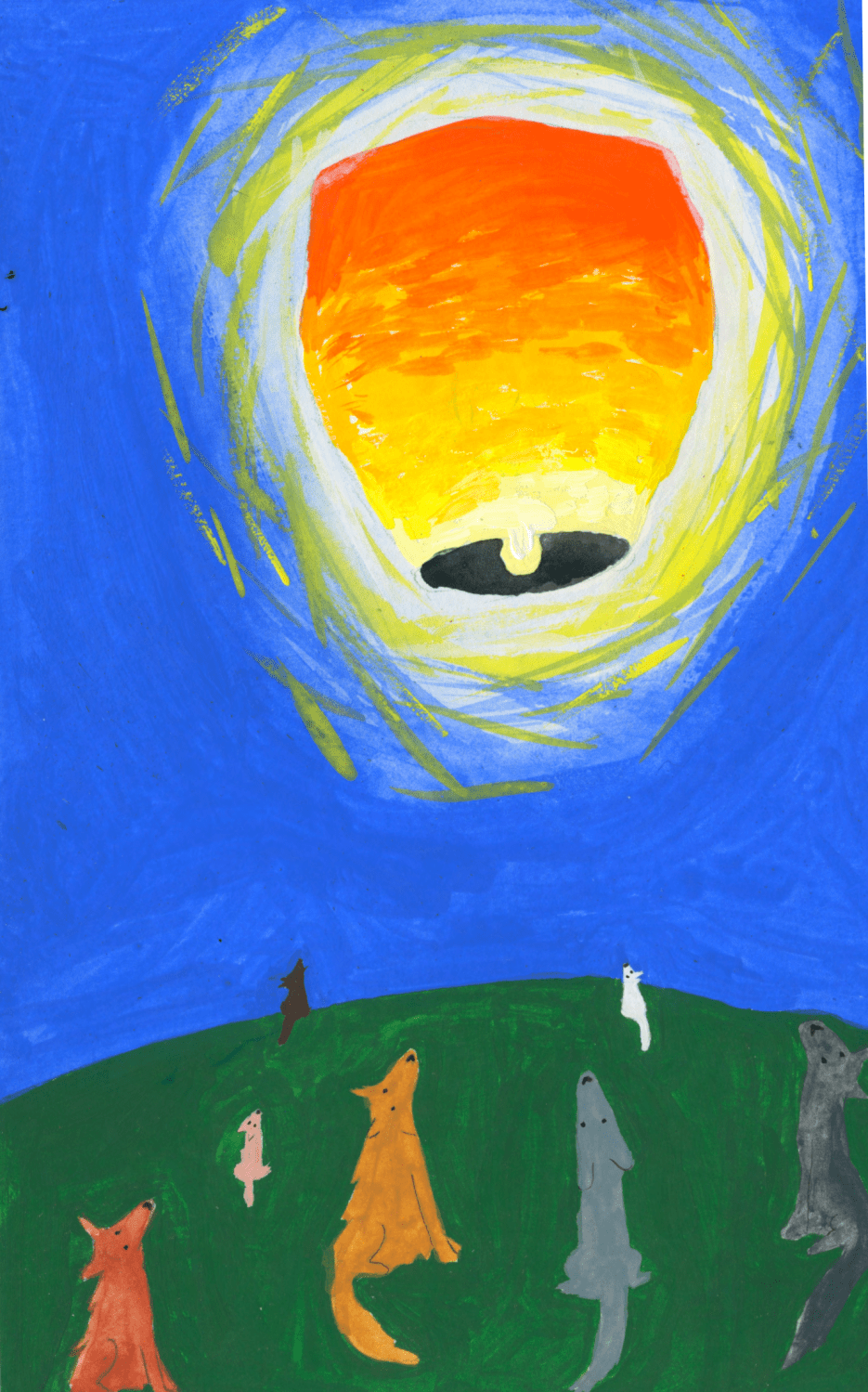
I’m really inspired by folklore and fairy tales and kids’ books – whimsical stuff. I was really into Arctic imagery at the time, and that’s where all the wolf stuff comes from. Wolves and yetis have been a big theme in a bunch of stuff I do. I don’t know why, I didn’t grow up in the Arctic or anything, but I really like that magical realism of these things existing in a world with something else. Some songs are more veiled than others. “Someday in a House”, which is the last track, it’s very direct, thinking about my current relationships, and how these people will change when we get older and all that stuff. And then some of them are just silly, like “A Lullaby for Davis and Margie”, which is about when I met this vendor lady selling sock puppets. I got two of them, one I named Davis, and one I named Margie. They’re in love, and it’s about them. It’s just tongue-in-cheek making fun of the stupid sock puppets, but it’s still emotional, and it’s supposed to be a sweet track. I don’t want to take myself too seriously, but I do find it difficult to really wear my heart on my sleeve and say exactly what I’m thinking. So throughout all my songwriting, with every project I’ve done, it’s a lot of whimsical storytelling with a deeper significance inside of it.
I’m curious about the wolf-mind virus. It’s a lingering and almost interactive imagery throughout the writing of this record. Can you explain what that is?
The lyric ‘wolves abound’ is actually, and I didn’t realize this until recently, is part of a Bonnie Prince Billy song. He says something like, ‘there are wolves about’. I don’t really remember exactly where that phrase came from, but I was like, ‘oh, he said it. I guess it’s a reference then [laughs]’. Back in the fall, I was so into doodling wolves all the time. I don’t know where it came from. but I was like, ‘oh hell yeah, let me do more of this.’ Especially the titular track, “Wolves Abound”, in my head I was imagining giant wolves walking around, stepping on cars and knocking down trees. I don’t know why I thought of them in that way, but it’s carried through. I had a creative writing class this spring, and I freaking wrote about big wolves. My professor was like, ‘why are you writing about this?’ And I’m like, ‘I don’t know, because I want to, and I get an outlet too, and it’s fun for me.’
Each track has an accompanying piece of artwork that really brings out these stories. How are these pieces of art connected to the album?
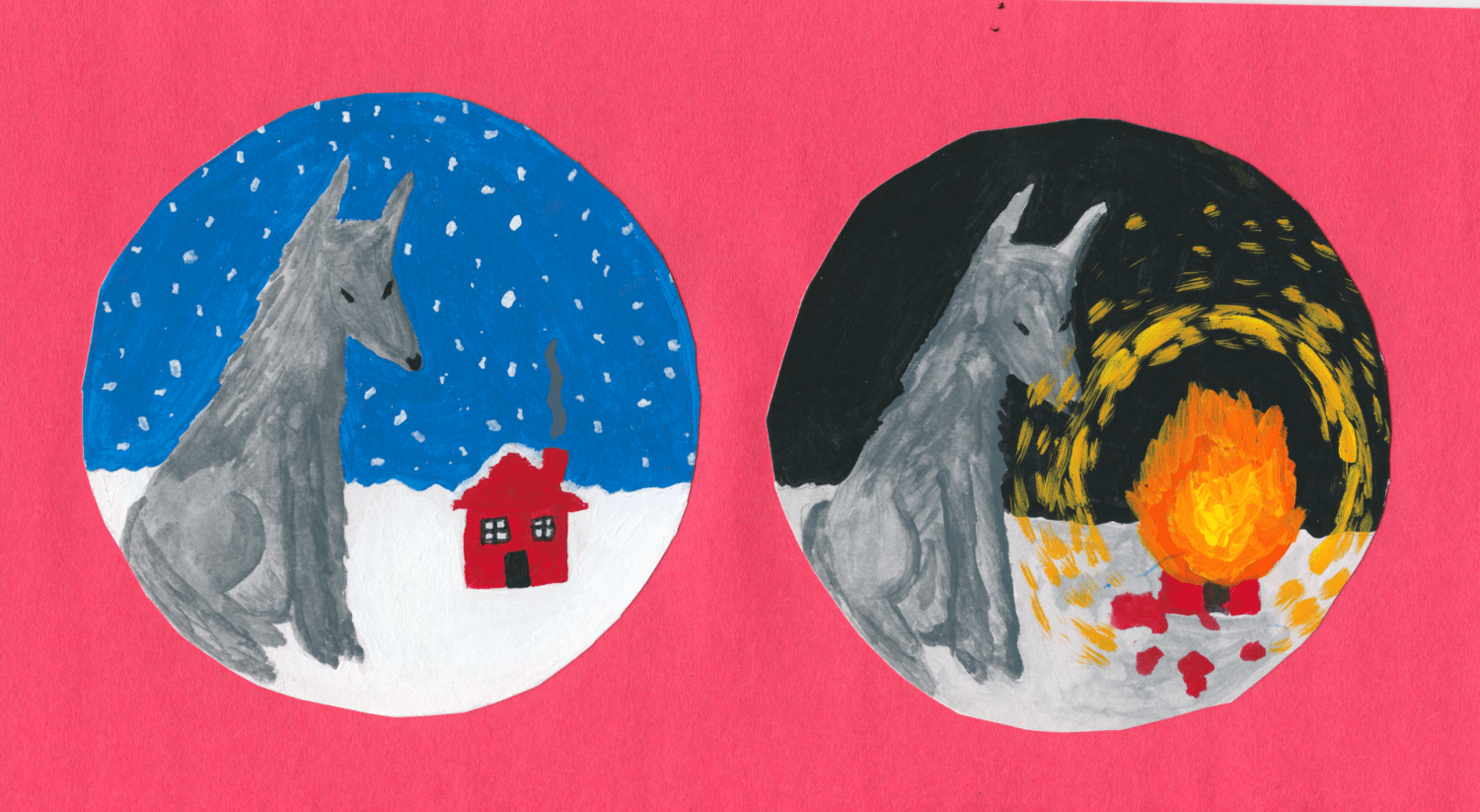
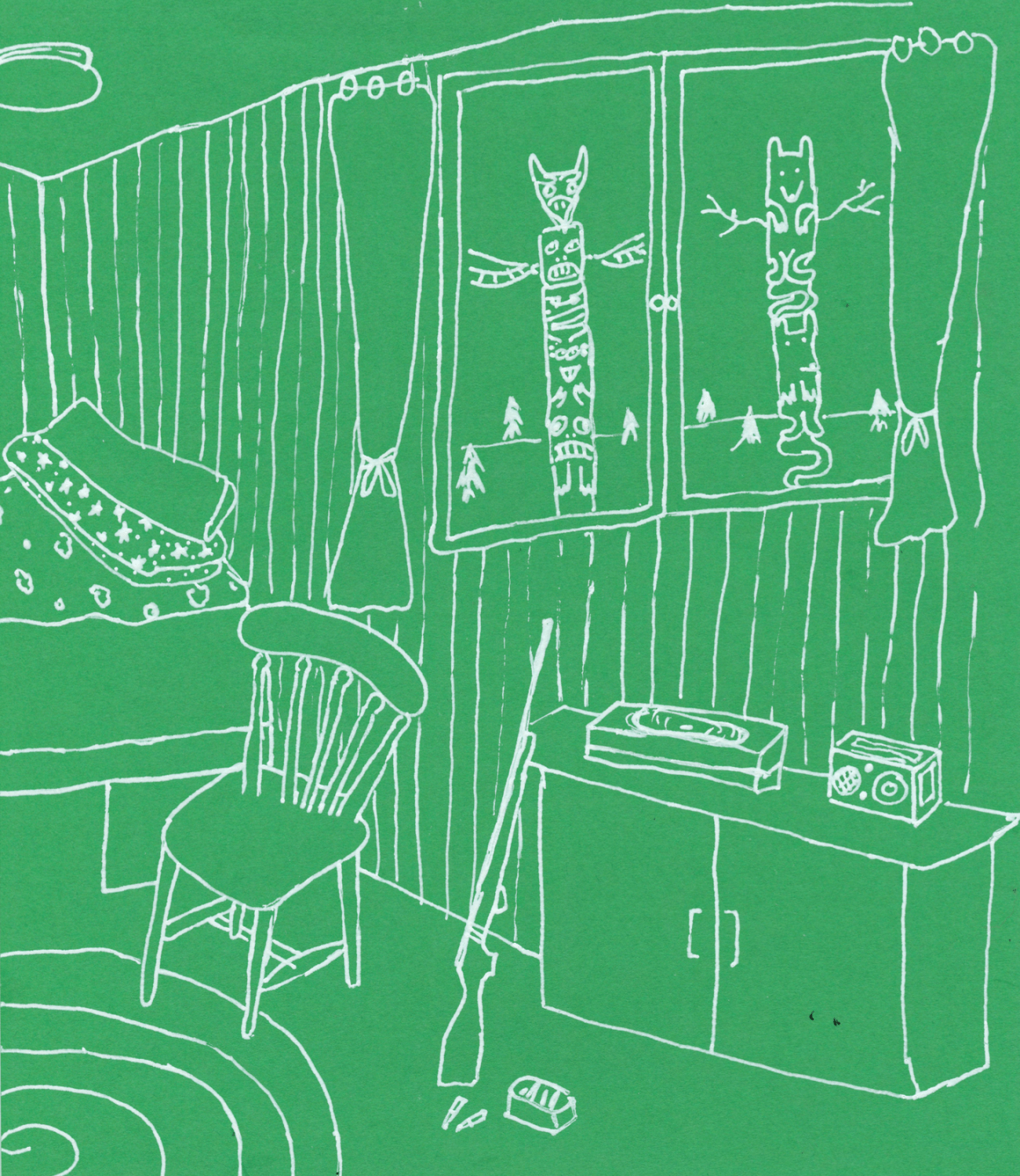
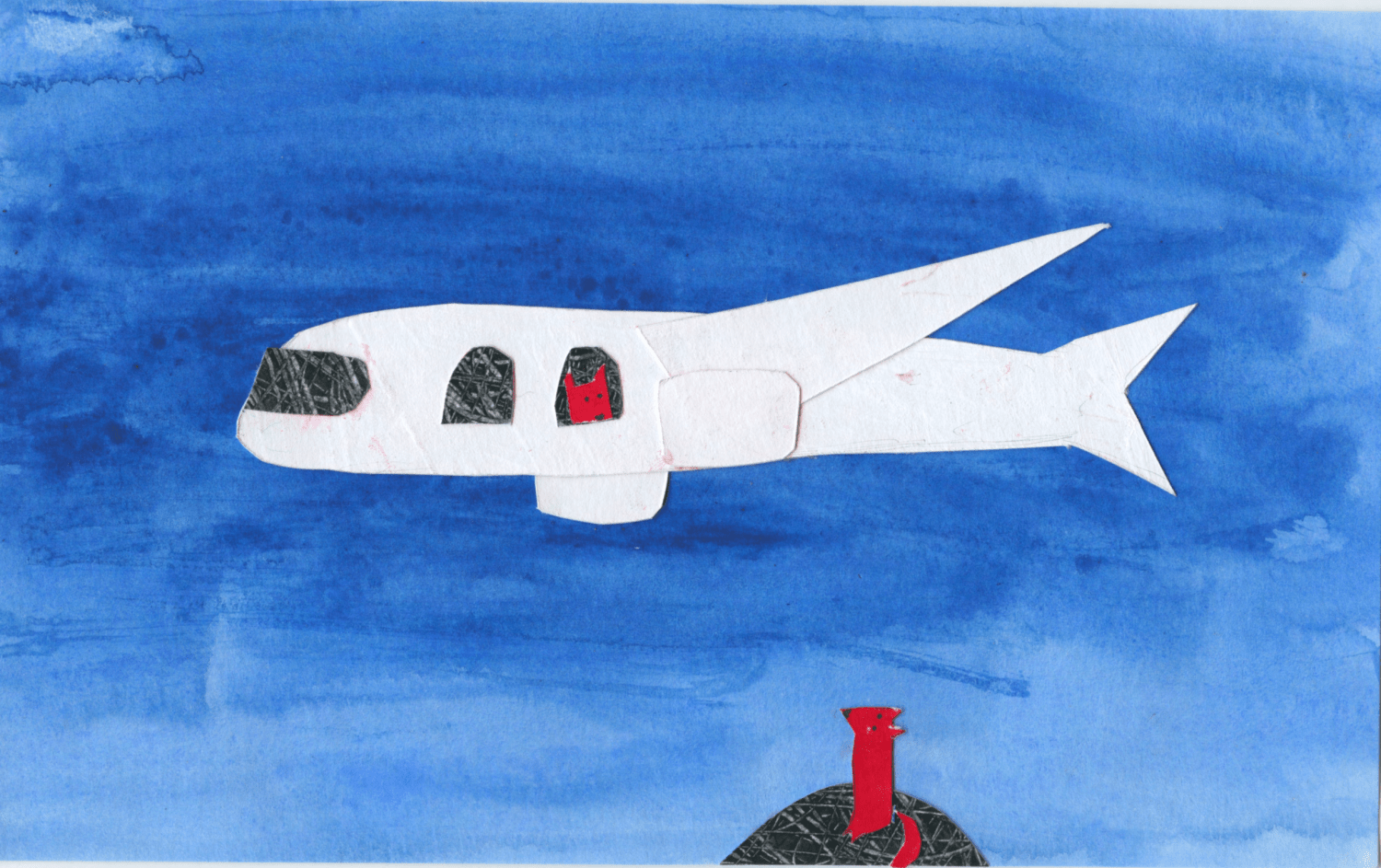
The art that I made for the song “Wolves Abound” is representational of those big creatures. That was actually a screen printing design that I did. We still make shirts of it for Deerest Friends – everything’s connected, you know? [laughs]. And then I’ve always liked painting flames and houses because it’s fun to do it. You can see that in the “Someday in a House” art. “A Lullaby for Davis and Margie” is a wolf flying away on a plane, and the other wolf looking to say goodbye. That’s me flying away from home and saying goodbye to everyone and going back to school, or the opposite – that one was me putting myself into that art. I was just having fun figuring out ways to represent the music with one piece of visual.
Looking back on it now, how does it all feel? Does it feel like the start of something you want to keep working at?
Yeah, definitely. I think this was the project that has really led me into my own artistry – feeling like my art style and what I want to write and put out. And it might not carry through for the rest of my artistic life. But for now, I think it’s representational of this phase of my artistic existence.
You can listen to Wolves Abound on Charlie Johnston’s bandcamp. Find it below!
Written by Shea Roney | Photo and Artwork by Charlie Johnston
 the ugly hug