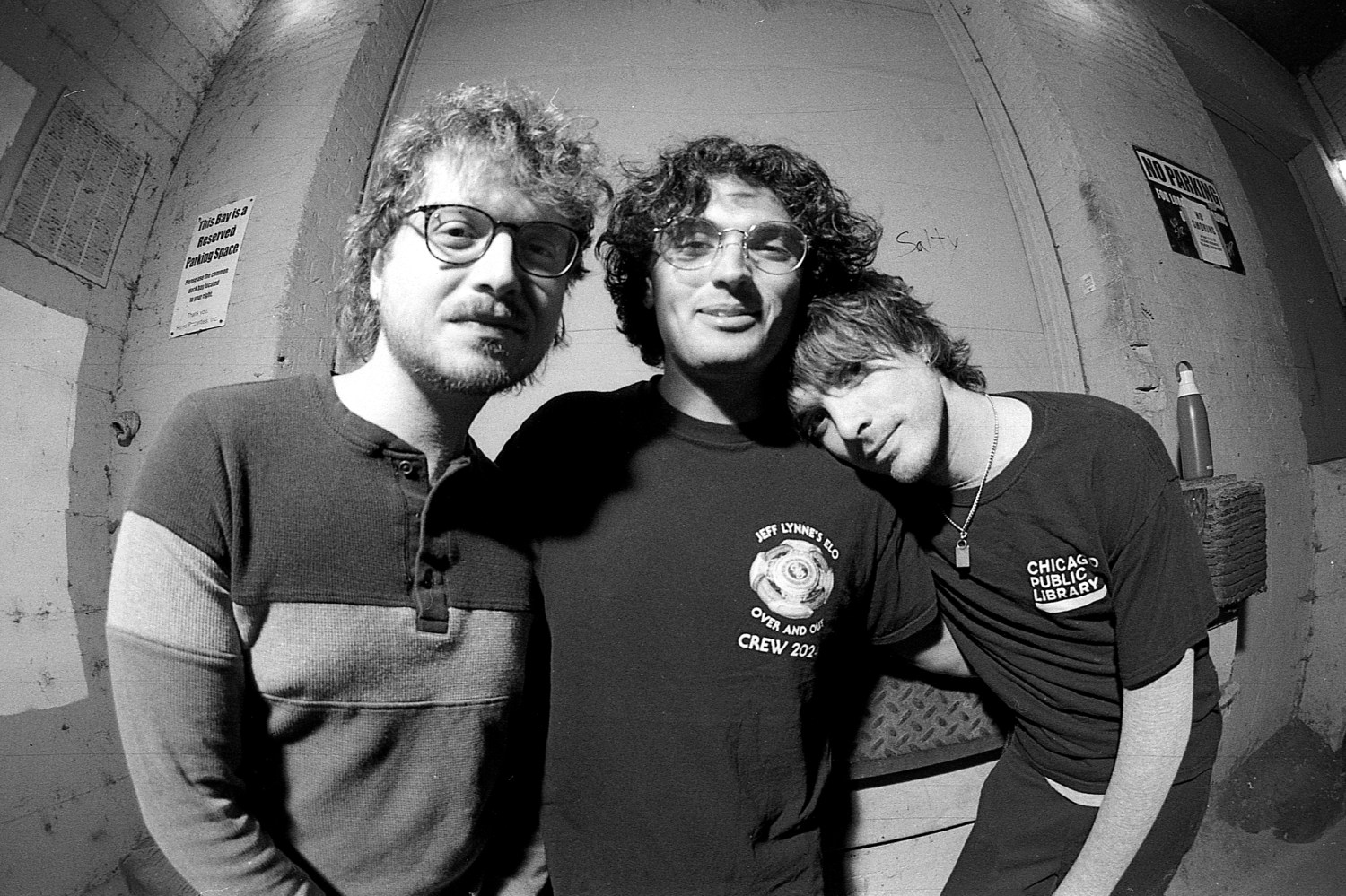
“Gerfety is pronounced Grafitti” … Tommy, the guitarist and lead vocalist of Geferty tells me, “I work at an elementary school as a janitor and one day a kid tagged the word “Graffiti” and spelled it wrong, I thought that was funny. We’re also inspired by street art.”
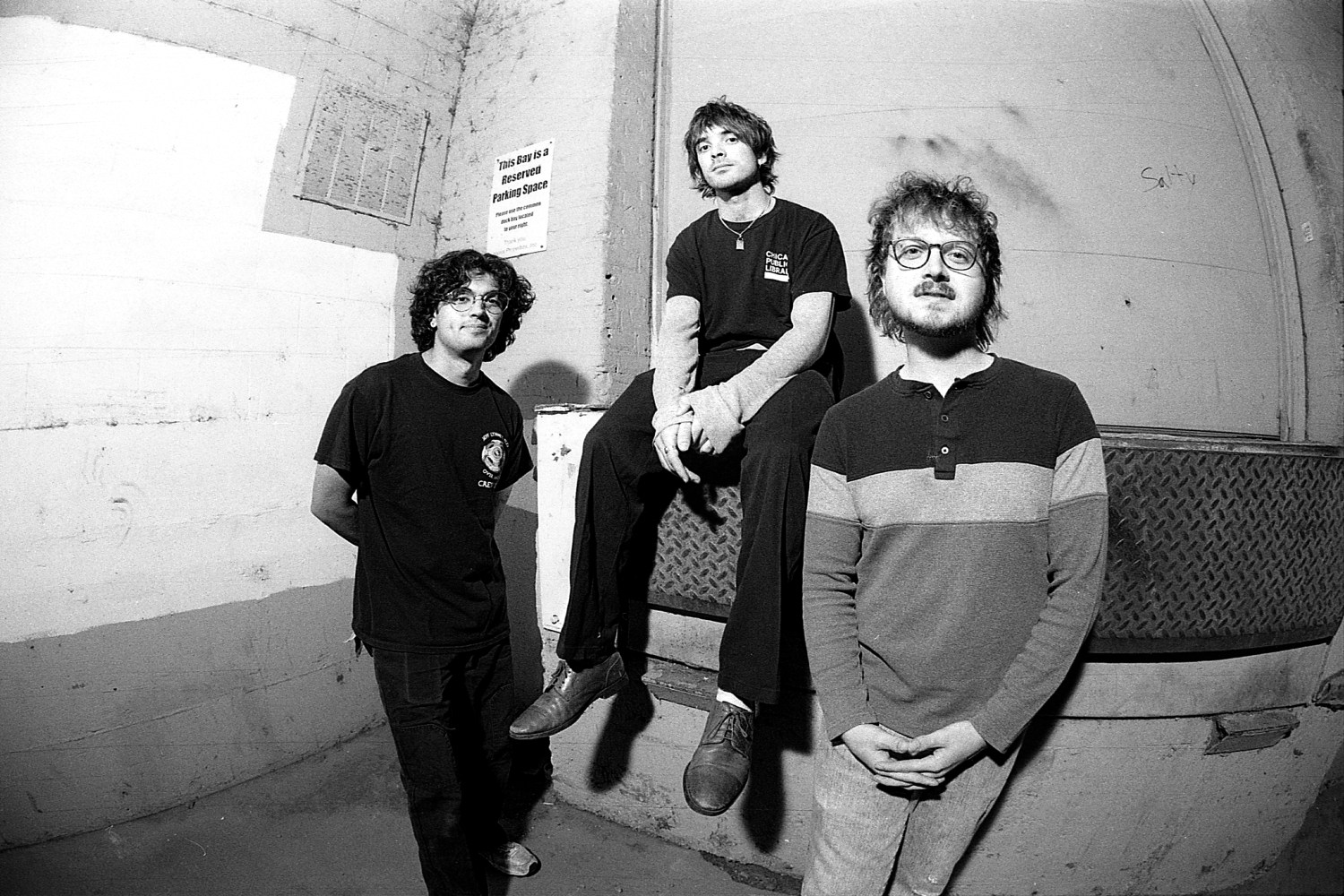
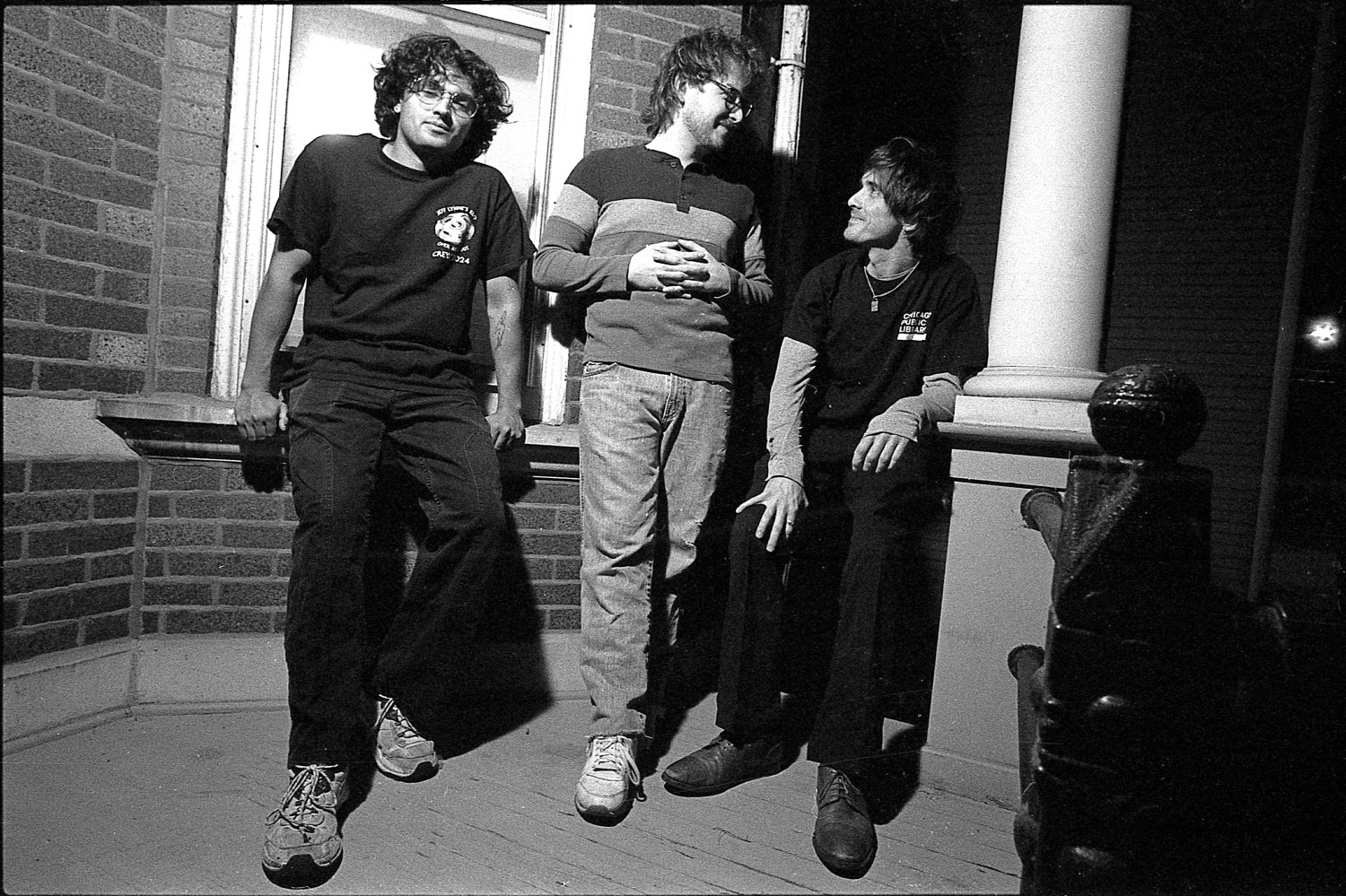
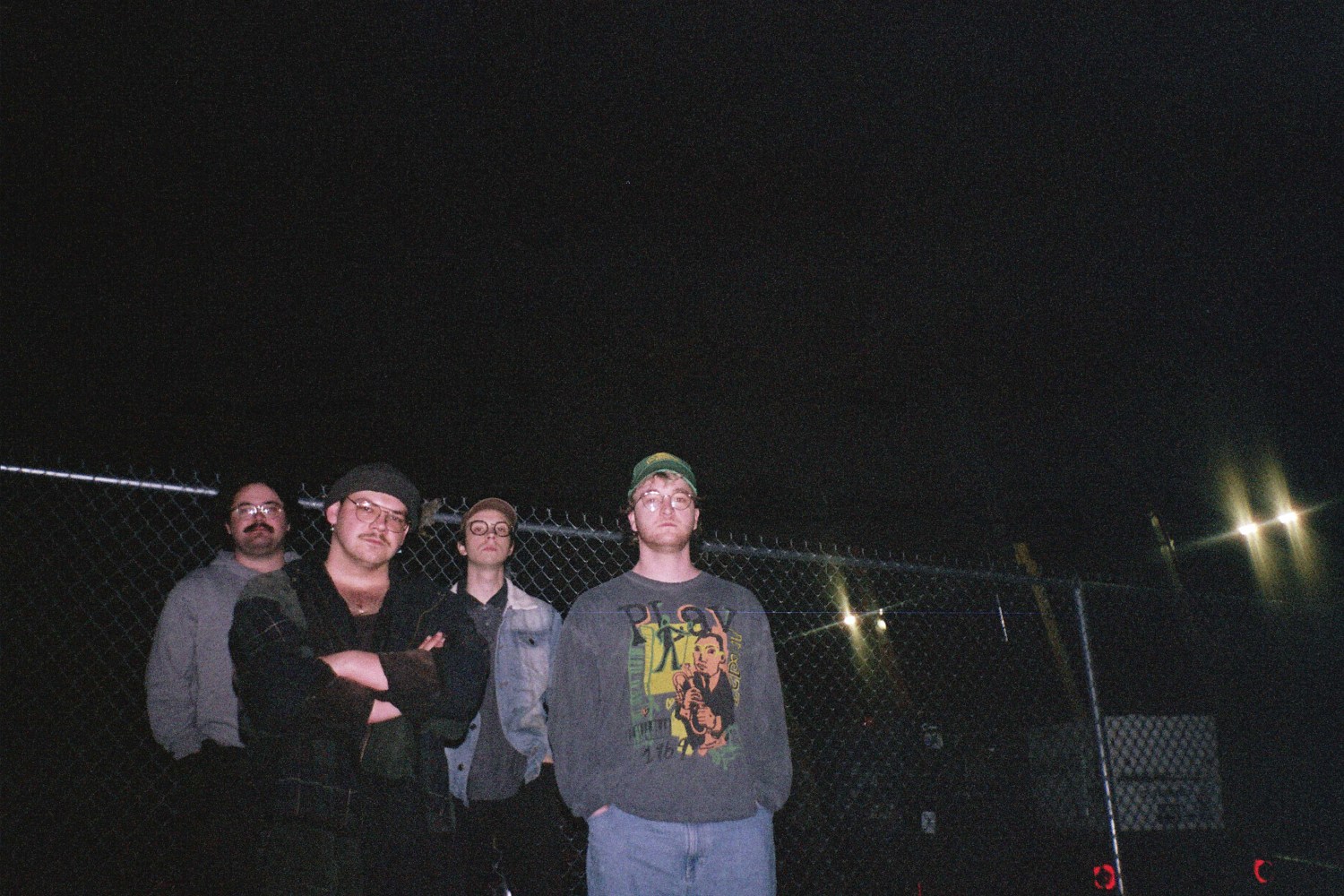
Naming themselves a nonexistent word is where the singularity of Gerfety begins. The band’s new LP Fight Songs is a testament to the craft of creative songwriting. What began as a bedroom bandcamp project in 2023, has developed into a fully fledged LP. The trio — Tommy (guitarist, lead vocals), Dominic (drums, backup vocals), and Grant (bass, backup vocals) — worked on the album for two years. Now, Fight Songs is out on all streaming platforms via Candlepin Records.
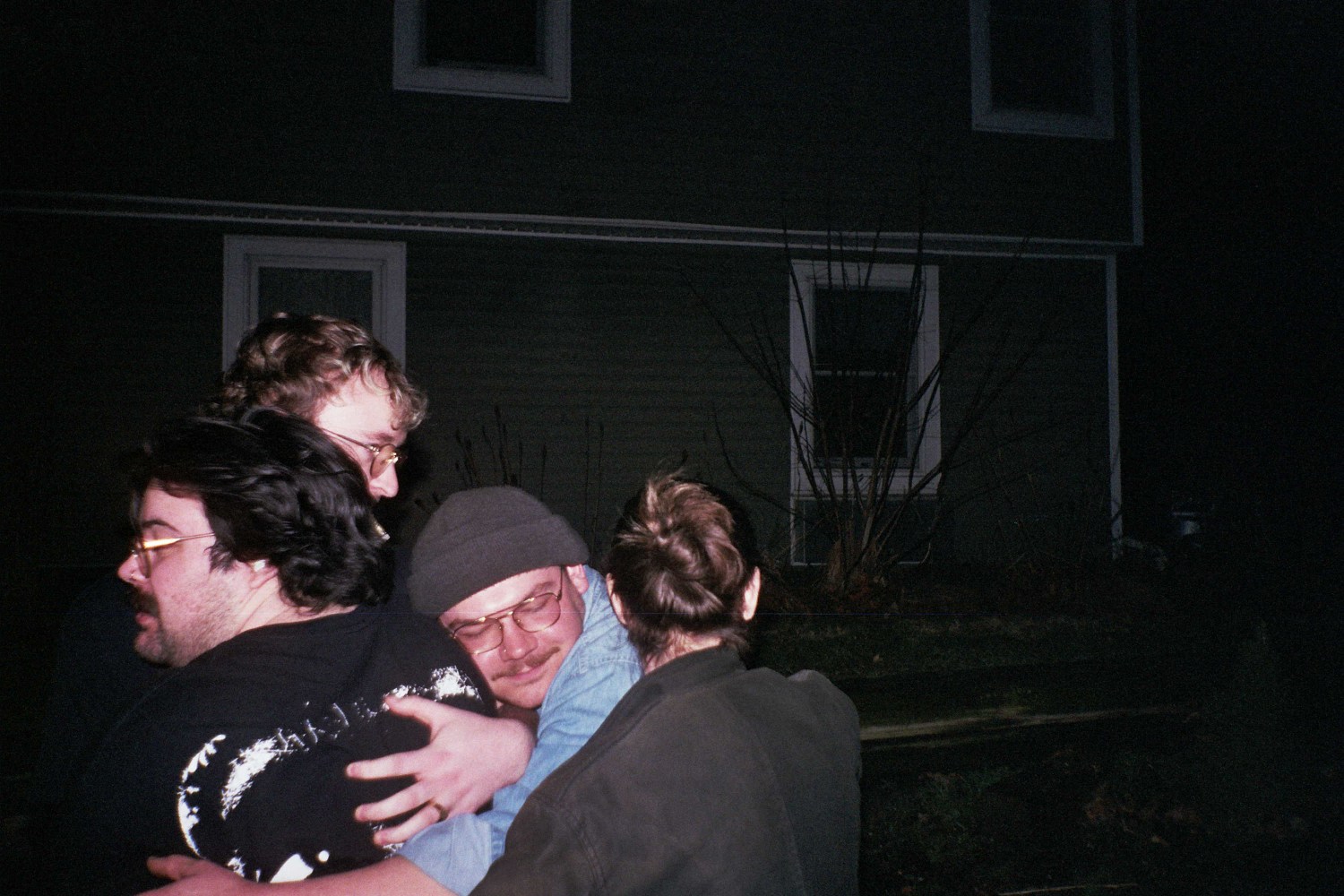
Speaking with Gerfety, it became clear how the congenial comradery between the bandmates shaped Fight Songs’ sound. Immediately upon entering the “zoom room,” Grant apologized for being a minute late because he had to jump his car. In need of some help, he Facetimed Tommy and Dominic to show him how to perform the rote mechanic job. A few laughs later, it was obvious: friendship is at the heart of Fight Songs.
Photo by Braeden Long
Your record Fight Songs drops October 24th. How are you feeling about the release?
Grant: I’m excited. I feel like it’s a very nostalgic record. Our friend Korgan did a great job of doing the mix on it, it’s very professional.
Dominic: I’m proud to have made something with love, with my best friends. I also feel very grateful and lucky to be able to create and release music.
Tommy: We started recording in February of 2023. We’ve been working on it for a while. We’ve all been excited about the album, and we’re excited to put it out. For how long we’ve been working on it, it still feels good.
Your first EP was all home recordings, did your writing process transition between creating your EP Come Back Bright, and Fight Songs?
Tommy: Yeah. We wrote all the songs together in our practice room. I usually come in with a song, essentially 85% done, and Grant and Dominic help make it a rock song. Everyone writes their own parts, bass and drums.
What made you choose Fight Songs to be the single and title for the LP?
Grant: I feel like it was one the first songs we played together where we felt in our element. Fight Songs also had a lot of different elements to it, you can hear it in the song, and it was one of the first songs we did that on. It set the tone for the record.
Photo by Braeden Long
Throughout Fight Songs, you incorporate a variety of sampled sounds—from bird calls in “In the Movie” to lo-fi textures in Into the Bark, which remind me of Smog’s debut album Julius Caesar. For me, these choices create a sense of intimacy and closeness with you guys, the artists. What inspired you to include these kinds of samples in your work?
Dominic: It was all Korgan’s idea. He produced and did the synth work on the album. When we were recording, Korgan had a mic on the entire time we were recording and would record everything. We called it the “fuck track.” Sometimes we’d mess around just to get cool sounds.
Photo by Braeden Long
Because most of the synths and samples are done in studio, for upcoming gigs, how do you translate Fight Songs live? Do you try to stay true to the recordings?
Tommy: We make up for the lost instrumentation with whatever energy we bring to the performance; sometimes high, sometimes low. Grant likes to dance around on stage and we all like screaming in the mic when we’re supposed to be singing pretty. We’ve found a cool way of translating the songs live by playing with as little as possible, no pedals or anything. Sometimes there are woodblocks or shakers. Maybe that’ll all change, but for now, we have a lot of fun filling up the space with chaos or quiet.
What’s next for Gerfety?
Tommy: We’re playing a few release shows. We have shows on Thursday, Saturday, Tuesday, and the record comes out on Friday. It’s exciting.
Grant: We’re also writing what’s going to be our next record right now and plan to record it this winter.
Tommy: Gerfety is now a record only band. Bring back the long lost art of the record.
Fight Songs is out today, and you can pre-order it on Cassette via Candlepin records.
Written by Maddie Breeden | Photos by Braeden Long
Last month, Lafayette based three piece Kaleidoscope Crux released single “Galactic Door”, a gloomy swirl of rusty guitar, textured samples and fuzzed out yearning. It was the first single off of Through the Portal, their debut EP out late this summer via Julia’s War, Pleasure Tapes and Candlepin. If approval from a sludge-lovers holy trinity of DIY tape labels was not enough to lead you to their music already, Kaleidoscope Crux is back today with their second single, shredding through a state of emotional fatigue on “Guided Away”.
The tone of “Guided Away” is instantly set with corroded vocal harmonies burgeoned by walls of heavy grungy goodness as Max Binet proclaims “it takes everything I have to keep holding on, hanging by a thread”. Sonically, the track mimics a sort of breaking point; a state of overstimulation amplified by blistering guitar riffs, unbridled vocals and tense percussion. “Self medication creeps into a lot of my lyrics, and this song is no different”, Binet explains of the track. “It deals with waking up and realizing that you’ve made an ass out of yourself. I came up with the first few lines during a shift at a kitchen job in early 2024, after a night that ended in a particularly chaotic manner.”
You can follow Kaleidoscope Crux on Bandcamp and check out the music video for “Guided Away” below.
“We’re informed by the dump we play in,” Spencer Morgan amuses towards the end of my conversation with Devils Cross Country. It’s kind of a beautiful sentiment, though in no way a hyperbole – the location where the band currently plays in Cincinnati neighbors a “Recycle America” facility. “It’s just piled sky high.” Connor Lowry explains. “The other day it looked like it was going to spill onto the street. A bunch of washing machines and plane parts.”
It is natural for a band to grow into its sound, and for their discography to reflect shifts as they inch closer to the music they are meant make. This can be a gradual phenomenon, or it could be as radical as a Frank Ocean remix project flourishing into a robust “four and a half” piece indie rock band. Devils Cross Country exists in the latter, and as drastic as that sonic shift may sound on paper, the project’s 2024 debut record affirmed that their current identity is by far their most authentic. Possession is Ninetenths tells a story of desire in its most innate form, the ethos of the album contrasted by a swarming of maximalist sound. The record is a tightly packed nine tracks, warped by a sea of synths and abraded by rusty samples that peel and chip at the ends. The listen is guided by a raw honesty, simulating the complexities of intense inner conflicts and and guilt-drenched longings through experimental song structure.
Amongst the many facets that shaped the current disposition of Devils Cross Country, the most salient was Patrick Raneses’ return to Cincinnati. Home to an animated post-punk scene, it was there that he enlisted drummer Spencer Morgan and bassist Connor Lowry, the three of them planting the project’s early seeds into hardpan Ohio soil. They shifted to a heavier sound – an outcome of existing in an environment where noise is as much a necessity as it is a stylistic choice. “When you’re in these environments, you physically have to play louder because some dude’s doing a Rob Zombie cover underneath us and there are screeching trains just ripping through outside,” Raneses tells me about the city’s impact. It was in these lighthearted moments and deprecating jokes that the members of Devils Cross Country’s relationship to Cincinnati felt the most fervent; as the three of them reflected on cracked foundations, greedy landlords and of course, “Recycle America”, their persistence to create and sheer love for their scene came across the loudest.
We recently sat down with Devils Cross Country amidst their recent east coast tour to discuss the history of the project, “trudge” music and their experience in Cincinnati.
This interview has been edited for length and clarity.
Manon: I know Devils Cross Country began during lockdown, I would love to start by hearing about the project’s initial roots and how it has evolved over the last few years?
Patrick: So I was in a band called Stem Cells at Fordham University with my friend Jake Lee and Frost Children. The last show we played was a day before lockdown, we did an acapella cover of “Numb” by Linkin Park, so we joked that we cursed the world with that one. Jake moved back to Phoenix and after graduation I moved back to Cincinnati, but we had always worked on remixes and that sort of stuff together so through the pandemic I was making music and writing songs that were definitely more indie rock oriented. I’ve known Spencer for a while, we were friends in high school and we started jamming together in 2021.
Spencer: Devils Cross Country became a band in 2022, when [Patrick] moved into our house. We lived in a house venue in Cincinnati, it was called “The Lawn”, it had AstroTurf in the basement that someone had stolen from the football stadium at UC and they kept it in the basement, at least that’s what the landlord told me when I moved in. Pat was looking for a room and then moved into our spot and the project just happened from there.
Patrick: That’s where Lawn came from. It was the perfect practice space and then we recorded that first EP there.
Manon: Do you still live in that house?
Patrick: No, they kept jacking the rent
Spencer: It doubled since we moved in, and the conditions were not worth it. Our house was falling apart and there were cracks in the foundation.
Manon: Okay so now you’re on your first tour since you released Possession is Ninetenths. Your music now has a lot of different layers and samples to it, how have these shows been, and how do you translate your recorded songs into a live format?
Patrick: We don’t feel super tied to like the recorded music, we are flexible and I feel like every show we have played has been different. We used to have two other guitarists in the band, and then we went to a three piece and now it’s kind of back to a five piece. Informally it’s a four and a half piece. I had come up with this plan a year and a half ago called the prosthetic plan, where we just add ’em on like extra limbs and it’s actually worked for the most part.
Our friend Nina, who is in another band in Cincinnati called Spoils, plays violin with us live now. It’s awesome, she was supposed to come on this tour with us but she got Covid on Sunday. I would say the past few months we’ve been working on a lot of new songs, we have a banjo guy too, Patrick number two, he is also named Patrick. It’s cool because we’re not reliant on them, but when they pop in it adds a lot.
Connor: Yeah, Nina and Pat can just jump into whatever we’re doing. Nina will just pick up a new song and instantly play the best she possibly can. It’s awesome, and a lot of what she does is straight improvisation.
Spencer: They need no instruction. Patrick and Nina are in another really cool band called Five Pointed Stars, it’s a slightly experimental dance project.
Manon: You mentioned you are working on some new music?
Patrick: Yeah, we played a couple of our new songs last night actually. I am trying to be more melodic because a lot of the songs on Possessions is Ninetenths are intense, so the new music is a bit happier and has more of a pop center, but still true to Devils Cross Country. I feel like Lawn was this bedroom pop, slacker rock EP and Possessions is Ninetenths went in a completely opposite direction. With the new stuff I want to push hard in both those directions.
Connor: Maybe in the middle somewhere
Patrick: No, other way. Stretch hard on both ends. Sometimes I’m like what genre are we even playing right now.
Spencer: Oh we’re playing trudge. That’s what we call everything, it’s a lax genre so we invented trudge. It’s a weird blend of guitar and electronic music and it sounds kind of blown out.
Manon: I like that, it beats you telling me some hyper-specific ‘-gaze’ with like four words hyphenated before it.
Connor: I feel like I struggle to understand any genre at this point, I just cannot process that information in my mind, so trudge makes it easier.
Spencer: It’s kind of just a lack of any real definition.
Patrick: We had been filming a music video for a song off Lawn called “Fishbone”, and were just driving back and some dude had gigantic boots on.
Spencer: And I was like, “that dude is trudging”
Patrick: Then the word just got stuck in my head.I feel like genre is not super useful anymore, but region can be. Like “Philly” music, that can be kind of trudge.
Manon: How would you describe the music in Cincinnati?
Spencer: There’s a big post punk scene there, a lot of hardcore guys. Corker is the other band I’m in, and a lot of the bands share members. The Surfs are there, Crime of Passing, also Feel It Records just moved there. Also, there are a lot of fresh faces, a lot of young kids making good stuff.
Manon: Do you feel like being in Cincinnati has a big impact on Devils Cross Country?
Patrick: Yeah for sure. When I started the project with Jake Lee, it wasn’t rock music. We were just fucking around, we made Frank Ocean remixes. Then [Spencer] put me on drums and I was in a hardcore band before this. Also, when you’re in these environments, you physically have to play louder because some dude’s doing a Rob Zombie cover underneath us and there are screeching trains just ripping through outside.
Spencer: They sound beautiful
Connor: Yeah they harmonize sometimes, it’s pretty cool.
Patrick: Some dude said it sounded like the studio was burning down where we were.
Spencer: We’re informed by the dump we play in
Patrick: Yeah, there is literally a dump right next to where we play
Spencer: Yeah recycling dump
Connor: Recycle America. It’s just piled sky high. The other day it looked like it was going to spill onto the street. A bunch of washing machines and plane parts.
Spencer: We are just practicing in the most bombed out areas of Cincinnati, but that’s cheap rent so it works. There are so many DIY spaces in Cincinnati, less houses these days but lots of gallery and warehouse spots.
Patrick: When we moved out of the lawn, we didn’t have a place to practice until we moved into this new place. We had to take a weird break, because you need space. I feel like a city’s DIY scene is so dependent on being able to have an affordable spot to make and play music. You need space to be loud.
You can listen to Possession is Ninetenths out everywhere now!
Last month, Devils Cross Country announced their first full length album and shared the fiercely catchy single “San Miguel”, titled after the beloved Filipino beer. The Cincinnati based band nails the divine grit of Midwest post-punk so well you’d never believe the project began in the pristine realms of Zoom mid pandemic, with frenzied hours of Google Drive demo exchanges between initial members Patrick Raneses and James Kennedy Lee. In the last few years, Devils Cross Country graduated the confines of virtual meeting rooms and is now a live constituent in the Cincinnati scene, featuring Spencer Morgan on drums, Connor Lowry on bass, and several rotating collaborators on strings, synths, and stretched samples. Today, they’re back with the second single off Possession is Ninetenths, out via Candlepin on December 7th.
“That person takes again, you let them take again — repetition, a musical act, as an offering. Romantic stuff, weirdly,” Patrick Raneses explains of “Second Sin”, a hazy, slacker rock track that bulldozes notions about ownership. The song explores a relationship with a thief, unfolding a narrative where the act of stealing a possession back and forth yields more fulfillment than possessing it in the first place. Perhaps a commentary on materialism, perhaps an unconventional love song, it’s a maverick of a track both lyrically and sonically.
While its initial melodies have softer edges than the jagged, guitar heavy moments of “San Miguel”, “Second Sin” is sneakily energetic, kindled by surging drum sequences and dense bass lines. Layers of creaky synths, swirling guitars, and warped vocals follow a recipe of twinkling distortion that evokes contemporary Pennsylvania shoegaze, but at its core the track is shaped by local influence, with a grisly sense of Cincinnati post-punk rawness welded into each note.
“I don’t know, it kind of goes back to, ‘why do you listen to depressing music?”, Kauffman brings up. “I think it’s more about a connection. If other people are feeling that, and you know that, why not talk about it?”
Last month, Abel released one of the most brash and heartfelt records of the year in Dizzy Spell. Fronted by Isaac Kauffman, the Columbus-based band took a much more collaborative approach to writing and recording, developing their sound further into a collective mix of brutal distortion and folk solidarity that reaches to the heart of the Midwest underground.
I recently got to catch up with Kauffman to discuss the record, shuffling through the teeth rattling noise, broken pop hooks and heart wrenching sincerity that makes Dizzy Spell a record worth holding on tight to.
This interview has been edited for length and clarity
Abel
Shea Roney: Dizzy Spell marked a much more collaborative approach to anything Abel has done before. Where did you see shifts in your process? Did you find any hidden strengths when collaborating as a full group?
Isaac Kauffman: Just in terms of sheer layering, I think there were a lot of shifts, because I think in the past it’s been pretty cut and dry (4 track type recordings and stuff). But now there’s room for so much more play, and honestly, I feel like if anything, the more we implement collaboration, the more and more we’re figuring out who should be doing this and who should be doing that, and who’s really bad at this, and who’s really good at that. So I mean, I guess both strengths and weaknesses, but I’d say we’re learning a lot about our strengths in terms of ‘can we riff on something?’ or ‘can we actually improv or not?’, that kind of thing.
SR: These songs are a mixture of both songs you have been playing for a few years now as well as newly written ones. How did this collection come to be? Where do the older songs sit with you now as they are finally released?
IK: First and foremost, there was “Rut” which we originally dropped back in 2021. That just kind of started this phase where I wanted to create more gazy atmospheres and just really see what I could do with distortion and producing distortion. In the past, we’ve been really clean cut, and after “Rut”, we were trying to figure out where to go. I feel like that’s kind of where this came about, because we definitely had the itch to make more singer-songwriter type songs, but I think more so, we just wanted to really advance our live sound to a studio and to tape, you know, to something final. The past two years we’ve done a few tours and just doing that made us realize that we’re more so of a live band and we want to make sure that that comes across in our recordings.
SR: So has playing these songs live help develop and flesh out what we hear on the album? How quickly do you begin to play a song live once it has been written?
IK: We usually play stuff pretty quickly. We’re already playing shows where 70% of our set isn’t even Dizzy Spell anymore. Most of these songs we were able to develop live except for “Wanna”, just because it was originally released two years ago before that EP (Leave You Hanging) with Candlepin and it was way more hyper-poppy. So playing that live I think we realized that we wanted to go a more noisy route; like blow up our speakers type deal at the end. When Brynna [Hilman] joined the band, we decided, ‘okay, we need to sit back and actually figure out how to make the EQ spectrum work on all of these amps’. So I think “Rut” evolved simply because we got to evolve our tones.
SR: After the album was released, you said on an Instagram post, “I hope you find peace within the noise”. I find that to be a very deliberate and understanding statement towards these songs as a listener who gets to experience them, first from a distance, and then fully enveloped. Where do you find peace in the noise?
IK: I appreciate that first off. Secondly, I think I just find peace knowing that I was able to create something and was able to get any emotion outside of my body. I think it’s very peaceful to be able to play any instrument, or even sing. I think that always just brings peace to most creative, or at least musically inspired people. So yeah, in the process of creation, I found a lot of peace.
SR: As the primary producer and writer, did you find it important to play with the different dynamics and styles throughout the album? What was the thought process of going from shoegazey walls of sound to twangy acoustic porch tunes?
IK: Oh man, it was definitely a challenge. First, I think it was just a matter of really trying to figure out where vocals laid. I think a big part of Dizzy Spell was finally being confident with my voice and figuring out how to use it. I feel like in the past, especially in a live setting, I was very uncomfortable with my voice, but once we got to these songs I was very comfortable and I wanted to call that out in some points and really push myself vocally on this.
SR: We are big fans of Mark Scott and the whole villagerrr crew over here at the hug. He is featured on the song “Placebo”, which is quite a shift in the overall sound and experience of the album. Can you tell me about that song and how that collaboration came to be?
IK: There was a point in time where we still didn’t know how many tracks we wanted on the album. I think I just wanted everyone to weigh in and John [Martino] just ended up expressing that he wanted to potentially write something. A week or two later, he sent me a voice memo and it was just that guitar riff with that main line over it. I was like, ‘okay, this is cool, I also hear Mark on this.’ That was like a week or two after I’d already reached out to Mark just in terms of collaboration, because I wanted one or two other local artists on this. I had shown him a few of the tracks, and he was like, ‘I don’t really know where I’d fit at all on this’, and then John sent me that track and it worked out.
SR: There are a lot of moments where you describe global issues told through your own point of view and observations. Was approaching this writing lens through your own critical life moments a challenge?
IK: That’s a tough one, because I feel like I tried to, in the grand scheme of things, distance myself from my lyrics, and I try to see my lyrics as more of a way for others to interpret it however they want to interpret it. But I think over time, I also look back on my lyrics as more of, not a journal or diary, but kind of just like a placeholder and time of emotional check-ins with myself. A lot of these songs are framed around very specific mindsets and moments that, in passing and reflection, aren’t that heavy, but the heaviness comes from the repeated listens. So I think with time, I’ve grown more attached to some songs, and others I’ve almost outgrown. I think it kind of speaks to the broader idea that you’re speaking to where it just seems like there’s always distance involved. It’s my brain’s simplification of feeling lost in the modern day world and I think we’re all just feeling very disconnected from everything.
Abel
Do you guys have anything coming up that you are excited about?
We’re working on a tour in October which will just be a little 5 day tour with Devils Cross Country out of Cincinnati. We’re playing with Dogs on Shady Lane on August 28 at the Basement. Other than that, we’re playing new songs. We’re writing stuff all the time. I’ll probably release another rat race ∞ type thing with more poppy songs or just stuff we’re not as final about. Definitely lots going on.
Written by Shea Roney | Feature Photo by Dylan Phipps