Every Wednesday, the ugly hug shares a playlist personally curated by an artist/band that we have been enjoying. This week, we have a collection of songs put together by UK-based group Bug Teeth.
Starting back in 2018 as a solo project by front-person PJ Johnson, Bug Teeth has expanded into the ethers, a functional force of members and a whimsical array of sounds and spirits that culminate in the natural beauty all around us. Their latest EP, Lucky Me, Lucky Mud transcends any defined boundaries, showing a band that has been established in their strengths while also embracing what may be beyond; ecstatic percussion, inventive tension, experimental atmospheres and literary thematic excursions all brought to life within a forceful DIY spirit. With the release of a new single, “Landscaping” earlier this year as well as a soundtrack by PJ called “Things That Grow” for a film exploring the microscopic world of bacteria, Bug Teeth are in the works of finishing new music to be released in the near future.
Today, the members of Bug Teeth curated a playlist for your listening enjoyment.
“I think that it is good to want to have a community get together once a week, sing some music together, read together, do all those things,” McKenna acknowledges, a type of grateful reflection across her face as she discussed her approaching EP release show. “I have just had to seek structure and community in different ways, and I think Chicago has been very open to that.”
Edie McKenna is best known for her leading role in the Chicago-based alternative group, Modern Nun, who have spent the last few years dedicated to creating spaces built on acceptance and collective experience through music and community.
With the release of her debut solo EP, For Edie, out everywhere today via Devil Town Tapes, McKenna is leaning more into her folk roots – reliving and repurposing the words she wrote almost a half decade ago. It’s an open letter to her younger self, only four songs long, as For Edie carries past trauma with such confidence – a striking invitation into the life she lived and where she has been headed ever since.
I recently got to sit down with McKenna to discuss the new EP, learning to redefine imprinted expectations and the joy found in mutual congregation.
This interview has been edited for length and clarity
Photo by Cora Kinney
Shea Roney: What was the transition like from St. Paul, Minnesota to Chicago? Where did you find yourself in the music scene here?
Edie McKenna: I graduated in high school in 2016 and moved to Chicago to go to DePaul. I really hadn’t been on my own before and it was really hard. I ended up dropping out of college because I just wasn’t doing well, but I made my core group of friends at DePaul and I fell in love with Chicago. My friend Sophie, whose brother is in the band The Slaps, saw the music that I started posting online and asked if I wanted to open for them. That’s when I had my friend Lee [Simmons], of Modern Nun, come play guitar with me. I think that the music scene was really lacking a lot of non-cis men at the time, so I think we just kept getting asked to play shows. Not to discount any of the non-cis men bands at the time, I just wasn’t aware of them because I was so new. I always was obsessed with indie and folk music, but I thought that I would be, I don’t know, a lawyer or whatever you think you’re going to be when you’re younger. I would just play music for fun, but then it kind of kept going and now I really love it, so I just kept going.
SR: In the past with Modern Nun, your recording sessions were more of what you described as ‘collective experiences of trial and error’. What was it like when you decided to take on these songs?
EM: Maybe this is just for me, but I find recording folk music just a little bit easier because it’s a little more straightforward and I don’t mind being so cheesy. Particularly with these songs, because I wrote them so long ago, the cheesiness is abundant. I don’t care if we’re just playing three chords, that’s fine with me. Whereas, with Modern Nun, it’s just different in that the music is a bit more complicated in a way.
SR: It’s funny because you said you never thought you would put these songs out, claiming that they were ‘too cheesy’ or ‘simple’. Did you find that there came either a motivation or a need for these songs to find daylight?
EM: I don’t know, I felt like I was just sitting on them. I’m lucky to have a really supportive group of friends who knew these songs, particularly “Lava Lamp”, which was one of the first songs I remember ever writing. I just had wanted to work with Seth [Beck] (Rat Future Recordings) for a minute because we were friends outside of this. When we finally got to work together I already had those songs and thought I might as well just try it. It went so well that I was like, why not make it a whole project? This whole thing has been a ‘why not’ sort of situation.
SR: Did the songs go through any changes from when you originally wrote them?
EM: They didn’t really undergo many changes, but I have been really under the influence of distortion, like Neil Young or MJ Lenderman vibe lately. I was just craving to add that to the folk music because I just think it’s so fun. We definitely tweaked them a little bit, because I’m not really a riffer and I wanted Seth, Zack [Peterson] and Eric [Beck] to be able to play off it, so we expanded some of the bridges and the intros and outros, definitely. But the lyrics stayed the same.
SR: Throughout this EP, you write from your own lens of some pretty difficult subject matters, especially on songs like “Kick in the Shin” and “Hail Mary”. What was it like to revitalize those moments and those feelings? Has revisiting these songs sharpened your understanding of your path of healing at all?
EM: I don’t know if I’m there yet, but I definitely have been feeling like I am almost ready to move on from these things. And in order to move on from them, I wanted to put these songs out. I do feel like I have processed these events and feelings and now when I write I don’t talk about them as much anymore. Like this EP was me writing about those experiences. When I named Modern Nun, that was about those experiences. But it is interesting to talk about it and I feel really proud about how far I’ve come. Songs are so specific and I think the best songs in my opinion are really specific moments or stories. It’s like time travel to those moments, but then I get to add something that I’m interested in now, like distortion, and it becomes a merging of two times in my life.
SR: “Swinging” feels like you are cutting yourself some slack, almost a brief grace period on the EP. Can you tell me about that song?
EM: That song is so gay. I’m sure it is definitely something that a lot of queer people experience, like when it’s two people not raised as men trying to make a move on each other. I remember it was impossible, the first date was like a week long and nothing happened, and I was like, ‘okay, that’s kind of the vibe.’ But it gets easier as you get older. That’s kind of what I was writing about. It’s so cute and it’s fun and I’m proud of it. I wanted to release it because I knew it is catchy, but whoa, I cringe. Just a little. Just a little.
SR: There are a lot of instances of longing in these songs – to be accepted, to be loved, etc. Do you feel like you have caught up to those feelings?
EM: No, I don’t think I’ve caught up to those feelings. I definitely think I’ve found my people and I’ve found it in other ways and in moments, but I think that it’s eternal. That feeling was so strong in high school and in early college when I wrote these songs, because, particularly being queer, it was just like, ‘I’m never going to act on these things’, or even, ‘I’m just going to pretend… ’. I also have extreme anxiety, so I get those feelings confused – excitement or yearning with like genuine fear, I get them really confused, so I think it makes the feelings stronger. But I think if you don’t have something to yearn for, what’s the point? It’s like having a crush on life, you’ve got to have something to be excited about it.
SR: While still talking about this longing, did the use of physical placeholders in your writing, such as sunglasses, a lava lamp, or even a malleable prayer make things feel more obtainable, or even just more realistic?
EM: My favorite kind of writing is just very straightforward because I really like someone who respects the intelligence of the reader and the listener. When I was first starting to write songs that I liked, the easiest way to do that is to just be observant and recognize, ‘this is my point of view’. I definitely think that it made the answers more realistic. I think using objects really just grounded me in the present moment because I felt so out of control and in the clouds in my life. They brought my answers into real life and made everything seem real at a time when I was really existing and hiding in my head.
SR: You grew up very religious, and I won’t ask you to dive back into it, but growing up in the foundations of congregation – which at its barebones is people who believe in the same thing/entity – have you found a draw to that same kind of belief when it comes to the local music community here?
EM: Totally, there are a lot of similarities. The things that I grew up doing, in theory, were amazing. Getting together once a week, singing, seeing some art, being with your family, being with other people, reading, talking about the reading, eating together – structure. I think I really struggle because a lot of things in my life I feel like I went from zero to a hundred. I went from not knowing what being gay was and going to private school where you got in trouble for doing the wrong thing always, to immediately smoking weed, etc. I just crave structure and I crave a very rigid routine and seeking that in my adult life has been really complicated. I had to seek structure in different ways through my friends here, which has been a huge learning experience because it’s like, ‘okay, I am living my truth. I am doing what I thought I would be doing just in a different way.’ That’s really nice to think about.
Written by Shea Roney | Feature Photo by Clare O’Mahony
For Edie is out every where today with a limited run of cassettes via Devil Town Tapes
I watched her brave out from under the awning of the Cyclone into a torrential downpour. As I maneuvered keeping my camera safely under an umbrella, a drenched Claire Ozmun sheepishly paused her posing to let a far away family pass by. I found it amusing that even in a massive storm, Claire’s main consideration was pulling too much focus. I wonder if her grunge forefathers would share the same anxiety in the midst of this moment.
I am a photographer and I love working with musicians and getting to know them through my work. A few months ago I reached out to Claire Ozmun about taking artist portraits. In that I stumbled into the fortunate position of becoming her friend and meeting the noble folks of COB, aka Claire Ozmun Band. Everything about her artistic perspective resonated with my desperate need for nostalgic, earnest self-reflection all mixed together with a ripping rock sensibility. I had the honor of shooting her much anticipated Dying in the Wool EP release at the Sultan Room in Brooklyn opened by Hiding Places and Adeline Hotel. They pulled a full house on a Wednesday evening so it was clear that night that we the people were watching COB launch.
I proposed to Claire that we celebrate by doing a photoshoot at Coney Island. When we first arrived at the West 8th street stop and our shoot began, so did a flash flood. Claire said her approach to the rain is to embrace and allow it to do what it will. This connected beautifully to her songwriting; a raw reflection of uncomfortable circumstances. As an artistic director my job is often to interpret the artist’s body of work into visuals that complete their message. I was keen on understanding Claire’s relationship with her visual output from a career standpoint. With a striking soft-grunge aesthetic and a drive to make memories, she aims to document her life authentically. Soaked from the flood we tucked away to a bar on the boardwalk. Claire thought back on arriving in Brooklyn and setting her sights on being a good friend first. With this Midwest sensibility towards friendships and her life-changing experience at School of Song, Claire joined a sturdy community of fellow artists who she continues to build a beautiful life with. She shared that her music, an honest recollection on growing up in Ohio, came to the forefront after she anchored her love in the people around her – the safest kind of love that brings out the best in an artist.
One question I had for Claire was, “what does your music know about you that you want visuals to capture?” She responded, “a non-sugar coated truth, discomfort and rawness. Though there is a silliness, general happiness and appreciation for my life.” We laughed about how the memory-making experience of a flash-flood photoshoot at Coney Island with a buddy embraces all of those qualities. She said, “like when we first got here I was actually so scared and I also wanted to laugh my ass off.” In that spirit, Claire and I left the bar and began hunting for lightning on the beach.
Looking down the road at such a promising career ahead can be so beautiful and daunting. The world of marketing and imagery can be a wild place for musicians. Just because someone is a performer doesn’t mean they are inherently comfortable with their photo taken. Claire is excited to continue into that world though there are reasonable fears around presenting one’s “face and human body.” However, she knows it cannot go wrong while she has her people around her. What better way to express nostalgia than to capture real memories with people you love? I have found in my own life and career that having a trusted community around you easily leads to thriving. It is a rapprochement to get to see yourself in other’s eyes, where that loving safety opens the door for the unknown ahead. Visual translation is very much a game of interpretation and a lesson in knowing. In all of life’s discomfort and hilarity, Claire Ozmun digs into her memories while we get to watch her make more.
To accompany this feature, Claire and Mara put together a supplemental playlist for our listening pleasure.
“I almost forgot,” Olivia Wallace blurts out towards the end of our conversation. “I made a list of a couple local bands to shout out.” Reading from a prewritten list of local Chicago bands that have sparked some excitement for her – a moment of true music fandom;
“Well, Precocious Neophyte, they’re a shoegaze band from South Korea that lived in Chicago for awhile, but I think they’re moving away to Denver soon. They’re so good, they’re my favorite. Julia Morrison is a singer-songwriter I saw the other day. She’s so unique and unexpected in her vocals and lyrics. And then another local person I really like is Girl K, especially their foray into more pop oriented music. Super good.”
Olivia Wallace is the backbone behind the Chicago-based pop-rock project Sick Day. Earlier this year, Wallace and co. released their latest EP, Overexposure, under their new label home, Substitute Scene Records. As the follow up to 2022’s debut full length Love is a State of Mind,Overexposure rattles to the brim with soaring guitars and distorted anxiety. But cutting through the noise is an institution of pop melodies, as Sick Day turns moments of doubt and anguish into catchy one liners, relatable anecdotes and a pure enjoyment for loud music.
Whether putting together stacked local bills, hosting songwriting groups or photographing events, Wallace has a deep love and respect for the Chicago scene and the people who build it up. The conviction to relatability is crucial in her work – personifying, articulating and inviting shared experiences is not only a marking for mindful involvement, but a gesture to the community that Wallace wholeheartedly promotes. Made up of other Chicago musicians, Sick Day has become a local hub of heavy hitters and rock n roll softies alike, collaborating with artists like Ryan Donlin (Red Scarves, Chaepter), Jen Ashley (Cruel) and Robby Kuntz (Red Scarves, Old Joy) on drums, as well as a rotating cast of live players including Chaepter Negro (Chaepter) on cello and Kaity Szymborski as the groups new bass player.
Wallace and I recently got to catch up over coffee and a banana cream Danish to discuss the community that holds up the Chicago scene, the evolution of the Sick Day project and the importance of exposure in her songwriting.
This conversation has been edited for length and clarity
Photo by Tracey Conoboy
Shea Roney: You’ve become a staple in the Chicago scene over the years, playing shows, collaborating with other artists and just being a big proponent for the community. What was your first exposure to local Chicago music and what stood out to you?
Sick Day: I didn’t start doing music for a few years after I moved to Chicago, but I feel like I didn’t really start to build that community until after COVID. It took me a while to, well, network is not the right word because it doesn’t feel like networking, but just becoming friends with people in the scene. Places like the golden dagger (RIP), friends’ house shows, and songwriting meetups that I had going a while back really helped.
SR: As someone so involved within it, where have you seen smaller bands struggle in this expanding and profit-driven industry?Are you still able to find hope in it all?
SD: As more and more of our public life takes place in online spaces mediated by tech corporations, it’s more important than ever to create real, personal community around the arts. Music is much more than a metric used for advertising and I’m somewhat afraid that musicians have internalized the backwards messages that apps like Spotify and Instagram have pushed upon us. The races for likes and streams and manufactured scarcity of popularity that leave people feeling atomized & undervalued. It’s so important for musicians to forge real-life connections because music isn’t about ego. It’s an extremely powerful spiritual force that makes the online narcissism factories look laughable. I do think the diversity of the music ecosystem is endangered, but I’m seeing more and more people craving real community in the arts, and that gives me hope!
SR: You have described yourself as a more solitary writer, but since the formation of the project, Sick Day has seen additions to your recording and live roster. How did this culmination of artists come to be?
SD: It takes a certain headspace of focus and like vortex of thought for me to really get into the songwriting space. So I write alone. The people on the EP are Ryan on lead guitar, who I’ve collaborated with a ton before, Robby on drums, and Jen on bass. I’ve played with them a lot in the past, and they’re amazing instrumentalists in that they pick up on songs so quickly. The final version of the song “It Hurts to Try” was probably Robby’s first time playing that song right before we went to the studio that day.
SR: There was a two year gap between the release of your debut LP Love is a state of Mind and Overexposure, marking a clear difference between the sonic build ups and performances in each. Did you find your writing or influences change between projects?Did your writing and recording process shift at all with more voices involved?
SD: Love Is a State of Mind was released in September of 2022 and we recorded Overexposure maybe six months later. It just took a while for the label to gather all the materials and set a release date, but I was recording pretty continuously in that time. Love is a State of Mind was all home recorded, and then we recorded some with Danny from CalicoLoco – it was all very homespun. Some of the songs were just demos that I recorded during the pandemic and it was just going to be raw, compared to my previous EPs, Deja Vu and Sleeping in the Dark, where I strove for a more professional sound. Overexposure was a bit of melding the two together. And I think Henry [Stoher] (Slow Pulp) and Keith [Douglas] were really good at capturing that idea amazingly. Keith was so professional when we were recording and then I worked with Henry via email, and he just has a gift for mixing things that sound both raw and so professional at the same time. I don’t know if it was a shift so much as a shift in how we recorded it. We recorded it all at once and I didn’t consciously think, like, ‘oh, I want to make a shoegaze record, or I want it to be grunge’. It’s just kind of how it turned out and evolved.
SR: Was there significance in revisiting the song, “Meet Me At The Park” a year or two after it was originally written? Does it sit differently with you now having worked on it twice?
SD: My friend Danny convinced me that this song has to be recorded with a full band. That first recording on Love is a State of Mind is something I just did real quick in my room. I appreciate both of the versions, but the full band version has so much life to it. The guy from Amplified Magazine said the demo version of “Meet Me At The Park” sounds like maybe I didn’t meet them at the park – then the full band version sounds like I met the person at the park [laughs]. That was definitely the simplest song I’ve ever written. It’s basically just a few chords, trying to be more hooky. I sometimes think about cognitive biases and psychology – there’s a thing called the mere exposure effect, which means the more you’re exposed to a certain stimulus, the more you just generally like it. And so applying that to songwriting, if you just repeat the same thing a lot, it’ll get more stuck in people’s heads. I’m not trying to like wield psychology [laughs], but it’s good to keep in mind.
SR: I find that psychological interpretation very interesting, it makes sense when it comes to melodies, but I can find it in your lyrics as well when you write about common struggles and the stimuli we get from them. In a way, that is another mere exposure effect, as you kind of highlight things that people experience day to day, building a personal attraction to your songs. This is brought out very well in the “Overexposure” music video.What were the ideas behind that video?
SD: I outsourced the music video to Kaity [Szymborski] who was super enthusiastic about making a video and she put her own spin on the meaning of overexposure. I love how she kind of parsed it down to a really mundane seeming detail, but it’s so relatable. If I was making the video, I might’ve gone for grander ideas or something, but it probably wouldn’t have hit as much as Kaity’s idea. And shout out to Lola’s Coney Island for letting us film there and being super nice and enthusiastic about wanting to be in the video.
SR: Does your own interpretation of the word ‘overexposure’ differ from Katie’s interpretation that is highlighted in the music video?
SD: I think it’s been hard to answer questions about the meaning of overexposure because I kind of channeled the song and wrote it in like 15 minutes. It felt really real and right and meaningful to write the lyrics and melody, but it’s strangely hard for me to put the meaning into prose. I wrote it more as a poem that is, in a way, rich with meaning but also it’s a song that I want the listener to feel, and interpret, on their own. It’s a different mindset and I try to make something really deeply relatable and also a little bit of amalgamation of experience, not just one detail of my life, but something that both resonates with me, but also with a potential audience.
SR: Since it’s been a few months since its release, what has it been like to play these songs live? I know you have a show coming up in Madison where you are only taking two cello players as opposed to your full band. Is there a formation that you feel brings out the songs better?
SD: They’re just totally different experiences. I played a strip down set with just me and Ryan the other day at a bar called Bernice’s and I was not expecting anything. I was thinking, ‘okay, we’re going to play and the people are just going to talk at the bar,’ but when we started playing, it was like a vortex that sucked the attention to the music. It was such a cool experience. But I think the main difference between full band and playing a stripped down set is that when with the full band, the lyrics sometimes get a little buried, but the spirit of the song really comes alive. Whereas when I’m playing stripped down, the lyrics really shine through and people can really hear each word and that’s really nice.
SR: Anything you have coming up that you are excited about?
SD: I’ve been recording an EP with an artist named Snow Ellet, which is a totally different process, just me and Snow Ellet to a click track. And then I’m trying to record an album of my earliest songs from when I was in my early twenties.
SR: Are you going to keep them as they are?
SD: I’m going to keep them as they are, but plan to just make the most of them. But yeah, my music from back then is not at all the same. It’s not worse, maybe, I don’t know [laughs], it’s got its own charm that’s just a little different.
Photo by Tracey Conoboy
Sick Day will be playing a full band set on August 10th at the Beat Kitchen along with All Weather Sports, dmb the etymology and Oyeme. Sick Day will also be headed to Madison, WI on September 13 to play the Snake on the Lake Festival (free of charge).
Written by Shea Roney | Featured Photo by Tracey Conoboy
“For such a long time I think we’ve been defined by our proximity to being teenagers,” Peppet admits. This is clearly a thought that has been on her mind for some time now, bearing visible weight with its built in expectations. Spencer Peppet is the singer and songwriter for the Cincinnati band, The Ophelias, who released their first LP, Creature Native back in 2015, now almost 9 years ago. “We were 18 when we started. Mic was only 16”; all of them still attending high school. “We were very young and that was part of our thing.”
Today, The Ophelias have released their self produced EP, Ribbon; a five song collection that marks a big turning point for the band. It’s their first bit of new material since 2021’s full length album, Crocus, one that followed a narrative path encircled within a toxic relationship. Now on Ribbon, Peppet takes back autonomy, not only redefining the expectations of a band trapped in youth, but one that puts the responsibility of redefining themselves into their own hands.
Album Art by Jo Shaffer and Spencer Peppet
As a four piece, Peppet (guitar/vox), Mic Adams (drums), Andrea Gutmann Fuentes (violin), and Jo Shaffer (bass), The Ophelias have referred to themselves as an “all girl band” upon the their formation, but over the years, they now call themselves a joyfully queer and trans band. Being spread out across the country, it feels like they are the broken mold for collaboration, regardless of the distance between them. With three albums amongst their nine years, with fairly large gaps of time in between, there have always been identifiable points of transition when it come to their sound. But in their foundational spirit, the four members have found a way to reinterpret dynamism, each playing to their own stamina, colorfully animating a blend of sounds; yarn-tied folk tunes, glittery bedroom pop ballads and peeled cinematic clementines that feel rich in flavor, often picking out the bitter pith from between their teeth.
But when it came time to track Ribbon, “I think we realized the music we have recorded and released doesn’t sound like what we sound like live,” Peppet describes, which takes on a much heavier, much more sodden sound than what’s perceived of the band. “It’s funny, Jo always jokes, ‘call me chill one more time,’” she says, wagging her fist in the air with cartoonish irritation. “But I think when played live it translates differently and we’ve really leaned into that recently. The new music that we have on both this EP and other stuff that we’re working on kind of solidifies that and we now can say, ‘okay, this feels accurate.”
Alas, earlier this year The Ophelias released “Black Ribbon”, the first single dedicated to this cycle and the most sonically contrasting song in their catalog as of yet. Starting off in their classic melancholy meander, the song settles into a moony night drive, picking up speed and tension as it hits the straightaways, only prompted by the line, “What do I do now / Will you kiss me again / Am I doing well?” to be blanketed by the plumage of static distortion and pounding drums. This ravenous climax is head turning to say the least, but it doesn’t compare to its final release – leaving a pounding heart to catch up with the stillness upon the songs closure.
Comfortable in its mere three minute run time, “Black Ribbon” marks a huge step forward for Peppet, not just in redirecting the band’s sound, but it freely explores topics of identity and intimacy as the song is a relic to her journey of coming into her queerness; a time that simultaneously occurred with her partner [Jo] Shaffer’s transition. “I honestly didn’t know if I was ever gonna put that song out,” she shares. “I had to check with Jo, of course, before I did, because I was like, ‘this is not only personal about me, it’s also personal about you. Are you cool with that?’”
With two thumbs up from Shaffer, “Black Ribbon” was a chance for Peppet to present her authentic self as she navigated not only a new relationship, but a healthy one as well. “I’ve been with the same person for 7 years now so break ups aren’t really the topic anymore,” she says with reflection. “Of course you’re going through teenage heartbreak and teenage angst, but as I’ve gotten older, you know, in this long term relationship, I’ve been very excited to see that [my songwriting] has not just stopped and that wasn’t the only thing I could write about.”
“I have a tendency to think of things as very black and white. That’s something that I need to work on, because it turns out everything lives in the middle,” Peppet says, stepping back and taking into consideration a much more full picture of her life. “Everything is in the gray area.” As a thematic through line, she defines this “gray area” as the in-between places; “the moments that feel like they don’t fit into good or bad, friend or foe,” as she explains them. “The stuff where it’s like, ‘okay, why does that feel weird?’”
Peppet currently resides in Brooklyn, having propagated herself since moving away for school. “This is where I have my full adult life,” she explains; a nice little community with her partner, her work, and a sustained life of neighborly interest. But in regards to her Middle America roots, she will easily admit, “I also still feel deeply connected to Cincinnati” – best put as a slogan you can slap on a t-shirt; “you can take the girl out of the Midwest, but you can’t take the Midwest out of the girl.”
The percussive and externally gratifying track, “Soft and Tame”, feels like a lump in your throat, casually inept to go down with each persistent swallow of Peppet’s lyrics as she narrates a time she took a post-grad visit to Cincinnati after a significant absence. The song organically and exceptionally shifts between anger, apprehension, and clarity, while its poignancy is clearly towards one individual; “there are people I don’t want to see,” obviously, “but I’m not gonna scream ‘get the fuck away from me’ at them in person, you know. That’s why the song exists.” But in the end, those emotions begin to feel like a sincere level of displacement that bleeds into Peppet’s own life as she juggles this shifting idea of home. “I don’t belong / I’ll make my own / Giving up love in the south of Ohio,” she sings, sifting through the breadcrumbs and pebbles left behind in hopes they go the right way.
There is a certain infatuation that comes with homesickness that holds both time and place on a pedestal – a habit to use memories that feel true to its only existence. But as she grows up, changing into who she needs to be, Peppet has found that Cincinnati has come to represent a piece of her that no longer exists. “I remember in either late 2021 or early 2022,” she begins, “I went back to Cincinnati and realized that I didn’t know any of the bands playing. There were restaurants that were gone, and new things that I hadn’t gone to. You know, the little things, but also they’re the things that I felt were reflective of my larger experience of still considering this home.”
In no way, though, has the city become a point of contempt for the songwriter, but a unique impression to understand the functionality of her adulthood. “There’s a lot of history in that city for me, and sometimes I’m there and I get to experience it with everybody. And then sometimes I’m watching from afar and being like, ‘okay, why does this feel weird? Especially in the couple years right after college, I had this feeling of like, ‘okay, life is happening in Cincinnati and I’m not there for it, because I don’t live there anymore.” But as she grows and builds upon her life in New York, Peppet still travels back to Cinncinatti every so often. “I’m still in the same place, but it’s me now, right? It’s not high school me. I don’t have to be her anymore and I’m thankful for that. That’s the comforting part.”
Ribbon is less about rebranding The Ophelias as a teenage band that has become an adult band, but rather an opportunity to redefine themselves on their own terms, both as an undeniably strong and creative group as well as maturing individuals. Although they are in the midst of completing their next LP, these songs on Ribbon had to enter the world first. “I mean, Nick transitioned, Jo transitioned. We all graduated, and there was a lot of stuff that’s happened since our last release. This just felt like a good time to reintroduce ourselves.”
Through it all, Peppet wants to be clear that not all of these “in-betweens” are inherently bad, but a spectrum to consider when the time comes. “These songs are me kind of wiggling around in there,” she says while mimicking a very determined worm of sorts – one either destined to seize its opportunity and make it to the other side of the stretch of wet sidewalk or be left to dry up in the sun, imprinting the concrete in the name of effort and betterment. “I think just by the nature of time I guess it has to be in hindsight,” Peppet describes this bit of sincere wiggling. “I’m not as chaotic as I was as a teenager. I feel much more settled in myself, and now I just look at the world and think, ‘okay, what’s going on here?’” she laughs. “I highly recommend it.”
Late last year, the ugly hug had the honor of featuring a new single called “Crown of Tin” by the Asheville/Brooklyn group Hiding Places. The first time I listened to that song, linked to its protected SoundCloud file, I was pressed up to the window of the express train from Chicago headed to my hometown of Aurora, IL. As the train pulled in, exhausted from its own journey, I immediately called my best friend of seventeen years – not necessarily to discuss the song, but to shoot the shit as we haven’t done for a while. He brought up this game that we made up when we were ten called “Bob” – a tag style game that included a museum and a tour guide who was in cahoots with a monster named, predictably, Bob. The tour guide, creating a cohesive exhibition of our woody backyards, would give us a tour that inevitably led the unsuspecting gallery goers to Bob’s hiding spot. Then all hell would break loose. Caught up in the movement, a combination of the loose direction my life was headed, the staunch unpredictability of the locomotive’s lurches and the eerie familiarity I absorbed from “Crown of Tin”, hearing my friend’s voice again was the liable push towards contentment that I didn’t know I needed.
Today, Hiding Places have released their third EP, titled Lesson, off of the independent Brooklyn-based label HATE TO QUIT. Since forming, the band has cultivated and perfected a unique blend of hushed folk melodies along with the crushing subtlety of Elephant 6 style production across two EPs and a handful of one off singles; taking a cult classic poise amongst the most taught folk knots and rock n’ roll softies alike. As they have come to release these new songs, most of which were recorded in London at Angel Studios, Lesson reflects on the teetering compromises of adulthood, showing a young band embracing their imaginative and collaborative spirit to confront the duality of getting older, both through immense individuality and as a excitingly new and creative group.
Cover art: Matthew Reed (TV Beaches) and Kristen Kershaw
As a three piece, made of Audrey Keelin Walsh (guitar/vox), Henry Cutting (drums) and Nicholas Byrne (guitar/vox/synths), Hiding Places’ initial lore comes from UNC Chapel Hill’s student-run radio, WXYC. Their story, to be told through the style of on-air lingo; DJ Arts + Crafts (Byrne) and DJ Silicon Based Life Form (Cutting) needed a photographer for a party they were throwing, to which they found DJ Tidy (Walsh) in the radio listserv. Quickly building a professional relationship – strict artistic business – they inevitably became good friends, and, soon enough, Byrne was offering to record some of the demos that Walsh had been piecing together. With the addition of Cutting on drums, the three recorded and eventually released Homework and Heartbreak Skatepark as the first Hiding Places singles in 2021.
Since leaving Chapel Hill in recent years, the members of Hiding Places have never lived in the same place at one time. While Byrne and Cutting moved to Brooklyn, Walsh stayed in North Carolina before heading to London to study abroad. “It definitely is an adjustment,” Cutting was the first to admit. “You get used to a lifestyle where you’re hanging with these people all the time and then they leave.” Going long distance, a struggle enough for young lovers migrating to different colleges, it is a profound geographic feat of sorts for a young band honor-bound to create something genuine and collaborative. Though they make the most of it; planning to write and record in quick trips to predetermined destinations, something in which Walsh considers to have only enhanced their creative relation; “there’s the intentionality, and the comfort, and this element of trust that happens that is just so rare,” they articulate sincerely. Managing that kind of creative relationship, though any relationship for that matter, distance – as Walsh continues, “just reflects a commitment to each other. A commitment to knowing what we are hearing, what we have to say, and being curious about what we each have to say.”
Photo by Alec Peyton
That sentiment rings true as Hiding Places has only ever functioned as a fully collaborative group, dividing amongst them royalties, recording say and especially writing responsibilities – utilizing three different perspectives for each and every project. While living separately offers a unique and sequential opportunity for individuality, the band has come to embrace the perspectives of localization into a cohesive synthesis of style and story. “I feel like for the entire existence of Hiding Places we’ve had geographical influences from multiple places at the same time,” Byrne says, continuing, “I think that has allowed us to really explore different kinds of sounds as far as how they relate to our daily lives.” While Wash was in London, recalling, “I got to see a lot of local artists who made music that sounded much more grim than the local music of the South that I had grown up going to see,” at the same time, Byrne and Cutting were experiencing their first harsh New York winter – northern environmental standards when vitamin D deficiency feels like seasonal betrayal; “I just wasn’t used to feeling sad in that way;” Byrne admits.
Lesson, as a whole, does have a much darker, much more contemplative deliverance than past projects, leaning into more serious topics of fate, grief and the the new responsibilities that come with aging. Though, the band’s approach has not changed. What sticks out in a Hiding Places song is the ability to comprehensively build upon a perception, pinpointing the exact feelings that sprout in our gut rather than force it’s hand to be present. For instance, “after image” was written by Byrne during that first winter in New York. In its nature, the track plays with the idea of stillness as the guitars flurry down in uncoordinated patterns like snowfall on a windless night whilst Byrne and Walsh’s harmonies grow and deplete like a series of deep breaths – a clear play of dynamism built with trust and accents built from pure addiction. The title track “Lesson” blooms from an outburst of love and genuine benevolence, as an overt sense of warmth ebbs and flows where it sees fit (reminiscent of songs like “Sun Was” and “Skatepark Heartbreak”). The track soon revolts into a second act; grim, dynamic and hopeless as Walsh witnesses joy, so distant through the lens of grief and vice versa. The band doesn’t see it as a depressing matter, but rather an opening to new opportunities of expression, as Walsh responds, “feeling allowed to make sad music, or to make music that is honest and runs the whole landscape of emotions is very cool,” they say, before finishing, “I feel like we are kind of low key going in an Evanescence direction in some sort of way;” said only half jokingly.
At the time of our call, Walsh was currently diving into the novel, Lapvona, the most recent work of author Ottessa Moshfegh – notorious for the light reading material of My Year of Rest and Relaxation. Taking place in a corrupt medieval fiefdom, Walsh explains, “in the book, humans use imagination to lie, steal, murder and do really hurtful things.” But to their point, they share, “imagination is a gift that as a human I have the privilege to access, one that my dog does not have in the same way, so I might as well use it for something good.” With everything that Walsh finds creatively moldable, whether that be songs, stories, photographs, the arts and the crafts, even their doodled car has become synonymous with the band’s image. With this rich and lovely DIY aesthetic blended with hints of fantasy and natural exploration, there is a pure wonderment that the band omits. On the track “Elephant Key”, the story explores the capacities of different animals’ self agency while also referring to Walsh’s own accountability as a human. There is no thought of what is realistic or probable, playing with references to a “fish king” and a clairvoyant elephant, but Walsh’s approach to songwriting isn’t based in the grips of reality, but how far can we utilize imagination to push the novel feelings and experiences, those singular to being human, into a more comfortable place of understanding?
“Crown of Tin” was written in 2019 during Walsh’s first year at Chapel Hill. The song spent years being recorded and scrapped, just never feeling to have been done justice. Until Cutting suggested using the original vocal and guitar demos that Walsh had made underneath their lofted dorm bed, it may still have never been completed. But in its finalized form, it’s a simple track, a meandering verse to verse style, as Walsh narrates their experience with homesickness. It’s not a song that grapples with being physically alone, but more of drifting through a changed environment; new people, places, and things that haven’t been defined yet. But that simplicity of production allows the demo tracks to excel in their significance, as Walsh expresses, “I think that the sentimentality behind it is very much rooted in honoring the exploration and the wonder that comes from just realizing that you can make something.”
On its own, “Crown of Tin” is a lullaby of Walsh’s own vocation; setting boundaries between real expectations unmet and those that we create – made to be resourceful to our wellbeing. “I have been thinking a lot recently about how most of my emotions either fall under joy or grief in some form, and usually at the same time,” Walsh explains. “Often if I am angry, I am grieving an expectation I imagined.” It’s not out of convenience or habit that these feelings arise, but an effort to revert back to a sense of self that feels in control. The opening verse of the song sets the scene; “Counting down the seasons till I see you again/Winter is me singing in my room it never ends/Taking a short dance under the sun when I can/Going on some picnics with all of my new friends”, a relic of a blushed and lonely reality of a first year student. As the song comes to an end though, the last verse takes a turn; “I wanna live inside a cabin or a tent/Animals will smile at me, will make conversation/I’ll climb trees and look around and wear my crown of tin”.
As I sat with this song for a few days, overwhelmed with this stunning sense of nostalgia it left me with, I was reminded of my childhood bedroom that I shared with my two younger brothers; three parallel twin beds – every night in the fashion of a structured summer camp (or juvie) – as my mom read us the book, Where the Wild Things; not intimidated to use the grumbly voices, but rather encouraged by her three baby boys. Maurice Sendak, the author and illustrator of that book once described, “children do live in fantasy and reality; they move back and forth very easily in a way we no longer remember how to do.” To get older, when imagination isn’t just for kids, but extended to those who have to live by the rules of capitalism, heartbreak, apartment leases, catalytic converters, sell-by dates and homesickness, why not make the reality of it all just a little bit easier? “[Crown of Tin] was a very momentous song for me,” Walsh conveys with sincere recognition. “It was the first song that I recorded on my own and it’s a reminder to myself that the reason I like to make music is because I like to explode my imagination everywhere.” As simple as that.
At the time that this piece is published and Lesson is pushed out into the wild, Walsh will have moved and settled down in Brooklyn, joining Byrne and Cutting; all together for the first time in a handful of years. “We’re excited about increasing the pace in which we’re writing and recording and releasing songs,” Byrne says. “I think we’re in a really good position to do that because we’ve already figured out how to collaborate when it was much more difficult.” With more songs already recorded, full band shows in the works and the excitement of just being together again, it could be safe to assume that Hiding Places is just getting started, yet it feels like they are already so timeless.
Lesson also features Anthony Cozzarelli (bass/guitar/vox), Malik Jabati (saxophone on “Lesson”), Lucas F Jordan (flute on “Elephant Key”) and Frankie Distani (clarinet on “Elephant Key”).
“Got home safe / Puttin on tea / Thanks for working on this with me,” Awh sings, almost instinctively; a clear marking – an endcap – no matter how fleeting this moment of calm may seem, there is a sort of closure at hand. This line, as simple as it is, opens the song, “Heart Container”, provoking a story to be told, while simultaneously closing out the album Good Game Baby. The song is an emotionally fostered and well rounded meander through a precarious heart; not necessarily in the right – nor the wrong for that matter. But as the song is escorted to its end, it becomes embedded within a collage of handpicked sounds and field recordings, some familiar, some unknown to us listeners. But the familiarity, although derived from the ethos of nostalgia, adds depth to where we stand; revisiting with a new perspective matured through time and experience to understand the full story.
Jess Awh is the gentle and vivid voice behind the band Bats, who, as of today, has just self-released her third LP, Good Game Baby. Following 2022’s Blue Cabinet, Bats has built a reliable reputation as a sincere lens into Awh’s own growing pains and intimate reflections. Good Game Baby is no different, with her tongue and cheek lyricism, hyper specific anecdotes and country music roots, the album weaves through pop facets and responsive traditions of storytelling to piece together a cohesive and sincere profile of the writer at hand. But as Awh reflects on the past, taking stock of genealogical traits, destructive patterns and influential circumstances, there is deliverance in her fractured timeline, blending nostalgia with confessionals as she looks back on how far she has come.
Album Art by Jess Awh
When it comes to recording, skills she has been sprouting since high school, Awh admits, “when I am outside of my own space I feel pressure to act a different way, and then it just never ends up coming out right.” So instead, with help from some friends, Awh turned her Nashville home into a live-in studio, taking advantage of the whole space being of her own. Weaving mics through the entire house – each room dedicated to a specific function; “the drums were in the living room. We had guitar amps in closets and in the bathroom, and we even recorded some of the record outside on the front porch.” As the time came to capture the valuable structure of Good Game Baby, “the whole band took a week off of work to have a little staycation and coop up in my house,” Awh recalls with giddy likeness – familiar with the importance of slumber parties as a kid. “We made breakfast together every morning, and then we would just get to work. It was very non-traditional and very relaxed and communal. That’s how I like to run the band.”
In turn to the accessible environment, Good Game Baby is a collection of songs that don’t sacrifice development due to comfortability, but rather find Bats taking on new sonic risks, while still propping up what makes Awh’s writing so special to begin with. Songs like “Going For Oysters”, “Are you like me?” and “Finger on the Tear” are dedicated to slinging guitar solos and more brash compositions than before, adding a dynamic intensity to Awh’s cunning melodies and cutthroat lyrics. Songs like “Sand Time Machine” and “Oh My God”, melodically fragile and willfully poignant, blend steel guitar, synthesizers and lo-fi drum tracks – a smooth blend of nostalgic rust and indie charm that has become the beating heart of the Bats sound. In all, Good Game Baby finds Awh taking the project from the early bedroom bandcamp days to a full band operation. “I’ve always wanted to make rock music ever since I started writing songs,” she recalls. “I could always hear full arrangements for them, but I just didn’t really have the resources, so this record really feels like a full realization of what I have always wanted Bats to sound like.”
Most of what Good Game Baby is based around thematically is Awh’s experience of growing up in the fast paced and self destructive city of Nashville, Tennessee. Besides leaving for school in New York, Awh has spent her whole life calling the “Athens of the South” her home. As a kid, “I grew up listening to 90s and 2000s mainstream country radio,” she shares; a notion that comes with the territory. “Being surrounded by that really potent pop and melody forward music taught me how to write the stuff that I like to write.” Too big for its own good, though, Nashville has become one of the fastest growing cities in the US. In search of sharing the authentic country music experience, it has fallen into years of demolition and rebuilding, as Awh watched the place that she grew to love become unrecognizable in virtue. Favorite businesses boarded up, parks left to their own efforts, restaurants’ Proust effect too overbooked to even experience; “Bats songs often have an undertone of being about the gentrification that I observe in Nashville,” she says with notable discomfort. “I feel that it runs parallel to my own experience of getting older and changing and grieving what used to be.”
Photo by Abby Johnson
“I think a lot of the turmoil of my early and mid twenties is represented by this desire to be able to identify myself,” she adds, “which is something that becomes harder when you don’t feel like you’re really situated in a place that is constant.” Touching upon stories of death, ambiguous love, losing friends, starting drugs, stopping drugs and terms of sincere guilt and ego, as a narrator, Awh’s defiance in change becomes crucial in experiencing Good Game Baby as a whole. “For some reason I’ve always tried to invite situations that are a little bit on the fringes of society,” she suggests – “a little bit unsafe.” Whether to do with dating an older man, cyclical substance abuse, breaking clarified distance or just simply profiteering self destruction, there is weight in reference that Awh releases in every song. Although it’s not easy to do, when done sincerely, “writing helps me confirm that I’m still me,” she expresses with an appreciative smile. “I’m still here trying my own experiences, putting them on paper and recording them. It helps me to contextualize myself.”
The track “Queen song we will rock you”, a cheeky name Awh will admit, begins to initiate an end to the record – bringing the heart of reflection into the forefront. “Grandpa died standing upright on two feet / Listening to Queen’s song we will rock you on repeat,” she sings with a soft yet forward delivery. “I would say it’s the most important song to me on the record, just because it provides a framework for understanding the rest of the lyrics on the album.” As is used, “We Will Rock You”, the bold and anthemic battle song, becomes self protruded when facing death, as Awh admits, “my family as a whole has this quality of taking the hard way through life and never really being able to give up or compromise their efforts,” leading to, “this realization that it’s in my blood to get up and try again no matter how many times I get fucked.”
Going back to the final track on the album, “Heart Container”, although it is not the beginning of Awh’s story per se, in the process she shares, “I have a desire to contextualize my life narrative as a thread that I can follow from beginning to end, even though in reality it’s not always so linear.” It can be found when blending together a story of a momentary relationship with the wistful sound effects from the cherished game, Legend of Zelda; as parting as a song about death introduced with voice memos from inside a favorite childhood restaurant; as defining as crippling self agency in a fleeting home like Nashville, Tennessee. Starting at the end of a story can give an artist some leverage; with expectations set, the rest of the time is spent filling in the holes that piece together a cohesive and resonating character. “I think juxtaposing my own history with my own present to tell a story of myself is a way to make it all make sense,” she says with a matured confidence. When dealing with a fractured timeline, jumping back and forth in its construction, there is an emotional emphasis brought on by hindsight and inevitable growth that resonates in this depth. But through her deliverance, blending these two narrative paths, there is closure that Awh demonstrates so affably of how things have been and an understanding of where they may go from here.
“Good game”, a form of etiquette passed around at the end of competitions, is meant to acknowledge the effort put in by an opponent. “Good game, baby”, a more personalized message, has a similar effect, yet less diluted by expectational manners. As the album enters the world, a physical project to face, Awh admits, “I think I’m actually a really well adjusted person in real life. Pretty happy and pretty peaceful in the day to day now,” before letting out a laugh, “I know this isn’t really what you’re supposed to say as an artist, so it sounds a little funny.” Through the turmoil and change, familiarity and rooted pleasures, Awh’s demeanor not only rounds out such an intimate and stylistically absorbing record, but marks impressive personal strides and victories as well; deserving of a pat on the back; a rewarding cup of tea; a good game well played.
Bats will be playing an Album Release show at Third Mans Record’s Blue Room March 1st, 2024. They will also be joining Bendigo Fletcher for a few supportive shows April 12 – 18. Listen to Good Game Baby now on all streaming platforms.
“You’re an expectation, I’m another night wasted on the outline,” a phrase lured in by a steady electric guitar and opening “Smokescreen” with no objection. As a whole, Nisa’s latest single is relentless; blending lush tenacity and the epitome of a catchy pop hook – making for a playful song of hesitation and emotional contusions. “I was stuck in a loop of repetitive behavior and somehow also expecting to feel different,” Nisa says about the song. “After a while, it started to weigh on me. In order to get out of one, I had to admit that I was prone to harmful patterns.” Along with the previously released pair of singles, “Vertigo” and “Currents”, Nisa says, “a lot of what these songs are about is a struggle to form a coherent sense of identity with all of the intersecting pieces of me.” These songs are abrasive and at times overwhelming, but from the heart, it comes together as Nisa’s melody matures into something to long for; an anticipation to break all expectations.
Nisa is the budding solo project of Nisa Lumaj, who, as of today, has just shared her new single, “Smokescreen”. With three singles released in this cycle, Nisa has also just announced her first full length album, Shapeshifting, due April 26 via Portland’s Tender Loving Empire Records. Nisa has crafted a career out of skies-the-limit songs, such as the cold-blooded rocker “Cold” (2021) and the glittery gaze of “Exaggerate” (2022), performing with such contagious angst that is leveled out by self reflection. Now coming up to her most cohesive project to date, Shapeshifting carries its name sake in both sonic explorations and narrative feats, as Nisa writes from the freights of a moving identity; one that is no longer fitting – while in line – the next is not yet attainable.
Born to Albanian immigrants, Nisa is a native New Yorker, preoccupying the boroughs of Manhattan, the Bronx, and currently residing in Brooklyn. Growing up and blending a bilingual household with the love of culture, both inherited and found, “I really felt like I had a foot in each continent,” Nisa conveys with recognition. With traditional folk music as the backdrop of her childhood, there was a drawn-out introduction to English-speaking pop music as she began to explore New York and the many artistic facets that hide in every corner. “When I started to play guitar I decided I was not going to focus on this [cultural] part of my musical identity,” admitting, “I hadn’t heard pop music yet, or anything of that beyond the radio.” Stimulated by this new music, and the wide definition thereof, “I was gonna explore what’s new,” Nisa recalls with excitement.
But with everything she has experienced, Nisa mentions, “the older I get, the more I appreciate my parent’s background.” Even in times spent dancing around despondency, there is an acknowledgement that her familial roots will always be a part of her; inevitably offering an angle when piecing herself together. “I do feel really attached to that part of my identity,” she reassures. Even in her musical world, Nisa admits, “the woes of being an indie musician, like the stress of financial security, doesn’t even begin to cover their hardships and experiences. I am very grateful to have that perspective.”
Photo by Rhianna Hajduch
Nisa is still a fairly new player to the Brooklyn scene, having released her first EP, Guilt Trip, in 2021. But in that short amount of time, with memorable live shows and a few more releases in the mix, Nisa has found a comfortable environment to cultivate her own. With each EP falling in love with a fresh sonic build up, discovering and defining new styles has become an exciting challenge for Nisa to venture into her songwriting. “I think working on a project-to-project basis has helped me keep a through line – that is, sounding like me without labeling me garage pop or something like that.” With much delight, embracing fuzzed out power chords, glittery sedation, theatrical art leaps, glitchy electronica – all with the subtlety of folk construction underneath, there ought to be celebration for remaining consistent in ever shifting environments.
The paired singles, “Vertigo” and “Currents”, released at the end of 2023, take a leap of faith together, not only into a tender subject, but into structural truancy as well. “The songs don’t really sound like something specific that I wanted to reference,” Nisa admits. “It’s just kind of what happened that day we were recording.” With production help from Ronnie DiSimone (Ritual Talk, Annika Bennett), Nisa shares, “we were kind of trying to convince ourselves that once we made it and it was out, we no longer had control over it.” As an incentive, control (or the contrary) can be a life support for a songwriter; especially one who so trustingly wears their heart on their sleeve. “I think understanding that you relinquish control in making something,” Nisa ponders, when a song is out, “there’s nothing you can do to change it. You’ve already said what you have to say and that can be really empowering.” As brutal as releasing a piece of yourself can be, acknowledging that there will always be anxieties; a standard rotation of expectations and critiques – “I think just reframing it for yourself has been the best way for me,” Nisa expresses with appreciable confidence.
In all, the amount of stylings Nisa embodies in no way feels like a chore – more rejuvenated by the movement – flowing naturally with the through line of her interior sentiments and emotional reverence. The new group of singles are sonically contrasting, thorough in their own ways, but aren’t necessarily that different as accomplices in Nisa’s overall narrative. “They were definitely written during a period of transition,” she shares, continuing, “the intersecting pieces of me didn’t feel composite.” Fractured in time with the basic experience of getting older, there is no clear answer to Nisa’s turmoil, but there is a blunt and habitual flow to these songs that rely on their combative differences and sincere nature to define an honest spectrum of mending; a balance that is always worth the wait.
With “Smokescreen” now out and Shapeshifting announced to a growing crowd, Nisa’s natural movements continue to push past expectations, both of the audience and of her own. For a project brought to life through hesitations and tender impressions, Nisa’s music grows out of this natural hunch and appealing confidence that she has spent years forming for herself. As identity goes, there is no saying when you have accomplished such an accountable idea of self, but with all the facets that Nisa has emboldened in her world, it is undeniable who she is as an artist. “I have always made what I want to make,” she says, clearly in direction towards our conversation, but the reflection in her voice lets it hang out in the open – to stay there. “I think if you keep doing that full steam ahead, you’re never gonna question yourself.”
I think one humorous aspect of history, in regards to the world of psychology, is the extended quarrel and inevitable fall out between psychiatrists Sigmund Freud and Carl Jung. We all know of Freud’s work; those little round glasses and clean goatee have become synonymous with the complexities of the human psyche and the way we study it. What started as a mentorship, Jung had a theory that contradicted the fundamentals of Freud’s work. In a blend of the conscious and subconscious levels, Jung looked for a way to define the concept of the authentic self entirely, acknowledging that not everything could be explained through sex and aggression. Destined to understand each barrier that stood in the way, one of Jung’s biggest contributions was the shadow; our own repressed ideas, weaknesses, desires, and instincts. To accommodate the shadow and blend any disharmony it caused would theatrically find copious amounts of comfort in an individual’s psyche.
L.A.-based singer-songwriter, Emma Ayzenberg, has a natural inventiveness to telling her story. As a songwriter, rooted in its narration and instinctive storylines, her writing has never been one to stray away from digging – especially in regards to her own psyche. On a new four song EP titled iron mountain, Ayzenberg accommodates her own shadow, all of the unsavory depths, in the hopes of finding some comfort in herself. Each song, each a step in personal defiance, covers four strongly different topics. But as a collective and cohesive project, these songs are no more different; calloused, intimidating, and all oddly beneficial with its blend of personal amnesty and forgiveness. Just finishing up a rehearsal, Ayzenberg took the time to call me up to talk about iron mountain; her journey of bringing trauma to the forefront in search of defining her authentic self.
Photo by Aubrey Trinnamen
At the end of 2021, Ayzenberg joined a songwriting class instructed by producer and musician, Luke Temple (Art Feynman). Upon that, he helped produce some of the early renditions that laid the groundworks for iron mountain. “He came in for a couple days and we just played a bunch of songs that I had written – all live. I had never really done that before and I was really scared,” she shares. Inevitably, “I just went with it,” opening up a new way to approach songwriting in grander terms. “I’m such a control freak, it’s insane, so it’s truly pushing me to not be.” Reflecting on the time in the studio, she says, “you just allow yourself to capture the moment that you’re in, rather than trying to curate the whole thing.” Also credited with production help is Carly Bond (Meernaa), who’s stylistic knack offered some of the EP’s most animated performances. “I had shown the recordings to Carly, and she was like, ‘I really see strings on these,’’’ Ayzenberg recalls,leading to the EP’s ultimate completion.
iron mountain is a gripping sentiment – climactic with its lyrical flows, licked wounds and atmospheric supervision. But at its core, it’s a fragile piece of work. Becoming second nature to Ayzenberg, songwriting is a form of cathartic storytelling; trial and error; ebb and flow with its path of rapport and endurance. “I’ve realized that I have a bit of a delayed reaction with a lot of things,” she shares. “I fully process them and then it sort of just hits me that I’m ready to talk about it.” As an extremely personal endeavor; leading with focus, fixation, and reflection, Ayzenberg says, “I go in with an intention of wanting to see how I can portray this story.” Although seemingly narrated from a distance, iron mountain is a culmination of personal convictions, relying on her own patience to build upon an incredibly personal story. Whether it be a recurring dream after leaving a scary relationship (“lucile”), pinpointing generational trauma (“iron mountain”), or the grander ineffectiveness of climate activism (“hero”), each song is credited to its own personal account.
The title of the EP, as well as the namesake for the song “iron mountain”, comes from the English translation of her Polish name, Ayzenberg; a perfect fit – poetically – for a collection of songs wrapped around identity. But the weight that that name holds, both in the way she wields it as well as its very real history, reflects on her relationship with her grandfather, a Holocaust survivor, and the stories that she grew up listening to and learning from. Very open to discuss the song’s subject, Ayzenberg tells me, while growing up, “there were so many things that I was starting to believe about the world.” As she continued, her tone shifted in disbelief as she said, “I would hear my grandpa say the exact same things, and I would think to myself, ‘nothing that we’ve experienced in the entire world has been similar at all. How can I be this way?’”
Spending years trying to understand the effects of this lineage, the idea of induced trauma passed down, Ayzenberg admits, “it didn’t start with me, it’s like you can inherit a worldview almost as a means of protection. I think that’s really what it is.” A notable line from the song, “and he’ll never be saved/The genes of an optimist,” there comes a double edged sword; optimism as a form of comfort and rehabilitation, but can inevitably disguising real pain and trauma. “I mean, every family has trauma, and every family has stories like that,” Ayzenberg says, “so it’s like how can you perceive safety or tranquility?” As she has tried to move and work with the trauma, leading with inner monologues both inherited and through her own experiences, Ayzenberg has learned to lean on it, letting it establish full presence in her life.
Photo by Aubrey Trinnamen
The EP comes to a close with “count the dreams”, growing from the roots of the hard ground it was planted in. The concept of the song was initially an assignment from Temple’s song writing class; to simply write a love song. Not in a relationship, Ayzenberg was stumped – a topic always easier when it’s physically present. Lost in the process, she kept asking herself, “why do I still not feel settled?” Having recently come out, “count the dreams” is more of a love letter to the process of growing, rather than any infatuation in particular; a love letter to her ever changing self and coming into her queerness. In its earnest opening, stacking lush vocals like overthinking layers of thought, Ayzenberg softly wanders around the phrase, “what if the way I stay is ever changing?” – a question asked, a question not necessarily answered, but to place in the parameters of a love song, she says, “I feel like I’m falling in love with this journey, for as silly as that sounds”.
That line in particular, “what if the way I stay is ever changing,” describes a new form of personal relation with one’s self. The idea of ever changing, something that is synonymous to the queer experience, is never a straight line; counterweighting both internal and external dialogues. “That’s how it is,” she says. “Catch me at 50 looking completely different.” But the song is a somber flow in a thick atmosphere and when asked why this approach felt right, Ayzenberg responds, “if we look at this as a sort of perpetually changing experience, then there is gonna be a lot of failure and a lot of mishaps.” She continues, “I so badly just want to be the person that knows I’m going to be fine and know who I am as a queer person, but I just don’t know yet.” Now able to sit with the finished song, she admits, “I have a hard time even calling that song a song, because it kind of feels like a poem or a little vignette,” a small piece of something so much larger.
As iron mountain enters the world, already physically adapted to where it was meant to be, Ayzenberg shares, “I came to the conclusion that it’s really about the stories that shape you, even if they are all very different and very disconnected, but they all make sense in my mind” – a relic of what constitutes as her authentic “self”.The EP, for what it is, is divided into four stories – an accommodation, a voice, an acceptance, and finally a comfort to some of her most troubling bits. In classic Jungian fashion, Ayzenberg’s shadow becomes a guide, given the opportunity to say its piece. Soon the complex idea of a singular self begins to mold into a cohesive individual – in this case, a collection of beautifully structured and earnest songs. “That’s what being in your twenties is like – just making sense of who you are in the world,” she reclaims, “and I know that that is like one sixteenth of a fraction of who I really am.”
“Oh wait, one more fun thing,” Link gasps as she jumps up from the couch and quickly exits the frame of our Zoom call. Right before our chat, her band PACKS released their new single, “HFCS”, along with an accompanying music video. Self shot in Las Vegas with Link’s trademark fisheye lens, the music video is as dizzying as it is addictive; notably dead-on considering its environment. With a knack for charmingly clever music videos, Link embraces the concept of low-budgeteering into her own style of sharp simplicity and pure enjoyment. After a minute or two, she returns to the call screen with a huge grin and an enormous pair of spy goggles covering most of her head. Playing with the long magnifying extension, bringing out her right eyeball to unforeseeable proportions, she tells me that she is getting everything ready to shoot another video, this time spy themed, for the song, “Missy”. Set to play a daring spy and her counterpart arch villain with her awesome new prop, Link’s genuine excitement couldn’t be wavered.
Madeline Link and PACKS have had a pretty productive past year. With the release of 2023’s Crispy Crunchy Nothing, PACKS redefined the bleak and mundane in the name of charming fixations and fuzzy rock sedation. On top of that was a month-long U.S. supporting tour with Brooklyn rockers, GEESE. Looking into 2024, after a mainland Europe tour, the Toronto band just released their highly anticipated second album within a year, titled Melt the Honey. On a break between tours, Link called me from her family’s home in Toronto, where we got a chance to catch up, discussing her first European tour, recording Melt the Honey, and the stories that she has strung along the way.
The sound that PACKS has led over their career is a collaborative and textured style of unpolished garage rock, anti-folk and the barebones of pop exceptionalism – spread out within a controlled burn of fuzzed-out clamor. But before the formation of the band,it was just Link. “I was making music in high school by myself, and I was just writing because that’s what I wanted to do when I got home.” Having played in a few bands with friends, as well as the jangly-pop duo, Triples, with her sister, Eva, Link was attuned with collaboration, but always placed an emphasis on a song’s personal and structural roots. Without a consistent band to play with, “I was writing songs so that I could perform them solo and they wouldn’t sound that different,” she tells me. But with the serendipitous addition of members Noah O’Neil (bass), Shane Hooper (drums) and Dexter Nash (lead guitar) to PACKS in 2021 allowed Link to comfortably take her vulnerable tunes into denser stylistic territories. With a great deal of trust, Links reiterates, “when I got the band, I would write the songs on my guitar, with maybe only a drum beat in mind, knowing that the guys would have really cool ideas for it”.
With that all being said, that creative premise rang incredibly true when PACKS was billed to support Slow Pulp on a full European tour at the end of 2023. As our call was a week before her departure, Link tells me she was headed over to the mainland, not with her guys, but as a two piece; her boyfriend taking the role of programming drum beats. Looking beyond this hurdle and relishing in the excitement, Link comfortably admits, “this is closer to what PACKS originally sounded like” – acknowledging the leap to that early and vulnerable style she had planned for. “It’s cool, now that we’re practicing for the Europe set, to just hear that the songs can take on any form that they want to.” She continues, “the song can live as many lives as it wants.” When asked as to how she interprets these new formations without embellishment to their meaning, Link admits, “it comes from not really having too much of an iron grip on any of the elements of the song.” As a wide smirk crosses her face, she sneaks in, “variety is the spice of life.”
Over a professionally tedious eleven day period, the band traveled down to Mexico City, rehearsing hours on end, to culminate what would eventually become Melt the Honey. From there, leaving behind the bustling center, the band took a bus to Xalapa, the capital city of Veracruz, and home of the notorious Casa Pulpa. Rumored to be commissioned by an ambitious grandmother as a place for her grandkids to play, the house, a cornerless entity, became a working home and studio for PACKS to record their new songs. As an architectural feat – an oddity – “It’s honestly a really dangerous place,” Link laughs, almost still in disbelief. “Me, Shane and Noah were sleeping on these platforms that were 14 feet above the concrete floors,” recalling the super tall echo chamber type rooms. “And then they have these poles that you take to get down. Or I think at least mine did, I don’t know if the other guys did,” she says, humored in the image of their gravitational struggle.
These anomalies – an intriguing combination of environmental and equipment failures – only led to what would be Melt the Honey’s greatest strength; its calloused individuality. With the utmost minimal recording equipment, Melt the Honey’s sound remains an established force, with each member’s personal aesthetic baked in. “We rented a drum kit from the only guy that rents drum kits in Xalapa, and we didn’t even use any clicks,” Link says. With the inclusion of various field recordings; a strong Xalapa storm, a love-tempered cat, recording goofs; Melt the Honey is a genuine relic of the time spent making it. “We just performed,” Link recalls. “I just played along for every take. It was a bit grueling after a while, but it was just a lot of fun.”
Photo by Eva Link
Melt the Honey finds the band presenting their laurels in traditional PACKS pageantry – but where it differs from other PACKS projects is its unapologetic trust, both as a band as well as in Link’s personal life. As listeners, we can easily find resonance within a PACKS song – deliberate in relatability, wit and charm in the face of loneliness and personal bummers. But now face-to-face with the project, Link affirms, “it’s not like writing sad songs is the only thing that I do. They’re the songs that tend to have heaviness to them, and so they’re the ones that are fun to play and expand upon.” On that note, she continues, “anything that I’m saying is buried under so much metaphor. I always try to encode things and distract you.” Before we both start laughing, she demonstrates with hand motions, “this is how bad I’ve been feeling for a month, but here’s the chorus.” On past projects, Link’s wording was meant for coping – distancing herself from her most troubling affections. But with new endeavors in her life, most notably, falling in love, Link’s quips and anecdotes have a lighter duty to them. A counterweight – specifically, Link makes clear, “it’s underrated. Well, I think maybe underrated is unfair to say, because artists are usually just quite sad, and they just can’t write happy songs.” She takes a pause, before saying, “I feel lucky that I get to write these songs.”
As Link and I continued our interview, lapsing my line of questioning to sharing stories; her art residency in Mexico City, the criminal Canadian/US visa cost (which I bravely took the heat for), and the time a drunk kid at a PACKS show tried to convince the both of us that I looked just like Hobo Johnson, Link’s excitement for sharing experiences was undeniable. “I find that I can move pretty slow,” she admits. “I process things pretty slowly, and I feel like I’m kind of a slow person. It’s like truly experiencing what is happening. It’s just part of the fun of being alive and I think every single thing that I experience allows me to have a wider perspective.” Going back to, “variety is the spice of life”, Melt The Honey feels like an embodiment of that particular spice that Link has used before, but this time around it feels purposefully heavy handed.As the boldest project of hers to date, redefining comfort in her style and in the direction her life is headed, Melt The Honey blends this new pronunciation of joy with the fixations of the things that she’s come to cherish; a new love, a passion for creating, the opportunity to do it with her friends – and all-n-all, a new pair of spy goggles to show for it.


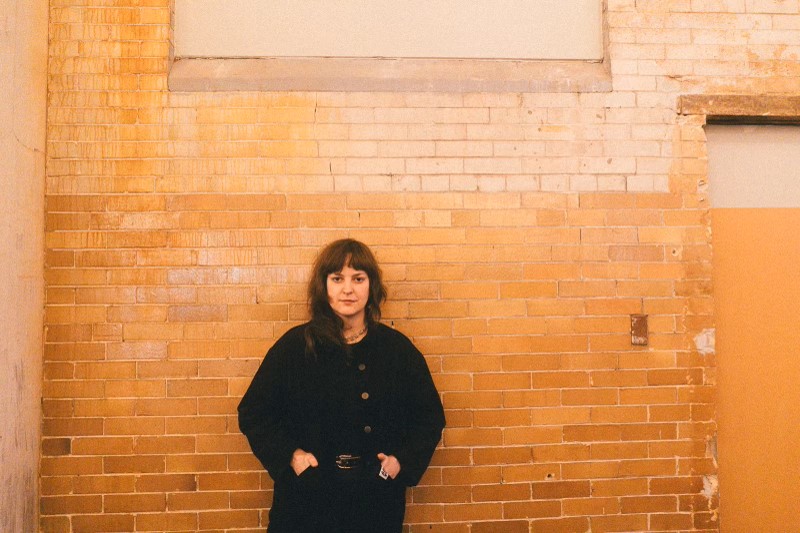


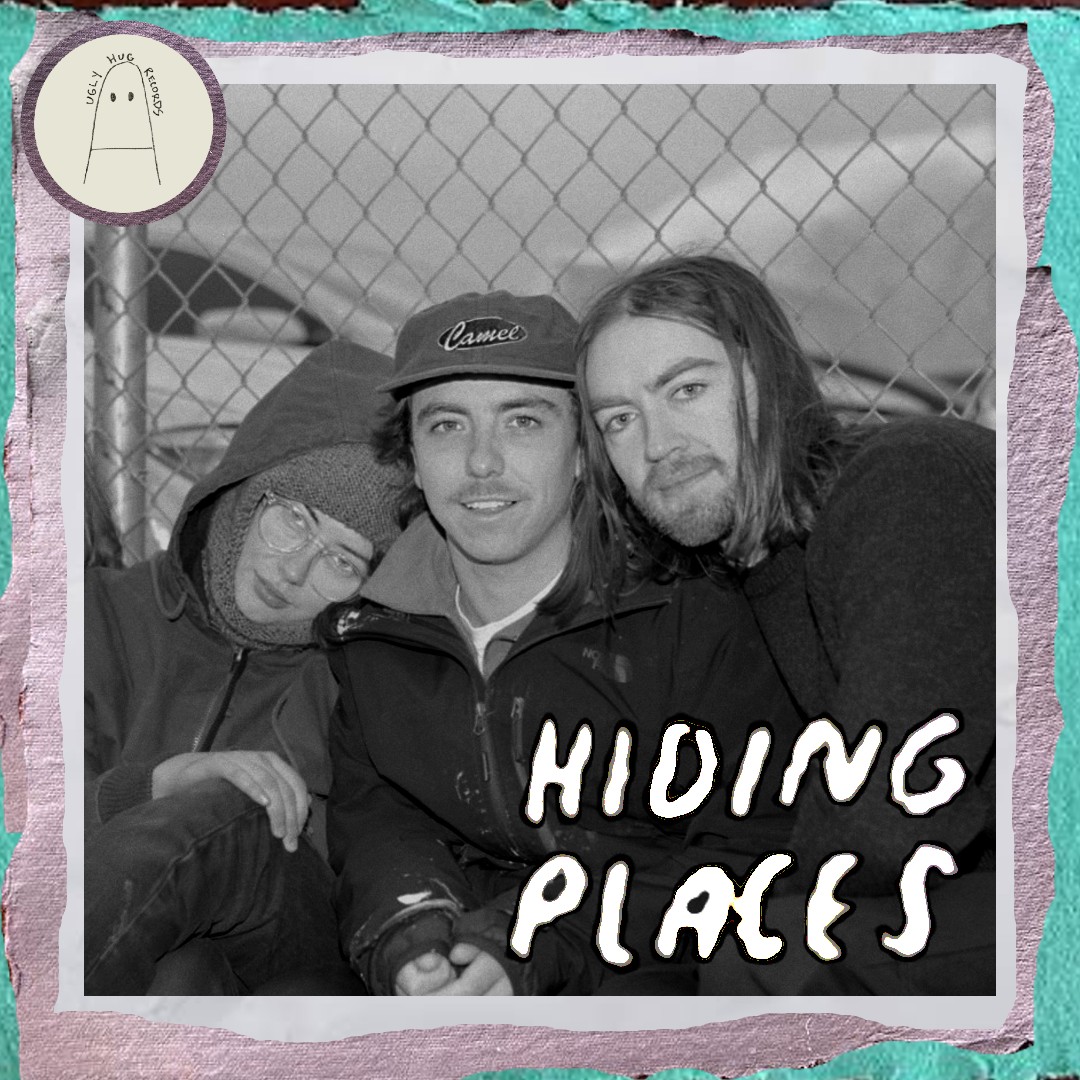


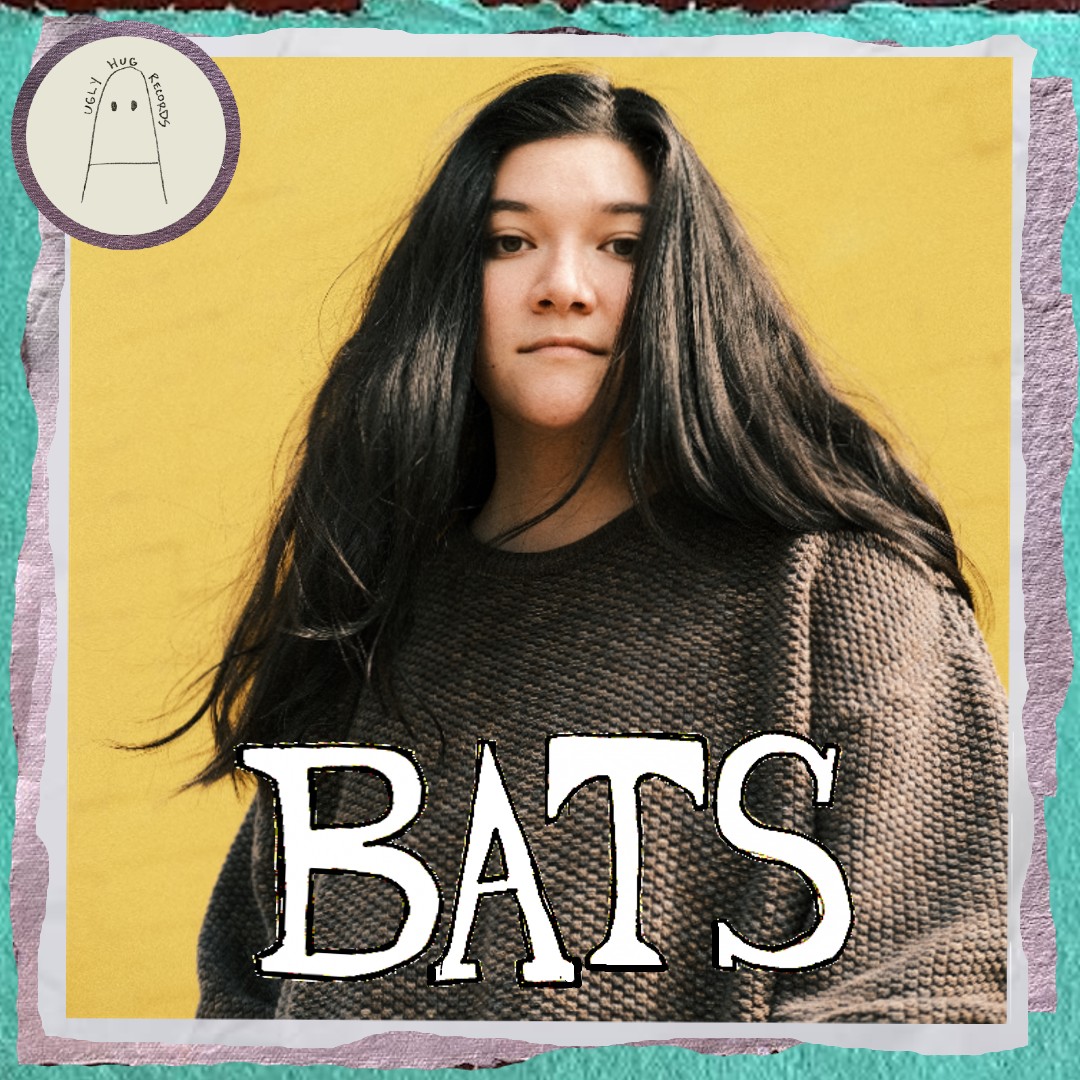
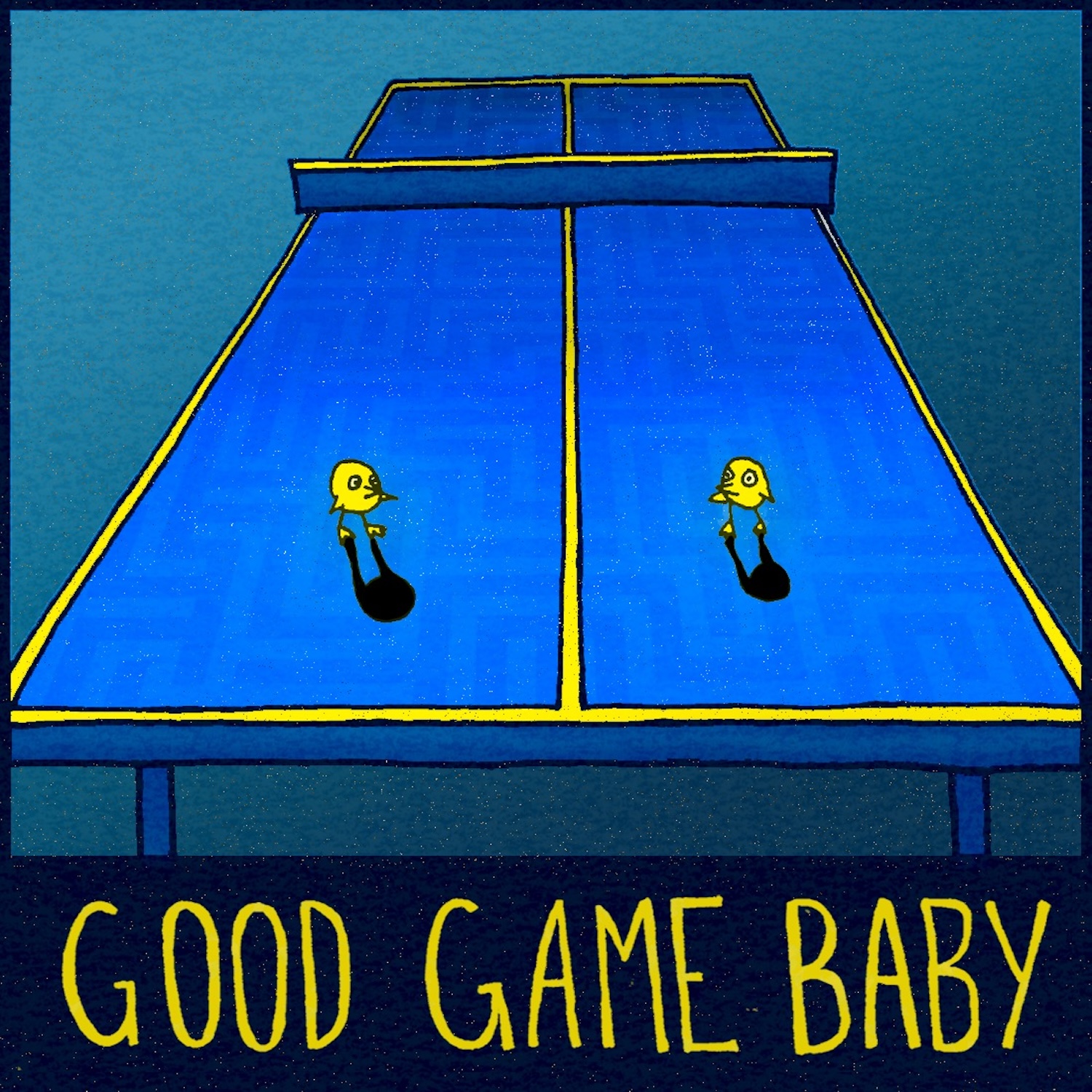

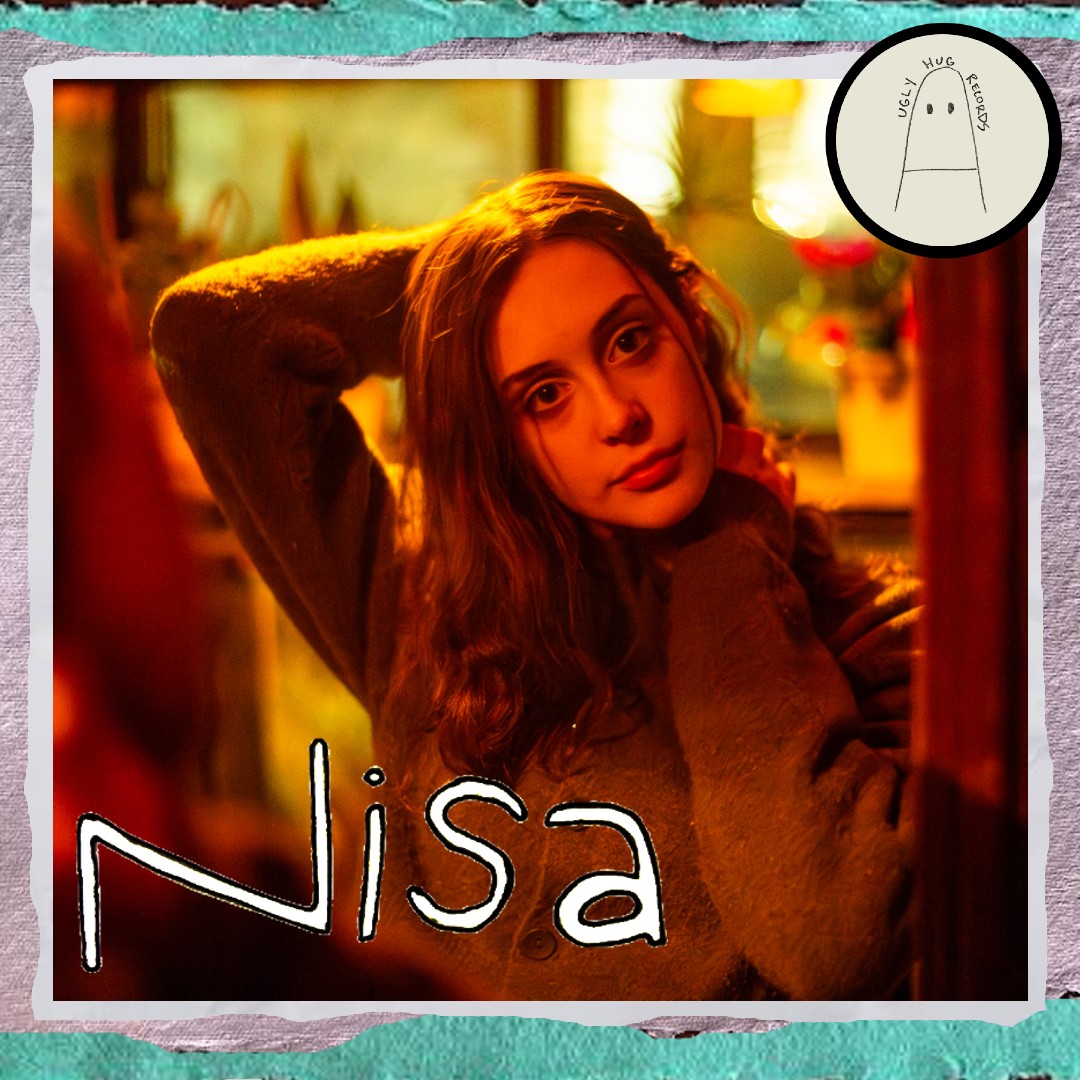

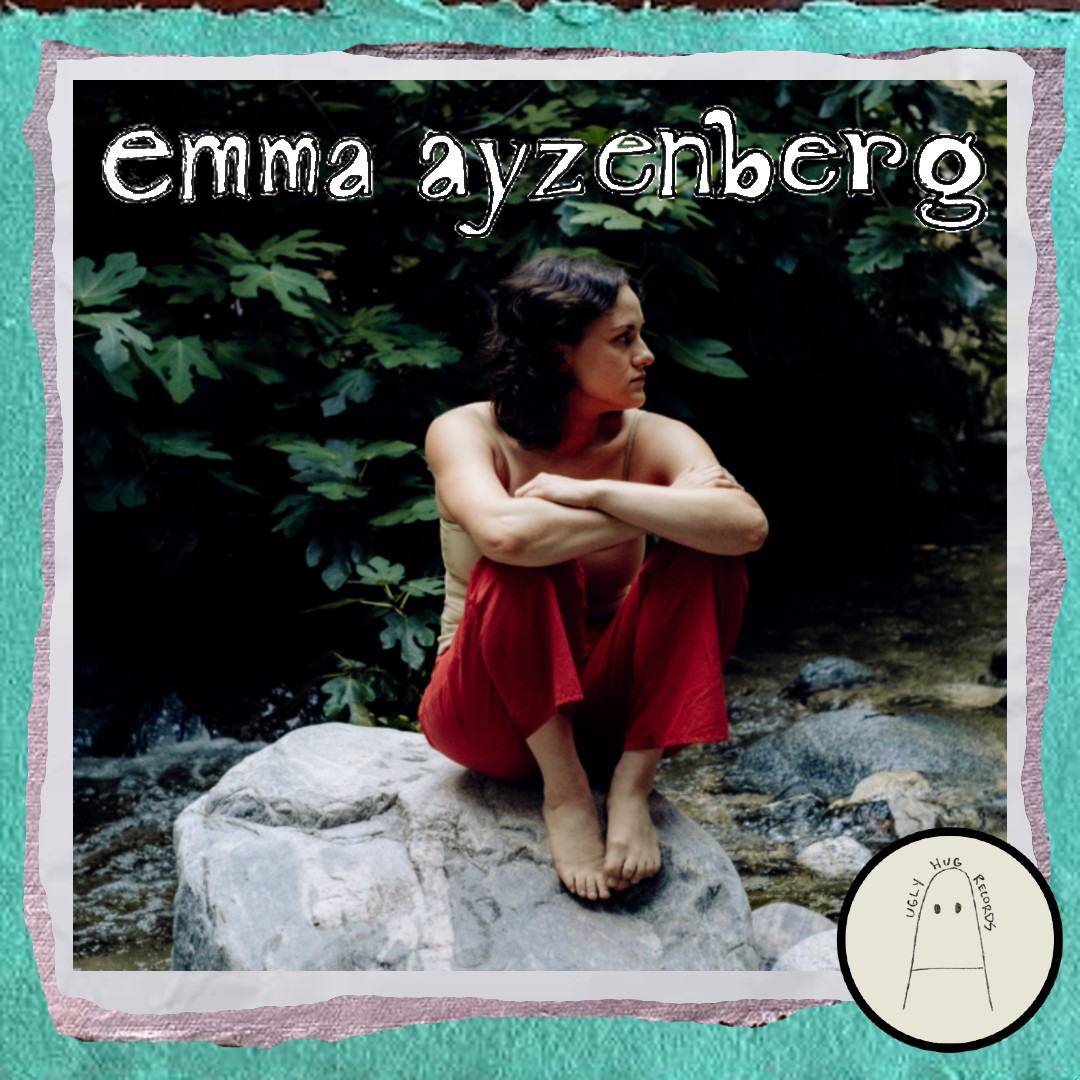


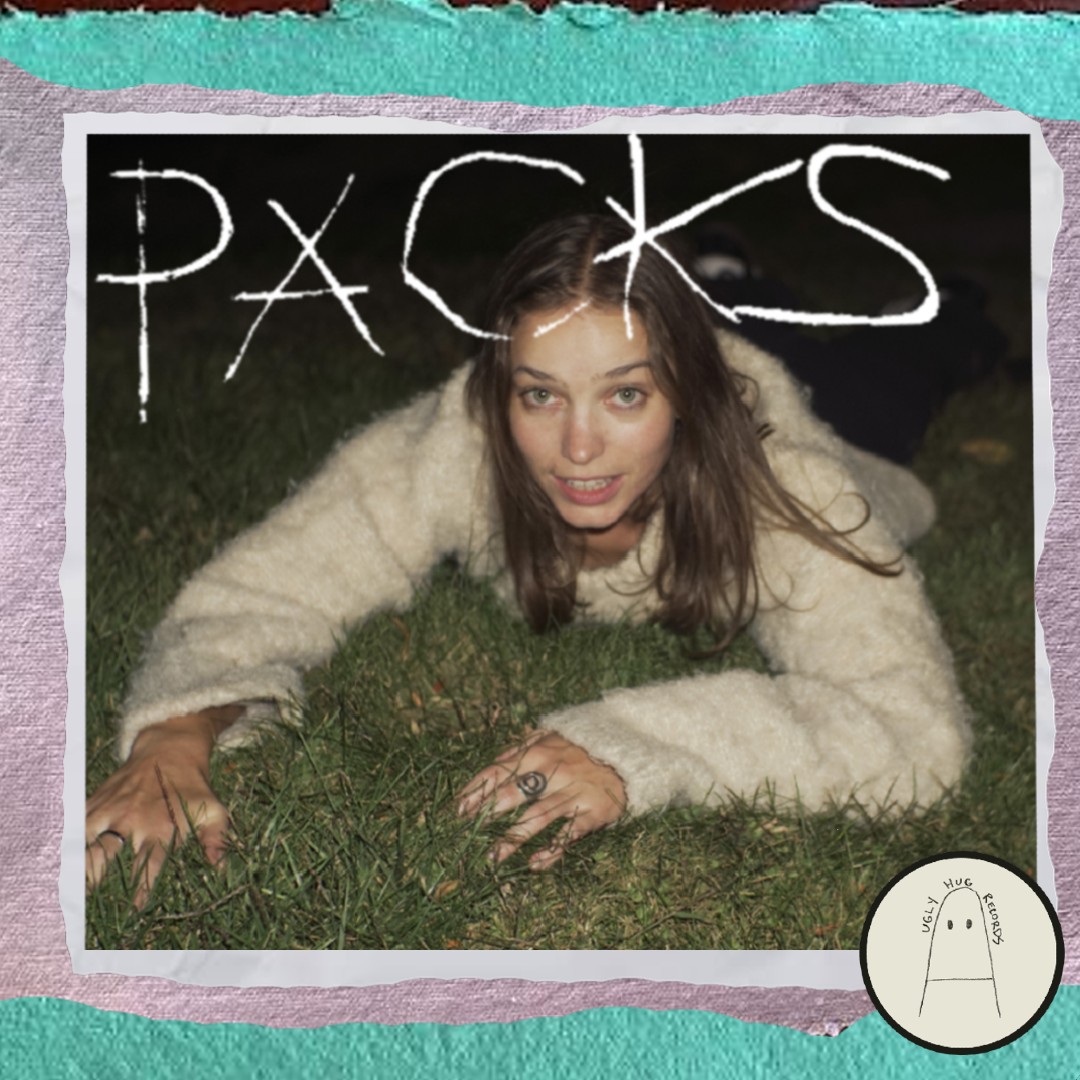
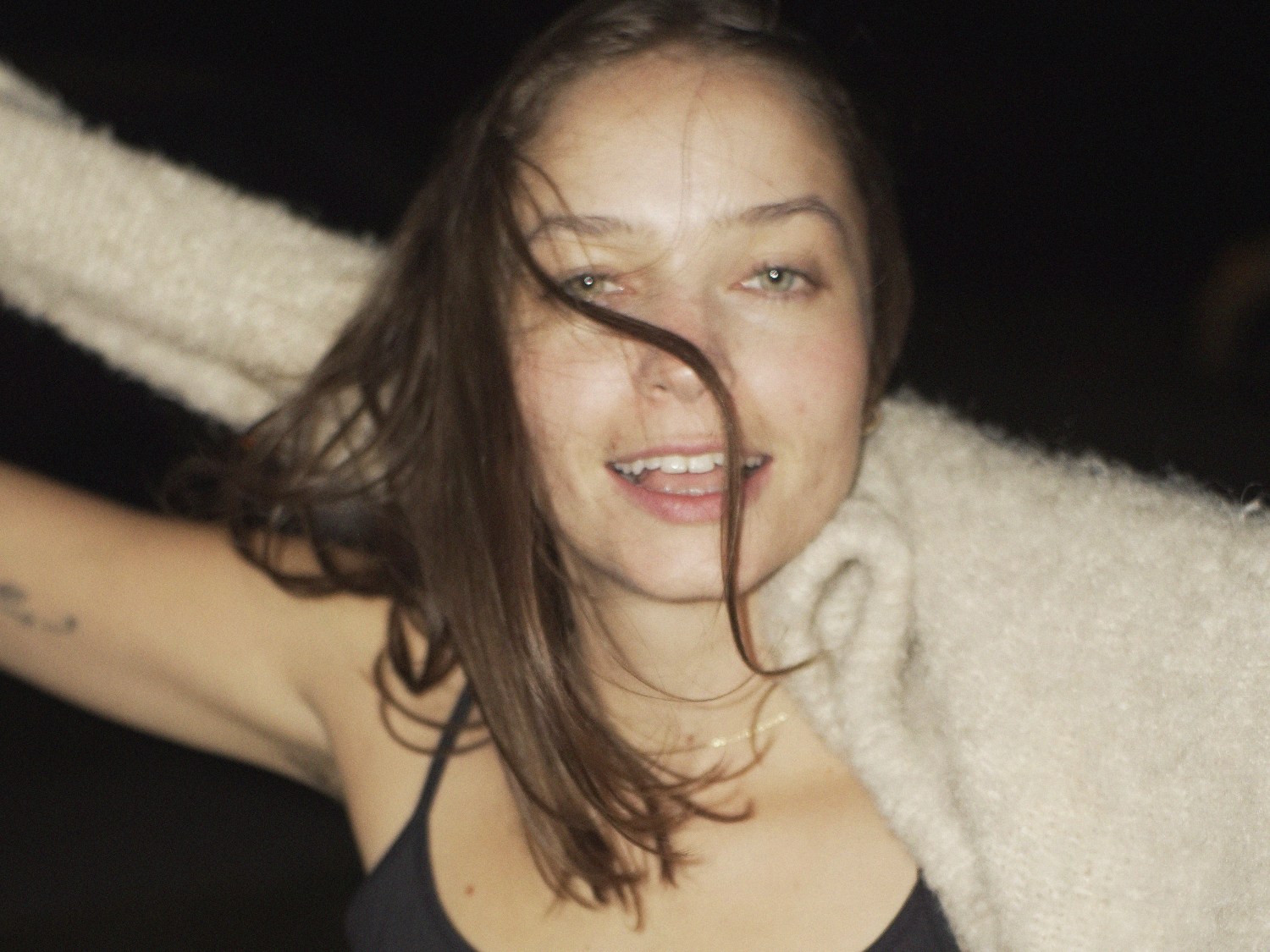
 the ugly hug