Written by Ella Hardie | Featured Photo by Hannah Cooper
“Do not wait until it ends to see what you want. Do not wonder what it could have been. Do not look away from desire.”
Anne Helen Wells is a Chicago-based hardware electronic pop artist who writes, records, performs, and produces everything herself. Before the release of her self-titled debut in February of 2025, she had already begun work on her next project, Edith, where she sharpens her focus on the particular BDSM dynamics within her relationship with her partner/“Daddy,” Samantha Edith Wrona. The result is a brutally beautiful chronicle of desire, devotion, pain, and love, loosely influenced by the Japanese story structure kishōtenketsu, consisting of an introduction, development, twist/reversal and resolution. Through this narrative device, the “story” of their relationship, as Wells puts it, is “driven less by external conflict than it is propelled forward through shifting perspectives and emergent depths.” Edith is a body of work that wholly belongs to Anne that explores the ways in which Anne wholly belongs to Samantha. The album closes with the tracks “Mine” and “Yours,” in reference to the ownership at the heart of their relationship. Wells explains that “even the choruses of ‘Yours’ are based around a refrain that I often repeat and am made to repeat in our BDSM scenes: ‘I am safe because I’m yours.’”
A far cry from Rihanna’s 2010 pop classic “S&M,” which somehow manages to fetishize “fetish” itself (Anne says: “great pop song! leaves a lot of depth to be desired”), Edith succeeds by staying firmly rooted in Wells’ experience—the bruises and bite marks on her album art are, in fact, real. Rather than approaching the widely misunderstood subject of BDSM through a wide-view lens, Wells examines her own relationship with an innate sense of generosity and gratitude without shying away from the complications that coincide with committing to another person. In Wells’ words, “BDSM & leathersex can look titillating or gruesome to the uninitiated, but I think there’s incredible beauty and intimacy within it that often goes overlooked,” hence the necessity of an album as thematically and sonically realized, as deeply felt, as Edith.
This interview has been edited and condensed for clarity.
7/14/2026 @ Estelle’s in Wicker Park:
Why are so many bars closed on Tuesdays? It’s Chicago in the summertime, it’s 96 degrees out, I have a bead of sweat dripping from my underboob to my bellybutton, and the spot we originally planned to meet at is not open. As I go to text Anne about our foiled plan, she appears on the sidewalk in front of me: she’s come straight from her desk job, tall and beautiful in business casual, and finds me red-faced, wearing the tiniest tank top and baggiest shorts I own, standing under the Blue Line tracks. We decide to pivot to a different bar a few doors down and are immediately blasted by The Most Delicious air conditioning upon entering. As we order our drinks, the opening credits of “The Big Lebowski” play on the tv in the corner. Hell yeah. Anne picks a table for us by the window, in desperate need of sunshine after sitting in an office all day. I start recording once we get settled:
ELLA HARDIE: I feel like we should start with how you’re feeling right now—at Estelle’s at 6 o’clock on a Tuesday, fresh off the clock, leaving for tour in a few days… It’s, what, eight shows in a row before you’re back in Chicago?
ANNE HELEN WELLS: I leave on Friday! It’s nine shows total across eleven days. There’s two gap days—it’s five shows and then a day off, and then three shows and another day off, and then the album release show in Chicago. And then I have the day off too—
EH: Thank God…
She laughs.
EH: Where’s your head at? What are you doing to prepare? Are you thinking about the album release show a lot?
AHW: I’m thinking about the Chicago show a lot, just because that’s where I’m based—that’s my audience, that’s my people—but at the same time, I’m also like: “Ok, I will have played eight shows in two weeks prior to that, I will be as as rehearsed and as prepared as I could possibly be—”
EH: 100%.
AHW: Like, I will be a well-oiled machine by the 27th. So my brain right now is mostly like: “Let me shake off the cobwebs, let me make sure everything is smoothly moving so I can hit these opening dates comfortably and confidently…” because I know after a show or two, I’ll feel, like, fantastic about it and I just want to keep that momentum going across the tour. There’s definitely some stress involved, but I think I’m kind of turning the corner from stress into excitement. The things I’m stressed about are, like… driving. The logistics of it… I’m driving with Samantha, my Daddy, and I put money into her car—we’ve got this thing into good shape, we’re touring, but it’s still a lot of driving….
EH: It is a lot of driving… How many total states are you hitting?
AHW: I think it’s seven states? Maybe eight states? We’ve got Columbus, Ohio, Pittsburgh and Philly in PA… I’m playing Brooklyn in New York and Baltimore, Maryland, then I have the day off before Charlotte, North Carolina; Knoxville, Tennessee; Louisville, Kentucky; and then Chicago, Illinois. So nine shows, eight states.
EH: Have you toured at this caliber before?
AHW: No… I did a weekender last summer with Hayley Elizabeth—a great friend of mine, she’s playing my album release show—but she and I put together three shows over the course of a weekend; nothing crazy, we just did Milwaukee, Chicago, and Urbana-Champaign, where she was living at the time. I did that as part of a team and that felt very cool, but after that I was like, “Can I do this myself?” I’m a pretty organized person, I’m really good with spreadsheets and inboxes, so I thought maybe I’d try this out. I thought, “Why don’t I shoot for a ten-day tour and if I can get six, I’ll be happy.” And I ended up with nine… So I’m pretty pleased with it overall, but it’s a lot of work.
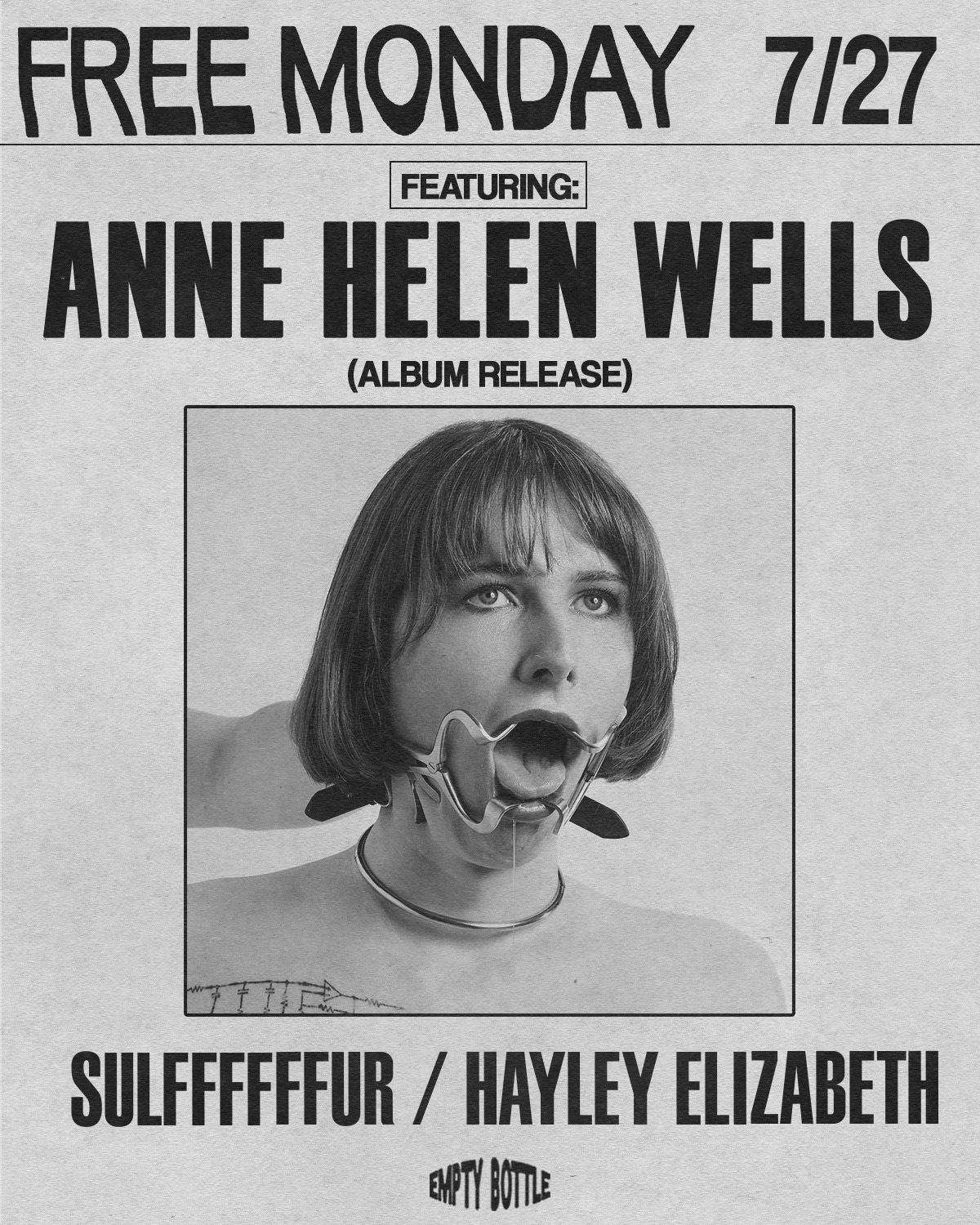
AHW: One thing that’s been coming up for me as I put this tour together is that I’ve gotten to see so many cool scenes—and I haven’t even seen them yet! I’ve been like, “Let me find these bands, let me scroll through Bandcamp pages, let me check this venue’s Instagram and see who’s played here—do they look like they play electronic music or electronic-adjacent music? That’s really cool!” That’s been fantastic and exciting to me because it can feel really insular in Chicago; as much as it’s a great scene, everybody that I know who’s in this scene has done very little touring as an electronic musician. Most of the touring that I know people have done have been in alternative, hardcore, cyber-grind, metal bands, something that is not based on synthesizers and drum machines. So as I’ve been booking this, I keep noticing that, first of all: even if there’s a scene for it, it’s hard to find spaces that want to put this kind of thing on, and second of all: there’s not the infrastructure that exists in the same way as these other genres. Like—externally speaking, I don’t know about the inside—punk bands are still following the same kind of thinking and routes that were built off ‘80s imprints. Like, they can do the same route that Black Flag did, but I can’t do that; I can’t play in a house basement with no monitors, my voice is getting weird and modulated, I need to hear that. It’s been interesting, but I’m wondering if this tour can sorta form a pathway… I want more girls doing electronic music to be able to play outside of these little enclaves. Like, there’s a cool little scene that I’m excited to go play in Columbus, but I want those girls to also go play in Detroit and Bloomington and Pittsburgh and Philly. I want that to spread. And I don’t think I’m, like, unique in this, but I do think that more girls making pop and pop-adjacent electronic music can hopefully look at this. So I’ve been sharing my resources, I’ve been keeping careful lists of these venues and their contact information and their pages and their histories and their reputations in the scene, and just sharing it with other girls doing electronic music.
EH: That’s your legacy!
AHW: I want to build something. I want to give back to my friends. I want to give back to the people whose music I care about, even if I’ve only talked to them online.
***
EH: Ok, your last album came out last February, and that was your self-titled debut. When did you start working on this follow-up, Edith, and how did you know you were ready to embark on the journey of a new project? What was the timeline in between, what shifted?
AHW: When I put out AHW, I had actually started writing Edith already… At that album release show, in February of 2025, the track that I closed with was actually a track called “Limb from Limb,” that is on Edith—
EH: Aw, really? That’s the one that got stuck in my head the most—
AHW: Aw, nice! I’ve always loved that one, it’s the most I’ve ever indulged my teenage love of MCR, honestly—
Laughter.
AHW: It feels like such a very pop-punk chorus, I don’t know if that reads—
EH: It definitely does—
AHW: Good! So I started writing it around then… I love writing about relationships and people—I think those are the most interesting things to me—and I also think I kinda have to write from my own perspective. I love people who can write with a little more worldly, omniscient sort of perspective, but for me personally, I tend to write from my experience and my views. Like, with “Favorite,” that was the first relationship I saw Samantha in that I started writing about. Before that, I wrote another thing following an experience that we had at a show in March, and I was like, “huh!” And then I wrote “Favorite” about polyamory and how I was experiencing that in the moment in April of 2025, and I was like: “I wrote three songs in a row about my relationship here.” I was sorta like, “There’s this feeling of a very satisfying relationship, there’s a lot of communication that’s working for me, there’s a lot in this power dynamic that’s working for me, I wonder if I can push myself to write a whole project about this…” And then I just kept at it—
She laughs.
AHW: Over the summer when I was playing that weekender with Hayley, I had written a few more songs and the project started to take shape. Like, “Oh, I think I could write a narrative about it,” ‘cuz writing a whole album of just: “Wow I love my girlfriend,” is not the most engaging thing… I thought, “Ok, I’ve got some conflict happening here, there are pieces where I could talk about where I was before this relationship, and I can talk about where I’m looking forward to,” and over time I fleshed out more of the narrative. She had a crisis early that summer, a mental health crisis, and I wanted to write about that experience as a sort of… I don’t want to say a “twist,” but as an album that’s written largely about my perspective on our relationship together, I really wanted to have something that kinda breaks through and feels a little bit less myopic…? Something that’s less focused on how I feel about all this and more about: “Holy shit, something really scary is happening right now and I have to handle it in real time.” It kinda coincided with these feelings that I was having around being in a really satisfying relationship, being in a BDSM dynamic that felt meaningful and instructive and upwardly mobile—like, there’s space for growth here. I started to feel safe in a way where I could think about the future beyond this and think about things like children. I’m in my early-thirties, and that’s something I’ve never felt stable enough to think about, even, but now I’ve got a stable job and I’ve got a stable relationship and I wonder what that would be like, and all of that kind of coalesced into the narrative from there…
EH: So, essentially, it was just a lot of life things coming at you and it ended up being right after your first album came out. You definitely seem like the type of person and type of artist who’s just like, “Let me see if I can make something out of this.”
AHW: Yeah, this is how I process my feelings a lot of the time. It’s a good space to get stuff out. If you’re feeling really pissed off or really excited or really sad or really horny, music is a great place to put those feelings when you can’t exercise them in real life day-to-day, and that’s kinda where this album moved through. I think I’d written half of it by the end of October, and then I could see what pieces were missing and it became a really fun project of, like: “Let me fill in the blanks here,” “Let me add some backdrop for this,” or, “ I’ve already written something very horny or sexually-loaded about this relationship, now let me write something very tender about this;” “I’ve written about how things started and this is kind of an introduction to the thing, but where did I exist before that, what is the backstory here?”
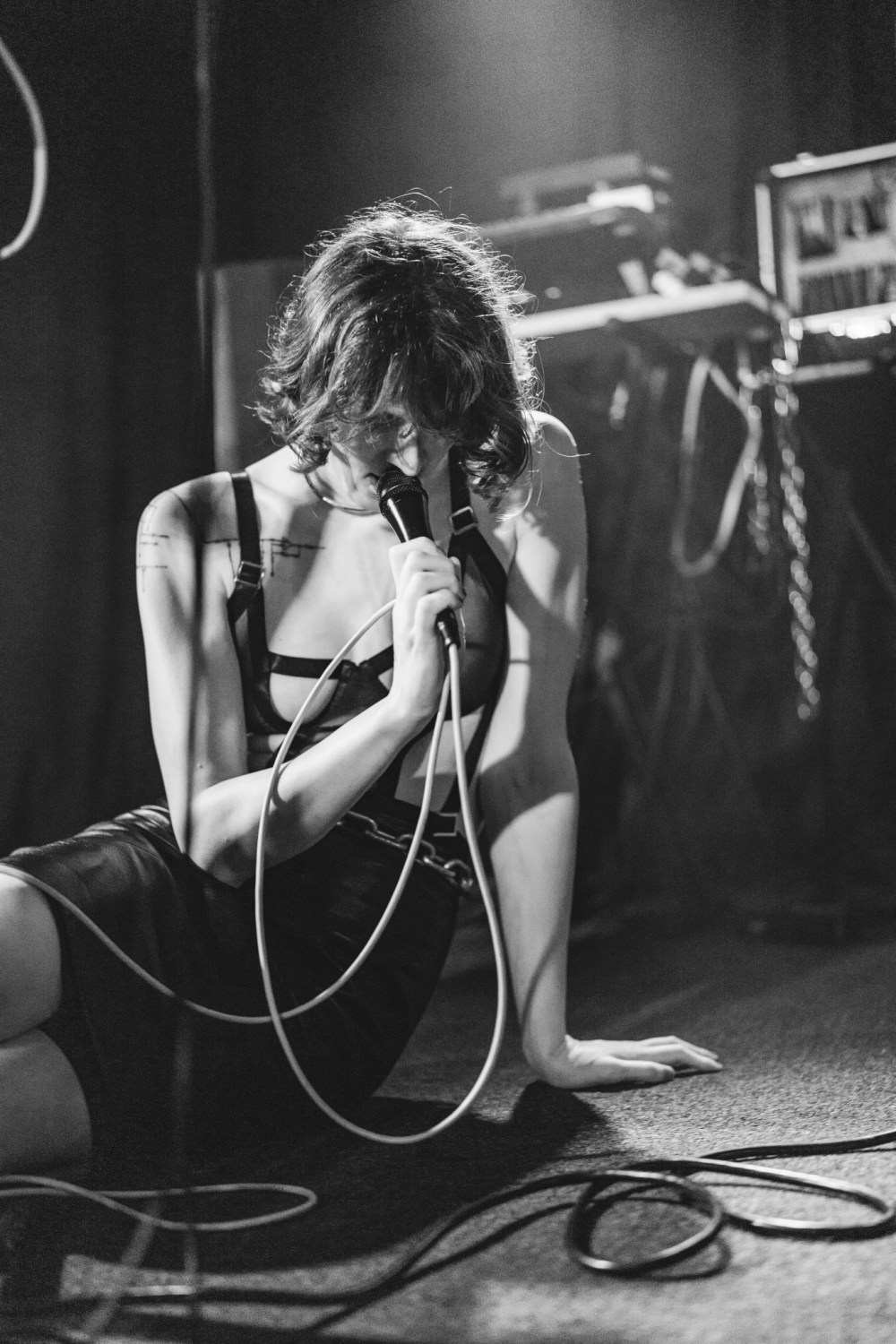
EH: What else informed your approach to your follow-up? Did you feel a new pressure of people’s expectations or did AHW serve as more of a foundation/launchpad?
AHW: I definitely didn’t feel a ton of pressure. Like, the people in my scene and my community were very complimentary and responsive about the album—that was great and really means a lot to me, but it definitely wasn’t like, “Wow, this is mindblowing.” I didn’t have this feeling of, “I can’t fail myself now…” I was mostly like, “Ok, cool: I’ve established what I can do, what can I build on here?” The stuff that I really liked about AHW that I come back to are that I think the sound design has some really good elements, I think there are some great melodic things—I’m a big sucker for a hook and clever lyrics—and I could see that, so I wanted to keep those elements, but the thing that felt the least engaging about AHW for me as the artist, was that it’s kinda scattershot. It’s approaching a lot of different things: there are a couple songs about one relationship, there’s another song about another relationship that didn’t end up being a relationship, there’s a track about trans-ness, there’s some stuff about BDSM, and there’s some stuff about just growing up. I was kinda like, “Ok, this is the wide-view lens. What if I tried to narrow it down a little more?” AHW felt like a really good foundation for that and I received enough positive feedback that I was like, “Ok, I can keep going in this direction, but what’s going to be more engaging for me?” Selfishly, that’s why I make music—I want to make music that I want to listen to.
EH: Totally. One of the writing mantras that I fall back on every time I’m stumped or disinterested by something I’m working on is literally just: “Write to entertain yourself.” If that’s your goal, you never get bored and you’re always surprising yourself.
AHW: It can feel a little self-indulgent at times—
EH: Oh, for sure—
Laughter.
AHW: But you keep going back to it!
***
EH: You’re a self proclaimed “gear nerd at heart,” and if you look at the credits in your Bandcamp it’s all you: you’re writing, performing, and producing everything—the synthesizers, vocals, drum machines, all the effects, etc. which is so beyond impressive. I guess I’m curious about how one gets into it, how you specifically got into it, what it’s like to perform all of this live, and, as a solo artist, how it’s fulfilling to exercise total creative control over your music. Sorry, that’s like five questions in one…
Laughter.
EH: Ok, where do you even start?
AHW: For me, the first instrument I was really into was piano. When I was maybe eleven or twelve, we got my cousin’s old fully-electric digital piano and I really loved playing that. I went to an arts high school where music was the focus but it was more, like, rock focused—like School of Rock but in high school. So I had all these guitarist friends with all these pedalboards, and I was like, “That’s really cool, you can, like, change the sounds of your instrument in so many ways, and I can’t do that.” I was like, “Let me figure out what synthesizers are… Oh, I can’t afford any of these… but you know what? It looks like I can build guitar pedals for really cheap because the parts aren’t that much, and I can learn how to do this.” My mom taught me how to solder and assemble electronics—she used to work for a company that makes barcode scanners—and I started making pedals, and then I had a cheap-ass version of a synthesizer.
EH: Holy shit!
AHW: At that point, I started playing guitar, but I really always liked this side of things—like the synthesizers and electronic stuff—and at a certain point, about the time when COVID started, I was getting more into that. I was in a project with my then girlfriend, now ex, called “Jewel Osco—”
I start laughing.
AHW: It started as more of a post-punk band and became more of a new-wave-revival, synth-pop kinda thing? Which necessitated me getting some more gear, like a drum machine, which is kinda how I got to the start of my current setup, like, some of the guitar pedals that I’ve amassed and the drum machine. And that was, what, six years ago? So some of that was stuff I’d had and then I started selling some old things and upgrading things until I got closer to my current setup.
EH: How about performing live?
AHW: I really like playing on hardware live. It’s really limiting—like, everything that I’m doing onstage with my equipment would be better done on a laptop with a little midi-controller plugged in and it has knobs and that’s it, but I have more fun doing it this way! I also don’t have a laptop, I do my mixing and production on a desktop computer, so I can’t really bring that to a venue anyway… When I was starting to do more solo stuff, I got in my head about watching somebody play live on electric guitar or drums, like, you’re watching what they’re doing physically. When a guitarist leans back and [starts shredding], you’re like, “Oh, cool! You’re doing something important! You’re making a show of yourself, I can see that and then I know to listen for it.” I kinda liked the idea that on a hardware setup like this, not all of that stuff is intelligible in the same way—like, somebody looking at it from the audience isn’t necessarily gonna know what these knobs do, they just know that I’m hitting knobs and turning switches. It feels engaging for me, like: “I don’t know what the knob that they’re turning does, so I have to listen for it,” whereas watching someone play a guitar solo, I can see that… I have to use my eyes more and my ears less, and I like it the other way around, where I have to use my ears more and my eyes less.
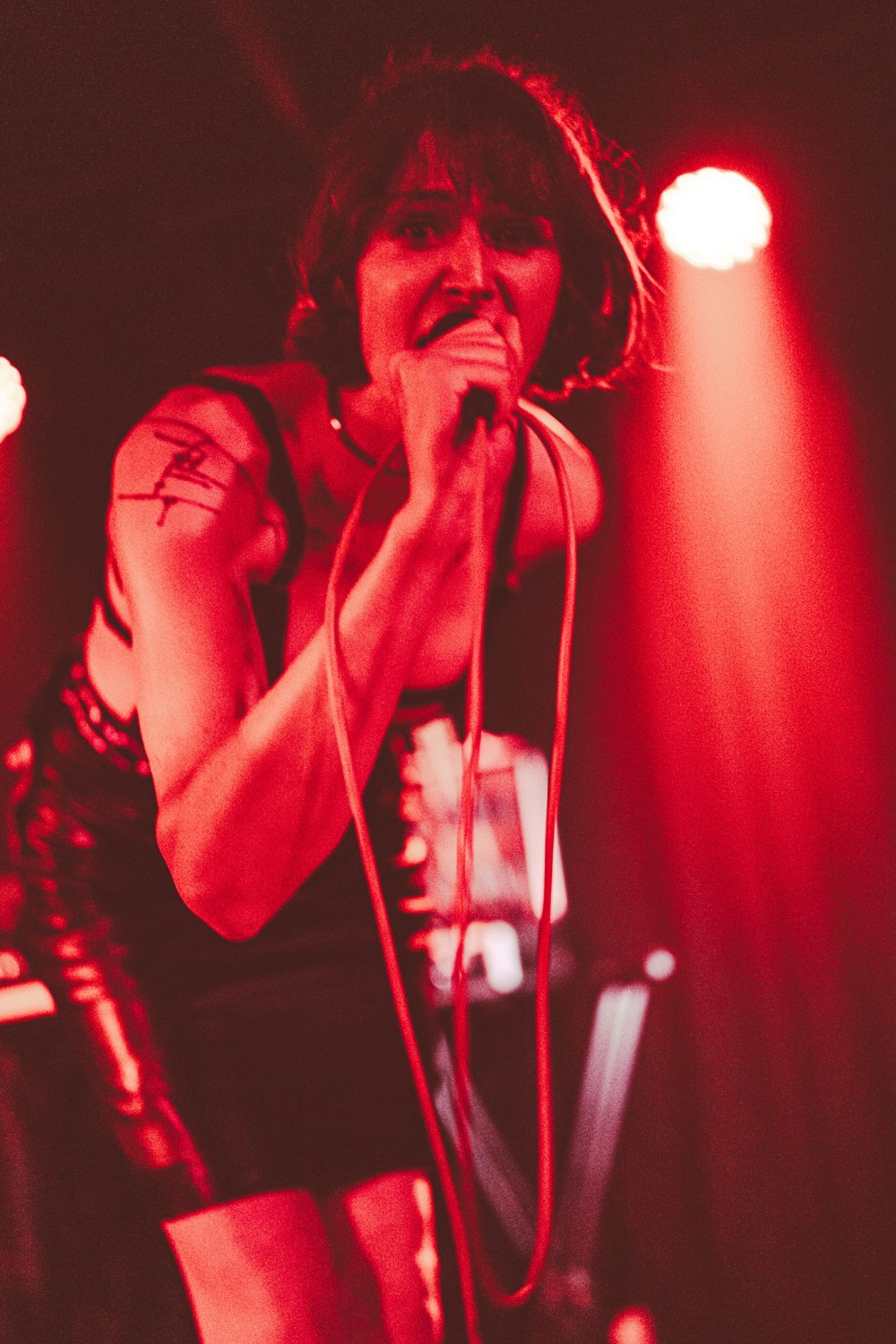
EH: What are your feelings about working alone and having total creative control over your work? It makes a lot of sense to me why your “artist name” is just your full name—there’s very little distance between you and your art, it seems every song you release is kind of a proclamation of: “This Is Who I Am.”
AHW: In terms of working on stuff alone, I love living by myself. I really value that, the freedom to be like, “I am going to do whatever I want to do,” and if what I want to do is, say, lay around naked, I’m going to do that. The more I’ve lived alone, the more I’ve relied on that. I also rely on the responsibility that it forces on me—if my cat pukes on the floor, there’s nobody there to clean it up but me; if there are dishes in the sink, they are my dishes and I have to handle that. Which doesn’t seem like that big of a deal, but mentally it really clicks for me and I like having that kind of responsibility. I’m very particular to a fault, honestly, and I think that carries over to my music. Down the line I do want to work with more people, but for some of these early projects it’s been really important for me to let myself have that degree of control—as much as I think, moving forward, it’s gonna be important for me to let go of some of that control. In particular, I want to work with mixing engineers more and rely less on myself for mixing. I really want to work with Hayley Elizabeth for mixing, I also think JuneDoom does fantastic mixing work… I dunno, I just want to branch out a little bit more because I do sometimes push myself to do everything by myself… and then I panic because I put so much weight on myself.
EH: Real…
AHW: And then the second part of your question… I’m kind of a blunt, transparently honest person a lot of the time. I really was like: I want to be upfront; this is the stuff that I care about; this is what’s important to me. And also, on a values level, I think it’s important to have sonically accessible music. I think to a certain degree, my music is still pop music—it’s a weird kind of pop music, but it’s still pop music—and I want that degree of accessibility while approaching subjects like BDSM, like power dynamics, like suicidality. I wanted those things as a teenager, y’know? There’s plenty of music about depressed people, that’s fine. I just don’t want to write about that all that much. There aren’t a lot of really sweet, accessible, fun songs about, like, leather.
EH: That’s totally true.
AHW: A lot of the time, songs like that are just like, a three lyric track that’s mostly, like, a club track. Like: “Here’s a drum machine and a bass synth, I’m going to sing you, like, four lines about leather and chains,” and then the chorus is kinda repeating… and that’s it. And this feels very nondescript to me, this feels like you’re doing it as a costume—even if you’re not, it feels that way. So I was like, “What if I just made that for myself because I want that?”
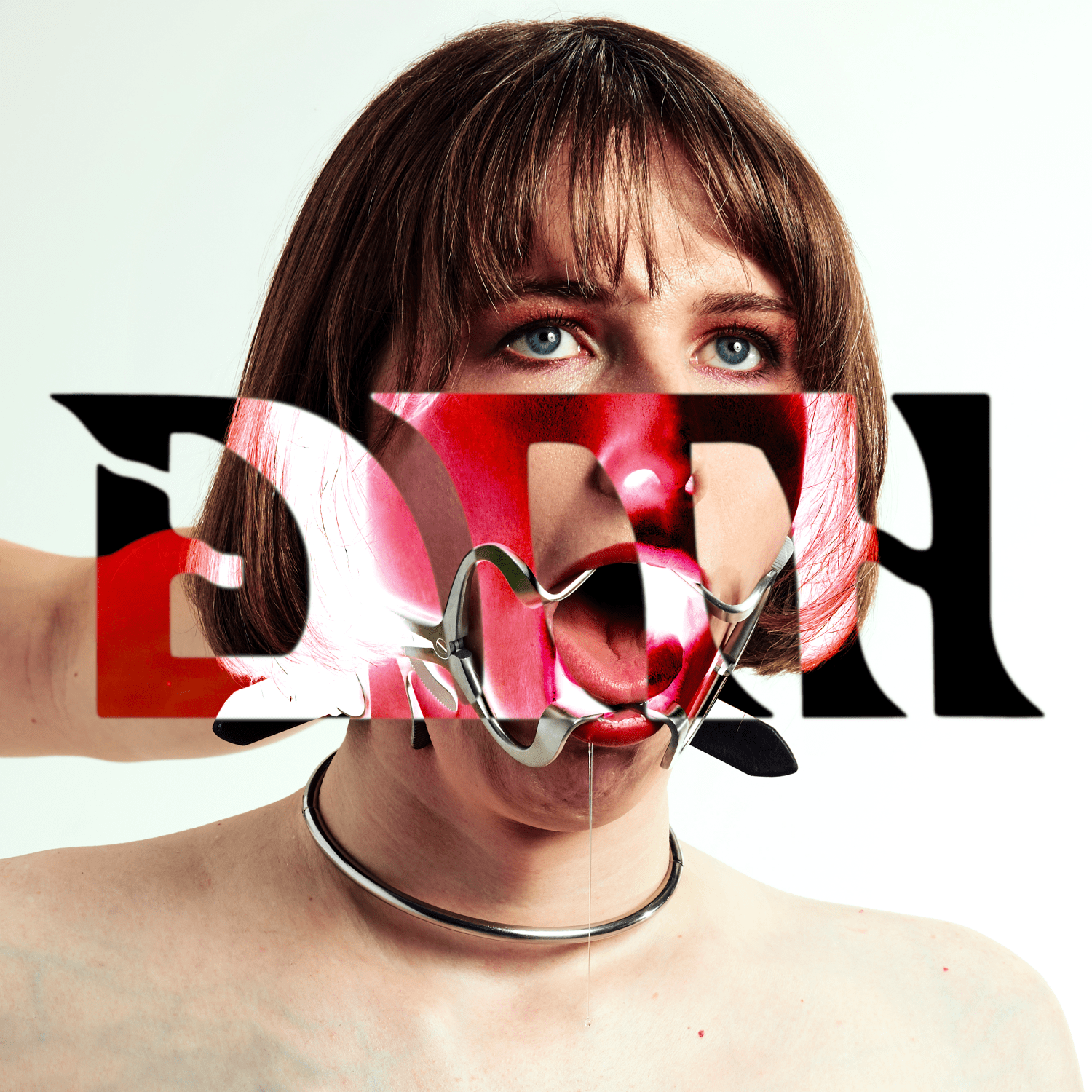
EH: I’m curious about the cover design choices for Edith compared to your self-titled—it’s interesting that you’re not on the cover of your self-titled but you’re front and center on Edith, and it’s like: There you are, but who is “Edith?” How did you conceptualize the cover art this time around?
AHW: It truly just kind of popped into my head one day. At one point, Sam and I had done a scene that involved dental gags—they’re meant to be in your mouth when you’re lying back, so they don’t want to stay in place, but if you bite down on them, they hold in place—and I had a lot of fun with that and I was like, “Wow, this is a really striking thing!” During that scene, Sam took a picture of me with the gags in and a blindfold on, and I was like, “I like that. That’s interesting.” It stuck in my head. I knew that for my next album, I wanted portraiture. I really loved Vile Creature’s album cover [for Glory, Glory! Apathy Took Helm!]; it’s a three-quarter profile portrait and she’s just got a bunch of, like, worms in her mouth. Not to be confused with aya’s hexed!, where she also has worms in her mouth… two different worm girls. God, I love a worm girl.
Laughter.
EH: It really is such a visceral, vulnerable, image. It’s you!
AHW: Yeah, exactly. I wanted to have my face on this thing. The first record has my initials on it five times. Now I’m writing about this relationship, and Edith is Samantha’s middle name, and I think because I’m not naming the album after myself, now there’s space for more of me on the album cover. When doing the photo shoot—which was done by Samantha’s sister, actually, Hannah Cooper, she’s a fantastic photographer out in LA—
EH: Shoutout.
AHW: I had gotten a harness made for the gags—like, two strips of leather to hold it in place—and we found that it was not quite the easiest fit, so we ended up with that photo where Sam’s holding the back of the harness behind my head and her arm is just like leading onto the screen with it. I was like, “That’s perfect.”
EH: That is perfect. I did not know that it was her arm. Your face makeup is gorgeous too; were the bruises and bite marks practical effects?
AHW: The cover of “Favorite” is not makeup. That’s real.
A beat. Duh.
EH: Wow. I feel dumb right now.
AHW: The bite on my clavicle for “Sick and Proud,” we did that in the studio, day of. That’s real. The bruise on my thigh is also real—we did that like the day before we flew out to LA—then in the studio we took like ten minutes, refreshed it a bit, and then did the shoot.
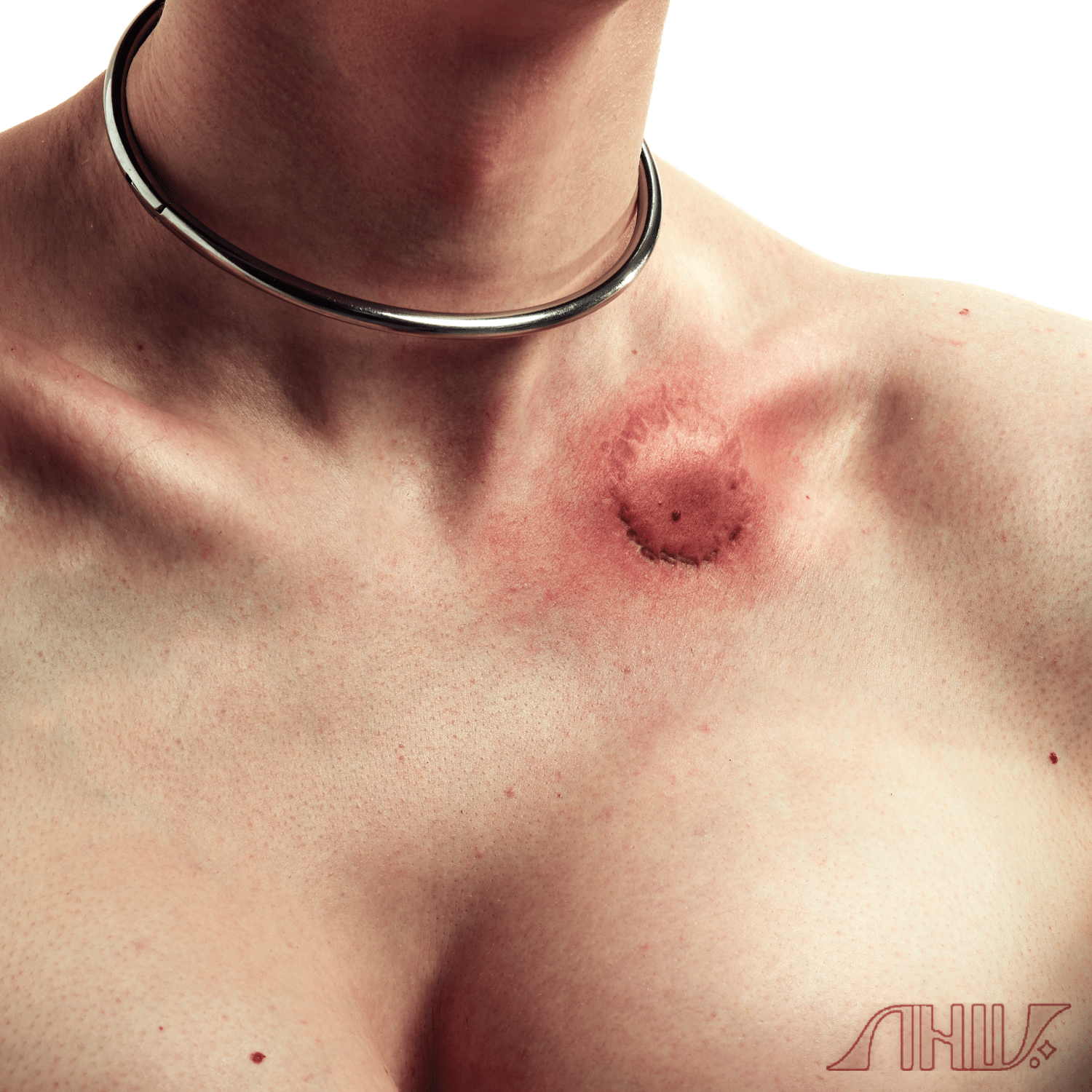
EH: I am so glad I asked about that, it didn’t even occur to me that they would be real bruises… but like, of course they are, that’s what so much of the album is about.
AHW: Exactly. Then in terms of the album title, “Edith” is Samantha’s middle name, and Edith is a name that’s often attributed to Lot’s wife in the Bible. When fleeing the destruction of Sodom and Gomorrah, Edith is turned into a pillar of salt for turning and looking back at the destruction. There are a lot of ways that this is interpreted, but the way that it kinda resonated with me—and with Samantha too—I think has something to do with the idea of letting your desire destroy you. There’s some symbolism in the idea that she is looking back out of lust, out of having missed her opportunity to live an ungodly life. I think that is a worthwhile thing to be sacrificed for, actually, the pursuit of an ungodly life. I felt like this was perfect; this is referencing [Samantha], this feels related to the subject matter of the album. I had that title by the time that I wrote the fourth song or so… I was like, “I know that I’m writing about her but I don’t want to name the album Samantha, I know this is her middle name, it fits nicely with this kind of intensity and weight that I want to bring.”
EH: How was your experience writing about The Person You Love Most and making your relationship—at least your view of your relationship—public? Because as much as it is you and yours, it’s something inextricably tied to someone else, which surely brings about a lot of extra, more tangible, factors to consider on top of all of the Big Feelings and Big Ideas in this album about devotion and submission and trust and infertility. Is it scary to share that? Is it freeing?
AHW: There’s a lot of fear in it, honestly. I want to do justice to this relationship that has meant so much to me so far, I want to see where it’s going and how I can continue to build this thing. Y’know, you don’t want to screw up a good thing—I care about this so much, I want to do this justice.
EH: You’re kind of preserving it, because you were writing these songs as all those things were happening. It could be kind of a time capsule down the line, in terms of tracking how you’ve both grown, which I think is very cool.
She nods.
AHW: In a humorous way, it is kind of a flex to write an album about your lover—like, that’s great—
Laughter.
AHW: But also I think of some moments of it, like the track “For Daphne,” which is me grappling with Samantha in crisis and leveraging the daughter that we’ve imagined as a way to implore her to fight to stay alive. That’s really heavy shit. That’s the kind of thing where I’m like, “Hey, I wrote this, I want to know how you feel about this, we’re going to talk about this and then we can assess whether or not this feels right” Not to say that she’s necessarily making creative decisions about the content of the album, but it’s more like, “Hey, this is about you”—maybe most explicitly, despite all of the other explicit stuff on this album…
She chuckles.
AHW: Like, “This is the most explicit thing about you that feels, like, vulnerable for you, I want to make sure that you’re okay with this.”
EH: It’s hard to give something as intimate as that away to the world—
AHW: It’s hard, but this is shit that I want to write about, this is stuff that’s important to me and is cool to me and exciting to me, this is what I want to put out there. On the topic of “For Daphne,” that’s another name that has a lot more weight to it. We were going to one of Sam’s gigs—she plays in a band called Techniques in Advanced Sounding—and we were listening to Ravel’s Daphnis et Chloé, which is a different name, but it made me think of the name Daphne, which is one of those names that comes back into my head when I think of what I would name a daughter. Daphne is a Greek myth: she was a river nymph who was chased by Apollo, and she pleaded to her father, the river god, to save her, and he turned her into a laurel tree… which did save her from Apollo, and in grief Apollo continues to wear laurel wreaths around his head. I kinda thought, “Wow, that’s a perfect way to describe this feeling of inability and newfound pain that I have over infertility.” I am both trapped and freed by my body; I will never have to know that pain, but I never get to know that pain either. It seemed like a perfect way to kinda encapsulate this in a little microcosm. I love it when granular details like that kind of contribute to a whole picture. Like, they enrich the thing, but they don’t have to be the whole thing. It’s like when you rewatch something, and since you’re not watching it for the plot anymore, you get all these rich character details that you may have missed the first time because you were focused on the narrative.
EH: Yeah. It’s interesting that you say that because my sonic experience after listening to the album four or five times all the way through was that there’s a lot to chew on. Your production is already very dense, but the other level of it comes from the lyrics, the song titles, and the structure of the narrative.
AHW: I do like really dense music. Sometimes, again, to a fault—
EH: You’re a maximalist… in a way that still feels very measured…
Laughter.
AHW: I try, I try… One: I think trying to do, like, real maximalism without a laptop is kinda impossible… And two: I like it when you can go and pick out a different part in each listen and say, like, “Oh, cool, I didn’t know the bassline was doing that,” Or, like, “Wow, I never heard that topline synth going before,” or, “What the fuck is that weird little woodblock sound?” I really like those “I didn’t even know that was here!” moments, that kind of stuff. It’s just fun.
EH: Exactly. When I was talking to 103 Fever, they kept describing those little moments as “ear candy” which I think is pretty perfect.
AHW: Yes, exactly.
EH: Speaking of those people, let’s talk about your Chicago music community and how the people that you’ve met have played a role in your growth as an artist. Because, again, your debut came out in the winter in 2025 and you were still involved before that, but it seems like you’ve really been embraced by the electronic scene here in Chicago. I’ve known [MaryMary!] since 2023 and I feel like I’ve known who you are for almost the entire time, just from hearing her talk about you, seeing your name on bills she’s on or bills she’s reposted. I want to hear your thoughts on the people, the places, the vibe…
AHW: Mary is, like, a huge hero to the scene and to me personally, honestly. Overall, I think it’s fantastic. There’s a great music scene in Chicago specifically for electronic music—all kinds of electronic music, not just dance electronic music. Like, there’s an incredible scene of DJs happening in Chicago, but the people doing solo electronic pop and rock and experimental stuff is what really draws me in. Obviously I love Mary dearly, I am a huge fan of Hayley Elizabeth and sulffffffur [and Anti-Soul Organization]—they’re just insane, they’ll always get the crowd moving, they’re incredible performers. I love Laura’s project Future Nest… Nat, who’s a recent transplant, has a band called Rose Hip that’s pretty cool. It’s been really exciting and refreshing to be embraced in this way because I’ve played in music in Chicago and been here for, like, 12 years. I’ve played in bands, and I’ve never really found this kind of sense of community, but starting to go to electronic stuff—which really started with going to Mary’s EP release—it’s been fascinating to see how it grows and connects. There are so many incredibly talented people doing all sorts of crazy shit. Again, JuneDoom does remarkable weird, heavy electronic industrial sorts of shit. I also am a huge fan of Shinespark, Zoey’s project; I love what Laura and Sage and Mary are doing with 103 Fever, though it is a little bit Ween for my tastes—
Laughter.
AHW: But I love the girls, and I love seeing them play together. And I think some of their shit is really fun, they’re just really incredible artists, and I’m very excited for them. Elle, spring ephemeral, makes some of the most luxurious sound design and perfect little pocket-heartbreak songs, just like: two minutes, perfect story, great melody, nothing but ear candy. Incredible stuff. There’s always people coming in, too, like, Cyrus Chrome moved here from Milwaukee last year and they make fantastic dance pop. There’s also such a fascinating parallel and overlap with the hardcore and noise rock and punk scenes happening—people like ameokama, who did that tour with Hayley Elizabeth and teeth kids—June[Doom] plays synth in that band, it’s sludgy noise-rock stuff. I also want to shout out Hedra Rowan! There’s just great people and great music happening in Chicago and it’s nice to have little corners of overlap, even if I feel like I’m in this particular bubble. It’s kind of the greatest thing. I do love some of the venues more than others in Chicago…
EH: Yes, what are some of your favorites?
AHW: I love Burlington, I love the Empty Bottle. They’re so cool, they’re so nice to work with. I also really like Cole’s, honestly—it always sounds great there and I like the fact that it’s not a huge rise on the stage, so it can feel a lot easier to engage with a crowd, ‘cuz you’re looking in people’s eyes.
She thinks.
AHW: I love Sleeping Village too, I am so thrilled and honored that I got to play there opening for aya last year, who’s also one of my fucking heroes. I still feel like that’s the craziest shit I’ve done yet… Hayley Elizabeth showed me aya’s album hexed! shortly after we became friends in mid-2025 and her show at the Empty Bottle in September of 2025 was one of the most inspiring things I’ve ever seen… That performance had a particular influence on “Yours,” the penultimate track of Edith, but the record overall is sonically indebted to her. To clarify, I wasn’t asked to open—I had a brief exchange with her via DM after her show, and I reached out to her in December, pitched to book her a Chicago show when she was looking for US tour dates, and she was down! I spent months getting that show pinned down with Sleeping Village and coordinated with her agent and promoted with flyers, but as incredible as the show was, I might treasure even more the fact that she and I hit it off while she was in town and we became friends. I was really worried about a “never meet your heroes” situation, but I can’t remember the last time I clicked with someone so easily as a friend.
***
EH: Any closing notes? Anything you wanted to talk about that we didn’t touch on?
AHW: Well, I’ve got the tour dates coming up… It sounds like my tapes are getting delayed, but I will have CDs for the tour and I’ll probably get the tapes express-shipped to me midway through. I had a leatherworker custom-make collars and keychain/key clip stuff to sell as merch. That’ll be fun.
EH: That’s perfect. Who else is selling that stuff at their shows?
AHW: People love weird little merch. For the collars I was like, “Okay, this is going to be a premium item, but it seems like a fun premium item, at least…” And it’s not like it’s got my name on it either, it’s just got “Favorite” or “Sick and Proud” on it—like, those are appropriate things to put on a leather collar.
EH: Exactly.
AHW: I’m really incredibly excited to do this tour. I’m also incredibly excited for the album to come out and exist and… to move forward. This has been a really important project for me and I really want to share it with people, but I can’t do that until it’s out. I feel very excited and very happy to be a part of this scene and to have the space to express myself and have this many people interested in it… it’s more than I ever thought I’d be interested in it, so I have to remind myself of that a lot.
Thank you to Anne for taking the time to chat in the midst of a truly chaotic week! You can listen to her two singles, “Favorite” & “Sick and Proud,” everywhere (except Spotify). Her second LP, “Edith,” is set to release on July 27th, 2026.
 the ugly hug