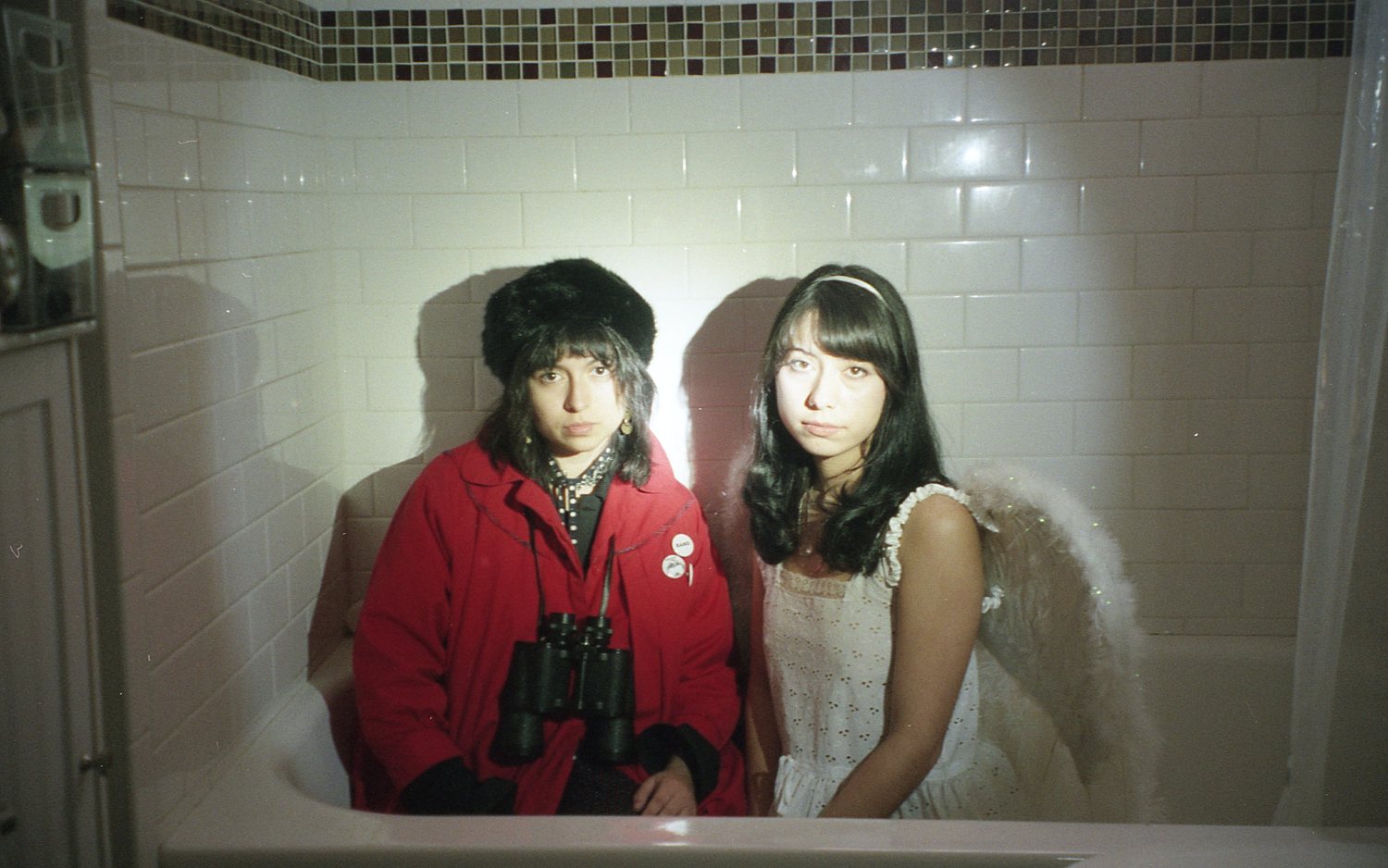
Starcharm, the Chicago-based recording project of Elena Buenrostro, (previously of Soft and Dumb fame), have been making a name for themselves within the Chicago show circuit for some time now. Accompanied by Jasmin Feliciano (bass) and Amaya Peña (drums), the trio have crafted a calloused, yet anthemic sound that rips through any of the sweaty and beloved spaces that they occupy. Today, Starcharm return with “Wake Up”, the second single shared since signing to Fire Talk Record’s imprint label, Angel Tapes.
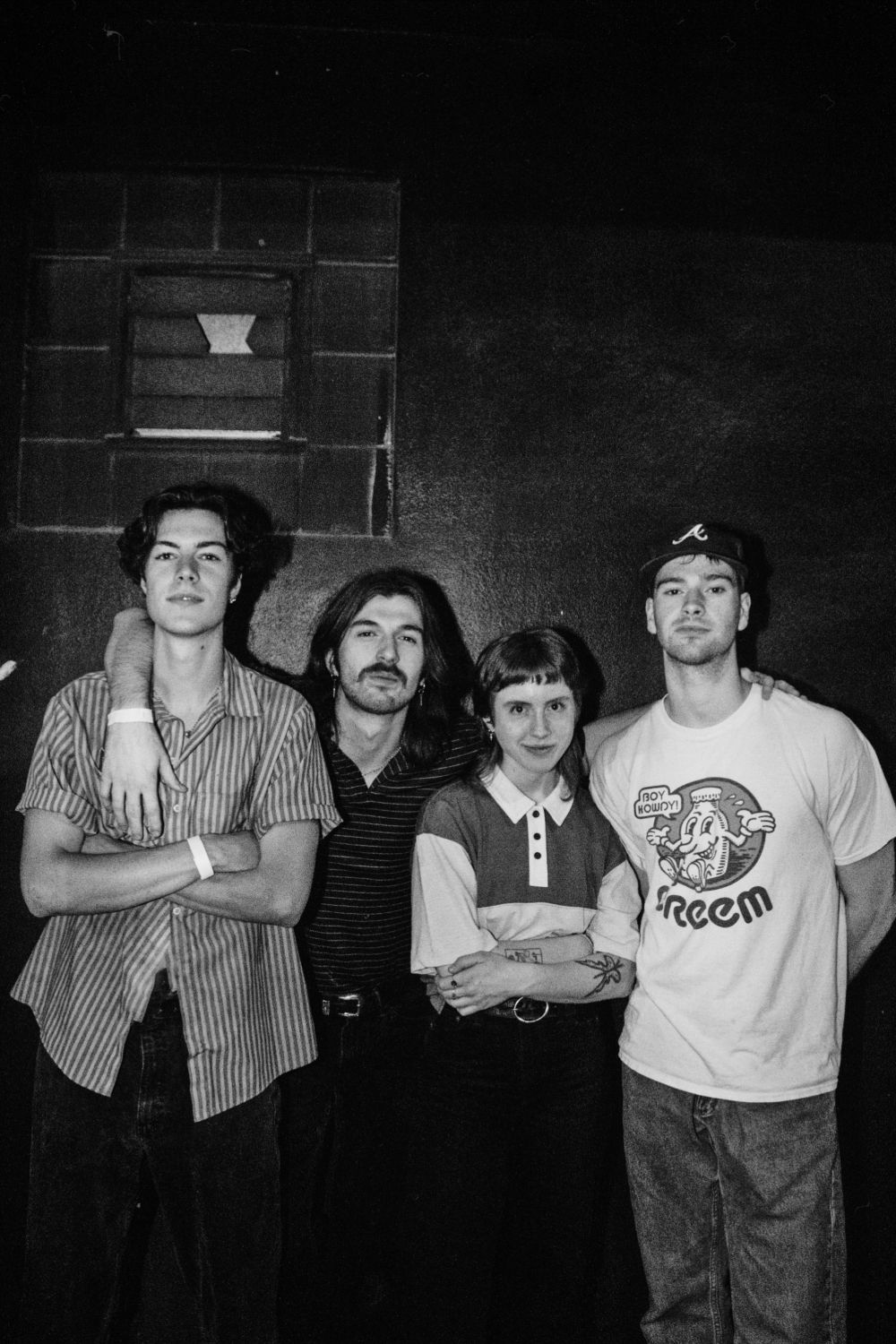
Photo by Orion Hastings
Right off the bat, “Wake Up” is built upon repetition, as Buenrostro’s words become temptatious over ticking tempos and glazed guitars; the track building with anxious anticipation but never feigning ignorance of what may lie ahead of this sonic daze. Following their previous single “The Color Clear”, a song that revels in the excitement of the band’s newfound successes, Buenrostro now grapples with the pressures of maintaining voice and clarity in the name of creativity and self-expression. “Wake up, wake up, wake up / Pay attention / Rockstars they never make in heaven,” she sings, her voice wrapped in contention while the weight of each phrase holds its own amongst the flood of sludgy guitars, wavering melodies and idiosyncratic percussion. And at the center of this spacious display, what feels like a distant worry now becoming larger as the gap closes, Starcharm is unwilling to let up, digging and digging further into embedded reluctance just to see what may be on the other side.
The release of “Walk Up” is also accompanied by a music video made by Amaya Peña.
This Friday, January 30th, Starcharm will perform as part of Tomorrow Never Knows Festival at Schubas Tavern for an Angel Tapes Showcase. Alongside Chicago peers Immaterialize and ira glass, Starcharm will also be joined by their coastal labelmates Jawdropped and Retail Drugs. Tickets are on sale now and available here.
The members of ira glass do not agree on everything. They have varying music backgrounds, varying listening tastes, varying stances on the accordion. They are four different people, after all – simply being in an experimental noise rock band together is not going to file down their differences and turn them into one homogenous organism. Nor should it, I cannot imagine the music would be nearly as enticing if it were produced by an army of clones. However, if there’s one thing the Chicago-based four piece can agree on, it’s webcore. They love ARGs and “low-res digital stuff”. They enjoy grueling scavenger hunts on archive.com, sifting through mounds of digital muck for something that resonates with them. They have created projections that collage videos sourced from Youtube rabbit holes. ira glass like making their own sense of the vastness of the web – spinning the overwhelming mounds of data it holds into a narrative of sorts, whether or not it’s decipherable to anyone else. Whether or not it’s even decipherable to them. “It’s like a willed, forced synthesis,” drummer Landon Kerouac notes amidst the webcore portion of our call. “A montage that doesn’t make sense but kind of works.”
ira glass’ approach to music is not too different from their mutually savored internet practices. In fact it’s essentially the exact same – though they would probably never say that, because they are not really the type of band to overly anatomize and delineate their own creative process. If anything, they are allergic to approaching music with too much cogitation, telling me that the act of intentionally striving to create something acutely new and never done before is a “nebulous, almost flawed way to go about art.” ira glass is not trying to forge some cunning new genre, in the same sense that they have no interest in tethering themselves to one that already exists. They just want to make music that they like. Music that resonates with them. Music that feels genuine.
The result is some sort of epic auditory Frankenstein; its appendages pulling both from the band’s external inspirations and “the id”. Out today, their caustic sophomore EP, joy is no knocking nation, is a sensical quilt that honors fragments and facets of their life at the time it was created. Some are discernible, like post-hardcore and jazz influences, wrath induced by infestations of faux-alternative characters, ambitions to experiment with unorthodox instruments, etc. Others cannot be outlined as easily, yet manage the same authentic impact. It’s an abrasive and charged listen, but never in a way that feels forced. The emotions are real, finding themselves in a sometimes crooked composition that winds up and down and adjourns when it needs to. It’s intense in a human way, and it’s honest without overly earnest lyricism.
“I just don’t like relying on the same old tropes, old school screamo doesn’t appeal to me,” vocalist Lise Ivanova tells me about her thoughts on lyrics. “It’s all very misanthropic or self-hating and I don’t feel that.” Instead of honing this sort of cynical pity-party poetry or accumulating shreds of intense vulnerability from their own lives, ira glass’ lyrics are detached and labyrinthine-like. They can be funny and intense and idiosyncratic, they can mean something to you if you’d like or they can just exist as another enigmatic component of the EP’s experience. It doesn’t really matter, the point is they exist in the same way as everything else ira glass creates; free from functional pressures and dilettante natures. It’s an ethos that glues together the eccentricity of their latest EP, and it’s contagious within the listen. Even in joy is no knocking nation’s harshest moments, characterized by discordant clamors of noise and shrill screaming, there is a lingering sense of comfort – perhaps even a certain catharsis, chipping away at the weight of various pressures and demands and self-inflicted factors that prevent you from just being your fucking self.
We recently spoke to ira glass about curating discomfort, “lame fake-alt people”, and joy is no knocking nation, out today via Angel Tapes.
This interview has been edited for length and clarity.
Manon: I’d love to hear how you guys just started playing music together. How did you meet and when did you start ira glass?
Lise: I moved to Chicago in October of 2022, I had lived in LA prior and had been trying to start a band there, but LA was not really fertile for bands. So when I moved to Chicago, I was dead set on starting a band, and I put up a bunch of flyers within a week of moving here, recruiting for a noise rock project and Landon was among the first to respond. We met at Whirl Away Lounge on Fullers End and talked about our influences and then we later recruited Jill – Jill and Landon know each other.
Jill: We used to work together at this french cafe.
Landon: Basically, Lise and I met in this almost romantic way – like a flyer, but then our two other members we know from day to day life.
Lise: Kaleb and I go way back. We lived in Albuquerque and were in a band called Thrush, it was a fake band because we only played one show, but it was still a good band. Even though it was a Big Black rip off. That’s how I know Kaleb.
Manon: It was fake because you only played one show?
Lise: Yeah. We practiced so much more than we played.
Manon: You mentioned that LA was not very fertile for bands. How does Chicago compare, and how would you say the scene there in general has impacted Ira Glass over the years?
Lise: I think there are more normal people here that aren’t, like, evil. So it feels better playing here.
Jill: There is a lot of collaboration, everyone is really friendly and they want to play a lot of shows with you and help each other out.
Lise: People are very sincere and driven. I feel like LA is very isolating and everybody is on a solo venture but there are a lot of bands in Chicago and people want to get together and play music with others.
Manon: You mentioned this idea of sincere and “normal people”. I feel like there is a presence of that on this new EP – maybe some exasperations about not normal people, or specifically, “freakos with hand tattoos”. How would you describe your relationship to sincerity?
Lise: Disingenuous people upset me deeply. Yeah. There are social climbers everywhere and there are lame, fake alt people everywhere. I don’t think that is exclusive to Chicago.
Manon: It’s definitely not.
Lise: But, I think there is more of a working class here. I guess that has something to do with it.
Landon: I can’t speak on it lyrically, but with our music and the composition, I think we are not necessarily striving for something new because that’s a really nebulous, almost flawed way to go about art. But also wanting to create something that comes from deep down.
Lise: Something from the id.
Landon: Yeah. [Our composition] is both really innate and also meticulous and thought out. I think that sort of synthesis gives us a sense of sincerity. I feel like we just go, “what feels right?”, and then meticulously work with and edit that material once it has come out of the depths. Would you agree with that?
Lise: Um, I don’t know.
Landon: Okay. Disregard what I just said.
Manon: I can also ask a more specific question about composition. I feel like when you make noise music, the ‘noise’ part is often rather defining, but you have a lot of interesting complementing instrumentals, and I really like a lot of the jazz elements within this EP – especially in the end of “fritz all over you”… that song is stunning. I would love to hear about your general music inspirations, and the kind of sound you were hoping to cultivate in joy is no knocking nation?
Lise: When we first started, I was super influenced by nineties Chicago noise, like classic noise rock, Albini, the Albini scene. And then, I was simultaneously also getting super influenced by mid-late nineties, early two thousands screamo, like Drones, Dream, and Orchid. So I think our first EP, compound turbulence, was definitely more influenced by those things. This EP feels a bit more post-rock, experimental, and post-hardcore. I think we are getting more into the jazz influence. Jill is a jazz head.
Jill: Yeah.
Lise: Jill, go ahead. Jill did jazz band.
Jill: Yeah. Jazz band. Throughout college.
Lise: You come from a jazz lineage.
Jill: Yeah, a lineage of jazz musicians.
Lise: And we all like jazz. I actually wanted a horn because of Brain Bombs, the way they use horns is so different. It’s not influenced by jazz at all. But Jill brings a very melodic kind of influence that I appreciate. Anything else about our influences?
Jill: We all come from relatively different backgrounds.
Lise: Landon, you like a lot of modern and contemporary noise rock.
Landon: Yeah, I definitely admire a lot of the nineties stuff, and I think what is happening with noise right rock right now is super interesting. Bands like Sprain and Shearling. Also Chat Pile. Then bands like Spirit of the Beehive.
Lise: Prostitute.
Landon: Yeah, Prostitute as well. I don’t want to keep listing band names, but I think Spirit of the Beehive is a huge influence compositionally because they don’t really have verse, chorus, verse, chorus, bridge – you know, it’s not a very orthodox song structure, but it flows really seamlessly. I think for us, maybe instead of seamless, perhaps our song composition is a bit more stitched together.
Lise: Contrived.
Landon: Not contrived.
Lise: Difficult.
Landon: It’s more stitched.
Lise: It’s a laborious taste
Jill: We figure out how to mesh different pieces together.
Lise: We are kind of math influenced in that way. Yeah math rock is also an influence.
Landon: Yeah, it’s this combination of “how can we do upside down music?” and the crazy math stuff and also stay true to the ethos of noise rock?
Lise: The banging rock and roll of it all. Kaleb, what do you like? Kaleb likes dark wave.
Kaleb: I’m more into industrial and German wave stuff. My stint with noise rock is more like Birthday Party and Scratch Acid.
Lise: Aw those are great bands.
Landon: I think some of that comes in with our experimentation with instruments. I think my symbol stacks can definitely be in the industrial realm. I think our horns too, and there is an accordion on the EP.
Lise: Which you hated. And didn’t want to use.
Manon: Anti-accordion?
Jill: He doesn’t like Organs.
Lise: He doesn’t like accordions or organs.
Jill: It’s the harmonics, right?
Landon: No, no. For the accordion…it was simply… I was fine with the accordion…
Lise: He has a fear of sounding goofy.
Landon: It’s a bit of a goofy instrument…
Jill: And the whistle…
Lise: The coaches whistle. He didn’t like that either.
Landon: It’s a bit on the nose.
Lise: Whatever, no big deal.
Landon: I think that the willingness to experiment with instrumentals, like real, storied instruments, is very seventies industrial. Instead of saying “what plug in can we use”, it’s using a kazoo, or a whistle, or something like that.
Lise: We haven’t used a kazoo yet, but it’s in our future. Our near future. Or a harmonica.
Landon: I don’t like the harmonica either.
Lise: You don’t like the harmonica either? Damn Dude.
Landon: No, I’m just joking.
Manon: Did you use the whistle? Or is that also in the near future?
Jill: There’s whistles. One coach whistle, two little whistles.
Lise: There are buried straggler whistles towards the end of the big whistle.
Manon: There’s obviously a level of discomfort to noise music, is that something you enjoy?
Lise: Yeah, we are all generally kind of awkward and uncomfortable people.
Landon: I don’t like music that sounds too pleasant or harmonic. I think the dissonance is really pleasing when it comes to melodies or chords. A word that is used a lot is angular.
Lise: Do you like that word?
Landon: Yeah.
Lise: Landon likes the word angular.
Landon: Angular is cool. There are different flavors of discomfort and dissonance, and I think angular paints a very particular picture to the sort of dissonance that we like. It’s a more intentional discomfort.
Lise: Yeah that’s true, we like dynamics. Contrast. We live for the contrast.
Jill: It can’t all be uncomfortable. You have to lure them in.
Manon: What do you hope to achieve when you play these tracks in a live setting?
Lise: We don’t like banter.
Jill: We don’t talk. We don’t smile.
Lise: Yeah I feel pretty distant from the audience, or I shut the audience out. I don’t even see them, my eyes are closed most of the time. I feel like it’s purely a live display of our music.
Landon: We’re obviously doing this for a love of music. But as we love music in theory, I think sometimes being on stage is like a compulsion. I feel like when I am up there, I’m just reacting to things, and trying my best to keep up with it.
Lise: Yeah, it’s like we’re floating. It feels so dissociative.
Landon: Which is a very unique experience. It’s not the most pleasant, but it can also be crazy rewarding if it feels right.
Lise: We’re playing aggressive and sometimes difficult music. It’s not like the songs come from this place of deep, dark self-loathing, but it still is very emotionally taxing and cathartic.
Manon: So the actual nature of the music is more taxing than the lyrics. Your lyricism is awesome though, very eccentric and a bit convoluted. Can you tell me a bit more about that?
Landon: That’s all Lise, it’s a black box to the rest of us.
Lise: Shit, I don’t know either. I do a lot of unconscious, ‘spitting it out on a page’ writing, or I have done the classic cut-up thing where I try to take lyrics from elsewhere. I like the Melvins’ way of writing, just nonsense that is still really evocative. I think you can use words that do not really make sense and they can still evoke a really strong image, and I think that’s what I am trying to do with my lyrics most of the time.
Landon: As an observer and not necessarily the author, I think it’s sort of like vignettes in a way. Would you say that?
Lise: Sometimes. I’ve been known to write a vignette from time to time. I like to think about strange situations that I haven’t experienced myself and try to describe them. I think about other people’s stories a lot.
Landon: There’s a depravity to it in a way.
Lise: People have said that. I guess it’s depraved.
Written by Manon Bushong | Photo by Derrick Alexander
I’m sitting here, writing this review after running into an old friend at the Logan Square train stop, remembering and examining the guilt and embarrassment I feel for what happened to this friendship I stopped cultivating. We planned to meet up over coffee this coming weekend: there is hope. Clover, an album that explores the experience of being an exactly real person, a “three-leaf clover,” and all the remorse, regret, and quiet weight of simply existing, taps directly into those same gnawing emotions. It reminded me of what it means to acknowledge your simpleness, to be human, and to sit in it — the good and the bad soup of it all.
Released this past February, Clover, the debut album from Chicago’s beloved Sleeper’s Bell, feels like a diary being read aloud. But done in such a way that you start to wonder if it’s your own, the one you keep in your sock drawer. With poetically simple and realistic lyrics like “I exist” (“Bored”) and “We watched the Triple A guy take his cables and jump the engine” (“Phone Call”), Blaine Teppema sounds like she’s speaking directly to you.
The songs pull you into a world that just makes sense. Clover doesn’t draw a line between the band’s world and yours. Instead, the artistry anchors both in something more collective: the beautiful ordinariness of real life. Listening to Clover doesn’t feel like stepping into someone else’s story. Instead, it feels like being gently reminded of the unified human landscape in which we are all growing.
Musically, the addition of saxophone to the usual trio of guitar, piano, and drums adds a deeper, more complex mood. Tempos and temperament change throughout the album, and Teppema’s sharp, clear vocals cut through the instrumentation with a directness that makes you pay attention. The “jam” bridges create atmospheric space that’s almost like the author is thinking about what to tell next, as if it’s happening in real time.
Played by Teppema, Evan Green, and other bandmates Leo Paterniti, Jack Henery, Gabe Bostick, and Max Subar, playing together feels spontaneous, carefree, while maintaining clear, intentional musicianship. Sleeper’s Bell plays with arpeggios, ambient noise, bass-heavy build-ups, cheerful melodies, distortion, and even touches of jazz, like a child building with Legos, unafraid to mix pieces that don’t traditionally fit. Clover leans folk at its core, but it’s this sense of curiosity and craft that sets the band apart in a saturated musical landscape.
Clover feels youthful, not in a naive way, but in a way that feels familiar and lived-in. It’s introspective and honest, filled with the kind of self-awareness that only comes with personal growth. The track “Over” captures the feeling of moving through an emotional numbness; its steady, chugging guitar strumming mirrors that sense of pushing forward despite emptiness. The lyric “but I’m just a three-leaf clover” carries a quiet resignation, a sense of being let down by the ordinary, yet learning to accept it.
In contrast, “Road Song” uses dissonant chords and a faster, skippy rhythm to convey a different kind of motion: one that feels restless and searching. It’s about trying to reach a place that may not exist, but holding on to the idea that it could.
Clover doesn’t beg to be heard. It just kind of sits with you, like a quiet thought you didn’t realize you needed to say out loud. It’s not trying to solve anything, but it does make you feel a little less alone in the figuring-it-out part.
Sleeper’s Bell has made their debut album, something that feels deeply personal but not isolating — a moment shared, like running into someone you thought was long gone and realizing you’ve changed and so have they.
Clover is for the in-between weird times, like growing up while staying the same, feeling anger with embarrassment, having regrets while fostering renewal. It reminded me that even in the human mess, there’s value in just existing through it.
Maybe that’s what being a three-leaf clover is about.
You can listen to Clover anywhere you find your music as well as purchase it on vinyl and cassette.
As the dog days of summer have come and gone, the newly formed Bloomington-based band Just Penelope is here to stay as they share their debut single “June, July”. Just Penelope, consisting of University of Indiana classmates Ella Curiel (vocals/guitar), Ethan Cantrell (drums/vocals) and Drew Goforth (bass), recently signed to Angel Tapes, the Chicago-based imprint of Fire Talk Records. Upon the release of their new single, Just Penelope lay it all out within their type of midwestern exceptionalism, where the blend of dynamic noise and earnest storytelling find revelries in the caricatures that live and foster life in the middle country.
Singing the praises of the power pop connoisseurs and starry-eyed romantics alike, Just Penelope enters rattled, but not deterred, as Curiel breaks ahead, singing “June, July / My shoes untied”, and leading the calloused guitars and clotted percussive motion on a mission. Written about a skateboarding injury following a parental spat, the song levels that teenage potency, where emotions feel too big to put into words and heavy distortion and scrapped knees both hold a place of fondness for rebellion and self-determination. As the song builds, embracing the heavy undertones and the melodic strains, the break in the song’s dynamic pacing showcases the intentionality behind the gives and takes of our day-to-day actions, throwing caution to the wind as we relish in that invincibility we feel in the moment.
Watch the music video for “June, July” directed and edited by Keegan Priest.
You can listen to “June, July” out everywhere you find your music. Keep an eye out for more to come from Just Penelope.
Written by Shea Roney | Photo Courtesy of Just Penelope
Imagine if the swarms of songs we got during the golden age of grungy power pop came out forty years later. Would Teenage Fanclub reference CoStar in “Star Sign”? Could we expect a hyper pop element in American Thighs? Probably not, and I doubt anyone has spent much time mulling over those dumb hypotheticals because those songs in themselves are timeless; the only constituent that truly tethers them to a sense of nostalgia is the sheer abundance of really good alternative rock they were birthed alongside. It is not often done well (or frankly, done at all) today, hence why you might be not truly convinced that Jawdropped’s staggering debut EP is a 2025 release until you hit the third track and a cheeky opening line about Venmo stalking pummels you back to the era of Sweet Green salads, online dating and “Instagram Face”.
The LA based band was formed a little over a year ago by Kyra Morling, Sean Edwards and Roman Zangari, their ties to the city serving as integral a role in the project’s identity as their shared praise for the Lemonheads. The spirit of Los Angeles lingers throughout their debut EP, personifying the heaviest in final track and lead single “Star”, which explores the ventures of an ambiguous (and somewhat malnourished) caricature swept up in the stereotypes of Hollywood. Tucked between confident guitar riffs, catchy pop hooks and bursts of satire are also pockets of honest sincerity and introspection, and while they never kill the buzz of the EP’s ridiculously fun nature, they do elevate the complexity of the narrative the band has chosen to share. On standout track “Outside”, the tough enamel of sneering one liners wears thin as Jawdropped establishes feelings of social purgatory through a circling of the lines “a little on the outside / a little on the edge of in between” cushioned by a series of emotionally potent “lalalalalas”. Out today via Angel Tapes, Just Fantasy boasts nostalgia without ever presenting like a knock off, jamming strong vocal harmonies, jangly guitar and witty sincerity into five explosive, ridiculously fun and instantly classic melody-driven tracks that are damn-near impossible not to love.
We recently got to sit down with Jawdropped to discuss inspirations, their unwavering pride for Los Angeles and debut EP, Just Fantasy.
This interview has been edited for length and clarity.
Manon: So Just Fantasy is a debut release, but I am so impressed by how clear of an identity and personality there is to Jawdropped and how that comes through on this EP. I would love to hear about the formation of the project and what went into creating this sound?
Roman: We all met in LA, just through the music scene here. We have all played in other bands and had previous projects and were just mutual admirers of one another in terms of music. I had started some songs that did not fit with my other band and started working on some stuff with Kyra and then we were like let’s make this band. We got offered to play a friend’s house show in March of last year and it kind of galvanized everyone to try and create something
Sean: We all hung out at some hot springs one day for our homie’s birthday, and we talked about the Lemonheads and Teenage Fanclub and Roman had these songs and we were all like “oh these are dope, let’s do it”. It kind of just worked really fast, sometimes you jam with people and you’re like okay cool probably won’t do that again, or this probably won’t go anywhere. But I feel like right off the rip when we started playing together and working on songs, shit was really easy and fun and felt worthwhile. It was never a question of ‘should we keep doing this’? It always felt very natural.
Roman: We went to see Dando.
Krya: Oh yeah. Did we see him around March?
Sean: I think it was right around the time we started, we all went to see Evan Dando play solo and had a really fun night together.
Manon: That’s Awesome. Okay so then the Lemonheads… would you say biggest inspiration for the project?
Roman: I would say it’s the North Star, at least for the first batch of music
Manon: You mentioned you met through the scene in LA. The city seems to play a pretty substantial role in Just Fantasy, can you tell me a bit more about your relationships to LA and how it influenced this EP?
Roman: To me, it’s super important that there’s an identity to the band that is rooted in LA. “Star” is pretty on the nose, and some of the other stuff is as well, but I do think there’s a certain quality of music from LA that maybe we are trying to follow in the footsteps of, or just a lineage we want to be a part of. It’s intentional, I wouldn’t want somebody to hear the songs on the EP and be like “is this a band from New York?” I think it’s a point of pride, being located in LA. Cook is from LA, Sean is from Moha, so right outside.
Kyra: You’ve lived here for years, and I’ve lived here for ten years.
Roman: Yeah the music scene here is just very near and dear, and I think we’re trying to embrace that rather than shy away from it.
Sean: Everyone plays well and everyone looks cool, I mean it’s the same as New York in that regard. To make it you have to have a sound and a cogent idea that you’re trying to hit because everyone is serious and everyone is good. I guess in a weird way it’s an industry town. So if you’re not really going for it and gunning for a sound and practicing a lot, there really isn’t a point. When all your friends are really good and all their bands are really good and doing a certain thing, it pushes you to be better. You don’t want to suck, because no one else does.
Manon: Besides “not sucking”, which I’d say you’ve achieved, do you feel like that pressure, and being surrounded by so many talented artists, has impacted the project in any other way?
Roman: I honestly haven’t felt a ton of pressure. We’ve been lucky, since we’ve all been playing music in LA for such a long time and we know a lot of people so it has been pretty easy and mellow, it doesn’t feel like we are starting from scratch is I guess what I’m trying to say. I also think we are tapping into a different sound, one that I think is lacking in the scene. We just want to make power pop, catchy rock songs. Also we want to put on a good show so people want to go, maybe know the words, have a good time, but know that we’re putting it all out there.
Manon: The EP is definitely catchy, and also I would say quite witty. Can you tell me a bit about your lyrics and the narratives you are creating?
Roman: I gravitate to songs that tell stories, like Neil Young, Big Star, a lot of country stuff, Lucinda Wlliams. Songs that when you hear them it puts you in a place, and they’re about people you relate to or gravitate towards or just are kind of interested in.
Kyra: I write kind of therapeutically. Also sometimes I get a song stuck in my head and it’s just repeating over and over, so I actually write fairly fast because we spend a lot of time in our cars here, so I’m constantly writing in the car or if I’m alone at the wine shop. It’s usually like a word vomit thing and then I just refine it over time. I guess I write more from feeling, and [Roman] is more focused on stories, maybe more observational.
Roman: You know when you can’t tell if a band is talking about themselves or somebody else. It’s sometimes kind of nice to leave a little bit to the audience to apply meaning, you don’t give them the full story. You’re just kind of giving them a little.
Sean: I feel like “Star” is as much about us as it is some third person we are making fun of, you know? I mean we… no one’s a stranger to you know, not eating right and maybe doing drugs.
Kyra: And hanging out with models.
Sean: Maybe you Kyra. Kyra hangs out with a lot of models.
Kyra: Cooks a model. He’s in the room with us right now.
Just Fantasy is out everywhere today. You can order tapes via Angel Tapes.
Written by Manon Bushong | Featured photo Alyssa Soares
This Friday, Sleeper’s Bell is offering Clover, their long-awaited debut LP via Fire Talk’s Chicagoland imprint label, Angel Tapes. Looking ahead to this release, we are excited to be celebrating Sleeper’s Bell week here at the ugly hug with two different features!
Originally formed by Blaine Teppema back in high school, Sleeper’s Bell was first found by many listeners with the release of her debut EP Umarell, released back in 2021 and having since been reissued on cassette in 2024 via Angel Tapes. It was a raw, and rather memorable collection, as its longevity is a sentiment to its articulation of heart, something that she so beautifully made mindful in its short run time. Fostering a reciprocal relationship with storytelling, Teppema’s presence within her words has always been one of desirable consciousness and stimulation – like biting into a citrus fruit and lingering with the reliving, sweet flavors while fighting with the stringy pith that’s left behind, stuck between your teeth. With the addition of Evan Green on guitar, Sleeper’s Bell became a project unknown to Teppema, not out of lack of recognition, but a rather new and open space with no defined limitations – a chance to strive for clarity where there was sometimes none before. With songs dating back almost a decade now finally in one place on Clover, the duo has taken every part of the process step-by-step, embracing a type of chronological association where both beauty and trauma hold the cards and Sleeper’s Bell decides when to slap them down.
Embracing the vivid talents of the Chicago scene, Clover also debuts the duo working with a full ensemble of notable players including Jack Henry, Max Subar, Gabe Bostick and Leo Paterniti, putting a newfound life into the already lasting structures of a Sleeper’s Bell song. But as Teppema and Green have spent the last two years recording Clover, building upon their trust as both collaborators and friends, this debut marks more than just the release of some rather beloved songs. It has become a full story, an almost novelistic dream of what it means to love and to be loved, to be hurt and to heal, and to simply make art with your best friends.
With Clover’s release this Friday, the ugly hug is featuring Sleeper’s Bell in two different ways today. One is a conversation in which we recently sat down with Teppema and Green to discuss the duo’s origin, vulnerability in sharing, friendship and the making of Clover. The second being the debut of a new series called the ugly sessions.
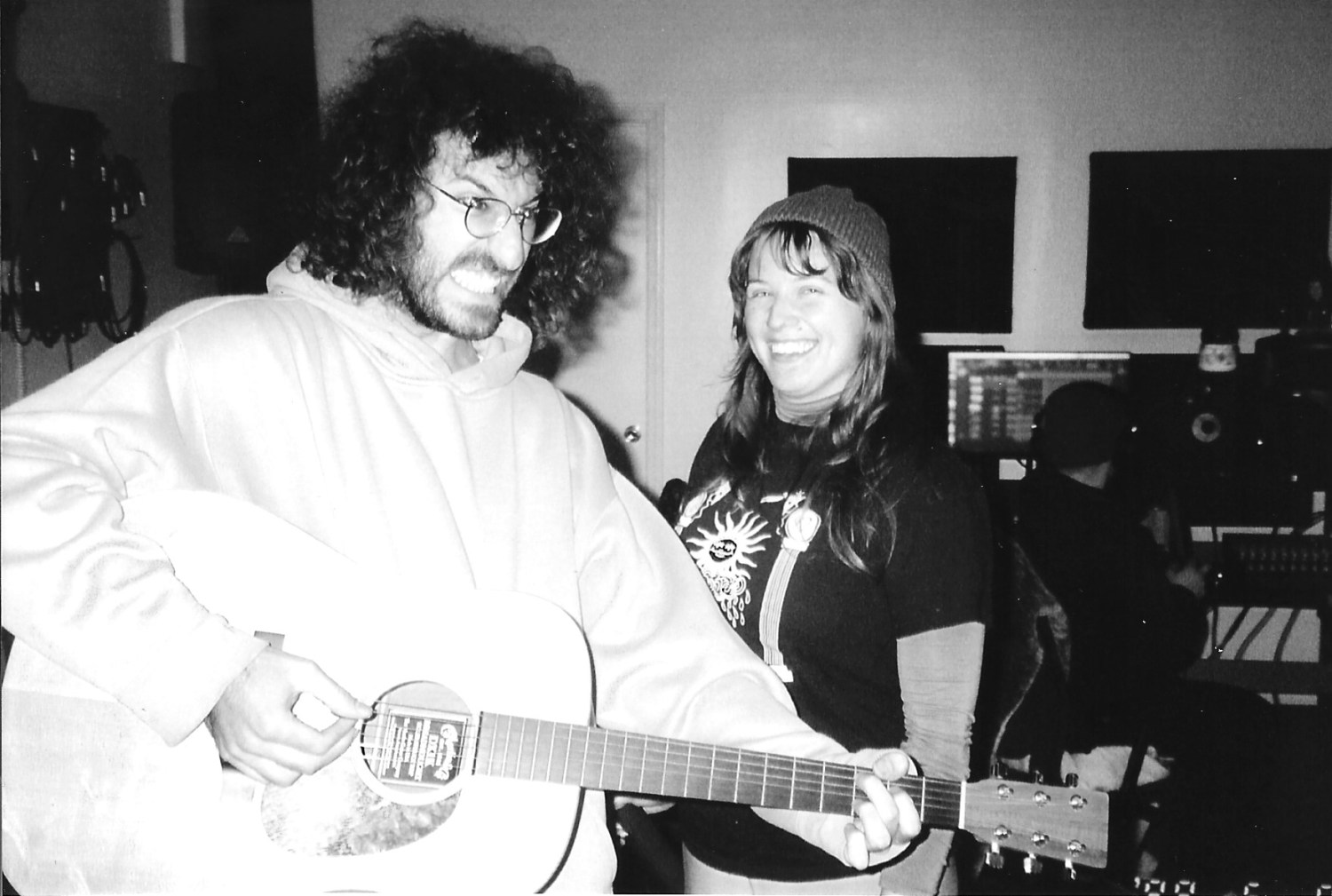
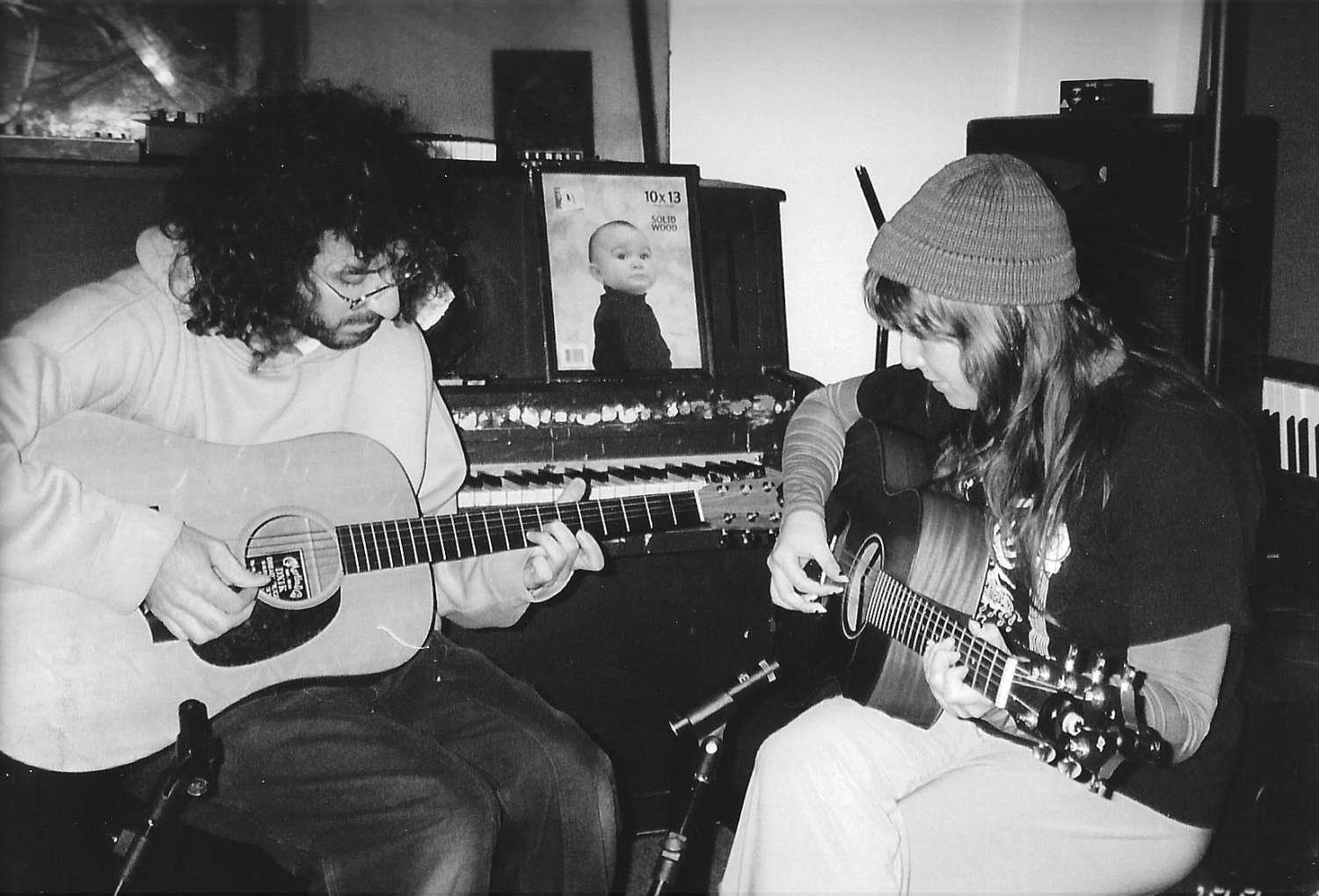
Watch Sleeper’s Bell perform in studio below.
This interview has been edited for length and clarity
SR: We are almost upon the eve of your debut LP, Clover. Looking over the edge now, how does it feel?
Blaine Teppema: I’m ready. I feel like I’ve been so up and down about the release process for so long, and now I’m finally in a stable place with it. It feels good.
Evan Green: It’s like the stages of grief, seriously, you know what I mean? At each part, there was like a mourning for the loss of the part before it. There were hurdles each step of the way and it definitely would feel impossible at times because it took us over two years.
BT: We were so new to every process. I’ve never recorded in a studio and I’ve never recorded with a band or really worked with other people besides Max [Subar], who was really hands-off with the process, so every time the band figured something out, we couldn’t sit with it or spend time thinking about it or really work on it. It was just on to the next part, you know? And now we’ve been able to sit with everything.
EG: We’ve come so far with the music and being a band. We were not even a full rock band before the record because it was just Blaine. And then Blaine added me to the project, just us playing duo for almost a year. And then when we started recording the album, we would get to the studio and literally I would play bass, Blaine would play guitar and sing, Jack [Henry] was on drums and Gabe was just in the recording booth pressing record, and we would just figure out arrangements for all of the full band songs on the record while it was recording. We only would play it ten times and then we’d just pick the best one.
BT: It was always the first or second one. That’s usually how it is.
SR: Was it weird figuring this out, you know, not allowing yourself to sit with pieces you just learned as you kept pushing through?
EG: Since we were at the DePaul studio, Gabe was like, ‘okay, I have this window of time for you guys to be able to record here for free’, before he graduated. We were like, ‘okay, we want this record to sound like this…’, and we just started doing it. So we felt this time pressure. We were all so busy. Eight songs done. We had those initial sessions and then we were still committed to working with Jack on the record, but he would go on tour and we would have to wait a month or two at a time and then get back to working on the record. We kept having to put things on hold, so we would have this moment where we would be working on everything and it would feel incredible, but then we would have time off. That kind of kept going until December of 2023 and we decided that Leo [Paterniti] and I were just gonna mix the record and we finished recording everything at our house and we mixed it all in our bedrooms.
SR: You can tell this album works like patchwork, but it fits so cohesively, especially knowing the whole ethos of this record piecing together old and new songs you had, Blaine. But this project has been your personal thing for almost a decade now. Was this how you envisioned Sleeper’s Bell would be when writing as a teenager?
BT: Hell no. I was so meek about music. In high school, I didn’t really show anyone my music and I didn’t like performing. I feel like it was something I would just get high and make a song on GarageBand and post it on SoundCloud, you know? And that was basically how I was able to function as a teenager – I would just record in my room alone all the time, and a lot of those songs I was so critical of, and a lot of them are gone. I would put it up and then I’d be like, ‘It’s so stupid, stupid, stupid,’ and I’d delete it. I thought that was me being humble or something, or, you know, having humility. But I think, in retrospect, it’s a form of ego to be like, ‘it’s not perfect, so it’s not me.’ Then I had these songs that I had written in college, and Max had a studio, so I felt like I should just record them and it was just gonna be a one-and-done thing to say that I did it. But I didn’t like playing shows.
EG: You did play a few shows though. I heard that Umarell EP through our mutual friend Lilly, and we were falling in love to Blaine’s music. It was really crazy because I was so in love with the songs and I was starstruck by Blaine. And when I moved back to Chicago, I was like, ‘I want to join the best bands. I just want to play music and be around other artists and other people that inspired me to write music and create.’ And ever since I heard [Blaine’s] music, my dream band would be to join Blaine in Sleeper’s Bell. It was a thought that I had, and then a few months later, Blaine hit me up to play a show. I was so scared [laughs]. I was terrified.
BT: Well, again [to Evan], you’re the reason that I like playing shows now. And I like every process that isn’t just sitting alone and writing. You’re the reason that I like sharing now.
EG: We had fun. The first practice was kind of… I feel like it was the perfect example of just how the rest of the journey would be when [Blaine] came over. I was nervous to play with [Blaine], and she comes over and goes, ‘oh, God, wait. I haven’t touched this guitar in months.’ She then takes out her guitar and strums it and it’s rattling. I take it and I turn it upside down and shake it, and dust bunnies just start pouring out of the sound hole [laughs]. It was like a magician’s handkerchief! It just kept coming off out and coming out.
BT: I wasn’t lying!
EG: And we just broke the tension. And then we played that show at the Golden Dagger, and everyone was just silent. It was almost sold out or something like that and we were so nervous. You could just hear a pin drop. We both felt high afterwards, we were shaking with excitement.
We just couldn’t believe it. That just kind of made it. After that, we just felt like we could do this.
BT: I had never really felt that way after playing a show because I was never prepared. I would go into playing a show and I would be fucking up and I wouldn’t have enough songs to have a whole set, so I would play for 15 minutes and be like, ‘I’m fucking done.’ But [Evan] helps me have discipline.
EG: I mean, you’ve grown.
BT: Yeah, I have to respect it all the time even if I’m not feeling it all the time. You know?
Photo by Athena Merry
SR: My first time hearing Blaine’s music, similar to your story, Evan, I was just, you know, completely enamored. I would even listen to it while I ran [laughs]. But it’s funny because I did an interview with Hannah Pruzinsky, and they were like, ‘what are you listening to?’ I was like, ‘have you heard of Sleeper’s Bell?’ They texted me later that day saying something like, ‘it’s so good! I just listened to it on my run.’
BT: [laughs] Oh my god! I love running to sad music. I think it’s because it makes me feel like I’m trying to get to the train station before someone leaves so I can profess my love to them. It’s like a mission.
SR: I completely agree! And then the first time I saw you was that insane four bill at Sleeping Village. It was you two, hemlock, Lily Seabird, and Merce Lemon.
BT: Was that the show where we came out and there was feedback immediately? Probably. That was also the show that I walked off stage with the cord still attached to my guitar.
EG: Some of those early ones were a fever dream. We didn’t have our tech stuff figured out, and running into awkward setups, and if people are talking it can be difficult. It’s a learning experience, but that show was a bit of a rough one for us.
BT: Also we just weren’t besties yet. That makes all the difference. Trust is huge.
SR: Blaine, this album is a constant dialogue between you and your younger self, responding to old journal entries and songs now as an adult trying to heal. What was this experience like in the beginning, and did it shift at all as this album started to become more feasible to you?
BT: I wrote the first song on the album when I was 16 and I wrote the second song on the album when I was 24. And then everything else is in between. But the last song, I wrote when I was doing trauma work in CBT, and a part of that was that I had to go back – I’ve been keeping a journal since I was nine. And as a true librarian should, I have them all archived and numbered on my wall. I never touch them. It’s like fucking dynamite – but as part of the therapy practice, I had to go back and really relive a lot of situations. That’s where the last song “Hey Blue” came from. It was part of forgiving, my inner child sounds so corny, but, you know, letting her know that I love her. But I feel like there’s a line that you tow with vulnerability, that you can give yourself away completely, and I did want to protect myself a little bit. So I did want the songs to be kind of a bop. I wanted them to be fun and energetic, so that I could play with that a little bit.
SR: In what ways did you play with rearranging the songs?
BT: Well, a lot of them weren’t like that when I wrote it.
EG: Oh my god, yeah, that’s where the grooves come in. When we first were playing these songs, they were slow and they were really, really sad. Kind of just meant for a duo setting. But we ended up taking all of those songs and sped them up, like, quite a bit, and the groove of the songs just came naturally.
BT: It just felt like a nice recontextualization. We were having so much fun, we’re in the studio, we’re joking. We were just so happy to be there and there’s nothing we’d rather be doing. I feel like that comes through in the music as much as whatever I was feeling when I wrote it.
SR: Working with the older songs, how much did you hold true to the original and how much would you change when it came time to putting this record together? When trying to hold that throughline between Blaines, what was that process like?
BT: I feel like once I write a song, I can’t change. I just don’t know how I would go in and change it, you know? If anyone else wants to try to change anything, you can, but my brain doesn’t work like that. I feel like we definitely had to doctor up the older ones a lot more because it was just, like, they weren’t as interesting.
EG: No, it wasn’t that they weren’t as interesting, but we were trying to make them fit with the other songs. Like the song “Over” just flowed so naturally. I feel like you can kind of feel it in a song, “Over” especially, how naturally things kind of flow, versus “Bored”, which was more of a puzzle, thinking, ‘how can we match this story that Blaine is telling to an arrangement?’ We have pedal steel, we have keys, we have acoustic 12-string doing these plucks, and all these elements kind of just weave together.
SR: This was also your first majorly collaborative release, quoting it as an ‘assemblage of chosen and real family’. What was this transition like as a solo writer to then a duo to now a fuller ensemble sharing ideas?
BT: Yeah, it was hard. It was really emotionally taxing, you know? I was afraid for a long time, in a similar vein of performing, telling people what I wanted. I realize now that that’s the most helpful and kind thing you can do is to tell someone exactly what you want, and that goes for anything in life. I still struggle with that, and [Evan] helped me a lot with that because I feel like we have a similar vision for it now, where it’s like we think the same things sound good.
EG: I feel like that has been maybe one of the most crucial aspects of our friendship and our musical partnership, the way in which we were able to build trust and help each other. We went from not having any experience and not knowing how to express our likes and dislikes or our preferences. It was just a whole process of growth and pushing each other to be honest. It took over two years to make the record, and we went from not knowing anything to we’re making every decision about this.
EG: But it was really hard. It takes a lot to trust, and at the same time we were making this record where [Blaine] is just being incredibly vulnerable with the lyrics and the stories she was telling, and we put so much love and care in the record. It was such an emotionally loaded experience because of how much we were enjoying it and it was so validating to have these moments of personal growth show in the record.
BT: It’s actually like, ‘this is what I really think because now I’ve been using that muscle, you know, one that I’ve been ignoring for so long.’
EG: Yeah because we were in the studio, we were like feeling confident, we were learning these skills and learning to trust ourselves and like, ‘oh we’re making a record and this is a legit thing we’re actually doing.’ And I feel like at the same time you were growing and learning to say no and stand up for yourself in relationships extending outside of the music process and that’s something. It’s not just like we were making a record, but we were deepening our friendship and deepening the trust between us and sharing these really vulnerable moments while also sharing the creative process.
BT: It was like the most fun I’ve ever had, and the hardest I’ve ever laughed. I was laughing so hard. It’s like we invented a language. I mean that happens when you have all your defenses down and you just want to make art with other people. It’s really just like a fast track to a shared language.
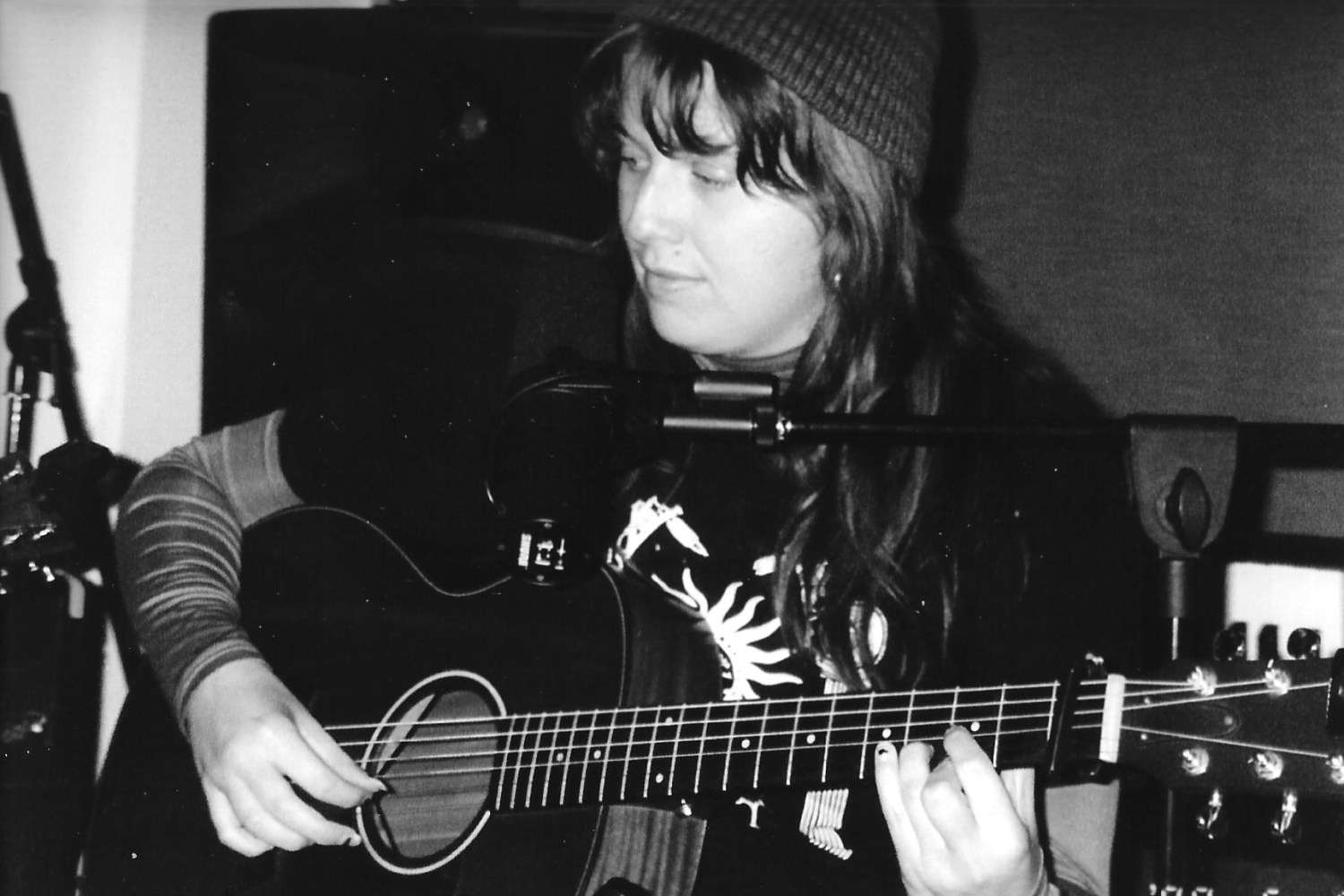
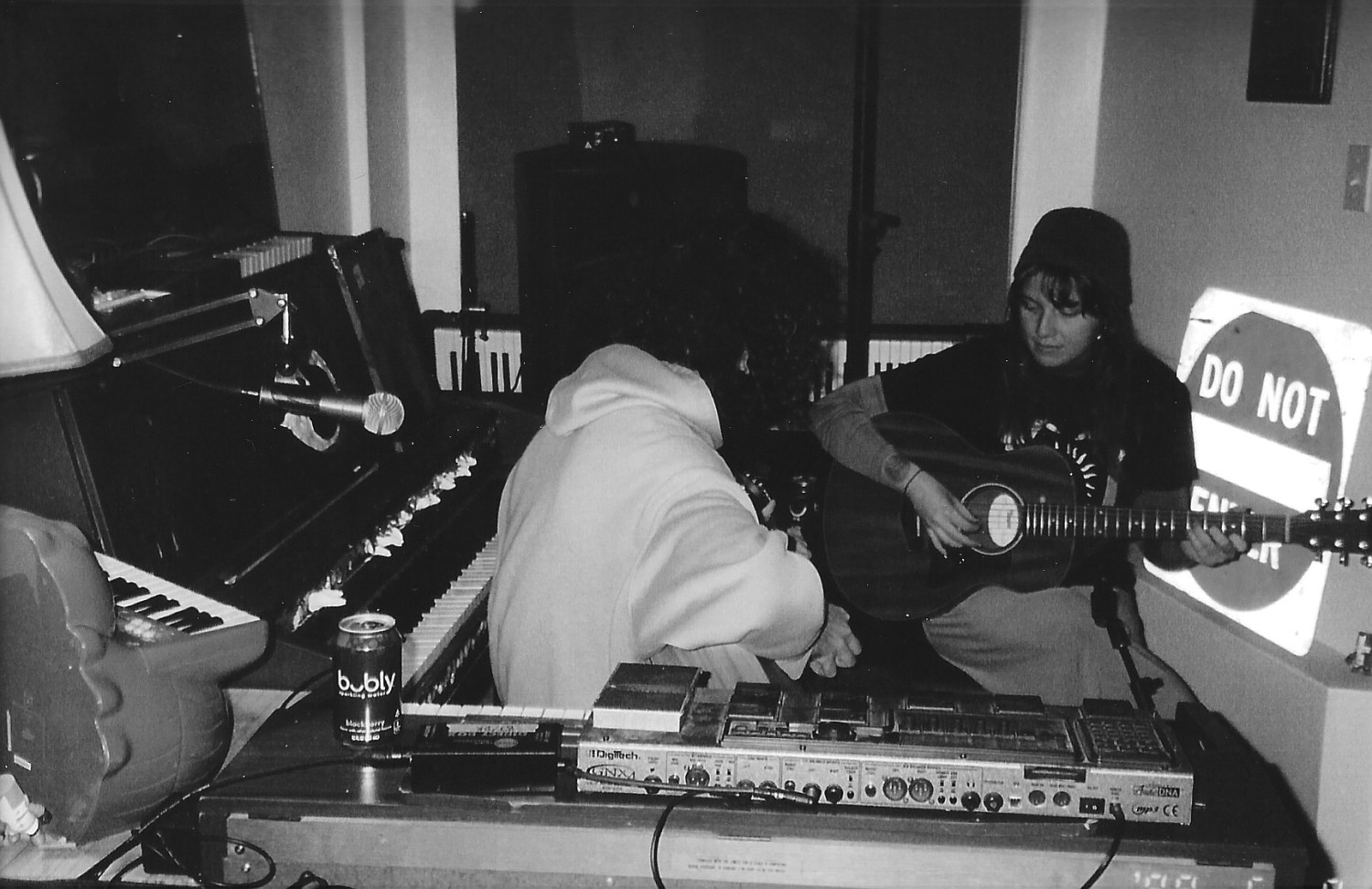
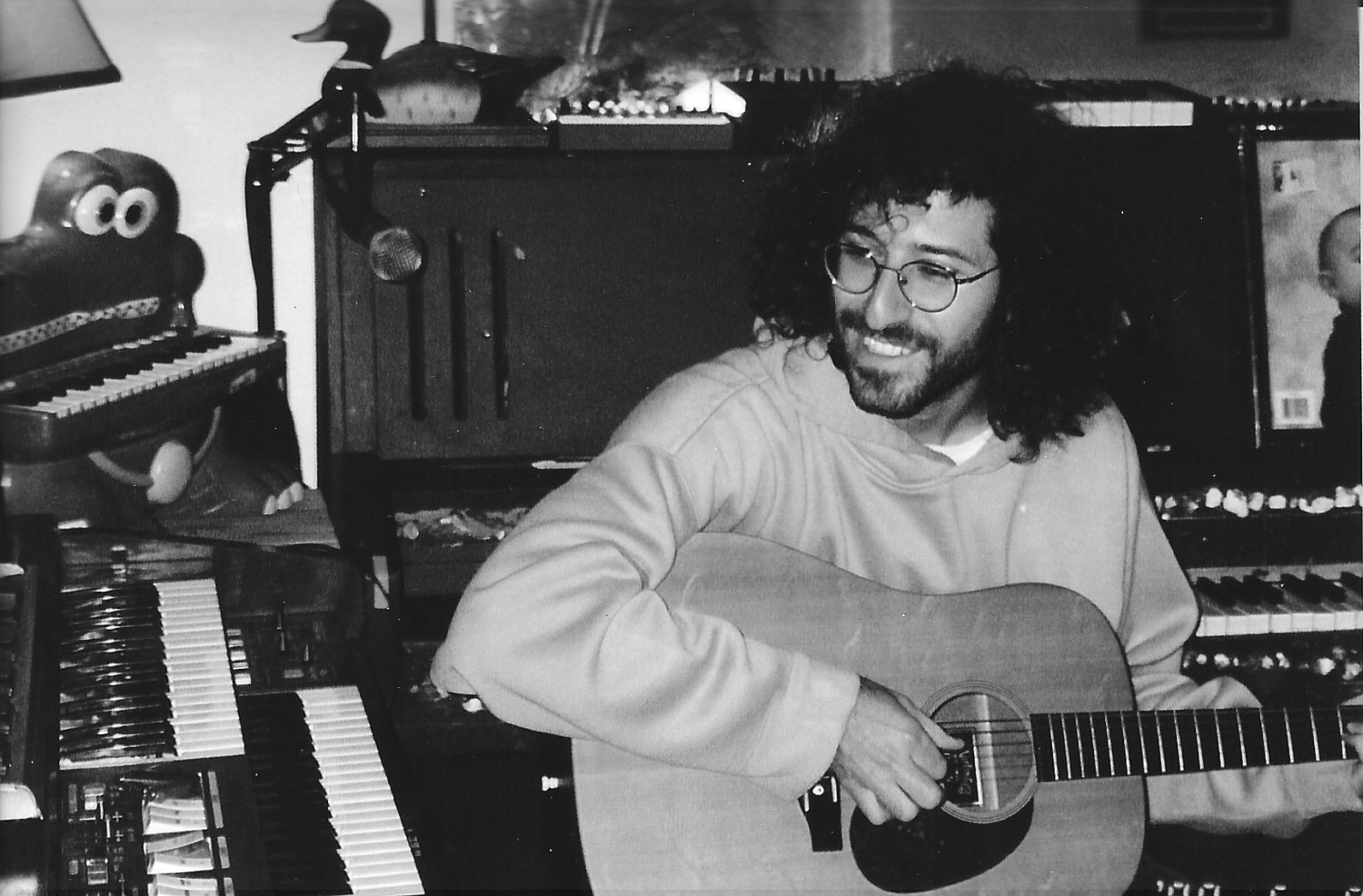
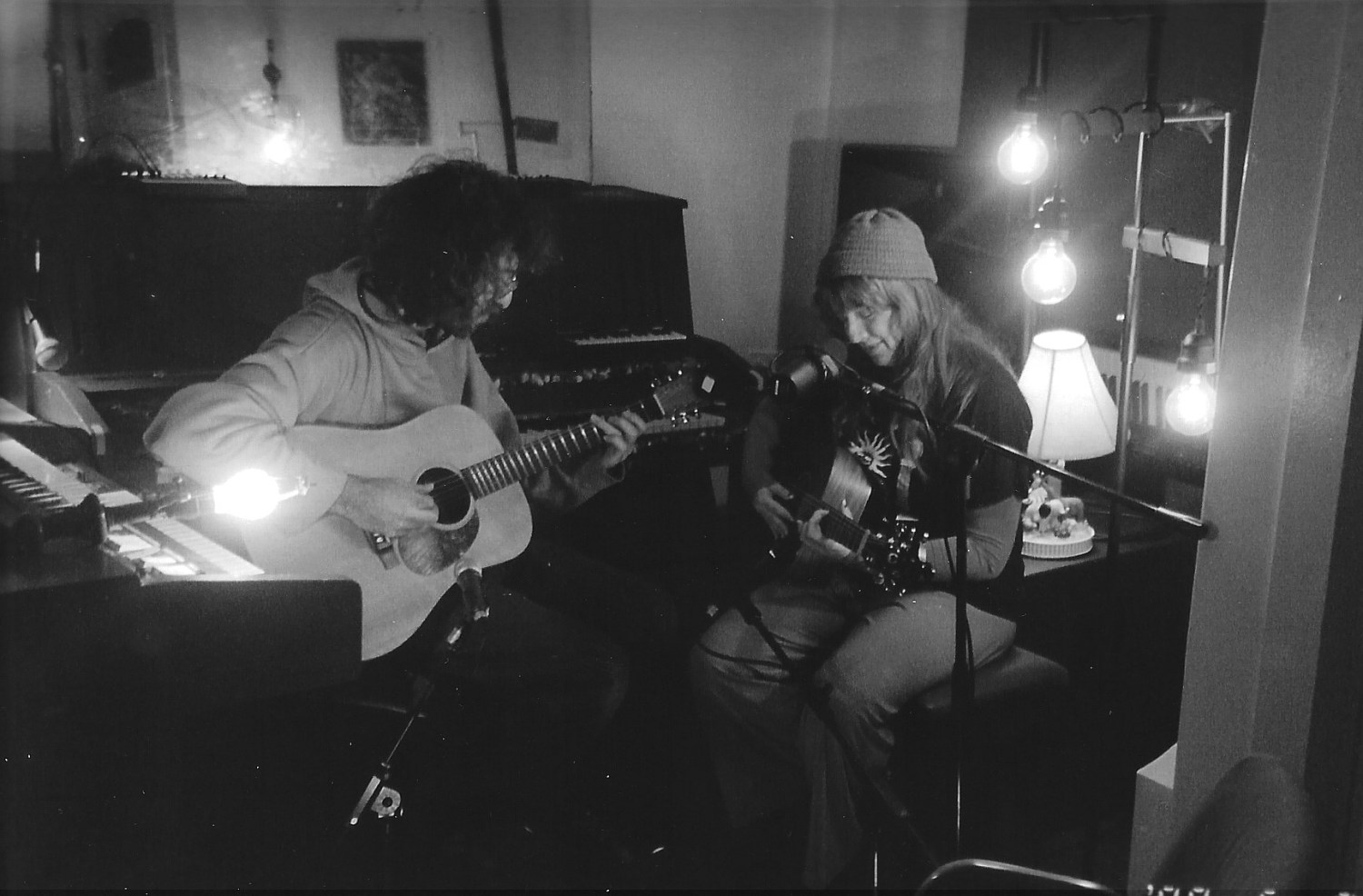
Scroll through photos from Sleeper’s Bell’s ugly session here!
Clover is out everywhere this Friday. Preorder your vinyl and cassettes via Angel Tapes. Sleeper’s Bell will be celebrating the release of Clover with a show at The Hideout in Chicago, Saturday February 8th. Get tickets here. If you preorder the vinyl, you will be entered into a free ticket giveaway. Winners will be picked 2/7.
Written by Shea Roney | Feature Photo by Athena Merry
“I was so nervous it was just going to sound like a collection of songs? In hindsight…what the hell does that even mean?” Victoria Winter reflects in between sips of chai tea.
We are having the age-old ‘what makes a record’ conversation. It’s a topic that leaves room for hours of discourse, but for New York based Shower Curtain’s debut album, the answer is relatively straightforward. Titled as an ode to the band’s journey, governed equal parts by fate and Winter’s deep sense of intuition, words from a wishing well marks the promising start for Shower Curtain’s synergetic future as a four-piece rock band. “I also don’t want a record with songs that all kind of sound the same. I had forgotten that, no matter what, it still has this unspoken identity that is ours”, Winter declares, putting the subject to rest.
The unspoken identity she speaks of is a strong one, one you trust and one that leaves you wanting more. A certain tenderness in Winter’s vocals paired with vulnerable slices of internal dialogue salute her bedroom pop roots, while a new presence of heavily layered instrumentals eulogize Shower Curtain’s days as a solo project. Now joined by Ethan Williams (guitar / vocals), Sean Terrell (drums), and Cody Hudgins (bass), words from a wishing well is a stunning journal of internal roadblocks, some easy to articulate and others leaning more into the abstract.
Wilting thoughts of “I can’t be on my own” and “I’m always falling apart” are intensified by fervent guitar riffs on “take me home”. On “benadryl man” the suffocations of nocturnal anxieties manifest as a figure on Winter’s ‘velvet purple couch’, blanketed in eerie, staticky distortions. The album wraps with “edgar”, where the stinging in Winter’s vocals compete with heavy chord progressions to deliver a story of grief you feel in the depths in your chest.
At times honoring the noise-driven, sludgy guitar tropes of 90s shoegaze, at times experimenting with electronic production styles, there is an essence of Shower Curtain’s newly formed collaborative personality seeping into every track.
I sat down with Winter and Williams last week to discuss Shower Curtain’s compelling visuals, their upcoming tour, and words from a wishing well, out everywhere today via Angel Tapes / Fire Talk Records.
This Interview has been edited for length and clarity
Manon Bushong: You’ve been making music since 2018, but words from a wishing well is Shower Curtain’s debut album. Did you always intend for these songs to exist as an album, and how did the process of creating them vary from Shower Curtain’s prior singles and EPs?
Winter: This is the first time that Shower Curtain is really doing things as a band, before it was more just me alone for fun. I would say this album definitely marks being in New York, being collaborative, and just having a more solid group of individuals and contributions. I always did want to make a record, but it’s kind of hard to navigate the music landscape. One hand, people tell you, “fuck albums, you need to be doing singles and EPs until you’re big enough”, but then, no label is gonna wanna work with you if you don’t have a record. So as a small indie band, you’re kind of like, ‘okay, what should I do?’ So we kind of went back and forth and then kind of just kept as we wrote, which I don’t feel like we’ll ever do again.
Williams: We’re not going to do that again. There were like, maybe four or five songs when we started recording it. So we were like, well, let’s start making an EP and see what happens. And then it just took so long that then there were like four or five more songs that we had and we were like, just re-recording them as we wrote. So it wasn’t necessarily the plan, but it wasn’t not the plan, you know?
Winter: I definitely felt in my heart, even though we went back and forth, that I always wanted to prove myself and make a record. I work as a designer in the music industry too, so I see a lot of vinyls and really wanted to have that for us as well. I’m like an album person in general.
Williams: I’m an album person too. It’s easier to create more of a cohesive artistic vision that way.
I really enjoy the album’s structure, and I noticed you included a more electronic track, “tell u (interlude)”, in between two heavier songs. When it came to producing, which I know you both do as well, did you feel like creating an album pushed you to think a bit more alternatively there?
Williams: I mean, we made it in my basement. So once we had recorded everything, or towards the end of having recorded everything, we thought about how to make it sound more like an album and not just a bunch of songs that we wrote over the course of two years. So we added some stuff in between and tried to create some motifs, it wasn’t planned from the get go, but it made it feel like more of a finished thing to us.
Winter: I had been really nervous, I used to say to Ethan “ugh, it’s just gonna sound like a collection of songs”, this is not gonna sound like a record. Now in hindsight, I’m like, what the hell does that even mean? Why was I so stressed about that? “tell u (interlude)” was the last thing we made, and by that point I had kind of gotten over myself because at the end of the day, I also don’t want a record with songs that all kind of sound the same. I had forgotten that, no matter what, it still has this unspoken identity that is ours.
All of the visuals for this project have been super sweet. I really like the cover art, the semi distorted pink photo of you all in the woods really matches the album’s sound. Could you discuss that a bit?
Winter: All the visuals are kind of my brainchild, whereas, the music has been way more collaborative. The actual album cover, I wanted to put a lot of thought into because that is something that matters a lot to me, I remember album covers more than their names. I was graduating from Parsons for Graphic Design, and I had the record be my final thesis, and so a lot of consideration went into it, and brainstorming if we were a color, what would it be? I wouldn’t say we are pink, but we definitely aren’t blue, or purple, or green. I went on this journey, I thought about certain descriptors for the songs, like ‘textured’ and ‘heavy’, but also ‘emotional’ and ‘sensitive’. Just really considering how close an album cover can get to what you’re about to listen to, I put a lot of thought into that and the name.
For the name you chose words from a wishing well, what was the meaning there?
Winter: So much of how I move through life and with the band is with these very intuitive and esoteric beliefs, so being in tune with ourselves is extremely important. That’s the main motif behind the title, this idea that when you really want something, the wishing well talks to you.
Sometimes it’s just not the right moment, and not everything that you wish is going to come true. But I do believe that if it doesn’t happen in a moment, later on you’ll think, ‘I’m so happy that it didn’t’. I feel like a lot of the lyrics are about how I am as a person. Whereas the title, I wanted it to be about the story of how the band came together.
When you mentioned that balance of cute and creepy, I immediately thought of the music video you put out for “benadryl man”, which features some very sweet bunnies, but also edited at a pace that feels a bit eerie. How did that project come to be, and what do you prioritize when creating music videos ?
Winter: Sean the drummer, made those bunnies with his girlfriend, Kati, for an exhibition. When I saw the bunny with the painted flames, I thought ‘oh my god, this would be such a sick album cover’. I knew I wanted to use that bunny for something, and Kati likes a lot of similar stuff, like small objects, tinted glass, and metals – she’s a visual artist. So I asked her to set up a stage for the bunnies and then I went to Mother of Junk and got a bunch of miniature random items. Then Cody showed me this guy, Matt, who makes animations, which was also a crazy coincidence because a bunch of people from my city in Brazil followed him. Turns out he is Brazilian and knows a lot of people that I know from my hometown. So, he actually edited all the spooky, crazy shit his own way, and added his own spin on it.Then, the music video for bedbugs is a horror film-noir. When I work with people for a video, I’m just like, ‘I really don’t want it to be too cute and twee’, but I want it so you can tell it’s a girl making it. Kind of a female gaze, not necessarily cute and with this aspect of moodiness to it.
Do either of you have a favorite song off the album to perform, or just in general?
Winter: Personally, I think “bedbugs” is my favorite and “you’re like me”. And then for performing live, Edgar is my favorite.
Williams: I think my favorite ones to play are “you’re like me” and “star power”.
Winter: Ooh, yeah. And from the record?
Williams: Maybe also those. Yeah, I don’t know, I like the parts that I play, which is kind of egotistical to say, but they’re just fun
Apart from the release of words from a wishing well, is there anything else exciting on Shower Curtain’s horizon that you would like to shout out?
Winter: We’re having our New York City record release show on November 13th. It’s going to be a ‘Stereogum Presents’ and it’ll be with Many Shiny Windows, My Transparent Eye, and a Special Guest we can’t announce yet. Then we’re going on tour in two weeks, which I’m really excited about. Then I want to come back from tour and record new stuff.
Williams: I’m excited to go to New Orleans and Chicago. Those are two of my favorite cities in general. I just love going on tour, it’s like a little rock and roll circus. You know, driving around Oklahoma and Kansas feeling like a cowboy. I’m just excited to do that.
words from a wishing well can now be streamed on all platforms. You can purchase a vinyl or cassette of the album via Angel Tapes / Fire Talk Records here. You can purchase tickets to Shower Curtain’s upcoming album release show at TV Eye in New York here.
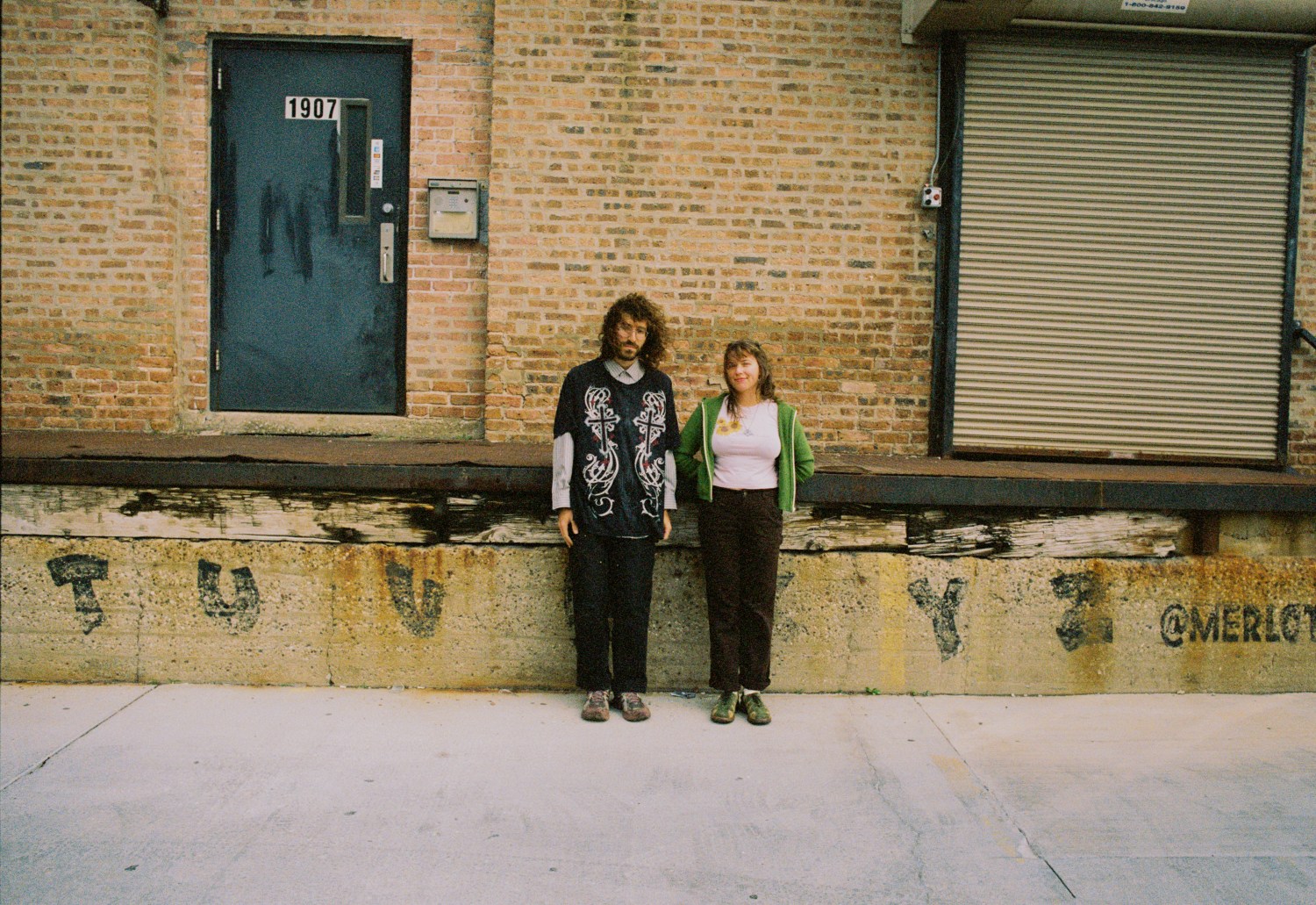
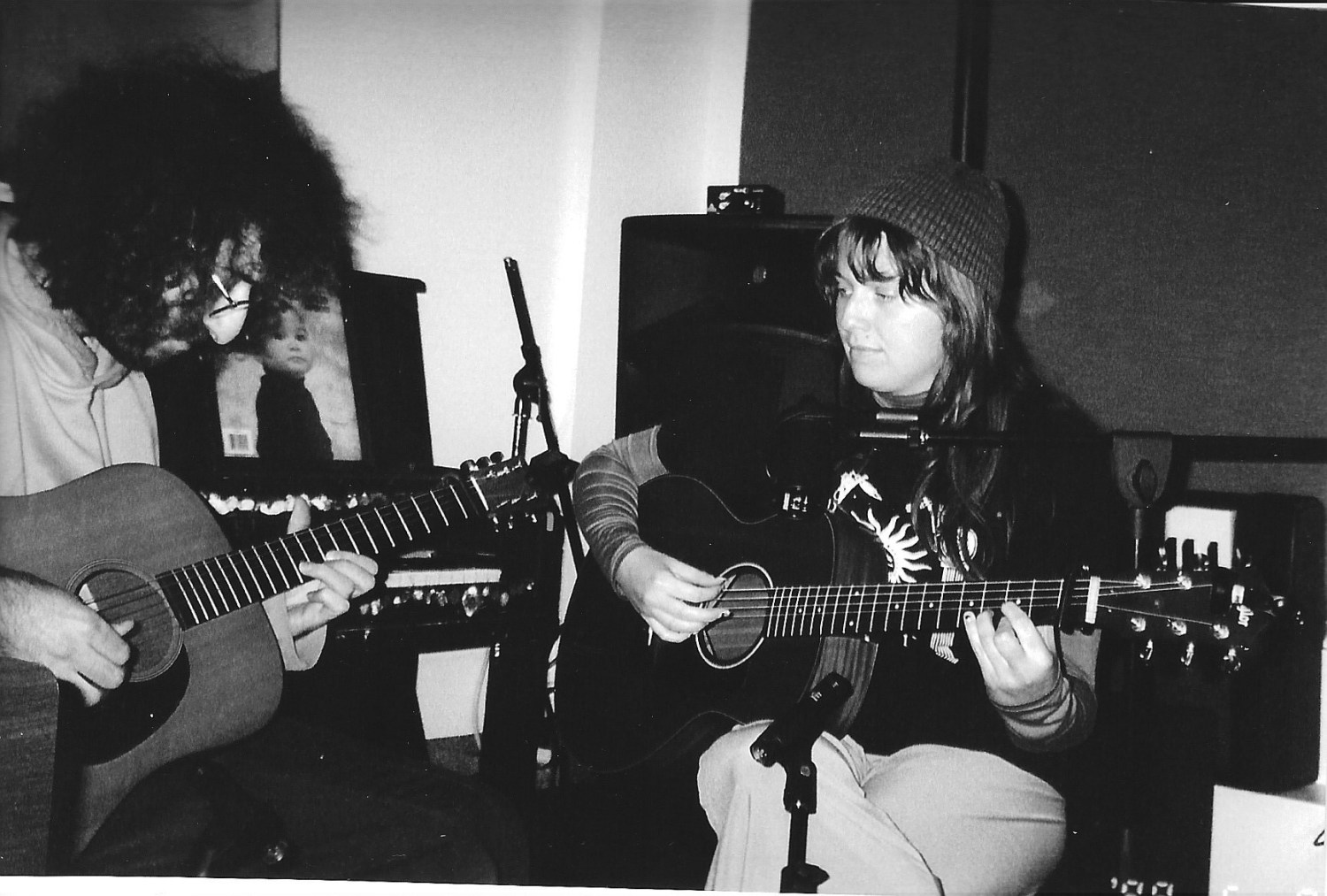
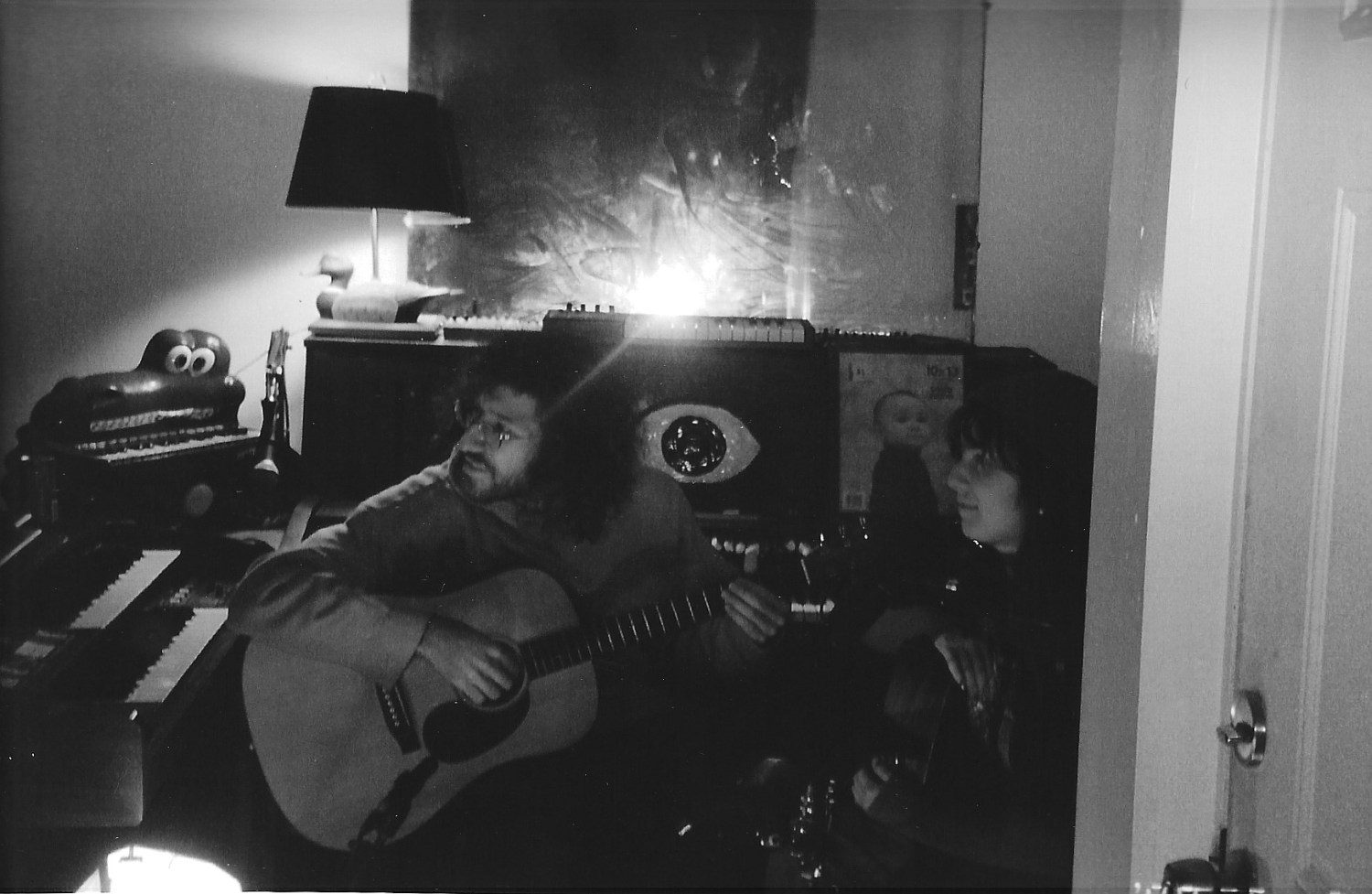
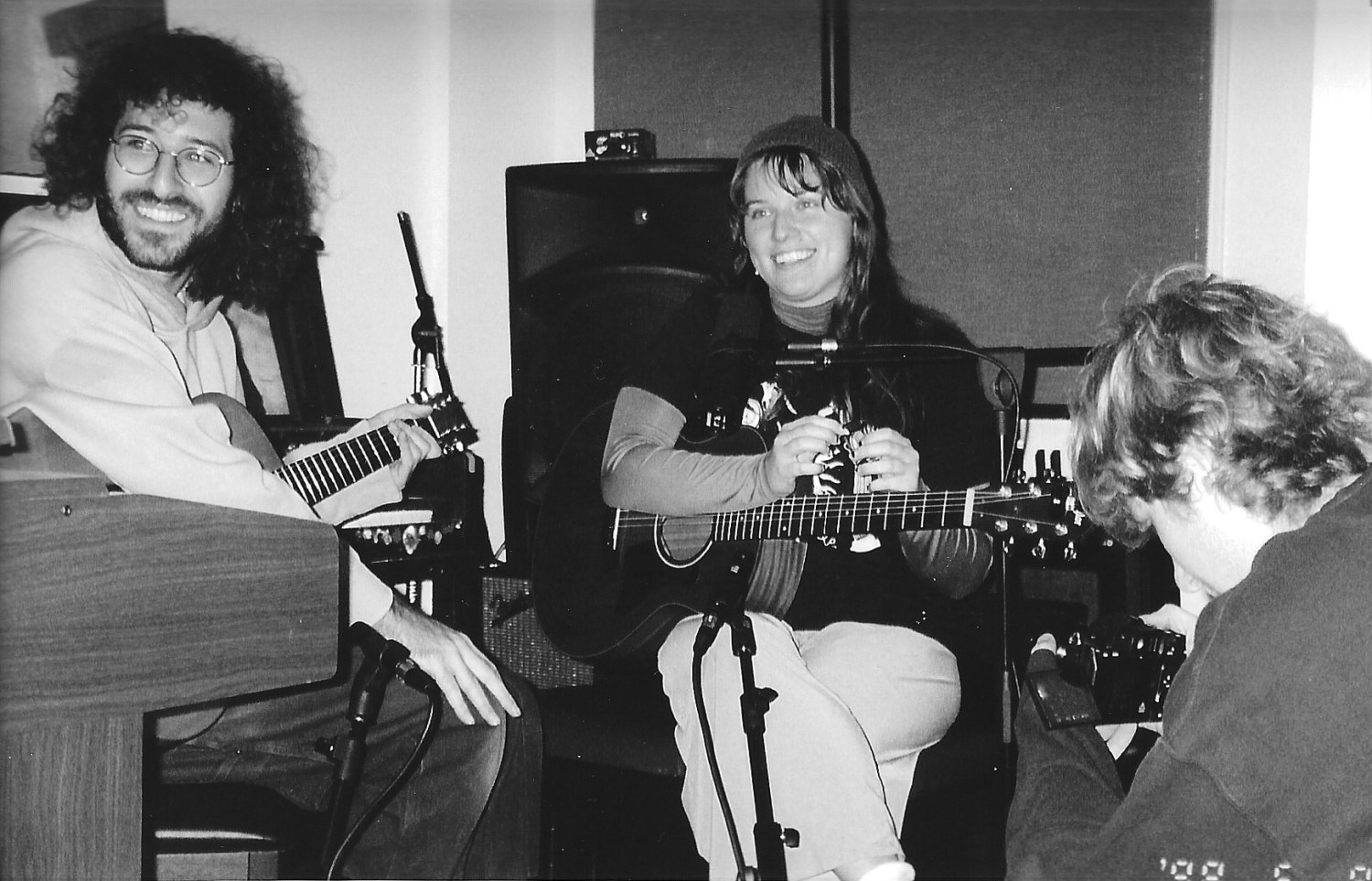
Sleeper’s Bell, the Chicago-based folk duo of Blaine Teppema (guitar, vocals) and Evan Green (guitar) have shared their new single, “Road Song”, today. This release comes after the reissue of their debut EP, Umarell, via Angel Tapes / Fire Talk earlier this year, which included a separately released bonus single, “Corner”. Umarell, both concise and inviting, found Teppema in a place of still observation – where moments left open to breathe were both purposeful and reflective. Bringing her initial vision for the project into fruition, “Road Song” finds the duo in good company of collaborators, bringing out Green’s artistic production and Teppema’s open-ended lyricism with an array of cacophonous instrumentation and deliberate storytelling.
From the very click of the drum sticks, you can tell this isn’t going to be your grandmother’s Sleeper’s Bell track. Above a light instrumental shuffle, Teppema sings, “Spent so long on the road / I forgot there was somewhere to go,” as the chord progressions lean into minor tonalities – finding an edge that feels both strikingly new and incredibly fitting for the minimalist group. It isn’t long before a saxophone, played by Rufus Parenti, grumbles for resolution, bringing stamina to the emotions in Teppema’s wandering mind. “I caused another bitter end / ‘Cus all I needed was a friend,” she sings, giving a voice to the thoughts that lead when there is nothing left to entertain, just before the song comes to its abrupt and inevitable end.
About the song, Teppema shared in a statement;
“It’s partially about the sunk cost fallacy — you put so much time and energy into something that you forget you’re allowed to try something new. But then, sometimes, you put so much into something and then you’re a long way from where you started, and you have to figure out how to get back, or how to pivot.” She continues, “It’s also just about being a kid. I miss how visceral all my feelings were. I feel everything like that again when I’m driving long distances. And I listened to a lot of Townes as a kid, in the car with my dad. ‘Nothin’ was one of the first songs that ever made me feel sad. So I ripped that line from him and made it about me.”
Sleeper’s Bell will be performing in an Elliott Smith tribute performance on August 6th at Schubas Tavern in Chicago, IL. They will be performing alongside other Chicago acts such as Minor Moon, Half Gringa, Wet Skelly and Plus Plus.
Today, Feller, the Chicago-based post-rock duo, share two new singles from their forthcoming debut EP, Universal Miracle Worker(due May 28 via Angel Tapes/Fire Talk). Both tracks are accompanied by a visualizer made by Brady Sheridan, and you can listen to “New Cotton” and “Air Mail Tablet” premiering on the ugly hug.
Feller is composed of drummer Ethan Toenjes (Sleepwalk, Old Coke) and guitarist/vocalist Pete Willson (Cafe Racer), whose concise, far-reaching and captivating sound has found a comfortable home in Chicago’s expansive DIY scene. Making no sacrifice to their individuality, though, Feller stands out in their unique disposition; heavy, eccentric, patient, volatile – and every which reactionary pleasure that they feel fits in the moment.
“Air Mail Tablet” and “New Cotton” showcase Feller as a rock n’ roll assemblage; embodying the most endearing parts of post-punk, post-rock and post-hardcore that still feels fresh in delivery and irresistible in nature. “Air Mail Tablet” is a fever dream, energized by an instrumental groove that floats between loose guitar layers, haunting vocal manipulations and Toenjes’ snug and propulsive drumming. “New Cotton” demonstrates the duo’s natural ability to shift and build around a centralized idea. As patterns melt and mold, showcasing the duo’s extensive knowledge of rock music structures – and lack thereof – the song always returns to its melodic, and often restorative, center.
Universal Miracle Worker will be available on limited edition orange cassettes via Fire Talk’s extension, Angel Tapes.
Revved up and out of the gates of Chicago’s expansive DIY scene comes the newbie band, Cruel, and the release of their debut EP, Common Rituals. Off of the newly formed Angel Tapes, an extension of New York’s Fire Talk Records, the band is at home with its rough and deliberately melodic post-punk sound. With recording and mixing help by Jack Henry (Friko, Free Range, Horsegirl) and mastering by Greg Orbis (Stuck, Lifeguard, Deeper), the four-piece strike a deal between punk antiquity and alternative’s melodic variety to release the next Chicago stalwart of rock music.
Cruel, consisting of Michael Schrieber (vocals/guitar), Jen Ashley (bass), Brent Favata (drums) and Jack Kelsey (guitar) is a ruthless and well constructed group of musicians. There is no doubting the intensity that comes off of this EP more than the very moment it begins. The opening track and the first single released, “Gutter”, is a trial of human exposure to a relentless system. With an explosive guitar riff right off the bat and drums and bass rumblings underneath, Schrieber growls into a song about societal expectations of labor and moral bending. “Forty hours a week I lose myself on my knees / Forty times a night I tell myself I’ll get more sleep”, Schreiber screams as the chorus finds its steady ground.
Emerging with guitar chunks and pounding tom-tom runs, “Damage” has a rhythmic change, initiating a maturely paced intensity. With a melody reminiscent of the glory days of punk music, with its simplicity yet engaging and angsty lyricism, “Damage” finds the band speaking to the self-destructive nature of youth. As the two guitars duel between dissonant bends into harmonious and satisfied chord progression, the feeling rises up into a release of our own pent up frustrations. “Demeanor”, one of the catchiest tracks of the EP, is a rush to a secular life. With the drums, bass, and guitars all in a mutual understanding during the instrumental rundowns, “Demeanor” is a screaming conversation towards a one sided systemic scheme. “Count me out / Of your affiliation / I won’t take part / In any congregation” Schrieber demands.
With the fuzziest sound on the album, the closing track “Tuesday” is a thrashing escapade that barely scrapes over two minutes long. With the implementation of a stop time effectively used to break up the wall of sound, the band closes the EP with a catchy and repetitive headbanger that is as memorable as it is loud. (very).
Photo by Yailene Leyva
At only four tracks long, Common Rituals is a fresh take on the importance of punk music in a DIY scene. Loud, thrashing, and emotionally blending, Cruel stands their ground, in a rather dying world, as a defiant and exciting new voice to be reckoned with.


 the ugly hug