The tender voicings of New York-based project Adeline Hotel return today with their fourth and final single “Isn’t That Enough” before the release of their new album, Whodunnit, out this Friday. Fronted by Dan Knishkowy, Whodunnit so skillfully captures a snapshot of an individual’s journey to redefine joy in their life as the aftermath of an ended marriage begins to fade in time. “Isn’t That Enough” serves as the companion piece to the album’s title track as an emotionally freeing piece that circulates through grief, beauty, anger and understanding.
“In a sympathetic world, I saw right through you and you saw through me,” becomes representative of the complex hindsight that Knishkowy paints throughout “Isn’t That Enough”, yet this lyrical curiosity, hanging on to each breath with a protruding edge, grasps the conversation as it catches up to where he is now. In a tender pacing, sparse and warm with an acoustic drone, the band begins to find a progression, growing in the slight sonic voicings that tinker and play underneath the heavy stanzas with heightened synths and harmonies that revel in the track’s depth as it moves forward. “Isn’t That Enough” becomes a story of a relationship left baron – where the ideas of people, places and things turn against each other in depravity and a chance to gain ground, where the question feels less inclined to ask ‘isn’t that enough’?, but rather ‘will it ever be?’
You can listen to “Isn’t That Enough” below.
Whodunnit will be released this Friday, September 27 via Ruination Records and you can preorder the vinyl here. Adeline Hotel will be playing a release show at Union Pool in Brooklyn, New York on Friday, September 27 with Sima Cunningham and Katie Von Schleicher. Get tickets here.
Written by Shea Roney | Featured Photo by Amghy Chacon
Based in Brooklyn, New York, Youth Large is the solo project of Em Margey, who has returned today with a new single, “Warn Me, Hold Me”. Previously known as Emma Blue Jeans, Margey has become a staple in the intimate BK scene, both through their musical projects as well as coordinating and curating a monthly queer residency at venues such as Purgatory, Nublu, Trans Pecos, Rockwood Music Hall and more. Upon this return, Youth Large plays with articulated patience as they strip back their sound into a methodical burn on “Warn Me, Hold Me”.
There is an immediacy to the tension that “Warn Me, Hold Me” contrives, as it brings notice to the conflicting emotions within a relationship. The heavy thuds of a drum are deepened by the sparseness of instrumentation, as Margey’s instincts look every which way for a deliberate and cathartic release, singing “And every week / It creeps around the corner / we’re just saying things / you warn me, hold me.” The track’s emotions hit a peak as a harsh and swirling guitar rips through the space, as Margey repeats the very utterance, “warn me, hold me” – a clash between comfort and self-preservation as the song slowly burns out.
“Warn Me, Hold Me” is accompanied by a music video directed and edited by Margey. As a fun exposure to the rather melancholy track, the video plays with humor towards New York’s macho skate scene, even including a mustached stunt double filling in when needed.
“Warn Me, Hold Me” is Youth Large’s first release with New York-based tape label Toadstool Records and the track can be streamed everywhere now. Earlier this year, Toadstool Records also released a bandcamp compilation where all proceeds will be donated to The Freedom Theatre in the West Bank, Palestine, which you can purchase and listen to now.
With a certain tenacity, untethered to any form of expectations or rules, New York-based band Plastic moves along through the sparks and dust of their debut full length album, Crabwalk. Released last week, Crabwalk is a lumbering 76 minutes of intense dynamics and alt-rock passion; the lows are intoxicating with a ledger to minimalist exceptionalism and the highs fight through melodic wear and tear to find addictive resolve that, on the whole, begins to feel conceptually engaging and strategically pure the more you sit in it.
Beginning as a solo project by guitarist and songwriter, George Schatzlein (guitars/vocals/electronics), Plastic has been slowly molding into what it is now, with new members Wylie De Groff (bass), Nigel Meyer (guitars), Sam Kurzydlo (drums/electronics) and most recently, Mariah Houston (vocals/guitar) redefining the band with a precise and expansive mindset of five distinct voices.
the ugly hug recently sat down with all five members of Plastic on a Sunday morning, and what was planned as an interview felt like a first hand glimpse at a band whose functionality and collaborative spirit pairs with an intense trust and exciting friendship, as we discussed the record and what they have in mind going forward.
This interview has been edited for length and clarity.
Shea Roney: Last week you guys released Crabwalk into the world. How has the album roll out been?
Sam Kurzydlo: It’s been interesting, I think particularly in handling a lot of the in house stuff. We’ve been very lucky to have view no country from Texas working with us on physicals, but it’s been an interesting process. Sort of figuring out what works for us and troubleshooting as we go.
George Schatzlein: You kind of just run into the problems as you go and you have to figure it out from there. Trial by fire; you can really only learn by doing.
Nigel Meyer: Yeah, even yesterday, I was going to start dubbing tapes to have some physicals at the release show, and I realized that the tapes I have are too short for the album. So, rookie mistakes on some ends.
GS: But some of it’s been pretty seamless, kind of long winded frankly, at least. I’ll speak for myself when I say I am excited for it to be out so we can just be relieved. We’re excited for it to live in the world and we’re really proud of it, but most importantly, we feel like it’s a statement, not only because it’s a long piece, but it’s just an accumulation of work over a couple of years and what this band has become. This record really encapsulates the formation of ‘what is a band’ versus just someone writing songs and directing people what to do.
SR: So Plastic has one EP out as of now called Heredity. But as you have moved forward since, how did this group come together? Have any of you collaborated in the past with other projects?
Wylie De Groff: Well, this started as George’s solo project, so that EP he recorded all himself. But when I moved to New York three years ago, I just hit up George to hang out and he was like, ‘hey man, I’m putting together a band and I need a bass player. Do you want to come rehearse with us?’ That was my entry into the band.
SK: We all connected sort of serendipitously in different ways. George and Wiley knew each other back in high school. George and I had played a show together back in 2018 while he was running through Chicago. I think this lineup sort of coalesced across a year or so, intersecting with the development of this album. But this is the configuration that I think this group was always meant to be in, so it’s been really fulfilling to see that come together.
GS: It was like a nucleus of these webs of relationships from meeting at shows or playing the same bill that kind of just naturally collected throughout time. Classic music world.
Mariah Houston: We all went to music together [laughs].
SR: In this transition, going from a project that was very singular to a full collection of talents, is Plastic a fairly collaborative writing team now?
GS: It’s been slowly inclining to being that.
SK: I feel like even across the tracks written for this album that has sort of changed and I feel like the album is a document of that process in a way. It is really interesting because some of the more recently composed songs on this album are sort of signposts of things to come.
WD: The really long, gnarly song, “Touchdown”, which was a totally different song beforehand, was something that we gigged out for a bit and fully tracked in the studio. And then, when George was recording vocals, he just didn’t feel like it fit with the rest of the album, and we all kind of agreed and decided to maybe chop it. But instead, we saw that we had the stems of this song, and wanted to see what we could do with it and we turned it into something that started mostly in George’s head and ended up being more of an expression of what the band is now as a fuller unit working together.
SK: It went from being a song that never quite connected with me to being my favorite thing on the album.
GS: When you’re starting a project, you want to be as articulate and concise as you can be so that you’re not just banking on people to make up their own parts. But when you know you play with musicians organically, and learn to trust them, they start to write parts that suit their playing more. But I think in the context of this being a live rock band, it’s a lot easier to have more liberties with parts and it’s just progressed to be that way in the studio which has become my dream for this band’s future. We all trust each other’s taste and opinions, so now it can naturally be collaborative, because we all equally care about it. I feel like we’ve all been in bands where maybe effort isn’t always put in, but now it feels like we all really do care about this project and everybody wants to put in the best they can.
SR: Yeah, I mean that clearly stands out when sitting with the album, catching onto those individual parts and feeling the energy and focus in its writing and seeing it come together to create this massive piece.
SK: I think it’s our blessing and our curse that we think about stuff for ages and ages. But then I feel like the final product does always display that level of consideration and thought and care.
SR: With that in mind, when did you feel that these tracks were finished?
GS: When I finished the vocals, which took me way too long [laughs]. We broke it up into 3 recording sessions for main tracking and I didn’t do vocals in the studio, so it got dragged out, but I think really, it wasn’t that long ago when it felt like we were done with it. “Touchdown” to me was like, ‘okay, this feels fresh. This feels like a good thing to reference where we’re going’. It just made the record well rounded to me, when the album itself is not extremely linear.
NM: I can think of at least one or two instances where the parts I play now live aren’t exactly the parts that I played on the record because it’s just progressed. When we recorded the instrumentals, we didn’t have Mariah in the band yet, so going forward and potentially bringing in new instrumentation and reworking the songs into a three part guitar piece would definitely bring out some of these songs in a different way. I think they’re always going to mutate. The record is a snapshot of what they are now, but we know they’re not set in stone.
SR: I want to talk about the length, because it feels rare these days to find an album that goes over 35 minutes. Crabwalk tracks in at 76 minutes with a handful of tracks stretching over 7 minutes. As your debut LP, what parts of building such an extensive project do you think showcases what makes you stand out as a group?
SK: I think from the beginning we endeavored to approach it in a very experiential way. I think that all of us found it important to make something that you could sort of live in for a while, taking you for a ride with different detours and new stops popping up. And yeah, who’s to say our next thing might be nice and lean, but this one from the start was important to us, not length for length’s sake, but we wanted to create something that felt very immersive and had a beginning and an end.
WD: I think that the moments that feel most like us are the long moments like “Touchdown” and “Satiation”, where the first part of ‘Satiation’ is a normal song structure and then the second part really goes out into space. Even before it reached the studio version, that was definitely the idea we played with.
SK: I think, too, we’re not traditionalist by any means, and we’re all just students of the distinct form of music we enjoy. But I do feel like the streaming ecosystem does incentivize singles, EPs and shorter form releases.
GS: The way that that is being prioritized through streaming, to basically push shorter records, and branding music in that way, it doesn’t come naturally to us. We all love those records, but I think we’re inspired by a lot of long records at the end of the day. Something to put on in the car and drive down the highway when you have the patience and time to listen to something. It’s really, really valuable.
SK: And more recently I feel like we’re in a good spot, too, where it seems like the songs that resonate most with people when we play live are the longer, weirder, more meandering ones. That’s validating in a lot of ways, but it’s also nice that it kind of gives us permission to be a little indulgent in a way that’s really fun and inspiring.
WD: Yeah, I mean the most validating phrase we’ve gotten is like, ‘oh, this doesn’t feel like a seven minute song’. We love that. That’s the goal, to aim for when the length is natural and due to the shape of the music, not length for length sake, in the same way that we’re on purpose not keeping it short just for short sake.
SR: Flip floppin’ here, one thing that I was drawn to were those little interludes, “Try Again”, “Andrew” and “Drawn”, where if just by themselves would feel random, but when in their correct spot, bring this natural progression from the different styles that encompass the album. What was the story and the process behind these inclusions?
GS: As far as track listing came along, whatever Crabwalk means to me, when you’re really kind of at the end of a project and you’ve got these chunks of songs you start to see the little gaps that could be filled in. What we tried to do, as far as whether it’s mood, texture, aesthetic, energy. or even themes, you can kind of find one of those and patch them together to just smooth it out.
SK: “Drawn” was something I whipped up for live shows when we needed to change tunings and that track evolved out of one of those interstitial pieces I put together. But it became a personal expression for me when working at the office and trying to fold music into my life as much as time allows, I’m grateful that the rest of the group gave me the chance to clean it up to live in an environment beyond the stage.
WD: “Andrew” was just a voicemail, and I think we were listening to it when we were tracking “Wannabe”. I remember we played it on tour all the time because it was so funny and it gave us a chance to just be cheeky.
GS: Yeah, I feel like as a writer myself, I kind of naturally gravitate towards writing lyrics and songs that are maybe slightly abstract and more introspective, and I kind of wanted to just feel like I am a person. I can also be funny and have a sense of humor [laughs].
MH: Yeah, it’s so important to have your personality in your music. What makes a band really special to me is when I get to be really invested in their lore as people and I am able to identify that in their music. I think it’s nice that we have those moments of humor and personality, because we are funny [laughs].
SR: George, a lot of your lyricism is very textured and vivid, which as a listener, greatly enhances this almost dystopian feel to the album. Was there a contextualized throughline that you tried to pull through on the album within your writing?
GS: I guess similar to the instrumentation, all of a sudden it reveals itself subconsciously and then you start patching it together and you realize, for me at least, the subconscious will start relating to a theme. Sometimes it just happens where it’s laid out well enough and just feels natural. Maybe there is a throughline, but there were no sort of preconceived larger concepts. I think Crabwalk became fitting for the title because it felt like an early display of what this album was stepping into with this new phase of more collaboration. To me, the idea of a crab is this constant, but awkward and lateral motion, often repeating steps, which can become really exhausting and a difficult way of moving, but there’s always motion forward.
SR: Mariah did you contribute any lyrics to the album?
MH: I feel like my contribution to the album was very last minute. All of the instrumentals were tracked long before I was in the band and then the vocals I added were done as soon as George tracked his. It was very down to the wire.
GS: That’s what is really exciting about what’s next because now the ideas are getting slowly but surely pitched in this collaboration of talents. I don’t know what it’s gonna sound like at all, but this next record is just not gonna sound close to Crabwalk. Not that we’re trying to deliberately jump away from it, but I just think this specific way of going about it is just naturally going to make it very, very different. It’s pretty much the biggest leap you can make as a band, to make it sound different going from a pretty singular songwriter to a group of five people. I wouldn’t say the identity of the band is shifting because this has been the established identity, but this will be the next archive.
MH: I think it’s exciting for me to be in a project that is so drastically different from my personal projects. I’ve always enjoyed being in bands, and have always ended up in bands that are very different from my own music. I think George and I have very different lyrical writing styles, but it’s exciting to leave my comfort zone and potentially collaborate on stuff that’s not what I’m used to writing. I feel the same when playing with these guys, too. This is the first group of people I’ve ever jammed with, which was scary at first, and then it quickly became very fun. There’s something to be said about trusting each other.
GS: Yeah, and trusting that it’s not going to always work out the first time, of course, but once you kind of figure out how to work together in that way, where everybody’s pretty mature, when someone has something to contribute there’s a collective decision and encouragement. I think that allows me to have so much certainty and confidence and conviction that whatever we try next will be great.
SR:That sounds extremely healthy.
NM: Yeah, the writing is probably the healthiest part of the band [laughs].
Plastic is releasing a limited run of Crabwalk on CD via view no country. Following the album release, Plastic will embark on a 10-date tour across the Southeast and Mid-Atlantic United States in October.
Anne Malin Ringwalt, who performs and writes under the name Anne Malin, is an absorbing artist and poet, branching through a career that is transcending of any boundaries as her art collects upon her most basic instincts as an individual. Following 2022’s album, Summer Angel, the North Carolina artist returns today to Dear Life Records to announce her fifth album, Strange Powers! (due 10/25) as well as share its first single, “River”, along with an accompanying music video.
Pivoting within an ever vivid sense of self, “River” becomes part of Ringwalt’s journey towards recovery, as she rebuilds trust in the earth and feels its reciprocation. In a bloom of violin played by Lily Honigberg, both cinematic yet simple, “I saw my heart beating in a river and left it there for the earth to save / Some muscle wet in the weeds, and flooded through still I will sing” – rests with some weight on top of Ringwalt’s fingerpicking as her articulated vocal expressions ebb and flow with such delicate intention as the track breathes in and out without congestion, immortalizing these moments of calming reassurance and understood fear amongst its wandering pace.
“River” is accompanied by a music video shot by Abby Jones at Eno River and Jordan Lake in Durham, North Carolina in a spurt of pouring rain. Shot on super 8, the video becomes a representation of solitude, as Ringwalt moves across the natural landscape, falling into the spirit of the enduring earth and the timeless warmth of the tape’s hue.
“River” is also used as a bridge that joins the release of Strange Power! and What Floods, a new book-length poem written by Ringwalt published by Inside the Castle.
If you have ever experienced the rich communal impact of the Chicago music scene, there is a chance that you have caught a performance by guitarist and pedal-steel player, Andy “red” PK, who has become a substantial player in countless Chicago acts such as Free Range, hemlock, Tobacco City and other touring groups. Although PK’s presence in the scene feels matured, established and highly influential, their skills as a songwriter are a new endeavor for them, as last week saw their debut singles as a songwriter, “Bedroom” and “Moving Off the Line”, added to streaming platforms for the first time, marking the start of a new talent that stands out on its own with such sincerity and contextual instinct.
Stemming from immediate inspiration and recorded directly to tape, these singles are brief, yet dense with intention and clarity. “Bedroom” plays within a confined space, a collective exhale – a rummaging of thoughts that plunder our consciousness when the latch of your bedroom door comes to its purposeful resting spot. “And I heard you driving / I looked away too long and I missed you,” PK sings in a hushed whisper, lingering amongst layers of guitars that create a comfort of stringed textures underneath. In a more eager push towards folk-pop, “Moving Off the Line” so cleanly plays to both of PK’s skills as a melody maker and compositional instrumentalist. Progressing with a lively and nostalgic drum track that holsters an array of off-beat accent points, the track still leaves room for the underlying bass to speak for itself as PK’s established guitar voicings kick in. “If anybody told you / That I’m moving off the line / You’d listen close for warnings / But you’d hold on to the signs,” is noted by anyone who lives in Chicago; bustling, pragmatic and essential to navigating a complex city, let alone navigating your own placement on an individual level. Balanced with a string of harmonies that are performed with familiarity in influence, PK’s debut singles already feel timeless at their core.
You can listen to “Bedroom” and “Moving Off the Line” on all streaming platforms now, as well as purchase them at Red PK’s bandcamp.
The “flow state”, only reached when a racecar driver hits 180+ mph, feels like a momentary lapse in time, where all movement becomes one and control over the situation begins to feel effortless. Today, the ugly hug is premiering Violet Speedway, the debut record from Sacramento artist, Levi Minson, which is set to be released this Friday via Anything Bagel. Although not reaching the speed at which the engines rev and the heart is left in synchronous palpitations, Violet Speedway is a flash of grace, as Minson smoothly transitions in and out of stories of love, loss, fear and most of all, hope.
Oftentimes minimal, Violet Speedway confronts the open spaces with soft, yet hearty soundscapes. Recorded fully in a bedroom on a tascam four-track, these deceptively sparse, lo-fi songs live in this subtle density of Minson’s instrumental expressions of looping guitars, light synths and heavy drums that spackle in the cracks. Songs like ‘The Shadow’ and ‘I Can’t Say It At All’ play with persistence, as Minson’s somber melodies sit on top of the chunking of heavy guitars – attuned to that of the early catalog of Elliott Smith as he transitioned from the rock roots of Heatmiser. ‘The Gleam Is All I See’ is a rambunctious indie rock stinger that plays passenger to the melancholic feel of the lo-fi recordings at hand, yet the distorted undertones are still muddily layered and excitingly harsh at its core. The harmonies on ‘Colin Is’, featuring Taylor Vick, build and flow with such tender vigor that any hints of pain begin to blend with bits of satisfactory release.
This type of writing – reminiscing on momentary feelings and the duality at which they are experienced and then later remembered – so creatively opens up little worlds within each one of Minson’s songs. As the third generation of a dust bowl family, Minson’s writing articulates a rural life; the stories of time, place and being that stick out while fine details help hammer them down with sincerity and charm. ‘Anyone can do it/Sidekick’ begins with one of the most subtle moments on the record, letting each word hang in the air as staggered guitar strums reverb around them in a bare mini two-part epic. “My old man was a psychic / When he said I won’t need him / Cuz I’m your sidekick”, he sings with a stirring string of harmonies. ‘Did You Try’ plays through a stumble, falling into minor intonations as the guitar picks along, fixated on its pacing as it tries to grasp on to anything other then solitude. ‘I’ll go, you stay here’ marks Minson’s presence as he toys with distance. With the beautiful subtlety of synthetic strings – a restrained form of cinematic trust within the track – the song turns into a doomed romance as Violet Speedway reaches its most inflicting emotional height.
Minson sings of shortcomings as if he is one step ahead, reflecting while simultaneously looking at the path forward. “Do they look both ways yet? / I know all about regret”, he utters out, with no hesitancy, bringing the album to a close with the song, ‘Memory’. It’s not really a love song, and yet, it’s not really about heartbreak either, but a sincere glimpse at Minson’s heart and mind beginning to flow together.
Listen to Violet Speedway early below.
You can now pre-order a limited screen-printed tape of Violet Speedway from Anything Bagel at their bandcamp. Make sure to check out the rest of their excellent catalog!
Running through the Catskills, cultivating in the heart of Maine and now resting in New Paltz, New York, the sonic tinkerings and lethargic dreamscapes of The Spookfish have been sprouting across the Eastern United States for some time now. Brought to life by Dan Goldberg, The Spookfish is a cherished project, one that revels in the heart of natural beauty and the experience of an ethereal being – each collection of work representing its own journey inside a textured sonic world. Last week, The Spookfish released “To The Flame”, a new tape via We Be Friends Records and the encompassing soundtrack for the new Rebel Jester Studios platform video game, To The Flame.
Within the dark depths of a weepy cavern, To The Flame follows the journey of a moth, whose main objective is to reach the light at the end of the tunnel; “a brutal pilgrimage to meet god”. The concept was inspired when game creator Ezra Szanton went to watch local dungeon synth artists Deep Gnomes and Covered Bridges with Goldberg at a cozy barn in Maine. The collaboration between Szanton, Rebel Jester artist Fergus Ferguson and Goldberg was a very hands-on experience as Szanton shared in a statement;
“Dan’s sound is perfect for this game. He combines dark ambient synths with personal instrumentals in a way that’s melancholy and spooky but also hopeful. To The Flame takes place across 4 areas, each with their own mood. Usually our artist, Fergus Ferguson, would create the art for an area first and then Dan would create music inspired by that art but sometimes it worked the other way around with Dan making music first and Fergus creating art that matched. Oftentimes I would get attached to early drafts of the songs. We decided to keep many of the early drafts in the game as variations, so when you go into an area you have a random chance of hearing essentially a demo track instead of the “final” song. This kind of variation helps keep the player interested even if they’re not making physical progress in the game (which is common because the game is quite difficult). Dan’s music really elevated To The Flame. I remember after putting the music for the main menu into the game, I just sat there for 20 minutes listening to it and thinking “we’re making a real game!!”
The soundtrack becomes a new world in and of itself; meandering through tight and damp crevices, yet manages to feel hauntingly spacious; primitive in nature, yet ghostly in its deliverance. Most of the album was recorded on a cliff over looking the ocean in Maine and was finished in a snowy shack down in New Paltz. Whether through the methodic atmosphere and scratchy recordings of “Not Alone”, the ominous and ethereal presence of “Voice in the Cavern” or the toying pacing and intonations of “Heavenly Light”, the soundtrack creeps along its own decayed and treacherous path to join you as you make your way to that singular light at the end of the tunnel.
Today, the Philly-based project Thank You Thank You has shared a new music video for their latest single, “Watching the Cyclones” which was released earlier this month via Glamour Gowns. As an ever expanding project brought out by the artistic stamina of Tyler Bussey, Thank You Thank You is an imprint of the people who pass through – an articulation of the souls that make a moment long lasting.
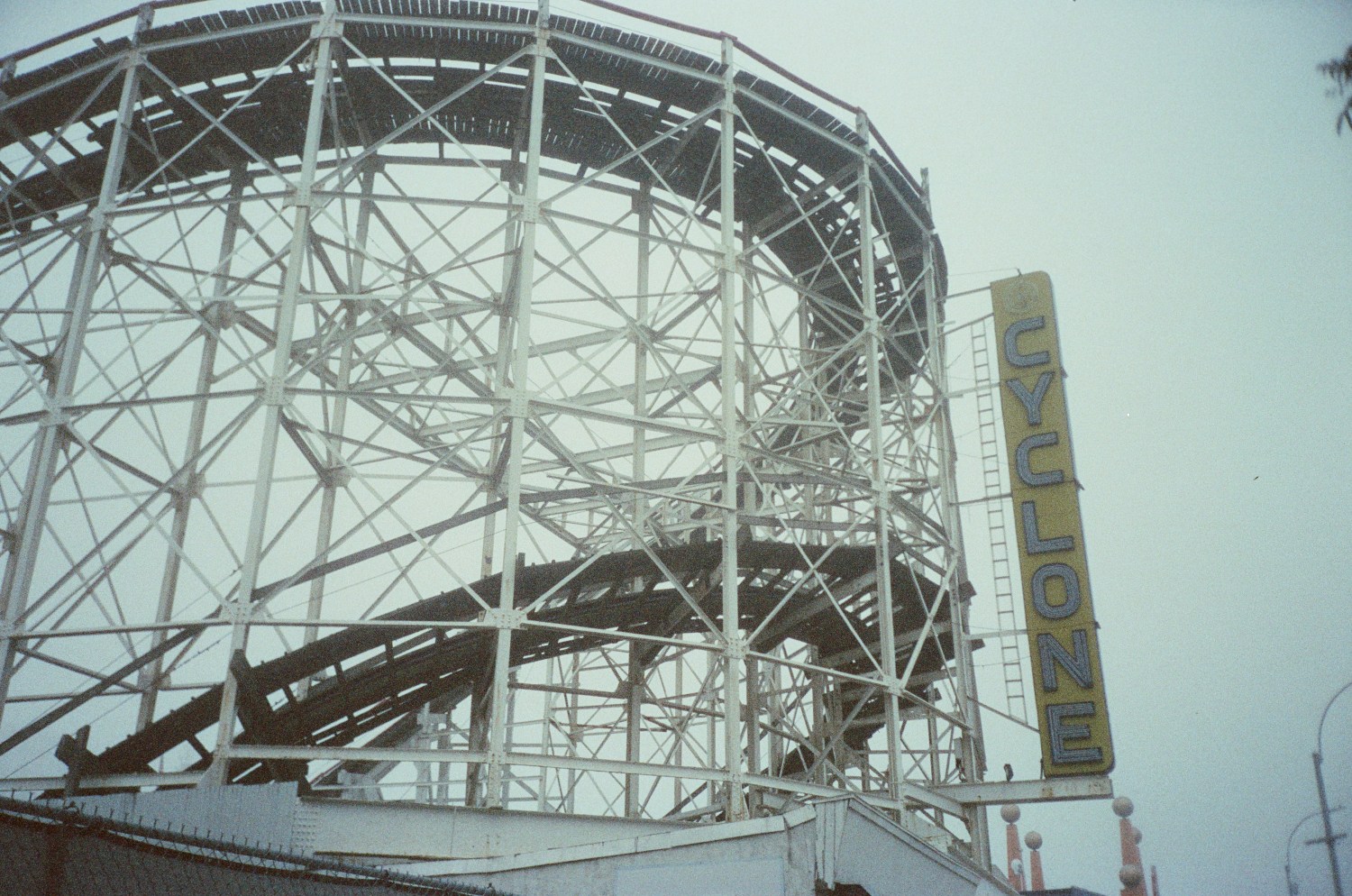
“Watching The Cyclones / Not long ago / The diamond gleamed in the sun / The great illusion that’s on my mind / Time standing still on the field for us / It’s going, it’s going, it’s gone.” Oftentimes, the heavy air of summer can be indistinguishable from underlying heartache and impressionable worries, but on the contrary, can be just as easily defined by the vitamin D and the chance to engage with its picturesque revelries. “Watching the Cyclones” thrives in that very tenderness of life, where momentary feelings blend together to form a brand new experience. It’s a patient song, allowing time and energy for the folky groove to exude its charm and make for an enjoyable experience – a chance to look around and see how good things can be.
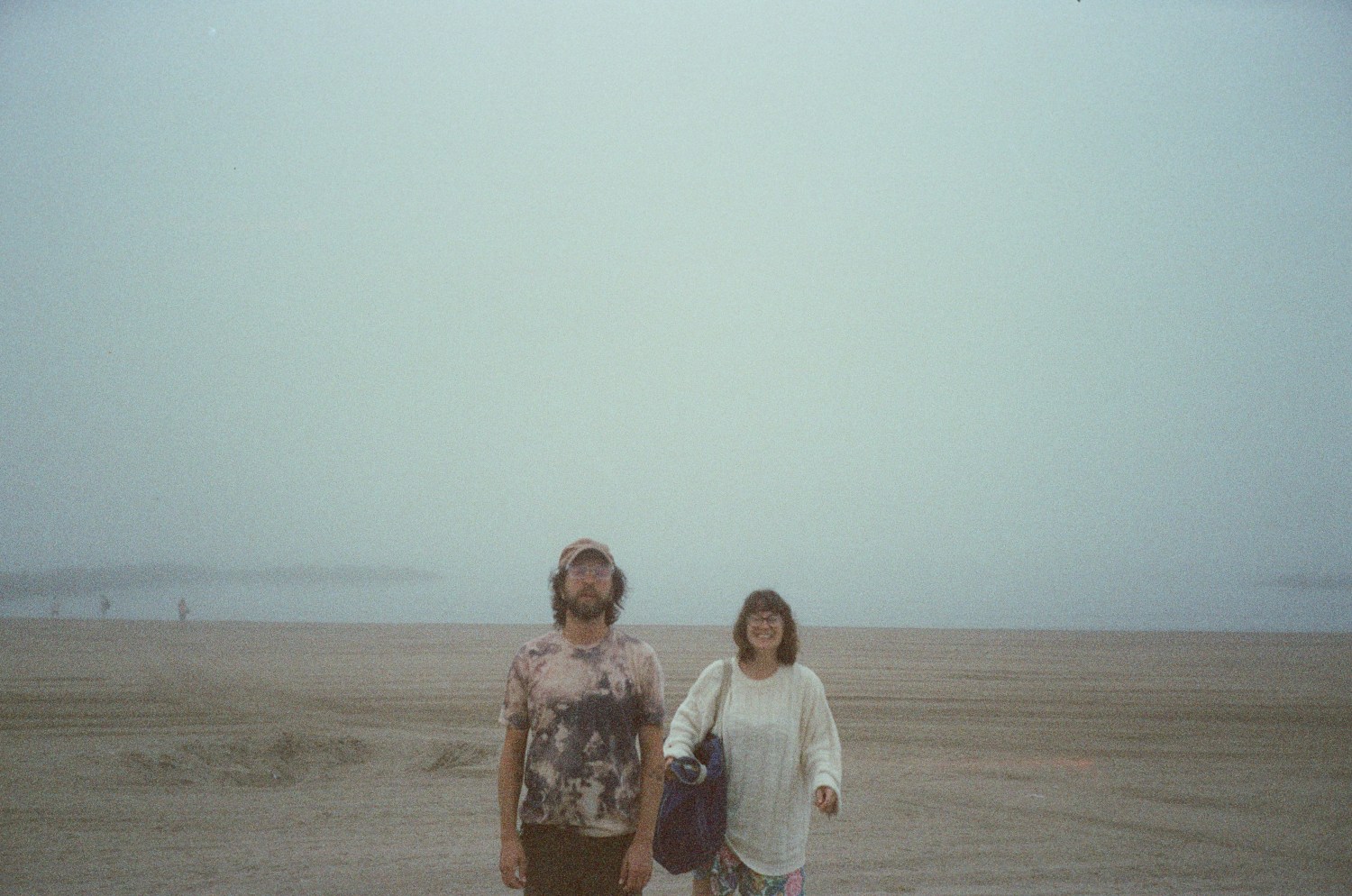
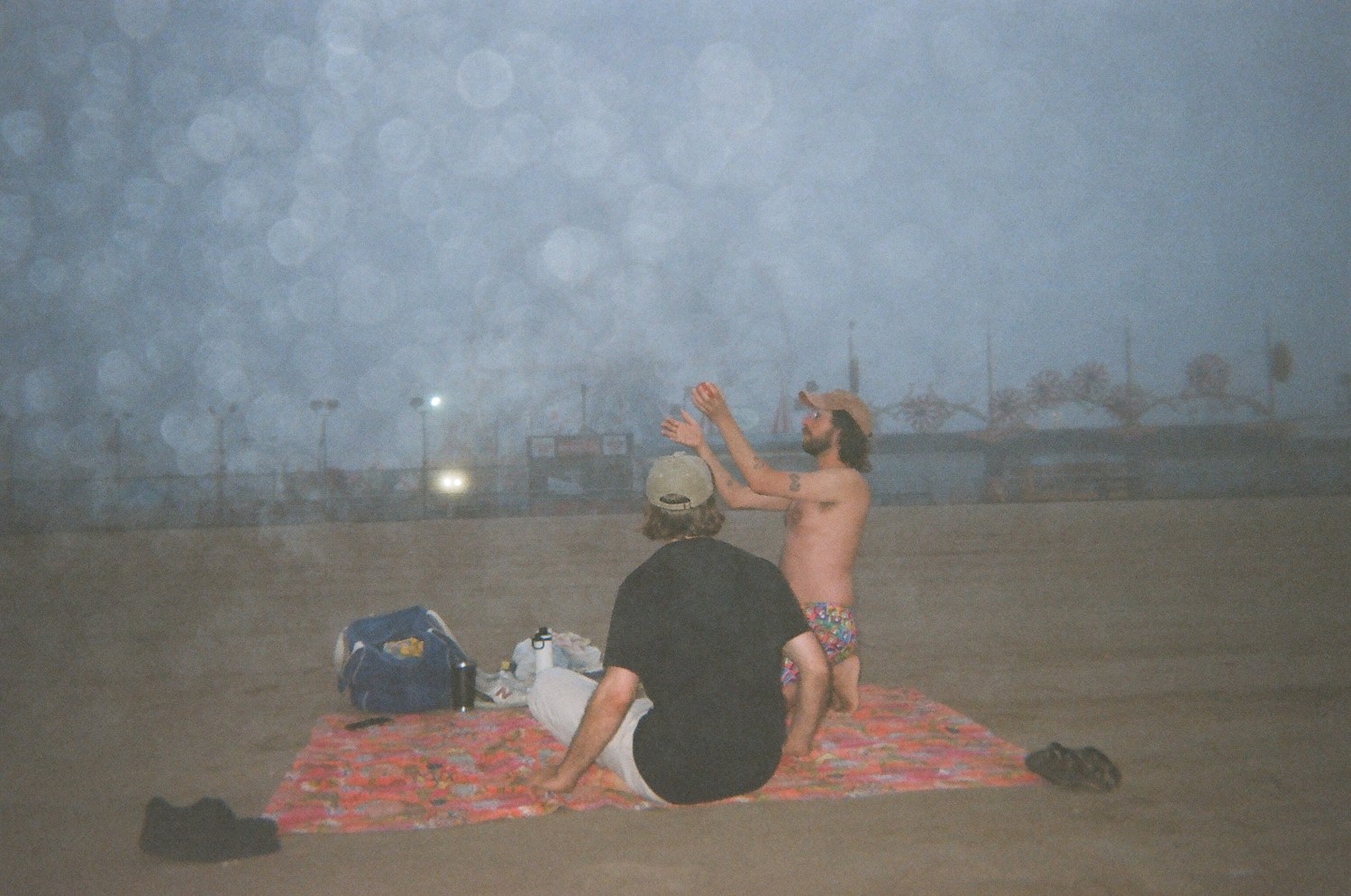
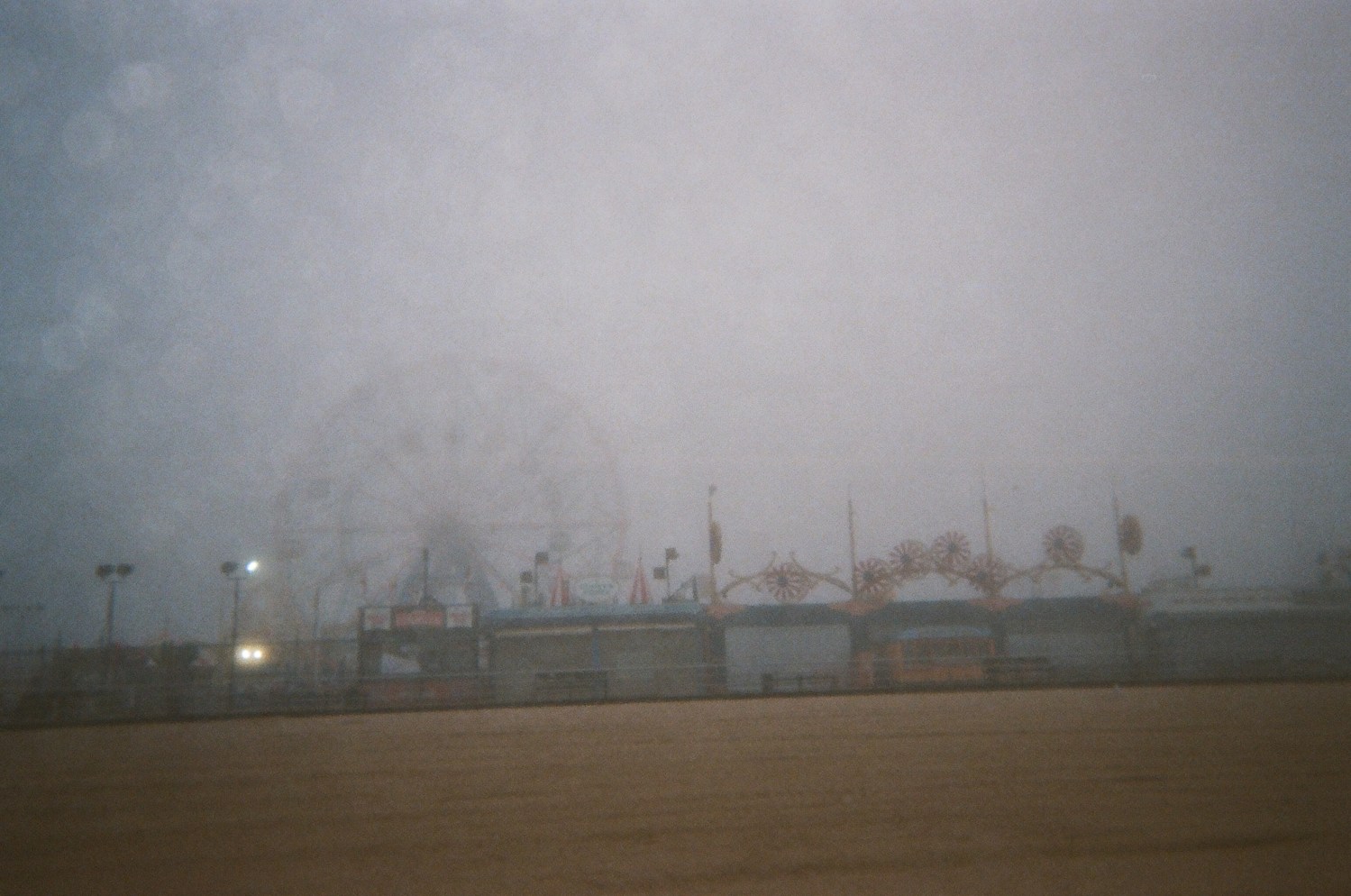
Shot by Ty, Jesse Gagne and Sam Skinner along with animations by Julia Sutton, the music video for “Watching the Cyclones” becomes a misty morning excursion, a preservation of friendship, and an exploratory of goofing around in empty public places.
About the video, Ty shares, “In September 2022 I went to Coney Island with Jess and Sam, and on a whim on Monday, July 15th, I reached out to both of them to see if they’d like to go there with me at sunrise to make a music video. With nothing but iPhones and apples, this is what we made. We didn’t check the weather forecast and had no idea it was going to be so foggy. The video is a fun testament to making things with your friends and not overthinking it.”
You can watch the video below and stream “Watching the Cyclones” on all platforms now.
look below for some behind the scenes photos taken by Jesse Gagne and Sam Skinner that morning at Coney Island.
There is a sense of longevity that resonates within the artistic musings of Olympia, Washington – almost folkloric – where projects like Generifus have been acclimated to the ever shifting scene while still manage to trailblaze their own paths after decades long careers. Fronted by Spencer Sult, Generifus returns today with “Waking Winter”, the first single from his upcoming album Summerberrys set to be released 10/18.
Recorded up at the Unknown Studio in Anacortes, WA, “Waking Winter” plays to those cutting interludes of change and the deafening moments of stillness that seem to follow. Amidst the shuffling of drums, a reliable movement that sets the tone, Sult pushes forward into a light and hearty groove of sedated bass and spacious keys – “I don’t enjoy this / I should talk to someone / I should get it fixed,” he sings with a melody dedicated to the path ahead and the rhythm underneath. Sult and co. are patient in their delivery, stretching out the edges of their barebone roots while the different brushings of organ tones, twangy guitars and dreamy scale runs animate the track into a leading moment of realization; clarity in the cold.
Kennedy Mann has always held her hand out to sincerity, making a name for her musical and emotional depth at the helm of her dream-pop band, Highnoon. But as of today, Mann shares “On Video”, the new single from her solo endeavors that finds her expanding on her skills as a songwriter and producer. With production help from Grillo and Brendan Simpson, Mann reanimates a song she wrote back in 2019, emphasizing the parts of her that have become unrecognizable while simultaneously marking new beginnings as she looks ahead.
Over a blend of clean guitar tones and the perseverance of a lo-fi drum track, Mann marks her presence in the opening line, singing, “I watch my life on video / How the time just seems to fly.” It’s not an easy story to tell, watching your life go by, yet Mann is commanding in her vulnerability. In the culmination of secondary guitar runs, atmospheric synths and light piano voicings, she creates a spacious piece that leaves room for both personal growth and self-reflection while still filling the void of unanswered questions with the warmth in her delivery and production.
In a statement, Mann says, “The song is about feeling a sense of nostalgia for the parts of you that don’t exist anymore or were changed almost suddenly. I think a big part of growing into yourself is spending time reflecting on difficult memories. Sometimes you think it would be better if everything happened differently. But sometimes it’s best to just take inventory of those events and get on with it. I think this song is my attempt to do so.”
“On Video” is accompanied by a music video made by Mann and shot by Lucy Soutter. Watch below.





 the ugly hug