Today, Bedridden announced that their debut LP, Moths Strapped to Each Other’s Backs will be out on Aprill 11th via Julia’s War. Hatched by Jack Riley in his college years in New Orleans, Bedridden is now a Brooklyn based project, joined by drummer Nicholas Pedroza, bassist Sebastian Duzian and guitarist Wesley Wolffe. The individual members boast backgrounds ranging from jazz to metal, these influences subtly feeding the identity and rapport built over a shared proclivity for volume. Bedridden accompanied the album announcement with the release of “Etch”, a track both promising for those fond of their 2023 release Amateur Hearthrob and sure to dredge up new listeners. The rhythmically dense EP is sort of like if Friday Night Lights had a sludgy power pop soundtrack, wrapping notions of home runs and cheek kisses from cheerleaders in a sea of angsty guitar. It wields enough fuzz to form a foreboding cloud of grunge, but not enough to sand down any rough edges. Bedridden’s apt for animated riffs and sports novelties merely exist as a padding for the loneliness and anxieties that trickle out of their seemingly unguarded arenas of noise.
“Etch” is a wrathful track that explores the burdens of one’s own rage, armed with brooding guitar harmonies and scatterings of sports vernacular. It purges interpersonal animosities as Riley recalls a victorious fight dream, his vocals dodging harmony as he pummels through lines of “meet my knuckles” and “he can’t breathe, he can’t see without his eyewear”. Though the dream follows his rules, meandering in and out of NBA references and ending with the sweet satisfaction of the antagonist warming his own bench, there is an ambiguity to “Etch” that feels familiar whether or not you have access to any sports channels. The erratic and combative feel evoked by the song’s lack of a tonal center recalls an innately human kind of anger, an overwhelm that can sometimes only be soothed by aggressive figments of our own imagination.
In a statement about the track, Riley shares “‘Etch’ was a rhythmic accident that didn’t stem from any direct inspiration. The irregular triplet line came to me first and sounded somber, yet hostile. It lent itself well to phrases I had written not about heartbreak, but about the subsequent temper that it had induced. I was dreaming of fighting, I was dreaming of winning that fight and lastly dreaming of defaming my competitor. The song is frantic and doesn’t have a tonal center. With its weaving guitar harmonies laid underneath countering vocal melodies, it sounds to me like that regretful fistfight that I was longing for.”
Listen to “Etch” here.
Moths Strapped To Each Other’s Backs is set to be released April 11th via Julia’s War Recordings. You can now pre-order the album as well as a cassette tapes now.
Written by Manon Bushong | Featured Photo by Sam Plouff
This Friday, Sleeper’s Bell is offering Clover, their long-awaited debut LP via Fire Talk’s Chicagoland imprint label, Angel Tapes. Looking ahead to this release, we are excited to be celebrating Sleeper’s Bell week here at the ugly hug with two different features!
Originally formed by Blaine Teppema back in high school, Sleeper’s Bell was first found by many listeners with the release of her debut EP Umarell, released back in 2021 and having since been reissued on cassette in 2024 via Angel Tapes. It was a raw, and rather memorable collection, as its longevity is a sentiment to its articulation of heart, something that she so beautifully made mindful in its short run time. Fostering a reciprocal relationship with storytelling, Teppema’s presence within her words has always been one of desirable consciousness and stimulation – like biting into a citrus fruit and lingering with the reliving, sweet flavors while fighting with the stringy pith that’s left behind, stuck between your teeth. With the addition of Evan Green on guitar, Sleeper’s Bell became a project unknown to Teppema, not out of lack of recognition, but a rather new and open space with no defined limitations – a chance to strive for clarity where there was sometimes none before. With songs dating back almost a decade now finally in one place on Clover, the duo has taken every part of the process step-by-step, embracing a type of chronological association where both beauty and trauma hold the cards and Sleeper’s Bell decides when to slap them down.
Embracing the vivid talents of the Chicago scene, Clover also debuts the duo working with a full ensemble of notable players including Jack Henry, Max Subar, Gabe Bostick and Leo Paterniti, putting a newfound life into the already lasting structures of a Sleeper’s Bell song. But as Teppema and Green have spent the last two years recording Clover, building upon their trust as both collaborators and friends, this debut marks more than just the release of some rather beloved songs. It has become a full story, an almost novelistic dream of what it means to love and to be loved, to be hurt and to heal, and to simply make art with your best friends.
With Clover’s release this Friday, the ugly hug is featuring Sleeper’s Bell in two different ways today. One is a conversation in which we recently sat down with Teppema and Green to discuss the duo’s origin, vulnerability in sharing, friendship and the making of Clover. The second being the debut of a new series called the ugly sessions.
Watch Sleeper’s Bell perform in studio below.
This interview has been edited for length and clarity
SR: We are almost upon the eve of your debut LP, Clover. Looking over the edge now, how does it feel?
Blaine Teppema: I’m ready. I feel like I’ve been so up and down about the release process for so long, and now I’m finally in a stable place with it. It feels good.
Evan Green: It’s like the stages of grief, seriously, you know what I mean? At each part, there was like a mourning for the loss of the part before it. There were hurdles each step of the way and it definitely would feel impossible at times because it took us over two years.
BT: We were so new to every process. I’ve never recorded in a studio and I’ve never recorded with a band or really worked with other people besides Max [Subar], who was really hands-off with the process, so every time the band figured something out, we couldn’t sit with it or spend time thinking about it or really work on it. It was just on to the next part, you know? And now we’ve been able to sit with everything.
EG: We’ve come so far with the music and being a band. We were not even a full rock band before the record because it was just Blaine. And then Blaine added me to the project, just us playing duo for almost a year. And then when we started recording the album, we would get to the studio and literally I would play bass, Blaine would play guitar and sing, Jack [Henry] was on drums and Gabe was just in the recording booth pressing record, and we would just figure out arrangements for all of the full band songs on the record while it was recording. We only would play it ten times and then we’d just pick the best one.
BT: It was always the first or second one. That’s usually how it is.
SR: Was it weird figuring this out, you know, not allowing yourself to sit with pieces you just learned as you kept pushing through?
EG: Since we were at the DePaul studio, Gabe was like, ‘okay, I have this window of time for you guys to be able to record here for free’, before he graduated. We were like, ‘okay, we want this record to sound like this…’, and we just started doing it. So we felt this time pressure. We were all so busy. Eight songs done. We had those initial sessions and then we were still committed to working with Jack on the record, but he would go on tour and we would have to wait a month or two at a time and then get back to working on the record. We kept having to put things on hold, so we would have this moment where we would be working on everything and it would feel incredible, but then we would have time off. That kind of kept going until December of 2023 and we decided that Leo [Paterniti] and I were just gonna mix the record and we finished recording everything at our house and we mixed it all in our bedrooms.
SR: You can tell this album works like patchwork, but it fits so cohesively, especially knowing the whole ethos of this record piecing together old and new songs you had, Blaine. But this project has been your personal thing for almost a decade now. Was this how you envisioned Sleeper’s Bell would be when writing as a teenager?
BT: Hell no. I was so meek about music. In high school, I didn’t really show anyone my music and I didn’t like performing. I feel like it was something I would just get high and make a song on GarageBand and post it on SoundCloud, you know? And that was basically how I was able to function as a teenager – I would just record in my room alone all the time, and a lot of those songs I was so critical of, and a lot of them are gone. I would put it up and then I’d be like, ‘It’s so stupid, stupid, stupid,’ and I’d delete it. I thought that was me being humble or something, or, you know, having humility. But I think, in retrospect, it’s a form of ego to be like, ‘it’s not perfect, so it’s not me.’ Then I had these songs that I had written in college, and Max had a studio, so I felt like I should just record them and it was just gonna be a one-and-done thing to say that I did it. But I didn’t like playing shows.
EG: You did play a few shows though. I heard that Umarell EP through our mutual friend Lilly, and we were falling in love to Blaine’s music. It was really crazy because I was so in love with the songs and I was starstruck by Blaine. And when I moved back to Chicago, I was like, ‘I want to join the best bands. I just want to play music and be around other artists and other people that inspired me to write music and create.’ And ever since I heard [Blaine’s] music, my dream band would be to join Blaine in Sleeper’s Bell. It was a thought that I had, and then a few months later, Blaine hit me up to play a show. I was so scared [laughs]. I was terrified.
BT: Well, again [to Evan], you’re the reason that I like playing shows now. And I like every process that isn’t just sitting alone and writing. You’re the reason that I like sharing now.
EG: We had fun. The first practice was kind of… I feel like it was the perfect example of just how the rest of the journey would be when [Blaine] came over. I was nervous to play with [Blaine], and she comes over and goes, ‘oh, God, wait. I haven’t touched this guitar in months.’ She then takes out her guitar and strums it and it’s rattling. I take it and I turn it upside down and shake it, and dust bunnies just start pouring out of the sound hole [laughs]. It was like a magician’s handkerchief! It just kept coming off out and coming out.
BT: I wasn’t lying!
EG: And we just broke the tension. And then we played that show at the Golden Dagger, and everyone was just silent. It was almost sold out or something like that and we were so nervous. You could just hear a pin drop. We both felt high afterwards, we were shaking with excitement.
We just couldn’t believe it. That just kind of made it. After that, we just felt like we could do this.
BT: I had never really felt that way after playing a show because I was never prepared. I would go into playing a show and I would be fucking up and I wouldn’t have enough songs to have a whole set, so I would play for 15 minutes and be like, ‘I’m fucking done.’ But [Evan] helps me have discipline.
EG: I mean, you’ve grown.
BT: Yeah, I have to respect it all the time even if I’m not feeling it all the time. You know?
Photo by Athena Merry
SR: My first time hearing Blaine’s music, similar to your story, Evan, I was just, you know, completely enamored. I would even listen to it while I ran [laughs]. But it’s funny because I did an interview with Hannah Pruzinsky, and they were like, ‘what are you listening to?’ I was like, ‘have you heard of Sleeper’s Bell?’ They texted me later that day saying something like, ‘it’s so good! I just listened to it on my run.’
BT: [laughs] Oh my god! I love running to sad music. I think it’s because it makes me feel like I’m trying to get to the train station before someone leaves so I can profess my love to them. It’s like a mission.
SR: I completely agree! And then the first time I saw you was that insane four bill at Sleeping Village. It was you two, hemlock, Lily Seabird, and Merce Lemon.
BT: Was that the show where we came out and there was feedback immediately? Probably. That was also the show that I walked off stage with the cord still attached to my guitar.
EG: Some of those early ones were a fever dream. We didn’t have our tech stuff figured out, and running into awkward setups, and if people are talking it can be difficult. It’s a learning experience, but that show was a bit of a rough one for us.
BT: Also we just weren’t besties yet. That makes all the difference. Trust is huge.
SR: Blaine, this album is a constant dialogue between you and your younger self, responding to old journal entries and songs now as an adult trying to heal. What was this experience like in the beginning, and did it shift at all as this album started to become more feasible to you?
BT: I wrote the first song on the album when I was 16 and I wrote the second song on the album when I was 24. And then everything else is in between. But the last song, I wrote when I was doing trauma work in CBT, and a part of that was that I had to go back – I’ve been keeping a journal since I was nine. And as a true librarian should, I have them all archived and numbered on my wall. I never touch them. It’s like fucking dynamite – but as part of the therapy practice, I had to go back and really relive a lot of situations. That’s where the last song “Hey Blue” came from. It was part of forgiving, my inner child sounds so corny, but, you know, letting her know that I love her. But I feel like there’s a line that you tow with vulnerability, that you can give yourself away completely, and I did want to protect myself a little bit. So I did want the songs to be kind of a bop. I wanted them to be fun and energetic, so that I could play with that a little bit.
SR: In what ways did you play with rearranging the songs?
BT: Well, a lot of them weren’t like that when I wrote it.
EG: Oh my god, yeah, that’s where the grooves come in. When we first were playing these songs, they were slow and they were really, really sad. Kind of just meant for a duo setting. But we ended up taking all of those songs and sped them up, like, quite a bit, and the groove of the songs just came naturally.
BT: It just felt like a nice recontextualization. We were having so much fun, we’re in the studio, we’re joking. We were just so happy to be there and there’s nothing we’d rather be doing. I feel like that comes through in the music as much as whatever I was feeling when I wrote it.
SR: Working with the older songs, how much did you hold true to the original and how much would you change when it came time to putting this record together? When trying to hold that throughline between Blaines, what was that process like?
BT: I feel like once I write a song, I can’t change. I just don’t know how I would go in and change it, you know? If anyone else wants to try to change anything, you can, but my brain doesn’t work like that. I feel like we definitely had to doctor up the older ones a lot more because it was just, like, they weren’t as interesting.
EG: No, it wasn’t that they weren’t as interesting, but we were trying to make them fit with the other songs. Like the song “Over” just flowed so naturally. I feel like you can kind of feel it in a song, “Over” especially, how naturally things kind of flow, versus “Bored”, which was more of a puzzle, thinking, ‘how can we match this story that Blaine is telling to an arrangement?’ We have pedal steel, we have keys, we have acoustic 12-string doing these plucks, and all these elements kind of just weave together.
SR: This was also your first majorly collaborative release, quoting it as an ‘assemblage of chosen and real family’. What was this transition like as a solo writer to then a duo to now a fuller ensemble sharing ideas?
BT: Yeah, it was hard. It was really emotionally taxing, you know? I was afraid for a long time, in a similar vein of performing, telling people what I wanted. I realize now that that’s the most helpful and kind thing you can do is to tell someone exactly what you want, and that goes for anything in life. I still struggle with that, and [Evan] helped me a lot with that because I feel like we have a similar vision for it now, where it’s like we think the same things sound good.
EG: I feel like that has been maybe one of the most crucial aspects of our friendship and our musical partnership, the way in which we were able to build trust and help each other. We went from not having any experience and not knowing how to express our likes and dislikes or our preferences. It was just a whole process of growth and pushing each other to be honest. It took over two years to make the record, and we went from not knowing anything to we’re making every decision about this.
EG: But it was really hard. It takes a lot to trust, and at the same time we were making this record where [Blaine] is just being incredibly vulnerable with the lyrics and the stories she was telling, and we put so much love and care in the record. It was such an emotionally loaded experience because of how much we were enjoying it and it was so validating to have these moments of personal growth show in the record.
BT: It’s actually like, ‘this is what I really think because now I’ve been using that muscle, you know, one that I’ve been ignoring for so long.’
EG: Yeah because we were in the studio, we were like feeling confident, we were learning these skills and learning to trust ourselves and like, ‘oh we’re making a record and this is a legit thing we’re actually doing.’ And I feel like at the same time you were growing and learning to say no and stand up for yourself in relationships extending outside of the music process and that’s something. It’s not just like we were making a record, but we were deepening our friendship and deepening the trust between us and sharing these really vulnerable moments while also sharing the creative process.
BT: It was like the most fun I’ve ever had, and the hardest I’ve ever laughed. I was laughing so hard. It’s like we invented a language. I mean that happens when you have all your defenses down and you just want to make art with other people. It’s really just like a fast track to a shared language.
Scroll through photos from Sleeper’s Bell’s ugly session here!
Clover is out everywhere this Friday. Preorder your vinyl and cassettes via Angel Tapes. Sleeper’s Bell will be celebrating the release of Clover with a show at The Hideout in Chicago, Saturday February 8th. Get tickets here. If you preorder the vinyl, you will be entered into a free ticket giveaway. Winners will be picked 2/7.
Written by Shea Roney | Feature Photo by Athena Merry
Today, Spring Onion, the recording project of Philadelphia-based artist Catherine Dwyer, returns with a brand-new song “Anger Acceptance”, marking the first single from her upcoming album Seated Figure set to be released March 14th via Anything Bagel. Having been a player in several Philly favorites, such as 22° Halo, 2nd Grade and Remember Sports, it is now Dwyer’s turn for a full-length endeavor, as Seated Figure is a collection of personal expression six years in the making.
“Anger Acceptance” begins with a very certain two chord progression, one of familiarity that defined a generation of not just youthful angst, but an exhilaration into a rather open and definitive moment of emotional recognition for countless individuals. The track begins clean, but full, as Dwyer sings, “I could have killed the man that told me / And I wish I killed him still,” apt to the gritty undertones that are waiting to be let loose. “We learned a lot about each other / I guess love’s a useful skill / that only matters if I make it / and with all my words I will,” becomes a marker all on its own, as the song erupts into a controlled burn of chaos and clarity, as Dwyer recognizes the beauty that lingers behind no matter how imperfect it may feel. “Anger Acceptance” is not a ploy for nostalgia per se, but rather a moment of gratitude, a recalling of what it was like to be young and angry before life goes on without a say in which direction.
About the song, Dwyer says, “This was the first song I wrote after my dad passed away from lung cancer in October 2020. I was alone, recovering from covid, listening exclusively to Nirvana, and stewing in the anger they say accompanies a great loss.”
Listen to “Anger Acceptance” premiering here on the ugly hug.
Seated Figure is set to be released March 14th with both a vinyl and cassette pressing from Anything Bagel. The album features longtime collaborators Julian Fader (Ava Luna), Carmen Perry (Remember Sports) and Francis Lyons (Ylayali), among others.
Listen to Spring Onion’s last release i did my taxes for free online.
Written by Shea Roney | Featured Photo Carmen Perry
Every Wednesday, the ugly hug shares a playlist personally curated by an artist/band that we have been enjoying. This week we have a collection of songs put together by Philly-based composer, multi-instrumentalist, producer and Founder of Dear Life Records, Michael Cormier-O’Leary.
Along with contributions to beloved projects such as Friendship and 2nd Grade, Michael also leads the remarkable chamber folk ensemble, Hour. Following the critically acclaimed release of Ease the Work, Hour recently announced the arrival of Subminiature, a live tour document curating two years of DIY show performances and offering a culmination of the project’s seven years of dynamic work.
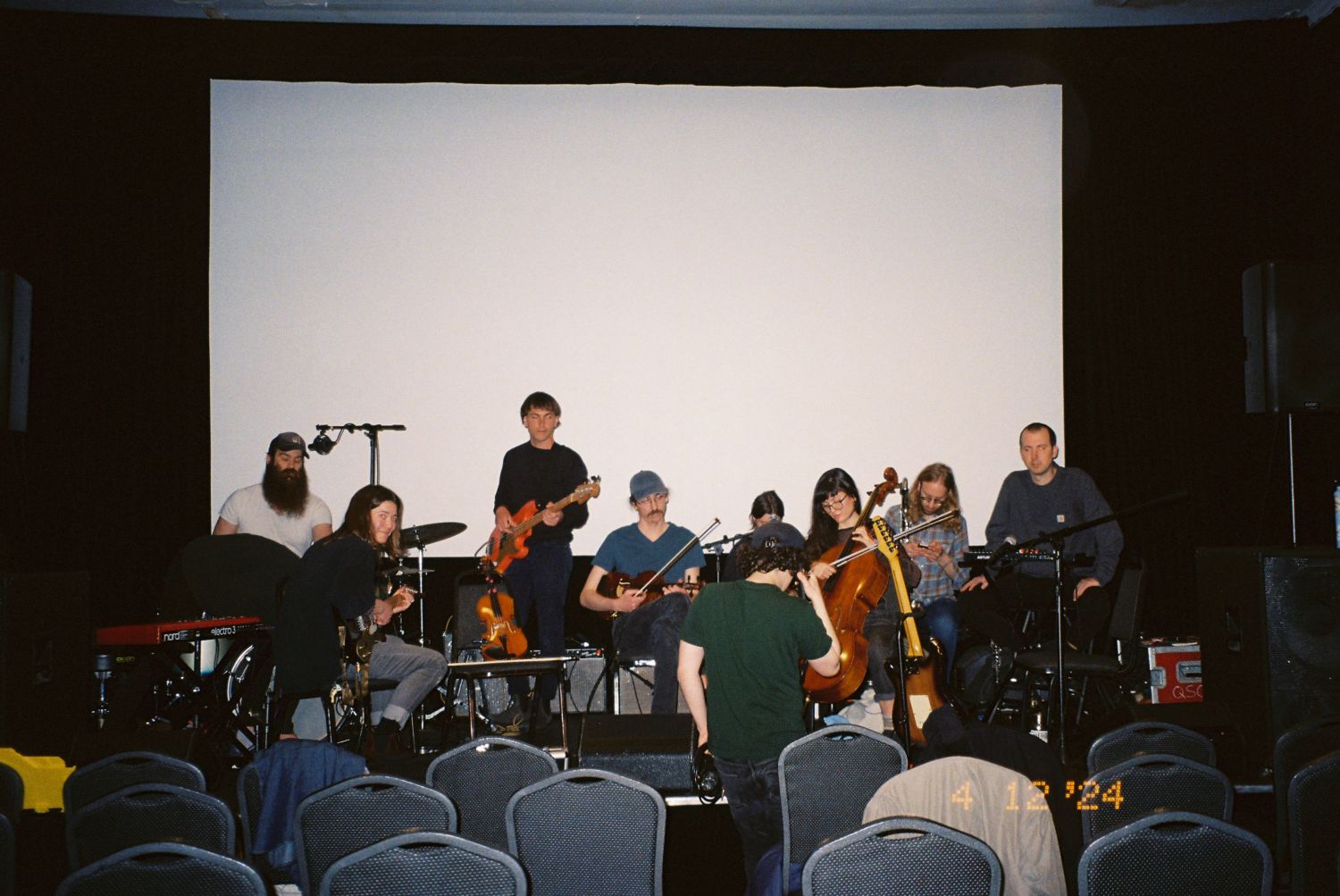
The first snippet shared from Subminiature is lead single, “At the Bar Where You Literally Saved Me from Fatal Heartbreak (Live at Philamoca, Philadelphia, PA, 4/12/24”, accompanied by a live concert video directed by Matt Ober. Watch below.
Michael put together a playlist of some of his favorite film music, a lot of which has inspired Hour in many ways. Listen below!
Hour is made up of many familiar faces from the Philly scene and beyond, with Subminiature featuring players such as Jacob Augustine, Jason Calhoun, Em Downing, Matt Fox, Peter Gill, Lucas Knapp, Evan McGonagill, Peter McLaughlin, Keith J. Nelson, Erika Nininger, Abi Reimold, Adelyn Strei
Set to be released on Valentine’s Day of this year, Hour will celebrate Subminiature with an extensive month-long tour across the U.S. You can preorder Subminiature now, including a limited edition cassette and CD run by Dear Life Records.
Written by Shea Roney | Photo by Michael Cormier-O’Leary
Built upon a vivid display of collaboration and curiosity, Amigos Imaginarios is an experimental duo composed of Arbol Ruiz (Paris via Columbia) and Caleb Chase (Worcester, MA), whose blend of stylized structures, pressurized electronics and sweet flavored twee had offered quite the impression on their first two records, Pick Flowers (2021) and El Jardin Encantado (2022), both released via Bud Tapes. Now Amigos Imaginarios announce their forthcoming LP titled Ice Cream, and to celebrate have shared the first single from the cycle called “Voy corriendo”.
In just 90 seconds, “Voy corriendo” is both a subtle and sweet affair amongst the electronic tinkerings and unruffled harmonies that Ruiz and Chase use to create a green patch of charm and sustainability within its bizarre, and almost dilapidated presence. With a title that roughly translates to “I’m running” or “I’m on my way”, “Voy corriendo” flows with this whimsy of wonder, remaining both playful yet poignant in its short, and oddly charming life – like a beloved children’s toy at the end of its battery life, whose charisma is wearing down despite remaining true to its colorful demeanor and purposeful responsibility for play.
Ice Cream marks the first Amigos Imaginarios project that was made in person, having been a fully collaborative project only through email up to this point.
Along with the single, Amigos Imaginarios also shared a music video featuring a 2000% saturated video with a collection of adorable dog clipart. Watch “Voy corriendo” here!
Ice Cream will be released January 10th via up and coming Brooklyn tape label, TV-14 Recordings. You can preorder a cassette now. Check out the rest of TV-14’s catalog here.
At the very bottom of the Virginia Creeper bandcamp page for their latest release, there is a Wikipedia link that takes you to the about of a cryptid-being known simply as the Loveland Frog. In its animated depiction, this limber amphibian stands on its hind legs, hunched over and stopped in its tracks at the end of a searchlight illuminating its presence – a riveting interpretation of a rather intriguing piece of Ohio folklore that still goes through the same rigmarole that both skeptics and believers hold to more well known beings like Bigfoot and Nessie.
Shea Roney: Can you tell me about the Loveland Frog? Why did you choose to include it along with the credits of the album?
Genevieve Poist: Yes! The Loveland frog is a cryptid that I am a fan of. We’re very pro-crypted in this band. We’re still trying to route our next tour so we can go to the Mothman Museum in West Virginia. There were a lot of little strange sounds and inside jokes and bits that made it into the record in different ways – we just recorded another album a few months ago, and the same thing happened actually – I think a lot of people do that. It’s the fun of making art obviously but I was trying to figure out how to appropriately acknowledge and credit them in the work. But I had been reading about the Loveland Frog, and specifically that rendering of the frog on the Wikipedia page, just really brought me into their whole aura. It’s fun to make the lore of the record lead to different lore, and one of my favorite things about being on the Internet is clicking and going down a trail somewhere, so I wanted to give that to whoever might find it.
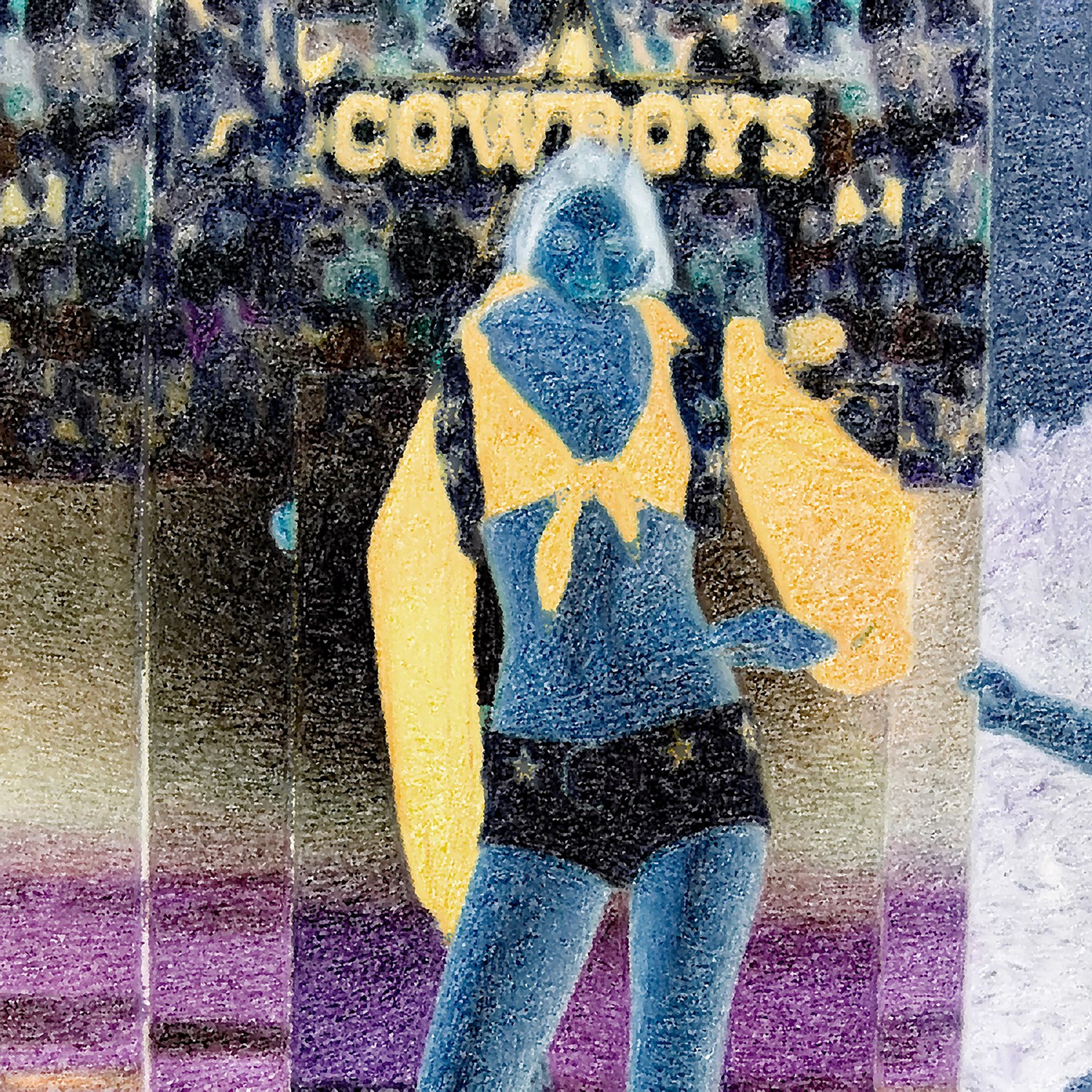
People Love the Dallas Cowboys Because They Want to Love Themselves artwork by Genevieve Poist
Genevieve Poist fronts the Austin-based project Virginia Creeper, who after a few years of writing and touring, have finally released their long awaited debut record People Love the Dallas Cowboys Because They Want to Love Themselves. Beginning as a solo endeavor, Virginia Creeper has since become a cavalry of creatives – familiar faces out of the music scenes from the American South that have contributed to a wide range of beloved indie recordings and touring acts. As a whole, the album plays with a witty liveliness, finding its own pacing amongst memorable hooks, expansive instrumentation and charming stories of personality and community, establishing the core repertoire that Virginia Creeper has worked to compile over the years. But to Genevieve’s efforts, this project has become a force of understanding, where each track is a composite of both presence and perspective within the song’s lasting life and the people behind its creation.
We recently caught up with Genevieve to discuss the new record, what it means to love yourself as well as the Dallas Cowboys and the act of finding and keeping the lore within art.
Photo by Tommy Reed ft. Aaron Zachary, Aaron Arguello, Marshall Pruitt, David Stimson, Genevieve Poist, Mason Parva, and Rosie the dog
This interview has been edited for length and clarity
SR: A lot of these songs on this record were written a handful of years ago. Can you give me a rundown on the timeline of making this record?
GP: The earliest songs on the record were probably written in late 2018 and into 2019 when I started playing with my friend Aaron Zachary (former Virginia Creeper member), and then at the end of 2019 is when we were thinking of recording a lot of these songs. But as everyone knows, we were supposed to start recording that weekend when the world shut down, so essentially that stretched and changed everything and we ended up writing and recording over 2020 and 2021, primarily at different intervals, so I would guess it was over four years.
SR: So now that these old songs have finally gotten to see the light, some in which you have said marks a special time in the VC lore, in what ways are these songs representative of that time and are there moments in which you see you and the band growing with these songs?
GP: Personally, for me as a songwriter, a lot of the subject matter that I was writing about or processing had to do with my mom passing away in 2019, so a lot of these songs, and even if it wasn’t directly about that by any means – the images and experiences – you know, were really concentrated in that universe. When you experience loss, you’re kind of writing about that forever, so I don’t really think that that’s necessarily going to change. But I do think that it was a very fresh and interesting place to be in relation to that event. And then, as a band and group of people working together collaboratively, the years around making this record were the first time a lot of us met, and not only began making music together, but even became friends. It kind of forged this musical and creative community that we have now with the current Virginia lineup, and then some other friendships and other musical projects that have come out of that. It was really unique and interesting to reflect back on how the different threads were woven together in that moment, I was trying to pay homage to whatever that was.
SR: Can you tell me about the rotation of characters that make up Virginia Creeper? How did this lineup come to be and do they influence the songs you write?
GP: Before we started the process of writing and recording this record, Virginia Creeper was sort of just me, and then different collaborators that I had worked with at different moments in time throughout my life of making music under that moniker. But now, Virginia Creeper is very much a band, with the people that are in it, and then sort of this little rotating group of people that we’ve recorded with that are still playing with us sometimes, as well as just friends that were on the record. That for me was essentially the first time that I was collaborating with a group of people on stuff that I had initially made in private or independently, which was a really informative experience – definitely very positive and fruitful for me. I have always liked music because it’s an art form that is inherently collaborative. Whether it’s an audience, or you and other people, I feel like this is one of the first times that I really was living what had appealed to me.
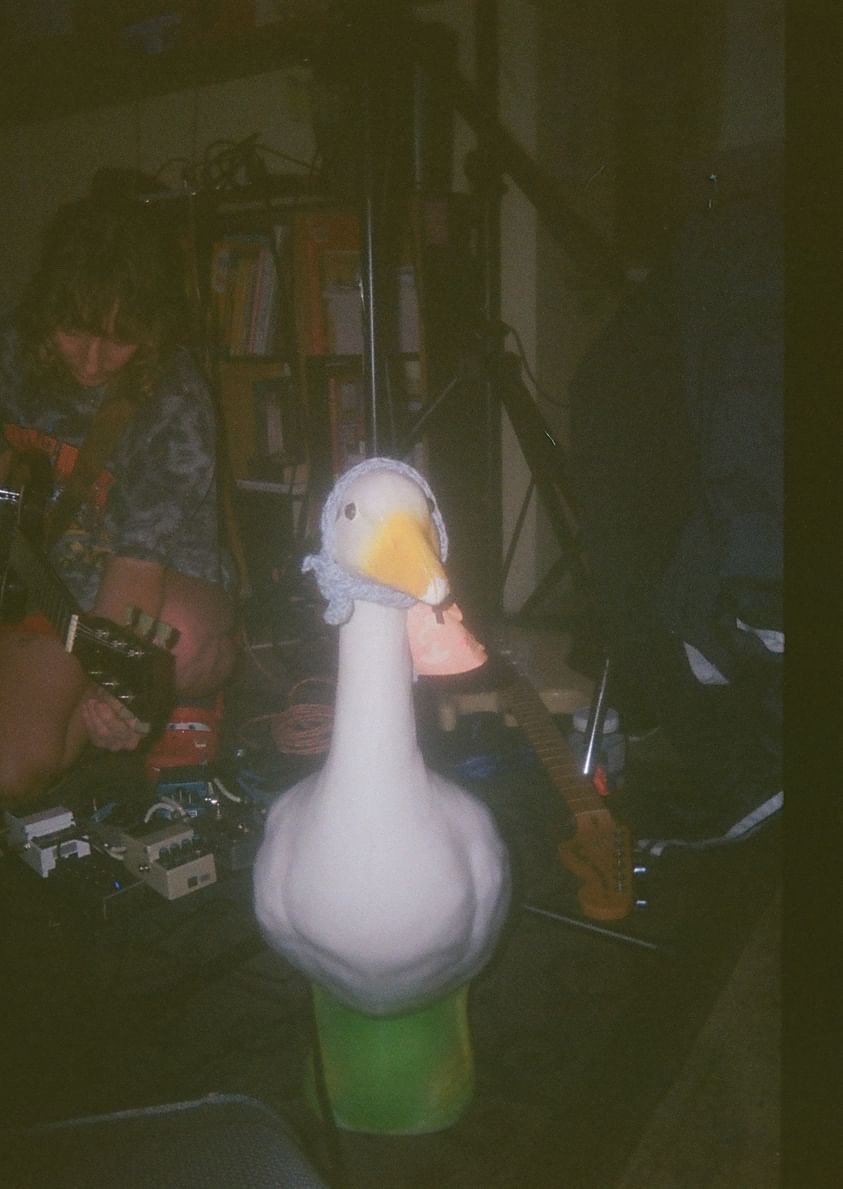
Virginia Creeper live set goose named Ginny (taken by our friend Giovanni Ventello)
SR: Did there come a need to document or preserve that time of your life? And in that case, how did you approach that type of preservation of feelings and memories through your music?
GP: I like this question because I feel like I am almost problematically obsessed with preservation and documentation. I definitely feel like a lot of my compulsion to create comes from an impulse to record, keep, or preserve a memory, especially with memories that seem really significant to me that are very vivid, but are maybe not accessible – maybe the other people that have lived those memories aren’t present anymore to reflect upon them with me, or maybe the memory itself is actually really sort of niche or minor. But for whatever reason my emotional connection to it feels really strong and I am really motivated, or compelled, to write those down or make something out of it through a song or other art forms. That is a big driving force for me, which also extends into other aspects of my life. My friends are always making fun of me because my phone doesn’t have any space on it, because I have like 40,000 voice messages and 50,000 pictures and I don’t delete my text messages, so there’s a physical reality to that issue as well. I have so many sentimental little objects that are probably considered trash by most people, but all of that to me feels really important to living life.
SR: Yeah for sure, and on a personal level, this record revolves around some very intimate feelings of grief and identity. What have you found yourself embracing when bringing new life into these songs while also having the time to now grow with them before they were released?
GP: I think a lot of the delay in releasing the music, I mean, it did take a long time to finish it, but then there was this time after the fact where I was grappling with like, ‘oh, this doesn’t seem to be a good representation of who I am, or who we are artistically right now’, and we were asking, ‘should we even release it?’ I don’t know if the rest of the people in the band felt as strongly, but you know, I think just by nature of me having the most familiarity with those songs, I think it was just harder for me to deal with it. And then when finally releasing the record, I didn’t really listen to the songs for a large period of time, and once it was released, revisiting them and talking to people about them kind of gave me this cool sort of bookmarking, like, ‘okay, we did that.’ And now you can kind of see, at least for me, how we got over here, and it’s nice to have this sort of thread that’s a visible record. I think it gave me an appreciation for being able to see a process and sort of have experience to think, ‘oh, I don’t know if I like that’, but then think, ‘okay, actually, I can see it with this removed lens to where I can appreciate it at a distance from myself a little bit.’ It feels nice.
SR: Is there a different direction you’re thinking of going with your songwriting or are you just talking mainly about your emotional connection when you say it doesn’t feel like an accurate representation of where you are right now?
GP: I think more so kind of just the sonic palette or genre. The music that we’re exploring as a band, and in a really reductive or simplistic way, those songs on that record and the music that I had released previously, a lot of it came from writing in a sort of limited space either by myself or not being able to be really loud. Since the time of that record’s creation, writing with the band and being able to play together resulted in different sonic terrains that we’re exploring in terms of being louder, or just having different clothes that it’s wearing. It’s not really that crazy different, I mean, we play with different bills now, but I don’t really think it’s that wild.
SR: So no glitch pop for Virginia Creeper?
GP: Well [laughs], we do play some various types of glitched beats in our live sets right now, but it’s not really glitch pop, it’s more just like a weird sample from the Internet that we manipulated and made sound weird. But who knows what’s next?
SR: “People Love the Dallas Cowboys because They Want to Love Themselves” is obviously a very intriguing title. Being from Texas yourself, what was the inspiration for this phrasing and does this title ring true in your own life?
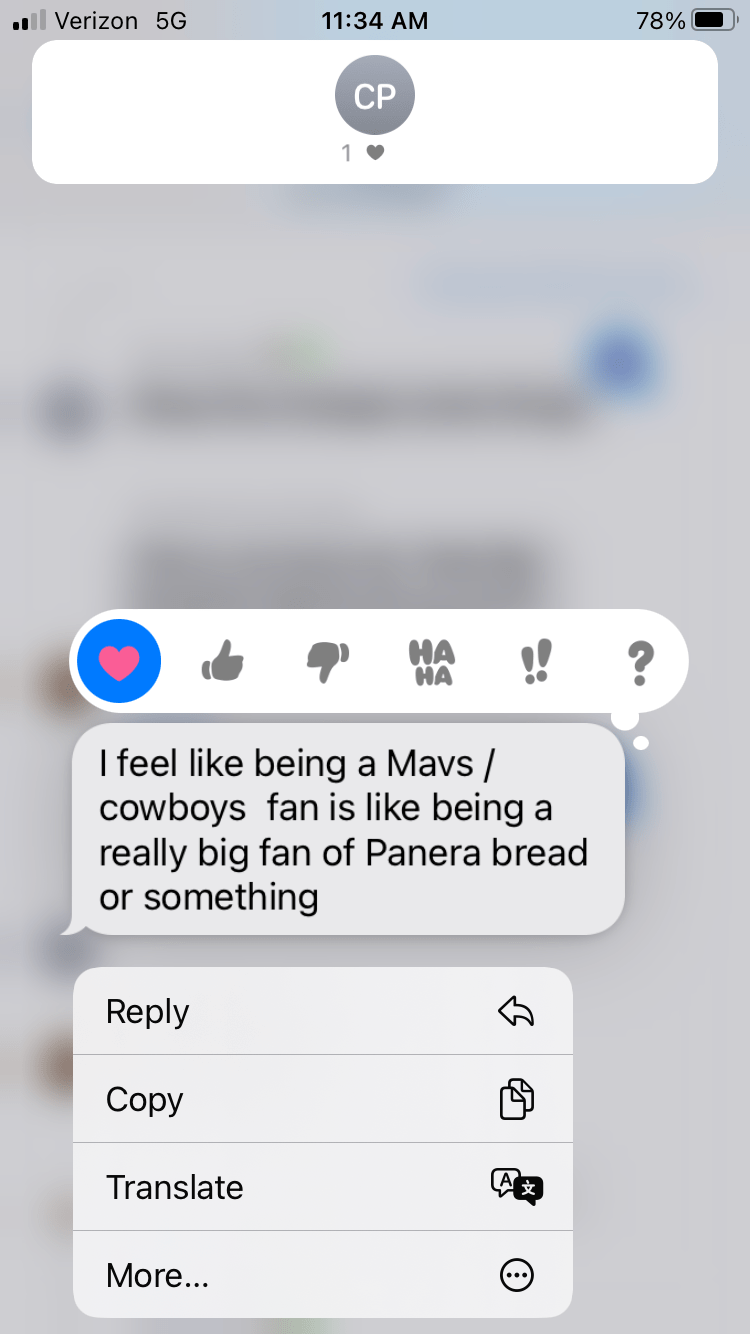
GP: Okay, first of all, I have a prop. I had a birthday party this weekend, and my friend Jason, who is basically where the phrase “people love the Dallas cowboys because they want to love themselves” came from in a conversation we were having once several years ago via text, he gave me this book for my birthday paying homage to the title, so I can’t wait to read about the outrageous history of the biggest, loudest, most hated, and best loved football team in America. The phrase is kind of about how people place a lot of their personal identity and self-worth in the things that they like, sort of why we have stan culture, where people get personally upset if you critique something that they’re interested in – that phenomenon is just really interesting to us and we’re trying to figure out why we do that and if it has intensified recently. Well, Jason and I were talking about how the Dallas Cowboys are sort of emblematic of that notion. Anyways, I’m not a Cowboys fan, so I like to antagonize Texas sports fans, especially football.
But to your second question, I do think it’s true. I think most things that we love, we are loving because we’re wanting to be like them or we are seeing ourselves in them – it’s somehow connected to wanting to love ourselves or receive love ourselves in a way. So I do think that that is a true phrase, right now at least, but I’ll report back as time passes if I think differently.
SR: You just finished a super brief tour recently? Was it the World Series themed tour?
GP: Yes it was!
SR: Not to keep the conversation on sports, but what a bummer that series was. What was that?
GP: Dude, I know. We joke that half of our songs that we play now are about baseball, so we’re always saying we’re a sports band. But yeah, it was such a bummer. Kyle’s really into baseball, and the rest of us have kind of embraced it when we’re all together. Yankees vs. Dodgers to begin with, is kind of the most lackluster series, and then the way that the series played out wasn’t even exciting, so it was kind of a downer.
SR: You recently helped put together a compilation album called ATX x AVL with Love made of all Texas artists benefitting Hurricane Helene victims in western North Carolina. How did that compilation come to be, especially coming together so quickly?
GP: Well it started with Lindsey Verrell of Little Mazarren. They are always joking that they are self described ‘not good at the Internet’ [laughs] even though they’re way better than they think they are. So, they texted me with this idea, presented what they wanted to do, and then I sent out a call to as many people as I could think of that would be down. I think we messaged people on Thursday or Friday, and then got all of the submissions by Tuesday morning, and then it was like a one week turnover which was awesome. I’m always kind of nervous asking people because it is kind of daunting to either record something new really quickly or find something and make sure you’re okay with putting it out. But people were super generous and excited about it, which was awesome. I’m continually very inspired by how active people are, whether it’s for Palestine and doing things to raise awareness and protest the genocide that’s happening, relief for the hurricane, or even a few years ago with a comp that we put something on for abortion access when a lot of that stuff got restricted. People’s industriousness and just willingness to do so much when most artists aren’t even making any money from the base level stuff that they’re doing – and then adding this on top of it – it’s just really inspiring.
SR: I am such a fan of very niche concept compilation albums. I know that Toadstool Records just put out one that was all Beach Boys covers.
GP: Woah, that’s so cool! There’s just so much stuff that reminds me of how just much fun and play there is in making music, or any type of art for that matter. It’s all just a fun art project with your friends or people you know, and I think there’s such a pressure to make stuff so streamlined and presented and packaged in a certain way because of how stuff is right now, but anything that is deviating from that, or just like existing for the sake of existing because people wanted to do it, is just really refreshing.
You can purchase People Love the Dallas Cowboys Because They Want to Love Themselves here as well as stream it on all platforms.
Today, Brooklyn-based singer-songwriter Avery Friedman shares her long awaited debut single, “Flowers Fell”. Having frequented bills with artists such as Sister. and Dead Gowns for the past year, Friedman has consistently left an impression on those that have caught her sets, oftentimes performing solo, creating a space in which her vivid imagery and tender melodies greet new ears with welcome and understanding. Produced by James Chrisman (Sister.) and with contributions from Felix Walworth (Told Slant, Florist), “Flowers Fell” plays to the in-between moments as Friedman defines new beginnings.
Photo by Mamie Heldman
“Flowers Fell” begins in a reverberated haze, rearing guitars and diluted vocals hold their breath, awaiting that very first line that Friedman drives out— “The flowers fell off when I was asleep / But it’s okay ’cause now its all green” — blindsided, but not disappointed. Soon the chorus becomes definite, Friedman’s vocals wield both strength and tenderness as the melody leads with its whole chest and instrumentation follows in a potent groove. “How long can you mourn for something that was always supposed to blossom into something stronger?” Friedman asks in a statement — a combination of both grief and vitality. As the song begins to close out, the ghosts of distortion and the swarming of sonic fixations underneath begin to blend, holding the surrounding static accountable as a full picture begins to clear up.
“Flowers Fell” is accompanied by a music video, directed, filmed, VFX, and handwritten lyrical text by Nara Avakian. Watch it here.
You can stream “Flowers Fell” on all platforms now.
“The first two years that we were performing,” Beckerman recalls, “the nerves were pretty unmanageable before every single performance because I had the worst stage fright,” a level of exhaustion still remnant in the corners of these memories as she speaks. “But I feel like I’m finally getting to the point where I’m not getting butterflies just from waking up that whole week before I perform — I’ve grown a lot, thank goodness.”
Daneshevskaya is the project of Brooklyn-based artist, Anna Beckerman, whose namesake derives from her own middle name, one in which she shares with her great-grandmother. Having since released her debut album, Long Is The Tunnel late last year via New York label Winspear, an album in which presence and perspective become intertwined within her own story, Beckerman’s writing has always been one to cherish self-discovery. As she continues in her career, “the more I write lyrics, the more I get closer to what I’m really trying to say,” she conveys, speaking towards her practice. “I don’t know what it is I’m trying to say, but I think I’m getting closer.”
Today, Daneshevskaya returns with “Scrooge”, the first bit of new music since Long Is The Tunnel and a revitalization of an earlier song she recorded and released under the project name back in 2018. Fractured by the cruelty of romantics, Beckerman and collaborators set a benchmark for retainment, where stillness isn’t an option as melodies coincide and collapse, strings gasp at the vivid imagery at hand and playful keys tiptoe around as if not to disturb the surface. Although the lyrics have not seen any changes – the emotion still fervent and raw – “Scrooge” becomes a moment of admiration for what was left untouched, while still recognizing how far she has come since.
The ugly hug recently sat down with Beckerman to discuss “Scrooge”, looking past the “cringe” of earlier works, and what she has learned from an openly collaborative career.
Photo by Madeline Leshner
This interview has been edited for length and clarity.
Shea Roney: I can’t believe it has already been a year since Long Is The Tunnel was released. Are you still riding the high from the attention that album received?
Anna Beckerman: I get so much anxiety from releasing and promoting music that I feel like it took me a while after it was released to be like, ‘oh, wait, I’m proud of that! I’m excited, and I’m proud.’ It’s so crazy to make music and then see people I don’t know posting stuff about it and telling other people to listen to it – so it took me some time to get over myself and enjoy what I had made.
SR: You have a new single called “Scrooge”, which is actually a newly recorded version of an older song released a handful of years ago. What made you want to return to this song now?
AB: Yes, it was released back in 2018. We had worked on the song and I think we submitted to maybe a hundred SubmitHubs or whatever, and got like a hundred rejections. We always really liked it though, I remember being really proud of it. We all saw that we had this opportunity to re-record the parts of it that always bothered us and give it another go and see if it would reach more people, especially now that we have more support releasing it. Going into it, we knew we wouldn’t record it that same way now, where it had been done kind of chopped up and with different people, so it was nice to get to make it in the way that felt right, and work with the people who I wanna work with.
SR: Although it is a fairly older song, do you feel like it still resonates with you on that same level?
AB: I feel like my whole life has been making stuff and then looking back on it a few years later and thinking, ‘I can’t believe I ever thought that was cool’ [laughs]. I can’t imagine having as much access to showing people things as kids have now. I was making the stupidest, most indulgent, disconnected and self absorbed stuff, but showing it to no one because there was nothing to do with it. Oh, God, the YouTube videos I would have to look back on if I had had that kind of access back then. But that being said, it was convenient that it was the first thing I ever made and somehow I don’t look back on it and think that I would never make this now. I probably would make something like that still, or even, maybe I’ll never make something like that again, because it was something I did, and now it’s done. But I still have a lot of respect for it, and the lyrics don’t make me cringe, which is a true test.
SR: I fully believe you need those cringy moments though. Little testaments to keep yourself in check.
AB: Oh, yeah, you gotta remind yourself [laughs]. I also took a bunch of poetry classes in college, and I feel like the whole point of those workshops is to just make cringy stuff. Sometimes I do go back and read what I wrote when I was a freshman in college, and I just think, ‘…oh.’
Photo by Madeline Leshner
SR: You have always written with such vivid imagery, but this song feels unique, in that it deals with varying moments of proximity and presence. You build this focus from a very intimate lens that feels very hands on, yet you manage to create this growing distance between yourself and “Scrooge”. Was this a challenging feat when writing, and why did you want to tell the story this way?
AB: I think in general, when I listen to music, I really like lyrics that are kind of familiar, but also feel strange. When writing this song, I was just really sad [laughs], so when I have a loss or something leaves my life, I feel like I have a rush to write things down so that I remember. A lot of the first EP, Bury Your Horses, I was dealing with how weird it is to know someone and then not know them anymore, and how that is such a bizarre feeling, even more so than feeling something sad or melancholy – I just feel like it’s so weird. I don’t know, my brain just couldn’t really wrap around it, so I feel like the lyrics are a way for me to put it all out there and just be okay that it’s weird.
SR: The character himself, Ebenezer Scrooge, is textbook villain, but is also a very dynamic character. What was the inspiration of choosing him as a placeholder for someone you knew personally?
AB: Part of it was that it fit into the amount of syllables that I needed [laughs]. I wish that there was a more interesting explanation, but I just thought of the first thing that comes to mind when I think of a villain, or someone who’s just clearly a bad guy, even though I was kind of aware while I was in it that this person isn’t actually bad, even though I was so upset and hurt – it almost felt fake.
SR: EB-EN-EZ-ER.
AB: Yeah, it has more syllables than most other villains. What’s that one? Thanos? That’s not good. And it was interesting, because the chorus of the song I had written before my breakup was about being with someone, and then seeing them from a different lens and then feeling that distance from them. And then we broke up, and I was like, ‘no, this still applies [laughs], it still works. I still feel what I said.’
SR: Did you find yourself grappling with the honesty of persevering those feelings that this relationship brought out while writing this song?
AB: I always struggle with being scared that my lyrics will be too specific and they’ll end up seeming precious or something. But I also don’t want things to be so vague that they don’t resonate with people because they’re not specific enough. I was also really angry when I wrote this song and the song itself obviously isn’t – it’s very ‘La la’ indie folk, so it doesn’t come across super angry. But I always loved the Elliott Smith songs where he’s really angry but it’s kind of a cute song, and it takes a few listens to be like, ‘oh, you’re really pissed right now.’ It’s like a little bit of that, and also just thinking that if this person hears this song, maybe only they’ll know that I’m angry. Everyone else might think it’s a cutesy song, but the person who I wrote it about will know that I’m angry. In that way I was trying to be honest.
SR: Your work up to this point has been a very communal effort, bringing in a lot of friends to help contribute and create this rather spiritual effect in your music. What kinds of things have you learned from your collaborators that you hold dear to your heart as you go on?
AB: First of all, nothing I’ve ever done in music I could have done without the amazing musicians all around me who can do everything. I’m very aware of how lucky I am to have people I get to make music with, and who genuinely want to be doing it. I think that’s the only thing that has kept me in music for so long now. That being said, the best thing you can get from someone giving you feedback is not always the feedback, but the way that they look at music as what sticks with you. The next time you make music, you’ll have a little voice in your head of one person saying ‘maybe you could try a different voicing’, and then there’s another person saying, ‘do you need that many words?’ All of those voices are me, but they’re also a product of the people that I have worked with through the years.
Watch the music video for “Scrooge”, directed by Madeline Leshner, here.
“Scrooge” was made with the help of co-collaborators Madeline Leshner, Artur Szerejko and produced by Marcus Paquin (The Weather Station, The National, Julia Jacklin). You can now stream it on all platforms.
Daneshevskaya will be headlining Brooklyn’s Baby’s All Right on Friday, December 13th. Get tickets here.
Earlier this year, the Philadelphia instrumental ensemble Hour released their latest album, Ease the Work, a collection that soars with dynamism and passion, striking both communal and critical acclaim across the board. Made up of ten multi-instrumentalist who perform and record live, Hour is composed and produced by leader Michael Cormier-O’Leary (Friendship, 2nd Grade, Dear Life Records). Today, the group returns with two new songs “Saturday After Payday” and “Absence is a Heady Spice”.
Photo by Michael Cormier-O’Leary
These two songs were recorded as part of the Ease the Work recording session at the Greenwood Playhouse on Peaks Island, off the coast of Portland, Maine, in which the group had to take a ferry to get to with an entire studios worth of equipment. The songs were ultimately left off of the album, yet remained a solid pairing to be released at a separate time.
Playing with a tempered progression, “Saturday After Payday” begins with a steady piano, undeterred with its direction as a string quartet and an electric bass add a firm, yet suave voicing. The track was recorded live by an eight piece iteration, and is “indebted to the work of some classic French pop arrangers, most notedly Jean-Claude Vannier.”
Like the old family heirloom pianos, “Absence is a Heady Spice” holds weight within the simplicity and unevenness, each note played is met by a release – the tension of the sticky keys relieving pressure from the years of use on the piano’s inner workings. “Being the only solo piano piece in a collection of compositions for large ensemble,” Cormier-O’Leary says, “I thought it was funny to name the piece “Absence is a Heady Spice”. Like, ‘where’d the band go?’”
“Saturday After Payday” and “Absence is a Heady Spice” are now available to stream on all platforms. Purchase the two songs here.
Hour is made up of Jason Calhoun (synth), Michael Cormier-O’Leary (guitar, percussion), Em Downing (violin), Matt Fox (viola), Elisabeth Fuchsia (violin), Peter Gill (bass), Lucas Knapp (radio effects, field recordings, piano), Evan McGonagill (cello), Peter McLaughlin (drums), Keith J. Nelson (bass clarinet, clarinet), Erika Nininger (piano, rhodes) and Abi Reimold (electric guitar).
Having since moved out of Chicago earlier this year, a place in which the beloved and defined community was considered home for quite some time, Elijah Berlow has recently set off to write the next chapter in his life. Today, the now Vermont-based songsmith and multi-instrumentalist returns with his newest single, “Harvest Fields”, the first release since his 2022 EP, Put Out Fires. With a rich and thorough musical upbringing, learning the traditions of Americana music and literature, Berlow’s music is reflective of his life’s journey, both acknowledging the stories of how far he has come, and not forgetting where he has left to go.
With rolling instrumentation, “Harvest Fields” plays from the roots of a feel-good folk groove, both sincere and eager, as guitars swirl with heart and melody, a piano voices its gratification and percussion leads with full hearted faith to the unknown ahead. Following an ecstatic guitar solo, Berlow sings with gracious deliverance, “And we scraped up our knees / And we ran us around / Said that nothing can get better / Unless it can be found” – full of bewilderment and study, the understanding of both time and maturation as life continues on. Soon, Berlow and co. round the corner, elated trumpets soar before dropping out, the melody of a guitar, sparingly and lone, plays to the open sky – cherishing the newfound clarity that Berlow has to offer.
About the song, Berlow shares, “this song encapsulates the effort of betterment, the bereavement of not being witnessed within ones full capacity, steeped in naturalistic metaphor yet also a dialogue between a course of action, wild yearning and one’s own obscure place within the repeated seasonal cycles.”
“Harvest Fields” is accompanied by a music video shot and edited by Esteban Alarcon. Watch here.



 the ugly hug