Dan English’s ‘Sky Record’ is a gateway, an opening that spills outward. Toeing the line between analog and digital, flesh and fiber optics, the record unfolds on itself.
At Treefort Music Fest, The Ugly Hug had the chance to speak to Dan English about the influences behind the record, the strange experience of discovering new meaning, and work as a “distillation” of the self.
This interview has been edited for length and clarity
Lucie Day (The Ugly Hug): You’ve talked about growing up and using music, movies, and games as portals to other worlds. Do you think that Sky Record is a continuation of that, or is it more about bringing those imagined worlds into reality?
Dan English: I think I used making the music as an escape, as a salve. Doing this thing that I know how to do and have been doing for a long time as a therapy or as an escape— you know, a drug or whatever you want to call it. Some sort of piece of work that both making it and experiencing it could be useful to somebody who needs it now. It doesn’t come from some sort of genius imagination of “what if there was this kind of place”? It’s more of like a – not an expulsion, but like a spilling out.
LD: With that mythology that grows, is that more of an accidental immersion than intentional?
DE: Yeah, I would say so. Or just an explanation of the mythology of the self, you know? Even the mythology of your day-to-day, there’s an intensity and a heaviness to that that is monolithic, but it happens every day. So it’s kind of boring, but it does feel intense. And I guess it kind of has to do with that. It definitely was not me sitting down trying to be smart about it. The visuals and stuff all were just tapping with friends. I think we’re on the same page and like the same kind of stuff. Approach art in the same way. Don’t know why they do the things they do, but they really care about it.
LD: Like a compulsion.
DE: Yeah. They’re just like, this is the way that I understand the universe, and so this is what I must do.
LD: In a different interview, there was a comparison that you made to songwriting as divination. A following of intuition, which I think is very consistent with what we’re talking about. Have there been moments where in the process of constructing a song or a larger body of work, it’s surprised you or revealed something that you didn’t consciously know you were feeling or dealing with?
DE: I’ve had conversations about this album that have illuminated it more so to me than I even thought about it or understood. It’s weird, especially today doing interviews. It’s a lot of looking at something from so many different angles. This is the first time I’ve ever thought: ‘Oh, I’m an artist who has a body of work’. In a hundred years, if I was dead and somebody was like, ‘Dan English’s work is about this’. I never thought about that until today. There are all these people that are like, ‘This is what my work is about‘ and they’re right. That’s making me think about things. There’s this thing being communicated, that it’s not that I didn’t intend it, it’s just that I didn’t expect people to pick it up. I didn’t, in some cases, know it was there. It just is a distillation of me.
LD: Do you think that as time goes on, that’s going to mature and change or do you think it’s going to stay the same?
DE: That’s also come up today— not in a conversation, but now that I know what it’s about or what I’m about, what do I do with that? It’s a big question. I would rather just hang back and see what comes out and hope that it’s meaningful. But there’s also a responsibility to do something meaningful and useful and practical with your life that I do feel— Or just making music does, because I was saved by music when I was a kid. I needed music more than anything.
Making it doesn’t necessarily give me a pass or something, I still think there’s a lot more you could do for your world and your community. Hopefully, I can find a way to do that. I’ve been making this my work— my work has been my life— for however many years. Now that it’s catching a stride, and also catching a break, it doesn’t have to be so hard. You know what I mean? As hard as it is for a fat little 10-year-old who hates himself and all that shit.
LD: You have a lot of the same references come up, namely Blade Runner and Zelda. What do you think it is about those that resonates with the universe that you’ve constructed?
DE: I think it would be the reverse, that my universe reflects those. They’re just geniuses. Incredible pieces of work by people who do it differently, you know? I’ve just always been drawn to that and I’m not trying to say that that’s what I am, it’s just the stuff that i like.
I was trying to think about it the other night, I don’t even know why. I don’t know what I was watching, maybe it was a movie, or a concert and I was just like, ‘What is it that makes good stuff good?’ I think it’s anything that does the opposite of turning your brain off. It makes you like to ask questions or it keeps you engaged. It’s not predictable, it commands your attention. I don’t know whether it’s like Cronenberg or just something different. I love Ridley Scott.
I was talking earlier about thematic stuff too, I think attention to theme is also a way to keep people engaged. I certainly don’t do that with intention or anything, but when I watch a movie or even Zelda, it feels like mythology. The story might not be detailed or intense, but it has this universality and weight to it that hits hard. That’s just what moves me, and none of it in my music is by design. It’s just like gravitation, you know? I wish I could say it was from being smart and making decisions, but it’s not.
Dan English Live at Treefort Music Festival | Bosie, Idaho
LD: If Sky Record had to be a different medium, and it wasn’t the music…
DE: I mean, obviously it would be a movie. But I hope I never make a movie because I just want to keep them as a special thing. Although, you know, I’m worried I’m running out of movies to watch. It’s got to be a finite number. But yeah, it would be a film. I don’t know who would direct it, but I’ll bet it’d be good. I think it would have a good arc to it. George Lucas, Peter Jackson.
LD: When people listen to Sky Record years from now, what do you hope still resonates with them?
DE: I think there’s a thread that I didn’t really realize when I was making it that was timely with AI. This was like 2018 when I was conceptualizing it. I was into Blade Runner and Pinocchio, too. There’s a thread of it that is not feeling human, but longing to be human. This idea of “I’m not human, but I experience what a human does”. It’s just being out of touch with your emotions. And, in a way, a lot of it is the dysphoria of modern life— having a digital life and also a body. Being alive and how different and, in a way, disconnected those things are.
I hope it’s evidence of what was going on at this time, being a young adult or a person raised on the internet but also longing for the real thing. I really didn’t do it by design, which surprised me, but also is awesome to me. It is a lot of electronic stuff and a lot of acoustic stuff. It surprises me when I even realize that. I didn’t do it on purpose, this weird Frankenstein that I created.
LD: I think it’s very cool. It’s like a thing that’s alive that talks back to you. And you teach it, but it also learns from you.
DE: It’s cool. I’m happy people like it. But also… time to make another one.
Amid the constant motion of Treefort Music Fest, Coral Grief creates a sanctuary. Their new record ‘Air Between Us’ invites the listener in with open arms and layered melodies.
We caught up with the Seattle-based trio during the festival to step into the album’s haze and talk about trusting your instincts, embracing abstraction, and letting songs evolve on their own terms.
This interview has been edited for length and clarity.
Lucie Day (The Ugly Hug): First off, welcome to Boise, Idaho! Congrats on the record, too.Something that you’ve talked about is collecting ideas and not judging them too early on. How do you know when something is ready to be revisited versus whether it needs a little more time to marinate? Is it just a gut feeling?
Lena Farr-Morrissey (vocals, bass, synth): I think it’s a feeling.
Cam Hancock (drums): When you know, you know.
LFM: I feel like with some songs, they click pretty fast. That’s kind of, like, the ideal situation for a song, right?
LD: When it’s easy.
LFM: Yes, ugh, right? But then for some, it takes a little bit more getting there. And you’re right, I feel like sometimes I have a tendency to overwork something or I’m like: ‘I don’t know if that was right’. I feel like then just bringing it to y’all – having other opinions – to ask: “What do you guys think of this? Could we improve on that’? I think working more collaboratively has helped to figure out when something works.
LD: I feel like I do get that feeling. You look at something, and it’s a head and a chest feeling of: ‘Yes.’ Which is really cool! But I feel like it’s so easy to run something into the ground when sometimes it does just need time to breathe, and you just need space from it.
LFM: And then you revisit it.
LD: It’s a whole other perspective.
LFM: We have a ton of demos from years ago that when we were in the moment, we were like, ‘No’. And then you can go back and revisit them and be like, ‘Oh, wait, I actually really liked the verse of that.’ Let’s just take that part and then move forward with it.
LD: Within the record, there’s a lot of documentation of places without fully explaining them and a lot of context that’s not necessarily direct and is instead implied. Do you think that, with that, the lyrics become preservative? Or something that’s more abstract?
LFM: I think I definitely lean more abstract and I’ve been learning how to ride that line of, ‘how can I paint this picture and give people a little bit more of something to hold onto, but still not be so obvious about it’? I feel like I’m still trying to learn how to toe that line. I feel like my goal with the lyrics on the record was to – from these different angles, paint a picture. Not have it necessarily be like: ‘This is about Seattle, Washington and my favorite streets and the streets that I hate’. Kind of just evoking the feelings and the moods that I’ve been feeling about things and trying to give some context, but I’m fine with it being more abstract. Because then people can assign their own kind of interpretation to it. I feel like everyone’s kind of going through the same shit.
Coral Rief Live at Treefort Fest | Boise, Idaho
LD: Aside from the direct inspirations, do you see a visual world that the music exists within?
LFM: Totally. I think that’s unfolding more and more as we make more music. I feel like it’s very grounded in a whimsical nature.
LD: It’s like world-building.
LFM: A little bit of a – I don’t want to say post-apocalyptic, but, just, a better world? A little bit more fantasy? If I were to build a dream world that this music exists in, it’s definitely not our current reality.
CH: I think there’s a lot of nature imagery and ideas of exploring your surroundings in a way that feels like a fantasy, but it’s also very real.
LD: Very tactile.
CH: Yeah, because we’re so removed from that. It’s so easy to be removed from that. I think we’ve talked about how it’s a great record to go for a drive.
LD: Yeah! You guys said something about “in movement”.
CH: When’s the last time anyone just went for a drive and put a record on? It’s a great idea, and people do it.
LFM: We don’t have time for that.
CH: We don’t have time for that. But, you know, maybe you’re on the bus, maybe you’re on the train, or going for a bike ride or something.
LD: All you need is a window.
CH: I think if it takes you somewhere, that’s great wherever that place is for you. You talk about the abstract lyrics- people bring their own ideas to it. They bring their own imagery to it.
LFM: There’s this philosophy term that says that everything is alive called panpsychism. Everything has a consciousness, all things have a mind or a mind like quality. I want to channel that more.
LD: If the things that you were trying to be conveying weren’t through music, what do you think would be the best medium associated with it?
Sam Fason (guitar, synth): For me, at least, the medium I feel most akin to is painting. In a similar way to music, you can get very abstract and gestural with it. In music you can convey stuff with notes and structure, but you can also convey stuff with tone and timbre. In painting, you can convey stuff with form but also with color, and other things more hard to define.
LFM: I like how music moves through time. I feel like film captures that similar itch for me and I’m like, ‘Oh, I like putting this sequence together and creating a timeline’. That’s something I really enjoy about music, so film is a fun way to explore that visually even though I’m not really good at it. But I like it. It’s fun to do. I used to make videos with my sister, she was my muse. She was like four years old, and I was like, ‘Okay, you’re the horror, the scary girl, and we’re gonna have you haunt the town’.
SF: I mean, you did a couple of our music videos and they turned out great.
CH: I think that they’re kind of getting at what we’re talking about, where it’s not just us in a room playing. Even the ones that are that, there’s a lot of other imagery going on. There’s a lot of nature scenes. I really enjoy that part of the process this time around and getting to work with folks who see our vision and are able to take that to the next step. Bringing in their own ideas, it all should be collaborative.
LFM: That’s the world I want to build. A world with our friends and other people that are just down for the cause.
Coral Rief Live at Treefort Fest | Boise, Idaho
LD: Lately I’ve been thinking a lot about what you’re saying: ‘It’s fun, but I don’t know if I’m that good at it’. I don’t think it matters if you’re good at it. I think it matters if it’s fun. Sometimes it can just be fun, and that brings a feeling with it. People can tell when something is coming from a place of pure enjoyment.
LFM: And not judging yourself. Just being playful with it.
LD: If there’s a theme within the record of holding onto things that are shifting and that “sand in-between your fingers” feeling, what do you feel like you’re holding on to?
SF: It’s becoming increasingly hard, but holding onto the hope that things might get better. Things can and do move in all directions, so if it’s possible for things to get worse, things can also get better.
LFM: I have a lot of perfectionist qualities in my life that I project outward and I’m trying to let go of that type of standard in general. Kind of what we’ve been talking about – just being more loose with everything and holding on to less judgment. I feel like I’ll be able to then interact with the world better and with the hope that I’m able to embrace things more.
CH: I was thinking about the things that I can control and the time that I have that is actually mine. It feels like you’re being pulled in a lot of directions, and it’s easy to just kind of lose yourself in the news, the internet, distraction, whatever. But having that time, it’s so nice to just go to a place like Boise and get out of town. Take an eight-hour car ride, and I can’t really read anything while I’m in the car, so I just kind of sit there, and it’s easy to just be like, ‘I’m bored,’ but also, I have nothing I have to do right now.
LD: Yeah, it’s very freeing.
CH: I’m really leaning into those moments. A lot of change in scenery helps that in a big way.
LFM: Yeah, I feel like through the band, that’s how we kind of hold on.
LD: It’s like an anchor.
LFM: Yeah, it’s like an anchor. We’re hurtling through the world figuring out how to navigate it all, and if anyone else wants to hop on then hop on.
LD: I feel like everyone I see who is feeling stressed about the ways of the world has found an anchor, whether that’s in a creative process or in a community. Using your medium as a form of resistance is a real thing, and I think that people attach onto that when they need it.
LFM: That’s the thing, though. You’ve got to cut to the root of what’s happening.
SF: Being able to have gone on the road and toured a good amount in the last year, it’s really reaffirming. There are people holding it down everywhere. It’s easy to feel like you’re on an island and things are pretty bleak out there, but there’s people who are everywhere and going through the same thing. They have the same values, and they’re doing something about it.
LD: Is there anything that you guys have realized about yourselves as artists recently that you didn’t necessarily understand when making this record or within the process of?
LFM: I think it’s crazy that we recorded that two years ago now. I do feel like I’ve changed so much since then, and I would do a lot of things differently.
LD: When it’s brand new to a group of people but it feels so far away from where you are presently, that’s a really interesting disconnect.
LFM: We’re going to go back into the studio in a month or so, and we’ve been working on new stuff. I want to get more experimental with it and learn how to build on it. What I was saying earlier about perfectionism– to see if I can just let the songs unfold and have less of a strict idea of what they need to be like. Let them snowball into their own.
LD: Let them be alive.
LFM: Yeah, let them come alive a little bit more.
SF: I feel similar to that. Sometimes if I’ve been working on a song or a demo, after that I have a hard time turning that part of my brain off. I hyperfixate on that, and moving forward I want to be able to put in that work but then also let it sit and marinate more. I think that’s a really important part of the process that I sometimes struggle with. I want to tinker forever. Sometimes the best results come from just letting things settle and taking your mind off it, and then coming back to it.
CH: I think that something I didn’t realize is that the first album at the time didn’t necessarily feel like a statement, but once it was all compiled together and we started to talk about it, and we started to have to talk about it, it did. That’s part of the process too, forming those ideas around it and hearing what each other feels about the work is really important. I didn’t realize that that would come about and inform this next piece only in the way that we’re, like, just more consciously thinking about what this next thing is. I feel like there’s sometimes a pressure for the second thing to be somehow related to the first.
LD: An expectation.
CH: You’ve done your thing and you’re out in the world now. There’s all these people who are now gathered around this thing that you’ve made, whether they’re listening or finding your music on Instagram or the radio or something. Do you have to be beholden to your investors, or do you just do whatever the heck you want— or somehow find a balance? I think we’re all really down to experiment a little more, and I’m really excited about that. So far, that process has yielded things that we enjoy. And so, if that’s the trajectory we continue on, I think we’ll be in a good spot.
LD: I think that that is a beautiful closer and a very optimistic end.
Listen to Air Between Us out now via Anxiety Blanket Records.
Whenever I regret any of the tattoos I got at nineteen, I pacify the remorse by recalling the even more regrettable tattoos I did not get at nineteen. I still have a Pinterest board I can consult when I need to ridicule my half-baked prefrontal cortex; though no fine-line butterfly or cliche heart could come close to the surplus of relief I feel about having “wherever you go, there you are” in cheesy script on my arm. I got close; there was a time I praised that quote with a religious zeal. Today, I hate it. Sure, we cannot run from our own minds simply by changing zip codes, but I also think it is ridiculous to absolve our location of any impact on our own happiness. This can be in a literal sense, in terms of a home, community, environment, etc, but also through a broader, zeitgeist-considering lens. The state of the world, the technology that has permeated our lives, the information and slop at our fingertips. It feels out of touch to blame the disposition of our nervous-systems entirely on ourselves, as if a few deep breaths can reverse years clocked in a world constantly plummeting deeper down a catastrophic and backwards hole. In their latest work, Vermont-based Robber Robber captures just how detrimental it can be to co-exist with uncertainty. Written during a nomadic period for the band, the record blends Robber Robber’s housing impermanence with wider societal tensions. Out tomorrow, Two Wheels Move The Soul is an exhilarating sonic attestation to the enfeebling impacts of a society drenched in capitalism, as Robber Robber morphs anxiety into a sharp (and thoroughly enjoyable) listening experience.
The earliest seeds of Robber Robber were planted while Cates (vocals/guitar) and Zach James (percussion) were teenagers; the two began writing songs together towards the end of their time in high school. They continued collaborating creatively as UVM students, enlisting Will Krulak (guitar) and Carney Hemler (bass) as they began cultivating Robber Robber’s now robust identity – a transition that ultimately took several years. “It feels like it really became Robber Robber when we started putting together our last record, Wild Guess,” Cates tells me. “At that point, we had been playing together for a couple of years.”
They heavily credit their Vermont roots in the development of Robber Robber, though not necessarily in terms of their sound. In fact, the band is rather cautious about their sonic inspirations, avoiding any sort of “indie” or “punk” projects to prevent their work from being derivative. So while their sound strays from their peers (both local and within the indie-music scene at large), the community they were immersed in during their college years proved to be pivotal in attaining the dedication they have for Robber Robber today.
“The scene is great, I feel like we have been really lucky to be playing music and in school at the time that we were. It was around then that some of our other friends were starting bands and sort of pushed each other to take it to the next level. We saw one of our friends booking a DIY tour, and we were like oh yeah we can use those resources and collaborate. So now some of those friends are taking off a little bit more, like Greg [Freeman] and Lily [Seabird], and it feels like we have enabled each other more than in some college towns.”
The members of Robber Robber are now out of college, and their latest record, Two Wheels Move The Soul, is their first body of work to come out amidst this transition. Severing ties with the identity of “student” for the first time since childhood tends to reap anxiety for many, though their own circumstances quickly sent the potential stress of this milestone to the back-burner. Their apartment was demolished following a fire, an event that capsized an already skittish time in their lives. Following a series of failed sublet attempts, the band accepted that they may need to find other means of grounding themselves. In lieu of a steady housing situation, creating Two Wheels Move The Soul became one of the sturdiest constants in their life.
“At one point someone was like, ‘oh, that’s like a crazy year that you guys had, like did you think about pushing back the time line of the record?’ It actually didn’t cross our minds that maybe we should give ourselves more space with this. It was so nice to have that as an anchor and a main focus over the last year. If anything, it accelerated it.” Cates explains. They had recorded at the studio before, giving it a sense of familiarity and ownership for the band to cling to amidst a time where they chronically felt like guests in others’ homes.
The result is a refreshingly sporadic body of work. It teeters between burnout and overstimulation; often exploring how these two extremes have more in common than they contradict. Two Wheels Move The Soul wastes no time; the cavernous record is charged and busy from the moment it starts. You could consider it punk, though that label almost feels too dated for Robber Robber. Two Wheels is pumped with the modern and animated blood of a hyper-pop, and it wrangles the gritty feel of impudent noise-rock. Ultimately, it feels genre-immune; a scintillating and profoundly contemporary body of work all its own.
Lyrically, Two Wheels Move The Soul should read as almost manic. Cates assertively delivers lines like “Grind me down, blood computer. Mix my dust into a paste”, and “Shouldn’t bother, sucked back in and. Hours later, hours later. Hours later”. Though they can sometimes be nonsensical, they never register as gibberish; Two Wheels Move The Soul tells a commanding story, albeit one that can be interpreted in different ways.
“Writing lyrics can take a really long time. It depends on the song. Some come out in a day or two and then some of them take months to pinpoint. But usually what I do is I write pages of ideas, just sort of free form off a concept. I think that feels like carving it out of space. It starts very vague, very instinctual. It suits the mood of the song. I parse through them, and I try to do it on paper so I can crinkle them up in a ball and throw them and cross off ones that don’t work. Whatever I am left with, I try to puzzle and collage together.” Cates tells me. “I think something about that process helps me come back to the song later, after the lyrics have settled, and better understand what I meant. It is definitely a tool for figuring out the meaning of something, but it also means that there are often a lot of vague ideas connected.”
When I asked the band what emotions they were hoping to elicit with Two Wheels Move The Soul, their first response was “Joy”. I admit I was probably expecting something more callous, but the band went on to explain that it is important that joy go hand in hand with the catharsis of live music. “The world is also kind of exploding right now. I feel like being at a loud concert listening to music…” Nina Cates considers. “Joy in the face of it all is kind of a punk rock expression.”
Two Wheels Move The Soul will be out tomorrow via Fire Talk. You can preorder it below.
Written by Joy Elizabeth | Photo Courtesy of Mold Gold
There is a quiet assurance in Mold Gold’s I’m Sorry I Dropped You As A Baby. The LP, from the project founded by St. Louis-based songwriter, Mere Harrach, is full of sprawling instrumentals (à la cello) and hypnotic electronica pads. What is born from the unlikely match is a tone both warm and pristine. Harrach’s voice, unassuming and sweet, envelops the listener in a near-whisper.
I sat down with Mere to discuss some of my favorite tracks, the DIY scene in St. Louis, and the inner-workings of the entirely self-composed album.
With an album title as visceral and striking as I’m Sorry I Dropped You As A Baby, we have to touch on it. Where did the sentiment come from?
The album title broadly comes from the feeling of the anxiety of letting something important to you, that you feel responsible for, slip out of your hands. When it came to me, I was thinking about my tendency to get over-committed with projects and ideas that I feel really excited about, and in doing that, I end up neglecting some friendships and obligations that feel equally important because I get pulled in all directions. Especially when it comes to corresponding and replying to texts, I’ll mean to get back to someone and two weeks have gone by and it’ll hit me, oh shit. The balance is delicate and it feels really bad to do that, like dropping a baby. I haven’t actually dropped any literal babies but my friend Nicholas who’s a father of a new baby told me it makes him feel really terrible thinking about the album name so I’ll apologize for the imagery, haha.
The electronica effects on “Emphatic” are stark against the acoustic guitars and mellow vocals, showing us this isn’t going to be a traditional singer/songwriter record. Where does that modernized sound intersect with the folk foundation of the project?
Mold Gold is largely a mostly-solo recording project for me, so I like layering fun synth & drum machine textures in the tracks. When I play live I’m often just playing acoustic guitar and singing, though occasionally I’ve had friends join in on live sets, too, but the arrangements are still not true to the tracks. This project feels particularly inspired by artists like Chris Weisman, Lomelda, and local musician Zak M’s music, so I’m definitely drawing a bit of influence from how they record and arrange.
Dub effects on “Yellow” are perhaps even more surprising, but elevate the sound and make it more robust.
Thank you, I almost swapped that beat out for something simpler but a friend told me to stick with it & I’m glad I did.
The cello adds a cinematic air to Mold Gold, sweeping in “Bloomed” beneath the verses and giving a sense of unease in “Indigo Blue Bunting.” Who are your biggest classical influences?
For classical string writing, I really like Shostakovich & Schubert. In the world of contemporary composition, I love how Caroline Shaw can take a theme that feels old and classic & arrange it in a way that disrupts & reinvigorates. I would be remiss to not mention how important Arthur Russell and Abdul Wadud are to me, too.
You’re a St. Louis-based project. How has the local music scene supported your work?
I’ve been in St. Louis for a little over four years now & feel so at home here. To me there is no better place to land. The scene is big enough that there are a lot of different creative pockets & so many inventive and talented friends to draw inspiration from but small enough that there’s a lot of genre overlap & the communities feel tightly knit. On the regular you’ll have folk artists playing with punks playing with noise artists, playing with poets, etc all on the same bill. You really get to know people this way too, and you open your heart to a lot of different experiences. Because of this overlap, I’m lucky to have collaborated with so many friends in several projects outside of Mold Gold. There are really too many friends’ projects I want to recognize in this interview but to name just a few who blow me away every time, I would recommend checking out Kids, Sloopy McCoy, American Beautifulness, Dee Bird, and Goo Man if you get the chance to. Also if you’re ever in St. Louis, take a peek at stlshowpage.com to find out where to go.
“Mississippi Kite” almost plays like a lullaby. Was this intentional (potentially alluding to album title)?
Hmm… I hadn’t thought of it as a lullaby but that’s sweet! I should give a shout out, I stole the lyric “nude with anything” from the title of Jamie D’Agostino’s poetry book of the same name. I don’t think I have his phone number anymore, so if you read this thank you for the borrowed line Jamie!
How was your string of shows back in the fall?
It was fantastic! I’d never been to several of the cities Harrison (Riddle M) & I ended up playing on the east coast but it was a treat to hear so many sick musicians and meet so many lovely people. It was my first time playing with many of the artists we met but I especially loved getting to hear imy3 from Philadelphia and Jacob King of T.T.T.T. in Buffalo.
”Tell me what’s so wrong with wearing my heart on my sleeve?” The question is begged in “Vulture,” an emblem of the type of vulnerability felt lyrically and sonically throughout Mold Gold’s discography. Where does this intimacy with the listener come from, and is it easy to access when you are writing?
I have a hard time not writing from life, it’s kind of just what comes out haha. I think that’s important about folk tradition though, even if you’re being poetic and indirect, you can tell when someone’s writing from a place of true feeling and experience. If I’m being honest though, it limits which songs I feel comfortable playing live sometimes. That song “Vulture”, for example, came from a somewhat bitter headspace that I’m not often in the mood to put myself in or bring an audience into. A poem comes from a moment or era of feeling a certain way too, so it can feel funny writing the song, taking months to work on it, and having a shifted perspective about something once the song is released.
What can we expect next from Mold Gold?
I don’t put a lot of pressure on Mold Gold, the songs just kind of happen when they happen. But I do think for whatever I work on next in my solo songwriting, I want to invite more friends in. I should say here though, my other band Piracy is about to release our new album April 1st! Piracy has been a dream to be a part of because of its incredibly collaborative nature; I’d never been part of a group where everyone has an equal hand in writing and our musical chemistry feels so natural and fun. My collaborators Julio, Antonio, and Colin are all incredible musicians and friends, some of the most inspired individuals in St. Louis. You can find the music soon at piracyweb.bandcamp.com.
You can listen to I’m Sorry I Dropped You As A Baby out now.
Amongst Richmond’s animated DIY scenes comes the band K9, the five-bit rock band who released their debut LP earlier this year titled Thrills. Songwriter and guitarist, Jake Schmader, came up through the city’s hardcore scene, most known for his role in the heated project, Reckoning Force. But K9’s beginning was just as simple as finding excuses to record some covers with fellow collaborator and singer, Brenda. The project operated on the whim of possibilities for some time, as the band continued to grow with the additions of Ian (guitar), Evan (Bass) and Christian (drums). Soon with new voices, K9 has since shared a sparse, yet incredibly promising catalog of demos and EPs for public consumption, including 2023’s Harmony Kills EP and 2024’s In Blistering Stereo.
At its core, K9 lingers around those harsh pronunciations and “off with their heads” kinda daydreams that hardcore punk instinctually offers, but Jake has always been clear that they don’t want to be held down by it. The tracks on Thrills revel amongst the scruffy middlemen that come in and out for introductions, as each member performs with old back pocket magic that blends so seamlessly with these new ideas and some low-fi holy prowess. Making any formality just a bit more sweaty, K9 rips through with sharp guitars, conversational movements and pairs of sweet melodies as they embrace an instinctual type of looseness and pop song fascination. It’s a quick album, but its impact is in no way brief. And as they push on, K9 continues to play show after show, finding space beyond their home of Richmond, and becoming a conversational piece, a connecting thread when this band is brought up, “oh, yeah, K9? They rock.”
We recently got to chat with Jake about the project, keeping things open and starting a label.
Photo Courtesy of K9
You recently released your debut LP Thrills this past year. How has it been sitting with you since you shared it?
Good, I guess! We’re glad that people are coming across it and enjoying it. We had recorded Thrills back in the spring of 2024 and it took a while for it to come out, so the songs feel older to us having been playing them for years at this point. It’s been fun to hear what people think of the record and what kinds of descriptions and comparisons we’ve been getting. I feel like a project needs to be out in the world for a while before I’m able to hear it for what it is, instead of just hearing the mix, or whatever.
Having spent time coming up through the Richmond hard core scene, playing in the band Reckoning Force, why did something like K9 come about in your world? Did it open up anything for you in terms of how you approached songwriting or being in a band?
Absolutely. Hardcore punk is what got me started going to shows, writing songs and playing in bands – it’s still a big part of my life. I started writing songs and the project came organically out of a desire to record and perform those songs. We think of K9 as a punk band, but we try to keep the project free and loose in terms of genre and just make what we want to make, or what comes to us. Everything we’ve done with the band is informed by punk, and I hope that shines through even when we’re doing a sing-songy tune.
What were those organic components that you noticed were building around these K9 songs? Did you want to try to make something apart from Reckoning Force or did they naturally feel like their own thing?
It sprung from a few things that had been bubbling for a while. Brenna and I would drink a bunch of beers and record covers at my apartment, Christian and I would jam and I’d do the same with Ian which turned into writing and playing songs together. I didn’t set out to make anything really, just in writing and playing together the project solidified. We have similar tastes and sensibilities that have steered our style all around and generally away from straight-up hardcore.
You first shared the project with the EP Harmony Kills back in 2022. What was that initial debut of the project like and how have you seen it grow leading up to Thrills?
We actually had a demo out in 2020 that Brenna and I recorded in 2019, so it has been a slow burn. I was not aware of much that sounded like Harmony Kills at the time of its release, and I wondered what the punks would make of it, but our friends in Virginia liked it and the tape has found its crowd in time. Thrills has definitely garnered more attention, but it’s great that people are getting hip to our other stuff as a result. We started playing live between those two releases and that had a big impact on the sound and makeup of Thrills. Ian also started contributing songs and riffs following Harmony Kills, and we’ve developed a writing partnership as a band that feels really nice. We want our releases to sound unique from each other, but we have ended up having some themes that keep a through-line; recording live, raw sound, room sound, etc. K9’s music is going to be wide in scope because we can’t help it.
Creating these writing partnerships amongst the group, what sort of things do you all bounce off of each other? Especially with the mission of making each release unique, how do you push each other as collaborators in order to meet that mark?
Songs, riffs, parts, art; a lot of times it’s as simple as everyone liking or not liking an idea. We find ourselves getting interested in the same kinds of things for inspiration and I like to think we share a vision for what K9 is, and we try to stay true to that vision and to stay honest. I feel like we just go with our gut; the direction of the project changes and we have never felt like we had to reign it in. Maybe saying that we are okay with releases being different from each other is more apt.
Thrills marks the second of three releases off of the label Who Ya Know records, including two releases of some experimental and ambient work of yours, No Mystique and Bug the Cat Mix. What does having this label mean for what you put out, or even decide to explore for that matter?
We knew, even before recording Thrills, that we wanted it to come out as an LP, and Who Ya Know Records was a result of that inclination. Like many bands before us, we were not going to let anyone decide for us if that was going to happen or not, so we did it ourselves (with a lot of help from many people, especially Green-o at Not for the Weak Records). We were admittedly impatient in the ‘sending it off to labels’ phase, but the more time passes the happier we feel that it happened this way. I’m sure we will have relationships with labels in the future, but it’s fun to have an umbrella to put our ideas and our friends’ projects under, even if they aren’t all in the same lane.
Anything coming up for k9 in the future?
Yeah! We’re planning a midwest tour set to start this June, a promo tape will go along with that. We’re finishing up tracking for a collection of songs we’d like to see on a 7”. We’ve been writing a lot and we want to go play all over, all in due time.
You can listen to K9’s catalog now as well as purchase Thrills on a limited-edition vinyl pressing.
“I think in some ways it is pretty cool because you’re discovering another part of yourself that you didn’t even know was there.” If you’re a freakhead or not, there’s good news: untitled freak has released her first EP. 7 circles, a 5-piece release, introduces untitled freak’s atmosphere and sound into the world. What is the world though, you may ask? The world in this sense consists of a small city apartment lit like the Victorian days and you are whisked away in some corner of the bathroom. untitled freak begs to be listened to on the walk home on the rural street or in the depths of the bedroom you forget to clean. ugly hug had the pleasure of sitting down with untitled freak to discuss the new EP and what it brings.
How has it been since you released the singles and announced the debut EP?
It’s been really, really good! It feels different to have a new project that I’m in right now, because I’ve really only been in Laveda, and when I started playing in Retail Drugs, that was a bit of a shift. But it’s been really cool to see people excited about it and it’s definitely a lot different than other projects that I’m in. I’m just super open minded about it and I’m excited to continue to see how people react to the rest of the music when it comes out!
It seems like you have a lot more control over everything too – How has all that responsibility and authority changed the way you approach your music versus being more collaborative with bandmates?
Because I’m doing everything by myself, there’s a lot I don’t have to communicate with anybody else, which is a really interesting factor. I don’t have to talk to anybody, so I can just word vomit whatever it is onto the page, and if I like it, then that’s it. I think it’s a much faster process in general, which is cool. I have also been doing everything very spontaneously.
It’s been really fun to record by myself, because I never really have done that before. So it’s a new experience for me, and when I started recording music, I was always recording with other people, producers, musicians, somebody else always had the control at least in like DAW, whatever we were working in, which was fine, because I didn’t really care. And I’ve never really been super interested in more of the technological aspects of recording, I’ve always been more like a hands-on, interested in analog type of person. But I think it’s cool to actually be the person that’s pressing record and sitting behind the computer. You’re just gonna do things differently by nature. And make different choices because of that.
I think in some ways it is pretty cool because you’re discovering another part of yourself that you didn’t even know was there. But the one downside of recording by yourself is that I think it is fun to record with other people, and social dynamics are always fun and entertaining for me. It feels more serious in my head, the environment that I create for myself is very much like focus, but then what I’m actually doing, in some ways, feels a lot less serious.
How long does it usually take you to create a song?
I feel like most of the songs on 7 circles, like the bulk of the song and recording and even some of the mixing, maybe 5-8 hours? I think there were one or two songs that I worked on for maybe 3 hours and then I opened it up the next day and it was done. But the track “untitled freak,” that was written in two hours or something and then it was just done. The songs are a lot simpler, but very spontaneous. Sometimes I’ll sit down and I’ll open up Ableton. I feel like writing a song, but instead of going to my voice memos to find an idea that I thought had some merit, I just decided to write something new and then that was what I worked on. And then, if at the end, it’s not something I really love, then that’s okay, but at least I have a finished idea.
I really like your vocals, especially on “untitled freak,” the first single you released, especially that one part towards the end. I like how you’ve been using your voice on this project.
Yeah, a lot of that is also just spontaneous. I’ll write down words on my phone or sometimes in a notebook, and usually I’ll get halfway through the recording of the song somewhere, where most of the guitar parts are figured out, and I’m starting to hear vocal lines, and then I’ll write. I’ll just start scribbling some ideas for lyrics, usually very rough, and then I’ll just, whatever that says, I’ll embellish, and then one to two takes later, that’s the vocal take I’ll use. So I don’t really rewrite anything. Sometimes it doesn’t really make sense, because I’m just kind of going off an idea for lyrics rather than finished lyrics, but I think it makes for interesting vocal performances, because you have to dance with what you already have written and improvise.
Photo by Mars Alba
It plays out really well! I also wanted to talk about how you’ve been able to develop the visuals of this project. Seeing the photos and music videos, it seems very intimate with the apartment and lighting. I’m curious about how you want this to feel aesthetically/visually.
You know when bedroom pop was really having its moment? I always thought the aesthetic of bedroom pop was really interesting. I’m referencing what I imagined it to be in my head, and it was making music in your bedroom, and the little Tumblr vibe, people with guitars and microphones in the bedroom making music. To me, that immediately is something that came to mind. I want it to be close to my life, to whatever it is that I feel, and so naturally, visually it made sense to do the first music video in my apartment, and we filmed it in our bathroom. I also think I wanted to take my space and myself and add a weird element to it. At least specifically for the “untitled freak” video, I wanted to really emphasize being alone in your house and feeling psychologically crazy, your mind just going in circles, but then adding the element of washing myself with coffee grounds, I was like, “Oh, that’s really freaky.”
What shape do you think untitled freak would fit in?
It would be on brand for me to say circle, but no definitely I was gonna say triangle.
What are you gonna call your fan base? Are you gonna call them freaks?
Yeah, I thought about it. Freaks seem good, although it seems taken.
I think it’s fun to throw around, like what’s up you freaks?
I would love for someone to come up to me and introduce themselves, instead of saying, “Oh, I’m a fan of your music,” “I’m a total freak head!”
You can listen to 7 circles out now as well as get a limited-edition cassette or CD via Pleasure Tapes.
Glasgow’s Dayydream first materialized as the solo, lo-fi dreampop project from visual artist and songwriter, Chloe Kaufmann-Trappes. After a stellar and critically acclaimed debut in 2022 with the self-released EP Bittersweet, the band expanded into a full outfit when she pulled Loup Havernith, Dillon Salvi, and Samuel Rafanell-Williams into Dayydream’s orbit. Over the past few years, the band have casted their slowcore spell across Scotland’s underground creative scene with their immersive and hypnotic discography and personal and gorgeous live performances.
Often in collaboration with Glasgow-based independent label and promotion collective, No Soap, Dayydream have played at all kinds of unusual venues across Scotland’s Central Belt that are the stuff of DIY legend. From a cozy and locally revered charity shop in Edinburgh (the kind of venue where one quick movement could knock over a precious antique bowl) to an opulent and discreet chamber room in Glasgow’s South Side (the kind of venue where door access required direct communication with the event organizer), there doesn’t seem to be any spot too curious for Dayydream’s mesmerizing songcraft to drift through. In fact, Dayydream’s hazy textures and vulnerable lyrics seem to not only embrace, but appear most becoming in spaces both intimate and imperfect.
Through the magic of the Internet, we were able to bridge the ocean that separated us, and I got a chance to arrange a chat with Chloe over email. She spoke about how her artistic practice has evolved over time, from her earliest creative experiences to how she became connected to her creative neighbors in Glasgow’s tight-knit music scene.
Photo Courtesy of Dayydream
Hey, Chloe! How’s it going?
Hi ! I’m good, thanks for asking 🙂
I wanted to start off by asking what your first musical memory is. Could you tell me a bit about that?
Hmm haha that’s hard ! But if I had to say, I was really obsessed with High School Musical when I was like five, that’s not really cool of me haha but it’s the truth!
Did you listen to music a lot growing up? What was the first album you ever bought?
Yes! Both my parents are musicians, my dad trained as a jazz drummer and my mum trained as a vocalist. When my parents split up my mum remarried my stepparent Stephe, who is also a musician and producer, so there was always something playing around the house. As for my first album I ever bought, I didn’t really buy anything physical until I was in my teens. It might’ve been Adele’s 21 or a compilation of Bjork’s greatest hits on the iTunes store, if that counts.
Would you say that album still has an influence on the music you make today?
Hmm haha maybe in a way ! I still love Bjork and I think Adele is a great singer/ songwriter. I think I always wanted to have an amazing belting voice , but that didn’t really happen. I think Bjork would probably be a bit more influential in the way that I just love her songs and how emotional they are, whilst also being catchy and using experimental production – also I love her visuals.
You’re also a visual artist. Did you start making music or visual art first and how, if at all, do these practices feed into each other?
I definitely started making art first, but I’ve always sang. I think I realised I was good at art much before music, because I used to draw a lot when I was young. This led me to photography and video, t. The way they tend to relate is that I sometimes design cover art and make music videos. Sometimes I have a really specific visual for a musical concept but I think the fact I am visually minded comes out in lyrics more often than not!
Do you ever feel drawn to try out other creative projects or work in other mediums?
Yeah! I always want to do more creative stuff but I feel like there’s just not enough time in a day! I’ve been thinking more about going back to drawing and photography, and maybe try out knitting. I recently volunteered at a kid’s art workshop and that inspired me to do more arts and crafts. I also attempted to learn the piano for a bit which was fun, so I might come back to that.
Dayydream is currently based in Glasgow. Are you from there originally? What influenced your decision to stay/move there?
I am not! I am very much not from Glasgow [laughs], I was born in Hoboken, New Jersey, raised in Jersey till I was twelve, and then moved to London with my family. But I consider Glasgow my home and I love it here! I came here for university to study art and stayed for music.
How did you end up meeting Loup, Dillon, and Sam? What made you decide to play together in Dayydream?
I met Loup through Instagram actually, we were mutuals, because Glasgow is small and the music scene is even smaller. He asked me to play a show and I agreed, and we became friends! Loup pretty much was the glue that brought us all together since he knew all of us already. For a while it was me, Loup and Dillon, until I asked Sam to play Sam is part of a band called Spinney, who I love. I think we all just share a lot of musical influences and work well together, and I think they understand my songs.
Independent labels often play a crucial role in shaping local scenes. Dayydream’s released a few things under the Glasgow-based, DIY label, No Soap. How has your link to No Soap impacted your relationship to Glasgow’s artistic community?
It’s been really nice being part of a community in Glasgow, because there’s so much variety out there and so many bands. No Soap has helped introduce me to a wider community of people who are into similar music and art and really supported us throughout the last couple of years!
What’s next for Dayydream? Our EP Trace is coming out March 13th on No Soap! I’m so excited to finally say it, it’s been in the works for a while, so expect to finally hear some new music in 2026.
You can listen to Trace out now and keep a look out for cassettes and tapes coming soon via No Soap!
I’ve been trying to work my way through those lines — “clear eyes, full hearts / can’t lose but won’t win.” That’s from “Friday Night Lights” by Peter Lewis (recording under the name Peter Horses), who put out his debut record, xbox verizon, on Bandcamp last May. Peter told me that “Friday Night Lights” is “looser” than some of the other narrative-based songs on the record, but to me, it sustains a quiet emotional tone across its disparate imagery — a mourning still smoldering, a bitterness that cuts both ways. It was a tone that immediately found purchase in my heart. “Just let me down: say you were wrong,” the song’s character insists to their presumably wayward lover. Desire, rightness, wrongness; they’re all so entangled. On the one hand, the song creates a space to inhabit that bitterness, to ask the person who hurt us to admit their guilt. But this is not just a fantasy of emotional restitution. It’s a way to feel the loss honestly, even to quietly confess our own culpability within it. I might not be able to lose, which is what I really want—to lose and thus to not be let down—but at least I can resolve not to win.
Across all the songs of xbox verizon, there is that kind of buried self-address: all these external, sometimes absurd situations the characters find themselves in (most memorably, a plan to kidnap Jerry Seinfeld on “jerry”) reflect, or invite a new way to understand, our everyday emotional bereavements. All of these songs were written between 2022 and 2023, and it took a few years of encouragement from friends (including Aaron Dowdy of Fust and Oliver Child-Lanning of Weirs) before Peter decided to self-release them on Bandcamp. You could call it “slacker rock,” if you’re into terms like that: most tracks are simply grounded in Peter’s guitar and voice with maybe some drum machine loops (with the exception of “the plan is the end,” recorded with James Gibian on drums, Aaron Dowdy on guitar and Ryan Hoss on bass). I can hear Sebadoh, Elliott Smith, MJ Lenderman; whatever the lineage, these are sturdy songs, they’d hold their own in any arrangement, and I knew the first time I heard them they’d make a lasting imprint, as they have.
Peter explained to me that he grew up in Fredericksburg, VA, whose quietly vibrant art scene made an impression on him. “There was this Fredericksburg all-ages music scene that was happening when I was in high school and in middle school,” he told me. “It was very, very pivotal I think. My dad was involved in that; he had a bookstore where they would do shows. And then Fredericksburg has some cool music coming out of there. Daniel Bachman is from there; Jack Rose, too.”
After graduating from the Cinema Program at Virginia Commonwealth University, and spending a few years in Richmond, Peter migrated to New York City for grad school at The New School, in Media Studies. He moved back and forth between Virginia and New York a few times, before settling in the latter, where he’s been since 2022.
I’m so grateful to Peter for his complete openness—genuinely a rare thing—in agreeing to hang out and talk about his music. Below you’ll find an abridged version of our conversation, which seemed to lead us, gradually, to an understanding of the role of songwriting in the threefold emotional process of resignation, acceptance, and ownership.
This interview has been edited for length and clarity
There’s a theme of resignation on xbox verizon that I find really affecting. Your first words on “Jerry” are “lost your nerve.” And on “Farcry 5,” at the pivotal moment when the character is about to approach an old flame, they “chicken out.” But I love that, because it feels like what you’re doing in these songs is actually giving that feeling of loss some dignity. So I want to ask you: how does songwriting for you play a role in processing emotions? Because at least for me, as a listener, what it seems like you’re doing is taking what could just be seen as a negative emotional situation, and you’re giving it a sort of dignity or finding a different way of relating to it.
Well, I think I’ve struggled with expressing negative feelings, whether it’s sadness or frustration or anger—these sort of emotions that are just difficult to express, because they put you in a position of opening yourself up to conflict or guilt. And for some reason, in a lot of the songs, I find that the characters that are singing the song are sort of shitty. It’s a kind of petulance: it’s these people whining and struggling with something that is maybe just minute. I’m just using the song to express an emotion or a thought that is maybe not the most coherent, or the most appealing, thoughts that you would bury or suppress. And for some reason, I find it easier and more interesting to have these characters who are saying basically the quiet part out loud, they’re kind of expressing themselves in a way where they’re just being totally honest, and the way that they’re being honest is maybe kind of annoying. But it can also be kind of a funny feeling or can capture this sort of anxiety and indecisiveness that I think that I feel in my day. So I’m kind of using my own feelings to yell through these characters, to get upset and to get angry and to be annoyed, which is something that I’ve struggled with, in my own life, to allow myself to feel.
All these characters are having a moment, whether it’s a small problem or a big one, like on “Jerry”—this incredibly silly problem that’s larger than life and very cartoonish. The problem to me is the interesting thing, because when you present the problem in the song, you get to explore it a little bit. Are they going to solve the problem? Is the problem solvable? And then the song can kind of help you figure it out.
i can’t save money but i can do math
and he’s got enough and i would settle for half
throw jerry seinfeld in an unmarked van
hold jerry seinfeld hostage if you can
I will also say, although sometimes these characters are sort of silly or pitiful or whatever, I also really feel like these characters have a lot of tenderness.
I really appreciate that. I do think that the tenderness comes through in a way that I find surprising.I don’t think I sit down to try to write tender lyrics; it’s just something that I feel lucky enough to be able to tap into. If it’s a song more about a character, it’s about what makes this person tick, what makes them a human being. The songwriting is really kind of fluid that way, where I’ll come up with one lyric that I think is good. I remember with “Friday Night Lights,” the first thing I had was the “throw up my hands” bit at the beginning, and I didn’t really know what the song was about.
throw up my hands
and launch myself into the sun
my hair goes blonde
what’s that ‘bout how they have more fun?
Can you tell me a little about your personal history with songwriting, coming out of college and then moving to Brooklyn?
I played in friends’ bands a lot in college and after, but I hadn’t really done much of my own stuff. I had always tried to write music and it just hadn’t really worked the way I wanted it to work, and I was never very happy with the stuff I did. And then for some reason in 2021, I had gone through a weird breakup and I was living with friends and I was teaching at VCU—I had gone full circle and I was teaching in the program that I graduated from and having a weird time in general. And I finished, I think, the first song I’ve ever actually finished, that summer [“10-4”], and then came up with a couple more songs, and then moved back up here [Brooklyn], and then started coming up with songs in kind of a weird cyclone of being able to do it. I was just like, Oh, this is all of a sudden becoming so easy to do.
I go through ebbs and flows, though, where sometimes you’re kind of in—you’ve got something that you like, and you’re trying to work with it. And the rest of the time is kind of trying to find that thing. So there’s periods of time where I’m feeling like, man, I got nothing. I got nothing to say. I think that’s normal. This stuff came out of a period of time where I just was on a roll. And that was a couple of years ago at this point. All the songs came out in May, but almost every song I think I wrote between 2022 and 2023, and then I was like, oh, man, I’m tapped out. I was just sitting on them and thinking , ‘oh, they’re just demos, I’m going to try to re-record them with a band’ and so on. And it just wasn’t happening. And then, everyone’s like, we like them as is. So I’m like, oh, okay: I guess in order to make some room in my brain for working on new things, I just got to get these out of here.
It honestly blows my mind just because, you know, you just drop some music on Bandcamp on a random Thursday and people respond. And that’s so cool. I think that I still have difficulty accepting that.
You did bring a band in, though, for “The Plan is the End,” right? You had Aaron [Dowdy] from Fust on that song?
Yes, another way that I’ve been extremely lucky is that in college, I met my friends John Wallace and Ryan Hoss, who are both incredible musicians in their own right, from the southern part of Virginia, where Aaron is from. They all went to high school in the same place. And the guy who drums on that song as well, James Gibian, my favorite drummer in the world, all grew up in this one part of Virginia. So over the last 10 years or so, I’ve become very close friends with a lot of these now-North Carolina guys through this sort of kismet meeting of my two friends in college. And I have been lucky enough to find myself in this very solid group of people who I love, but also are extremely talented musicians. I had been sending Aaron and these guys these songs for a couple years.
And so for “The Plan is the End” , I went down to visit my family in Richmond, and basically, we just got together for a weekend and played some of the songs. And that one just so happened to get recorded on James’ iPhone. And the recording sounded okay enough that when I got back up to New York, I just overdubbed the guitar and the vocals. And that’s the version on the record. It’s basically just an iPhone recording, which is pretty goofy.
But yeah, these guys are steadfast buddies of mine. And I feel very, very lucky to have them in my corner. I don’t think I would have released the music if it wasn’t for my friends, who were basically like, This is great. And we think other people would like it, too.
We played our first show in October at Feast, which is something that Oli [Oliver Child-Lanning] and Justin Morris and Ori Messer and this whole North Carolina crew put on and it’s a really big, beautiful little music festival and a friend of mine, Sarah Bachman, described it as a “who’s who of who’s that.” Aaron played lead guitar, my friend Sasha Popovici was on piano, James was on drums, Oli was on bass, and my friend Avery McGuirt, who lives up here, was playing fiddle. Those guys have been so awesome, just in terms of making me feel good about the music and also helping me do the music for other people and think about it in the context of being in a band, which is something that I really wanted to do with the music, but I didn’t really have the opportunity to do.
And just to have that link back to Virginia/North Carolina, too, to that community, and to feel that’s still nurturing you in a really big way.
Yeah, I have so many friends who live in North Carolina now; half the people I know in my life all live in North Carolina. I spend a lot of time going down and visiting and doing music down there. So much cool stuff is coming out of NC. Fust is taking off, and Sluice as well, and Ollie’s group Weirs.
It’s awesome playing music with people. I did a lot of it in college, but in the last 10 years, it hasn’t happened so often, and I really crave that experience. I do so much of this stuff on my own, at home, but it’s so much more fun to do with other people. I want more of that. That’s kind of my focus going forward: finding ways to do that more.
I wanted to talk about “10-4,” which is my favorite song on the record. I’m curious about the narrative in your head behind that song in particular and its complicated address, the way the narrator refers to his addressee, in different moments, as both “buddy” and “an asshole.”
Yeah, I think that it’s an interesting one, because half of it feels a little nonsensical. Like “Polly Pocket on the hood of my car.” That was the first thing I came up with. There’s this weird mix of these made-up iterations of something like that. And the bouncer bit as well is something that actually happened to me. But that song was the first song I did where it was like, this one’s done. And that kicked everything off. So it was a weird culmination of a bunch of different things. I had just gone through a few difficult years in a relationship that was at times really beautiful and at times really, really hard.
polly pocket on the roof of my car
i lost her doin’ donuts in the car park
and when she hit the pavement
i felt lighter
You said something earlier about this idea of resignation, which I think is a theme in a lot of this music that I hadn’t really picked up on. Just letting things go—letting them be what they are, which is something that in my day-to-day life I struggle with—just accepting these things. That’s just hard to do. And that song to me is a sort of resignation. It’s like, when things are good, I’ll help you pack the car. And when things are bad, I can pack the car and I can go.
so i can be up when you’re able
and i can load the car when your folks call
you got a 10-4, good buddy
for certain enough you’re an asshole
and i can load the car when it gets old
you got a 10-4, good buddy
I was feeling very, very frustrated, I think, in some aspects of my life, resentful and angry at people. And that whole song has this feeling of, fuck you, I’ll do whatever I need to do. Like, “I could be a tugboat captain,” I can do anything I want to. This kind of middle finger to people who tell you how you should be operating or something like that.
And maybe nobody’s even paying attention to you, but in that moment for you, you’ve got a bone to pick, you know? There’s just something about this weird mix of resigning yourself to the way that you are in this moment, while also being allowed to be pissed off. In that song, it’s like: I lost my girlfriend; I might’ve gotten beat up at a bar; I got Pfizer. It’s like all these different things that can have two responses, which are similar—on the one hand, that’s all fine, and also, I’m allowed to be upset about it.
To me, it just keeps coming back to your line “long live the bummer days.” That’s sort of the watchword for me for a lot of the record.
Yeah, I really feel very strongly, even though it’s hard, that you’re allowed to feel bad sometimes. And sometimes you have to feel bad. Just accepting that “today I don’t feel very good” or “today I feel upset or angry” is really important to me. Who knows how long the bummer days will go on. They go on forever. That’s okay. It can be like that forever and you would be fine. And that’s what it means to say we could be buddies or we could be—well, that this might not work out. Either way, it’s gonna be okay.
Yeah, even if it isn’t okay, even if things continue to get fucked up, that itself is okay.
Yeah, it is. It’s like a weird, cascading thing where it’s just like, if that’s what it is, then that’s okay. Like, what are you going to do? It’s so much harder to be pushing, to be trying to stop these things from happening. So much of life is out of your hands.
Sometimes we hurt each other even worse when we try to overly control our own feelings.
Absolutely. I think that I’ve been on the receiving end of that. I feel like I’ve done that.
I wanted to end with one of my favorite lines from “tough talk,” where you ask, “what good’s a heart in heartless times?” Obviously, you could read that cynically: you could say, well, we live in a fucked-up world and it’s ending and, to use one of your other song titles, “the plan is the end.” And we’re just doomed to have our hearts crushed. And maybe there’s a little bit of truth to that. But I just love how you leave that unresolved. You don’t say, actually, our hearts will save us. And you also don’t say, the world will ultimately destroy us. You just ask the question—“what good’s a heart in heartless times?”
Every once in a while, I have this idea that—oh, this is what the record’s about. And for a little while, “the plan is the end” was kind of that touchstone. I was like, oh, this record’s about how fucked up the world is. I mean, there’s so much happening all the time that is heartbreaking and deeply frustrating and horrible. And I have a hard time not thinking about it, but also feeling like I’m not doing much about it. I feel very helpless. Maybe this goes back to the “bummer days” thing too, where I was feeling very predisposed to being, in a social situation, the guy who’s like—did you read the news today about the horrible thing that happened? Feeling like I was the bummer. There’s this social pressure to not be a bummer or something. I was thinking about that a lot when I was working on some of these songs.
Is it all just trash and sadness again?
Is it all hearts fixing to mend?
And for the “heart in heartless times” bit, it’s funny, ‘cause it’s a line that when I finished it, I was like, I should change that line. ‘Cause in my mind, it felt a little too on the nose. A few people have said that that line really resonated with them in a way that I didn’t expect.
I remember watching an interview with Michael Haneke, the German director, where he was talking about his process and how people are often telling him, you raise a lot of questions, but you’re not giving us many answers. And he said something that just always stuck with me. Something like, the role of the artist is not to answer the questions, it’s to ask the questions.
I think a lot of the time, with songwriting and with lyrics, I’m almost having a conversation with myself, where I raise a question and it prompts another question. Just cascading rows of feelings. And just moving on, because I know that I’m probably not gonna have the answers. And if I’ve ever written songs that I don’t really like, or didn’t make the cut, I think it’s sometimes where I feel a little too confident about what the answer might be. And when I listen back to it, I often feel—that’s not real, that one’s not grabbing me. I’m not loving that one because it’s too decided. Maybe where the boundary between the character and me coalesces is in these questions where I’m not even hoping for an answer.
It’s funny to hear you say you were questioning the aesthetic value of that line about a “heart in heartless times.” It poses an interesting question about deciding when to let the cracks show a more earnest core.
Yeah, I tend to overthink bits where, maybe it’s not too earnest, but where, if there’s a crack that’s showing, it’s in that where I feel I could have spent some time looking at that line and figured out something that was clever to fit in there instead. But in the case of that line, I didn’t really want to. At some point, you have to decide that you trust your instincts a little bit to not overwrite or overedit, and you have to leave those things in because they’re examples of a moment in time when you were obviously feeling that way.
And trying to respect that it’s valid to allow yourself to be a little cringey or be a little heart-on-your-sleeve or on the nose or something. And that’s allowed, because, you know, there’s the classic thing in filmmaking or literature, where it’s like, there’s no new story under the sun; every story has been told. The only thing that’s really new is that you’re telling it. So sometimes you have to trust that the thing that’s making this music or writing special is that I’m the one doing it, which is really hard for me as somebody who is constantly telling myself you’re not special, you’re not any better or different or more unique. It’s just a hard, hard line to walk for some reason for me. And so it’s been nice to see people respond in a way where I can realize, oh, I guess that’s true. So I think that stuff pops up and you just have to let it go.
That’s the flipside to that theme of resignation or acceptance: taking ownership. Saying, okay, these are my words. It’s who I am and it’s going to be imperfect but that’s who I am.
I think that kind of vulnerability, where you put something out there and people respond—that can be hard. Like at the show in November, we played “tough talk” at the end. And this person came up to me afterwards and was like, “I cried that whole song.” It still blows my mind. That aspect of people responding in their own way. It’s hard to put into words how cool that is. It just makes me think about it differently, where I’m like, oh, this has power. Art has power. It can do things. And I didn’t really make this music thinking it would do anything for anybody.
Written by Ella Hardie | Photo Courtesy of Poolish
“Well, when you bake sourdough, you have to start by taking care of a combination of water and flour, and poolish is a ratio of water and flour,” James explains. Matthew interjects: “Doesn’t it also have commercial yeast in it? I thought it was a combination of sourdough starter and commercial yeast…” James concurs. Apparently they’ve both read TheTartine Bread Cookbook. In baking, poolish is considered the “liquid version of a sponge,” and pre-fermentation is a vital step in the baking process that results in a better loaf—the flavors have time to fully develop and the increased acidity builds up resistance to mold, giving the bread a longer shelf life. Part water, part flour, part beer-sodden-alt-country, part slowcore-post-rock (with a bit of yeast/grunge?), Poolish’s debut EP Slip-On manages to capture the ephemerality of a young band in their early stages while they’re still actively fermenting. The record is undeniably an achievement in and of itself—this “fermentation” isn’t necessarily a means to an end, but a constant state of sonic absorption, collaboration, and evolution.
That bread metaphor can only go so far: listening to Poolish is a lot like slipping on a pair of boots you broke in years ago or sewing a new button onto an old sweater. They carry well-worn traditions of rock n’roll with a distinctly Midwestern twang and an endearingly palpable sense of reverence for musicians who’ve come before them, from local acts to all-timers. It’s hard to believe Poolish only have one EP under their belt when you see them play live, a natural result of each member’s storied history within the DePaul-adjacent DIY scene—for most of them, this isn’t their first band. With the chemistry of old friends and the composure of a group well beyond their years, their performances remain underscored by the playful spirit of a weeknight jam sesh in someone’s bedroom, basement, or garage. It’s the kind of spirit that makes you feel nostalgic for the night before; a call to simultaneously celebrate and mourn your youth while you’re still in the thick of it, to sway along and soak it all up.
This interview features Matthew Boyd (guitar/vocals), Danny Barney (guitar/vocals), Cece McIntyre (violin), Tyler Cook (bass), James Matthews (drums), various members of the band Glass-Beagle, and my beloved friend Cordia Ritz (for a second at the end). It has been edited and condensed for (relative) clarity.
I imagined this interview taking place outside over a cigarette after their set, but it’s Chicago’s rainiest January day in 50 years and the Empty Bottle’s small awning can only withstand so much… I once again find myself in the green room, but this time we’ve formed a circle on and around the couch by the door. I’m hunched over on a small ottoman with Cece sitting on the floor to my right, James and Tyler on the couch across from me, Matthew and Danny in swivel chairs on my left. We all chat for a few minutes and Marble Teeth’s set begins downstairs before I start recording:
ELLA HARDIE: Alright guys, some of you know the drill—
(For context, the first interview I ever did was with James and Matthew’s other band, Intoner, a couple years ago at Archie’s Cafe (RIP) where I asked the same first question.)
EH:How would you rate your set tonight out of 10?
DANNY BARNEY: Ten! It was fun, I like that we messed up a bunch—
Everyone laughs.
DB: I don’t like playing straight, I like that we were having fun… And Empty Bottle is the best place ever.
JAMES MATTHEWS: Yeah, I’m gonna go ten as well—
MATTHEW BOYD: I’m gonna go nine and half because of my major fuck-up on that one song—
Everyone:No! That made it better, that made it a ten—
MB: But I feel like I can’t give it a ten…because of that…
CECE MCINTYRE: Well, I’m gonna give it a ten. For friendship.
EH: For the power of friendship—
CM: The Power of Friendship was up on that stage tonight.
EH: That’s beautiful. Tyler, are you also going with ten?
TYLER COOK: Yeah, ten. It was really great, I was on it—
DB: It’s always either a ten or a five. It’s never, like, an eight.
Laughter.
EH: Have you had a five recently…?
DB: Yeah, definitely. [________] was a five—
MB: [_________] was great! That was a fun show!
JM: No, [_________] was like, an eight or a nine.
DB: There’s no eight’s!
***
EH:Have you guys ever done a formal interview before? Like, with this band?
MB: No, I don’t think so—
EH: Ok perfect, I’ll try to keep the questions pretty broad. Introduce yourselves!
James sits up.
JM: I’m James… I play drums—
I laugh a little and interrupt:
EH: Sorry, my bad, I was thinking more like a “We are…” kinda vibe—
JM:Ohhhh! We’re a band. A rock band. A five-piece rock band—
Nathan from Glass-Beagle enters the green room and stands behind Cece by the door:
DB: Hiiiiiiiii!
NATHAN: Heyooooooo!
DB: What’s goin’ on?
N: Poolish Best Band Ever, that’s what’s goin’ on!
Everyone “yeahhhh”’s & “woo”’s.
EH:That’s going in the interview.
N: Poolish goated!
Nathan walks down the hall into another room and closes the door behind him.
EH:Ok, what’s the origin story? ‘Cuz a lot of you were in bands before this, or are currently in other bands—
JM: So me and Matthew really wanted to start a slowcore band—
MB: That’s so funny—
EH: That’s not what you guys are doing at all—
JM: Yeah, we wanted to sound like Duster… But it was just us two, and I remember going over to Matthew’s place and we recorded demos and stuff, and then we ran into Danny at a show—at the Cruel farewell show—
JM: So we surrounded him at Sleeping Village and asked him if he wanted to jam with us, and he said yeah. Then the three of us jammed for a couple months—
MB: And then we stole Ian from Daundry for a while, and then he got too busy, and then we brought Tyler into the band—
TC: That was after the second Bottle gig… Ian played the first one, right?
MB: Yeah, he played like…seven shows with us? Five shows?
Nathan returns:
DB: Do you wanna say something for the interview?
N: Do I wanna say something for the interview?
CM: What do you want to say, on the record?
N: Umm… Poolish is the most goated band in Chicago that does a cover of “Hot Burrito #2.” It’s not the best Flying Burrito Brothers song, but it’s close—
DB: Damn, that’s a hot take—
MB: What’s your favorite one?
N: I don’t know! I dunno, I really don’t know…but I don’t think that’s the best one. It’s gotta be a cover, I feel like it has to be—
DB: I like “Do Right Woman…”
TC: Yeah, that’s a good one—
N: No, wait, wait, wait! “Sin City!”
TC: But that’s an original, right?
N: Oh, that’s true, that’s true…
The conversation devolves into everyone shouting out their favorite Flying Burrito Brothers songs: “Dark End of the Street,” “Colorado,” “Wheels,” etc.
A beat. Everyone cracks up.
EH: Thank you for your time.
N: Hot Takes! “Hot Burrito” Takes!
Nathan heads back downstairs to catch the rest of the Marble Teeth set.
EH: Alright, let’s get back into it: Cece, how ‘bout you? How’d you get in the mix?
MB: Cece’s a new addition—
CM: Yeah, I’m the most recent addition, I wanna say about…a month and a half ago? But we’ve known each other for a while. They reached out and asked if I would play the Hot Burrito cover and one other song with them at the Hideout show. After a couple rehearsals I just sorta…weaseled my way into doing more songs and I won over the hearts and minds, and now I’m part of the band.
MB: No, she played with us at one rehearsal and we begged her to join the band—
JM: That’s actually exactly what happened—
Laughter.
CM: Well, you guys were being very nonchalant about it, so I couldn’t really tell— EH: Two sides of every story…
Cece! 1/8/2026 @ Empty Bottle. Photo by Maddie Voelkel.
EH:You guys released your first record, Slip-On, back in September. How did you approach this project in terms of trying to establish your sound? Were you kinda throwing everything at the wall or did you have a clear vision?
MB: What’s funny is that the first thing we ever recorded is not released… It’s a slowcore EP with, like, four songs that are mostly instrumental—
DB: But then everyone fell asleep when we listened to it.
Everyone laughs.
MB: Yeah… By then we were playing live and we were writing stuff that really wasn’t that vibe, we were definitely moving away from that. We had these four songs [on the EP] that I still think are a little more in the vein of what we first were writing, at least compared to where we are now. We recorded that album in [our friend] Grant’s room—
EH: Aw, really?
This time, Bayden from Glass-Beagle enters the room:
B: You guys sounded great out there!
Poolish: Thank you so much!
B: I love when there’s two singers!
More thank-you’s and compliments exchanged.
He walks down the hallway. Matthew doesn’t miss a beat:
MB: But yeah, we recorded in Grant’s room, Tyler engineered it, it was fun! We just did it in a weekend in the basement—
TC: I recorded it, I wasn’t the mixing engineer. I did the tracking—
JM: I feel like recording it in a house made it feel super chill. I didn’t feel a rush at all, we could literally just kinda sit in there—
MB: Yeah, there wasn’t any pressure on studio time… Well, there was pressure from Grant—
JM: There were times when we were like, “Ohhh, Grant’s coming home! We gotta wrap it up!” But other than that, it was just a really good environment.
TC: It was just throwin’ stuff at the wall, we had no idea really what we were doing—
MB: We all went to get tacos while Tyler tracked the bass part—
TC: Yeah, everybody left… They also left when I tracked the tambourine which took, like, an hour—
JM: I was making you food!
TC: Yeah, you’re right—
MB: Oh yeah, we all ate potato soup at the end of it—
TC: It was fantastic.
EH: James, you should post the soup recipe on your Substack that has gone extremely quiet.
JM: Y’know, that’s actually on my Resolutions List, to write out my recipes more. It takes a lot of work to write out recipes, it’s like way more than you’d think—
More talking about Substack and recipes that I have to cut for time:
EH:So, what’d you guys learn from this first record and what are you bringing into the next one? Are you cooking as we speak?
I make myself laugh with the “cooking” comment after the Substack sidebar.
JM: We are cooking.
DB: So pretty much we’re just bringing an “old-familiar…”
Everyone tries to hold it together as Danny talks:
DB: “New spin on a classic” kinda thing…
Everyone cracks up and rolls their eyes.
JM: I couldn’t have put it better myself.
DB: We’re just rockin’. We haven’t really recorded most of it yet, but the first song we did really straight and tight and it was cool. Super exact. But the rest of the songs are gonna be sobarely together. We’re gonna play, like, one take—
MB: We’re gonna be lowkey out of tune n’ shit—
TC: Yeah, no tuning’s the rule on the new record.
JM:No tuning…
DB: It’s gonna be like spaghetti—
EH: This sounds very postmodern…
James reels it back in:
JM: No, but Jay Gardoqui’s gonna produce it and he’s very passionate about what he does. He wants to try a whole bunch of things and I think it’s gonna be, again, kinda throwing shit at the wall, but this time in a studio.
MB: In a real, legitimate studio.
A third (and final) member of Glass-Beagle, Jack, walks into the green room:
JM: What’s up!
J: ‘Sup dude?
More compliments about the show ensue and Jack walks away down the hall.
JM: That’s my boy, Jack…
Everyone quietly laughs as the door loudly creaks shut behind him.
1/8/2026 at Empty Bottle. Photo by Maddie Voelkel.
EH:I’m curious about your transition from “slowcore” to the twangy rock n’ roll, alt-country situation you guys have going now. What happened?
TC: It was, like, Danny and I trying to convince them—
DB: That’s the part that they’ll leave out, that Tyler and I had to religiously convert this band into something else—
TC: And now it’s perfect.
DB: They kinda went from a Protestant band to a Catholic band—
Laughter.
DB: Slowly it’s become less of what Tyler and I want, it’s less of what James and Matthew want, and it’s more about what the band wants to do.
MB: I do feel like that’s what happened. We started writing songs as a group instead of one person bringing songs in for the rest of us to play, and it just started sounding like that—
TC: With the new song we were working on, it was really like: “You try this and then you try that—”
JM: And sometimes it’s just the ugliest shit, it just doesn’t work, but I think that’s where it’s just throwing everything out into one vessel—
DB: And now we have a new mediator, Cece. Every final decision’s always gonna be up to you—
CM: Yep, I’m the tiebreaker now.
JM: I feel like all of them introduced me to a lot of music that I now feel really inspired by.
EH: What kind of stuff?
JM: Like, the fuckin’ Flying Burrito Brothers and shit like that, just older stuff that I didn’t grow up knowing or know before I was playing in this band. I feel like I’ve been exposed to more music through this band than I have through anything else.
Someone (I can’t tell who) whistles in appreciation.
EH:Who are some of your other influences?
TC & MB:Neil Young—
EH:Oh My God…
TC: Wait, cut that—
Everyone groans/cracks up.
We all take a beat to recover from that.
MB: Yeah, Neil… Bob Dylan…
DB:Bob Dylan?
TC:Bob Dylan…?
Another eruption of laughter.
MB: I mean, it doesn’t sound like Bob Dylan, but I love Bob Dylan, y’know?
TC: So, spiritually…
MB: I also love George Harrison a lot. All Things Must Pass is one of my favorite records.
EH:How about you Danny? You seem like you’ve got a lot to say…
DB: For influences? Oh man, I’d say—
TC: Jerry…
DB: Yeah, Jerry Garcia from The Grateful Dead.
MB:Are you serious?
JM: Bruh…
TC: fakemink?
DB: No, no—
MB: 2hollis?
DB:No, no—
JM: Let’s keep going! EsDeeKid—
Laughter. Danny shakes his head.
DB: We’re trying to get on some Alex G vibes, that’s pretty much it.
MB: Sorta like an Alex G copy-paste-type-thing—
TC: More of like an unreleased Alex G that you find on YouTube—
DB: And anything on Instagram that makes me sad, like, any song—
JM: Like with Bart?
DB: No, not Bart, but like, the sad-rock sounds on Instagram—
MB: Oh, like Duster?
DB: Yeah, we’re trying to be like Duster.
Laughter.
***
EH: What’s special about playing music in Chicago? Where are some of your favorite places to play?
CM: Oh gosh… My favorite thing about playing music in Chicago is the people. This is such an incredibly supportive environment and everyone is very collaborative—everyone wants to be playing with each other and forming new groups, it’s very inspiring. As for venues, I love the Empty Bottle, this was my first time playing here and it was a really great experience.
JM: Yeah, Empty Bottle, favorite venue. I like the community that surrounds the music here, it’s kinda the coolest people. Everyone is so friendly and very talented and has a lot going on, it’s really easy to make new friends.
EH: Totally. I don’t get a ton of competitive vibes here, especially being a major city—
TC: I feel very competitive—
DB: I was gonna say—
Laughter. They’re (half) kidding.
TC: There are so many times where I’ve been like, “Yeah, we gotta play better than those guys,”
DB: No, this is definitely a race to the top. This shit is not fun at all…
EH: Yeah, I hate everyone in this room actually…
JM: Alright Danny, actually go.
DB: That was my answer! I think, y’know, you gotta rock for fun but you also gotta try your hardest or else no one’s gonna pay attention.
EH: True.
JM: What’s your favorite venue?
DB: Well, one we’re playing very soon, Sunflower House. That’s like, my favorite venue—
EH: That’s our friend’s old apartment, actually—
MB: Wait, Sunflower House?
I turn to Cordia, who’s been sitting behind me the whole time:
EH: Yes! Cordia, that one is [______]’s old place—
CR: Wait, what? I guess we don’t have to “dm for address”…
EH: Damn, why didn’t they ever do that?
CR: They kind of did—
MB: No, I know, I walked in and I was like: what the fuck I’ve been here for a house party before… It was crazy.
EH: That’s crazy. The next generation… That’s wild—
MB: Wildwood! But yeah, that’s a good spot.
Laughter.
MB: There are just a lot of good bands here that are fun to play with. And it is supportive, I think, not competitive like Danny and Tyler think it is.
TC: I think we might get a little bit competitive in our heads, but I think that’s healthy.
MB: Yeah, like, I want to be a better musician, but—
TC: We love everybody—
MB: We love everyone, there’s no hate, there’s no beef. I dunno, I just like a lot of bands here—
TC: Joe Glass! We’re beefing with Joe Glass, put that on the record.
MB: Oh yes, Joe Glass. Please put that on the record.
EH: I also have beef with Joe Glass.
MB: Everyone has beef with Joe Glass. “Fuck Joe Glass! Fuck Snakewards!”
EH: Yeah, “No one go to his show on Saturday that I changed my shift to go to!”
TC: He’s blacklisted from any gig—
Laughter.
EH: Tyler, what about you? Venues? Vibes? What makes Chicago so fertile for bands?
TC: I think some kids had a lot of money and a lot of connections and now everybody’s trying to get the same connections, so it’s really good for kinda working your way up in the scene. And a lot of the music is really good as well, which I really like—
MB: That’s a crazy answer—
TC: No, there’s a lot of connections here! It’s like a mini-LA, y’know? Like, you know a guy who knows a guy, and then you get signed to—
MB: You’re like, two steps away from Finn Wolfhard, bro—
EH: Maybe less…
TC: True… But then, out of all of it, there’s good bands that poke through it.
Matthew laughs.
MB: Where was I…favorite venue? I love the Empty Bottle. And I love the Hideout, those are two of my favorites.
Written by Shea Roney | Photo Courtesy of One Wheel Fireworks Show
“My theory on my favorite music is that 50% of it is maybe the music itself, but 50% of it is because you don’t know how it was made,” says Will Cole, calling after a long day of work from his Nashville apartment. “So, you can never like your own stuff in that manner because it just doesn’t have the mystery to it.”
One Wheel Fireworks Show has been a throughline of Cole’s creative and personal understandings since his debut album Cold Cuts and Ramen was released back in 2024. Where songwriting became a reflection point of not just how to express himself, but why he should do it in the first place. Last month, Cole shared Jason, eternal, his newest collection of self-exploration and storytelling, out via I’m Into Life Records. These songs don’t represent moments that pass by, and they also haven’t been fully lived in yet. But to his credit, that’s what Cole envisions the journey of creating to be about. Jason, eternal bears its cracks as pieces break off from erosion and heavy use. Finding bits of conflict and resolution in the textured layers and folk-leaning explorations, Cole’s deliverance remains upfront, blending wit with conviction and irony with what has been assumed in his life thus far.
We recently got to chat with Cole before the release of Jason, eternal about the new album, restructuring creativity, leaving mystery and always writing with hope in mind.
This interview has been edited for length and clarity.
How are you feeling at this time as you approach the official release of Jason, eternal?
I’m feeling pretty good. We made it a long time ago, and it was one of those things where I wanted it hot off of the press. But I think time has been kind to my relationship with it. I recorded it in a really different way than I did the first one. And at first, I loved it, and then I hated it, and then I’ve kind of come back around to thinking it’s cool again. We’ve got a good band now, and Colin Miller (MJ Lenderman and the Wind) and Xandy Chelmis (Wednesday) hopped on it a little bit, too. I’ve got a band here in Nashville now that feels like we can actually play the record in a good way.
It does feel like a very expansive record, like you’re trying new things and taking risks. Did you have any goals or expectations as you took these songs to Haw Creek and Colin [Miller] that you wanted to see through?
The first One Wheel record I kind of made on accident. I was in another band in college that was this electronica, indie rock kind of thing, and I’d always collaborate with other people. But I had a collaboration fall apart, and then, moved to Nashville with my sister – I literally hopped in her car day of. I didn’t have anyone to work with, and it was COVID, so I started recording songs in my room, and suddenly had a record. I didn’t think I could do that, so I thought I’ll try to do it again. I spent the next year making demos that I just hated. Colin and I are both from Asheville, so I took these demos I hated to him and asked, ‘can we just make these songs, but in a way that I can stand to listen to?’ I thought the songs were good, I just thought I was using the wrong instruments, the wrong tempos and it became this very labored process.
Making this record, Colin calls it Hog Dash style, where we plug in two instruments at a time and hit the songs over and over and over again. And once you get bored on an instrument, you’d plug in a different one. There was no rehearsing any parts, it was really like zooming in on parts over and over and over and over, creating this massive stack that you would then whittle down. We did that for 4 days, and then we did it for 3 more days a couple months later, and that was the whole record. So, there wasn’t a vision other than that really messy and imperfect textures.
I want to get into the significance of imperfection in this record. Going from wanting to release it hot off the press to just not liking it at all to liking it again, what happened in between there?
In the mixing stage, we were whittling down so much, and I wanted Colin to just do his thing to it. I think it’s cool to have your art refracted through someone else. My favorite records, or at least my theory on my favorite music, is 50% of it is maybe the music itself, but 50% of it is because you don’t know how it was made, you know? So, you can never like your own stuff in that manner because it just doesn’t have the mystery to it. Colin was working on it, but then our progress was accidentally torpedoed by the meteoric rise of MJ Linderman [laughs]. Jake was there when we were working on the record, and then that whole thing popped off, and Colin got deployed to play drums on tour. But it actually allowed me to write 80 more songs.
Did the break in the middle of this album add to its mystery?
That distance is kind of the best thing ever when you’re trying to make a record. You spend so much time thinking about every word, every decision. And then come back to it, especially after someone else has sifted through it, and you sometimes think, ‘oh cool, who wrote that song?’ [laughs].
The significance of imperfection is in the title itself as well, playing homage to the artist Jason Polan. What about Polan inspired the way you view this record as both a concept and a project?
During my first two years out of college, I became completely unengaged with music – I was barely touching an instrument. I was really feeling distant from music when I came across [Polan’s] obituary. He was a newspaper cartoonist, and his whole thing was he would do these slice-of-life drawings that would take him anywhere from 20 seconds to 3 minutes. But he would walk around New York City and just pick out little details you wouldn’t normally notice. But he had this project called “Every Person in New York”, where he was attempting to draw every single person that lives in New York, which is like 8 million people. But he drew over 30,000 of these little sketches before he died in his mid-30s.
I’m trying to understand the idea of getting up in the morning and just making something. Treating music as that little 2-minute unobserved sketch. Obviously, his goal to draw every person to New York, A, impossible, and B, he failed. He didn’t get anywhere close. But it doesn’t matter, because there’s no standard by which he failed, you know? Every drawing was a testament to making stuff and letting go of perfection and comparison – just being like, well, that’s my drawing of that dog. It may not look like the dog. And it may be kind of goofy, and it may be all I can do, but that’s how I would draw it. I’ve been wanting to let that guide the creation ritual, rather than try to make something I think I should make.
It’s such an interesting goal, because depending on how you look at, it’s either, being excited that you still have 8 billion people left to draw, or it’s daunting, like ‘shit, I still have 8 billion people to draw.’ Taking that realignment of the way you approach creativity and perfection, how did it change the way you approached writing a song?
I feel like I’m now learning about how it ebbs and flows. Like, you can go out every day and pick up a notebook and start drawing everything, but sometimes I don’t feel like it. I’m learning now, after all this, to not be forcing myself to do it if it doesn’t feel right. I would throw stuff at the wall with the first record. I was very much working on coming up with something very specific to play and then perfecting each part. But working with Colin, now that idea of throwing stuff at the wall and hitting record, but moving on, that was the full circle moment. I figured out that I can get up, create, and truly just move on. That was the beauty of the break and waiting for this record. And as soon as I got home from Haw Creek that second time, I went from writing one song every month and a half to four songs a week.
Photo Curtesy of One Wheel Fireworks Show
A lot of this record you spend grappling with time and feeling stuck. But there are a lot of instances where it feels like you’re trying to balance the past, like faded experiences, or shifting around mistakes, projections, maturing, etc. Was there a need for you to bring a focus to the past, rather than writing for the future in a present that felt so motionless?
The whole time I was writing the record, there were some family health issues, and my grandfather died during the course of making it. I started to hyper-obsess about mortality and death. I remember being a little kid in elementary school and thinking, ‘my kindergarten teacher’s kind of old, right?’ And then I’d be in 5th grade, and I’d be like, ‘well, shouldn’t she be dead by now?’ She’s probably gone from the ages of 52 to 56, but I kind of thought about everybody dying when I was really little. The record was originally called B.I.B.L.E., which was an acronym that I saw on a church sign here that meant ‘basic instructions before leaving Earth’. So, between Jason [Polan], here’s this guy who did a lot with a little time, here’s me wasting all this time, clinging on to things around me that I feel are going away. But that title didn’t feel quite right. It felt a little too heady. This is a really dark record, but I’ve wanted to put a little more hope into it. I was sitting with a lot of fear and shame and regret when I was making it, but on the other side of it, it kinda feels hopeful in the darkest way.
Were you writing with hope in mind? Or does it only feel like that now that you are removed from making it?
I think “Jason” is a hopeful song. I think “Woody” is a hopeful song. I think there are glimmers of hope. The end of “Dollywood”, that song is contemplating this thought of, ‘am I evil?’ I’ve talked to a lot of friends about those kinds of thoughts, where I’m out here, trying to do my best, but is there something inherent to being that’s dark and bad and selfish, and cowardly? But that song is not resolved to that, and I feel like it pulls the other way, finding the good parts behind the bad emotion. Like, you’re angry, why are you angry? Because you care. But, why do you care? That kind of thing.
Did that lend itself to finding that hope? It’s such a dark place, when those thoughts come up, and it’s such a natural response to negative feelings. I like how you once said it’s like you’re trying to outsmart your own feelings.
I mean, it’s always the hungry check, right? Is everyone leaving, and am I doomed to wallow where I’m at forever? Or am I just hungry? Because everything feels so tangible when you’re in it, and I guess it is. But honestly, I think this was the first time I thought that making a record was about expressing emotions. Which is funny, because I made a decent amount of music before this, but I always thought I’m just making a song, you know? I have feelings, and I guess the feelings are in there, but I’m not expressing myself.
What do you think that separation was? Between actually allowing the feelings to come through and just writing a song?
I don’t know, I think I’m just stupid [laughs]. I think I was just not taking in the process of what I was doing. There’s a James Baldwin quote about how truth-telling is your only duty. Maybe before, I would just think this bad song was catchy, and now I’m almost making a logic tree of why I feel this way.
You actually use the perspective of various characters, spending time to explore their purpose in these songs and the larger stories that you’re telling. What made incorporating characters an impactful vehicle for you to tell these stories?
It’s funny, after writing the record, a lot of what I’ve written since feels very from my perspective. Characters allowed me to delve into some stuff that I was grappling with, but maybe not actually experiencing totally. “Jarrett’s House” is a combination of this old country boy that my dad was really close with in Marshall, North Carolina. He was this classic old Southern guy, who would give you the shirt off his back, but he was probably rigging local elections. He’s a lot of different things, and I feel like my dad kind of worshipped him. I mean, he’s always been nice to me, I don’t know if he’s a good guy, though. There’s a line in that song that goes, “he was a mediocre businessman, a pretty good friend, and a terrible father. Kinda wished he had a daughter, because sometimes something more foreign is somehow easier to understand.” I mean, I love my dad, but being a son… that dynamics just hard. I’m trying to make some sense of that, while trying to love people for sides of them that you don’t necessarily get to see often.
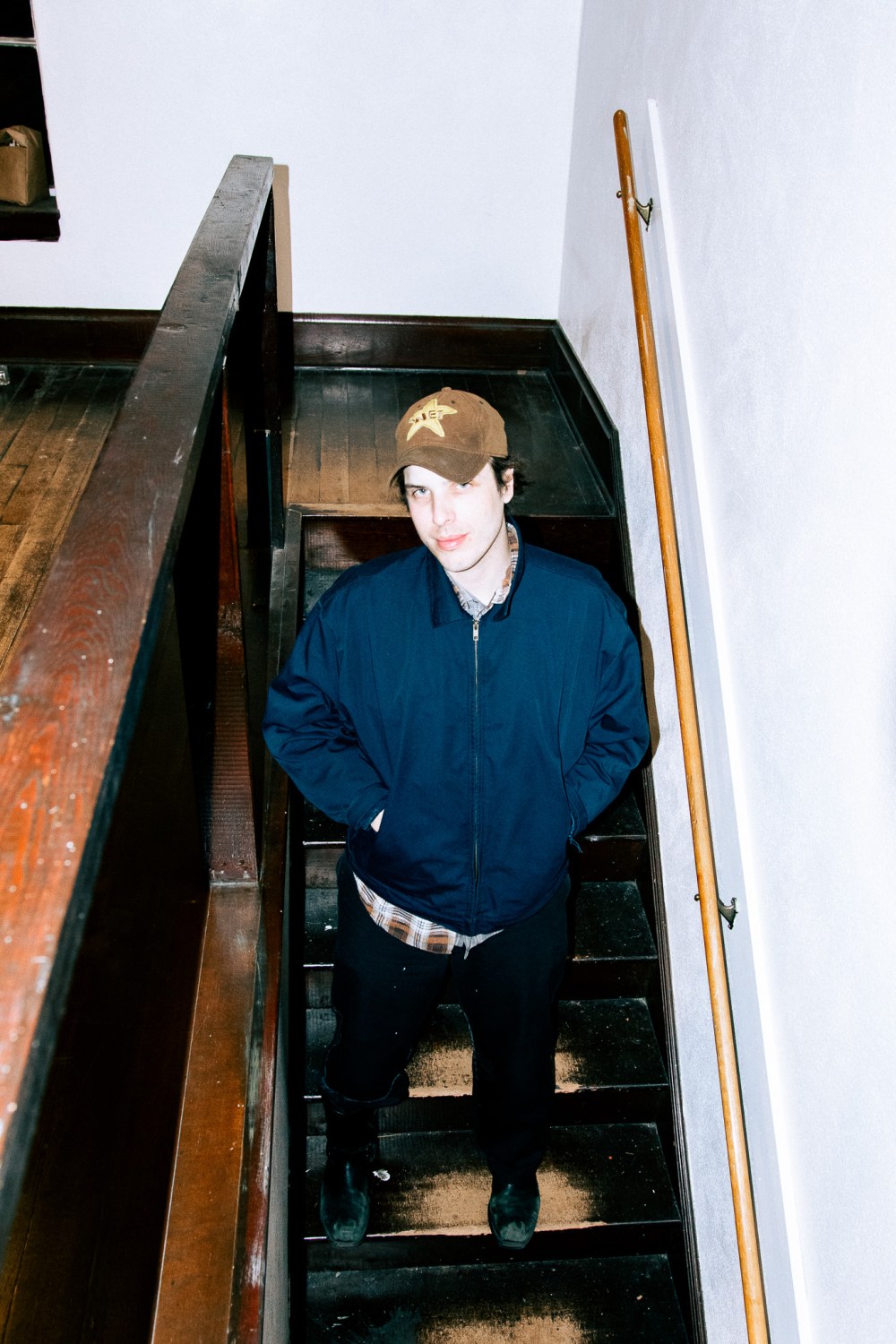
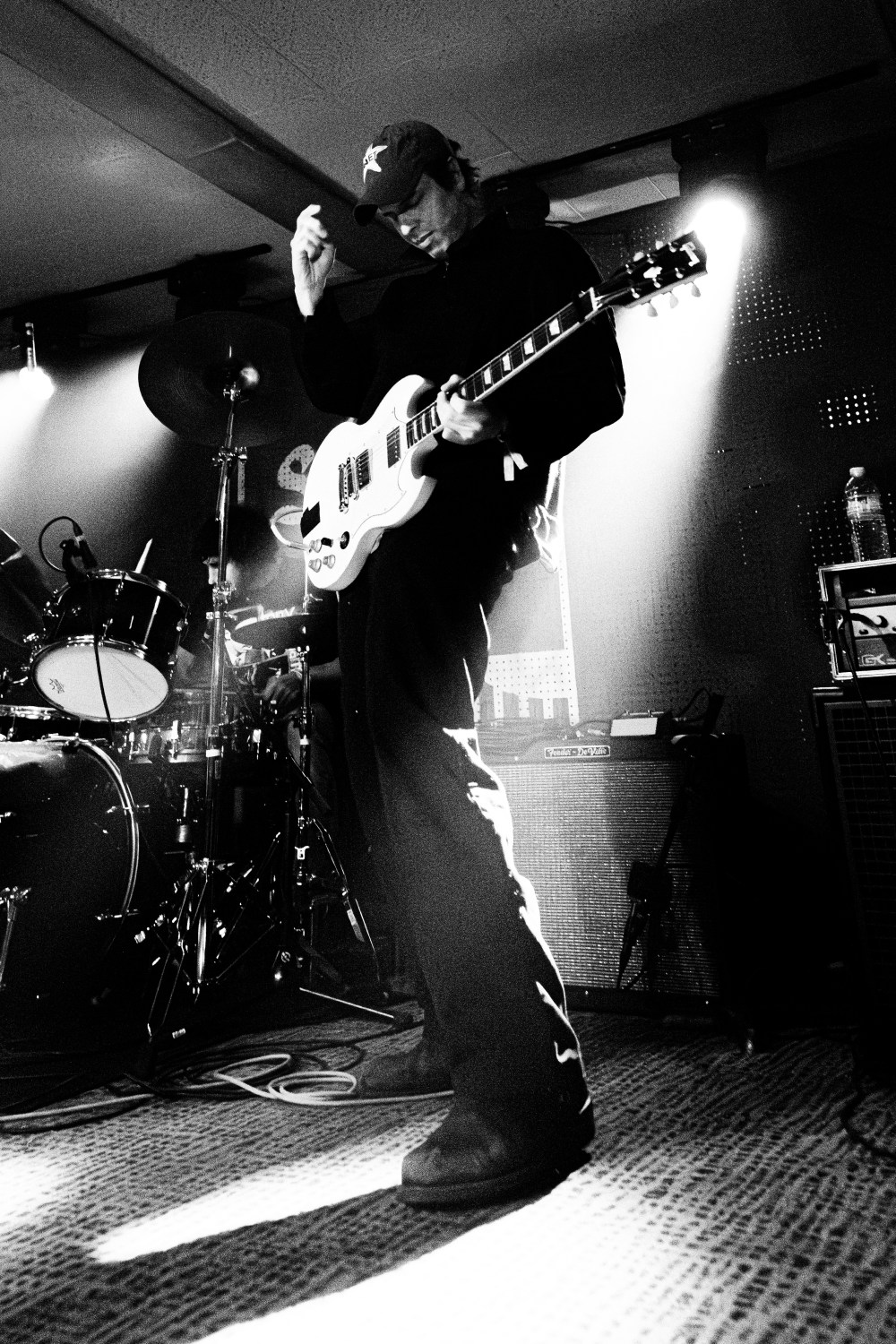
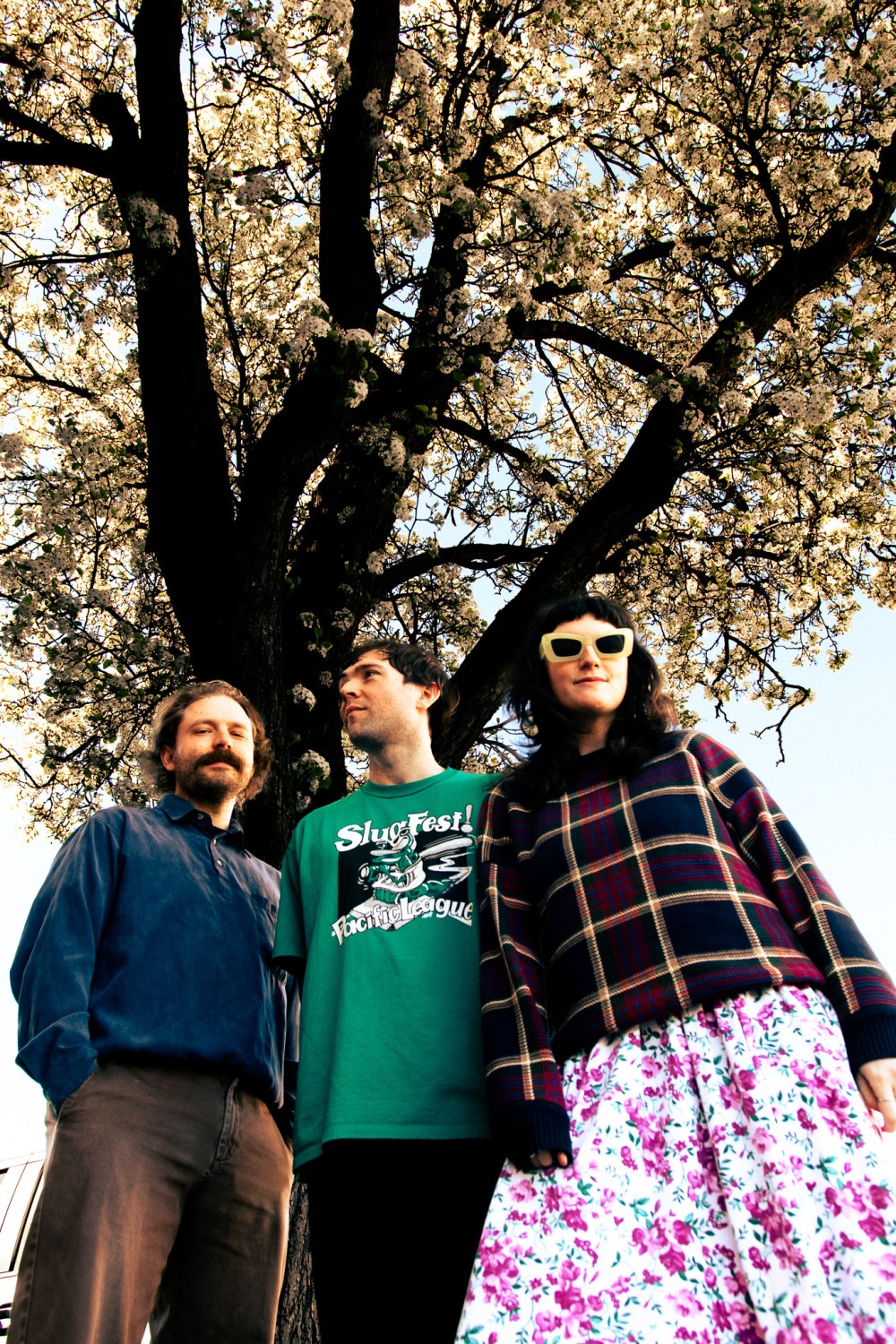
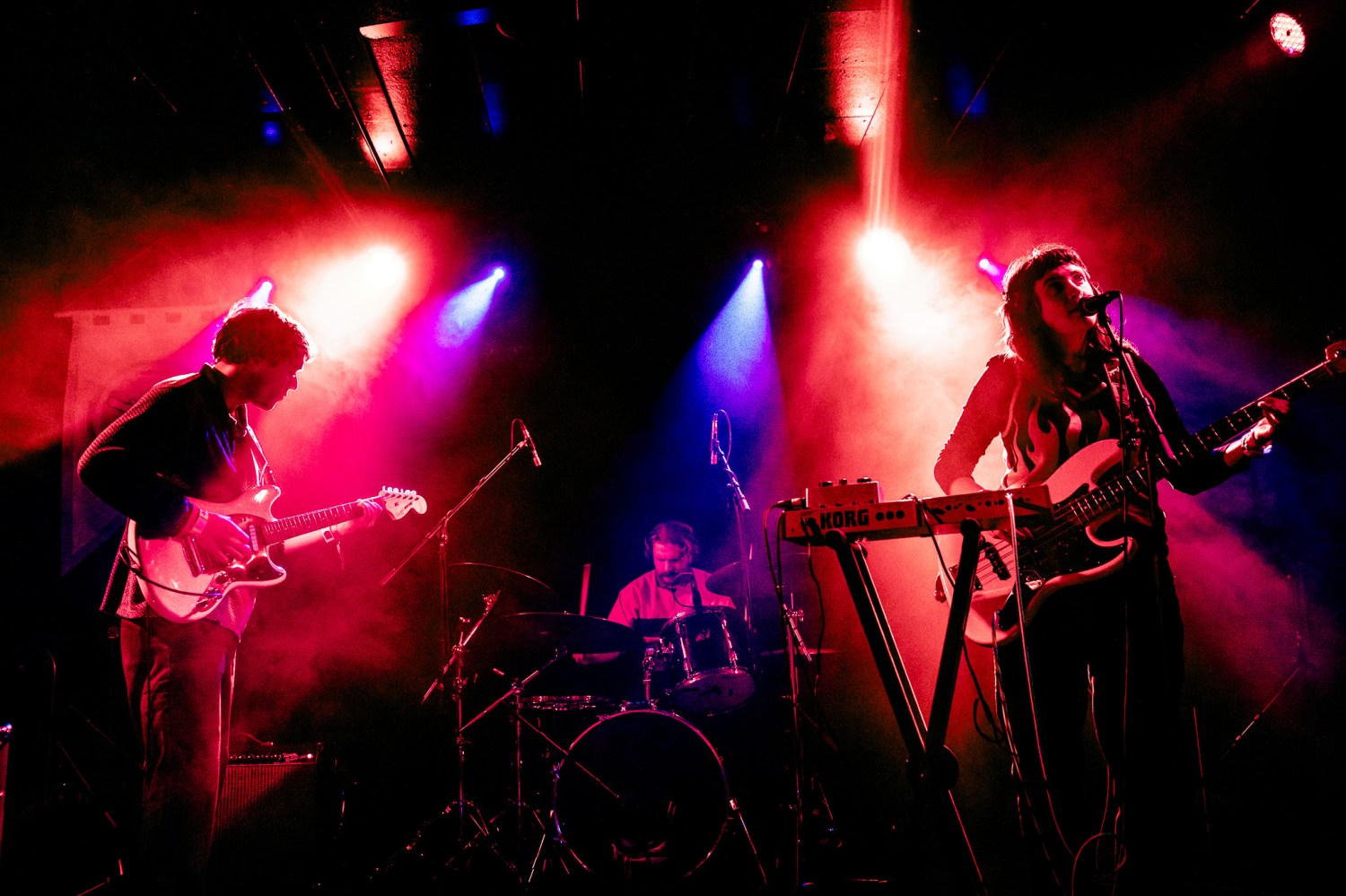
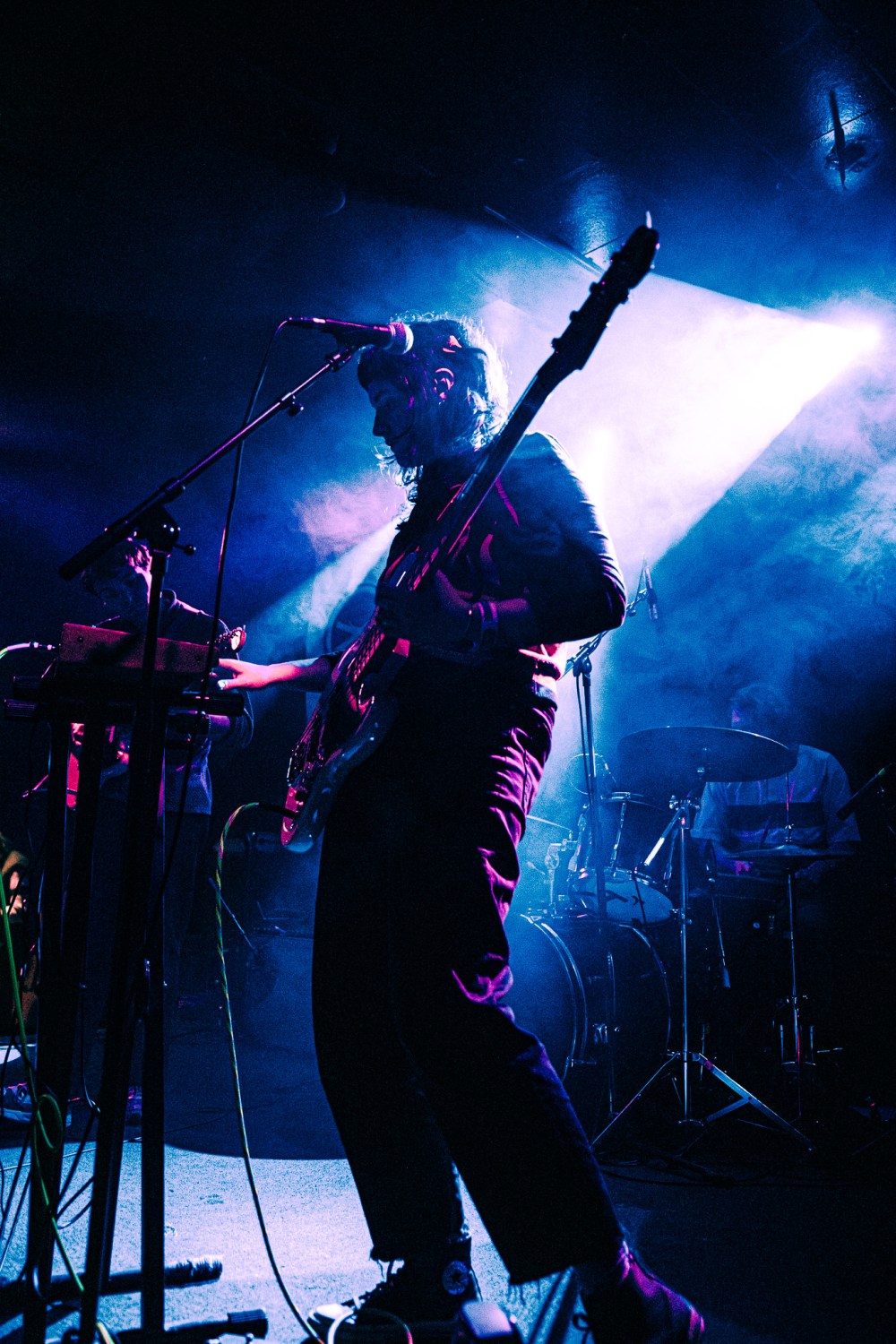
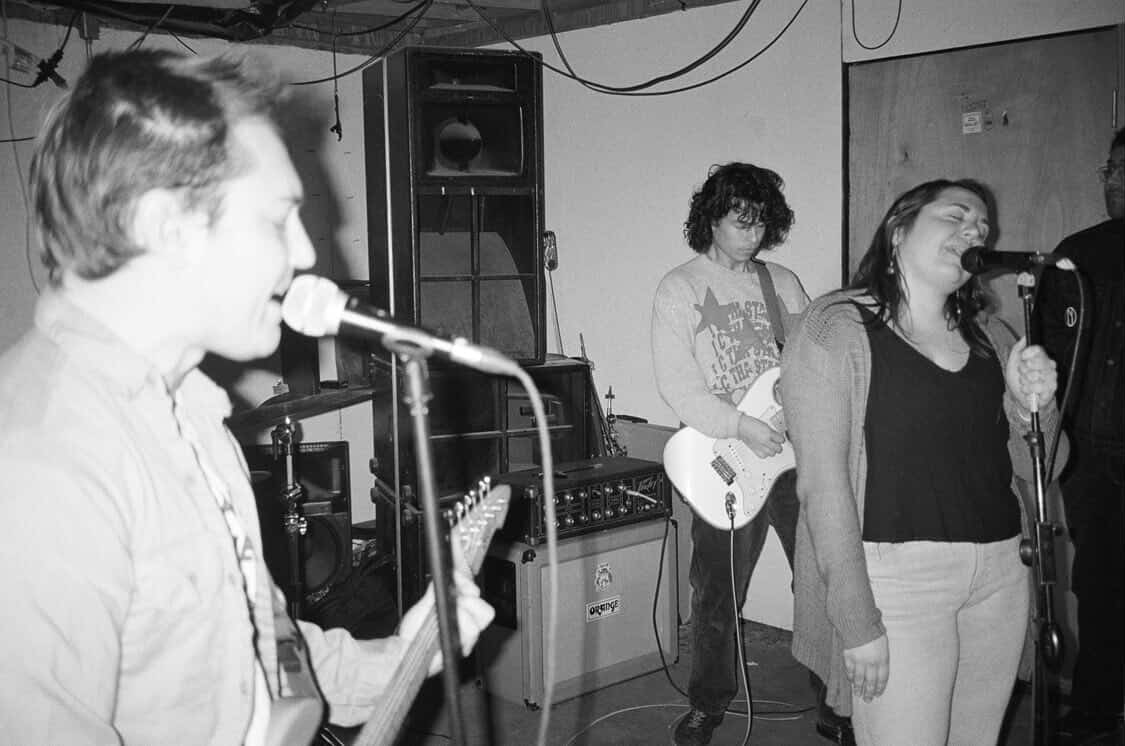
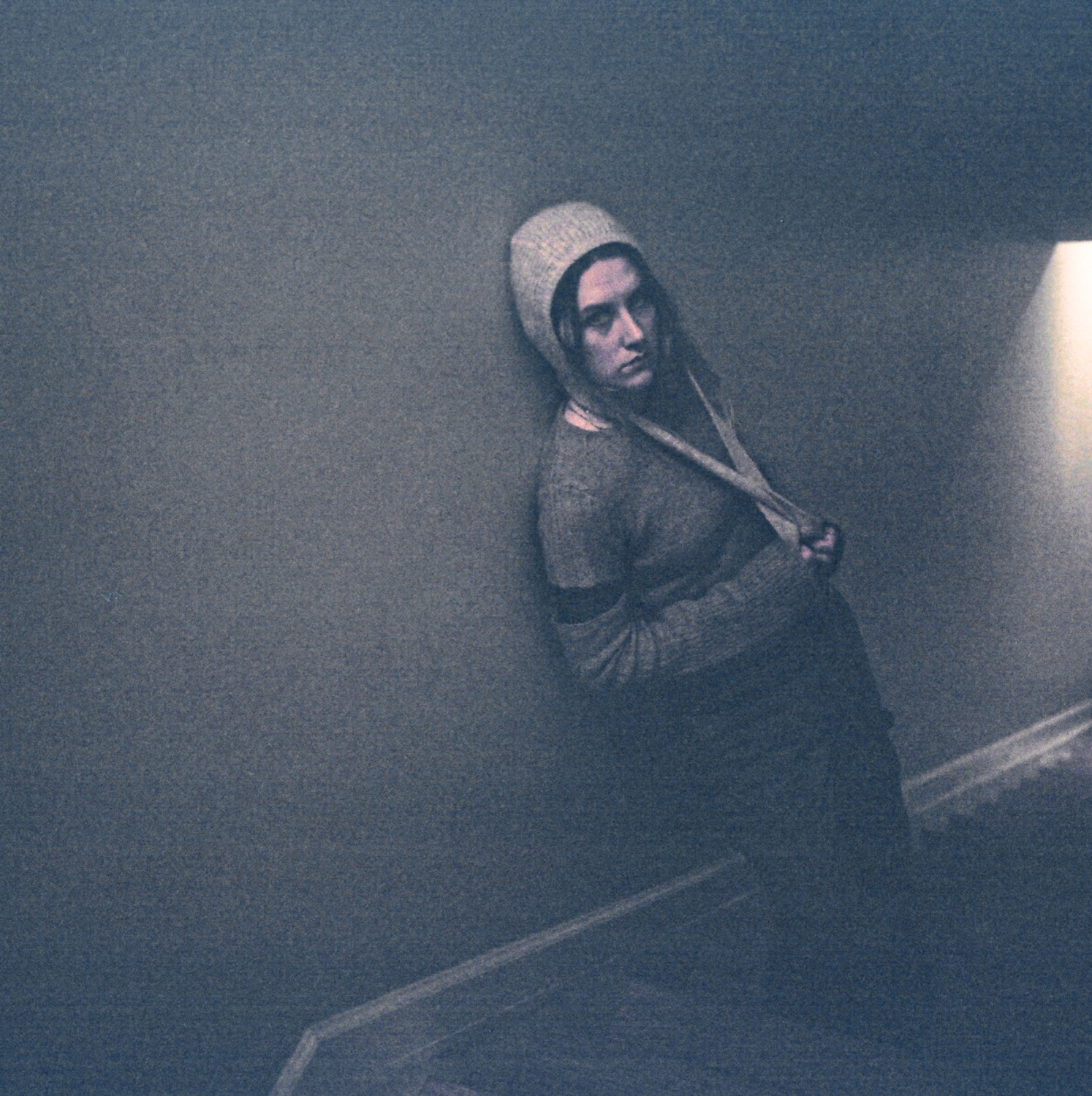
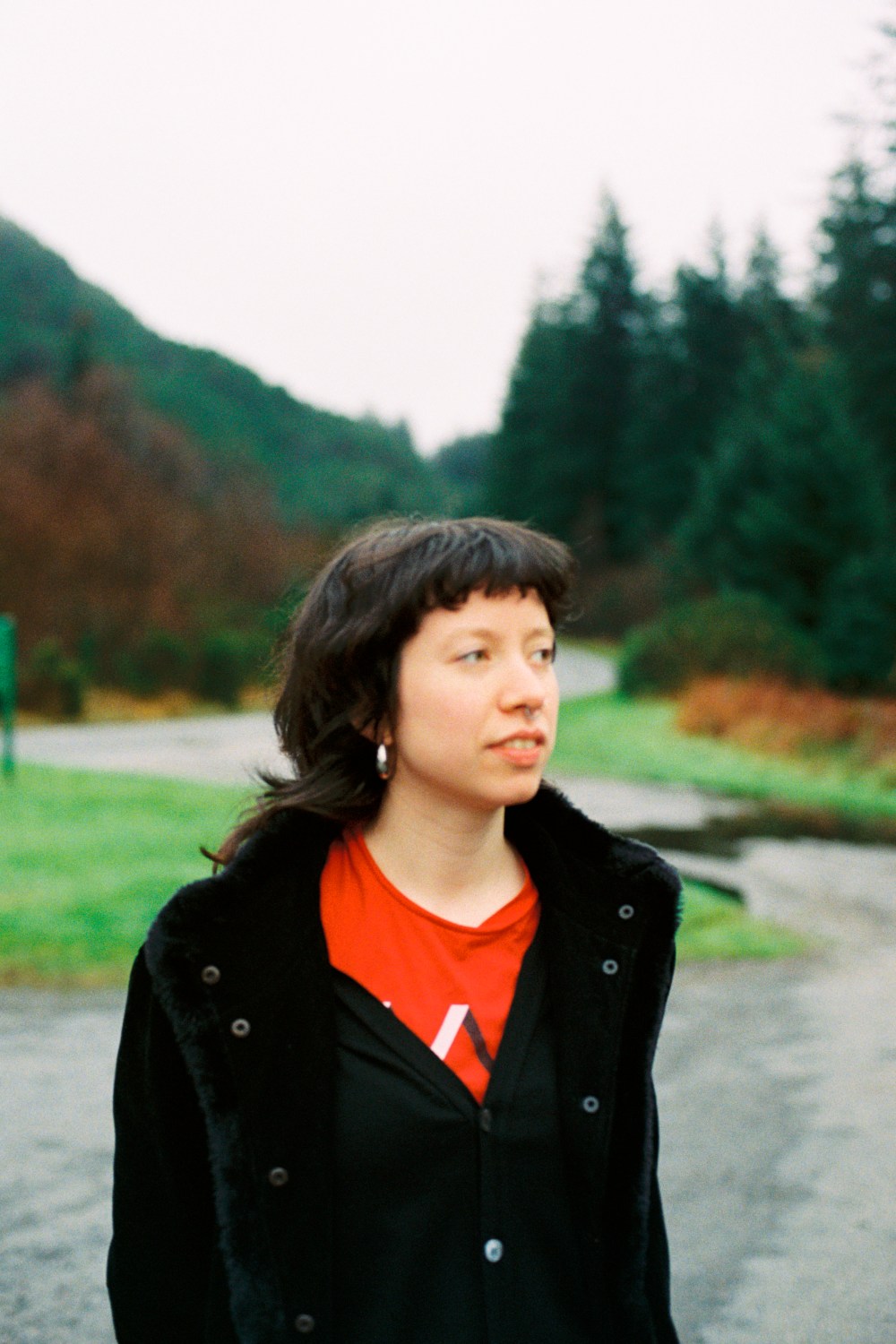
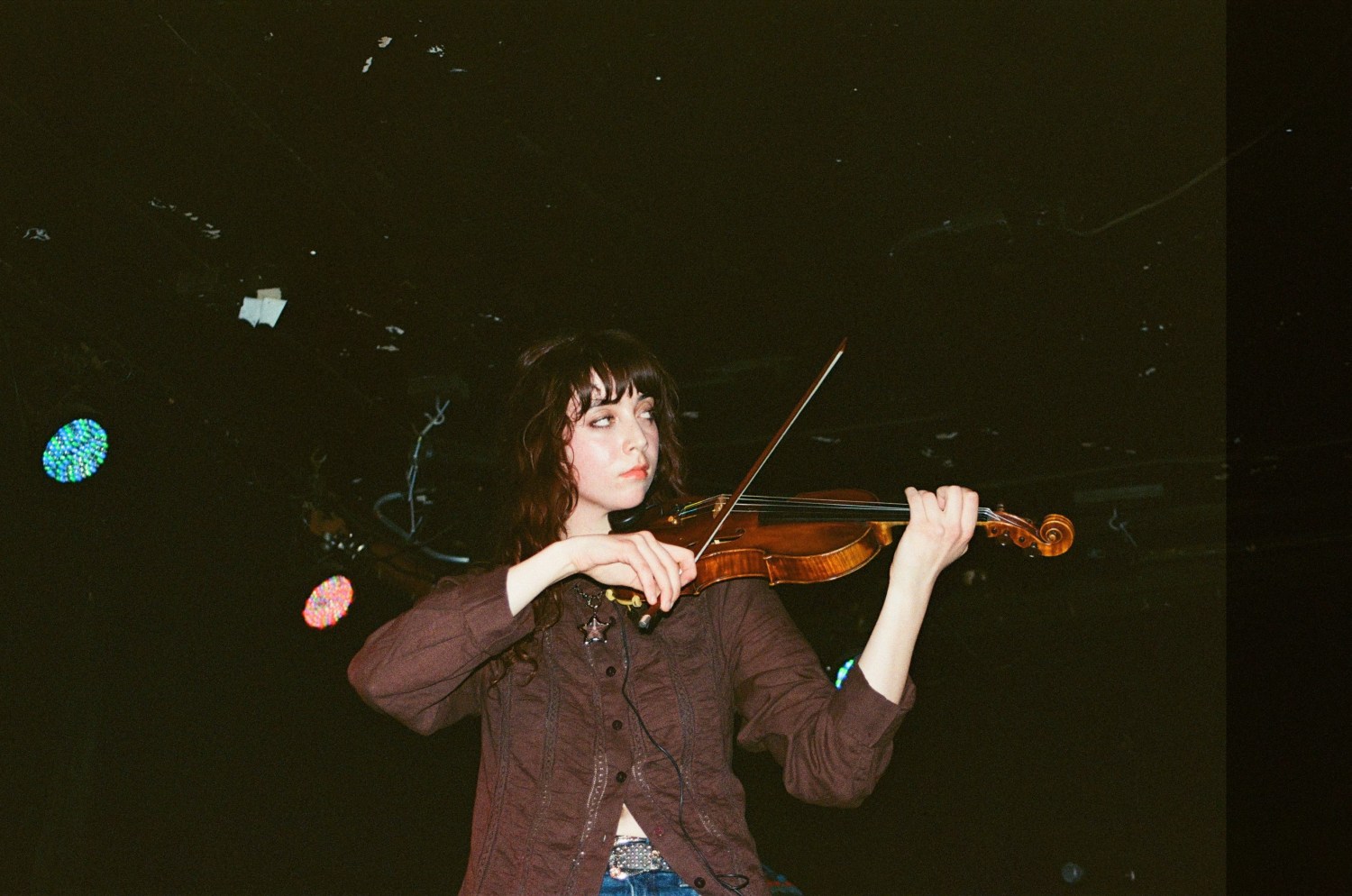
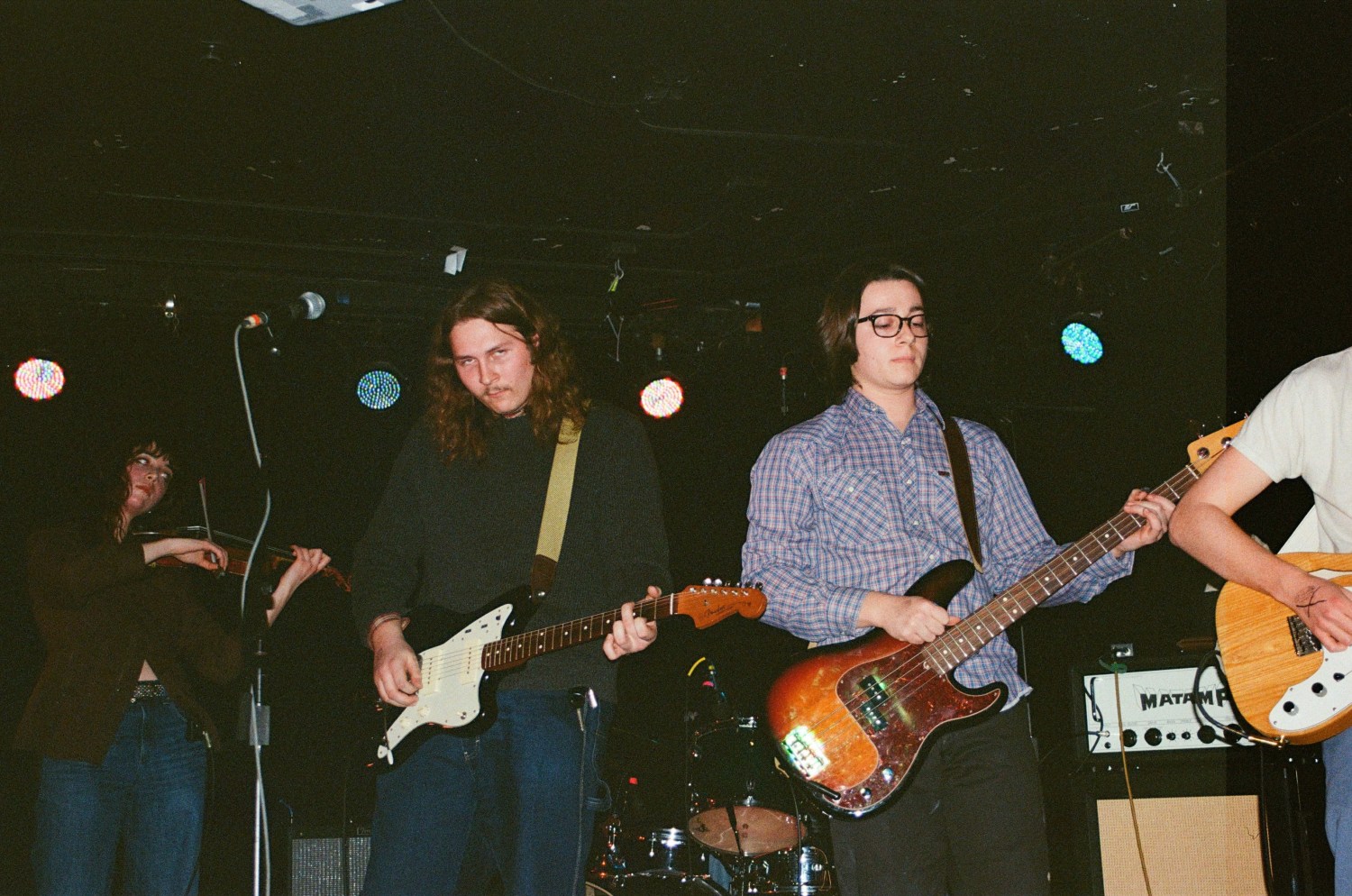
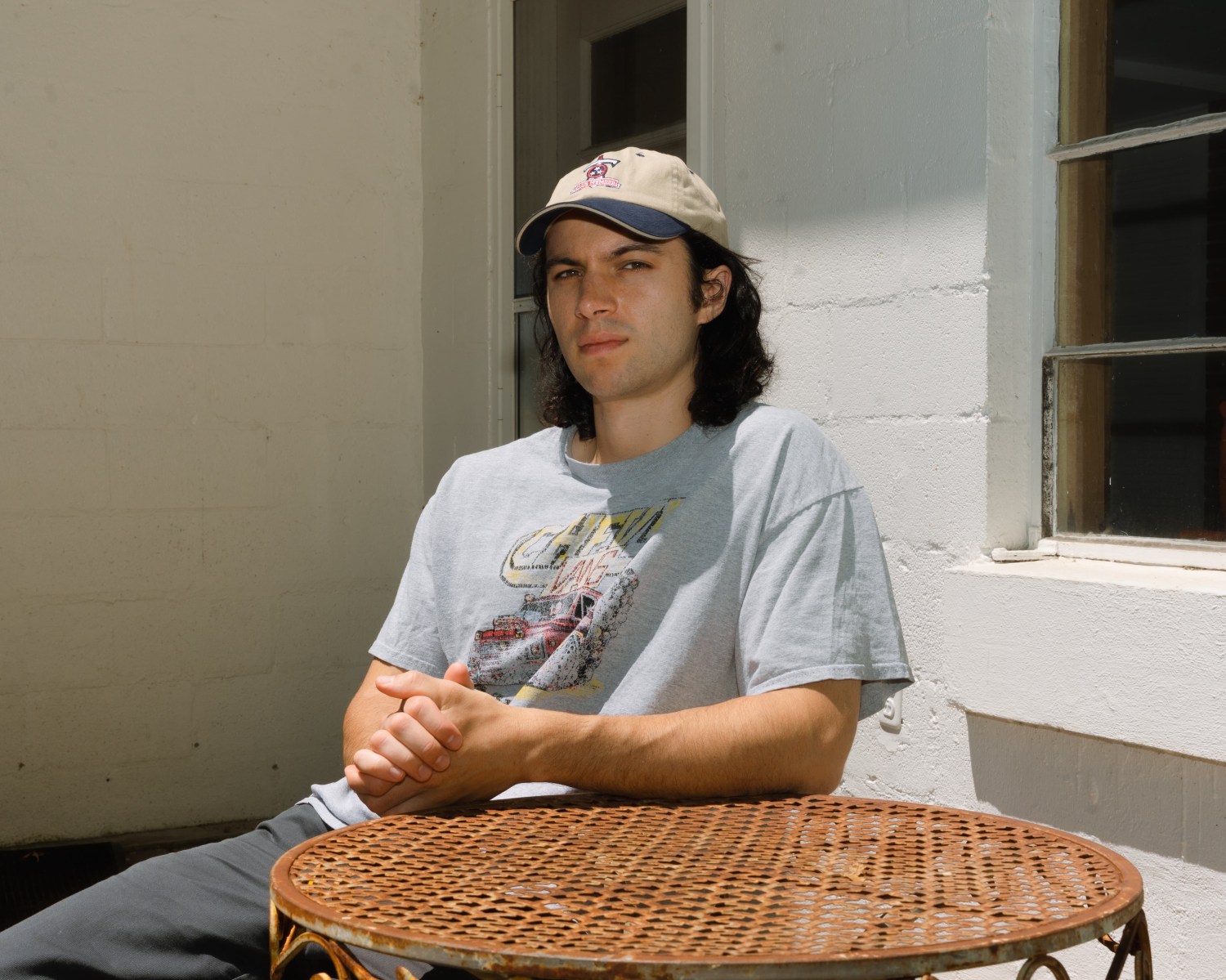
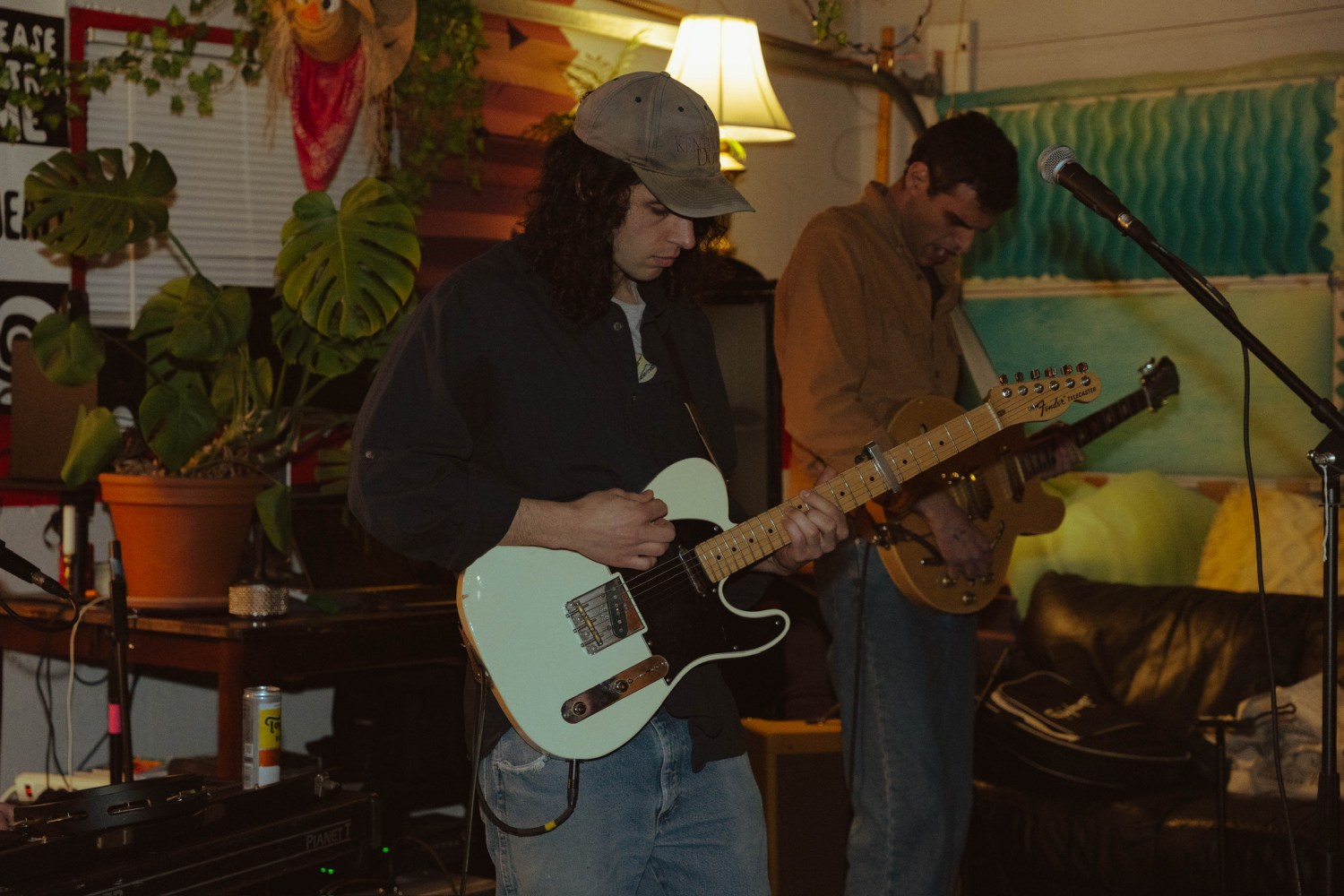
 the ugly hug