Philly-based folk guitarist Kristin Daelyn’s songwriting feels just as effortless as it does emotionally intoxicating on Beyond the Break, her Orindal Records debut out today. A short yet fully settled curation of songs rifling through the in-betweens of longing and recovery, Beyond the Break flows so naturally out from Daelyn’s presence, unhindered by the cruxes of grief in which they stem from and the self-realization and love for which they are headed.
Recorded live at home by mostly Daelyn herself, Beyond the Break defines its spirit very holistically, built out from her intuitive guitar playing and steady vocal performances, each empathetic to the other’s expressional deliverance and playing towards her ultimate strengths as a songwriter. Although sparse in complexion, this graceful deliverance wields a gravitational draw, further brought out by additional tracking from Dan Knishkowy (Adeline Hotel), Danny Black (Good Old War) and Patrick Riley who offer stirring arrangements to these already moving compositions. Songs like the album’s opener “Patience Comes to the Bones” or “White Lilies” flow amongst layered harmonies that soothe the setting, trickling with loose and enduring melodies that bring an aching familiarity, like the feeling we get hearing the voice of a loved one after a hard day.
Substantively, this musical cohesion only further exposes the fervent tenderness of these songs to the still air, restoring our hope in the simple saying of “time heals all wounds”. “And do I break my heart to open it up,” she sings with a particular infliction on “An Opening”, annunciating the balance between what we want and what we need. And as the album goes, her use of language, pained yet unrushed and honest, lives within these little moments that blossom with unguarded trust. “Like a moon that hides its darker side behind a crescent smile,” illustrates those voices we often push aside on “Longing”, remaining precarious and heavy in the back of our mind. “It came to me then/How we will live/And live again,” she laments on the album’s closer “It Came to Me Then”, building courage from the layers of musical clarity rising up from below, before the movement settles, “With river in my palms/I drink and know what it’s like to be loved” – what a wonderful feeling.
You can listen to Beyond the Break out everywhere today as well as order a vinyl or CD copy from Orindal Records.
Interlay does not want to play nice. Alexandria Ortgiesen tells you this on the second track of Hunting Jacket, amidst waves of abrasive instrumental collisions, but by then she doesn’t have to. Rather than treading a fine line between dissonance and harmony, Interlay embraces extremes recklessly, cultivating a rich and indulgent sound like some sort of ‘all you can eat’ buffet of the varying noise-driven genres they touch. Their songs lean heavy, but their structure is smart, understanding that the loudest arrangements can’t sustain impact by sheer volume alone. Hunting Jacket carves out soft pockets, teasing enough delicacy to lower your heart rate before a storming of dense drumming can kick you in the stomach. In six tracks, Interlay invites you into their game but does not tell you the rules, their clever melodies simulating the highs of reckless sound as they nail the gnarly beauty of raw Midwest noise in a recorded format.
Hunting Jacket functions as both a fitting addition to Interlay’s catalogue and a debut of its own. It marked their first release after relocating to Chicago from Madison, where the band had been based since its start in 2018. Ortgiesen is the only remaining member from Interlay’s roots, and is now joined by Henry Ptacek on drums, Kayla Chung on bass, and guitarist Sam Eklund, who also makes his vocal introduction on the 2024 EP. The band has never been known to ease in, following commanding start of “Rot” on their 2020 release Cicada with an even stronger intro track on Hunting Jacket , as standout “Virgin Mary” fills the first thirty seconds of the EP with abrasive riffs and formidable percussion. Throughout their latest work, Interlay takes the dense sonic textures and brooding nature of their past projects and stretches their potential, demonstrating how Interlay’s recent shifts are nourishing their identity rather than thwarting it.
One of the many successful feats of Hunting Jacket is the way it disputes notions that emotion and weakness are synonymic. Ortgeisen’s vocals are also volatile, offering no warning in their turns from gentle to abrasive. Yet, even at their most benign moments, when her deliveries are tender and lyrics spill with vulnerability, her performance is laced with assertion rather than docility. It helps that Hunting Jacket is a guitar heavy listen, creating an environment where instruments carry equal weight in navigating the feel of the tracks as vocals do. Interlay embraces their own emotion as much as they embrace raw post-punk noise, and their ability to blend the two bulldozes sonic expectations on “sad girl” music to make space for a reality where yearning, paranoia, and insecurity can and should exist at the same volume as bitter rage.
The EP wraps with the title track, where Interlay breaks free from the fervent tug of war between heavy and tender to explore a more climactic style of songwriting. Surpassing the prior songs in length, “Hunting Jacket” mimics the bodily effects of walking a lap after a sprint. In a stirring buildup, the band counters any whims that the rapture of the EP lies in party tricks of all consuming noise and distortion tactics, as their ability to write suspenseful and controlled melodies amounts to an equal level of auditory catharsis.
Scroll through photos from Interlay’s EP release show July 5, 2024, at The Sleeping Village in Chicago, IL.
Today we are celebrating six months of Interlay’s Hunting Jacket. Listen on all streaming platforms as well as order a cassette or CD via Pleasure Tapes.
Today, New York’s Toadstool Records has shared Let’s Be Friends: A Tribute to the Beach Boys, a 28-song compilation album of beloved Beach Boys songs benefiting the Billion Oyster Project and Mutual Aid Disaster Relief.
In a statement, Toadstool’s founder, Caroline Gay, shared, “In the lead up to the United States presidential election, climate change has become a hard reality. The United States’ support of Israel’s military assault on Palestine is not only a humanitarian disaster, but has had an immense effect on the climate. Combined with Donald Trump’s outright denial of climate change and rollback of over 100 environmental regulations during his presidency, the United States’ hand in the global climate catastrophe cannot be ignored.”
The comp includes contributions from artists like Joe Fox, The Fruit Trees, ghost crab, ebb, orbiting, djdj, Billy Plastered, Gavin Serafini, Luca Vincent, Bill Hagan and Friends, Luke Lowrance, Cephalid Breakfast, Daniel Um and many more.
All profits will be split between Mutual Aid Disaster Relief, a grassroots mutual aid network whose mission is to provide crisis relief based on the principles of solidarity, mutual aid, and autonomous direct action, and Billion Oyster Project who works with local communities to restore oyster reefs in New York City. Oyster reefs provide habitat for many species, and can protect New York from storm damage — lessening the impact of large waves, while aiding with flood and erosion control.
About the comp’s album cover, Caroline also shares, “Beach Boys fans will appreciate the artwork for this compilation, a custom piece by Matthew Durkin. It contains references to Smiley Smile (the house, plant on the backside of the album) and Friends (using a very similar typeface as seen on the album cover) all combined to make an original piece for this compilation.”
You can purchase Let’s Be Friends: A Tribute to the Beach Boys exclusively on bandcamp.
On the other side of the property line, only marked by my neighbor’s natural shrubbery – unruly and free – is a decaying birdhouse dangling from a branch that I watch every morning from my kitchen window. Missing half of its roof from many of our repeated Midwest storms, its siding almost timid to be left on its own, the structure’s only sense of hope lies within a singular piece of twine wrapped around its perimeter put there a years ago in hopes to hold, sparingly, what is still together. But lo and behold, with every season comes a new generation of sparrows or chickadees, a race to get there first and fill it with found, soft textures of twigs and the shedding hair of our dog – home sweet home. But from where I stand, as this birdhouse persists through the changing seasons, rotting wood and weathered temptations to finally collapse – I have to wonder, do those birds live in fear, or is it just me?
Grounded in unique homemade foundations of gritty instrumentation and soured conventionals, ylayali is the project of Philly-based artist, Francis Lyons, becoming a safe haven for his artistic visions and rooted stories ever since he was in high school fifteen years ago. Whether as a producer or having played in bands such as free cake for every creature, 2nd Grade and most recently, 22° Halo, Lyons’ work over the years comfortably falls amongst indie cult favorites, rearing the notoriety from tender pop-lovers, lo-fi droolers and calculated gear heads alike. As his tender demeanor and experimental spirit spill out on his latest LP, Birdhouse in Conduit, Lyonsbrings that same appreciation and excitement of what ylayali has been for over a decade, and pulling it towards the possibility of what may come next – brilliant or unusual – both putting a beautiful and enduring edge to the recordings at hand.
Protruded by crude distortion and a grating, hypnotic march of sorts, the album begins with “Francis Funeral Home” locking into nine minutes of controlled chaos – a type of unmatched sanctity of when solitude is met with the fuckery of an electric guitar and a shit-ton of pedals. “Stay and dance until the place close / the Francis Funeral Home”, Lyons sings, guitars circulating as the idea of endings are weighed upon impact. This type of surrealism is nothing new to Lyons’ ability to tell, notably unconventional, stories of identity and self, as he himself becomes interchangeable amongst mundane objects, obtuse scenarios and lackey characters that phase in and out of his line of sight. Songs like “Shadow Play” and “Spacebar” become a pledge of irony when trying to understand his existence, or merely define its intentions. “never saw it comin’ / first lookin’ spider-wise / and the webs all disappear when the dew dries” he sings on the latter, as the delicate vocals of both Lyons and Katie Bennett (Katie Bejsiuk, Free Cake For Every Creature) force us to lean in, introducing a new level of fixation to the sounds he so easily controls.
These sonic textures and attention to detail are almost moldable in your hands, as they condense and build, meander and squirm amongst the conduction of pulpy fuzz and distortion. “Devil Dog”, at its core, is a staggering and sticky rocker, subdued to fit into Lyons’ natural speed and rough façade that feels heavier than the actual sweetness underneath. “Fuzz” plays amongst a culmination of creeks, creeps and patterned fixations, paired together with the light and whimsical string arrangements and the choked clinks of a glockenspiel that push forward; a choreographed movement amongst the differing characters that each sonic voicing represents. The brief instrumental “Security Man” is an acoustic tribulation, a harmony of configured strings that sing for repentance before being overwhelmed by the warm rage of the closing track “God’s Man”. “I saw an angel / An actual angel,” Lyons sings, a continuation of religious motifs brought up throughout the album. But in the end, you can’t help but to think of the due diligence these angels actually perform for him, as absurdity overrides the elegance of salvation – “harbinger, angel of what, solicitation’s tale” – the words holding to whatever they can as the feedback sears its final marks.
“There’s that shiny part / Worn smooth by vinyl twine / birdhouse polypropylene / one spool lasts one life” – amongst the tinkerings on the standout track, “Birdhouse”, comes one of the more tender and grounding expositions on the album as the song hums with a sound that crusts over like hardened sugar. But it is on this song where Lyons feels most grounded into his foundation, where all of those huge questions of fear, death, religion and belonging don’t matter anymore. It’s in these sonic trances that make Birdhouse in Conduit feel so enduring, where meaning fluctuates with a meandering rhythm, and yet, Lyons can still take a pause and look at what’s right in front of him. “But the birdhouse makes me smile with the loop knotted on the side,” he sings, cherishing something so simple; it means the world to both him and those little birds.
Birdhouse in Conduit is now available to stream on all platforms. You can purchase the album on vinyl here, which includes a 22 page booklet, various homemade inserts and found photos. Lyons will soon be playing a few shows with 22° Halo on the east coast. Find dates here.
The album title reads like a “Mellow Gold”-era Beck lyric. The cover art is a psychedelic children’s drawing depicting a mystic midnight menagerie (notably horse-less) which seems to be ruled by a floating, buck-toothed, suboxone-animated magenta gumdrop. It’s far out, but not dramatically unlike the space in which All The Pretty Horses played the first show on their record release tour in New York City last Friday night.
The room was tucked into the back of The Windjammer in Ridgewood, a sailing-themed towny bar among the final frontier of $6 beer-and-shot specials in the five boroughs. There’s miscellaneous nautical décor nailed to the walls, a single pool table in the middle of the room, and about three lightbulbs in the entire joint. Everyone was dressed with the pomp of ill-fitting jeans and amorphous sweaters like a bunch of locals who just happened to swing by their local watering hole on the walk home, or towards whatever’s next. Whether that was probably exactly the case at The Windjammer is ultimately irrelevant (or maybe the point?). The real point is that this is a Hartford band and the music speaks for itself. If the musicians – especially frontman/composer/lyricist Austin Traver – had wanted or tried to insert themselves into the spotlight in front of the music, it wouldn’t have worked. No one did that. The band was a vehicle for a solid album more than a band on a stage, and it ruled. This album doesn’t need any help standing on its own.
All The Pretty Horses live at The Windjammer NY | Photo by Autumn Swiers
“Frances,” the opening track, reads a little one-dimensional until the synth rips in during the final third of the song. Is it worth the wait? Depends on whether you’re in it for the long game. Unlike the bulk of albums dropped in 2024, The Year of Our Lords Big Oil and Unceasing Mental Masturbation, All the Pretty Horses’ latest release is made for listening from cover to cover. One song wafts effortlessly into the next without providing or feeling obligated to provide a distinct beginning or end, stop or start, not because the songs are repetitive or unmemorable, but because Horses has its own sound and knows what that sound is, and this album is (praise god) not a series of singles Frankensteined together by a cohesive theme and ultra-earnest Scotch tape to the point of being uncool (sorry). This is an album. It’s an art piece that shines best as a capsule. Step back to look at it all at once like a large canvas – and resist any creeping discomfort at the feeling of “I really liked that track, what was it called? Oh, we’re onto another track already? I didn’t even notice.” Lean in.
As such, I feel like a dick for cutting it up with rock-critic dissection shears, but the star track here is “Sophie,” a heavy, droning drug anthem bookended by radio dialogue, fuzzy barely-there vocals, and minimal bass. Stuff your hands in your pockets and take a walk with this one. It’s an old formula, but it doesn’t need upgrading because it works. Incidentally, the opener is also a person’s name, “Frances,” but if they ever met in real life, Frances would be trying to win the gal while the gal is already busy writing her number down for Sophie – who didn’t ask for her number and doesn’t even want it, actually. After “Sophie” ends, the record immediately rips into an orchestral kazoo chorale (yes, really) before it’s right back to all that scrumptious sludgy beauty with “Hard Hill Road South,” made all the tastier thanks to the unexpected Zappa-esque interlude. That initial one-dimensionality was on-ramping. The equal mixing of instrumental and vocal in the tracks that follow makes the lyrics blur, melding into a comfortingly dissonant ode to the ennui of modernity and its deathless white noise.
If you’re neither happy nor sad – indeed, if you’ve been feeling “a little off” for the past five years or better – “Witches Up No Mountain, Switches Down No Valley” might be the album for you. You don’t have to be in a particular mood for this one to hit. Or, perhaps more accurately, if you point to the “bored” face on the Emotional Vocabulary Chart hanging on the wall in your analyst’s office (that’ll be $60), drop those shoulders. This album has arrived right on time to rub its grungy little fingers into your brain, not for that long-awaited lobotomy but for a massage. Take a break, and maybe even take that aforementioned walk. Chances are that analyst is on your case to take more walks already (and to get your grungy fingers off of her Emotional Vocabulary Chart, thank you very much). The least you can do is circle the block just to prove it won’t help. And, at 27 minutes from start to finish, All the Pretty Horses’ extended anthem will only get you around the block once or twice anyway.
You can listen to Witches Up No Mountain Switches Down No Valleyhere.
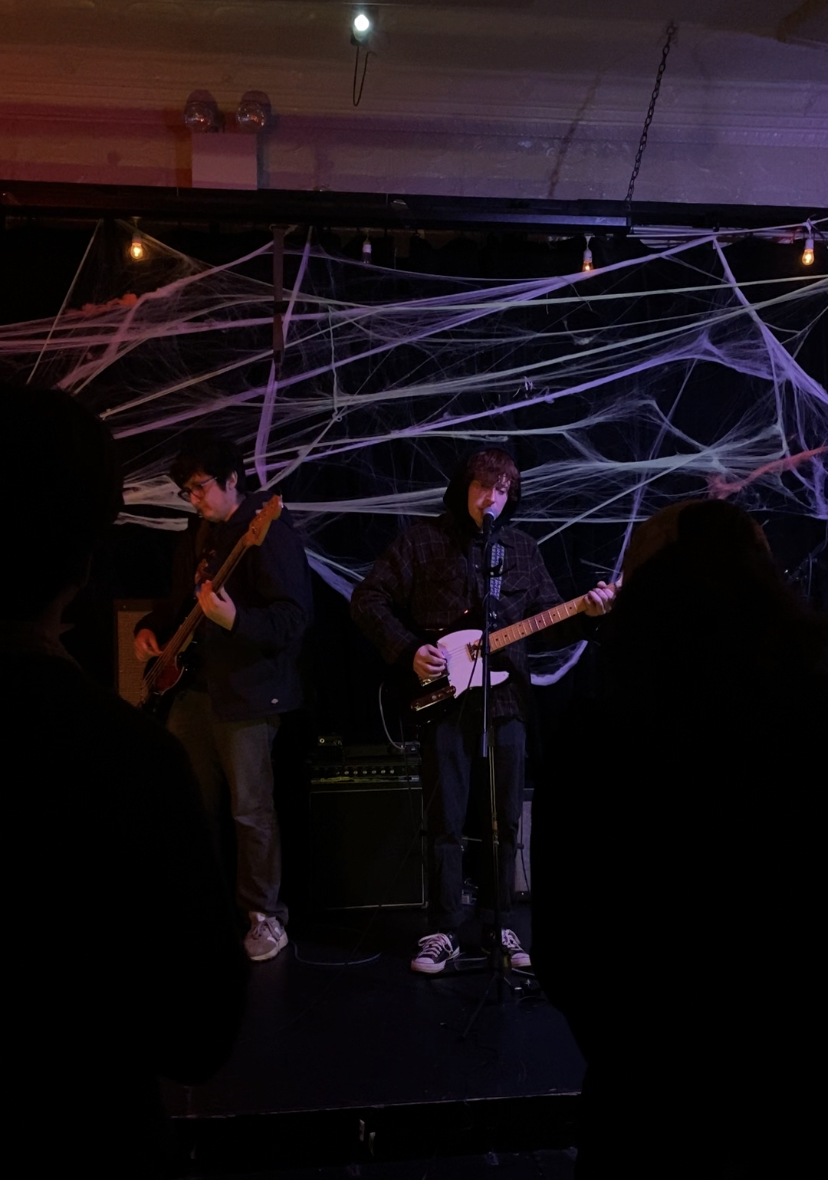
Through the faulty wiring and warm hiss of old tape recorders, Chicago’s latest addition, Harrison Riddle, has offered up his latest album, Lo Stereo, taking over the static waves and ecstatic ears of the local scene and beyond. Having performed under the pen name Riddle M since 2018, Lo Stereo finds Riddle in a continuation, arranging episodic moments that live out their own concise lives in the limelight of DIY antiquity and absorbing pop hooks.
Where flying cars and chrome exteriors used to imply happier times ahead, Lo Stereo kicks off with the retro shine of “Keyhead (Outer Space)” – daydreams push through with no intention of landing – “You don’t have to race / Up in outer space”, he sings over laser synths and a pleasant chicken pecked melody. Songs like “Sunset Inn” and “Falling On Off” play out with clunky whimsy, where melodies float through the air with ease above the strength of instrumental voicings that never feel to be restrained by the limitations of lo-fi recording. And to his credit, dusting off the old 4 track recorders, drum machines and synths, these new songs don’t feel weighed down by past sounds or ideas, but rather find Riddle embracing new life in an old and beloved style, bridging the gap between nostalgia and a continuation of homemade pop excellence.
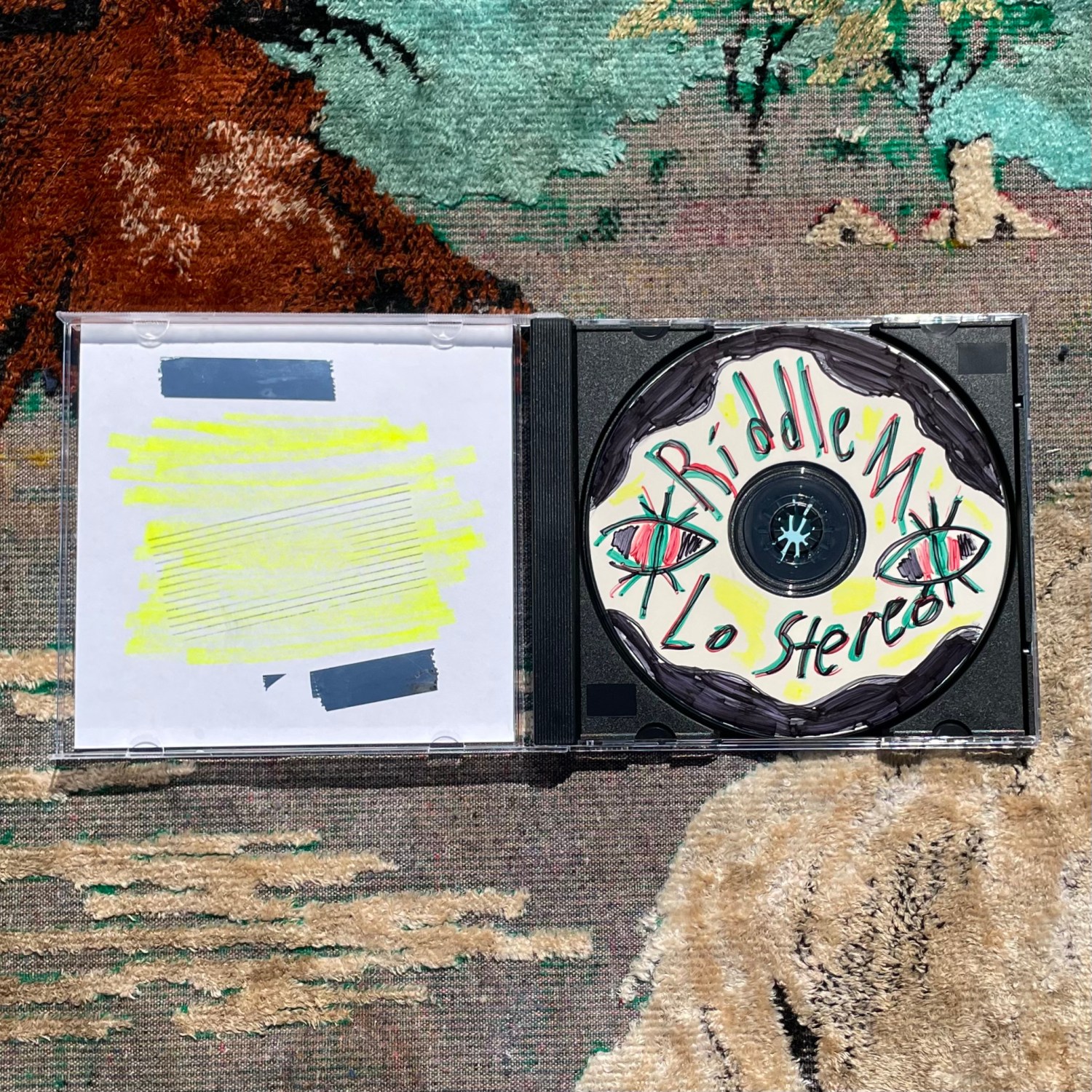
Lo Stereo Limited Edition Homemade CD
Throughout all of the methodical interpretations that each song offers in their own unique way, Riddle’s performance and attitude towards writing becomes a needed reminder of how much fun making music should be – a marvelous feeling of universality that comes when connecting the world around you with silly stories and cordial characters. Songs like the clinky folk ditty of “Peaches and Cream” or the riff spilling of “Scarecrow” exudes charm and personality that sits with you long after the initial listen. “Silver Dollar Queen” jangles and dances along with its vibrato melody and driving hook, while “Bubbles” and “Pin Holder” find the off-center pop sensibilities of lived in new wave classics. There is a soothing pull to the studious electro motives that shine with a rusted sheen throughout the album, where songs like “Sleeping On Earth” and “Modern People” fit neatly between rugged rockers like “Fight Little Truffle” and “Bird Claw” that could easily be a part of the substantial catalogs of bands like Guided By Voices or The Magnetic Fields.
The album takes a turn as the end becomes inevitable – not so much a crash landing, but a quick return to our own atmosphere and the notable gravitational restraints. “Haunt In Bed” vibrates with darkened synths while accolated, ghostly vocals come out to say their brief piece before they are off on their way to complete other ghostly tasks. “Waken (Your Love)” brings a natural ‘down-to-earth’ ending to a rather adventurous collection of songs, as a heavy, somber synth is brought out by a field recording of light waves finding their own, breaking on the shore with a soothing, methodical washing. It’s quite a distance from where the journey began, but considering the care put into this charming little world, becomes one to take over and over again.
You can listen to Lo Stereo everywhere now. You can purchase a limited edition CD of Lo Stereohere.
While history has proven that amity amongst band members is not necessary to create good music, it’s always special when the depths of a bands’ friendship is palpable in their work. Years of experience playing in bands like Sloppy Jane and Water From Your Eyes speaks to the technical talent of Al Nardo and Bailey Wollowitz, but it’s ultimately this sense of camaraderie that makes their prog-rock band, fantasy of a broken heart, so compelling. The duo’s collaborative friendship dates back to 2017, though up until now, fantasy of a broken heart was confined to a relatively low profile of house shows and occasional single releases. The time spent cultivating fantasy’s identity, or perhaps lack thereof, is discernible in their debut album, Feats of Engineering, a captivating experience doused in honest introspection and eccentric charm.
While fantasy of a broken heart claims that “only isolated artists make original material”, Feats of Engineering is a harmonious dialogue sung in a language that feels completely their own. Lyrically, Nardo and Wollowitz are masters at fusing vulnerable with whimsy. It would be easy to assume an album with imagery of Tony Danza preparing buttermilk pancakes and a possessed Evil Kenevil wielding an “as seen on TV magicians novelty arrow” would amount to a goofy but hollow listen, perhaps engaging in a bit of post-irony ridden social commentary at best. Instead, fantasy’s amusing tangents and bizzare imagery work to enhance the project’s emotional depth. In its entirety, Feats of Engineering is somewhat of an auditory hallucinogen, inviting us deep into an unrefined subconscious reality where the strangest of thoughts are met with rather hard to swallow existential notions. Instead of coming across as a joke you aren’t in on, the album’s vulnerability factor feels somehow amplified by each lyrical peculiarity.
In an auditory sense, fantasy is a maximalist quilt of 70’s prog-rock, 90’s dream-pop, and modern indie-pop, though if you tried to create a list of every subgenre their sound touches it would rival a CVS receipt. Each song on the album has a distinct identity, with its own unique formula of layered instrumentals and varied time signatures. However, amidst their most enigmatic structures, Feats of Engineering successfully stands as a holistic body of work, unified by a discernible sonic ethos and enriched by the soothing harmonies of two voices with an undeniable musical rapport.
The album commences with the trance-inducing “Fresh”, a minute long track that starts off with a steady high pitch car beep, the one reminding you to buckle up or perhaps shut your door. Though the beep is initially attention-seizing, it is soon lost in a mesmerizing synthetic organ melody, and in a brief, word-less 60 seconds, the magnetizing pull of Feats of Engineering has begun. The vibrant “AFV” follows, providing an auditory finger snap to the meditative state induced by the intro song. At its core, “AFV” is a humorous tale of a romantic interaction gone wrong, a palm to the face detailing of a flirting effort mistaken as an attempt to buy weed. The earnest anecdote is paired with an uneasy chorus, as the two harmonize on the repeating lines of “All I wanted was a little sensation”, and “I thought a devil called my name”. Through satisfying hooks and a lavish layering of instrumentals, fantasy of a broken heart harvests structures of an addicting pop track, while balancing a lighthearted story with a desperate longing to feel.
It doesn’t take long to establish that fantasy of a broken heart has perfected the art of writing tearjerkers that pass as chic remixes of vintage television jingles. Loss is the archetype for this, offering a vulnerable testimony to the umbrella concept of “loss”, supplemented by buoyant guitar riffs and animated vocals. The track is burdened by the weighing question of “have you lost it”, but not without the comedic relief of “Where did you put the sword”. “Loss” is not the only song on Feats of Engineering where fantasy sugar coats dreary ideas in bubbly melodies adorned with quirky references. At a recent Brooklyn show, Wollowitz led with “this song is about Pizza”, before diving into “Doughland”, where the duo’s craving for inner peace becomes increasingly harrowing with every “I can’t stand this” they chant. In “Mega”, the toll of an ambiguous relationship dynamic takes the shape of a catchy tune about an extinct giant shark. The title track might hold the most intense juxtaposition of heavy and eccentric, with imagery of tiny men and their adorable miniature safety gear following shortly after a painful reflection of “thoughts of jumping off a broken bridge in Middletown”.
The compelling effect of Nardo and Wollowitz’s harmonies excels in “Ur Heart Stops”, a sonically melodramatic track about the tethers of depression and stagnation. When Wollowitz’s droning is met with Nardo’s shimmery vocals over a series of jolty instrumentals, the repetitive chorus of “Ur Heart Stops” becomes hypnotic, transforming a devastating existential dialogue into a catchy prog-pop masterpiece.
“Tapdance 1” and “Tapdance 2” are back to back tracks that take contrary approaches to exploring the crushings of doubt. In “Tapdance 1”, the lyrics rarely stray from “Nobody knows what you’re talking about”. In “Tapdance 2”, Wollowitz embarks on a tangent of reflective commentary and what ifs, confessing to a habit of overindulging in Pitchfork reviews and dwelling on a “surplus of vision”. In the midst of an excess of thoughts and questions, fantasy of a broken heart gets honest about the blurring between art and interpersonal, while once again toying with the idea that “nobody knows what you’re talking about”.
The album wraps up with “Catharsis”, an appropriately titled delicate ballad that matures into an impassioned crescendo of realization. Around four and a half minutes in, Wollowitz’ soothing vocals erupt into an emotionally charged shout, and the lyrics shift from guarded thoughts of “it means so much to me that it happened at all”, to fervent revelations of “Love is collision, destroying your soul for another”. The two offer one final harmony, repeating “catharsis of the heart is the narcissist’s nightmare” over a pulse-raising arrangement of drums and fierce orchestration. While the album hurdles through a docket of unresolved questions and heavy notions, the intensity of “Catharsis” offers closure to a lyrically and sonically consuming experience, solidifying that Feats of Engineering is not only a collection of quality songs, but an extremely well structured album.
Like many of their fellow Brooklyn-based genre-bending contemporaries, fantasy of a broken heart isn’t here to resuscitate a subculture from decades prior. At the same time, it is abundantly clear the duo has spent ample time listening and deconstructing the most successful structures and sounds, creating arrangements that are equal parts pragmatic and avant garde. Through every nonsensical twist and earnest turn, Feats of Engineering engages in sonic nostalgia while paving a completely original identity, verifying that fantasy of a broken heart is a major band to watch.
You can listen to Feats of Engineering out everywhere now.
The Last Whole Earth Catalog is one of those prolific projects that redefines our expectations of what an individual can accomplish. With over twenty albums on bandcamp and an ongoing YouTube project of playing each song he has ever written live in chronological order, UK artist Dan Parr has returned with his latest album, We’re All Down The Rabbit Hole, self-released earlier this year. Venturing into the unknown and confusion of our innate obsessions, Parr explains that this album was written about someone who falls in and out of a cult, illustrating the characters’ struggling world view and deteriorating self-preservation as you tries to find his way back out again.
Although vast, the seismic catalog that Parr has built is not one of intimidation, but offers a safe point to jump in and experience his craft at any point in time. This is in part due to the timeless feel that these songs are molded from, where inspirations are voiced and personal visions are seen through with such intuition and commitment. Same goes for this collection, as “All Grass Seems So Green” kicks off the album with a whimsical and progressive folk groove as movement builds from a conversation with an ecstatic guitar, pushing the instrumentals to grow into a meticulous freak out. “Have You Ever” jumps out with choreographed guitar strings that lead with constant motion, never tripping over each other as they try to get to an unknown destination outside of our line of vision. “Until I’m Clear” simmers in a range of guitar tones, textures and dynamic moods as Parr’s musicianship excels in his transition from each new pacing. The album’s closer, “32”, is a light little love ditty – a break in layered stylings to a more conventional song structure that finds closure in its bashful lyrics and warm embrace.
Although the cult concept is not crucial to the overall experience of the album, Parr animates a classic archetype where obsession becomes both procurements of energy and devastation and our character has to take a fall in order to learn their crucial lesson. “With every headline I know the culprit / It’s society’s sickness and we all know / We’re stuck in the grind and don’t seem to mind enough,” sets us at our initial crossroads – where questions need answers but the tension reaches a breaking point as “If Only” erupts into a distorted drive of hopeful wondering. “I Don’t Want To Be Left Out” struggles with individuality held down by one’s own expectations, yet is dragged out by twinkling piano fills and a precarious mouth trumpet that dance around in freeform glee. The character reaches an awakening on “Reread My Life”, as Parr reflects, “Now that I know I can be fooled / Now that I know where I am weak / I’ll be careful when I have an option / When the intentions are not that easy to see”. It is one of the more sobering and grounded tracks in the bunch – a moment to stop and understand just how confusing and meaningful it is to be alive.
“In my mind there is not order / Only chance and what’s made for us / But in lasting memories I have to try and make a sense of peace”, settles in the heart of the story on “Every Single Little Piece” as a melodic guitar begins to swell with excitement as Parr’s demeanor grows in love and confidence. Although sometimes harsh, touching upon some of humanity’s most brash qualities and scapegoat tactics, We’re All Down The Rabbit Hole isn’t a project to relish in the flare-ups of despair, but one made to rejoice individuality, self-care, communication and unifying community, and in the whimsy of The Last Whole Earth Catalog, the rabbit hole is a welcoming place to fall down if you give it the chance.
We’re All Down The Rabbit Hole is available on all streaming platforms now. You can order CDs and tapes here. You can watch Parr’s All Songs Ever series here.
iji (ee-hee) is one of those groups that can be described as “your favorite artist’s favorite artist” (Sasha Colby), and through fifteen years of sophisticated pop tunes and pure indie bliss, they have proven time and time again that making music can and should always be fun. Fronted by Zach Burba, iji returns with their latest record Automatically, the groups first release since their relocation to LA in 2020 and a revitalization of the creative spirit within. Having time to sit and wonder, bubble in the troubles of the pandemic and its shadowy afterglow, Burba took the time to reflect on what is worth saying in a world like this, where stripped back pop tunes and witty musings can be just as effective when radiating moments of essential joy, communal care, existential dread, childhood dreams and souring friendships become harder to define.
On the surface, Automatically revels in organic and articulated instrumentals that feel lighter than past albums by the rather adventurous group, yet at its heart, sing the praises of such charm and character that iji has defined throughout their rich history. With an array of collaborators of indie spearheads and hometown heroes such as Erin Birgy (Mega Bog), Adrianne Lenker (Big Thief), Nicholas Krgovich (Nicholas Krgovich) and many more, Automatically is the communal event that it was always meant to be. “First Lickers of the Rock” simmers on top of electric tinkerings, while songs like “Recycle Symbol” and “Worlding Way” bounce with melodic energy, where 70’s folk-pop renegades would feel seen, and then honored when provisioned in the charming little world that iji so notably crafts. “Confusing Questions” and “Fear of What” are deliberate mysteries, unsettling at times, mark their own territory on the rather wide-ranging and inclusive collection of stylings and sounds.
“I want to take it all back / Every line ever spoken”, opens the album with “Onomatopoeia”, a song that blooms from the stem of a folk groove, choreographed to Burba’s melodic intuitions and clever vocal harmonies that would trigger anyone’s own participation in the comradery. It may come down to the phonetics that feel the most fitting, “Only one expression remains / the onomatopoeia” becomes an expletive, a simplification of all the shit around us that feels impossible to describe. And to his credit, Burba’s often textured and far out lyrical comprehension grasps this need of purposeful communication. “Walk a little more around the block to see the Deadhead sticker on a Tesla truck,” he sings, highlighting the moral and political hypocrisy in late stage capitalism. “Holy Spirit, tie my show,” sets “Dominus Vobiscum” into a whistling whimsy – “around and over, under, up and through” as religion becomes normalized in selfish ways more and more.
Intuition meets introspection as Burba rears an ending to the journey of Automatically. “Professional Anything” floats to its own lighthearted pace, as expectations are broken and passion and creativity come out on top. “She Sees” weighs heavy as it lumbers through a sparse soundscape. Featuring Adrianne Lenker on backing harmonies, she hits a steady and ghostly bongo like a heartbeat, as Barbus and co. come to the finish line. Reaching this collective release that has been kept inside for too long, Automatically doesn’t revel in the disastrous and estranged for long – even when heavy moments arise, Burba feels the most comfort in letting it breath, making for a rejoiceful moment of creativity and community to fill in the grand scheme of it all.
You can listen to Automatically on all platforms now as well as purchase a vinyl via We Be Friends Records.
Today, Wandering Years return with You Are Covered in Brooklyn Amber, a new EP via Candlepin Records and Better Days Will Haunt You; a short, yet mighty collection that finds the New York group, fronted by Gene Stroman, embarking on a lo-fi endeavor and an expression of influence and melodic progression. “Creeks overflow / Flowers Grow / Valleys mold and boulders roll and roll”, opens the title track as a clear marking of new beginnings – the EP grows with articulated distortion roaming in the head space as the title track poses with harmonious voicings and indie-rock elegance – where Wandering Years soon proves that they are a band on a mission.
Compiled of songs written between 2022-2024, You Are Covered in Brooklyn Amber is an album layered by a multitude of melodic guitars and methodical instrumental drives that pair together with such sincerity and intention to progress. Following their 2023 debut, Mountain Laughed, this new collection repurposes two tracks from that recording session as well as three new recordings made on a tascam recorder. Songs like “Summer Dress”, one of the band’s oldest songs, takes advantage of the space with large guitar solos and pounding percussion as the EP’s heaviest rocker, while “Geologic” explodes with tenacity and tension, protruding the very confines of a lo-fi recording, as Stroman’s hushed vocals are brought out further by delicate, yet purposefully spirited harmonies that manage to stop you in your tracks.
Through the noise, though, comes a level of sincerity that is oftentimes overlooked in the world of shoegaze and gaze-adjacent groups. “You’re the Chrysler Building” bleeds within its patience, where the hiss of the tascam’s bandwidth is a simmer of reflection and a journey of finding your way back home – “Campfire sparks and Springsteen’s Nebraska / Free as can be and headed back east” – building upon personal moments of introspection as a natural open playing field to explore. “You Are Covered (Acoustic)” is a return to their Virginia roots, a display of tender folk twang and alluring repetition of melodies as Wandering Years revisits the opening track as if its an entirely knew song, yet leaving its holistic impression of fresh starts even more tender and accessible. “Progress is slow / But the seeds are sewn / Believers know / Lovers glow and glow” – told within the frame of a simple guitar song, plays a triumphant expression with heart filled gratification at its core, because Stroman and co. know it’s best to keep your feet planted – in the case of You Are Covered in Brooklyn Amber, and let the pedal steel play you out.
Through Columbus, Ohio’s Better Days Will Haunt You, there will be a limited run of vinyl of You Are Covered in Brooklyn Amber. Wandering Years will be playing an album release show Friday Sept 13 at Heaven Can Wait in NYC.